-
1-4
-
5-8
-
9-12
-
13-16
-
17-20
-
21-24
-

25

Inspiration
The rapid digitalization of society has transformed how individuals, organizations, and governments operate. Yet this connectivity also exposes communities to rising cybersecurity risks. Existing policy frameworks often fail to quantify their effectiveness, leaving policymakers uncertain about whether interventions truly work. Our inspiration came from one pressing question: Can artificial intelligence and data science provide an objective, predictive way to evaluate and optimize cybersecurity policies?
We envisioned a project that not only advances academic knowledge, but also serves the public good by strengthening digital safety across borders.
What it does
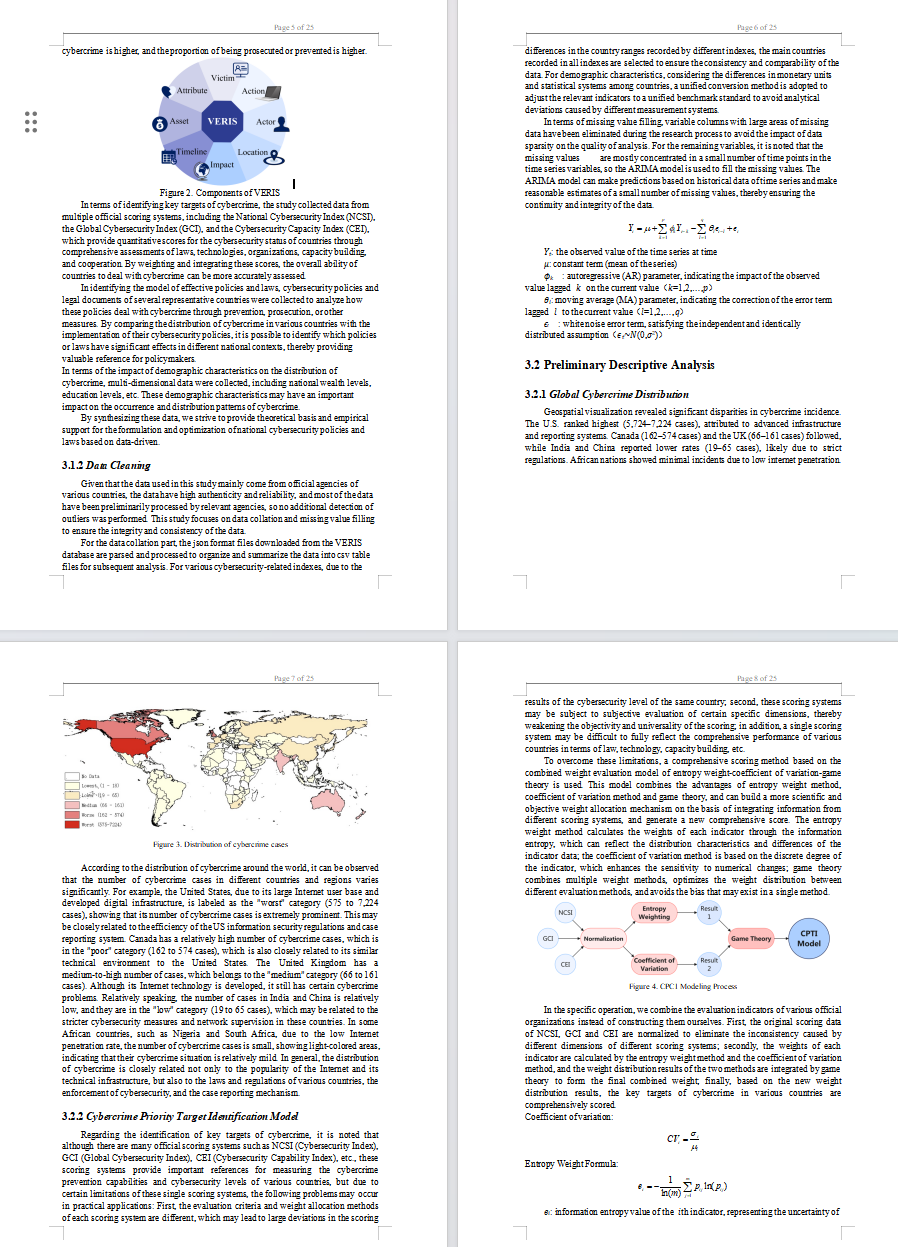
Our solution is a data-driven model for cybersecurity policy optimization and effectiveness prediction. It combines statistical methods, machine learning, and deep learning into a unified framework that:
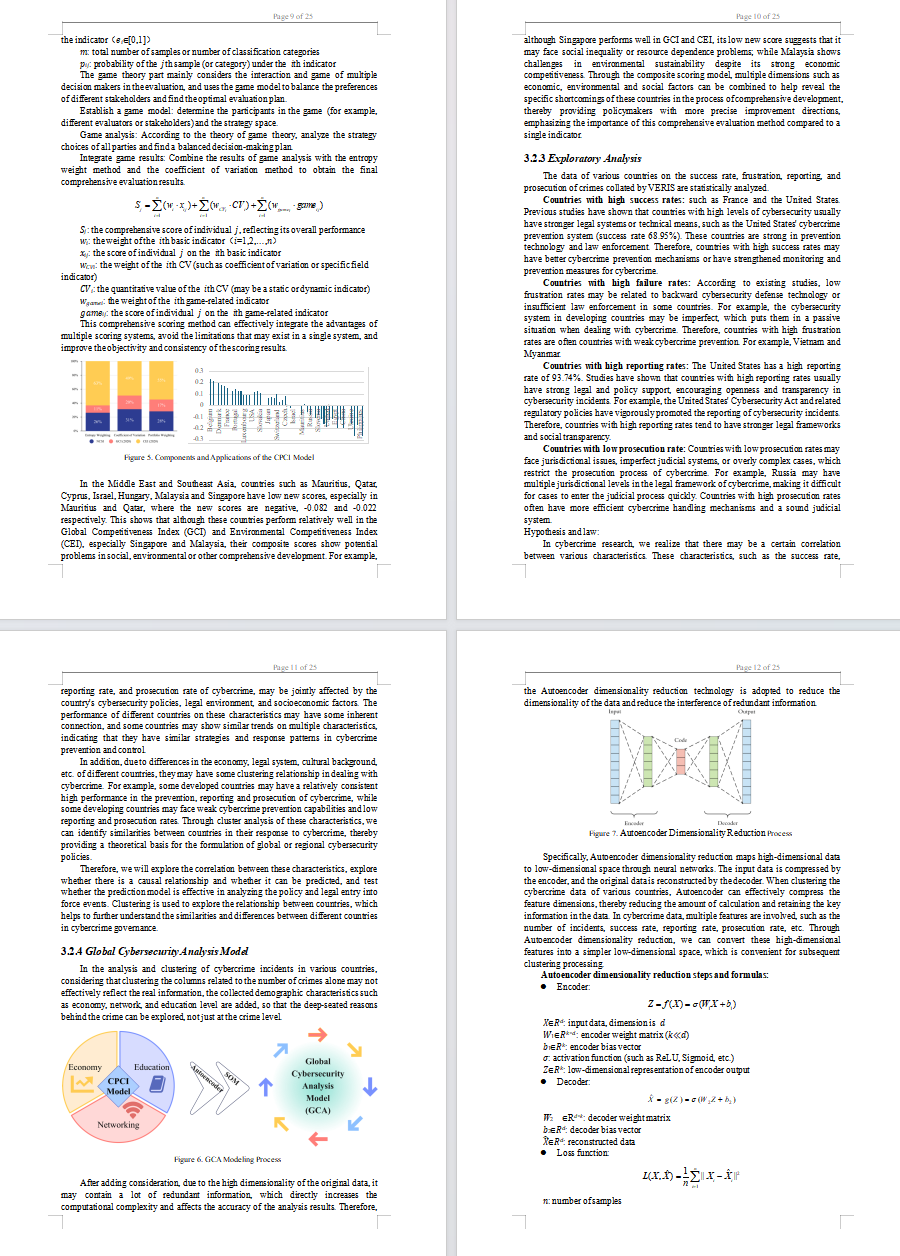
- Maps the global distribution of cybercrime incidents to identify high-risk regions.
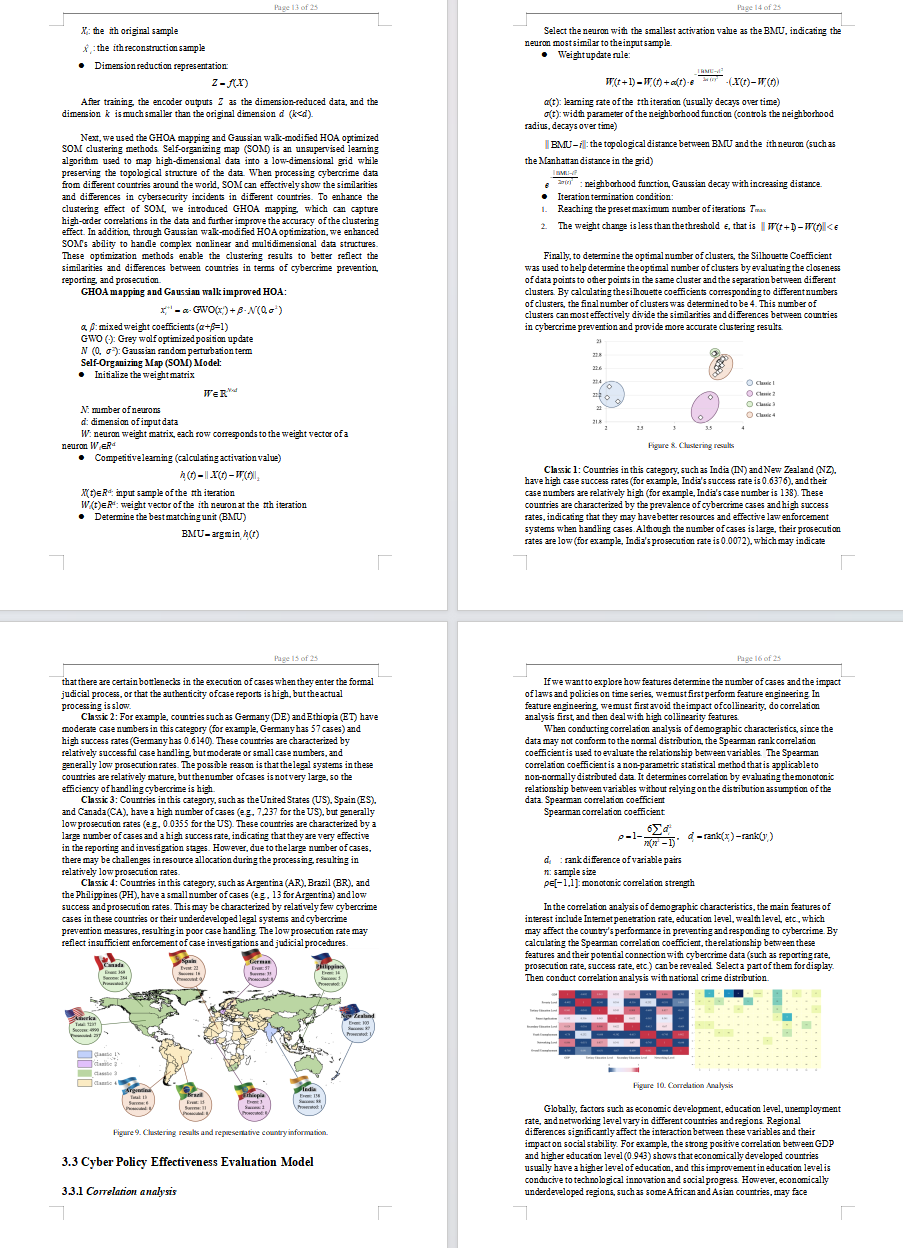
- Uses a hybrid weighting method (entropy weight, coefficient of variation, game theory) to evaluate national cybersecurity performance more objectively.
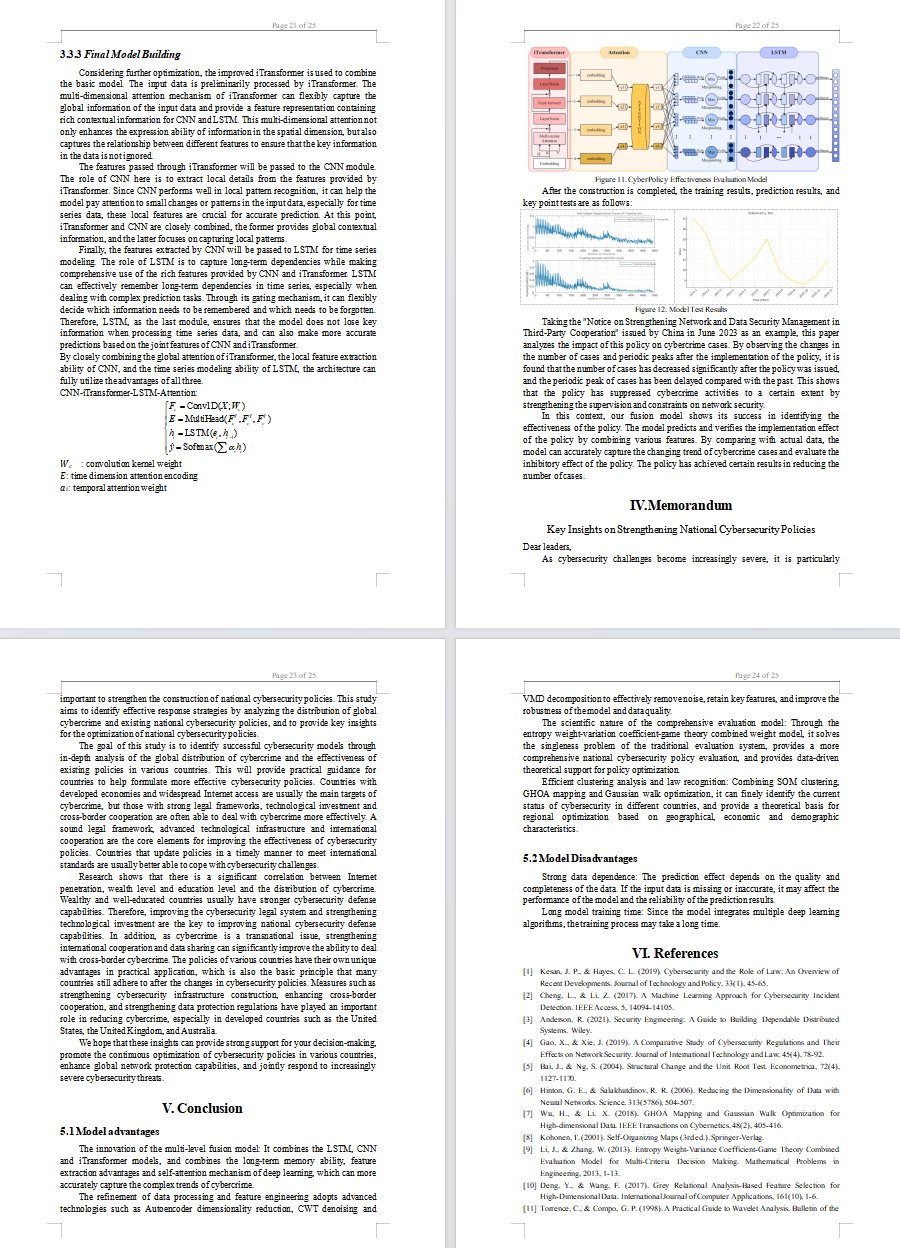
- Integrates CNN–LSTM–iTransformer deep learning architecture to forecast trends and test whether new policies reduce crime rates.
- Generates policy insights and recommendations in the form of a white paper, offering decision-makers concrete strategies for strengthening security.
This approach transforms abstract legal documents and policy timelines into quantifiable, testable, and actionable outcomes.
How we built it
Data Collection & Cleaning
- Integrated datasets such as VCDB, NCSI, and GCI.
- Used ARIMA models to fill missing values and ensured cross-dataset consistency.
- Integrated datasets such as VCDB, NCSI, and GCI.
Feature Engineering
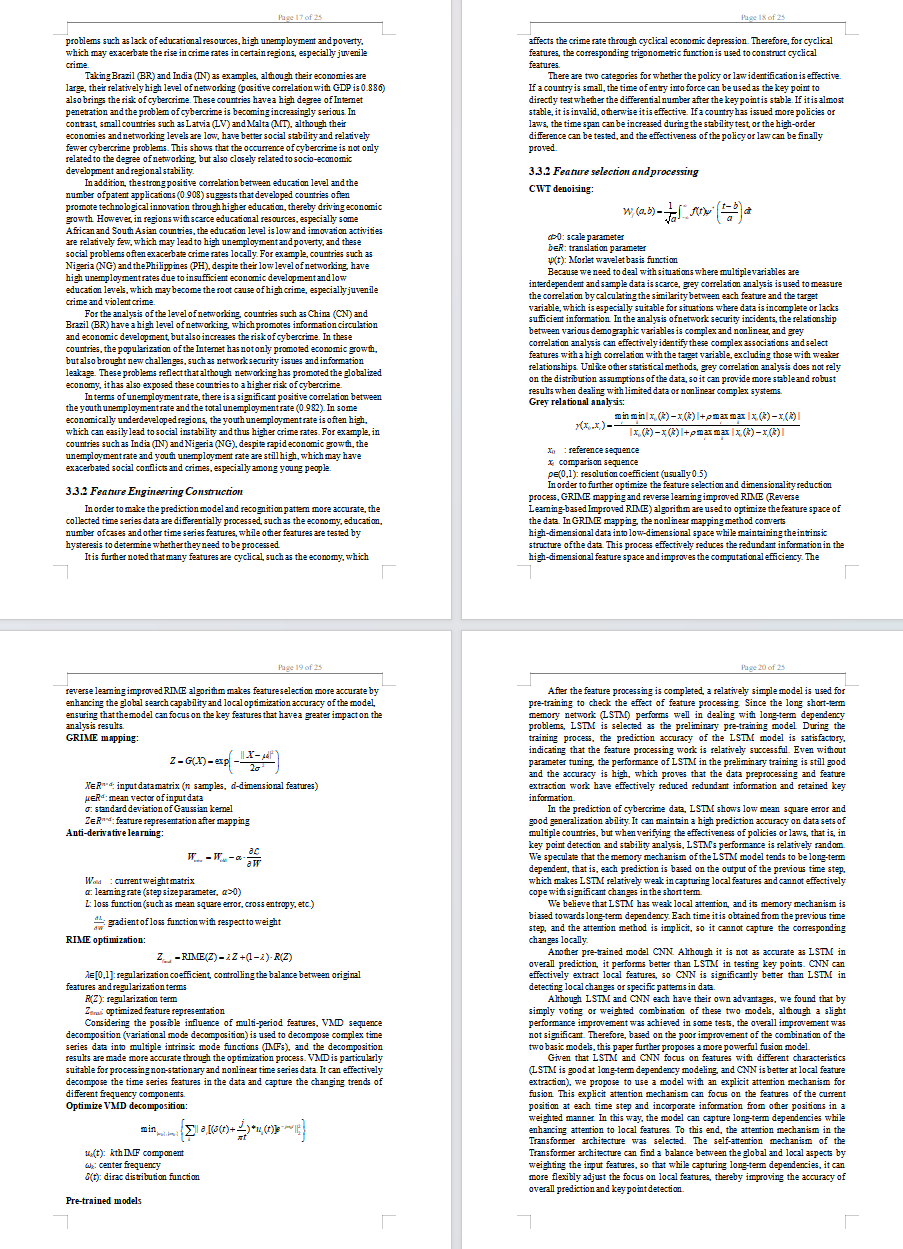
- Applied Continuous Wavelet Transform (CWT) denoising, GRIME mapping, and Variational Mode Decomposition (VMD) to extract meaningful signals from noisy time-series data.
- Standardized demographic and economic indicators for cross-country comparability.
- Applied Continuous Wavelet Transform (CWT) denoising, GRIME mapping, and Variational Mode Decomposition (VMD) to extract meaningful signals from noisy time-series data.
Exploratory & Clustering Analysis
- Reduced dimensionality via Autoencoder neural networks.
- Applied SOM clustering optimized with Grey Wolf and Gaussian walk algorithms, revealing four distinct country clusters with similar cybercrime patterns.
- Reduced dimensionality via Autoencoder neural networks.
Predictive Modeling
- Developed a hybrid CNN–LSTM–iTransformer model.
- CNN captures local features, LSTM models long-term dependencies, and iTransformer applies multi-dimensional attention to balance both global and local information.
- Developed a hybrid CNN–LSTM–iTransformer model.
Case Study & Validation
- Tested the model on China’s June 2023 cybersecurity regulation.
- Found a significant reduction in cybercrime cases and delayed peak cycles after policy implementation, validating the model’s predictive power.
- Tested the model on China’s June 2023 cybersecurity regulation.
Challenges we ran into
- Data inconsistency: Different sources used varying standards, requiring harmonization.
- Sparse and missing data: Some countries lacked consistent reporting, forcing us to engineer advanced imputation strategies.
- Model complexity: Integrating multiple deep learning modules increased training time and computational demand.
- Balancing interpretability vs. accuracy: Policymakers require clarity, while machine learning often produces black-box predictions.
Accomplishments that we're proud of
- Designed a composite evaluation framework that overcame the biases of single scoring systems.
- Built a novel deep learning fusion model that balances global attention with local feature extraction.
- Demonstrated real-world policy effectiveness analysis, showing measurable improvements after new regulations.
- Produced a project that bridges academic rigor and social responsibility, making it both research-oriented and impactful for communities.
What we learned
- Data-driven approaches can bring objectivity into fields often dominated by subjective judgment.
- AI alone is insufficient—law, ethics, and international cooperation are equally essential.
- Cybersecurity is inherently global: success requires cross-border collaboration.
- The combination of theoretical modeling with practical case studies produces the strongest insights.
What's next for the project
- Expand beyond cybersecurity: Apply the same predictive-policy framework to education, healthcare equity, mental health, and environmental risk.
- Develop a visualization platform: Enable policymakers to interact with real-time dashboards of policy effectiveness.
- International partnerships: Collaborate with NGOs, UN bodies, and government agencies to facilitate data sharing and joint defense initiatives.
- Responsible AI integration: Incorporate explainable AI tools to make predictions more transparent and trustworthy for decision-makers.


Log in or sign up for Devpost to join the conversation.