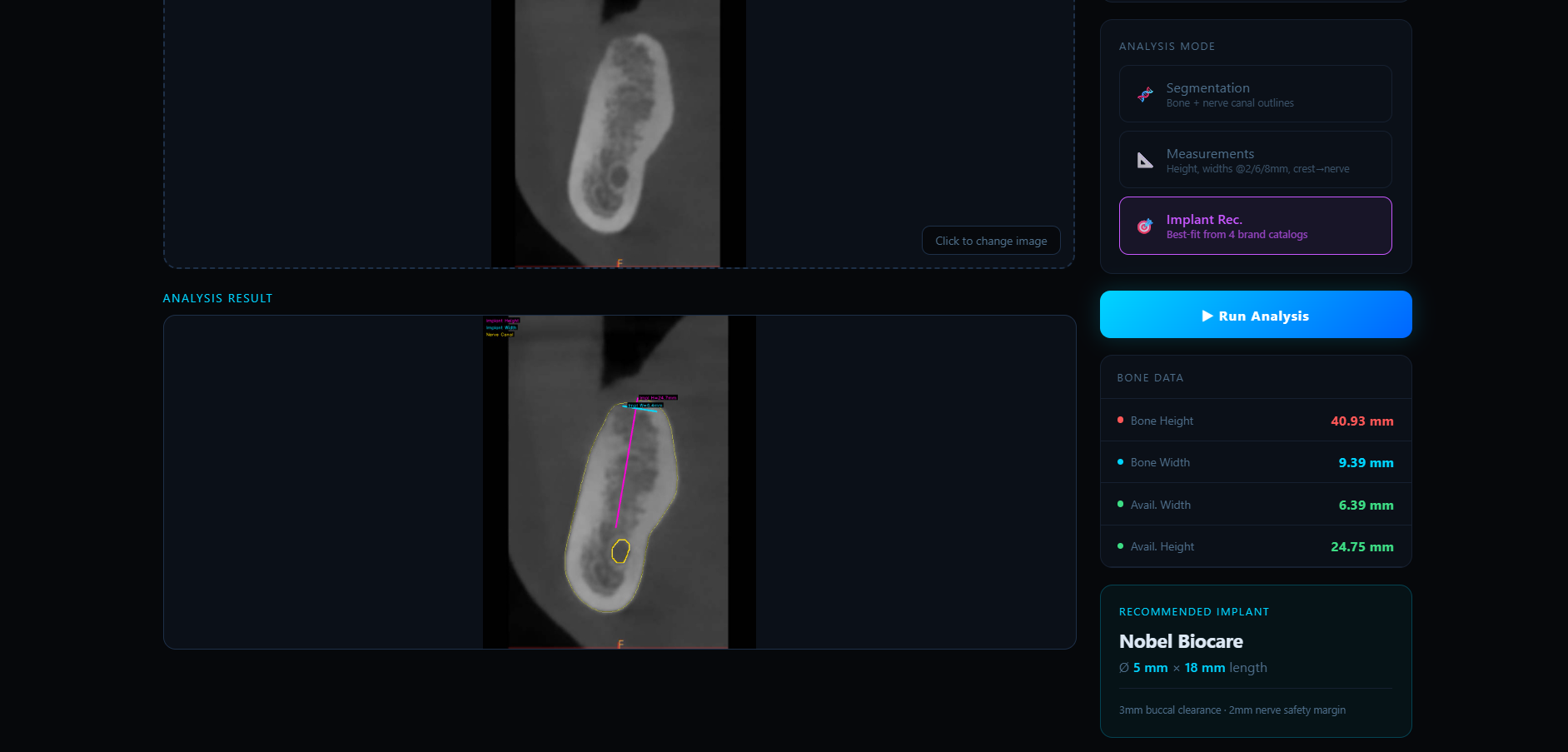
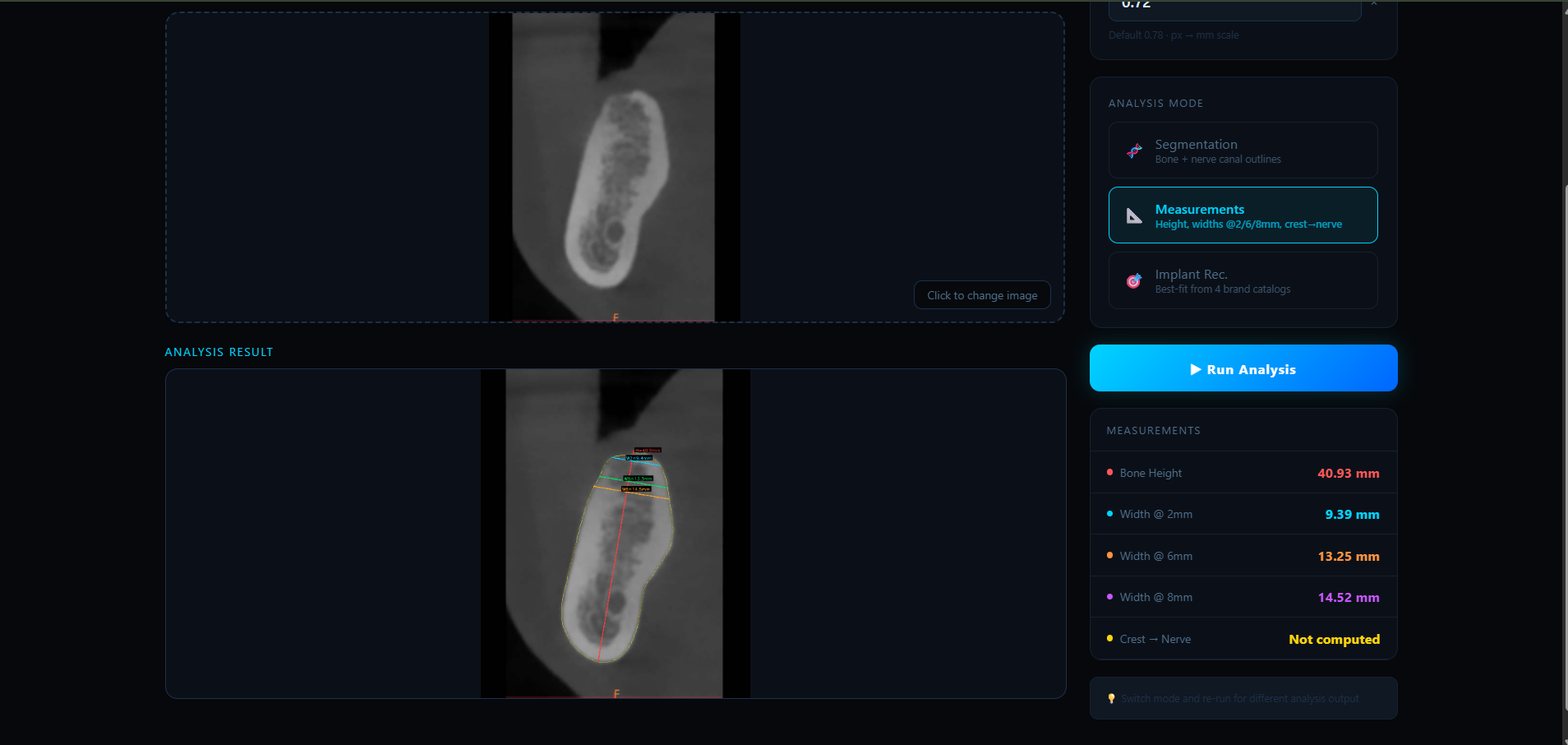
Dental implant planning using CBCT scans is a precision-heavy process, but today it still involves a lot of manual work. Clinicians must identify bone boundaries, locate the nerve canal, take measurements, and ensure safe margins — all using complex imaging software. Even small variations in measurements can impact surgical decisions, and fatigue or software complexity can sometimes introduce inconsistencies.
We were inspired by a simple idea: AI shouldn’t replace clinicians — it should support them by making planning faster, clearer, and more consistent.
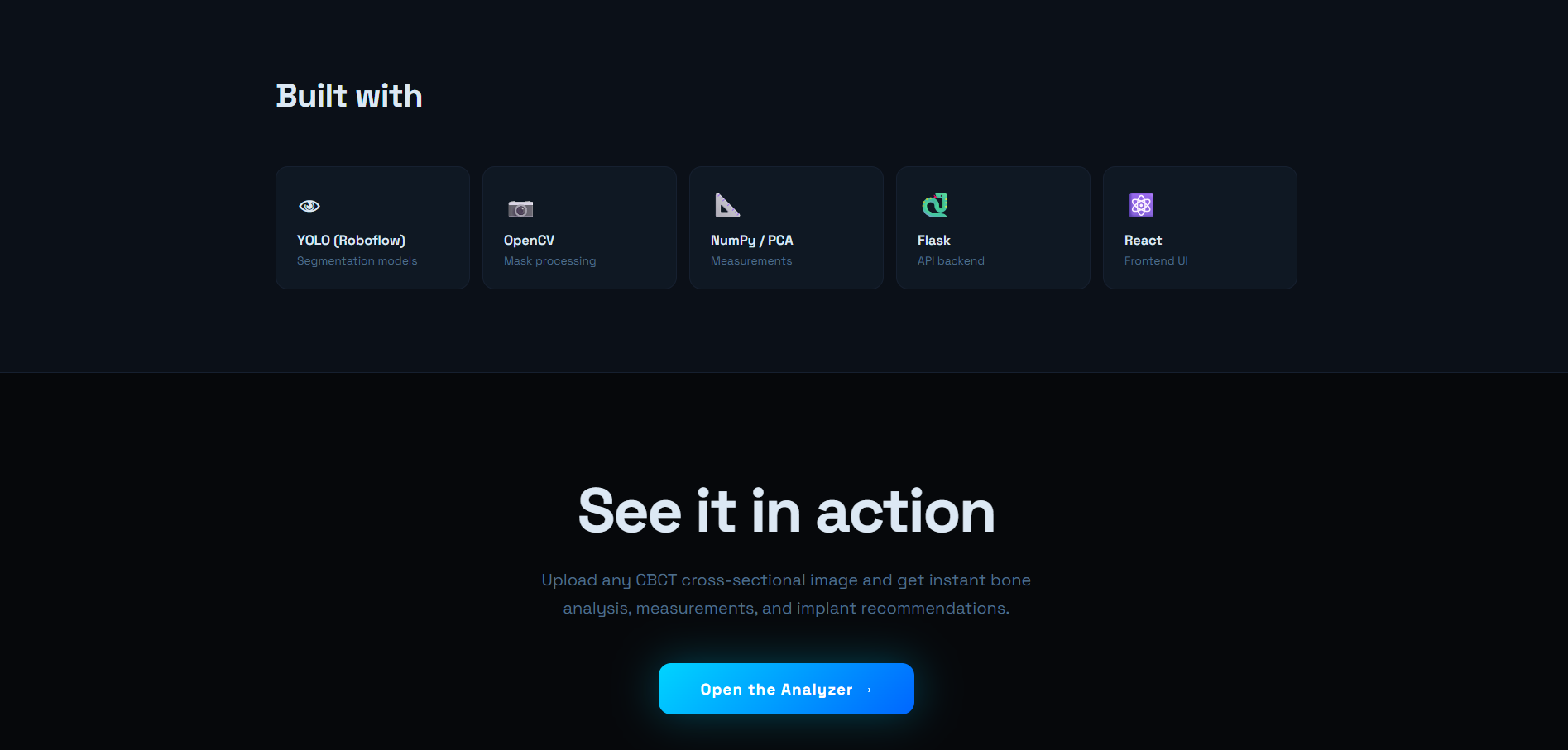
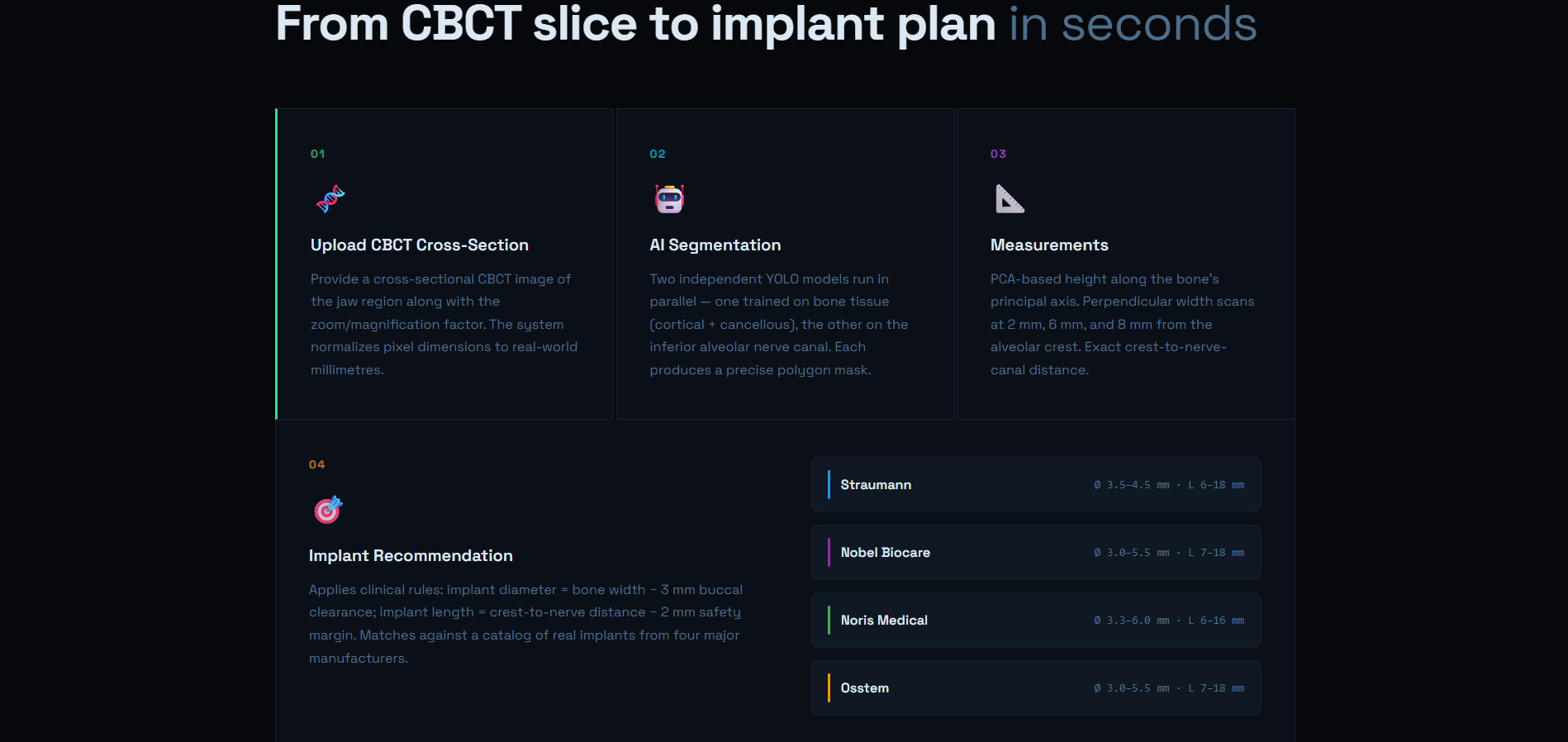
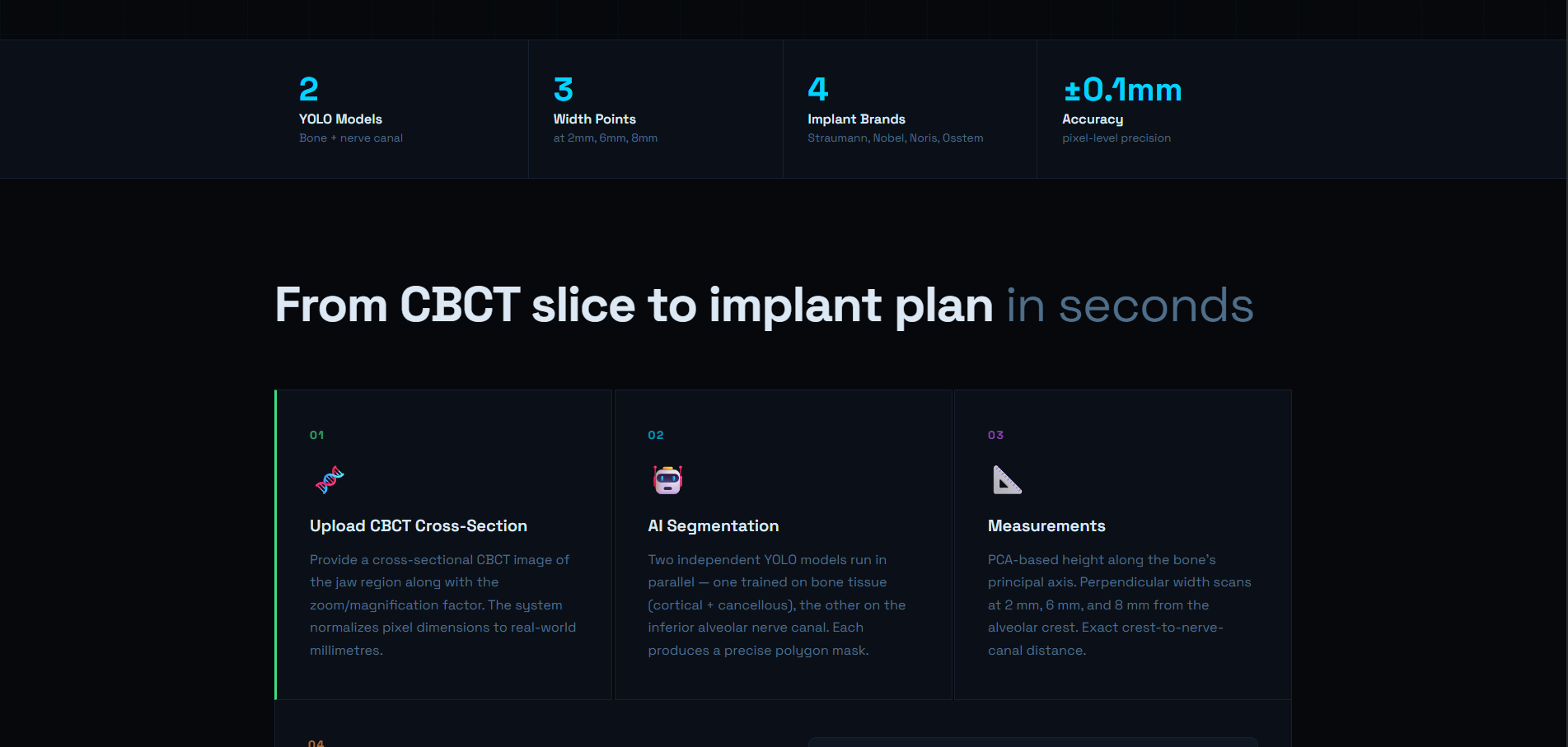
What It Does Our AI-driven CBCT Implant Planning System automatically: Segments bone structure Detects the mandibular nerve canal Calculates critical implant measurements Applies surgical safety margins Recommends suitable implants from real catalogs It estimates bone height, measures width at clinically relevant depths, and ensures safety by maintaining: 2mm clearance above the nerve 3mm reduction for implant width The system then matches these measurements with implants from real manufacturers like Straumann, Nobel Biocare, Noris, and Osstem — providing practical, clinically usable suggestions. How We Built It We developed a cloud-based pipeline where: A CBCT slice is uploaded AI models segment bone and nerve regions A geometry engine calculates height and width Safety margins are applied Implant recommendations are generated Results are visualized with overlays The backend was built using Flask, OpenCV, and NumPy, with cloud-based segmentation models handling the AI layer.
Challenges Anatomical variation across scans Maintaining safe margins near nerves Converting pixel data into real-world measurements Ensuring fast cloud inference during deployment We also focused on keeping the system assistive — not prescriptive.
Accomplishments When tested by dental professionals, the system’s measurements showed ~1mm variance, which falls within clinically acceptable limits.
We’re proud that we: Applied real surgical safety rules Integrated real implant catalogs Automated a traditionally manual workflow Created outputs clinicians can easily interpret
What We Learned Building clinical AI isn’t just about model accuracy — safety, geometry, and usability matter just as much. We learned how to translate AI outputs into meaningful clinical insights while maintaining practical safety margins.
What’s Next We aim to expand this into: 3D CBCT analysis Multi-slice planning Implant angulation support Surgical guide compatibility Our long-term goal is to create a clinician-friendly intelligent planning assistant.

Log in or sign up for Devpost to join the conversation.