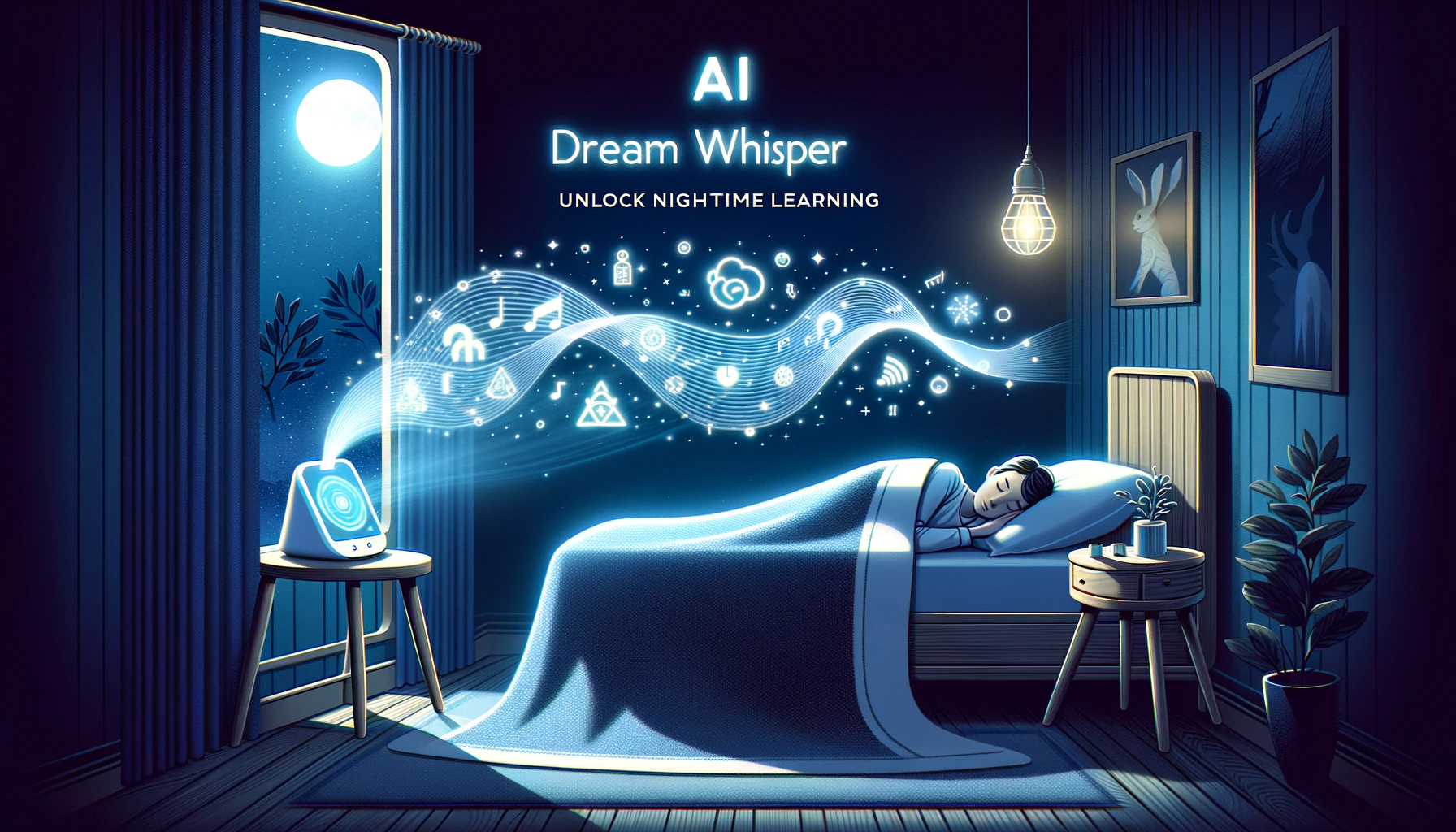
AI Dream Whisper
Use Case Title:
AI Dream Whisper - Leveraging Sleep for Enhanced Education
Description:
The AI Dream Whisper is designed to harness the untapped potential of nighttime hours for educational purposes. By leveraging the power of artificial intelligence, the application crafts tailored auditory stories that are played to students during their sleep, aiming to reinforce their understanding of challenging academic topics. AI Tools Involved:
- OpenAI: The application integrates with the OpenAI API to generate educational stories based on the topics or subjects students input. This ensures that the content is relevant, tailored, and maximizes the potential for learning.
- PlayHT: Once the stories are generated, they are converted into an auditory format using the PlayHT API. This text-to-speech conversion ensures that the content is delivered in a calming and soothing manner, conducive to sleep. Target Audience:
- Students: The primary target audience is students, especially those grappling with complex academic topics that require reinforcement. This includes high school, college, and university students.
- Lifelong Learners: Beyond traditional students, the application can also cater to lifelong learners or professionals who are looking to reinforce their understanding of specific subjects or topics. Problem Addressed: Many students face challenges in grasping and retaining complex academic topics. Traditional learning methods, which focus on conscious daytime study, might not always be effective for all learners. Nighttime, a period typically considered unproductive for learning, presents an opportunity. The AI Dream Whisper application addresses the following problems:
- Memory Retention: By targeting the potent phase of REM sleep with relevant auditory stimuli, the application aims to bolster memory retention, helping students recall and understand challenging topics better.
- Personalized Learning: Traditional learning resources, like textbooks or lectures, offer a one-size-fits-all approach. In contrast, AI Dream Whisper tailors the learning experience to each student's specific needs, ensuring greater relevance and efficacy.
- Emotional Well-being: Academic stress is a prevalent issue among students. By providing a calming and soothing learning experience, the application might also promote better sleep quality and overall emotional well-being.
Tutorial for Use and Best Practices:
Step-by-Step Guide:
- Platform Setup:
- If you're using a local version of AI Dream Whisper, ensure that the platform is set up and running. In the future, the application will be hosted online for easier access.
- Access the main interface of the platform. You'll find a simple and user-friendly design with a text input area.
- Input Your Topic:
- In the text input area, paste the topic or subject you wish to learn about.
- Click the "Generate" button to let the AI craft a tailored auditory story for you.
Best Practices:
- Use Personal Study Notes: To ensure consistency in memory retention and to get the most out of the AI-generated stories, it's recommended to use your own study notes about the topic. This ensures that the content is tailored to your specific learning needs and style.
- Input Format: When inputting your topic or study notes, format them as bullet points. This helps the AI understand the key points and structure the story effectively. Alternative Method Without AI Dream Whisper: While AI Dream Whisper offers a seamless experience, it's possible to achieve similar results using other tools:
- Story Creation with ChatGPT:
- Use ChatGPT to create a story or narrative based on your study notes. Simply input your notes and ask ChatGPT to craft a comprehensive story for you.
- Text-to-Speech Conversion:
- Once you have your story, use any free Text-to-Speech (TTS) platform to convert the text into an auditory format. There are several online platforms available that offer this service. By following this method, you can create your own simpler version of auditory stories for nighttime learning, without the use of AI Dream Whisper.
Impacts on Learning:
The primary aspect of the learning experience that is impacted by the AI Dream Whisper, is the memory retention and reinforcement phase of learning. Traditional learning methods predominantly focus on conscious, daytime study, where learners actively engage with content. However, the consolidation of this information, particularly its transition from short-term to long-term memory, is believed to occur during sleep, especially during REM phases. Without the AI Dream Whisper, my learning experience would likely be more traditional. I'd be confined to studying predominantly during waking hours, with nighttime serving merely as a passive phase, devoid of any active reinforcement of the content I've learned. The lack of reinforcement makes it challenging for me to retain intricate topics, leading me to revisit them multiple times to grasp them fully. Additionally, Instead of having content tailored to my specific needs, I'd have to rely on generic resources. Moreover, I generally struggle with relaxation and sleep, finding myself grappling with heightened study-related stress, particularly as exams or assessments approach.
Limitations and Ethical Considerations:
The AI Dream Whisper app, while innovative, does come with its set of limitations and ethical considerations. One potential hindrance to learning could arise if the AI-generated auditory stories are not perfectly aligned with the student's curriculum or understanding, potentially leading to confusion or reinforcing misconceptions. Additionally, biases might emerge from the AI's training data; if the AI has been trained predominantly on certain types of content or perspectives, it might inadvertently favor or neglect specific topics or viewpoints. This could skew the learning experience and unintentionally introduce or perpetuate biases. Ensuring the validity of the AI-generated results is paramount. One possible solution would be to fine-tune the AI's training data, diversifying its sources, and incorporating feedback loops where students can provide input on the accuracy and relevance of the generated content can help in maintaining the integrity and effectiveness of the tool. Ethically, it's crucial to ensure that the application respects user privacy, especially given the intimate nature of sleep. Clear guidelines on data usage and storage, as well as robust security measures, are essential to maintain user trust and safeguard their personal information.
Link to Video Tutorial (Optional):
Inspiration
The inspiration for AI Dream Whisper came from the realization that students often grapple with complex topics that require more than just daytime study. The idea was to leverage the untapped potential of nighttime hours, turning them into a productive learning experience.
What it does
The AI Dream Whisper app allows students to describe a topic they're struggling with before bedtime. Leveraging advanced AI algorithms, the app then crafts a calming audio story related to the topic, aiming to reinforce the student's understanding during their sleep.
How we built it
The app integrates with the OpenAI API to generate educational stories based on user input. These stories are then converted into audio format using the PlayHT API. The backend is built using Flask, a lightweight web framework for Python, and the frontend is styled using Bootstrap.
Accomplishments that we're proud of
- Successfully integrating AI algorithms to craft tailored educational stories.
- Leveraging scientific research to enhance learning during REM sleep.
- Providing a calming and educational experience for students, promoting both academic success and emotional well-being.
What we learned
- The pivotal role of REM sleep in memory processes and the potential of auditory stimuli to enhance learning during this phase.
- The challenges and intricacies of integrating multiple APIs to create a seamless user experience.
- The importance of user feedback in refining and improving the app's functionality.
What's next for AI Dream Whisper
Future enhancements for AI Dream Whisper include:
Flashcard Algorithms: Integrate a system where different generated audio stories are saved as "flashcards". These auditory flashcards would then be played at strategic intervals during sleep, leveraging the spaced repetition technique to enhance memory retention.
Enhanced User Input Flexibility: Plans to refine the user input system to allow for more detailed descriptions, preferences, and specific learning objectives. This would enable the AI to craft even more tailored and relevant stories for the user.
Complex Auditory Cues: Incorporate more intricate auditory cues in the generated stories. This could involve varying tones, rhythms, or even background sounds that are scientifically proven to enhance memory and learning during sleep.
References:
- Enhancement of memory by auditory stimulation during postlearning REM sleep in humans
- Upgrading the sleeping brain with targeted memory reactivation


Log in or sign up for Devpost to join the conversation.