Inspiration
⚠️ Note: This demo runs on Google Gemini's free tier (20 requests/day). If you hit a rate-limit error during testing, please wait 60 seconds and retry — it's a free tier constraint, not a bug.
As a Product Manager using AI in the SDLC, I started generating PRDs, specs, and design documents using agents and templates. While this improved speed, it created a new problem—documents had hidden assumptions, inconsistencies, and required significant time to review. I also noticed that not all documents needed the same level of scrutiny, but there was no way to measure that. This inspired me to build a system to improve trust and reduce review effort.
What it does
AI Document Trust & Review Layer improves AI-generated documents by:
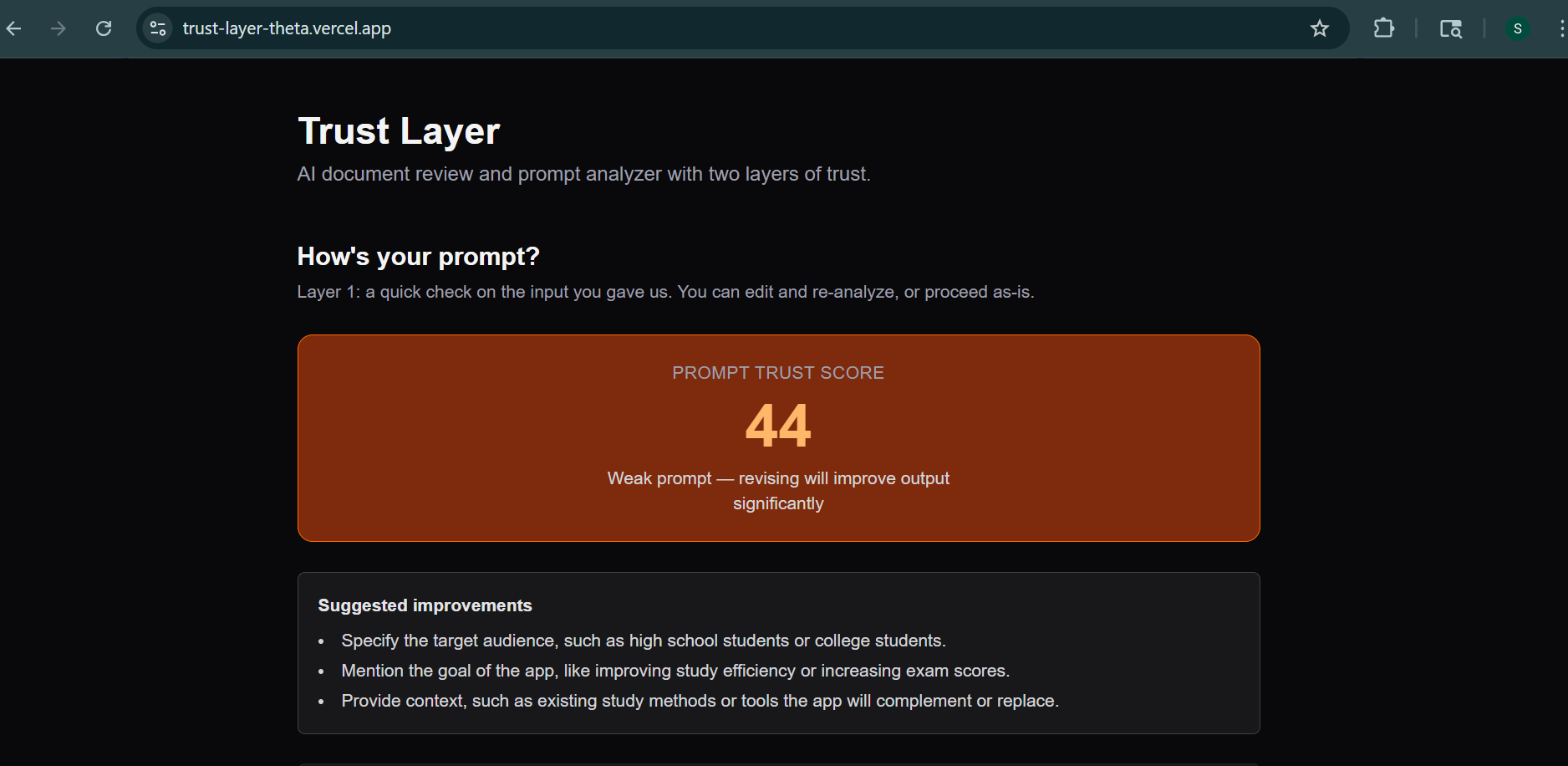
- Asking clarifying questions before generation
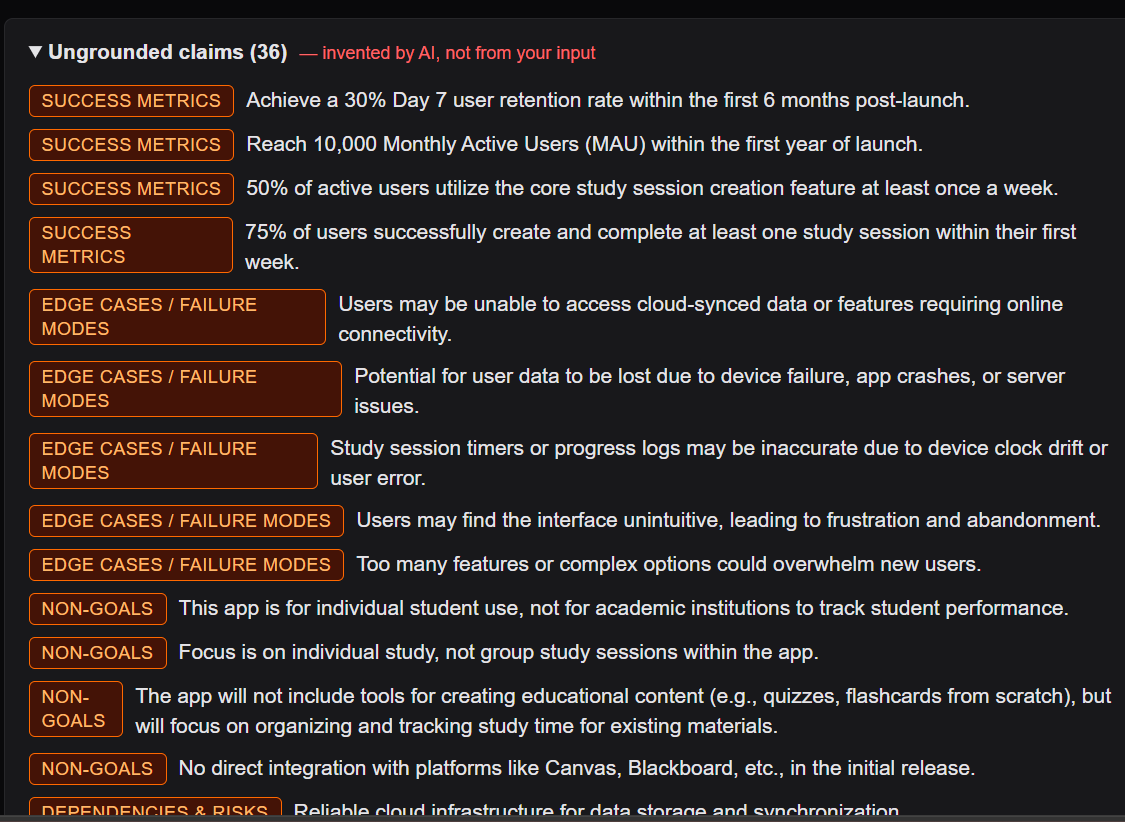
- Highlighting assumptions made by AI
- Validating content against quality rules
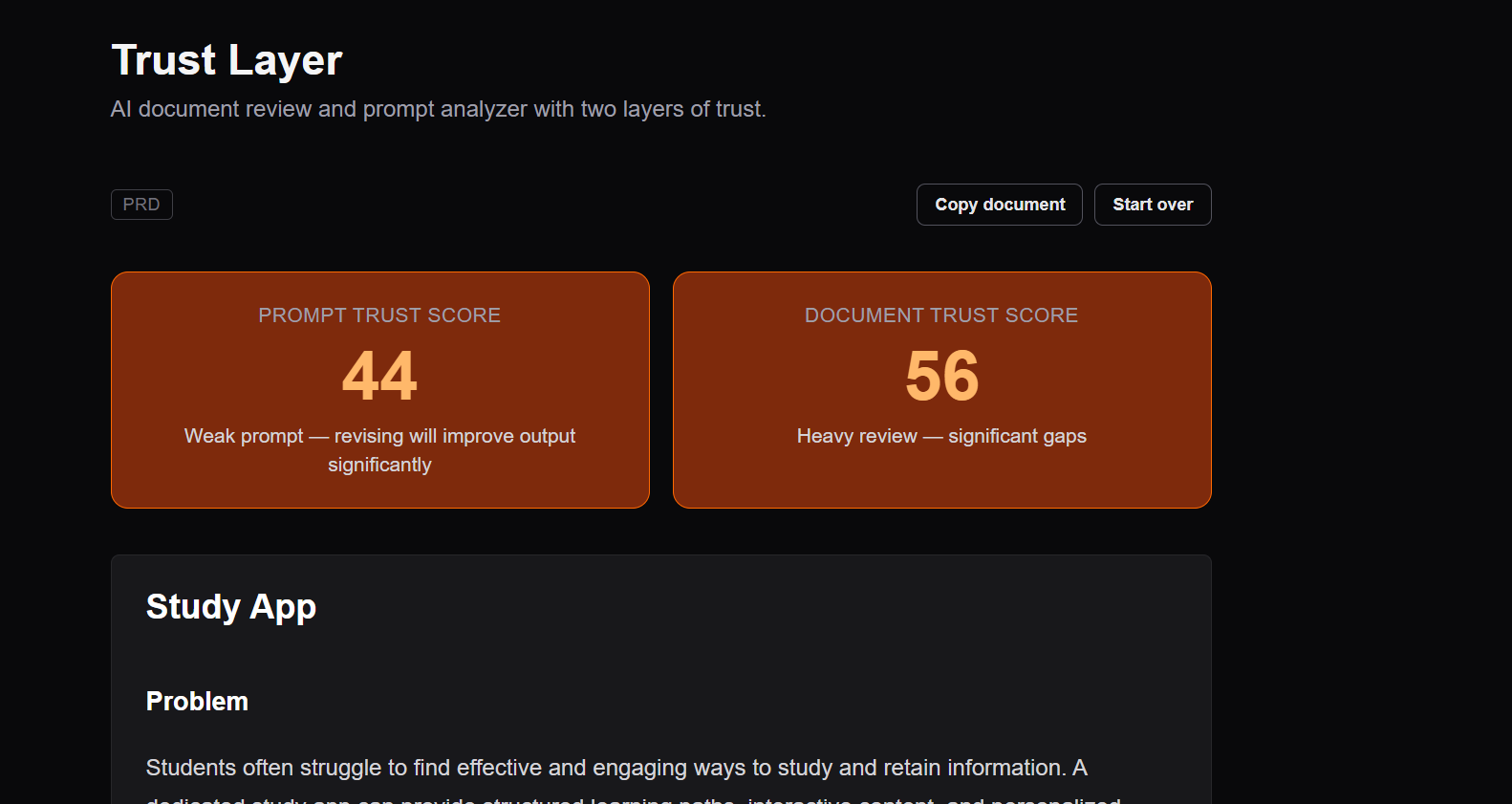
- Assigning a trust score to indicate review effort needed
How I built it
- Designed a workflow: prompt → clarification → generation → validation → scoring
- Used LLMs for document generation and assumption extraction
- Built a rule-based validation system
- Implemented a simple scoring mechanism and interface
Challenges I ran into
- Handling vague prompts
- Defining effective validation rules
- Detecting inconsistencies
- Designing a meaningful scoring system
Accomplishments that I'm proud of
- Solved a real problem caused by AI adoption
- Built a practical trust and validation layer
- Reduced review effort by introducing scoring
- Created a simple but effective workflow
What I learned
- AI shifts effort from creation to validation
- Transparency is key to trust
- Structured inputs improve outputs
- Quality measurement is critical
What's next for AI Document Trust & Review Layer
- Smarter validation and contradiction detection
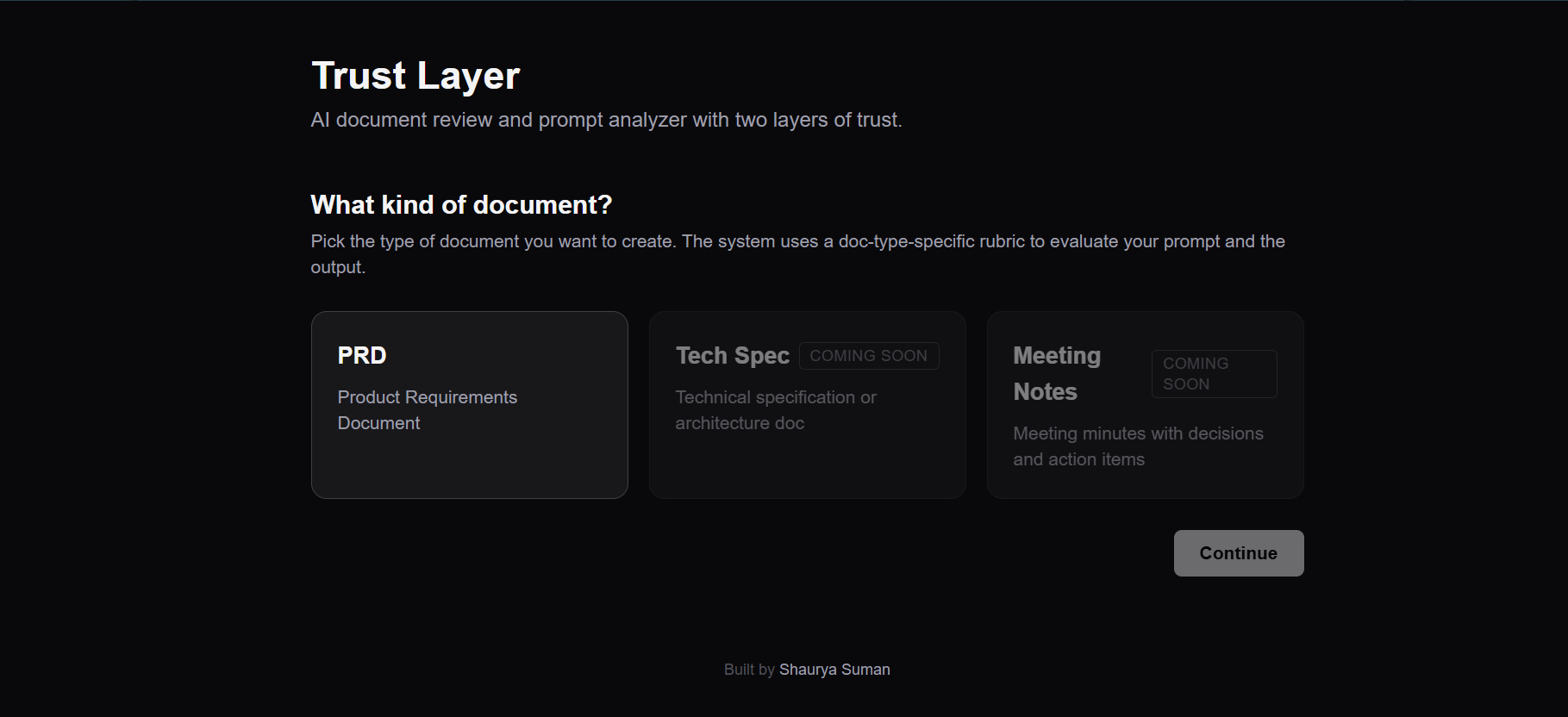
- Custom rules for different document types
- Integration with tools like Jira and Notion
- Auto-fix suggestions for low-scoring documents
Built With
- gemini
- next.js
- openai-api
- react
- tailwind-css
- typescript
- vercel

