-
-
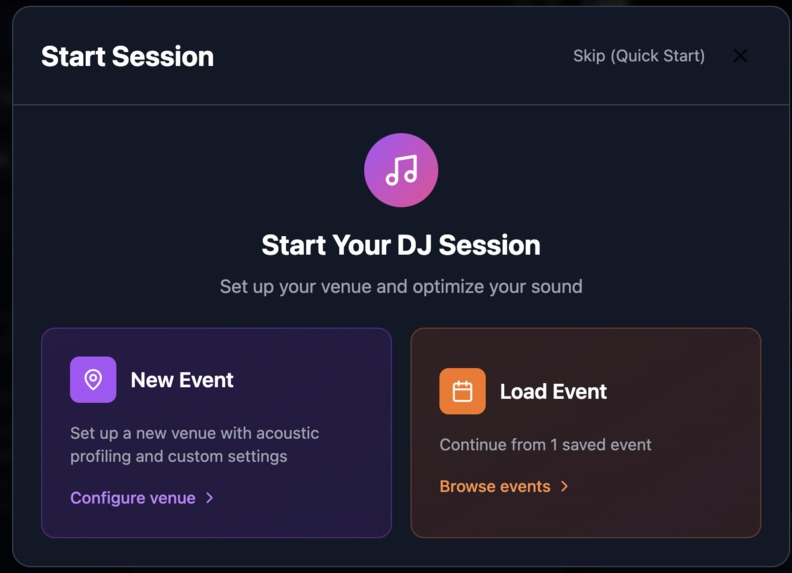
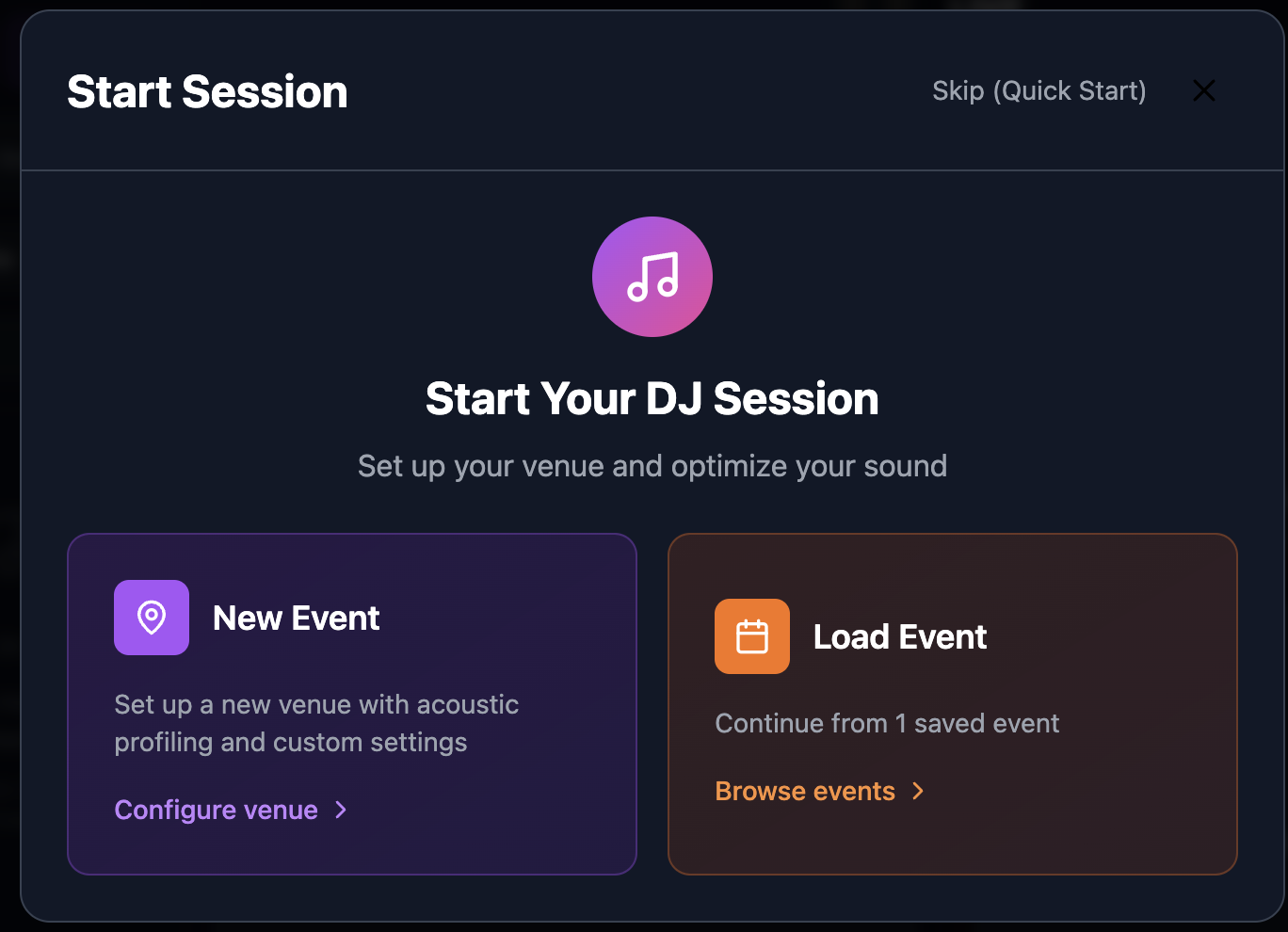
AI powered Venue Sound Builder
-
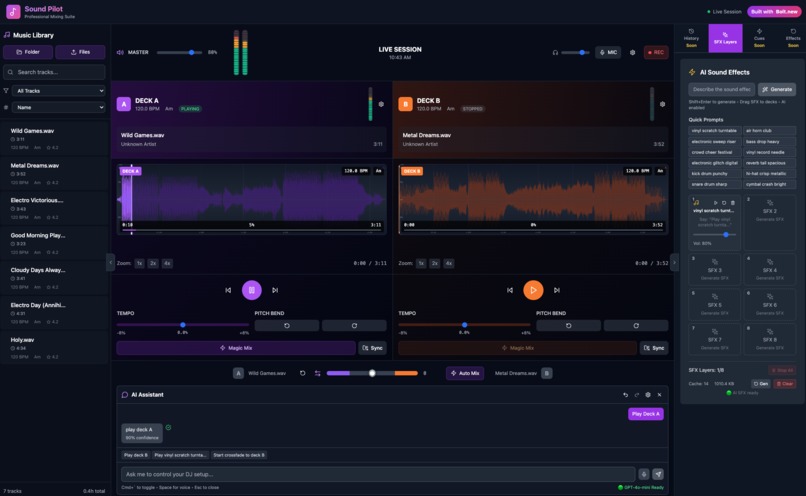
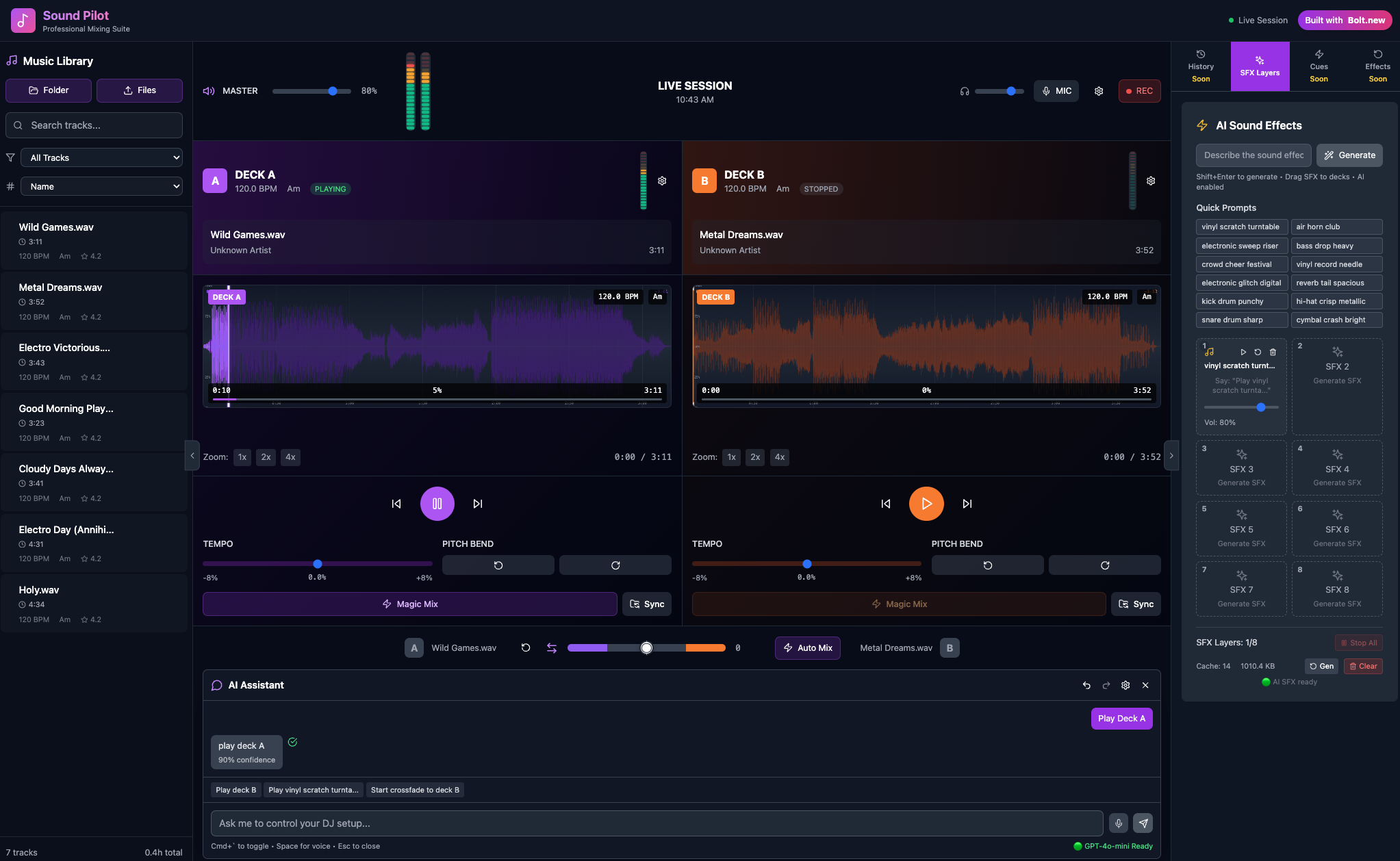
Sound Pilot Main View
-
Inspiration
Sound Pilot started as my dream to make DJing truly accessible. I wanted to give anyone - whether beginner or pro - the tools to mix, perform, and connect with an audience in real time. The idea was simple; empower creators, build community, and let AI handle the hard parts so DJs can focus on music and interaction.
What it does
Sound Pilot is a live streaming DJ platform built for creators like me.
- Dual decks: Mix tracks live with real-time waveforms and precise EQ.
- Go live: Instantly broadcast my set to a global audience using LiveKit for high-quality, low-latency streaming.
- Chat-driven control: I use natural language - typed or spoken to load tracks, trigger effects, or blend stems; the AI makes it happen.
- AI SFX on demand: Describe a sound and ElevenLabs generates it; I drag and drop it straight into my mix.
- Multi-stem mixing: Split tracks into vocals, drums, and more for creative live control.
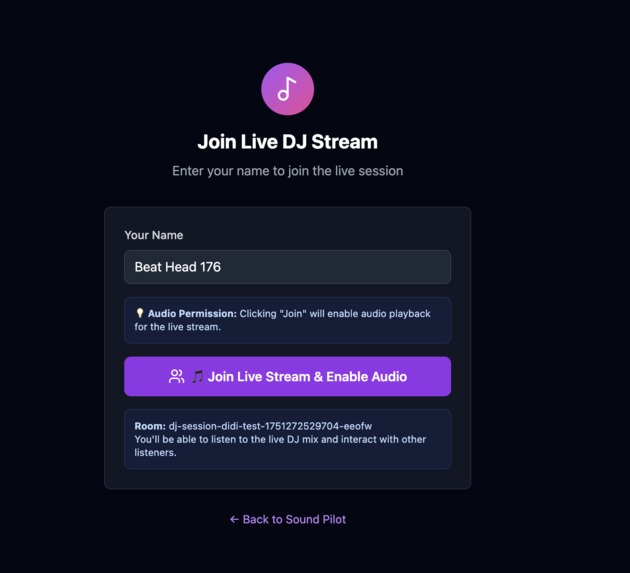
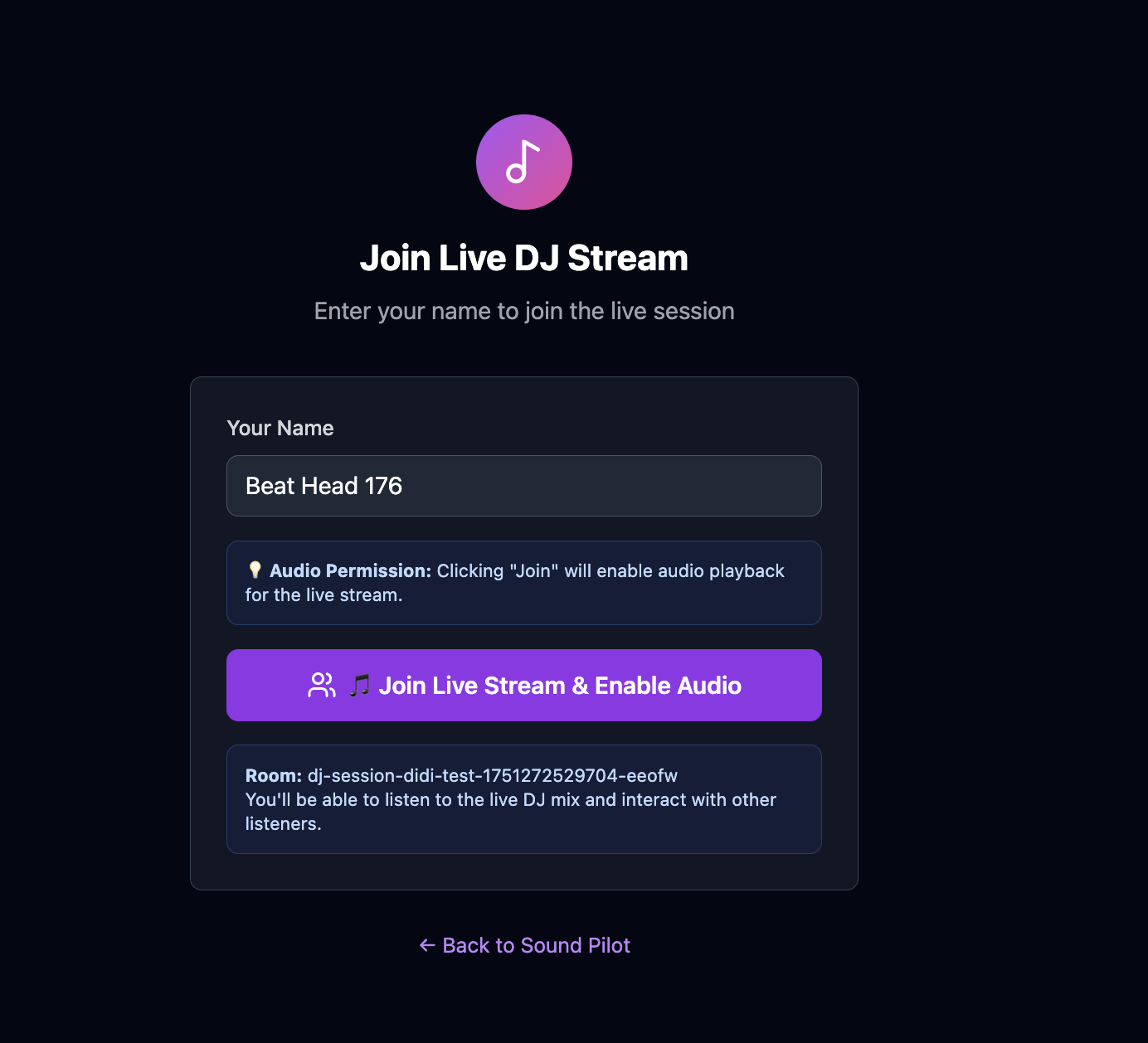
- Audience interaction: Viewers chat, request songs, and send reactions while I play.
- Flexible interface: Collapsible panels let me focus on music or chat, depending on the vibe.
- Subscriptions and upgrades: RevCat powers seamless in-app purchases and subscriptions for exclusive features.
How I built it
React SPA: Everything runs smoothly in the browser. Zustand: Manages complex audio and state logic efficiently. Tone.js: Handles playback, live processing, and waveforms. LiveKit: Delivers real-time, high-quality video and audio streaming for every show. RevCat: Manages subscriptions and upgrades, making it easy for users to support my work and unlock Pro or Autopilot features. OpenAI GPT-4o-mini: Powers the chat-based natural language controls. ElevenLabs API: Instantly creates AI sound effects on request. Tailwind CSS: Keeps the look modern and fully responsive. Lucide React: Provides clean, intuitive icons. Native File API: Lets me upload tracks and folders with a simple drag-and-drop.
Challenges I ran into
- Low-latency audio and video is a must; LiveKit was key but needed fine-tuning.
- Multi-stem playback and AI SFX generation had to work in sync without lag.
- Mapping unpredictable chat commands to exact DJ actions pushed the limits of GPT-4o integration.
- RevCat subscription logic needed to be rock-solid, especially for live shows with many users.
- Balancing powerful features with a user-friendly interface took many iterations.
Accomplishments I’m proud of
- Hosting live DJ sets directly from the browser with zero hardware required.
- Enabling real-time audience chat, requests, and reactions making every show interactive.
- Integrating seamless in-app purchases with RevCat so creators can monetize their talent.
- Bringing AI-powered sound design and mixing into the live workflow.
- Building a space where any DJ can find their crowd and grow their following.
What I learned
- Real-time streaming and audio is always a challenge; tools like LiveKit and Tone.js are powerful when optimized.
- External API integration (OpenAI, ElevenLabs, RevCat) means designing for both scale and failover.
- Creators want simplicity and reliability never make them choose between features and flow.
- Community and audience features drive engagement; every chat, request, and tip counts.
What’s next
- Smarter AI DJ tools for intelligent transitions and auto-matching tracks.
- New ways for fans to interact live polls, emotes, track voting.
- More monetization options with RevCat; tipping, subscriptions, exclusive content.
- Track history, hot cues, mobile streaming, and more FX.
- Making Sound Pilot the Twitch for DJs, where every set can be a show.

Log in or sign up for Devpost to join the conversation.