-
-
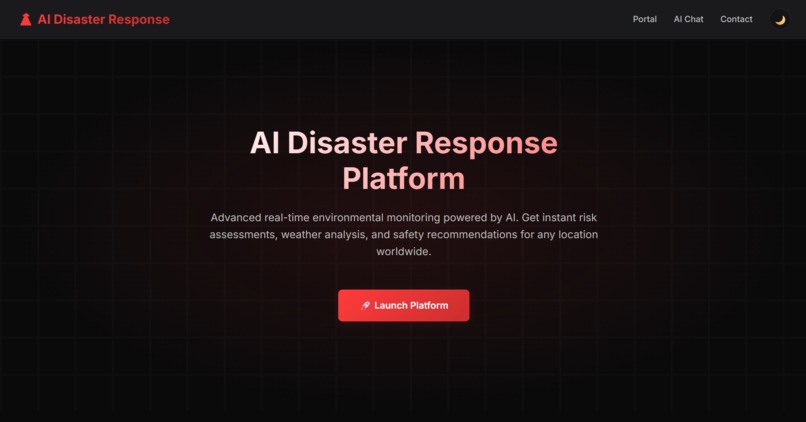
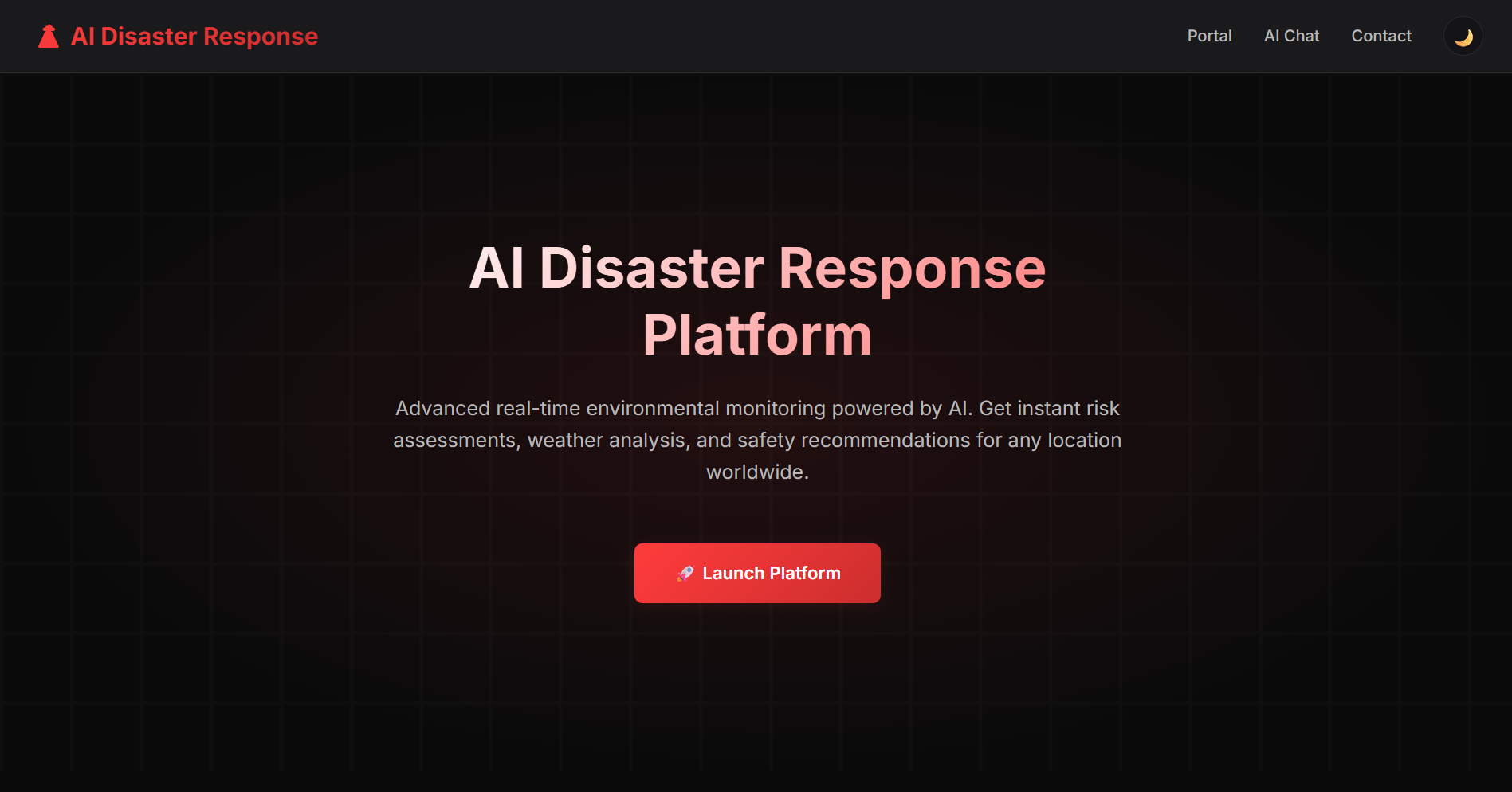
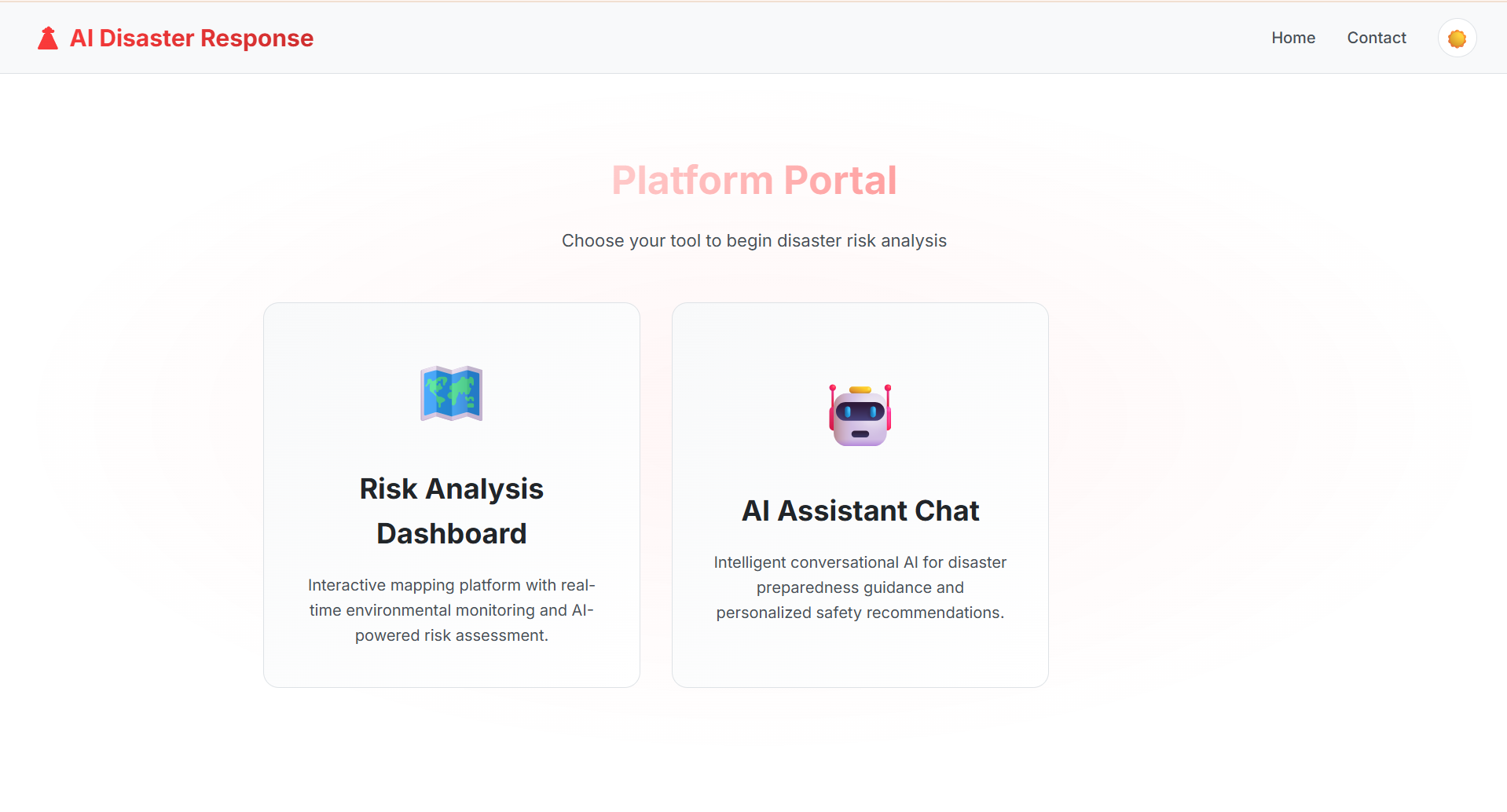
Home -1
-
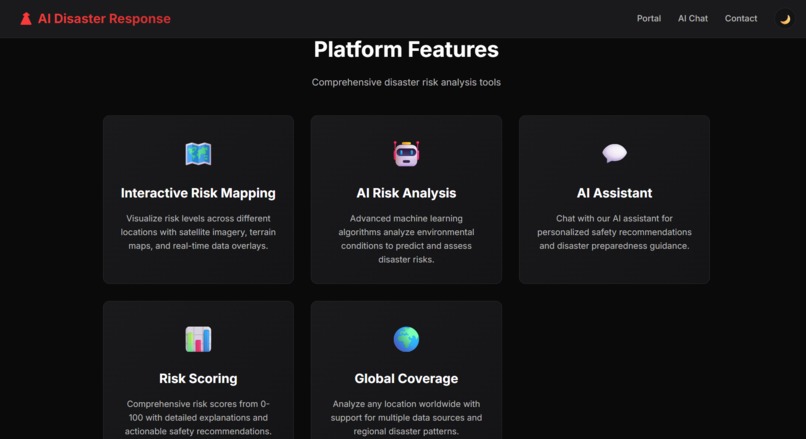
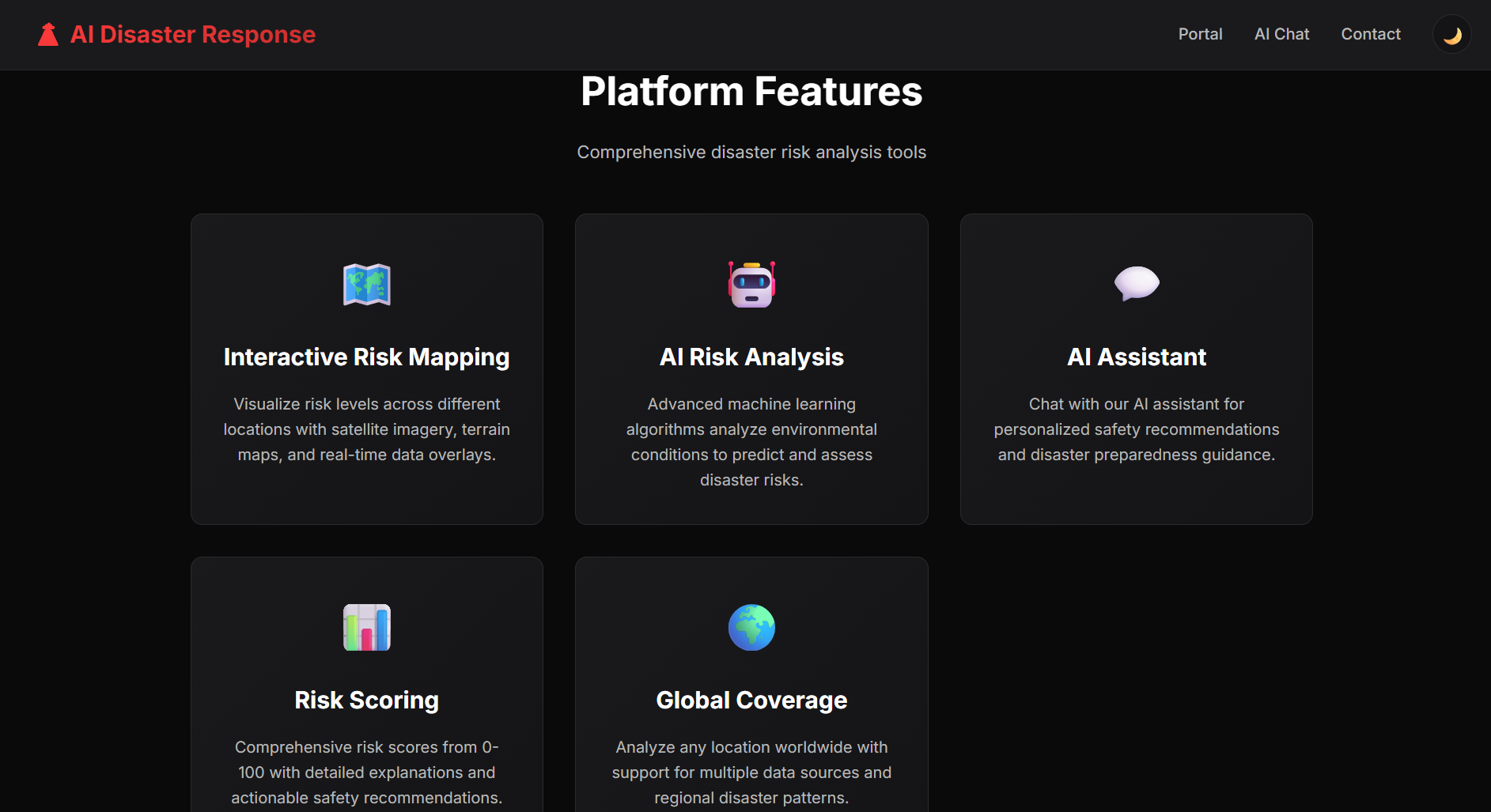
Home-2
-
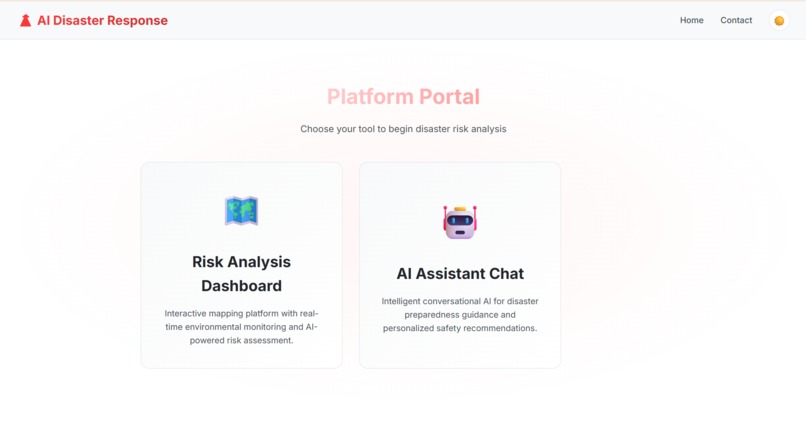
Tools
-
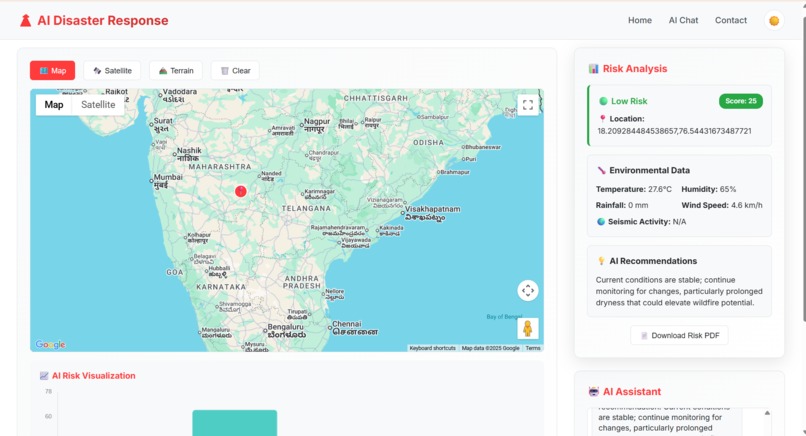
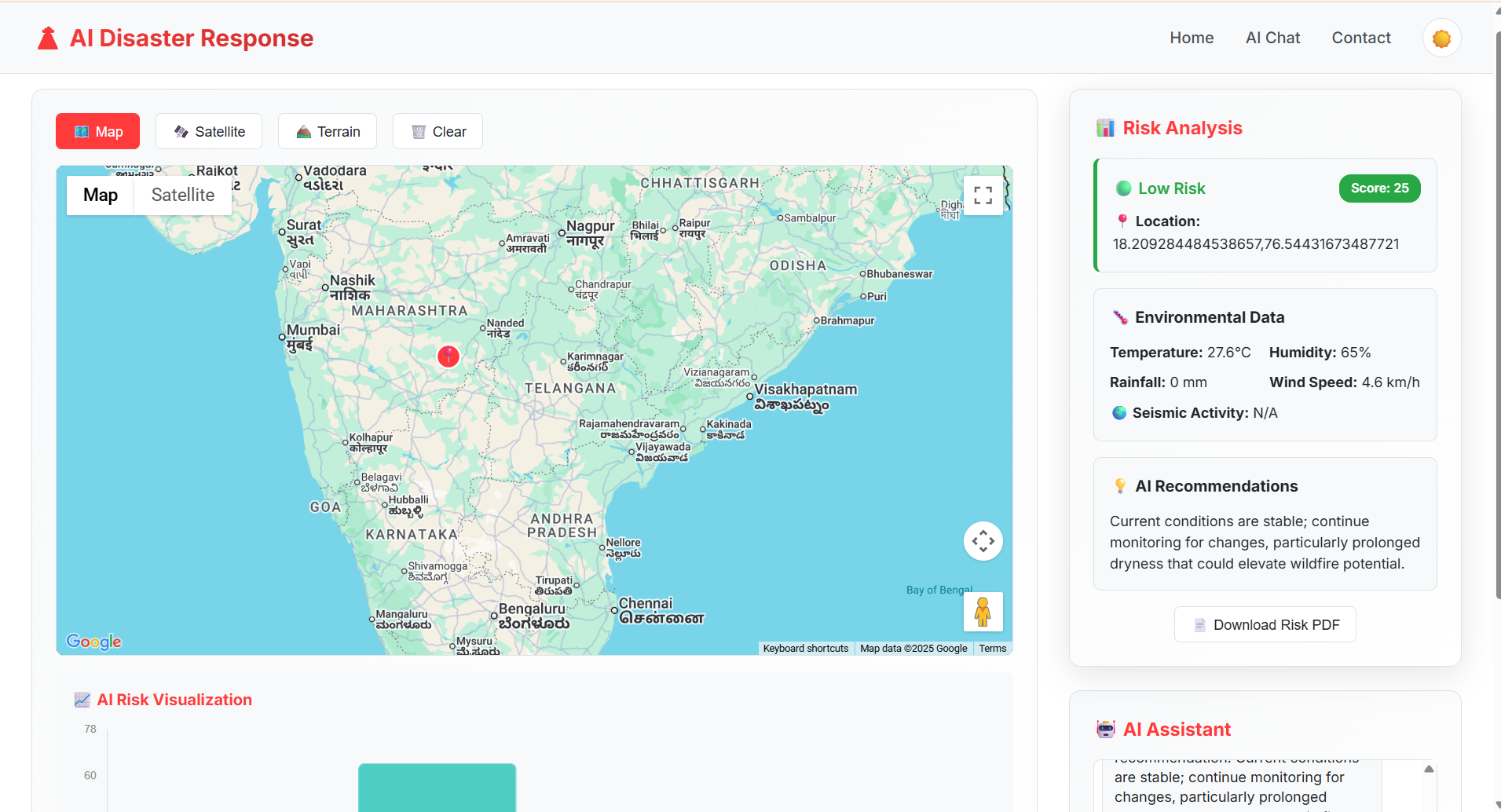
Risk Analysis
-
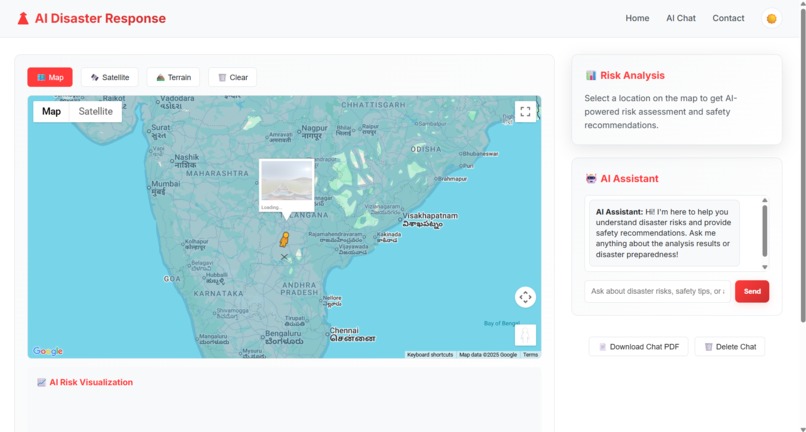
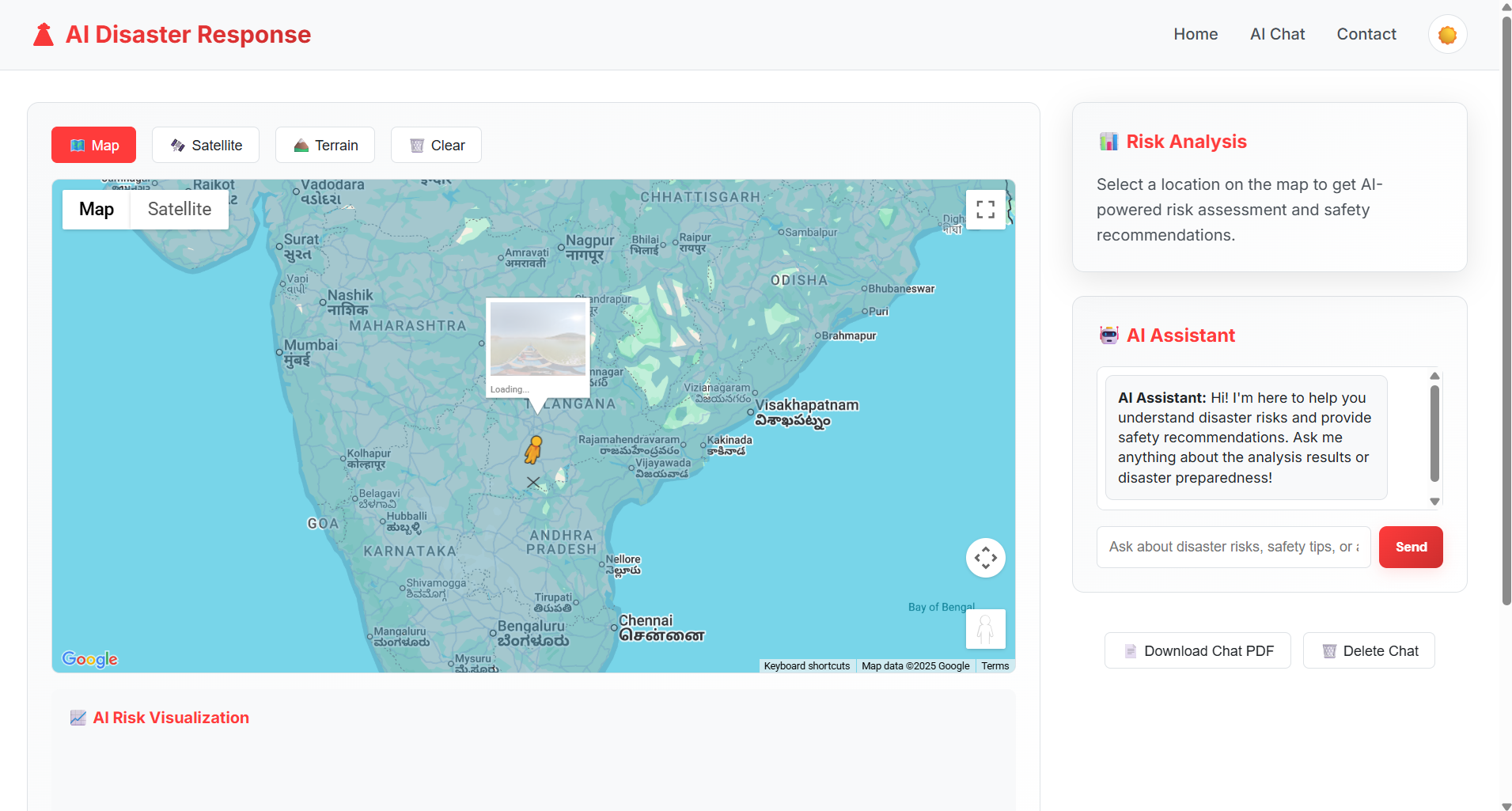
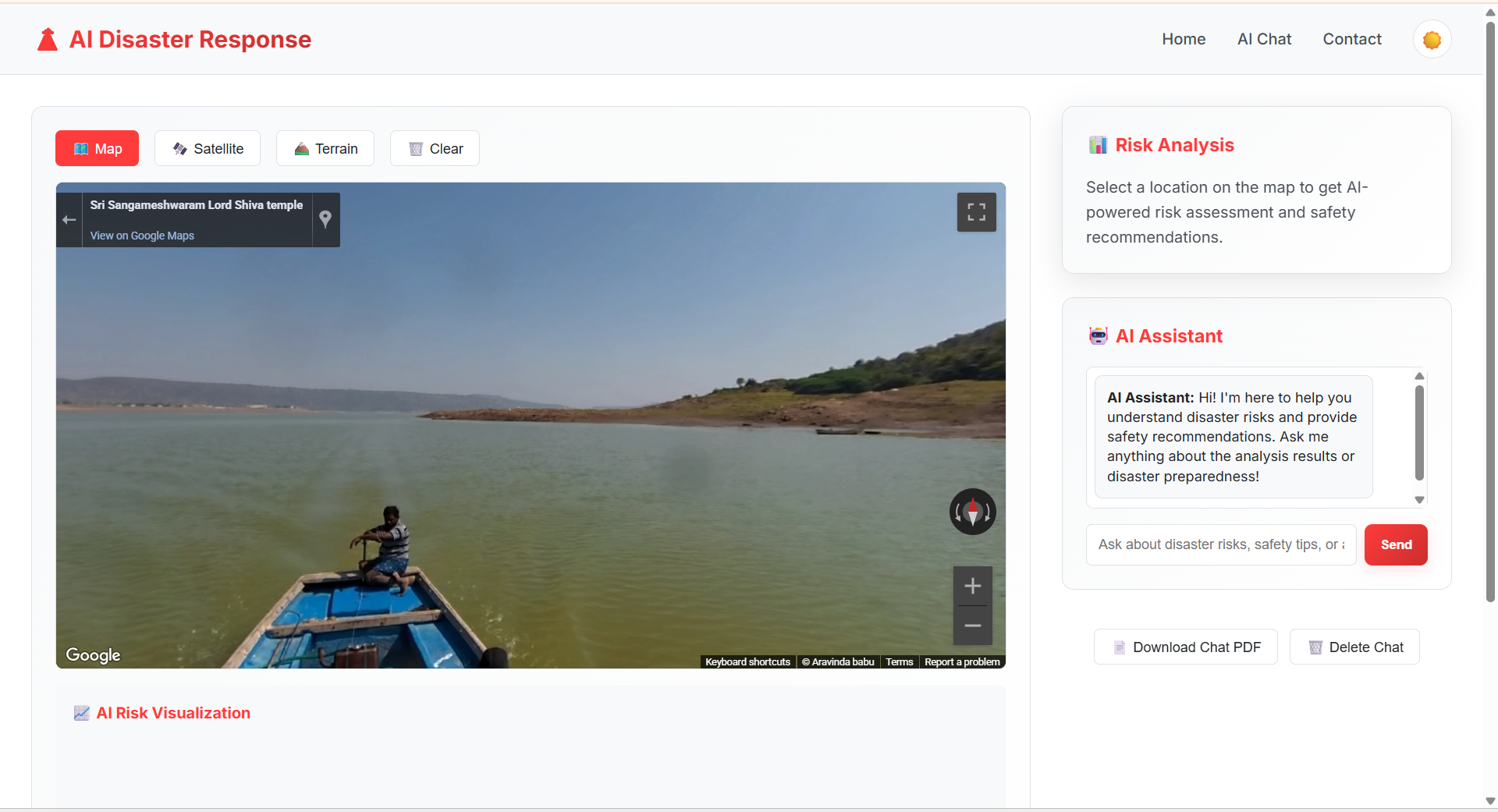
Drag the man in your map to any sport this will take you there
-
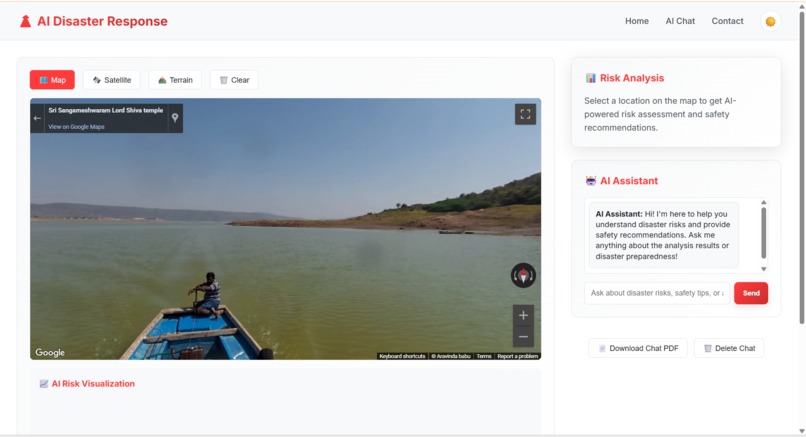
Closer View
-
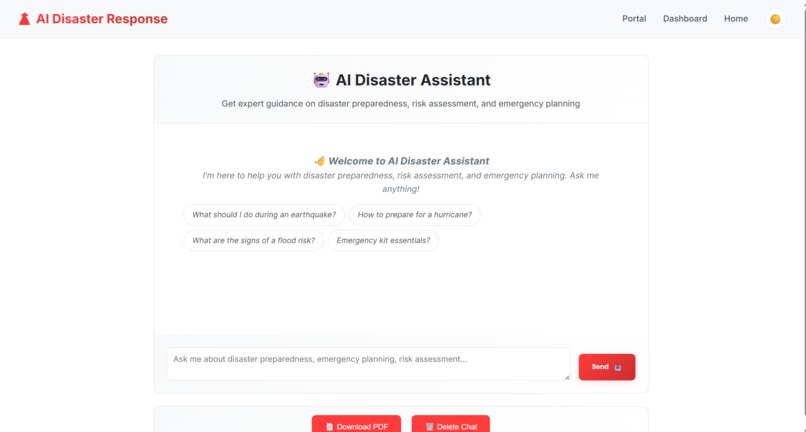
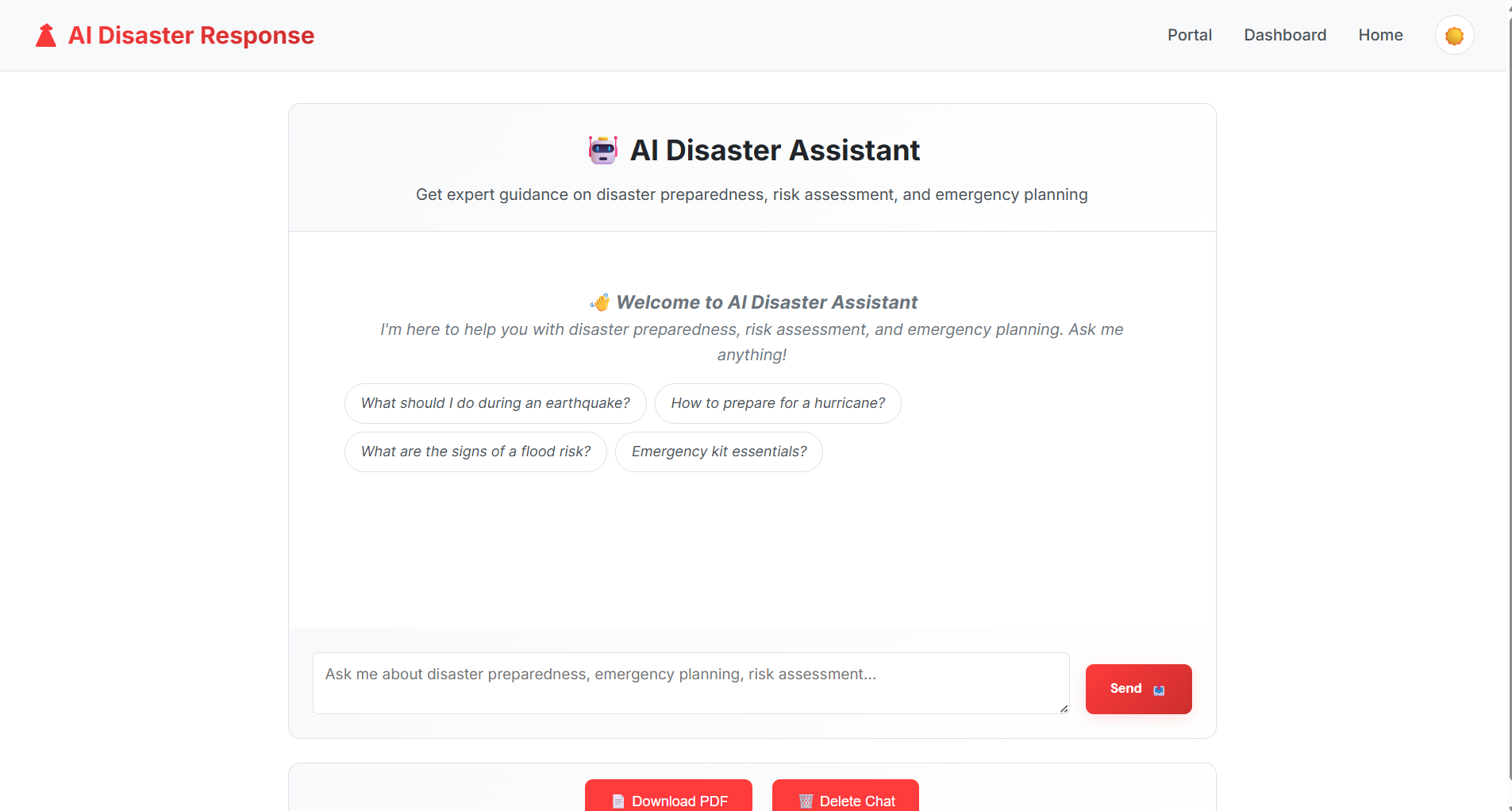
Ai Chat
-
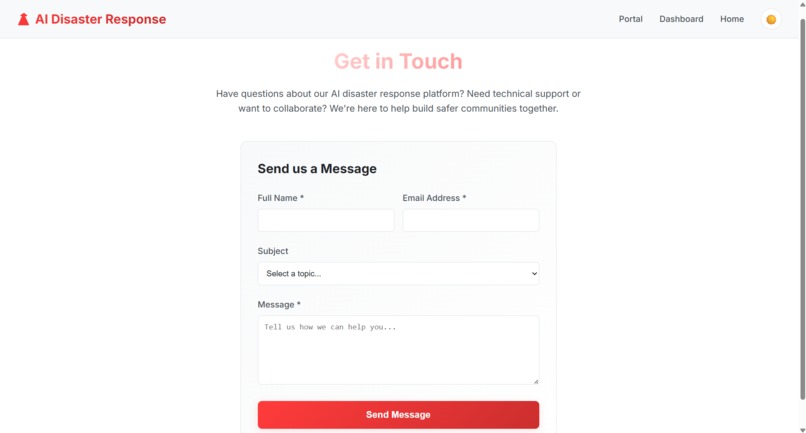
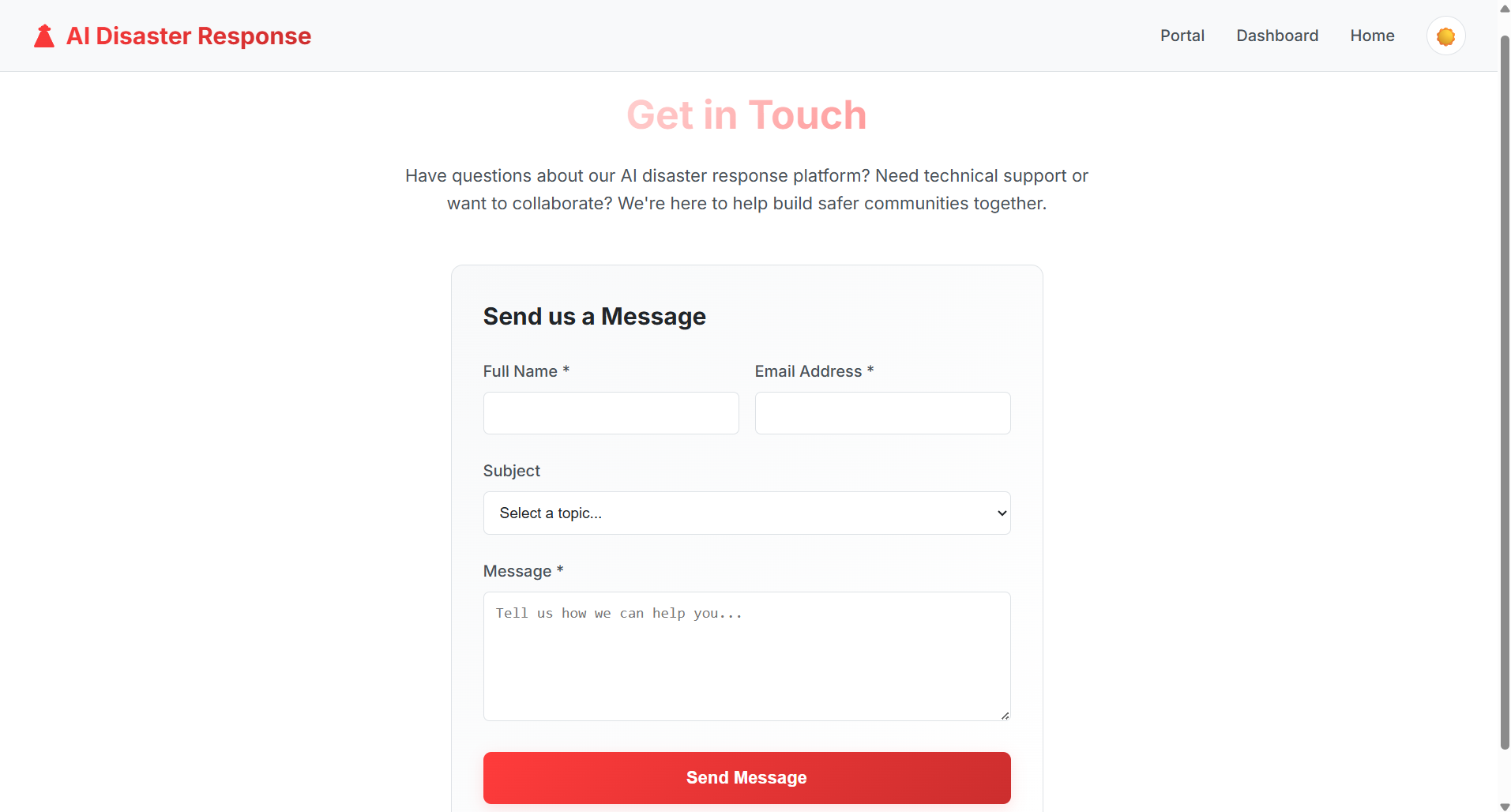
Contact Us
-
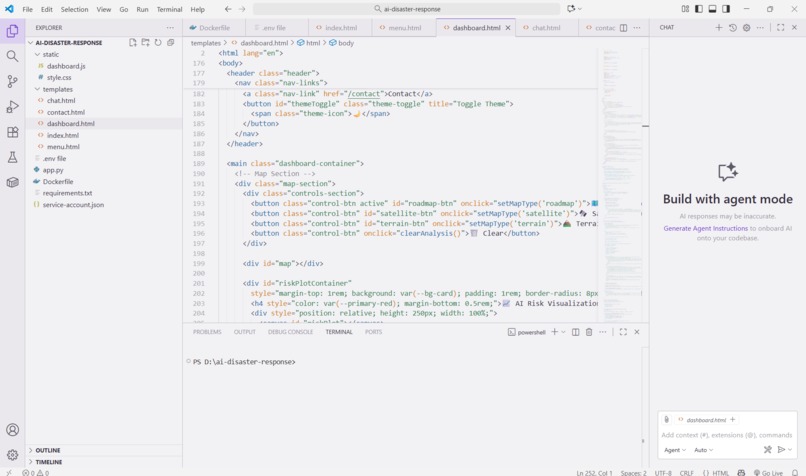
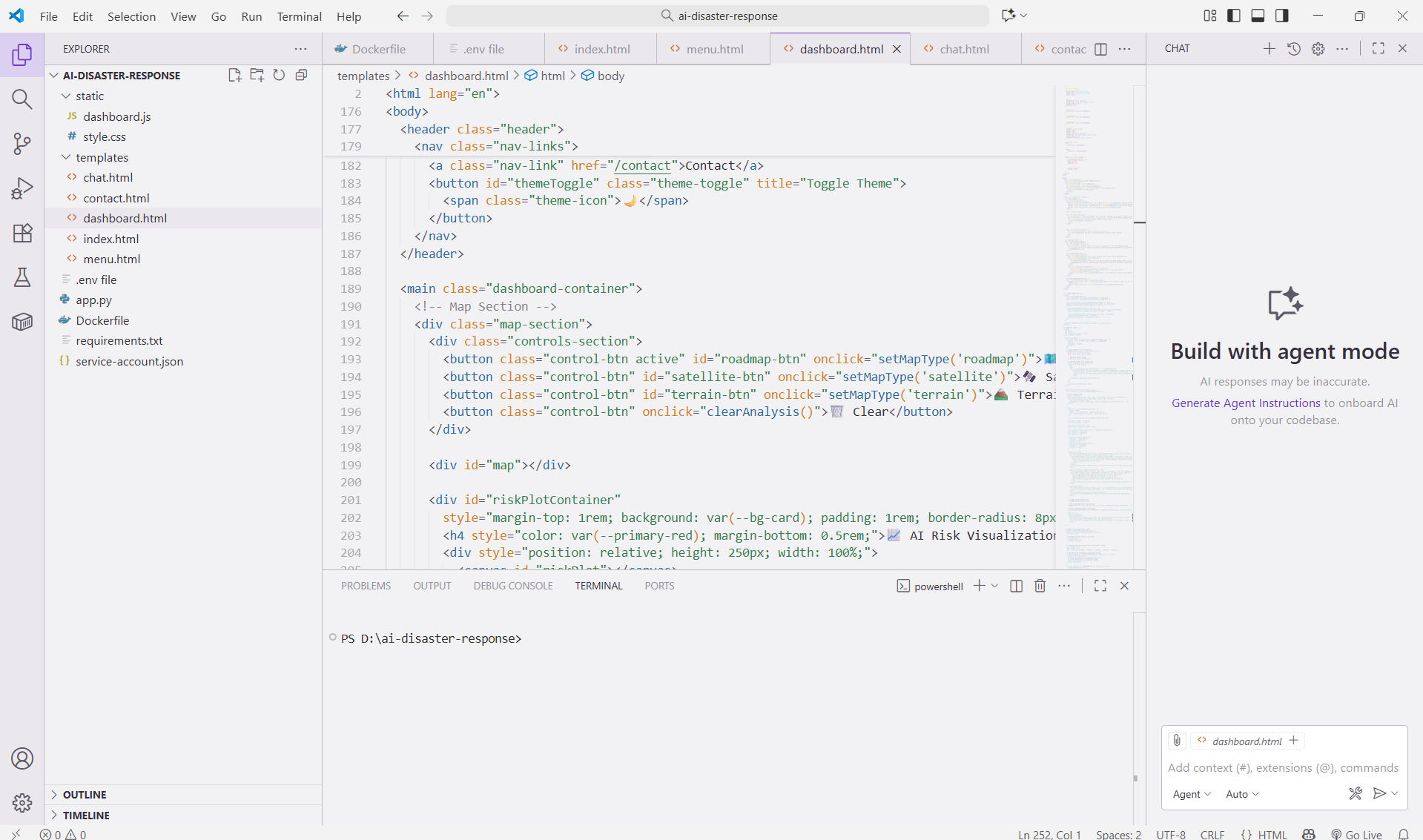
Code
-
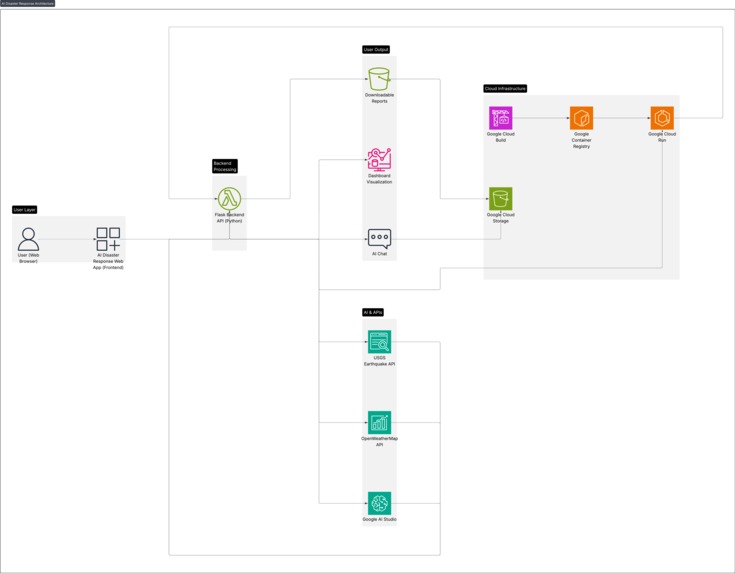

Architecture Diagram
Inspiration
Natural disasters are becoming increasingly unpredictable due to climate change. We wanted to create an AI-powered platform that helps authorities and citizens anticipate risks early — by combining real-time environmental data with AI-driven insights.
What it does
AI Disaster Response is an interactive web application that: 1.Collects real-time weather and seismic data from trusted public APIs. 2.Analyzes risk levels using an AI-powered model (Google AI Studio). 3.Generates visual plots and downloadable reports. 4.Provides an AI chat assistant for personalized recommendations. 5.Stores user chat sessions securely in Google Cloud Storage.
How we built it
1. Frontend: HTML, CSS, JavaScript (interactive dashboard and Google Maps). 2. Backend: Python Flask app hosted on Google Cloud Run. 3. Storage: Google Cloud Storage for reports and chat logs. 4. Data Sources: OpenWeatherMap API, USGS Earthquake API. 5. AI Integration: Google AI Studio for generating disaster analysis and insights. 6. Containerization & Deployment: Built and deployed using Google Cloud Build and Container Registry.
Challenges we ran into
1.Integrating multiple APIs in real time while maintaining low latency. 2.Managing authentication securely without exposing API keys. 3.Displaying dynamic plots and interactive elements below the map. 4.Ensuring smooth communication between the AI model and backend.
Accomplishments that we're proud of
1.Built a full-stack, cloud-hosted AI platform from scratch. 2.Successfully deployed using Google Cloud Run. 3.Integrated real-time APIs and AI insights in one seamless UI. 4.Enabled report generation, visualization, and secure data storage.
What we learned
1.End-to-end deployment pipelines using Google Cloud Build and Run. 2.Secure handling of API keys and environment variables. 3.Practical AI integration using Google AI Studio. 4.Designing user-friendly dashboards for data visualization.
What's next for AI Disaster Response Platform
1.Integrating Gemini or Gemma AI for advanced predictive modeling. 2.Expanding to include wildfire and flood data analysis. 3.Building a mobile-friendly version for rapid field response. 4.Adding real-time alert notifications and multilingual support.
Built With
- css
- flask
- gemini
- google-ai-studio
- google-cloud
- google-cloud-build
- google-cloud-run
- html
- javascript
- openweathermap-api
- python
- usgs-earthquake-api


Log in or sign up for Devpost to join the conversation.