-
-
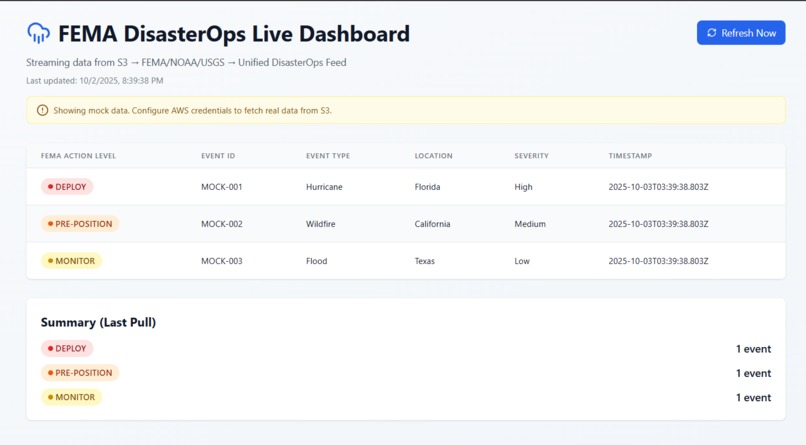
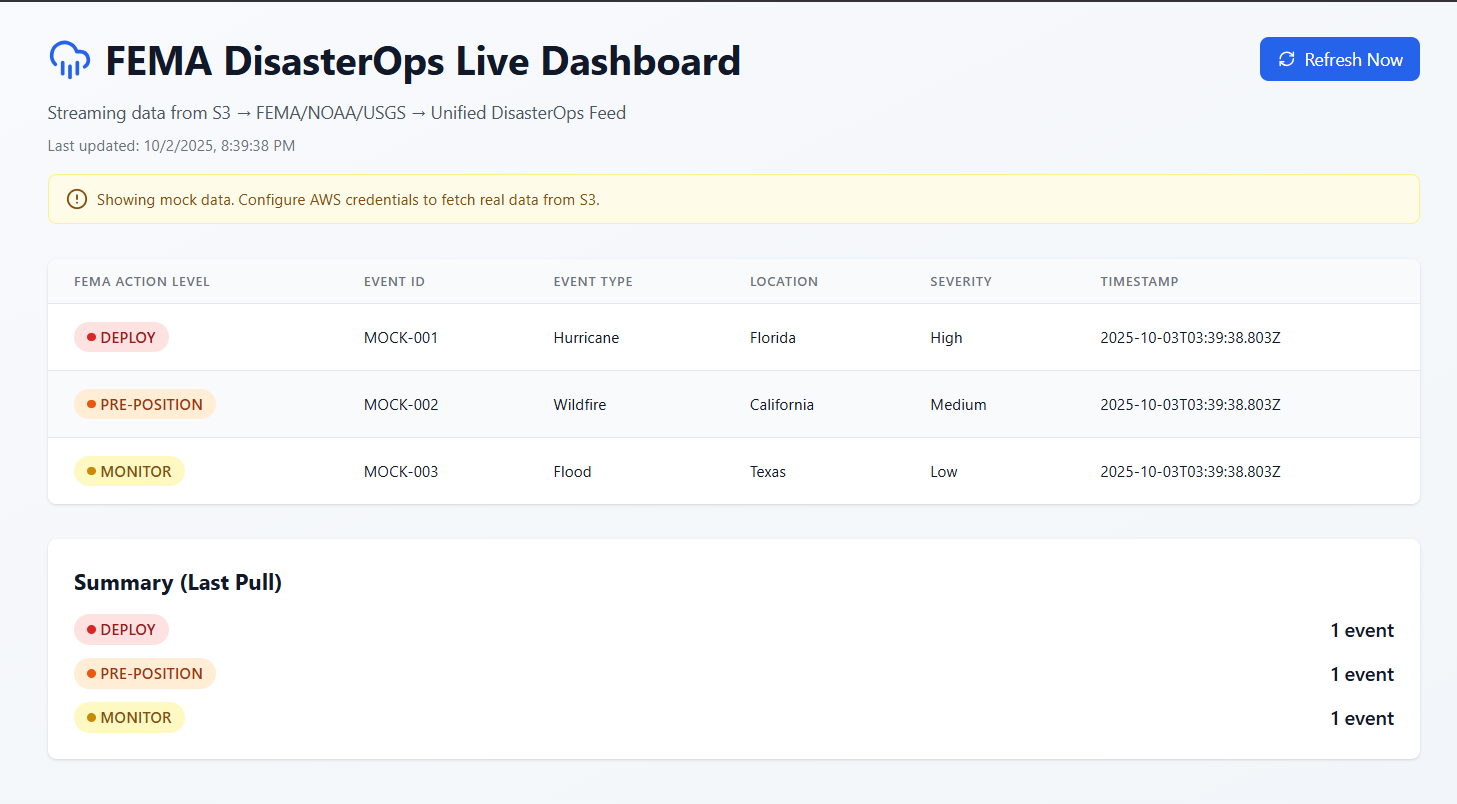
dashboard
-
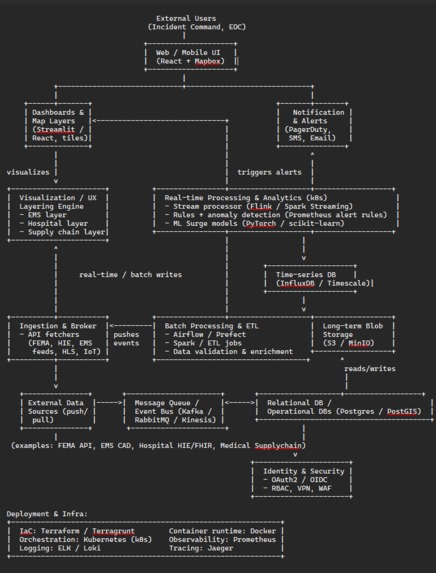
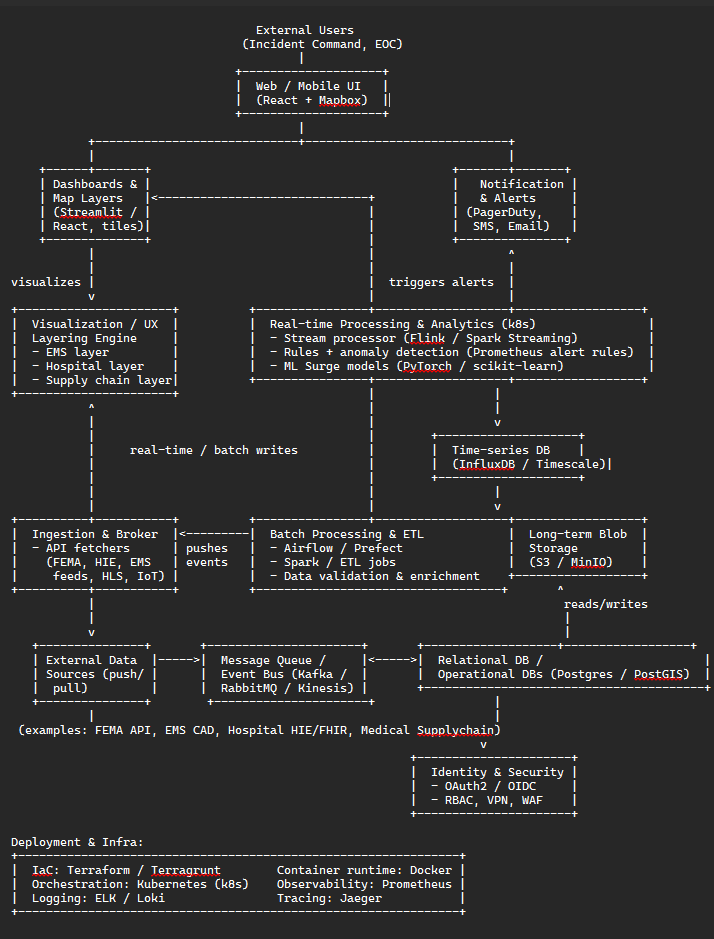
architecture
-
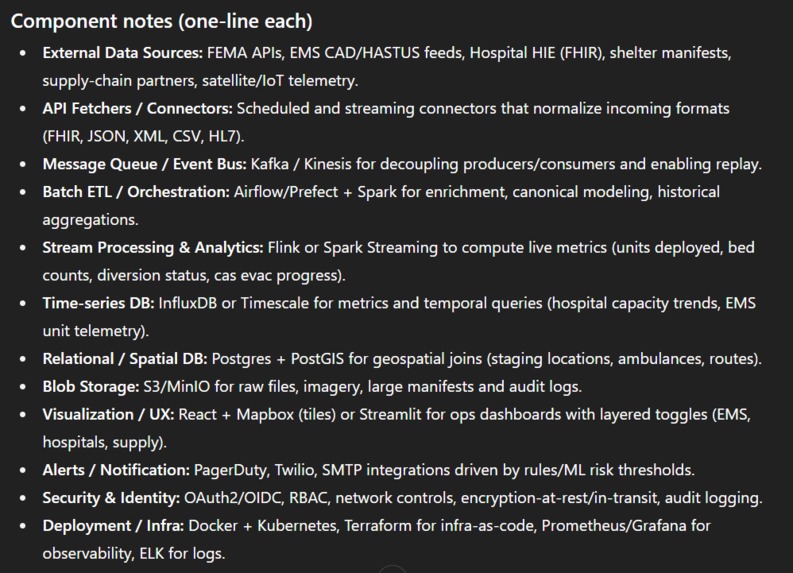
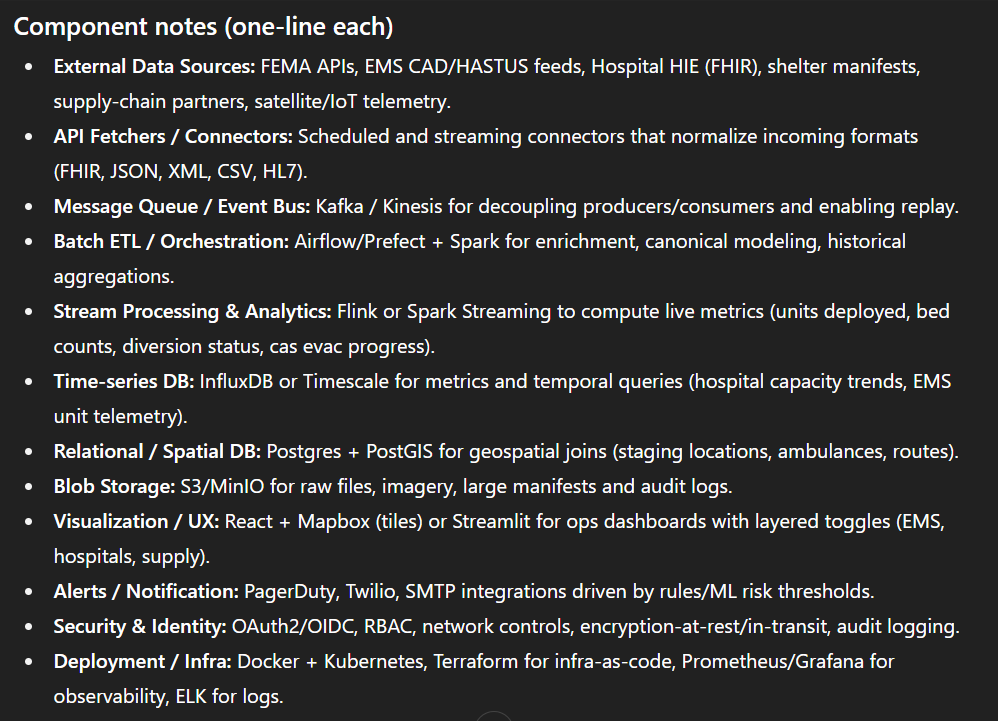
architecture notes
-
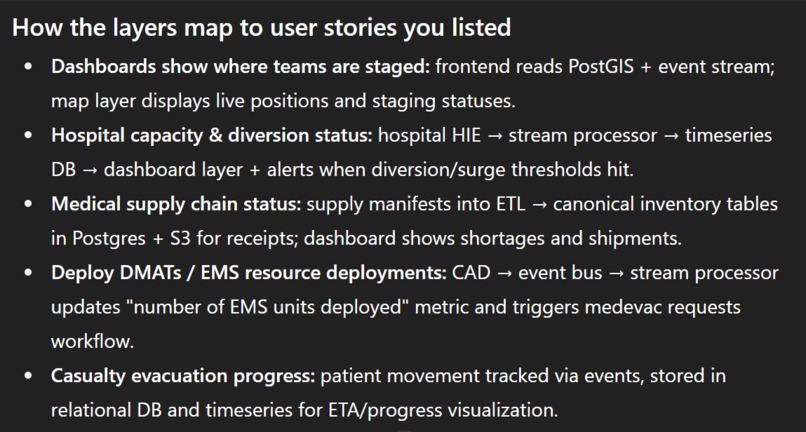
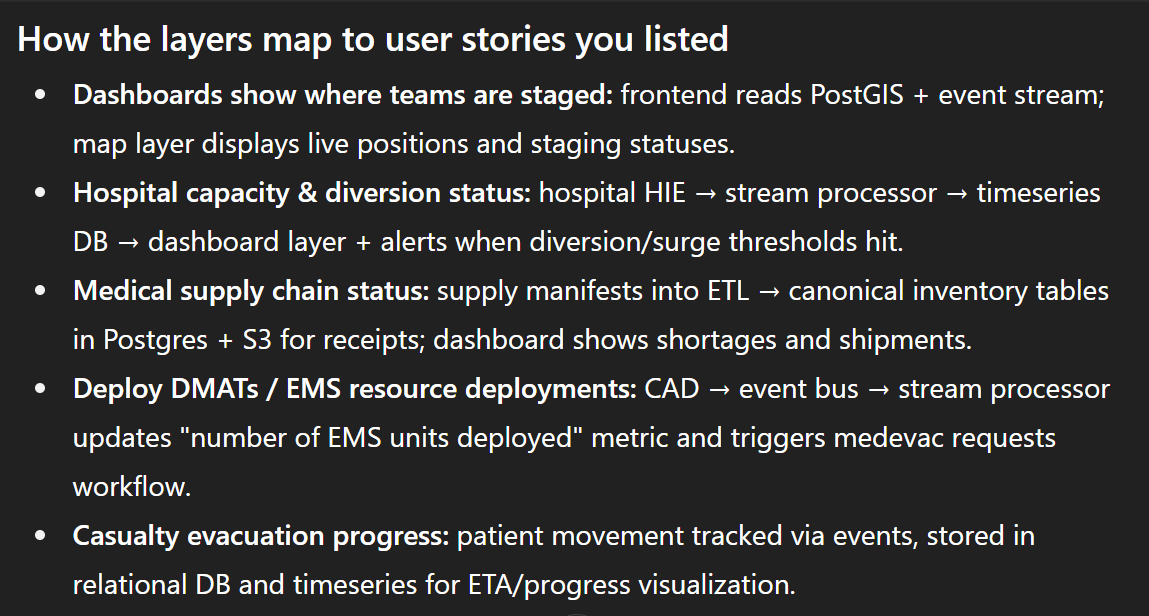
architecture layers
Inspiration
When disaster strikes—wildfires, floods, earthquakes—response teams are often overwhelmed by fragmented data and slow coordination. Inspired by how NASA Earth-observation satellites and autonomous AI agents can process massive, real-time information streams, we wanted to build something that helps responders act faster, with fewer bottlenecks, and ultimately save lives.
What it does
• Pulls in live NASA satellite feeds (fires, floods, droughts, air quality) • Fuses them with local sensor data (air quality, soil moisture, flood gauges) • Uses an autonomous Bedrock AgentCore + SageMaker model to detect anomalies and risks • Runs reasoning steps via AWS Nova reasoning LLMs to decide on next best actions • Pushes alerts to first responders via SNS and triggers remediation workflows with Lambda • Stores reports in S3 for agency dashboards, so data is transparent and sharable The agent can operate with or without human intervention—autonomously triggering workflows (like resource reallocation or evacuation alerts) when thresholds are exceeded.
How we built it
• AWS Bedrock AgentCore & Nova → orchestrating reasoning and decision making • Amazon SageMaker → training anomaly detection on simulated disaster sensor data • AWS Lambda + SNS → event-driven alerts and automated remediation actions • Amazon S3 → centralized storage for models, incoming data, and structured reports • Terraform → one-click deployment of all infrastructure (IAM roles, S3, Lambda, SageMaker endpoint, SNS topics) • Synthetic datasets → designed for anomalies in ICU beds, floods, and wildfire conditions for rapid prototyping
Challenges we ran into
• Normalizing different data formats (satellite images, CSV sensor data, real-time streams) • Making the system autonomous but still safe—balancing automation vs. human oversight • Long SageMaker training/deployment times when iterating during the hackathon • IAM permissions for Bedrock & SageMaker endpoints required a lot of fine-tuning • Ensuring Terraform reliably waits for training jobs before endpoint provisioning
Accomplishments that we're proud of
• A fully autonomous agent pipeline—from ingest to decision to remediation—stood up in < 24 hours • Infrastructure-as-code: one Terraform apply spins up S3, IAM, SageMaker training, model endpoints, Lambda, and SNS alerts • Built a multimodal analyzer (tabular + imagery + sensor data) that extends easily to real-world disaster datasets • Demonstrated how AWS Bedrock Agents + SageMaker can work hand-in-hand for operational autonomy
What we learned
• How to combine reasoning LLMs with structured ML models in a single workflow • Best practices for deploying SageMaker endpoints via Terraform (with training-job polling) • Designing synthetic but realistic datasets for anomaly detection • The power of autonomous agents in mission-critical disaster response scenarios
What's next for AI Disaster Response Agent (Autonomous Ops)
This platform has strong potential for expansion into a comprehensive operational picture for disaster medical response. Beyond real-time dashboards, it can evolve to include critical situational layers such as: Team Staging & Deployment: Visualizing where Disaster Medical Assistance Teams (DMATs) and other field medical resources are currently positioned or en route. Hospital & Facility Capacity: Tracking hospital diversion status, surge capacity, and real-time availability of ICU beds, trauma units, and specialty care. Medical Supply Chain Monitoring: Displaying inventory levels and requests for oxygen supplies, ventilators, PPE, and pharmaceuticals, along with shipment progress. EMS Taskings & Resource Needs: Showing active and pending EMS requests (ambulances, medevac assets), the number of units deployed, and unmet needs. Casualty & Evacuation Tracking: Monitoring casualty movement, evacuation progress, and shelter medical requirements to better allocate transport and care resources. By integrating these layers into one unified view, decision-makers gain not only situational awareness but also predictive insight into medical surge requirements, resource bottlenecks, and response effectiveness. This creates a scalable framework that supports local incidents while being adaptable for national-level disaster response coordination. • Integrate real-time NASA MODIS/VIIRS feeds for wildfire and flood detection • Connect to FEMA and Red Cross APIs for immediate relief coordination • Add drone + IoT integration for on-the-ground situational awareness • Build a human-in-the-loop dashboard for oversight and intervention • Extend beyond healthcare to agriculture (drought), transportation (evacuation routes), and utilities (power outages)

Log in or sign up for Devpost to join the conversation.