-
-
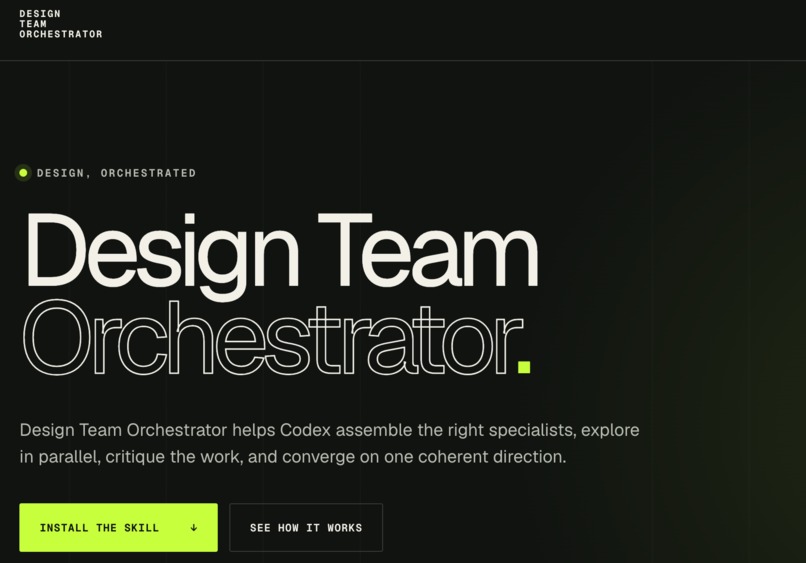
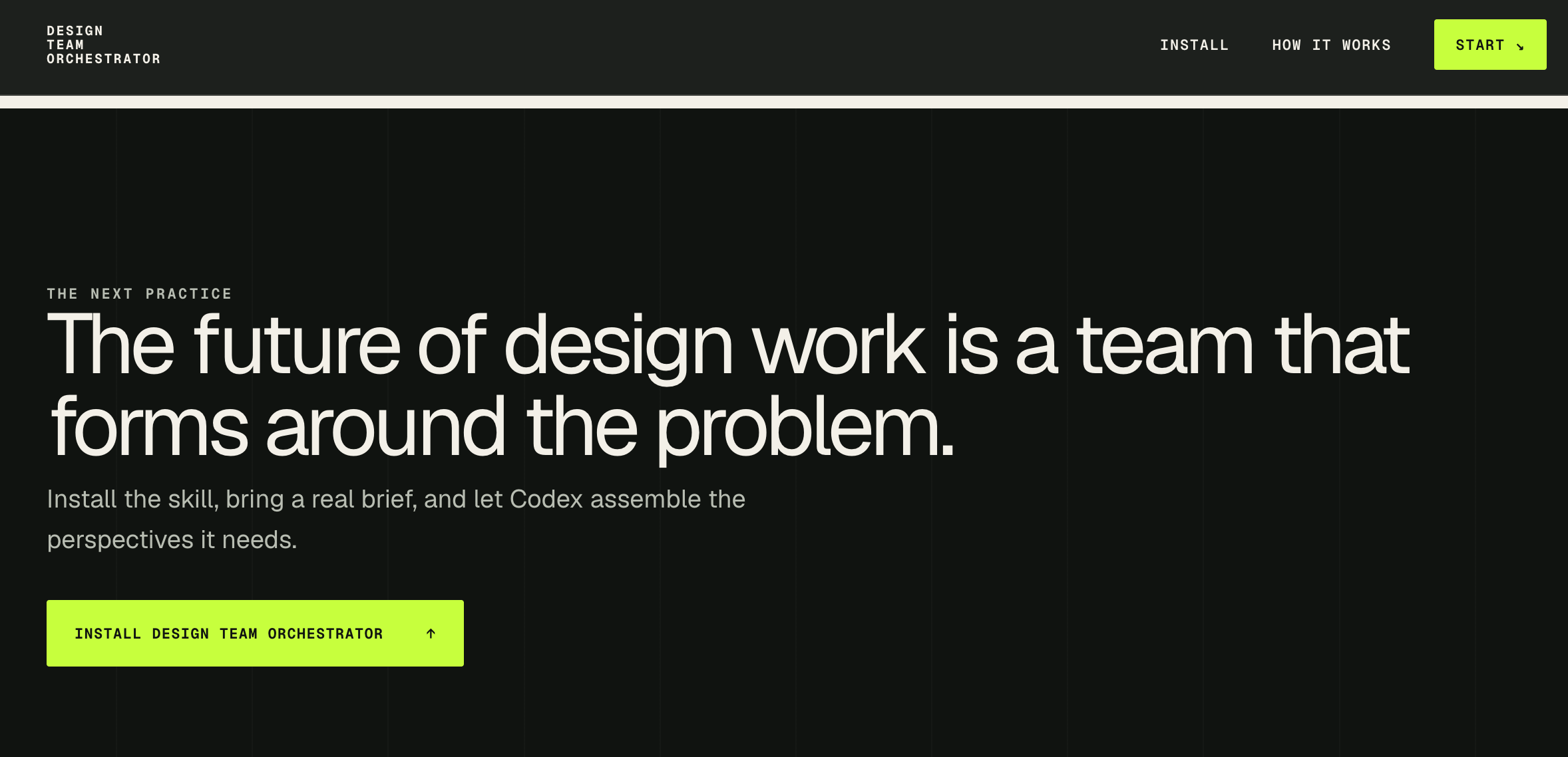
Design Team Orchestration
-
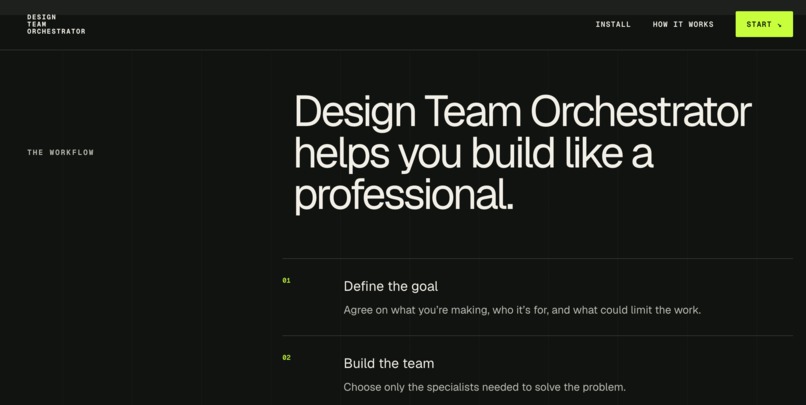
Design team Orchestrator
-
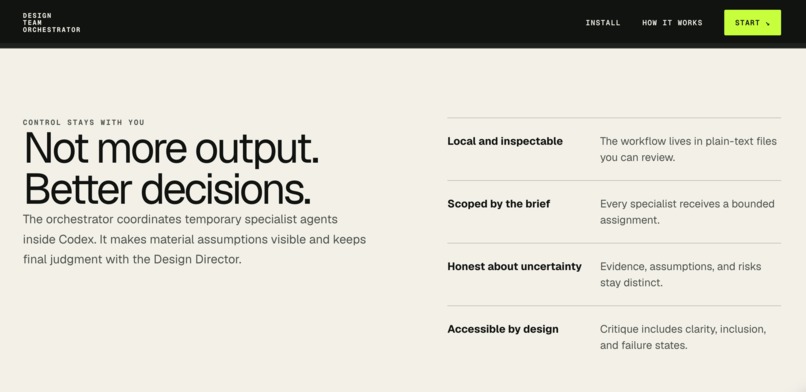
Better Decisions
-
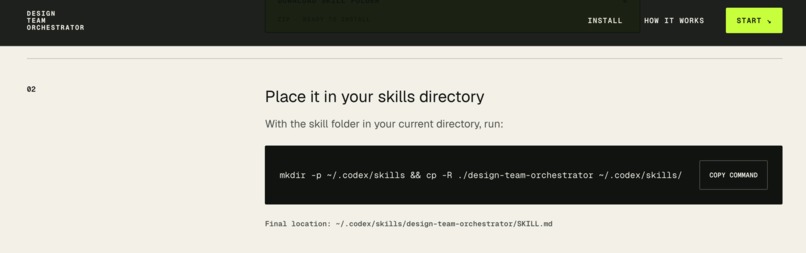
Download
-
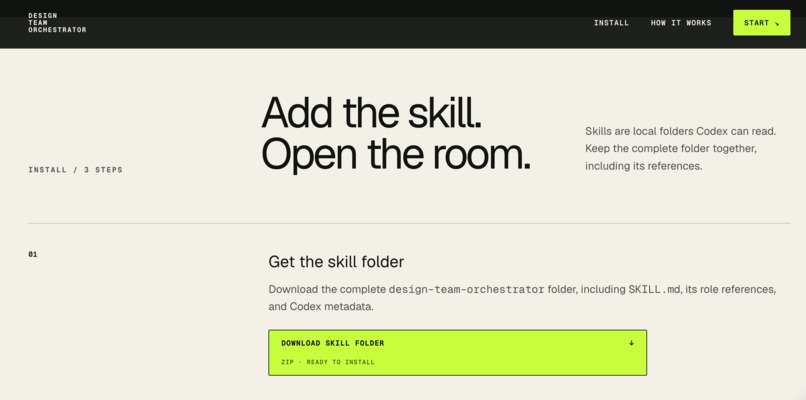
Add the skill
-
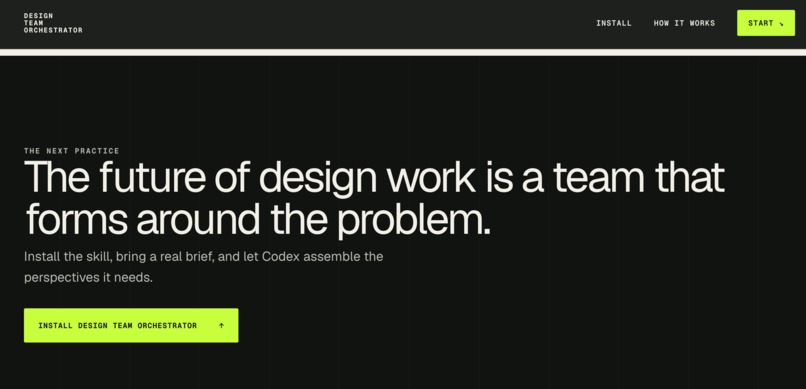
The Future of Design
-
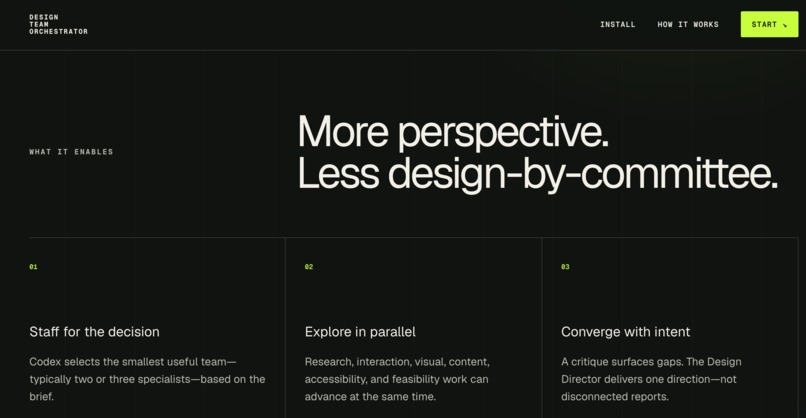
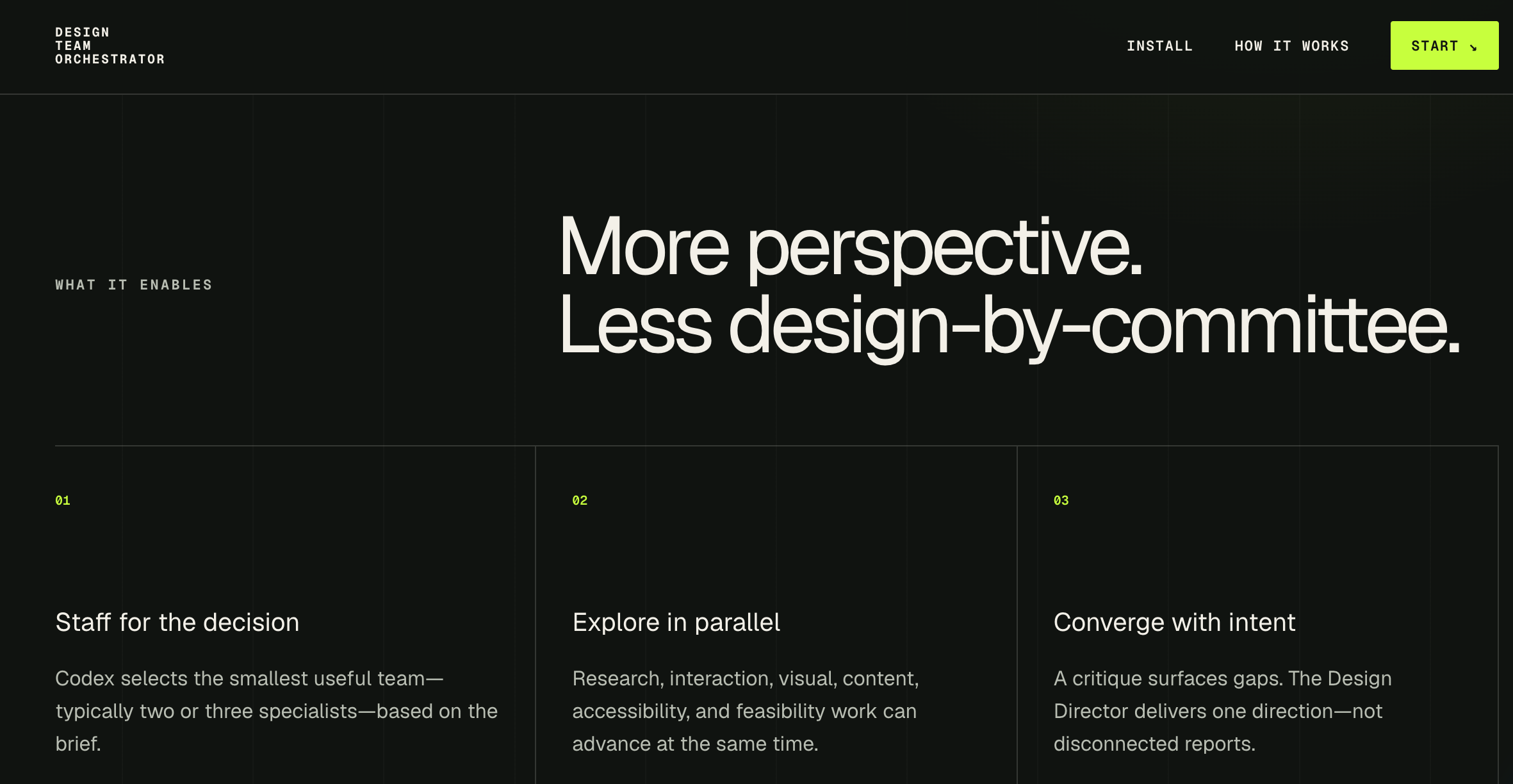
More Persepctive
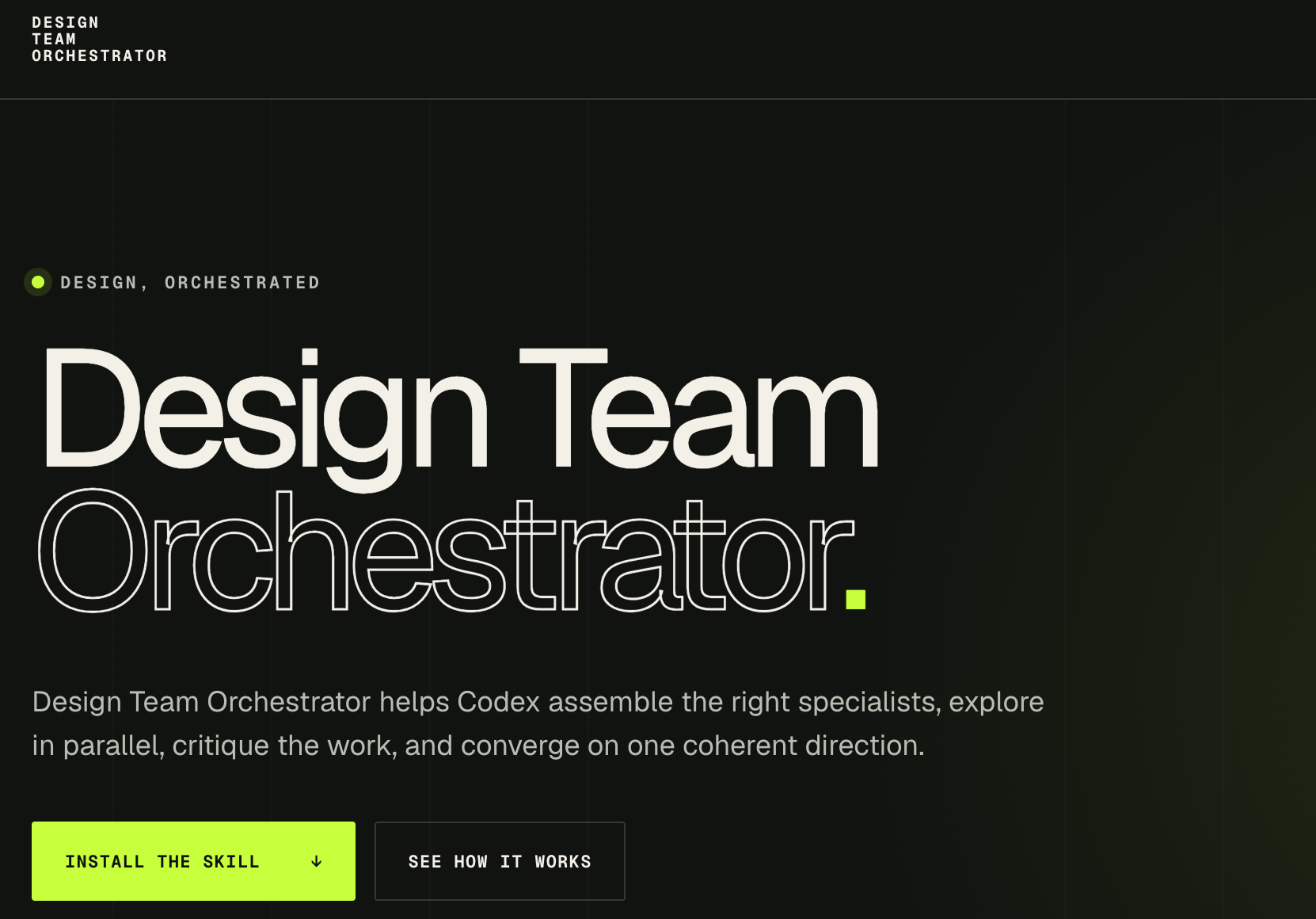
About the Project
Inspiration
This project was inspired by my experience building a design team using agent spawning with Clawbot. Seeing multiple AI agents contribute different skills and perspectives showed me that AI can be more than a single assistant—it can become a coordinated team.
That experience made me interested in building more specialized AI teams for design, research, development, content, accessibility, and other creative workflows.
What I Built
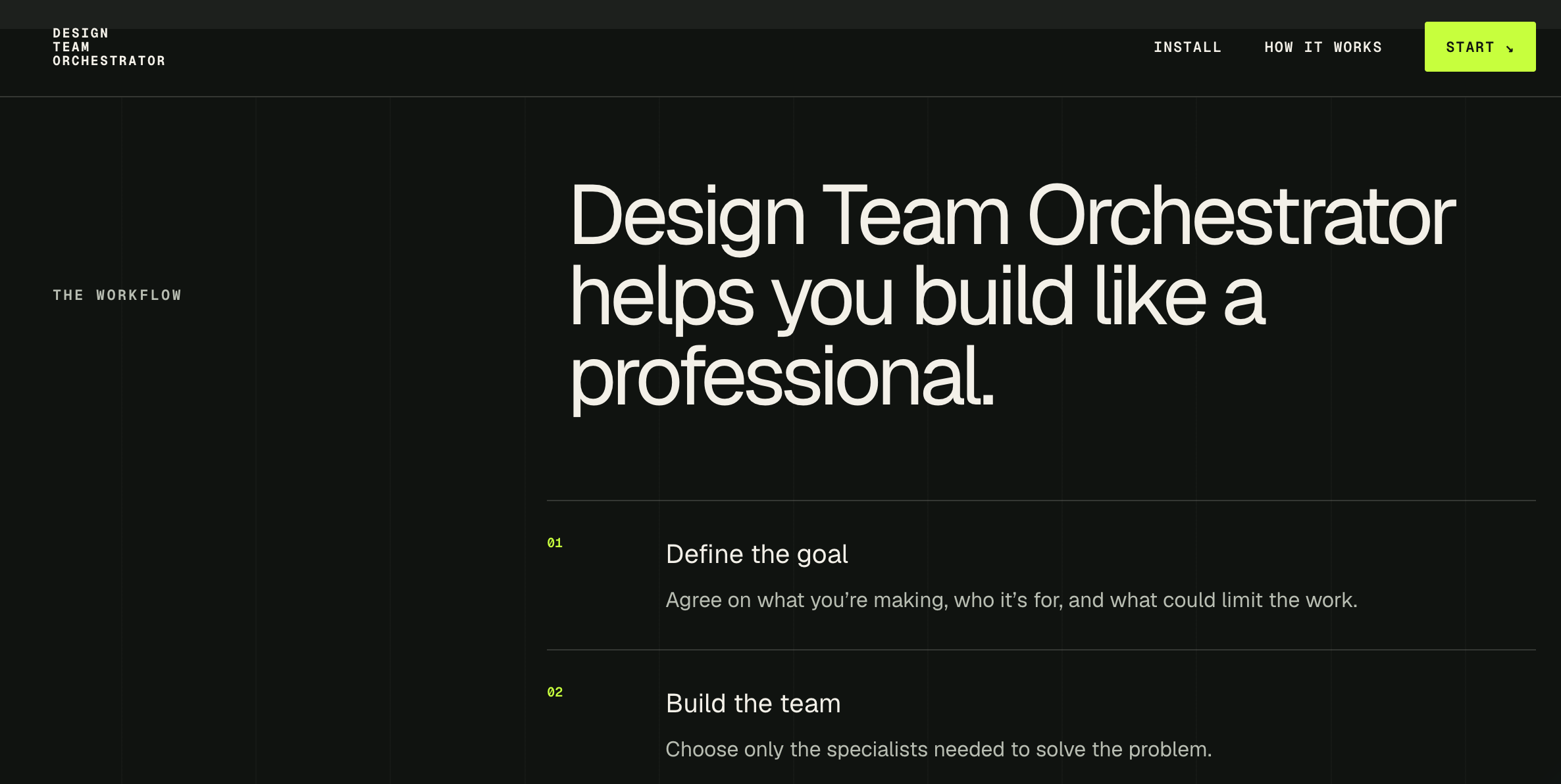
I built Design Team Orchestrator, a system that forms a temporary team of specialized AI design agents around a single project brief.
A Design Director coordinates specialists such as:
- Visual designers
- Content designers
- Interaction designers
- Accessibility reviewers
- Design engineers
Each agent receives a focused responsibility. Their findings are then reviewed and synthesized into one coherent recommendation or artifact instead of a collection of disconnected responses.
How I Built It I created an orchestration workflow that:
- Interprets the project brief and identifies the desired outcome.
- Selects the smallest useful team of specialists.
- Spawns agents with clearly defined roles and assignments.
- Allows independent work to happen in parallel.
- Critiques the results for clarity, accessibility, feasibility, and consistency.
- Combines the strongest ideas into one final direction.
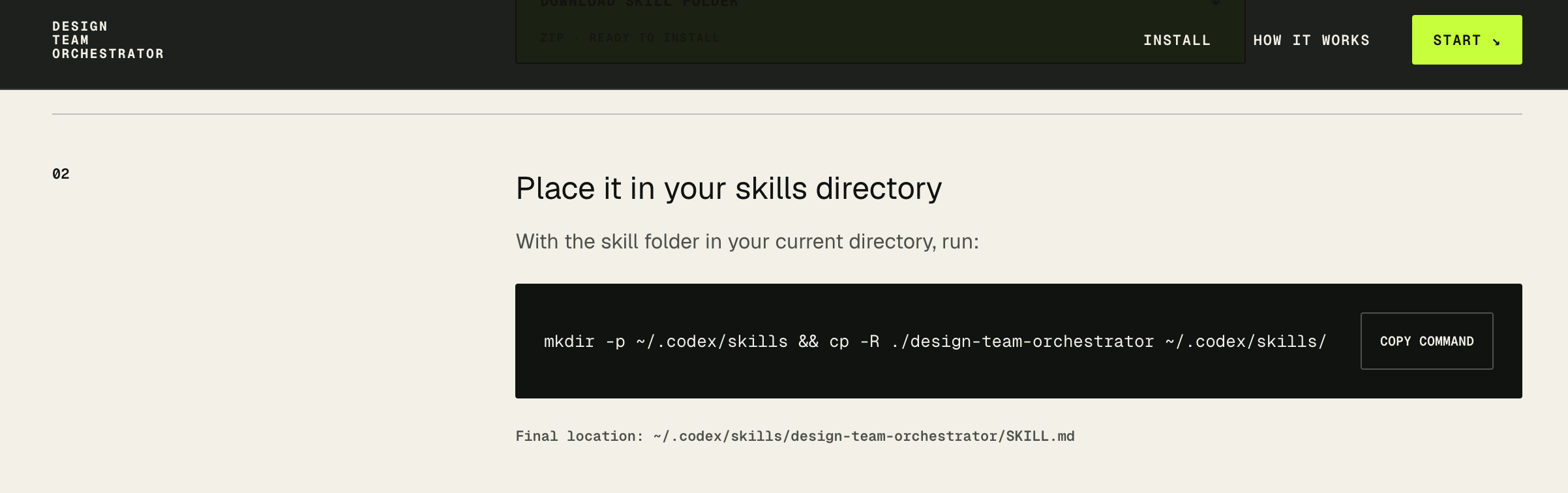
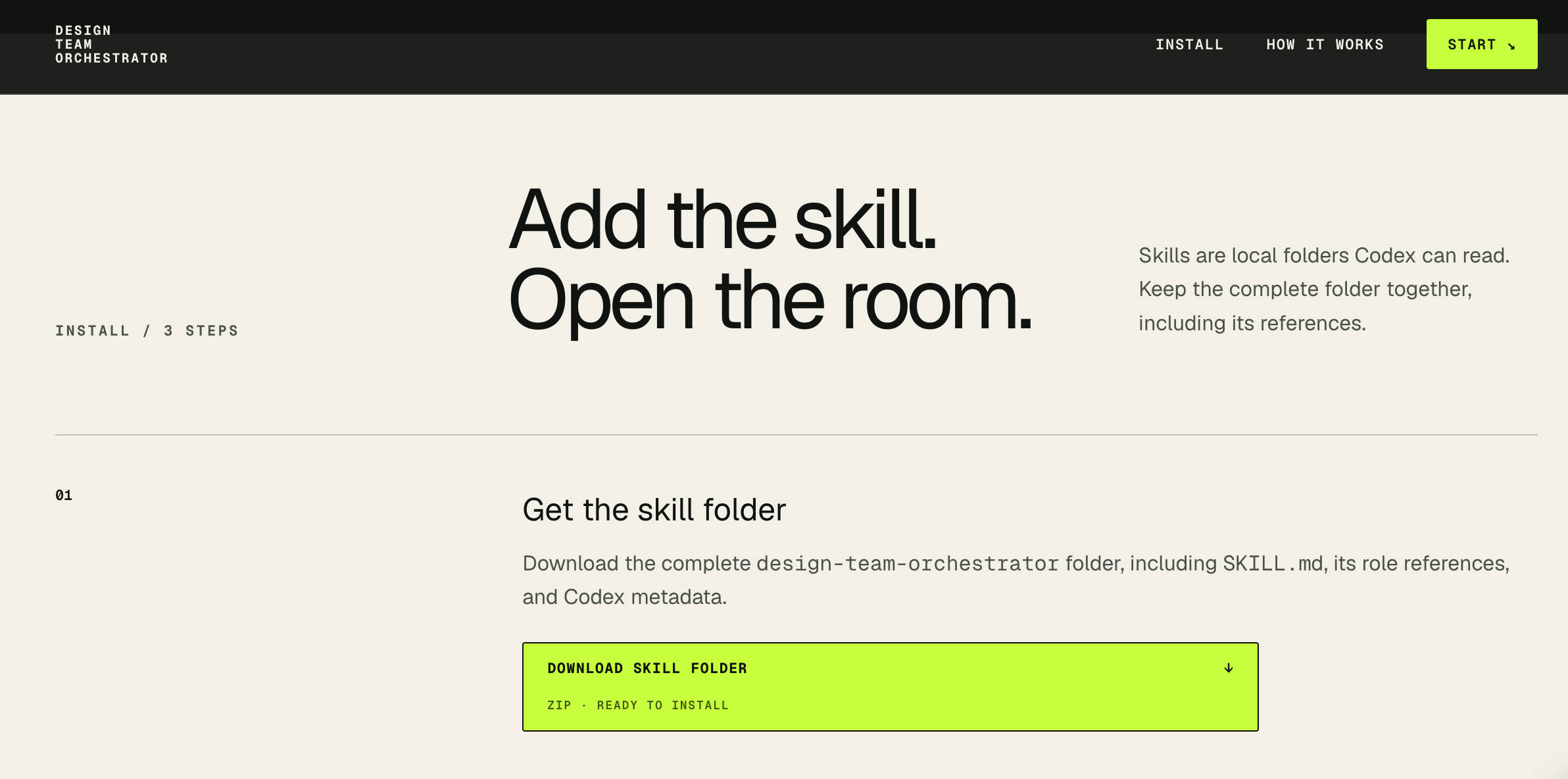
I also built a website that explains the project, its workflow, and how people can install and use the orchestrator as a Codex skill.
What I Learned
I learned that successful multi-agent systems depend on more than spawning several agents. Each agent needs:
- A clear role
- A bounded assignment
- Enough context to work independently
- Explicit ownership of a decision
- A shared quality standard
I also learned that orchestration is just as important as generation. More agents do not automatically produce a better result. The system needs a strong director that can resolve conflicting recommendations, identify gaps, and keep the final output aligned with the original brief.
A useful way to express this is:
$$ \text{Team Value} \neq \text{Number of Agents} $$
Instead:
$$ \text{Team Value} = \text{Specialization} \times \text{Coordination} \times \text{Synthesis} $$
Challenges I Faced
One challenge was preventing the agents from producing overlapping or disconnected work. I addressed this by giving every specialist a specific question, clear constraints, and ownership of a particular design decision.
Another challenge was determining how many agents to use. Too few agents can limit the range of perspectives, while too many can add noise and complexity. The orchestrator therefore selects the smallest team that can effectively address the brief.
The final challenge was convergence. AI agents can generate many promising ideas, but someone still needs to evaluate the tradeoffs and choose a direction. The Design Director fills that role by treating agent feedback as evidence—not as a vote—and synthesizing it into one cohesive result.
What's Next
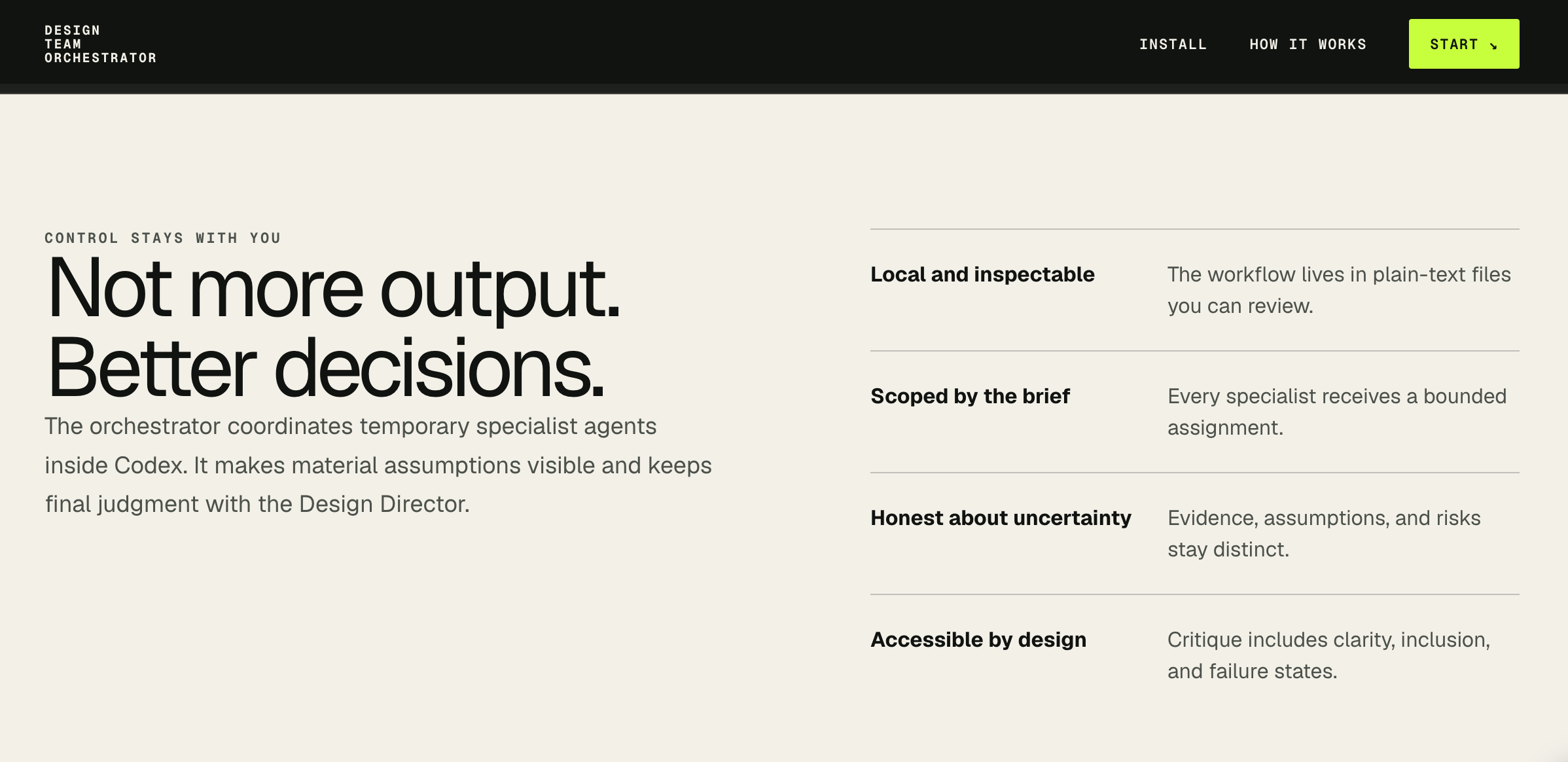
I want to continue exploring how AI teams can form dynamically around different problems. Design Team Orchestrator is a starting point for building specialized teams that combine human direction with AI collaboration.
My larger goal is to create AI teams that do not simply generate more output, but help people make better decisions and turn ambitious ideas into finished work._
Built With
- chatgpt5.6
- codex
- github
- imovie
- sol5.6

Log in or sign up for Devpost to join the conversation.