-
-
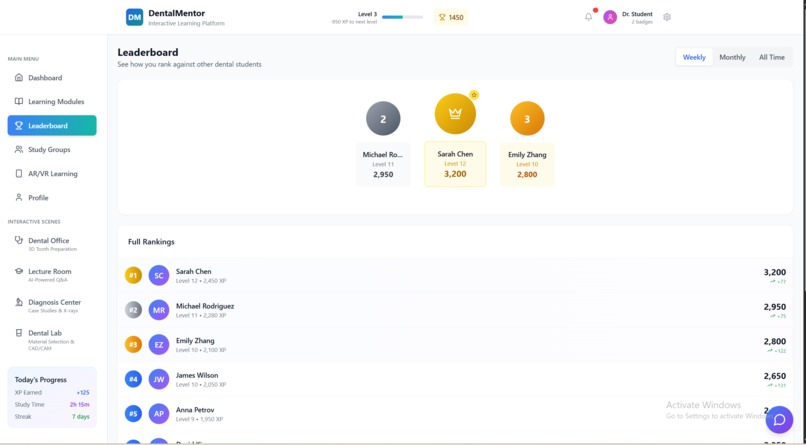
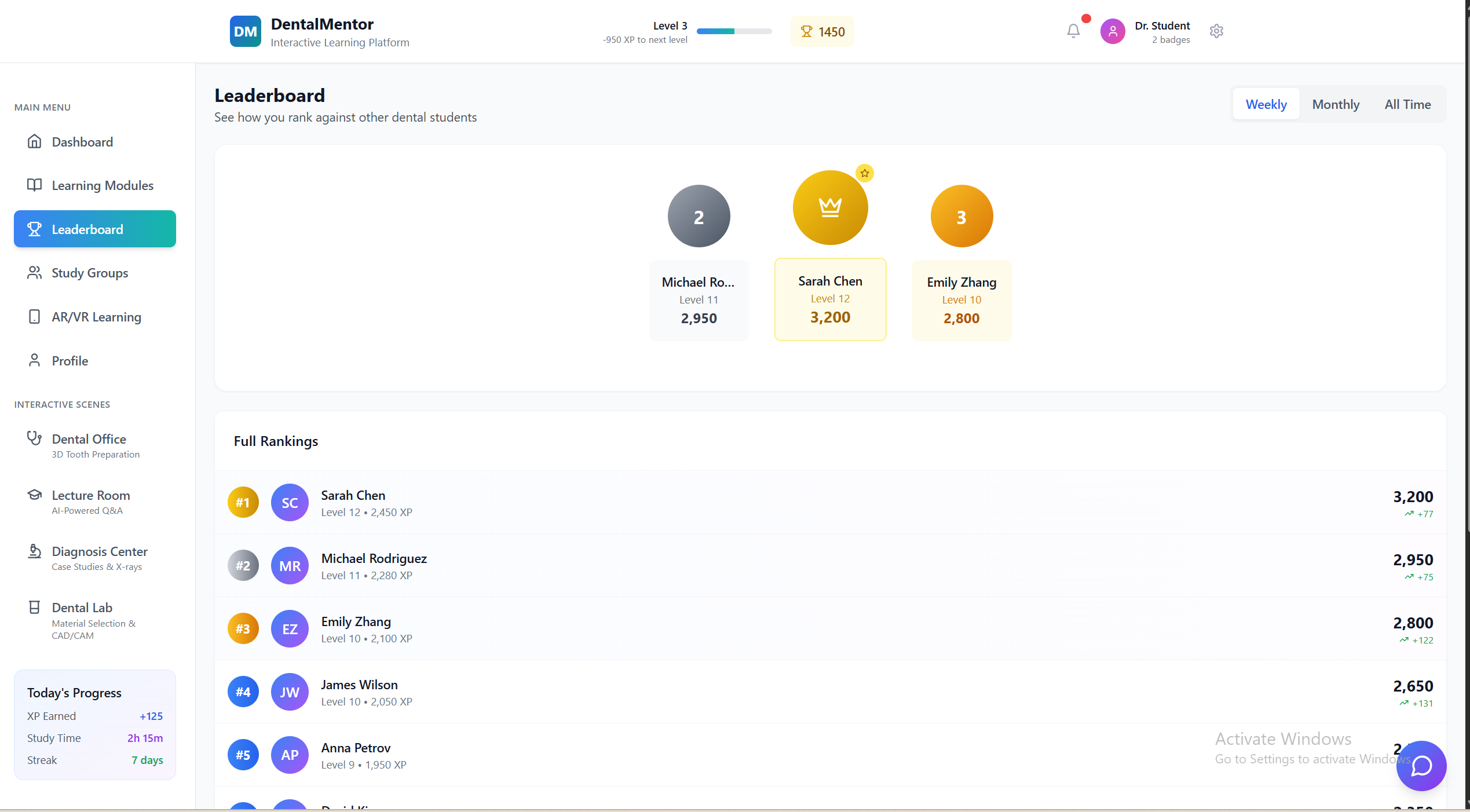
ladderboard
-
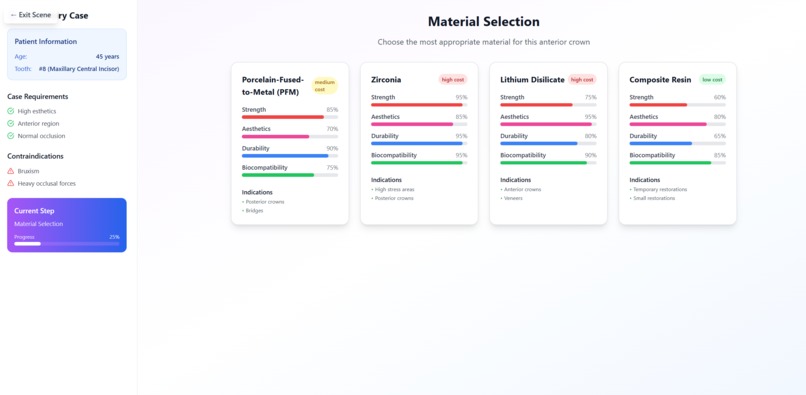
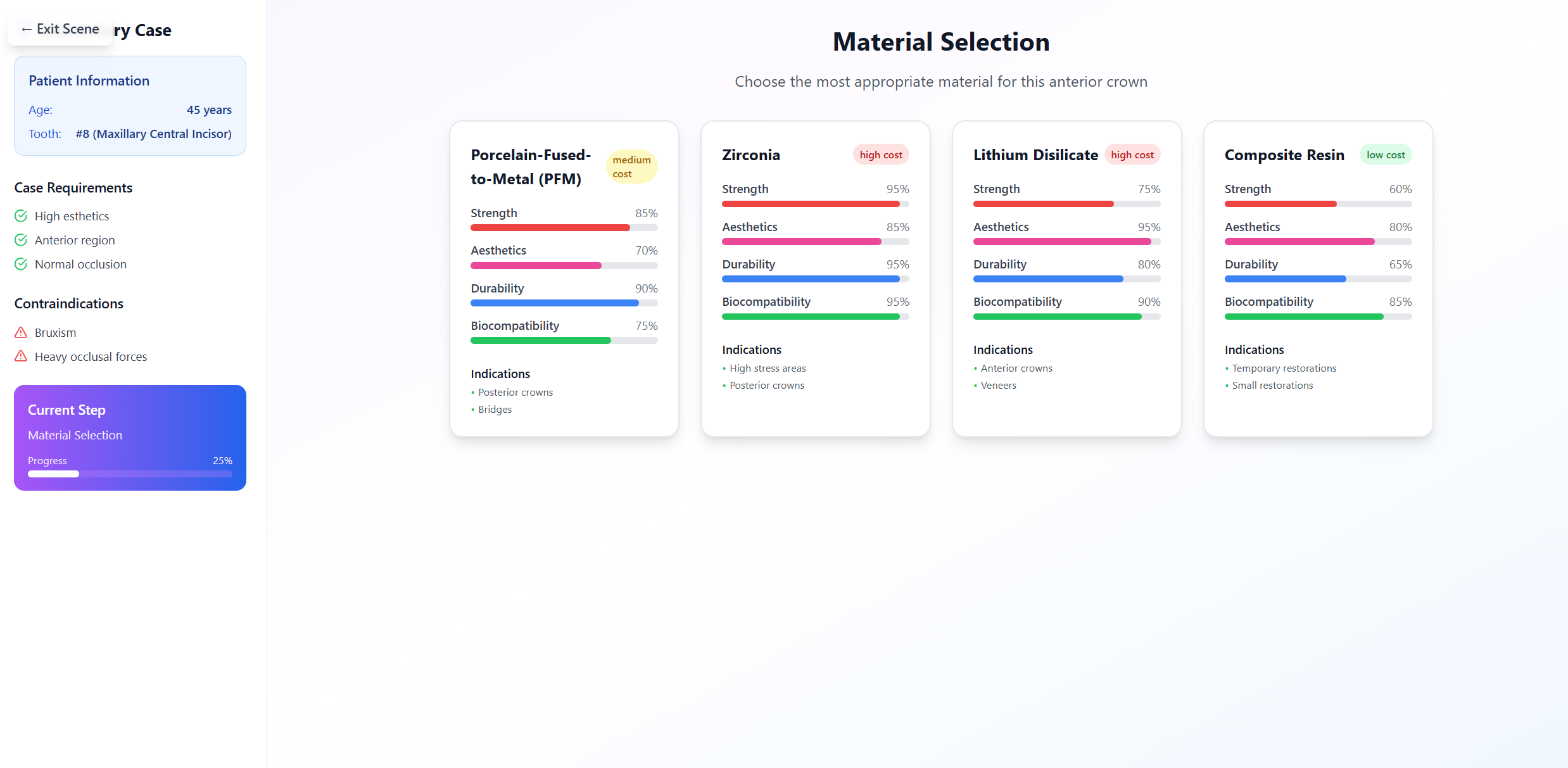
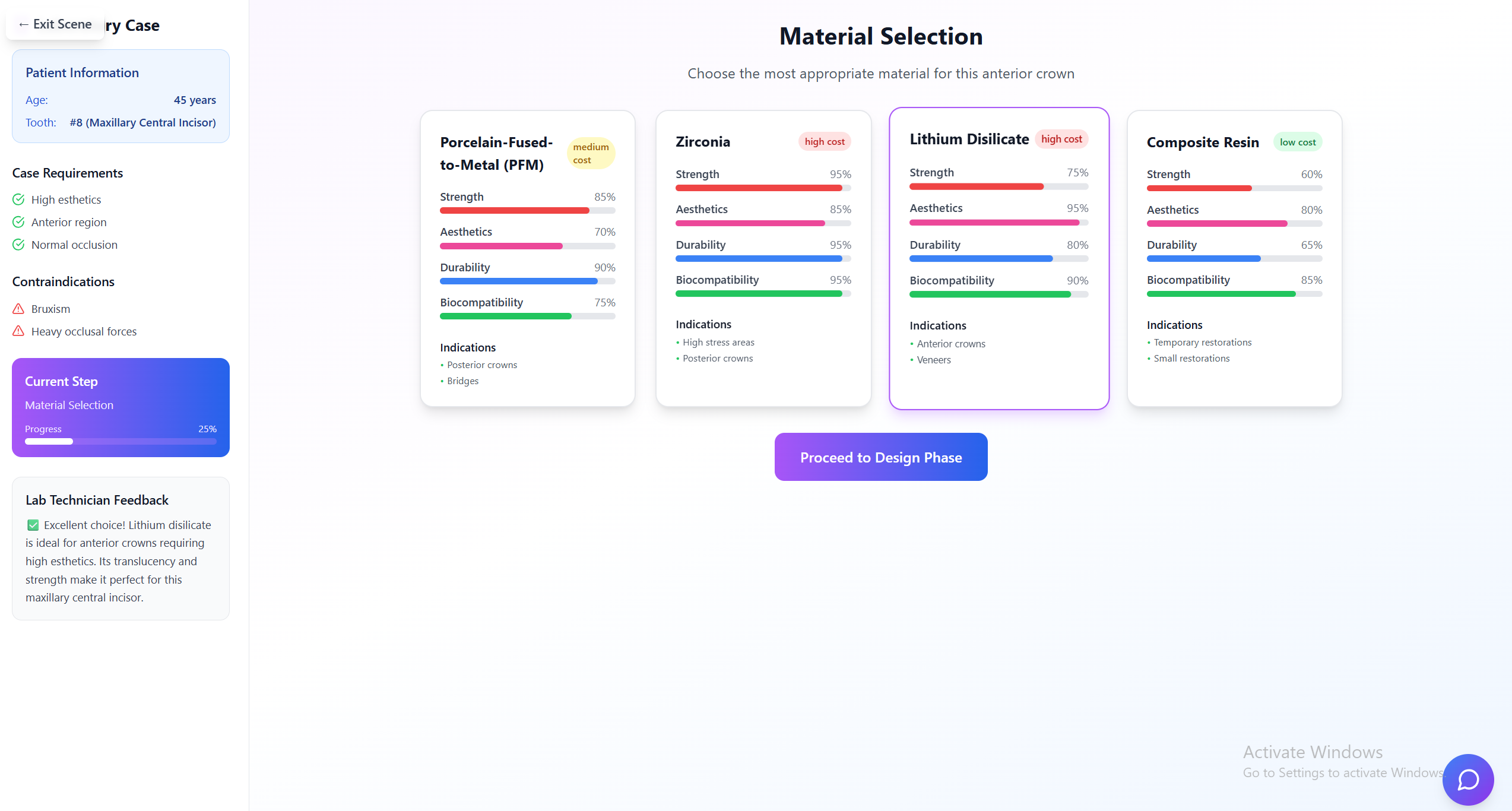
dental laboratory
-
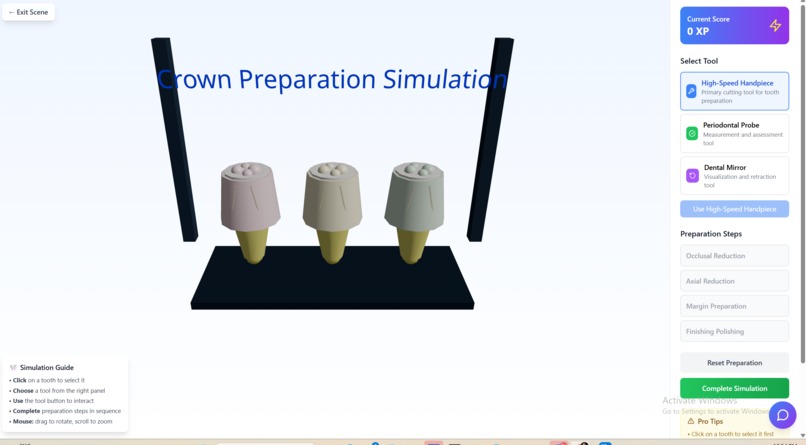
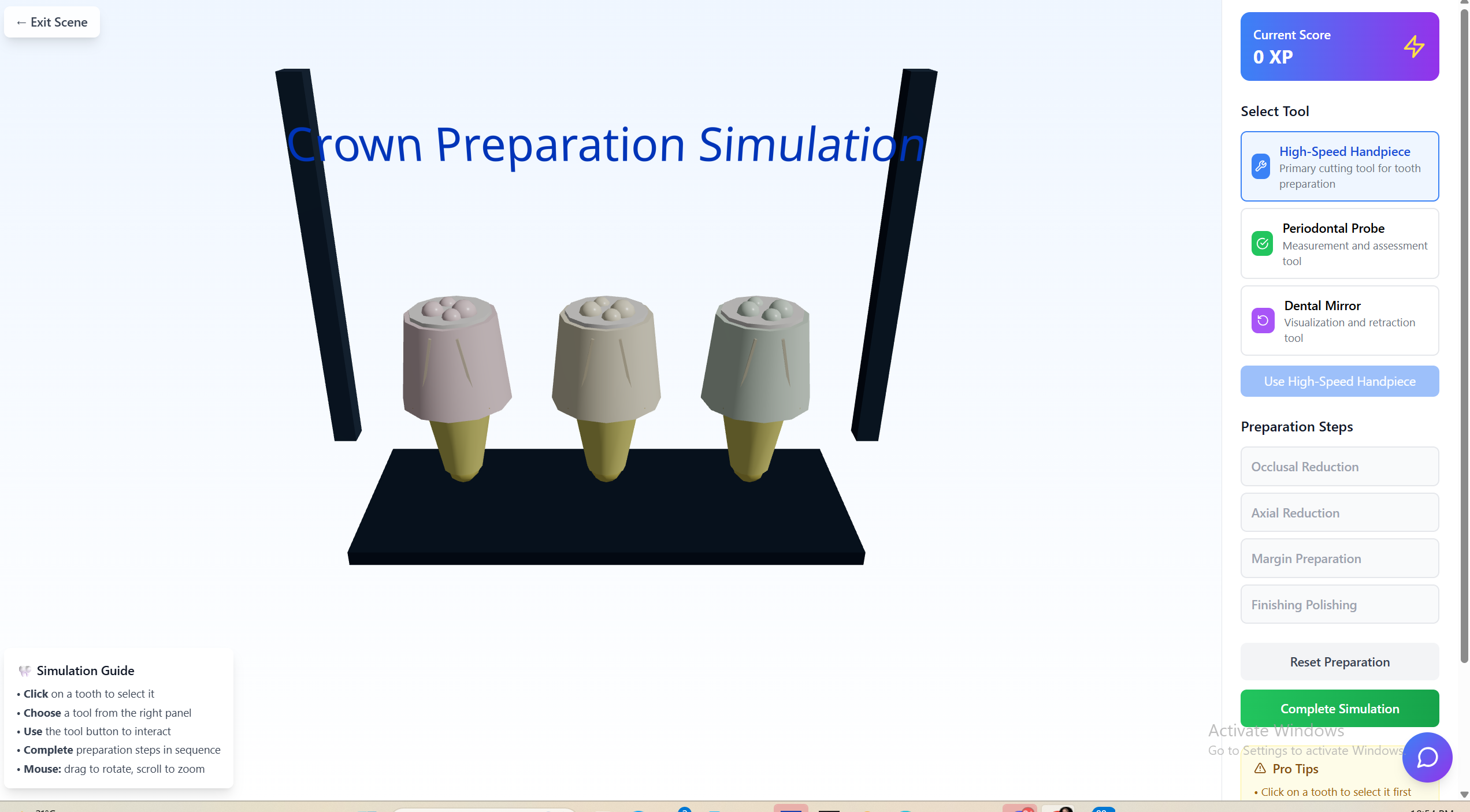
crown preparation simulation
-
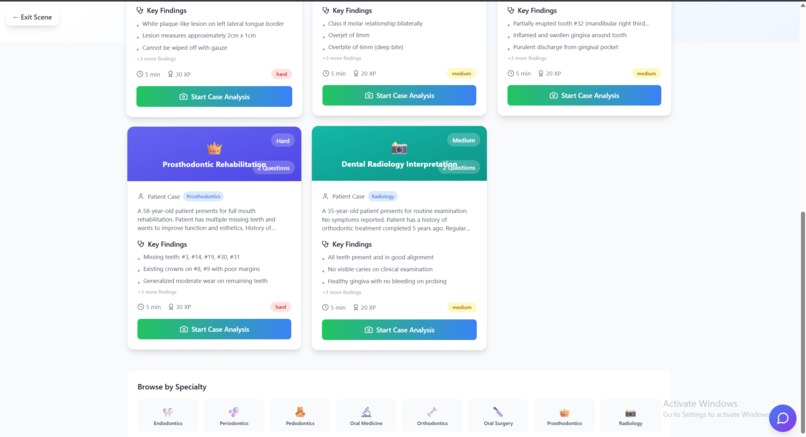
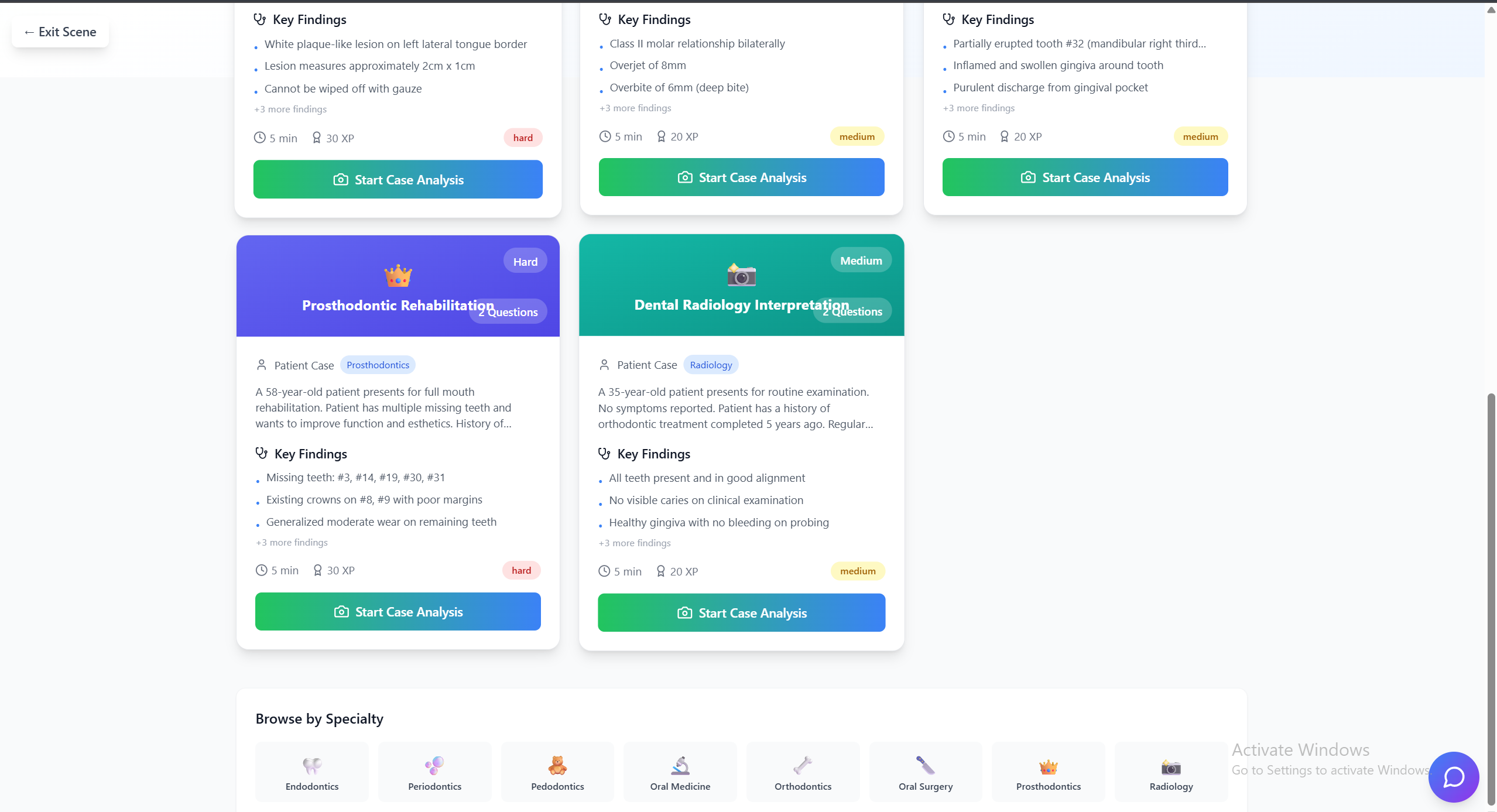
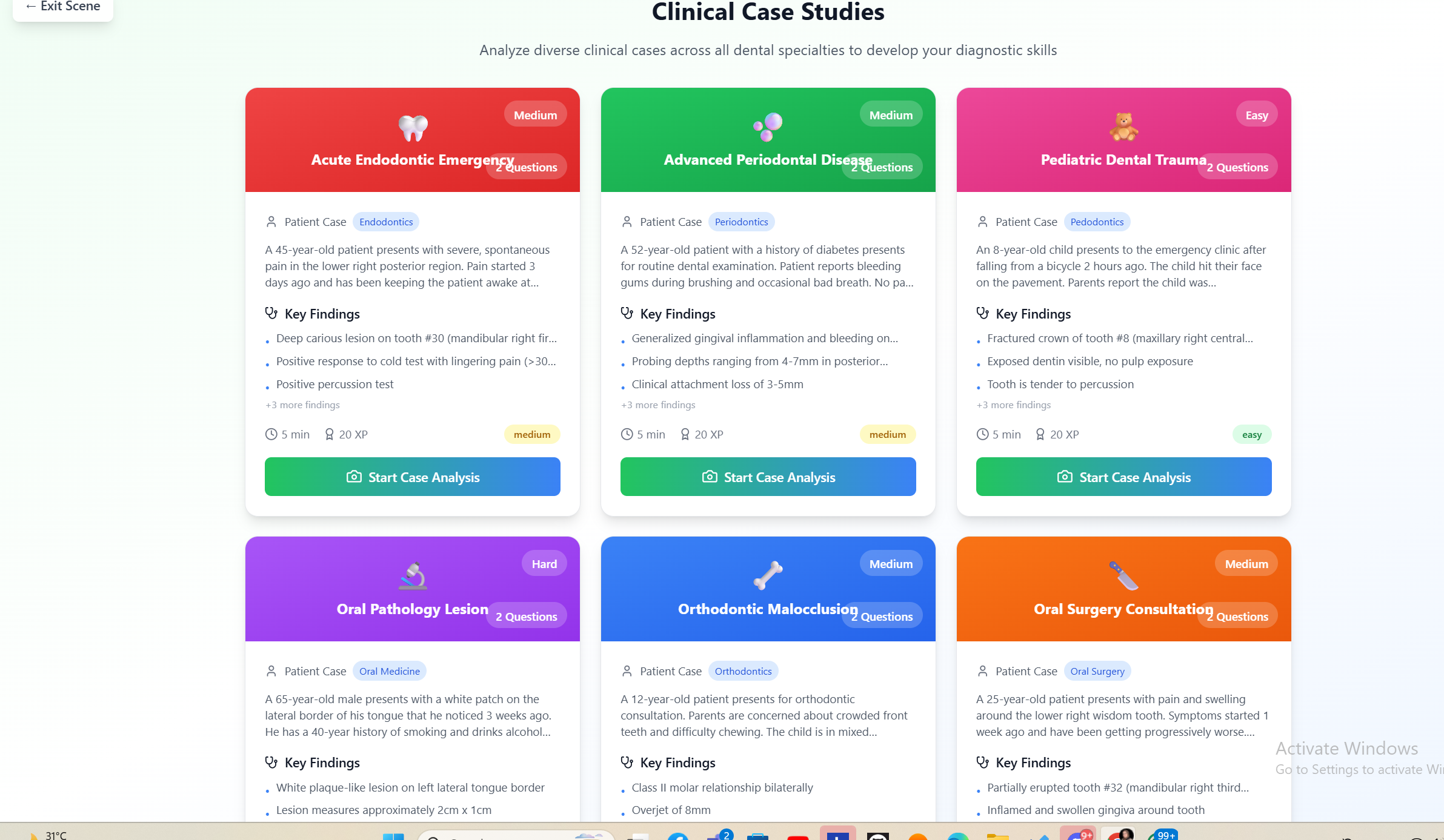
case study diagnosis
-
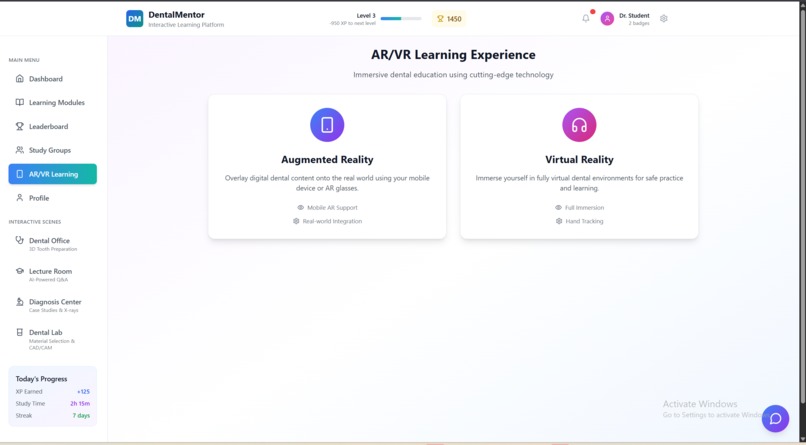
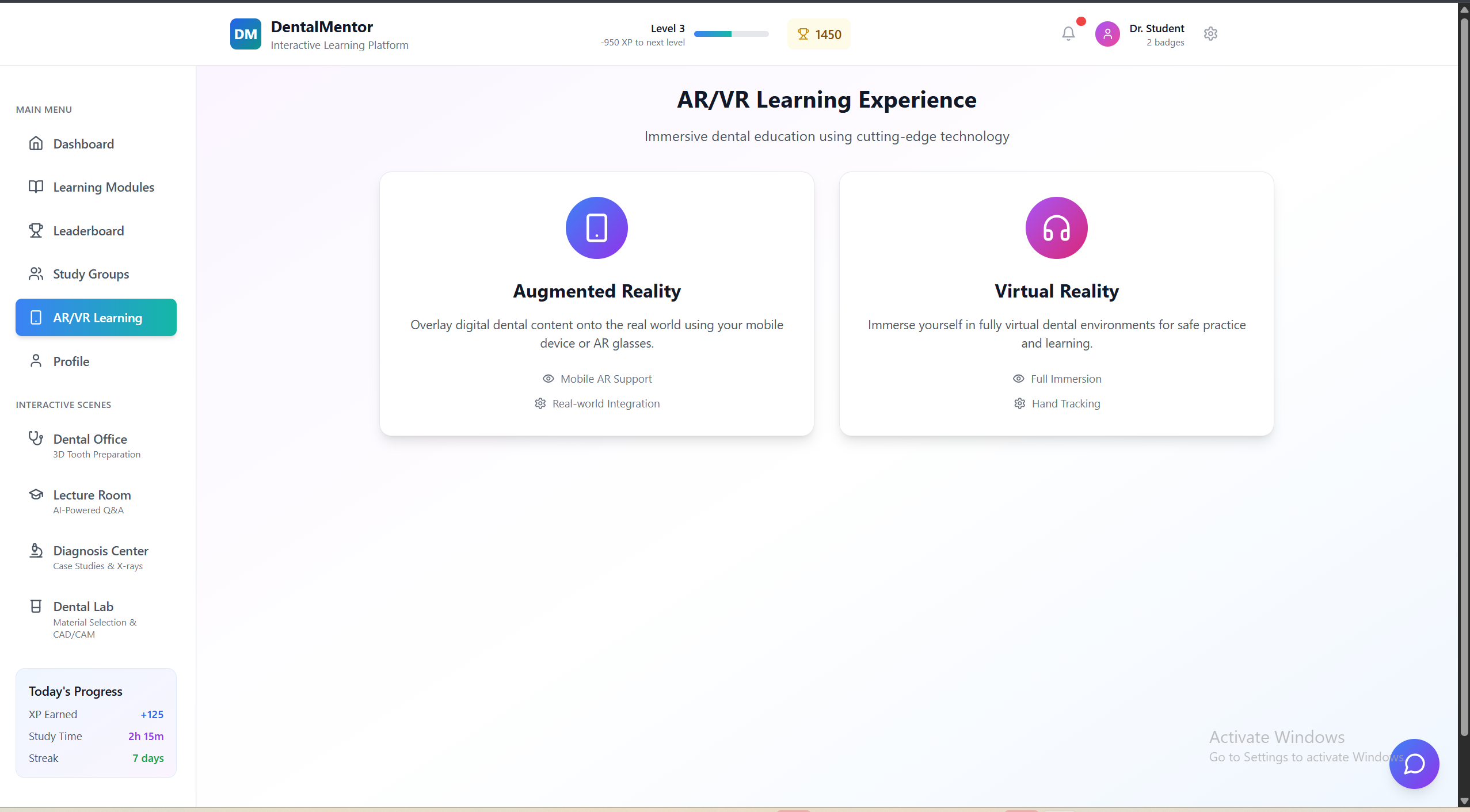
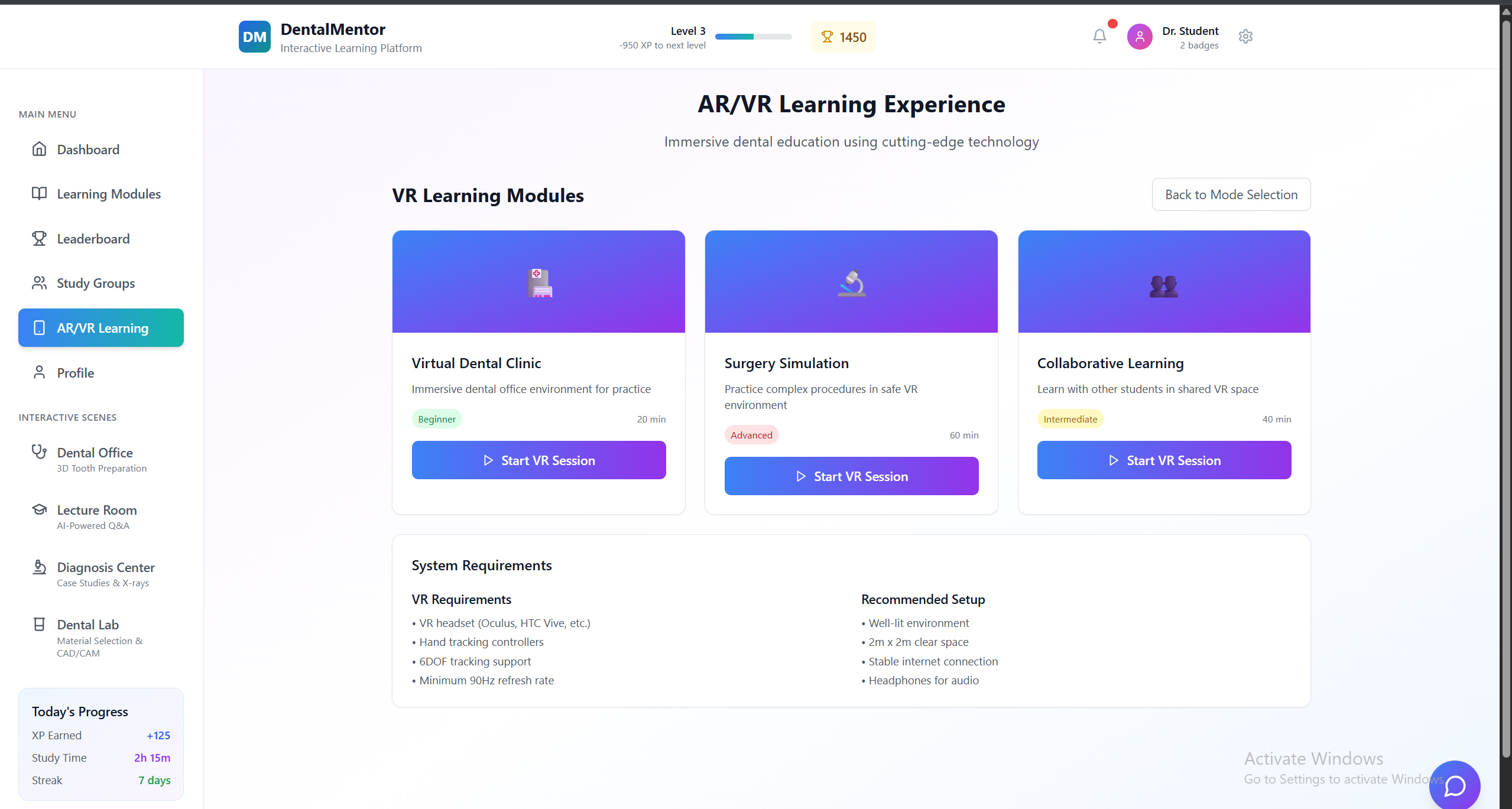
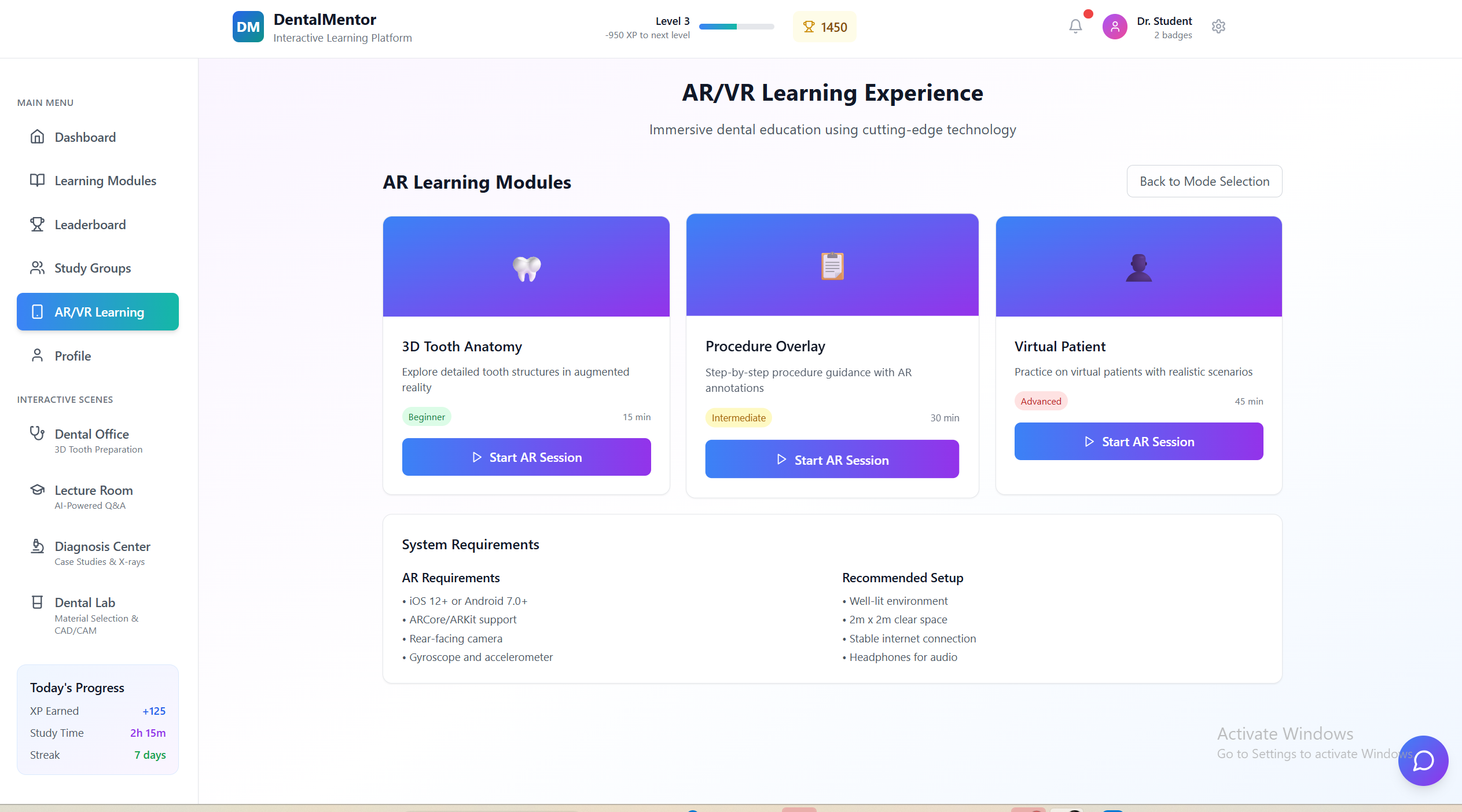
AR/VR learning experience
-
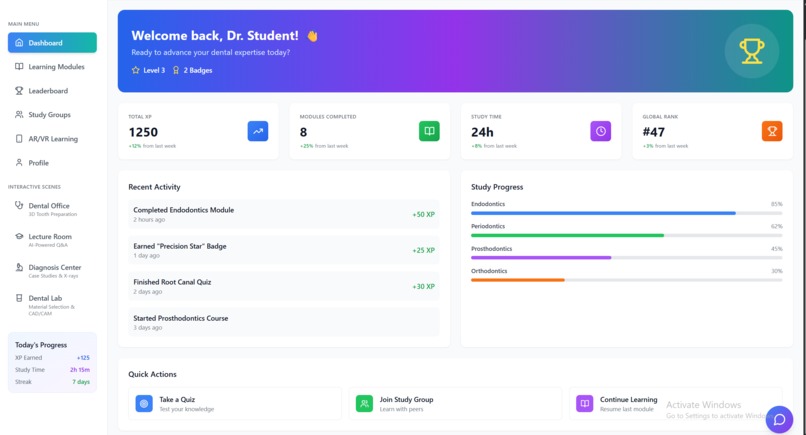
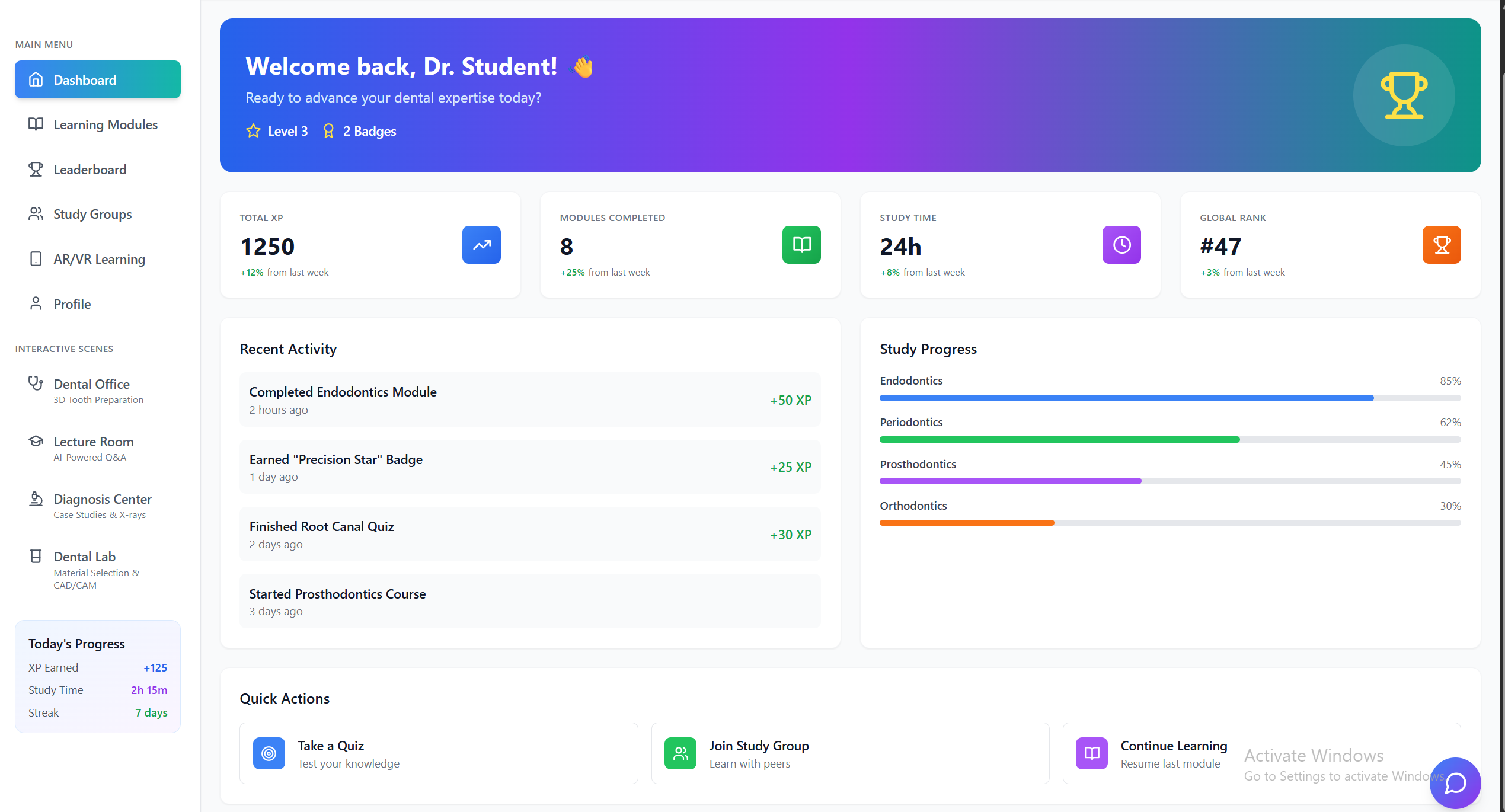
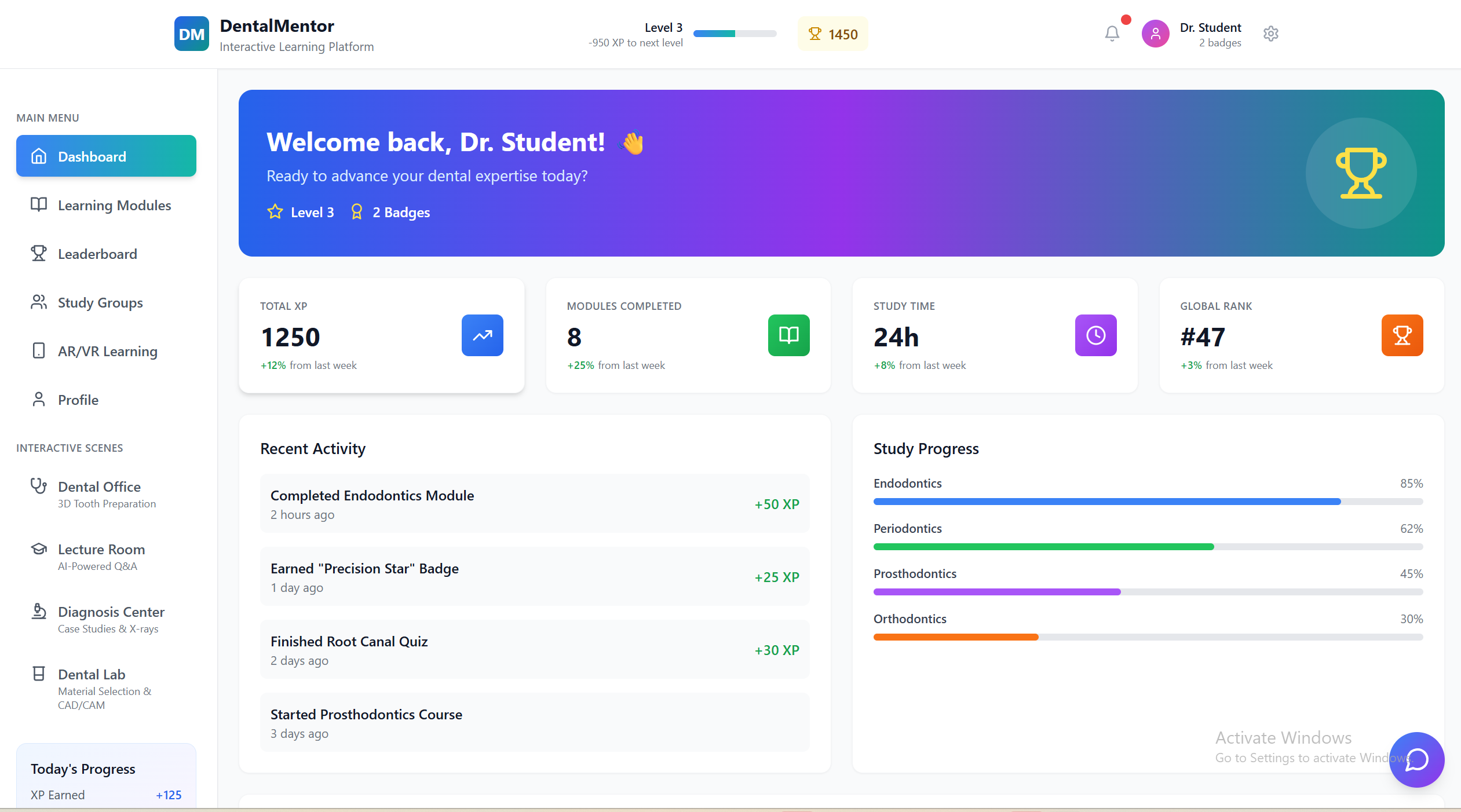
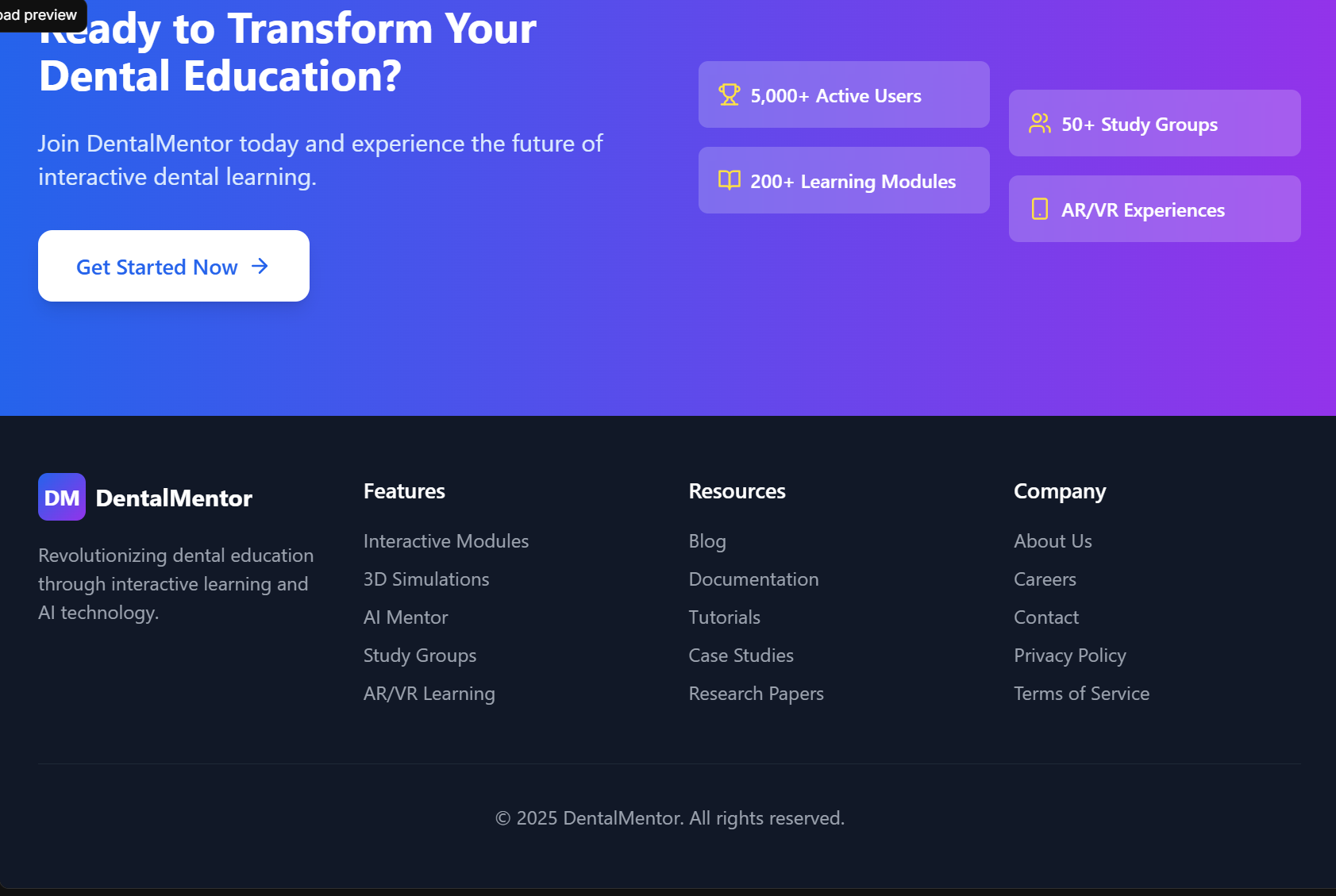
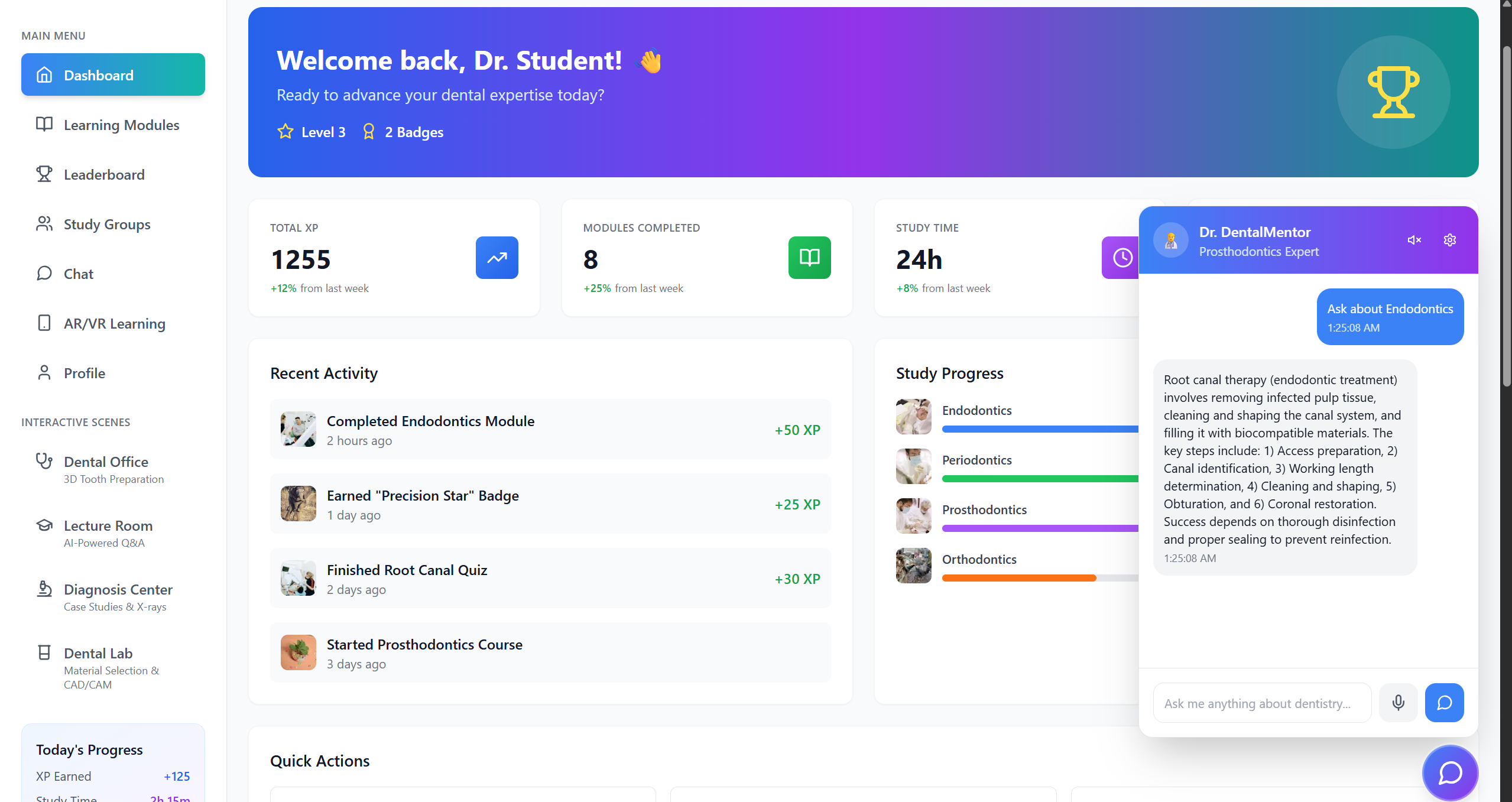
student dashboard
-
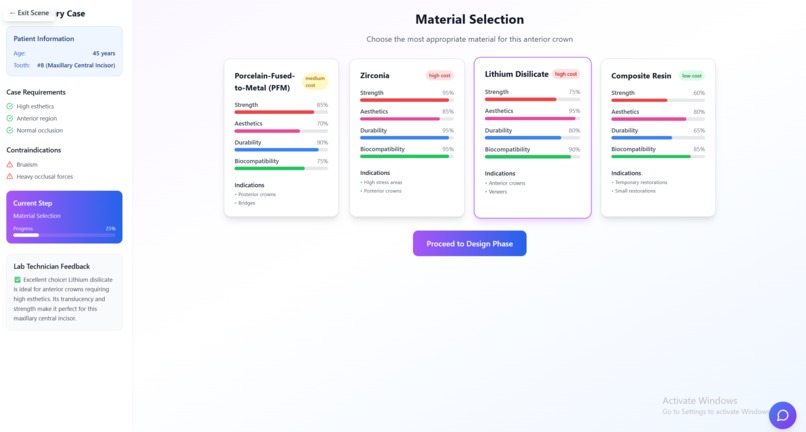
dental laboratory
-
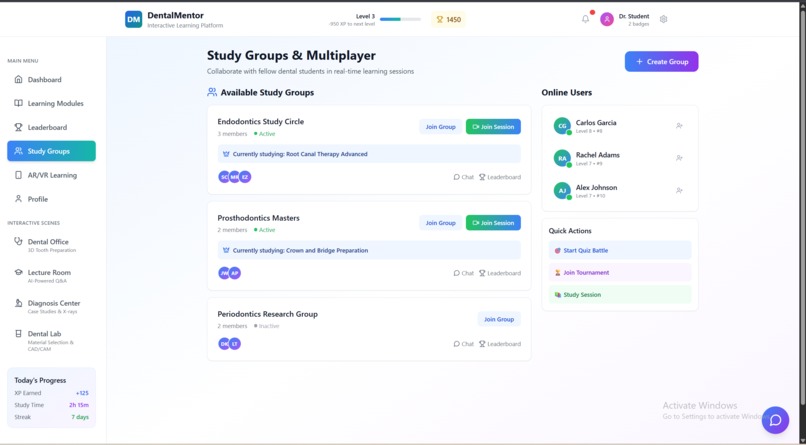
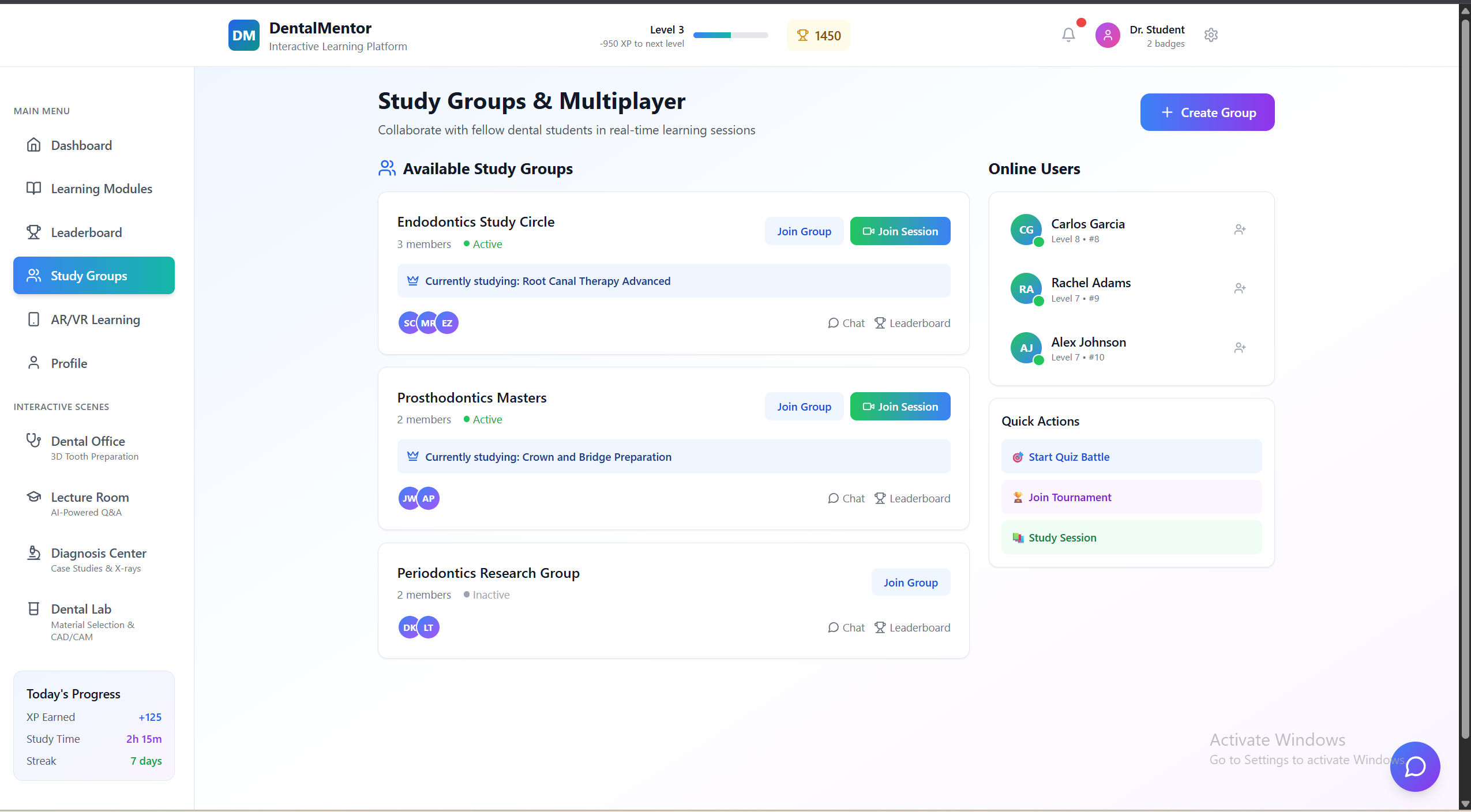
study groups
-
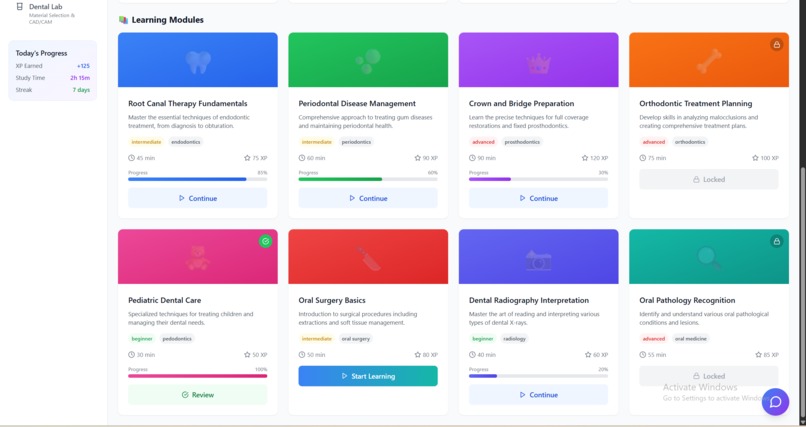
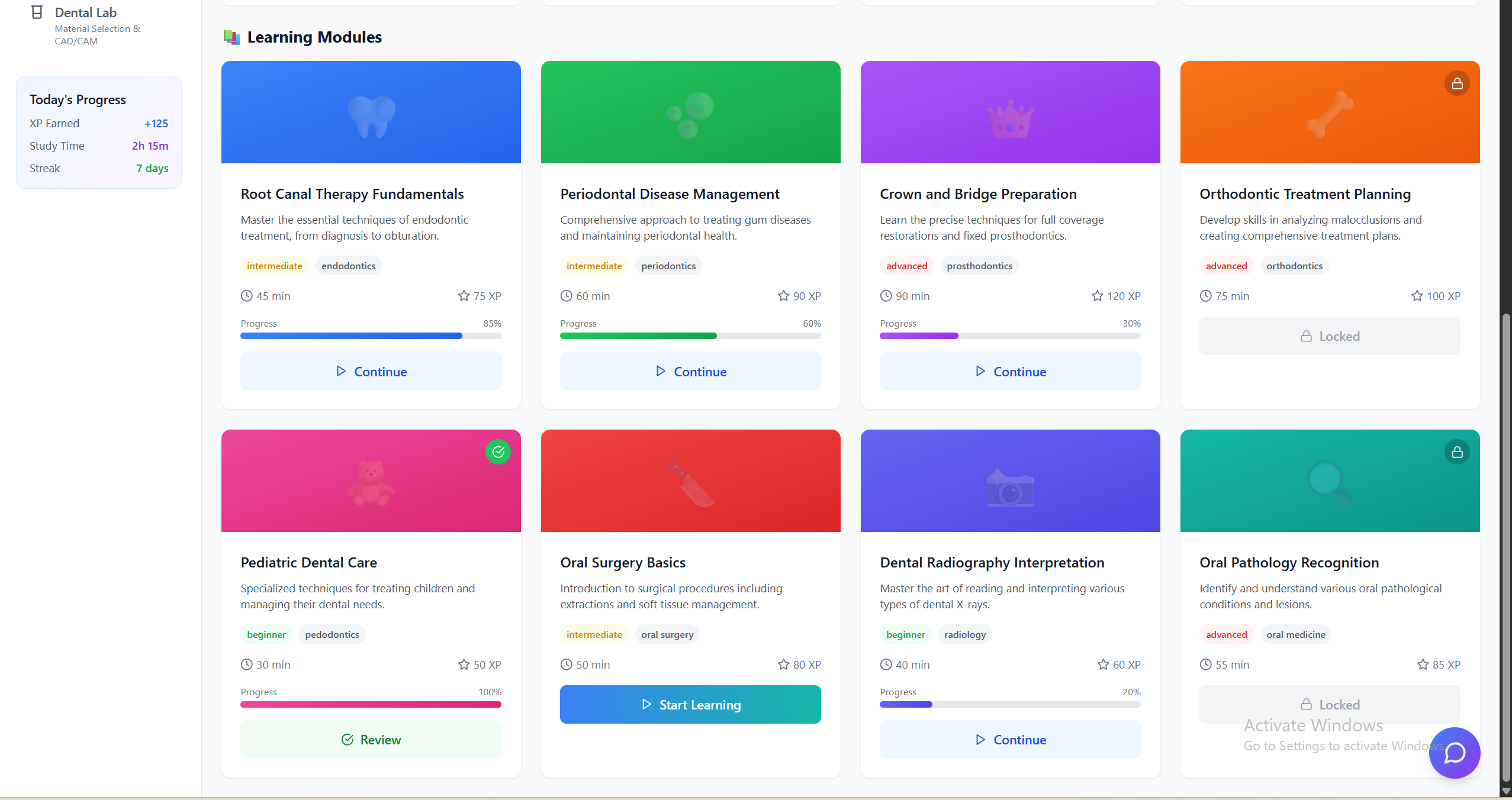
learning modules
-
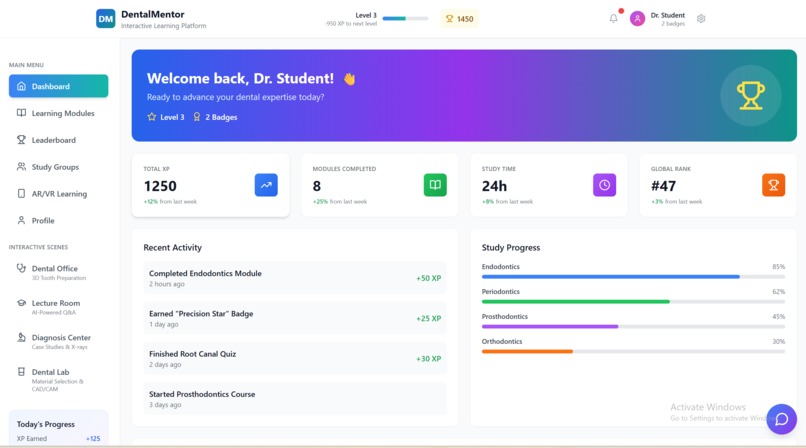
student dashboard
-
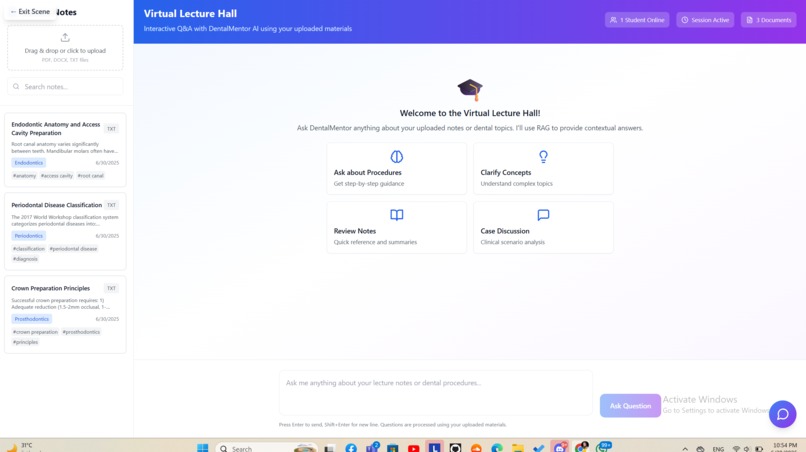
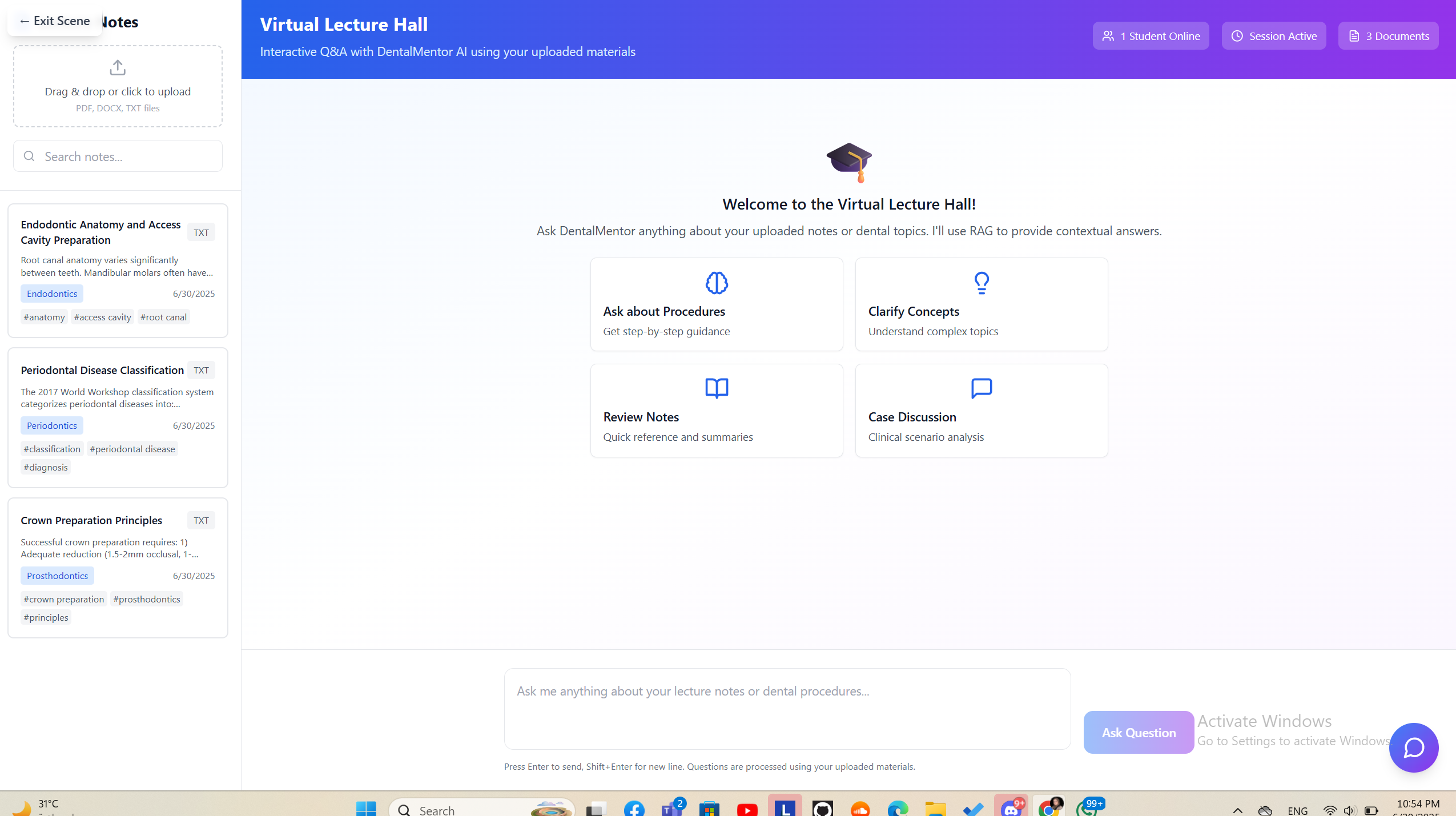
virtual learning hall
-
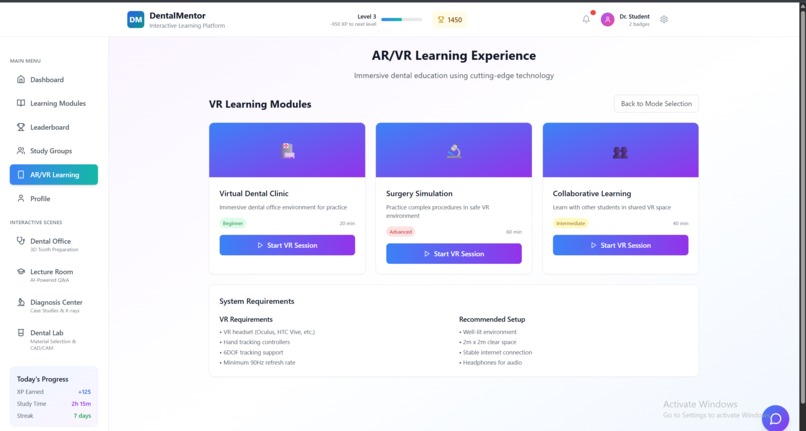
VR LEARNING MODULE
-
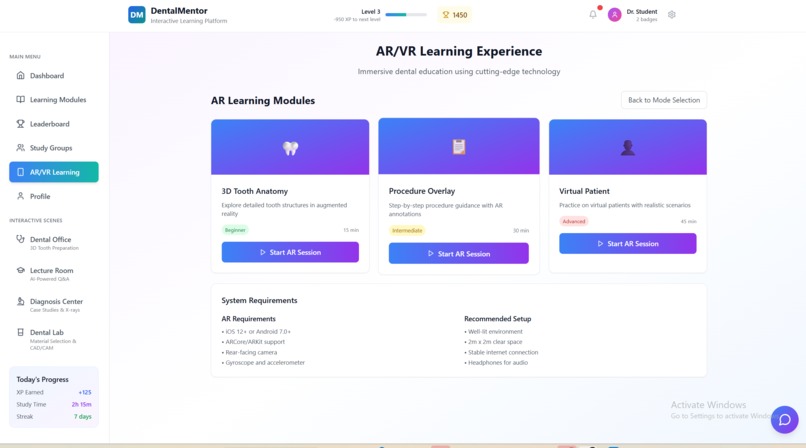
AR LEARNING MODULE
-
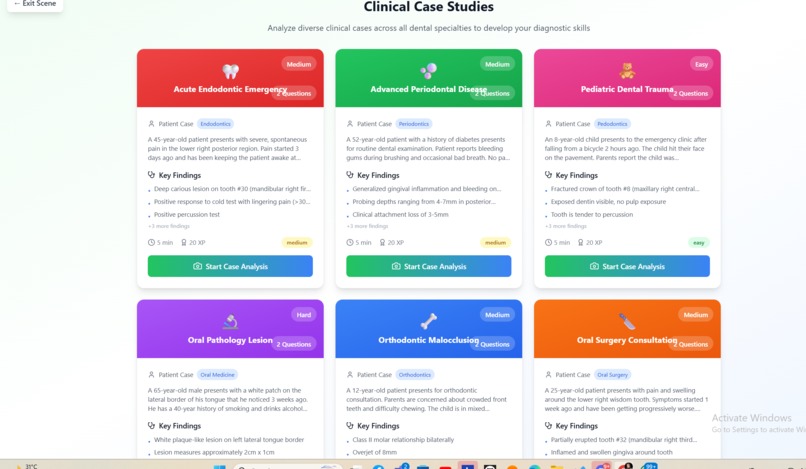
CLINICAL CASE STUDY
-
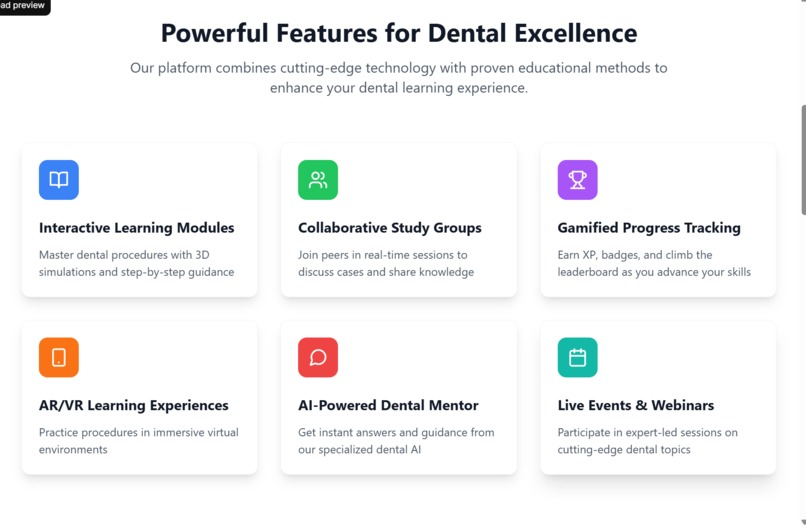
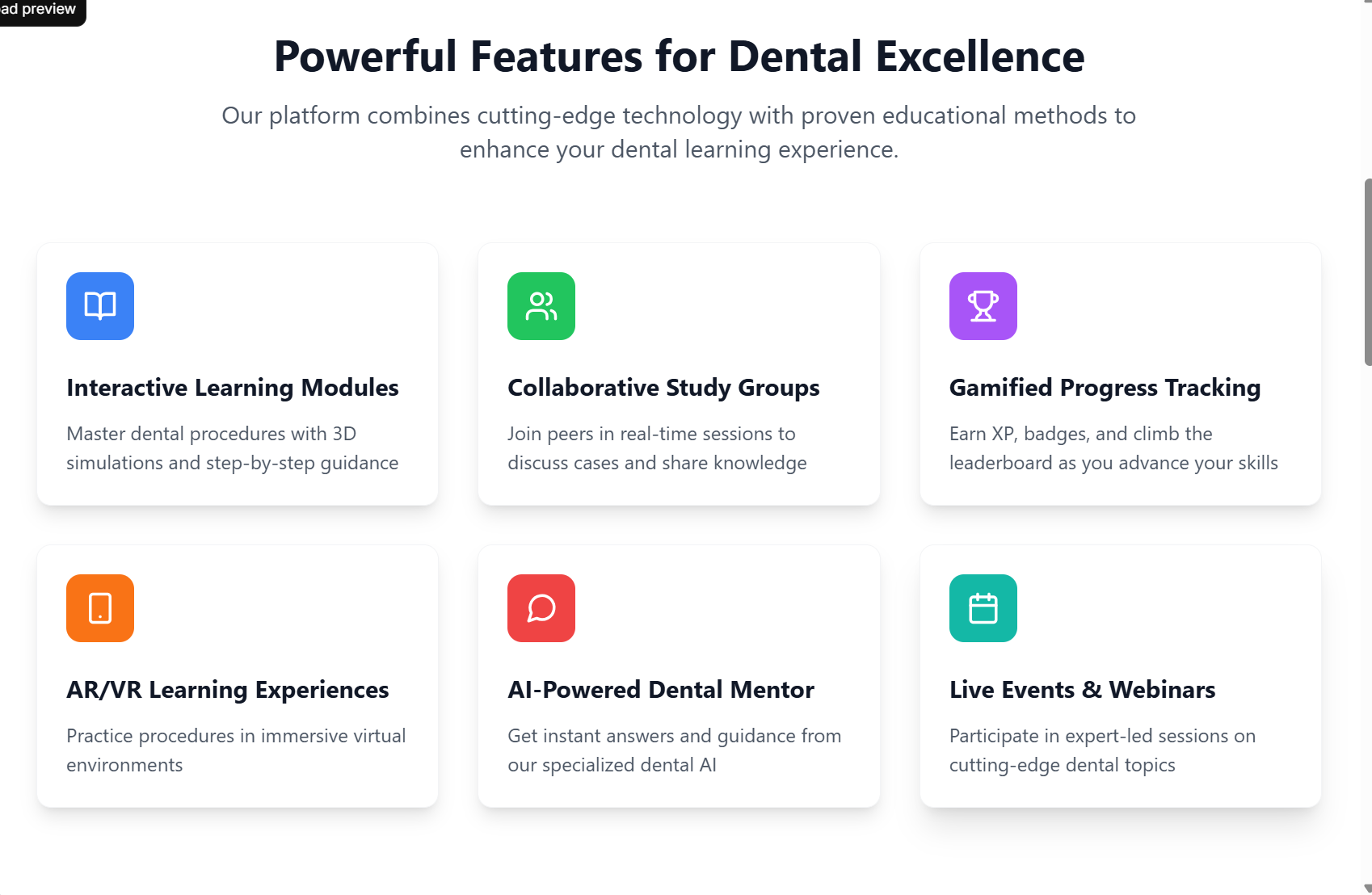
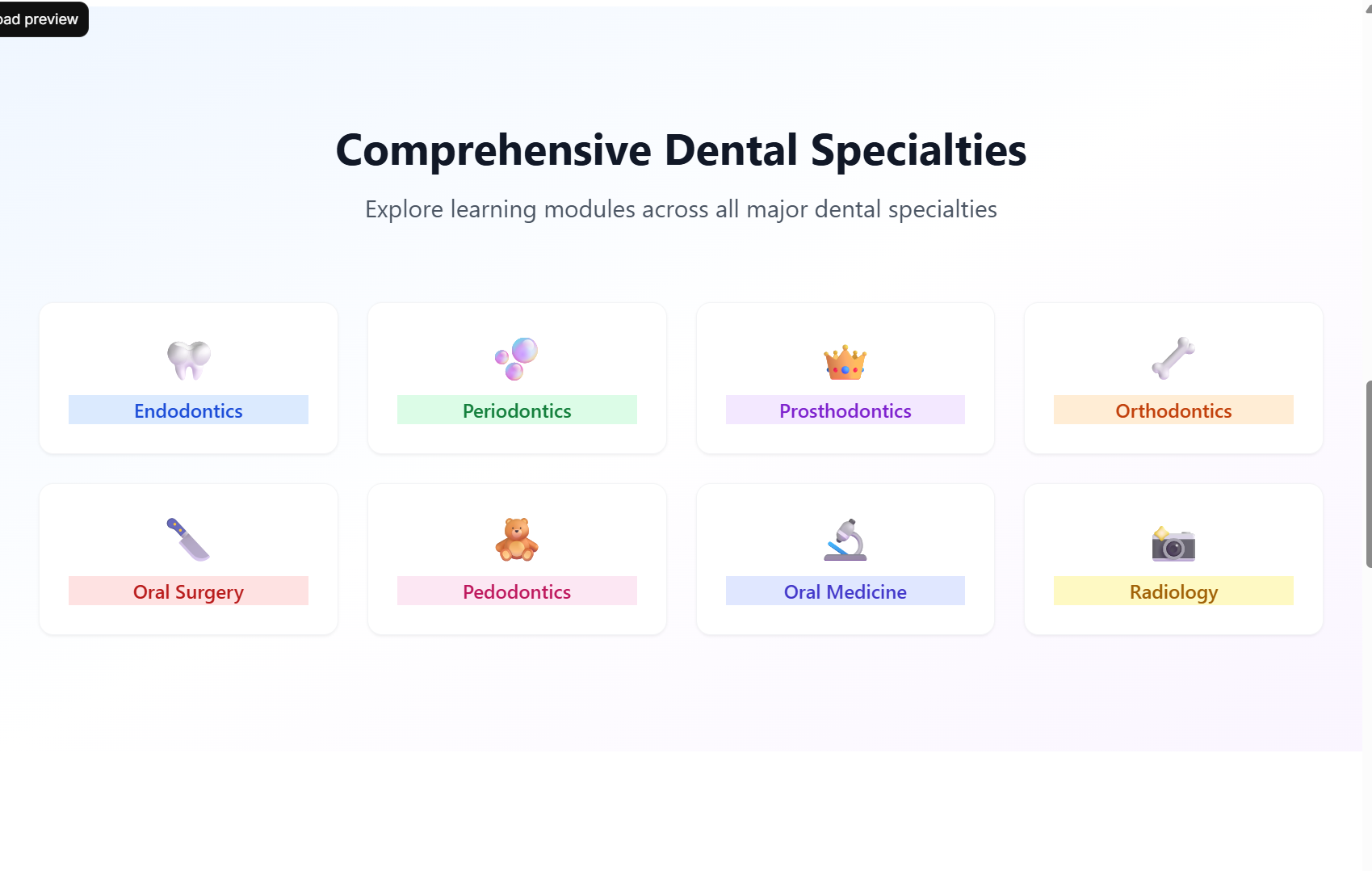
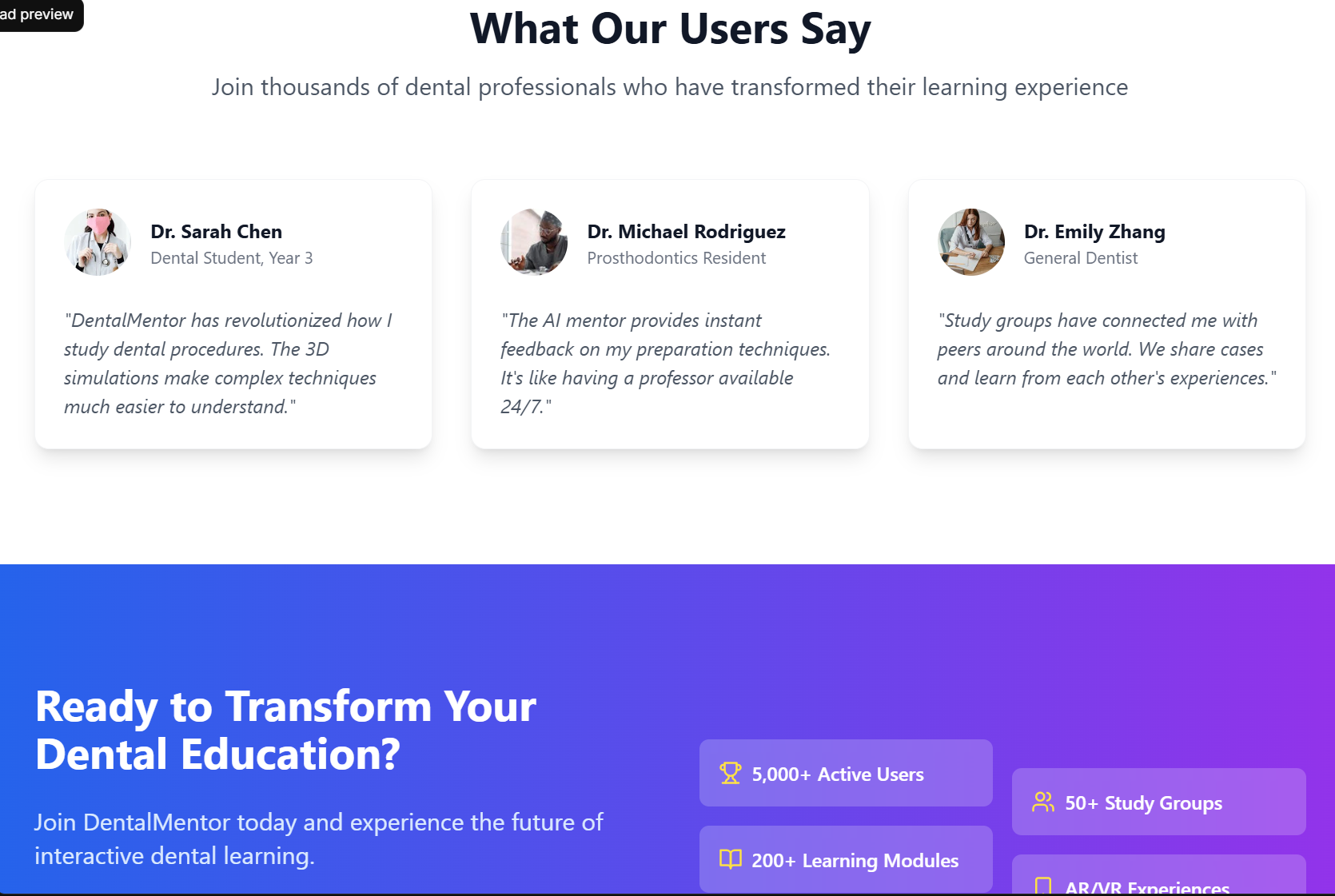
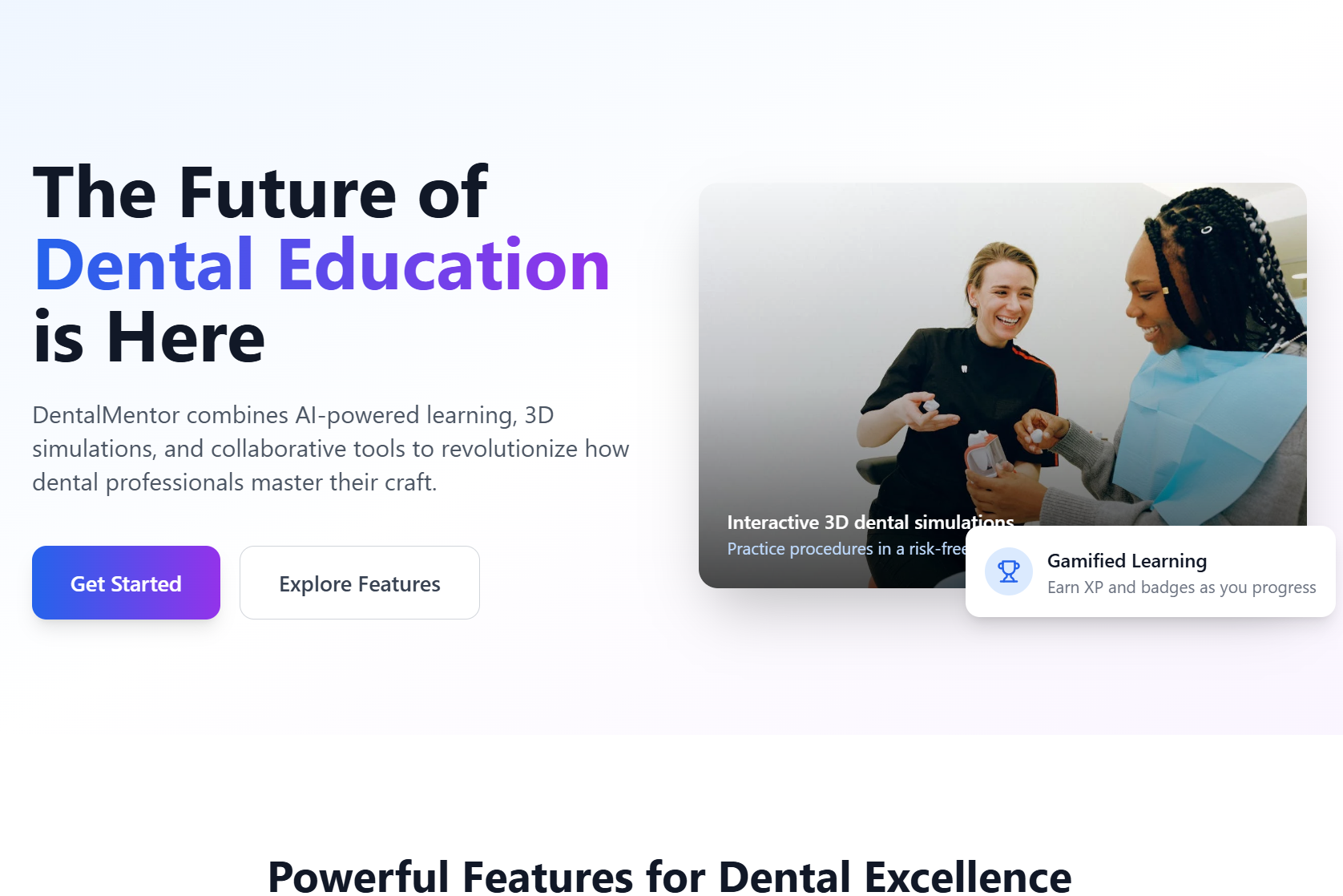
homepage
-
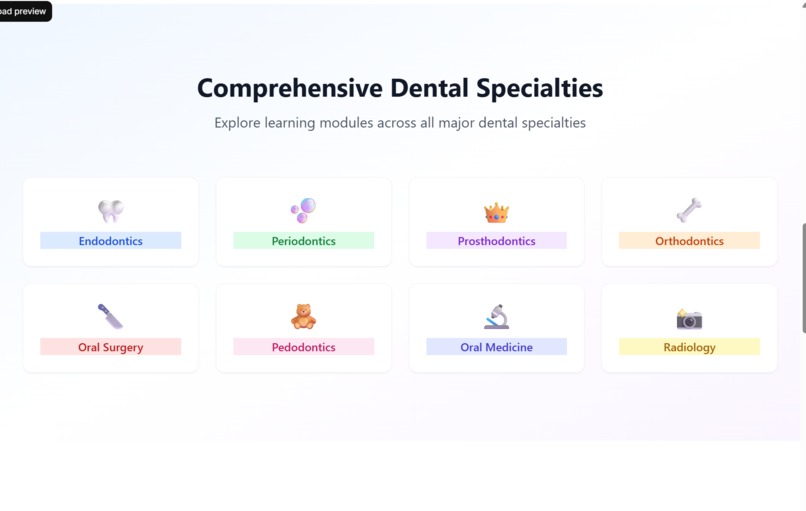
homepage
-
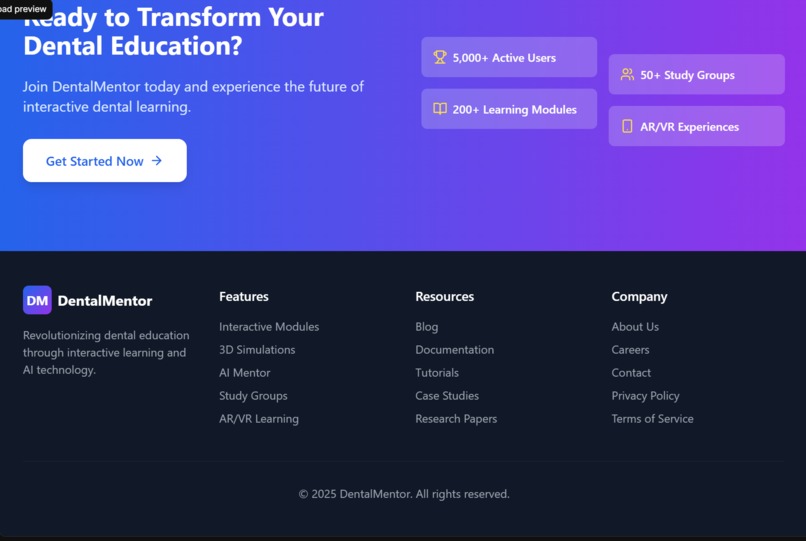
homepage
-
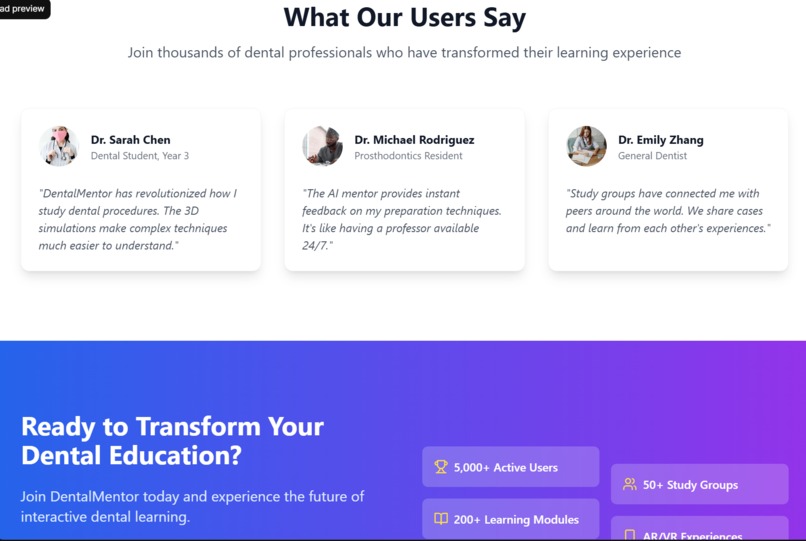
homepage
-
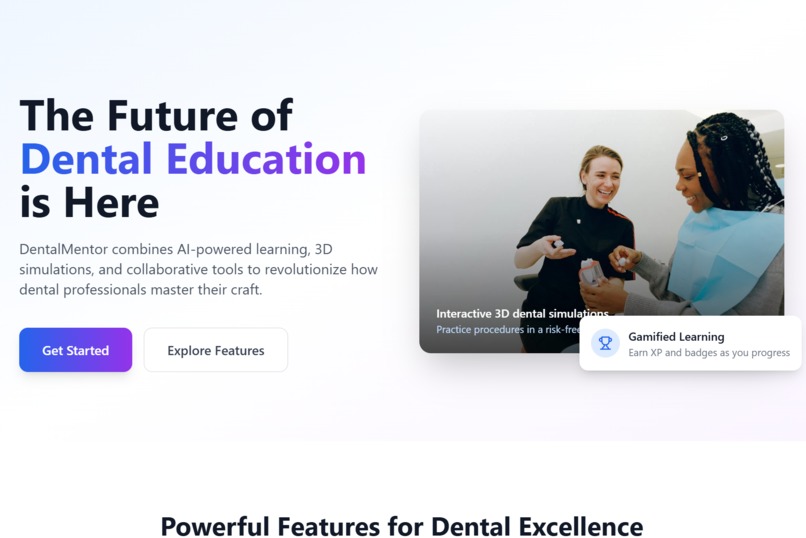
HOME PAGE
-
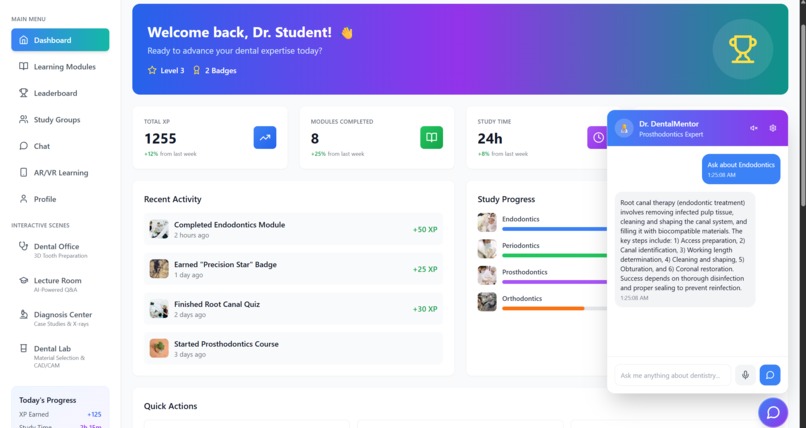
Dr.Dental Mentor AI assistant
Inspiration
As a dedicated dental educator, I saw that students often struggle to connect textbook theory with real-world clinical practice. Inspired by the engagement of modern video games and the power of AI tutoring, I envisioned AI Dental Mentor: an immersive, gamified platform where learners across all specialties can practice, ask questions, and receive personalized feedback in real time.
What it does
AI Dental Mentor offers four interactive “rooms”:
- Dental Office – Simulate 3D tooth preparations with anatomically accurate models and get AI-driven corrections on taper, undercuts, and margins.
- Lecture Hall – Chat with a lovable, context-aware AI tutor (using Gemini RAG) for free-form Q&A and dynamic mini-lectures.
- Diagnosis & Treatment – Review patient histories, X-rays, and photos; answer MCQs; earn or lose points; and view instant rationale.
- Dental Laboratory – Select materials, design crown geometry, and simulate virtual milling, guided by AI recommendations.
How we built it
- Unity & XR Toolkits: Crafted 3D scenes for desktop, AR, and VR using Unity’s XR Interaction Toolkit.
- AI Backend: Developed a FastAPI service integrating Google Vertex AI’s Gemini API with a simple RAG vector store to power Q&A, quiz and case generation, and design feedback.
- No-Code Wiring: Leveraged Bolt to bind every frontend button—quiz generators, “Ask Tutor” panels, document uploads—to backend endpoints without altering the UI.
- Multiplayer & Leaderboard: Integrated Photon PUN for real-time group sessions, synchronized scores, and a shared leaderboard.
Challenges we ran into
- Balancing Realism & Performance: High-fidelity tooth meshes initially caused lag. We optimized shaders, reduced polygon counts, and introduced local caching for repeated AI prompts.
- Seamless AI Integration: Early GPT calls were too slow for interactivity. We refined prompt templates, limited token usage, and implemented lightweight pre-caching of common queries.
- UI Integrity: Wiring new functionality risked shifting layouts. We used Bolt’s no-code bindings and automated tests to ensure every button still looked and behaved exactly as before.
Accomplishments that we’re proud of
- Delivered a fully functional four-room gamified platform covering all dental specialties.
- Achieved real-time AI feedback on student actions, from quiz scoring to mesh-based prep analysis.
- Enabled AR/VR deployment, letting students summon the tutor in their environment or step into a virtual clinic.
- Built a secure, role-based system where teachers can upload custom materials and track class performance.
What we learned
- The importance of modular prompt designfor AI: small, focused Gemini prompts yielded faster, more accurate responses.
- How to maintain UI/UX consistency when layering on complex AI logic and multiplayer networking.
- Best practices for asset optimization: anatomically correct models with PBR textures can run smoothly with careful LOD and shader tuning.
What’s next for AI Dental Mentor
- Expand RAG to include large journal databases (via Pinecone/FAISS) for richer case studies.
- Adaptive learning pathways: use student performance data and bandit algorithms to tailor question difficulty in real time.
- Enhanced analytics dashboard for educators: deeper insights on student progress, common pitfalls, and curriculum gaps.
- Voice interaction: integrate speech-to-text and text-to-speech for hands-free queries and narrated walkthroughs in AR/VR.

Log in or sign up for Devpost to join the conversation.