AI-Powered Diabetes Risk Prediction & Assessment System
Inspiration
The inspiration behind this project was the need to make diabetes risk assessment more accessible and easier to understand. Diabetes can develop without obvious symptoms in its early stages, and many people do not regularly monitor their health. I wanted to build a system that uses Artificial Intelligence and Machine Learning to help users assess their potential diabetes risk and better understand their health information.
What It Does
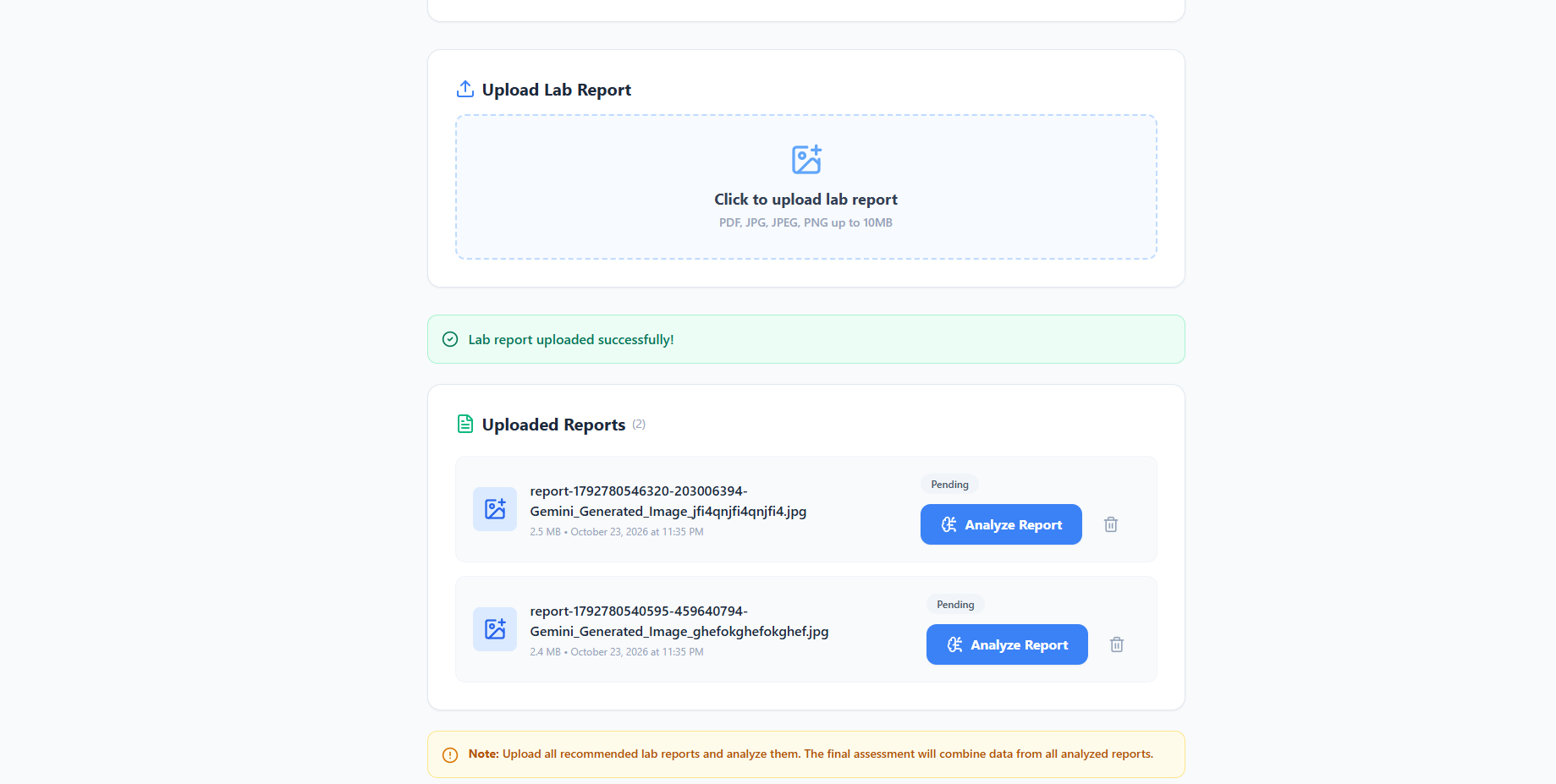
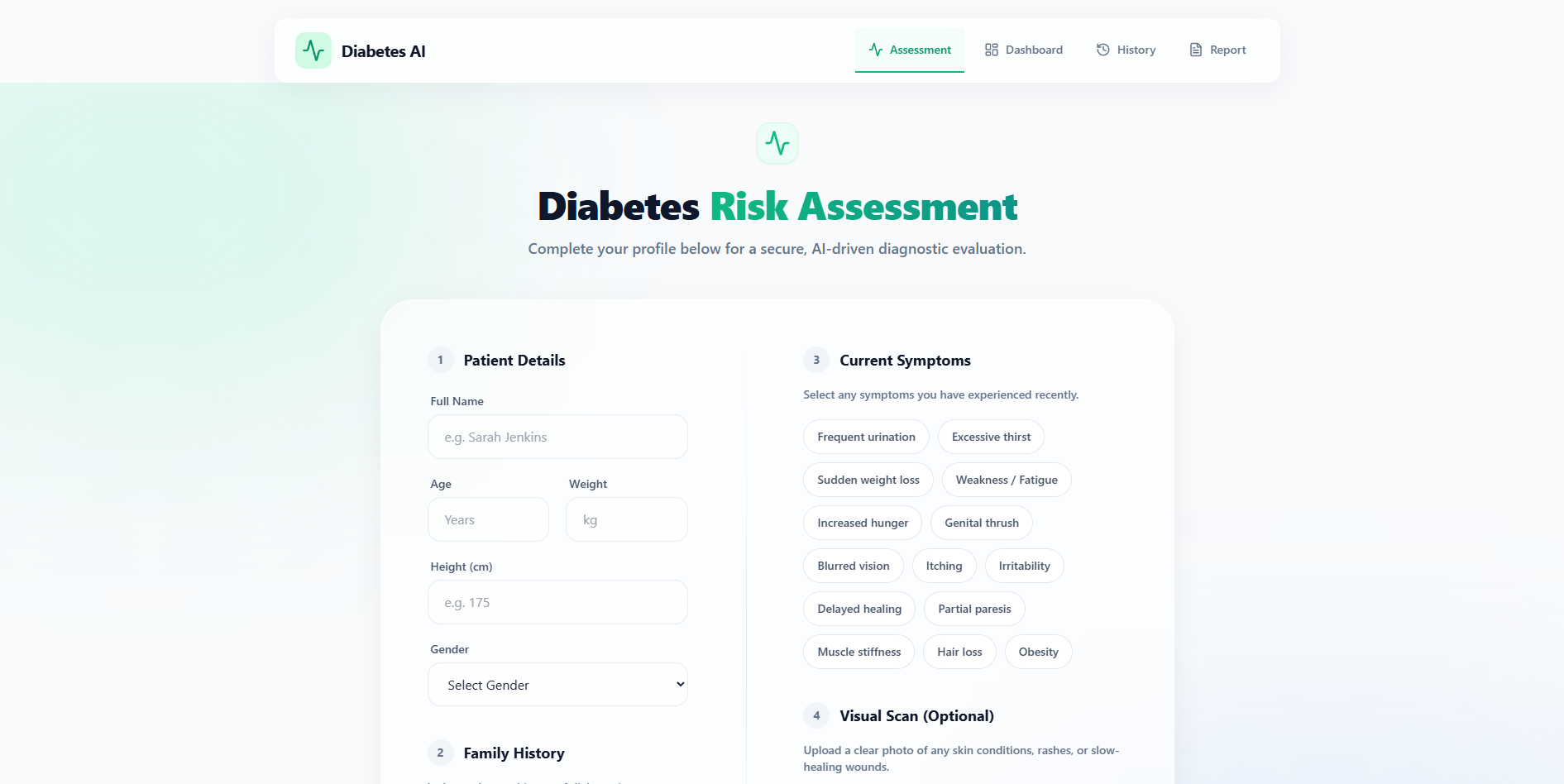
The project is an AI-powered web application that combines machine learning-based diabetes risk prediction with medical lab report analysis. Users can enter their age, gender, and symptoms to receive a diabetes risk assessment. The application also uses Optical Character Recognition (OCR) to extract relevant values from uploaded laboratory reports and analyze the available information.
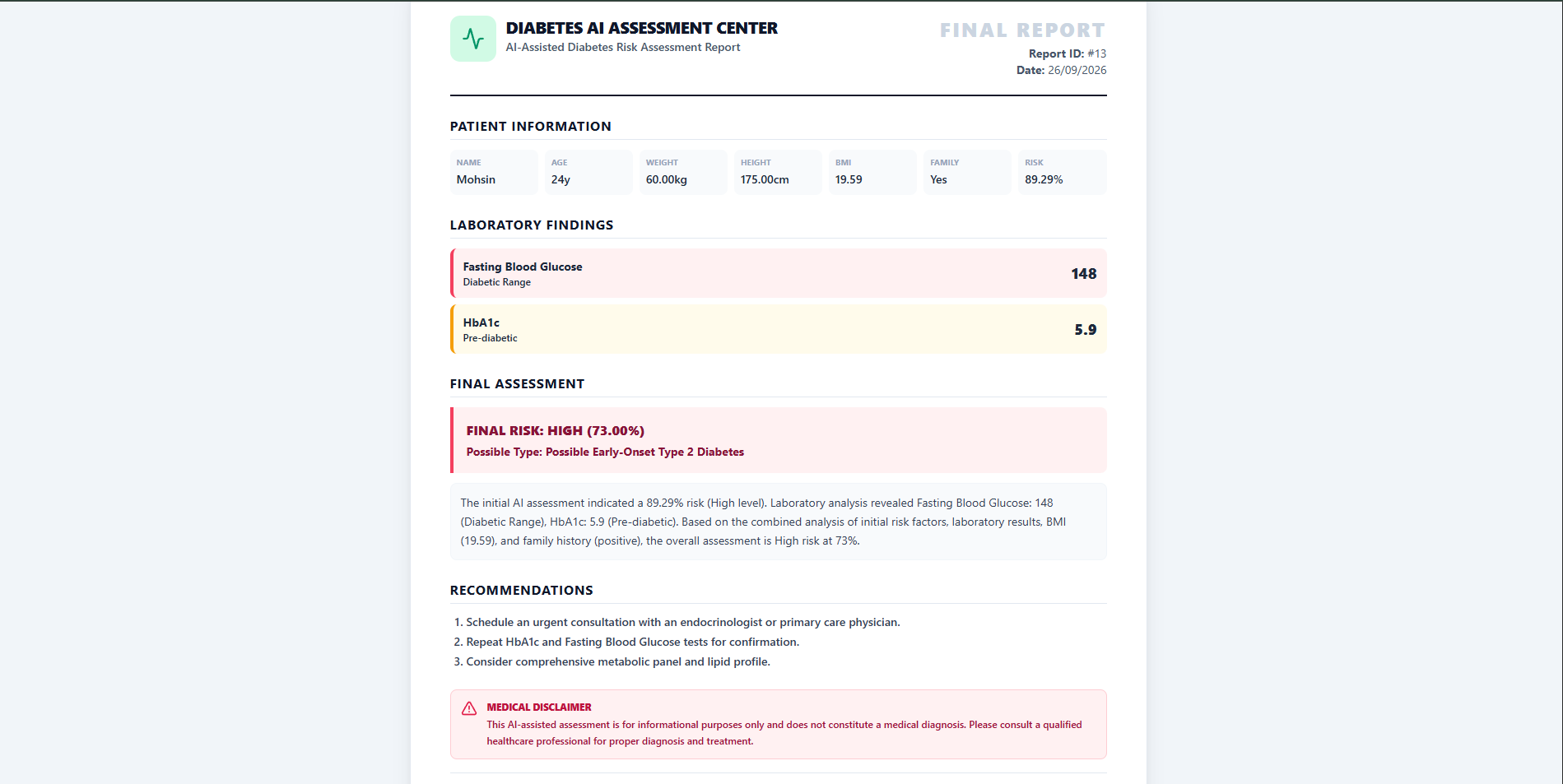
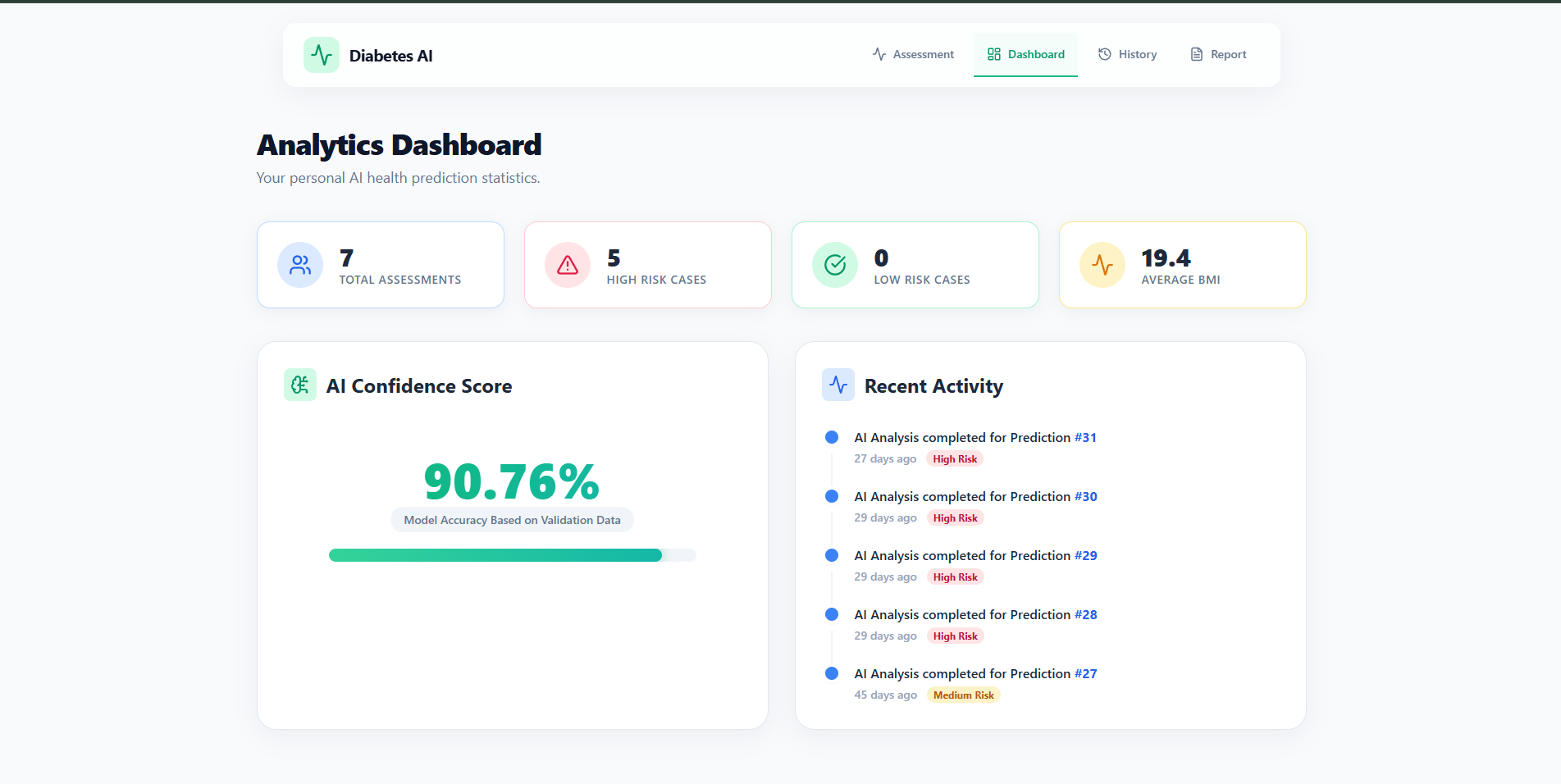
The system presents the results through a user-friendly interface, helping users understand their assessment. It is designed as a supportive screening tool, not a replacement for professional medical diagnosis.
How I Built It
I developed this project independently, working across the frontend, backend, database, and AI components.
- Machine Learning: I used Python and Scikit-learn to prepare the dataset, train a Random Forest classification model, and evaluate its performance.
- AI Integration:I developed a Flask API to connect the machine learning model with the web application.
- Frontend: I used React to build an interactive interface where users can enter symptoms, submit information, and view assessment results. -Backend: I used Node.js to handle application logic, API communication, authentication, and other backend operations.
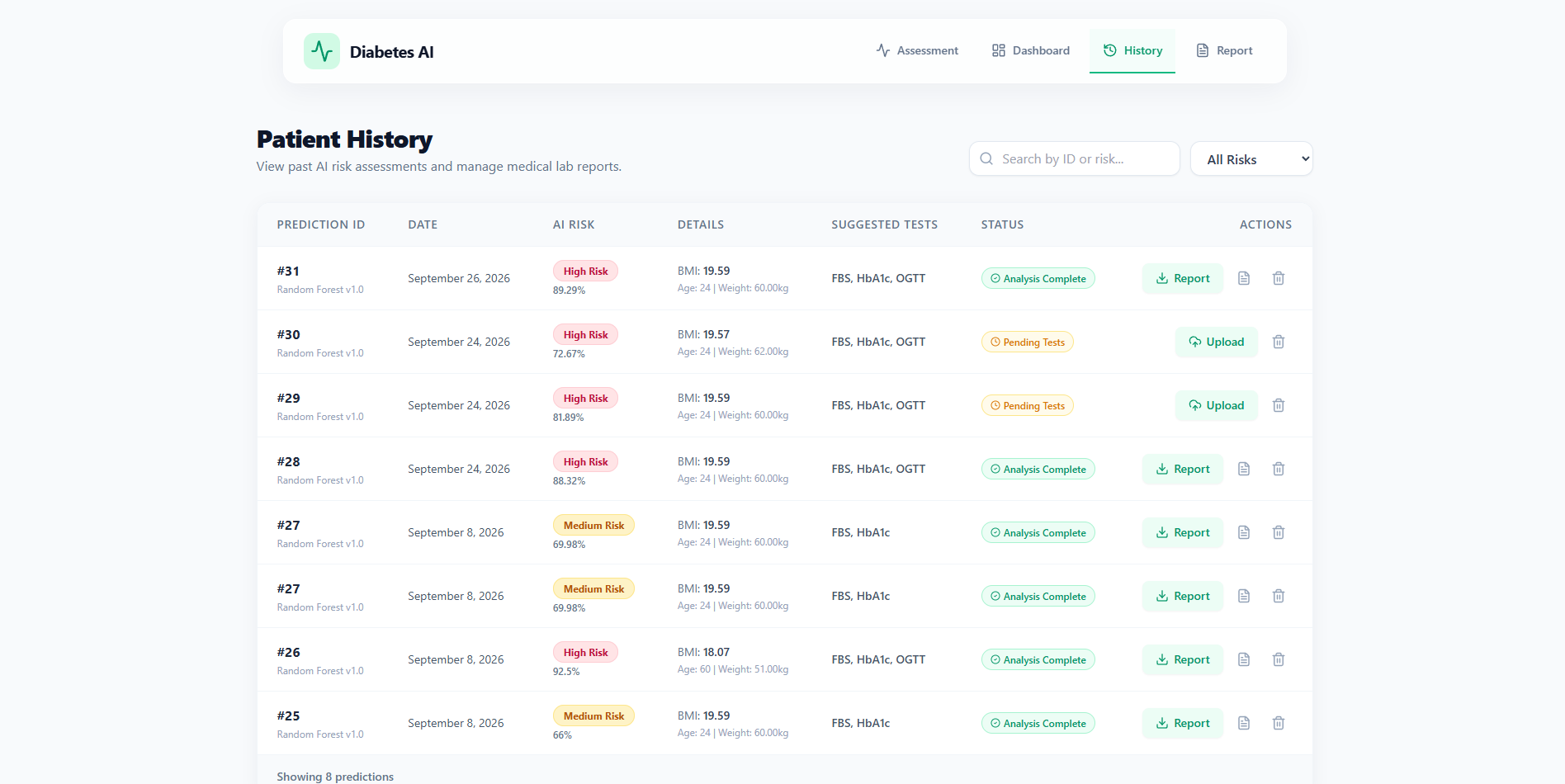
- Database:I implemented data storage for application functionality and assessment history.
- Lab Report Analysis:I incorporated OCR-based extraction to read relevant information from uploaded medical lab reports.
- Security and Reporting:I implemented JWT-based authentication and PDF report generation to support secure access and downloadable results.
One of the most important parts of the project was connecting these components into a single working application rather than treating them as separate experiments.
Challenges I Faced
Building the entire system independently presented several challenges. Finding and preparing suitable datasets was one of the first major tasks. I had to understand the data, preprocess it, train the model, and evaluate its performance instead of relying on a prebuilt prediction system.
Another challenge was integrating the Python-based machine learning model with the web application's backend and frontend. Ensuring that API requests, prediction results, authentication, and database operations worked together required careful debugging.
Extracting useful information from medical lab reports was also challenging because report formats and layouts can vary. I learned that AI-based systems require more than a trained model: data quality, integration, validation, and clear result presentation are equally important.
What I Learned
Through this project, I gained practical experience in machine learning, dataset preprocessing, model evaluation, REST API development, frontend and backend integration, database management, authentication, and OCR-based document processing.
I also learned how to troubleshoot integration problems, evaluate model performance using appropriate metrics, and turn an AI concept into a functional web application. Most importantly, I learned that developing a complete AI-powered system requires both technical knowledge and the ability to solve problems across multiple technologies.
What's Next
Future improvements could include testing the system on more diverse datasets, improving OCR accuracy across different laboratory report formats, conducting more extensive model validation, and enhancing accessibility and usability.
My goal is to continue improving the system's reliability and make its assessments easier for users to understand, while maintaining a clear distinction between AI-generated risk estimates and professional medical diagnosis.

Log in or sign up for Devpost to join the conversation.