-
-
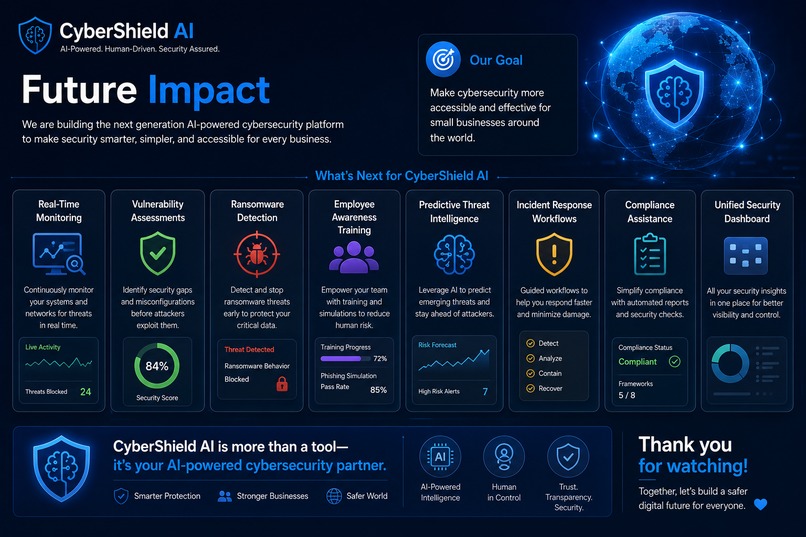
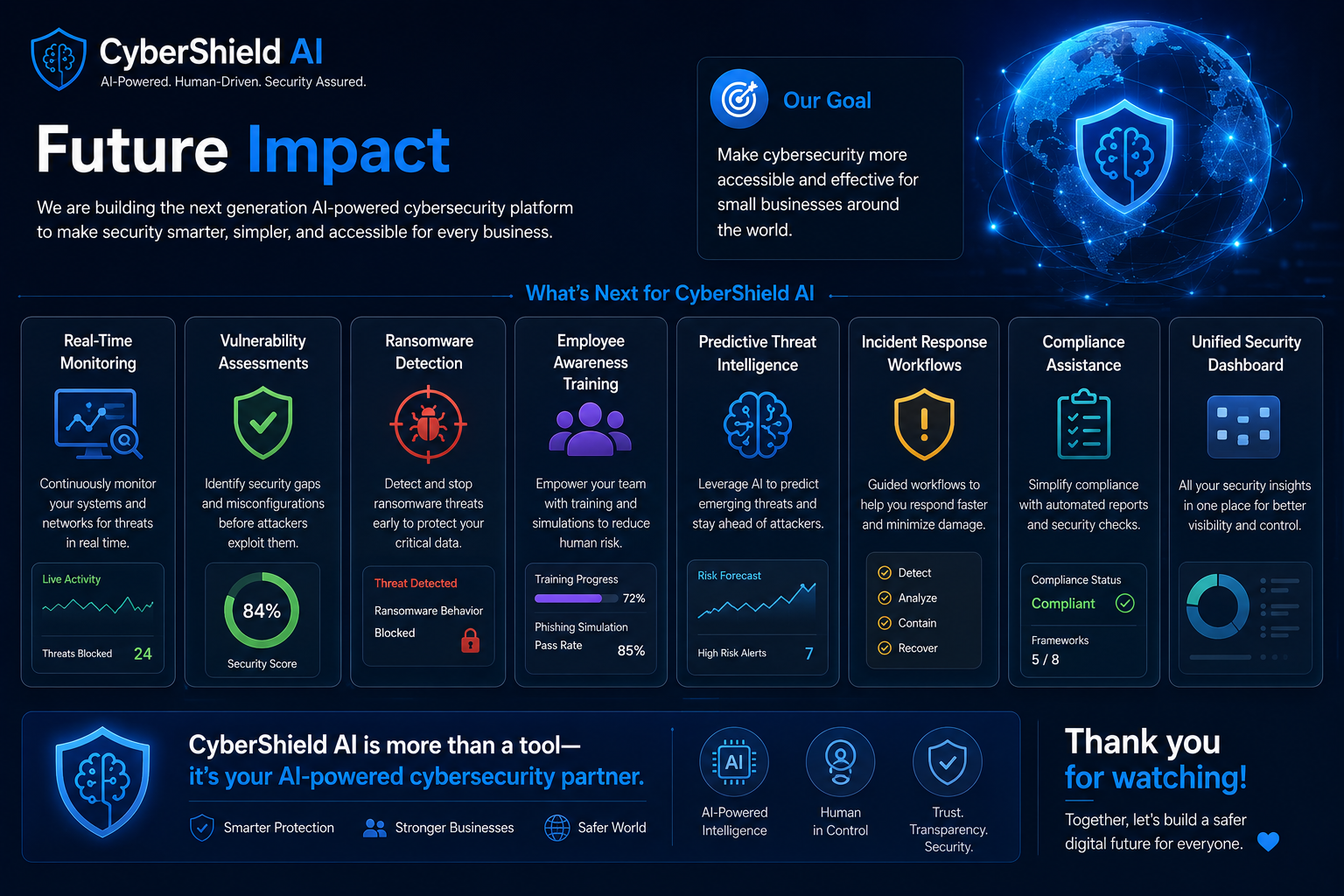
CyberShield AI Future Impact Next Steps
-
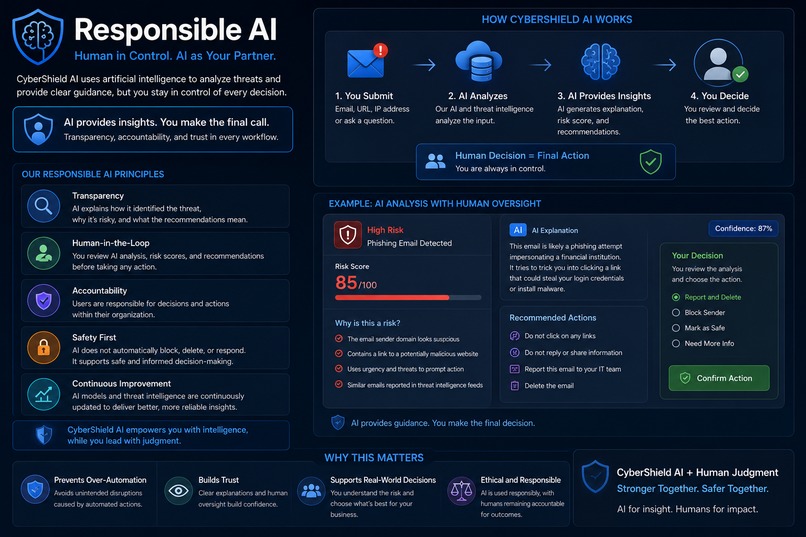
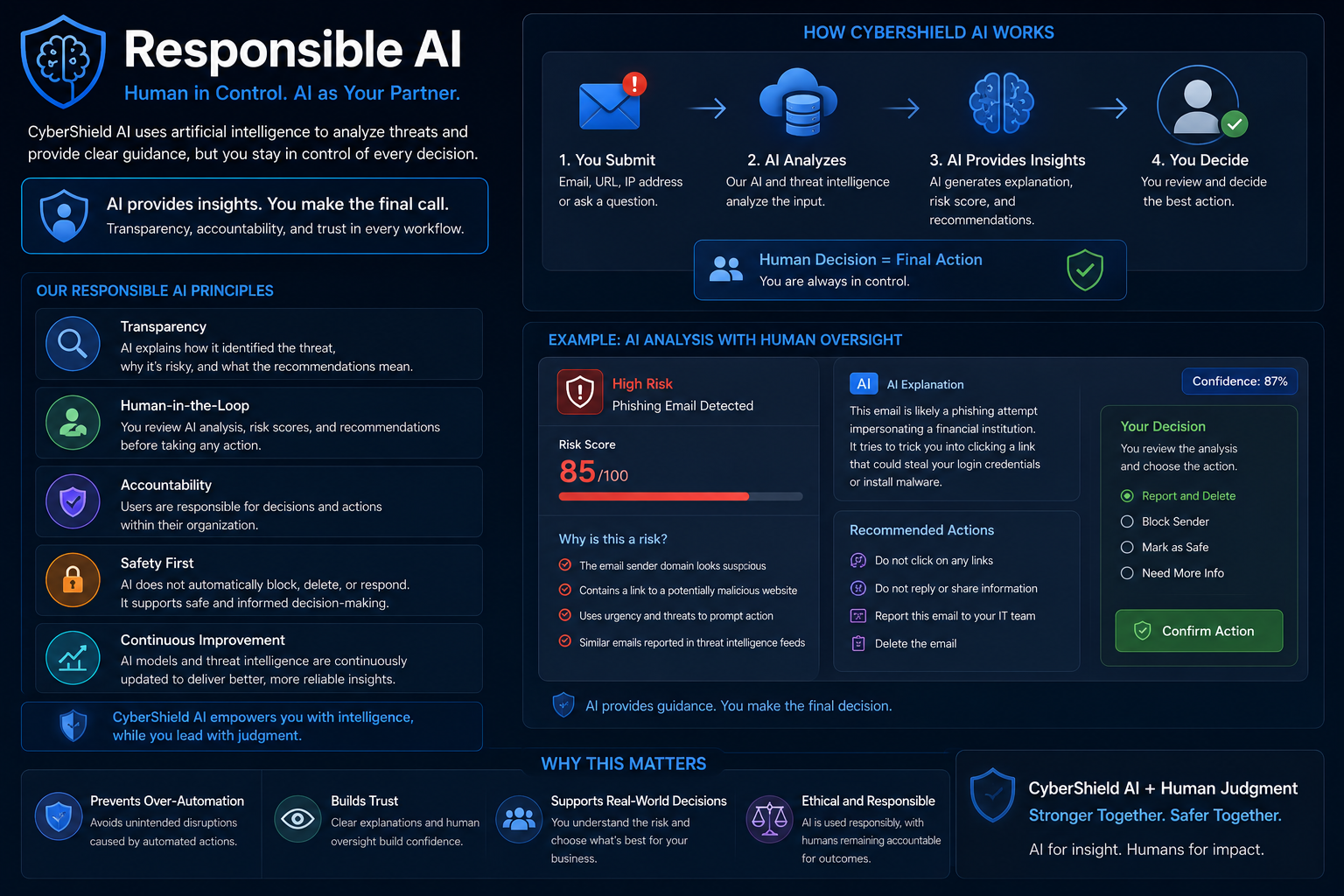
Responsible AI - Human In Control - AI As Partner
-
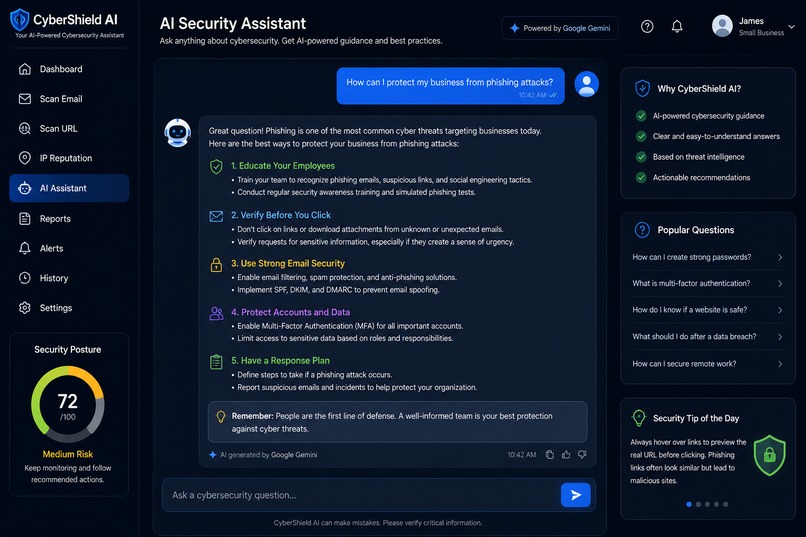
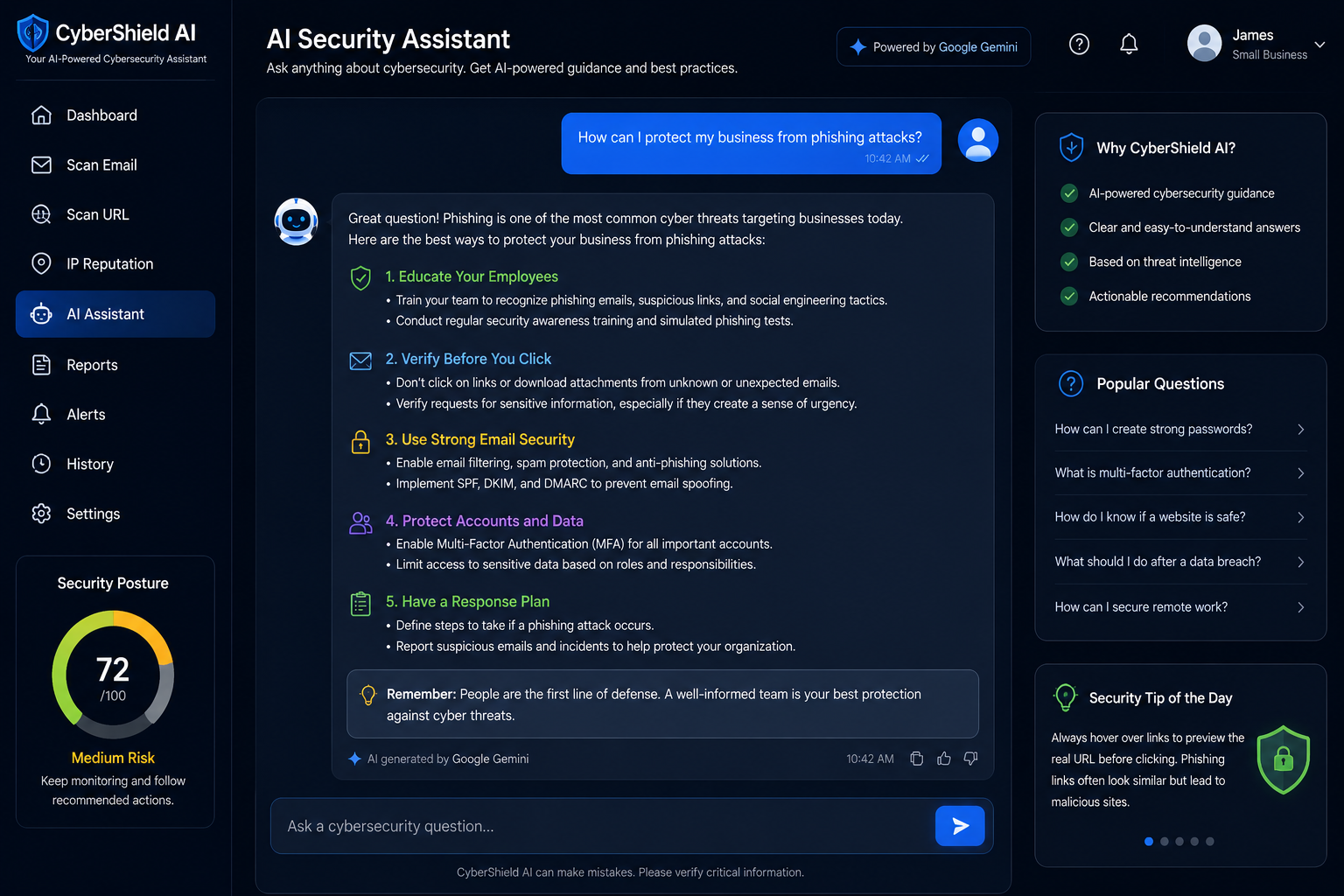
AI Security Assistant - CyberShield AI - Small Business Owners Researching
-

CyberShield AI CyberSecurity AI powered Assitant
-
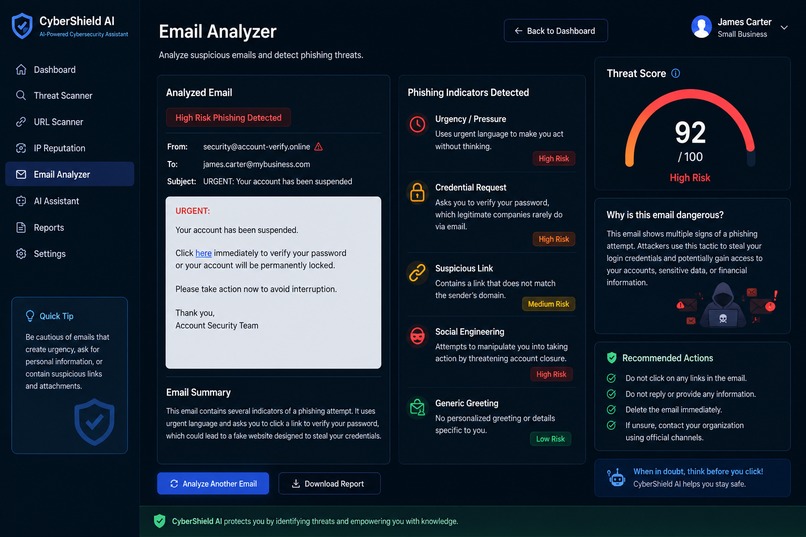
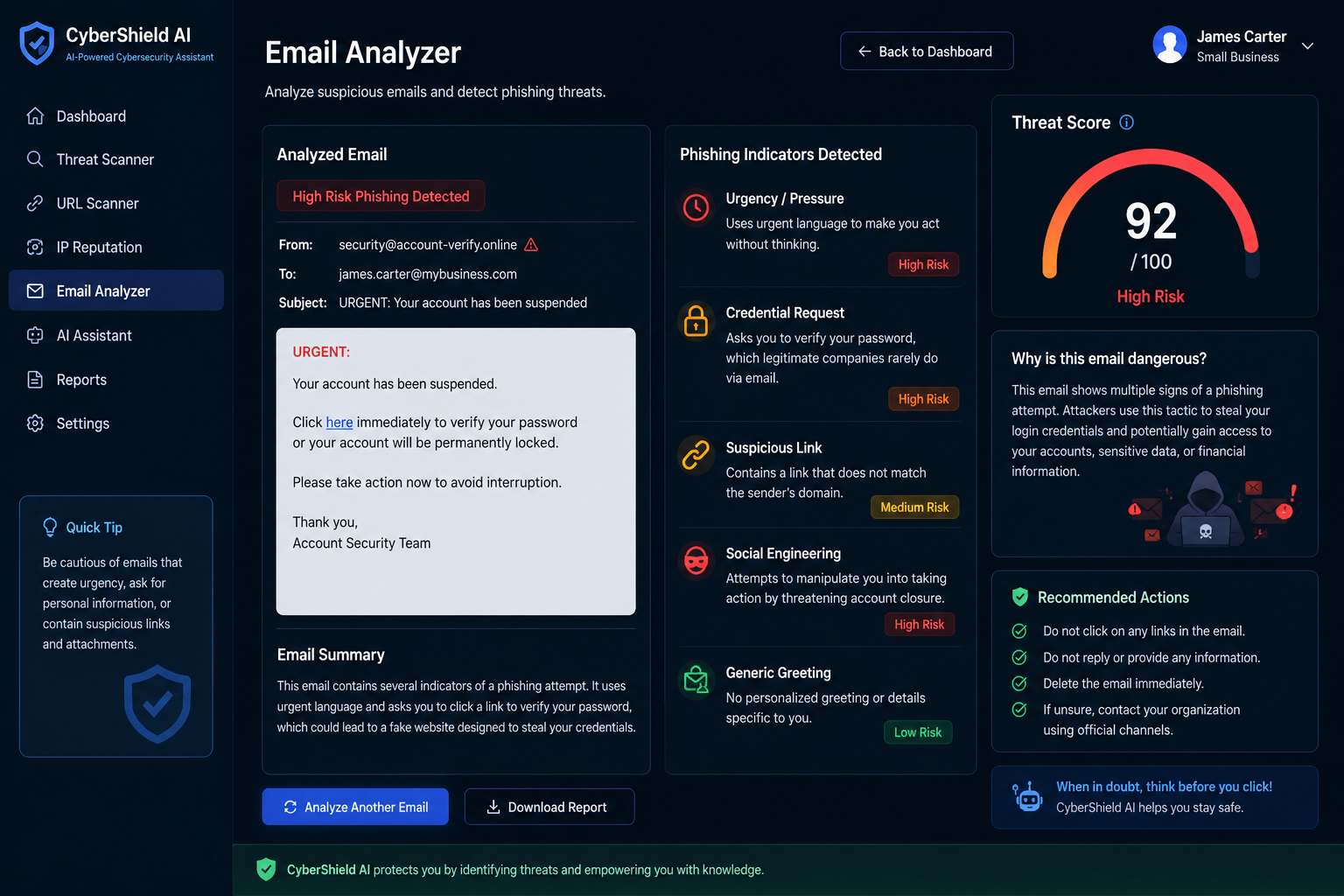
Email Analyzer - CyberShield AI
-
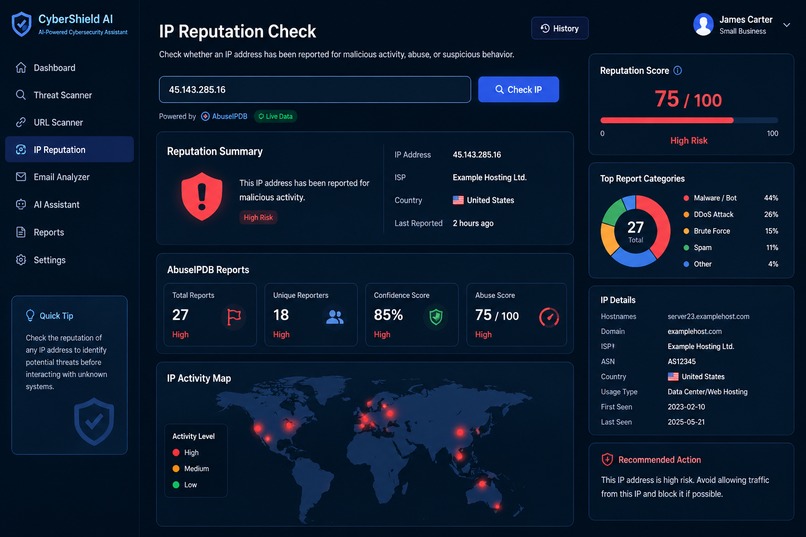
Email Analyzer - CyberShield AI
-
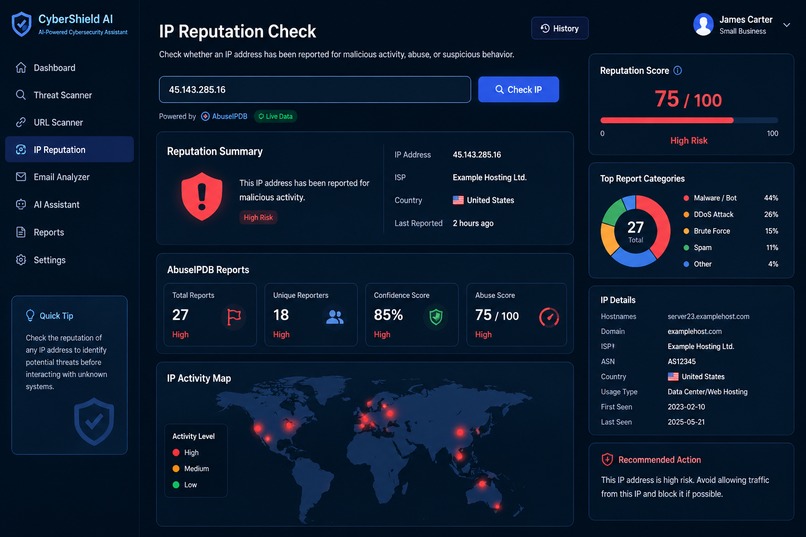
IP Reputation Check - CyberShield AI
-
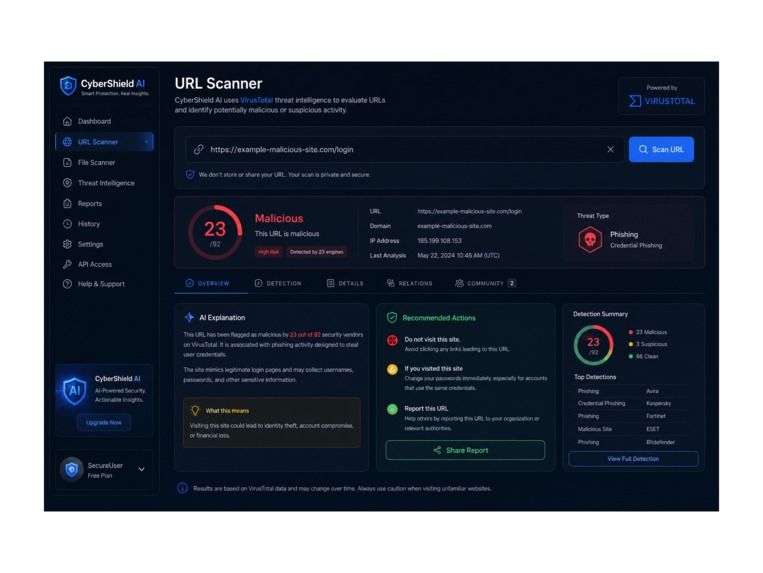
CyberShield AI URL Scanner
-
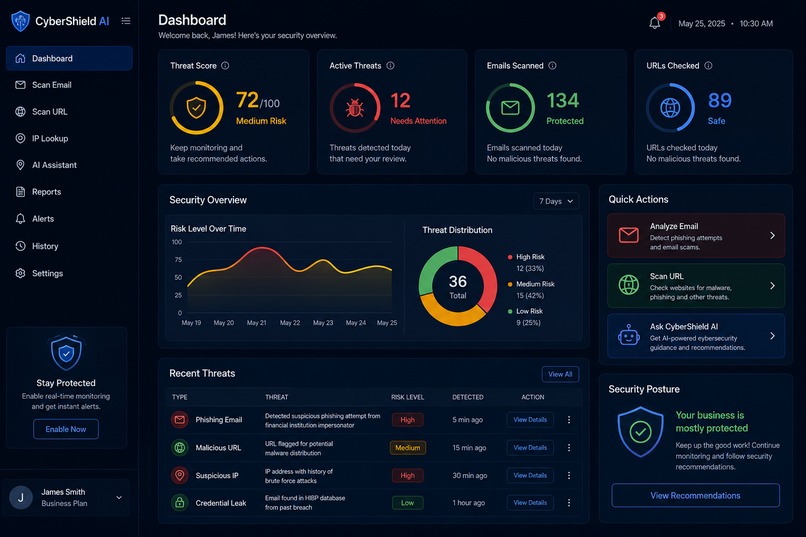
CyberShield AI dashboard 1

CyberShield AI
Inspiration
Small businesses are increasingly targeted by cybercriminals, yet many lack dedicated cybersecurity teams, advanced security tools, or the expertise needed to recognize threats before damage occurs. A single phishing email, malicious link, or compromised IP address can result in financial loss, operational downtime, data breaches, and loss of customer trust.
We were inspired by the challenges faced by small business owners like James, who manages company operations and technology systems without formal cybersecurity training. We wanted to create a solution that makes cybersecurity accessible, understandable, and actionable for non-experts.
Instead of requiring users to interpret complex security reports, we asked a simple question:
What if AI could act as a personal cybersecurity assistant that explains threats in plain language and helps users make safer decisions?
What it does
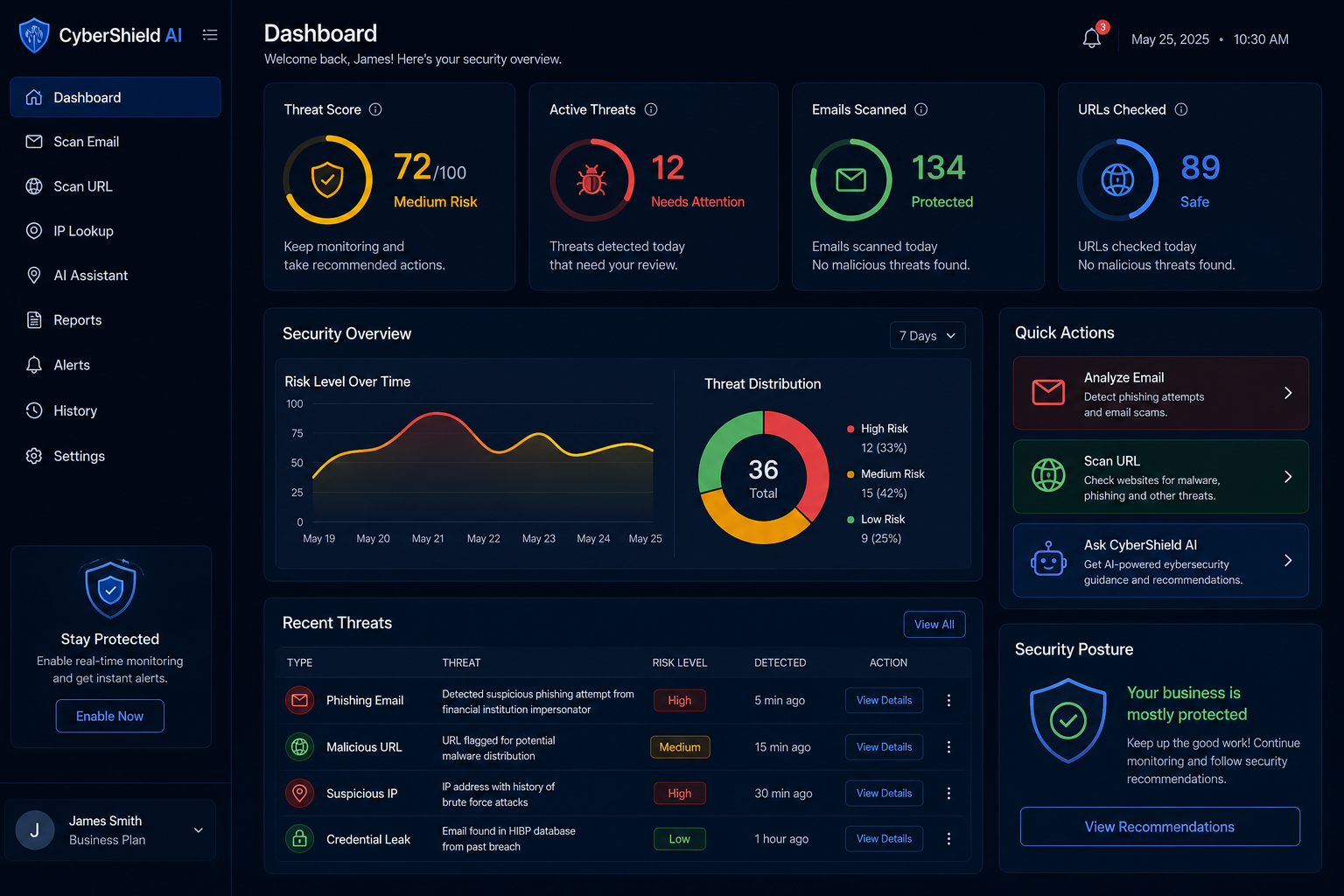
CyberShield AI is an AI-powered cybersecurity assistant that helps small businesses identify, understand, and respond to cyber threats.
The platform enables users to:
- Analyze suspicious emails for phishing attempts.
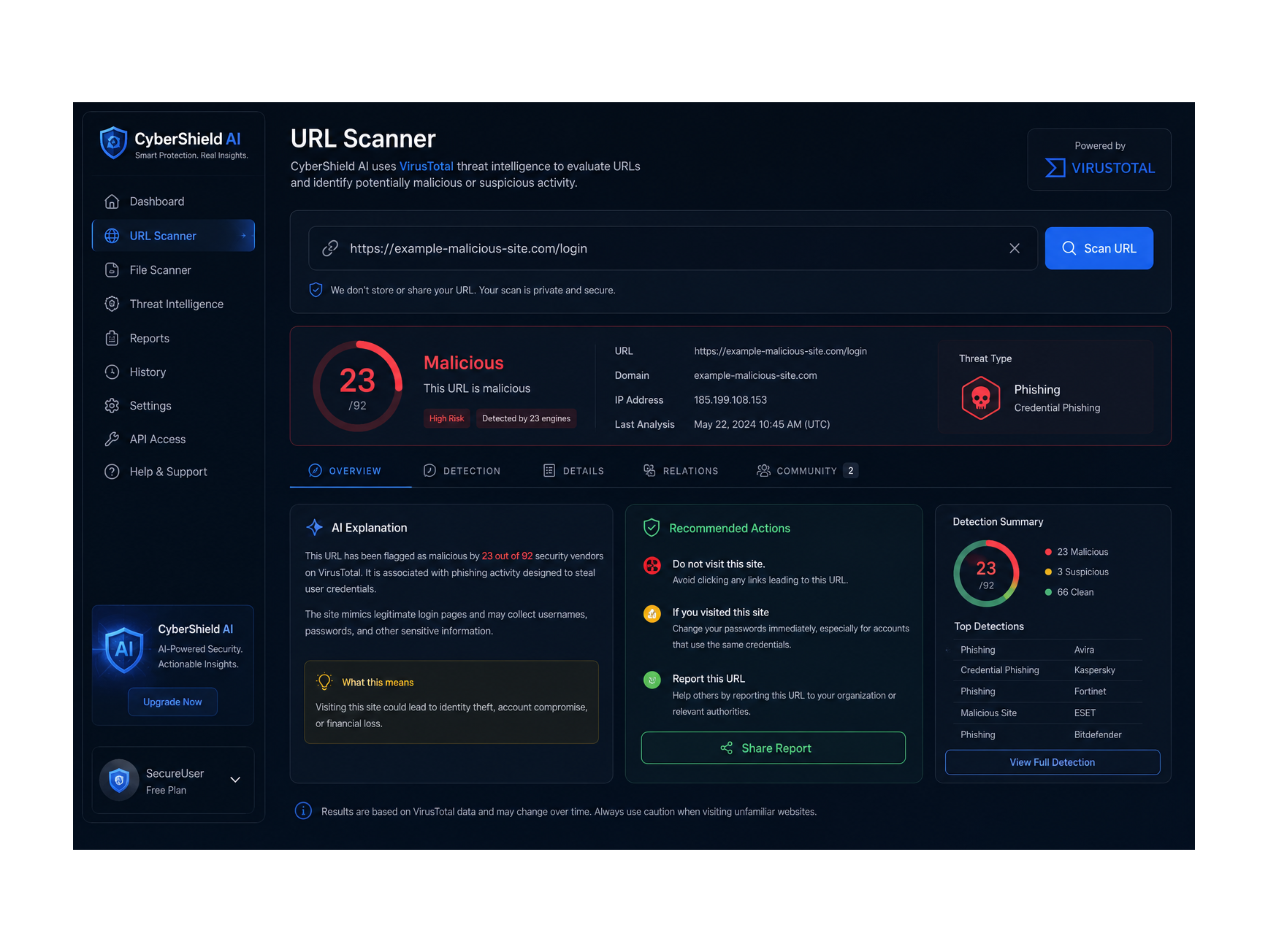
- Scan URLs for malware and phishing risks.
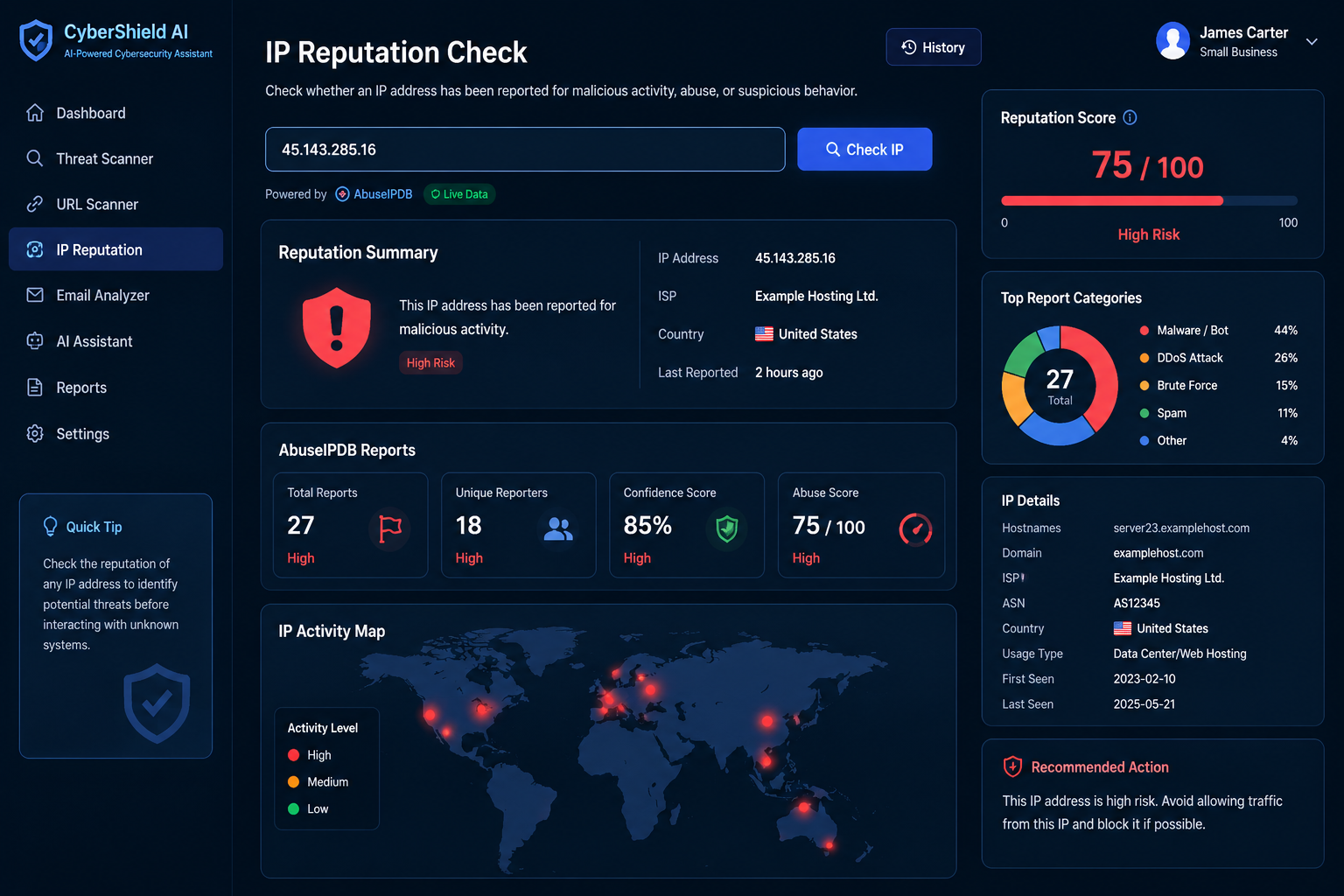
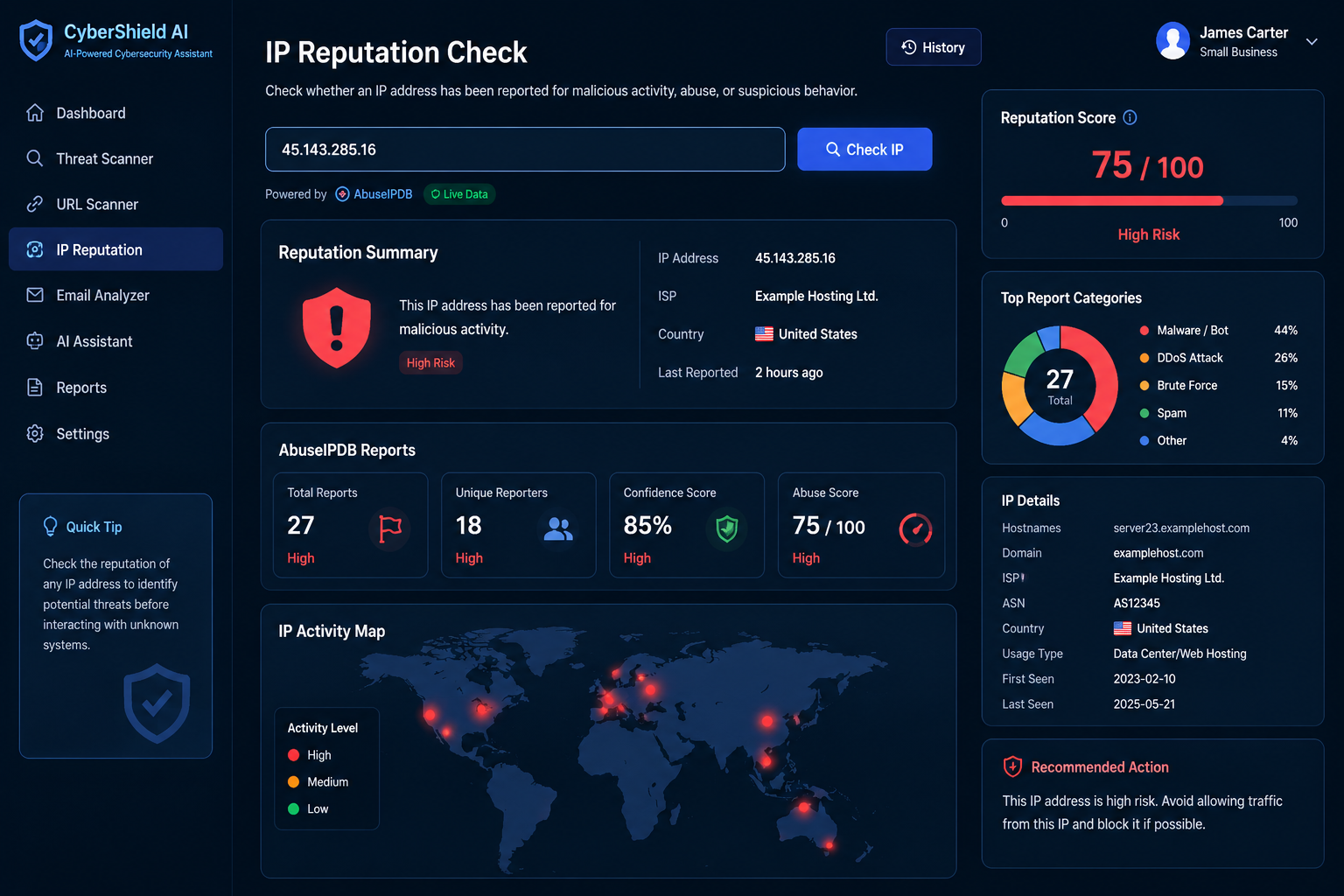
- Check the reputation of IP addresses.
- Receive AI-generated explanations of threats in plain language.
- View risk scores and recommended actions.
- Make informed security decisions while maintaining human oversight.
Rather than simply saying "threat detected," CyberShield AI explains:
- Why a threat is dangerous.
- How it was identified.
- What actions should be taken.
- How similar threats can be prevented in the future.
This transforms cybersecurity from a technical challenge into an understandable decision-making process.
How we built it
We designed CyberShield AI as a modern AI-assisted cybersecurity platform.
Frontend
- Next.js 15
- Tailwind CSS
- Shadcn/UI
Backend
- FastAPI
- Python
- Pydantic Models
AI Layer
- Google Gemini for natural language threat analysis, risk explanation, and cybersecurity guidance.
- Threat classification engine for risk scoring and prioritization.
Threat Intelligence Sources
- VirusTotal API
- AbuseIPDB API
- Vulnerability databases and external threat intelligence feeds
Core Workflow
- User submits an email, URL, or IP address.
- Threat intelligence services collect security information.
- The threat classification engine calculates risk levels.
- Google Gemini analyzes findings and generates clear, human-readable explanations.
- Users receive recommendations while retaining control over final actions.
This architecture combines automated threat detection, threat intelligence, and AI-powered decision support to help users understand and respond to cybersecurity risks effectively.
Challenges we ran into
One of the biggest challenges was balancing accuracy with usability.
Cybersecurity tools often generate technical reports that are difficult for non-experts to understand. At the same time, simplifying information too much can hide important details.
Another challenge was designing a system that uses AI responsibly. Cybersecurity decisions can have serious consequences, so we needed to ensure that AI would provide guidance rather than automatically taking critical actions.
We also faced the challenge of integrating multiple sources of threat intelligence and transforming raw security data into meaningful recommendations for users.
Accomplishments that we're proud of
We are proud that CyberShield AI focuses on solving a real-world problem affecting thousands of small businesses worldwide.
Key accomplishments include:
- Creating a user-friendly AI cybersecurity assistant.
- Combining external threat intelligence with AI reasoning.
- Designing a human-in-the-loop security workflow.
- Making cybersecurity understandable for non-technical users.
- Building a scalable architecture capable of supporting future security services.
Most importantly, we created a solution that empowers users rather than overwhelming them with technical complexity.
What we learned
Through this project, we learned that effective AI solutions are not just about building powerful models—they are about helping people make better decisions.
We learned:
- The importance of responsible AI design.
- How threat intelligence APIs can enhance AI reasoning.
- The value of human oversight in security systems.
- How to translate complex cybersecurity concepts into actionable guidance.
- The importance of designing AI around user needs rather than technical features.
We also learned that trust and transparency are essential when building AI systems that influence important decisions.
What's next for CyberShield AI
Our vision is to evolve CyberShield AI into a comprehensive cybersecurity platform for small businesses and underserved organizations.
Future enhancements include:
- Real-time network monitoring.
- Browser extensions for phishing protection.
- Automated vulnerability assessment.
- Employee cybersecurity awareness training.
- Ransomware detection and prevention.
- Security compliance assistance.
- AI-powered incident response workflows.
- Predictive threat intelligence and attack forecasting.
Ultimately, we envision CyberShield AI becoming a trusted digital security partner that helps organizations stay protected in an increasingly complex cyber landscape while ensuring that humans remain in control of critical decisions.
CyberShield AI demonstrates how artificial intelligence can make cybersecurity more accessible, proactive, and impactful for the people who need it most.
Built With
- abuseipdb-api
- fastapi
- github
- google-gemini
- google-gemini-api
- have-i-been-pwned-api
- next.js-16
- nvd/cve-database
- python
- shadcn/ui
- sql
- sqlalchemy
- tailwind-css
- typescript
- virustotal-api


Log in or sign up for Devpost to join the conversation.