-
-
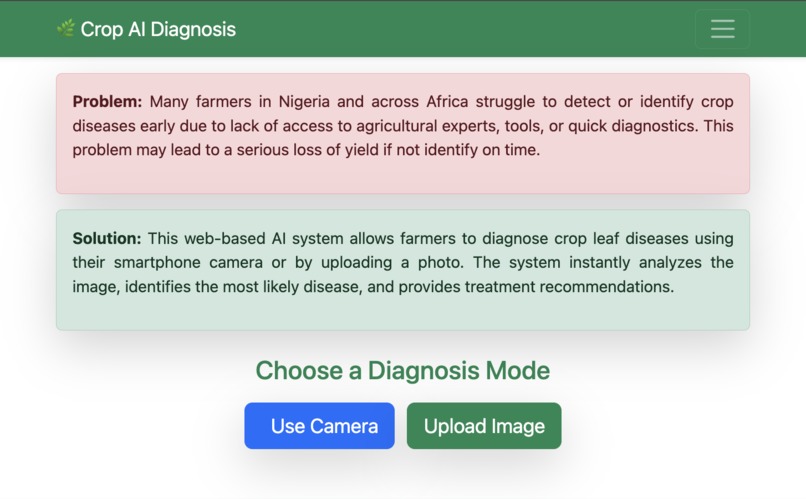
Home Page
-
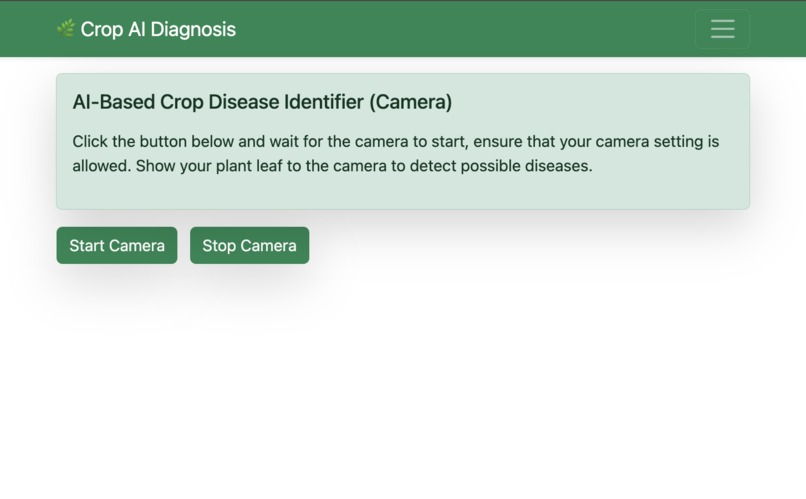
Camera Version Page
-
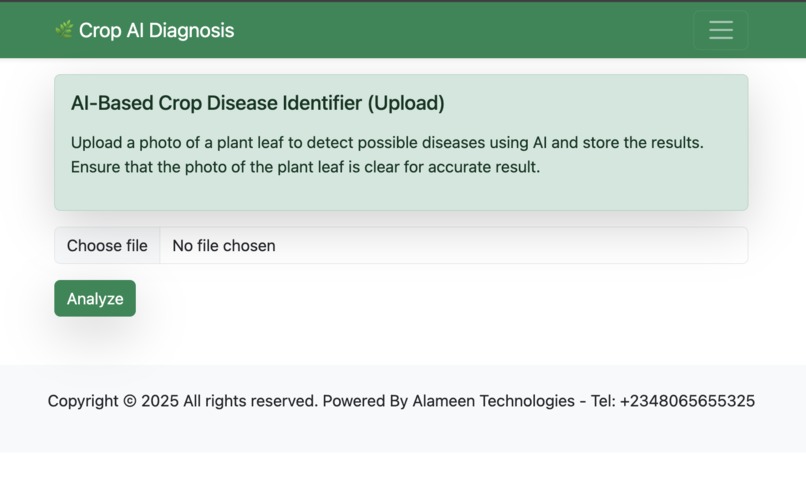
Upload Version Page
-
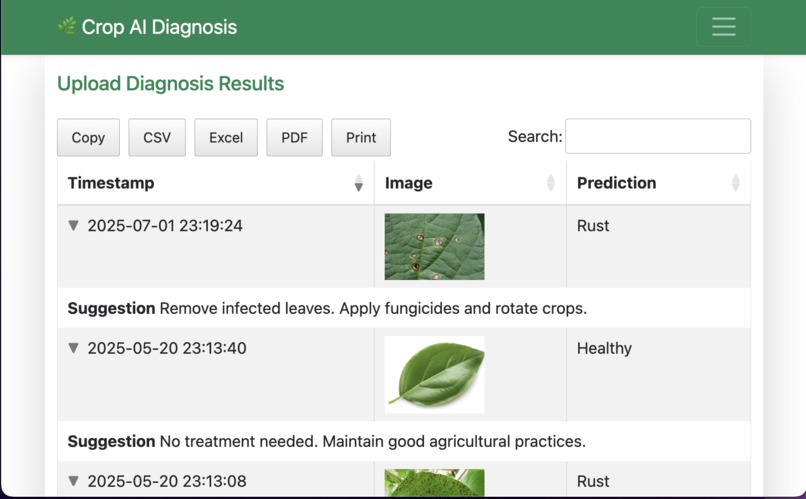
Result Page


Inspiration
The idea for this project came from the challenges faced by smallholder farmers in Nigeria, where many struggle with diagnosing and treating crop diseases. Without expert advice or accessible resources, they often experience significant crop loss. The goal was to create an affordable, easy-to-use tool that can empower farmers to instantly diagnose crop diseases using just their smartphones.
What it does
AI Crop Disease Identifier is a web-based system that helps farmers detect crop diseases by simply uploading a photo or using their smartphone camera. The system analyzes the image, identifies the most likely disease, and provides actionable treatment recommendations. It aims to improve crop health, increase yield, and minimize loss by providing immediate diagnoses and advice.
How I built it
The project is built using the following technologies:
HTML, CSS, JavaScript for a user-friendly, responsive web interface
PHP & MySQL for backend functionality and data storage
Google Teachable Machine to train a custom AI model using crop disease images
JavaScript to run the AI model directly in the browser, making it accessible even on low-end devices
The system allows farmers to either upload a photo or snap a picture of a crop leaf using their smartphone, which is then analyzed by the trained AI model.
Challenges
Model Training: Using Teachable Machine was convenient but had limitations on dataset size and custom model configurations.
Image Quality: Inconsistent image quality from various smartphone cameras affected model accuracy.
Performance: Ensuring the model ran smoothly in the browser with minimal lag, especially for low-end smartphones.
Internet Connectivity: Rural areas with low or no internet access presented challenges for remote image uploads.
Accomplishments
AI integration: Successfully integrated a custom-trained AI model that provides fast and accurate disease detection directly in the browser.
Mobile responsiveness: Designed the app to work seamlessly on low-end smartphones, ensuring accessibility for farmers.
Positive impact: The tool has the potential to reduce crop losses and improve farmers' decision-making by offering instant disease diagnoses and treatment suggestions.
What I learned
How to train an AI model using Google Teachable Machine and integrate it into a web app.
The importance of user-centered design for accessibility in rural and resource-limited environments.
How to optimize web applications for mobile devices with varying specifications.
Techniques to handle image quality and performance issues for web-based AI models.
What's next for AI Crop Disease Identifier
Expanding the dataset: Collecting more data and expanding the AI model to cover a wider range of crops and diseases.
Offline functionality: Developing a version that can work offline, especially for areas with poor internet connectivity.
Mobile app development: Creating a dedicated mobile app for both Android and iOS to further improve accessibility.
Collaboration with farmers and agricultural organizations: Partnering with local farmers for real-world testing and improving the system based on their feedback.


Log in or sign up for Devpost to join the conversation.