-
-
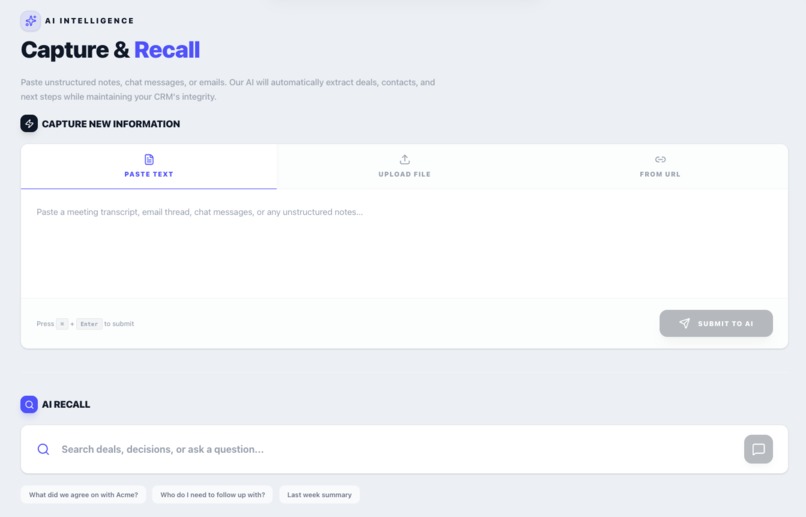
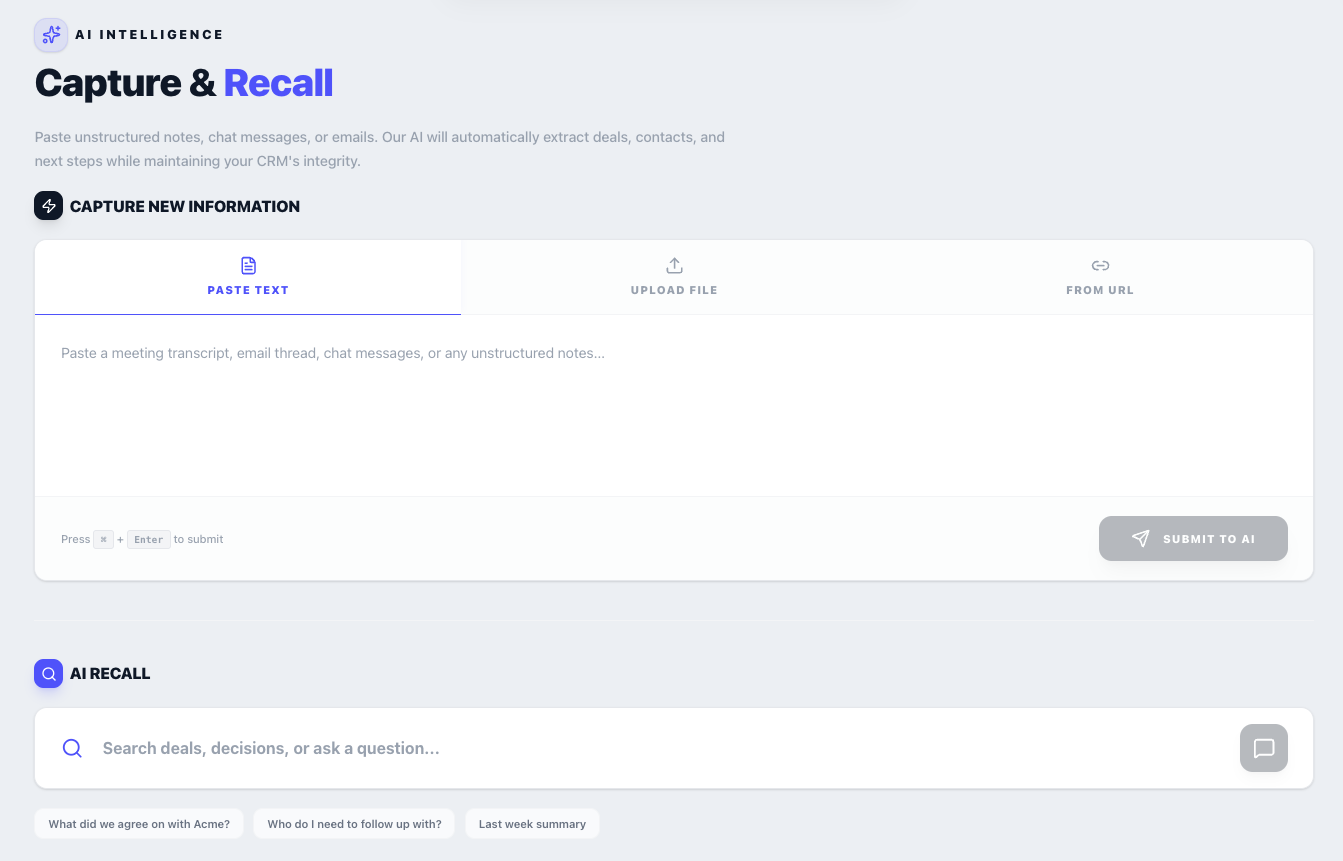
Easy way to interact with CRM using NL and unstructured data
-
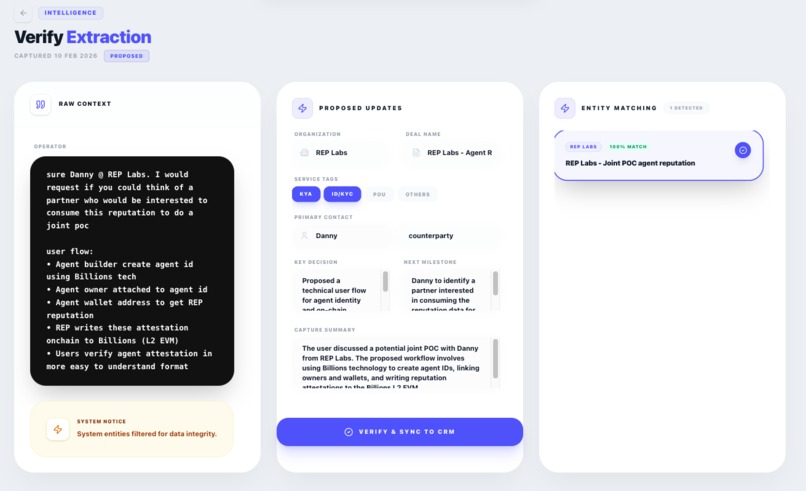
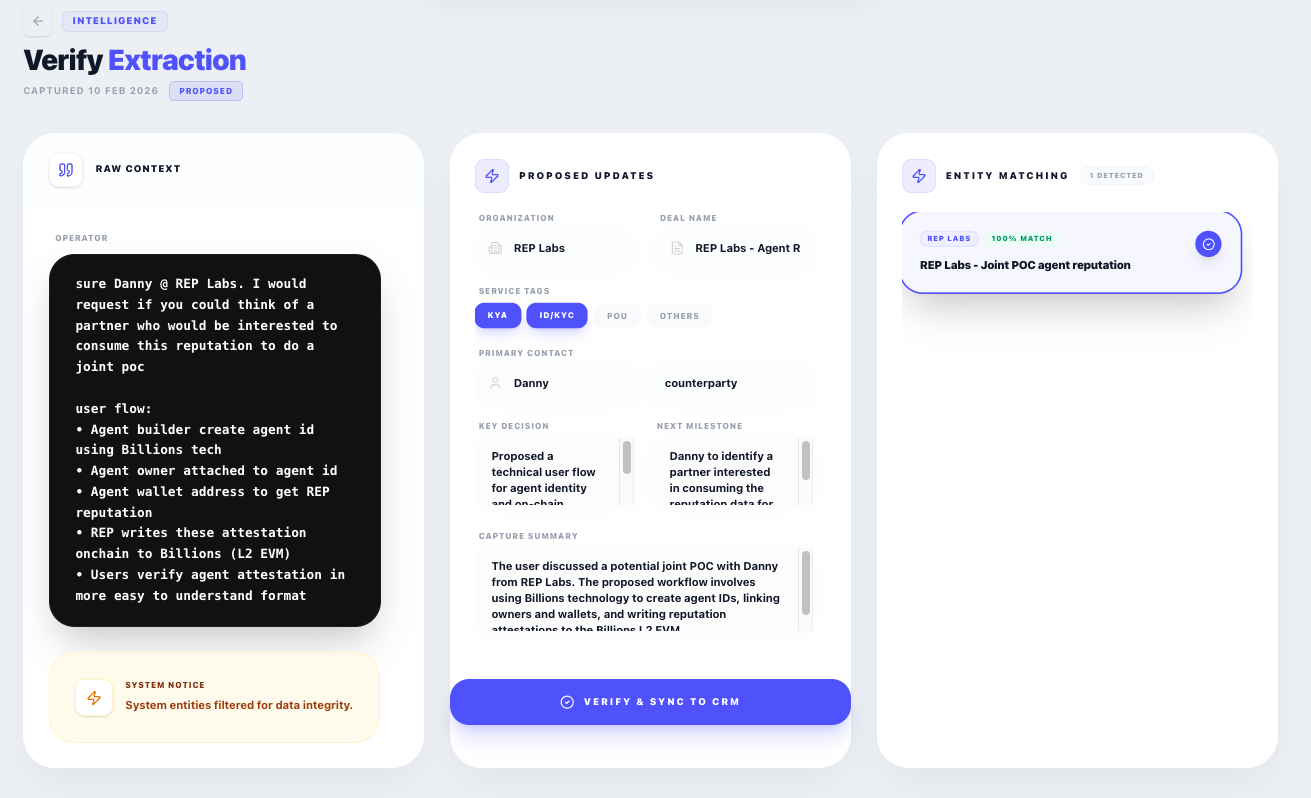
AI CRM system parse inputs into relevant categories and update CRM, avoiding duplicate entries
-
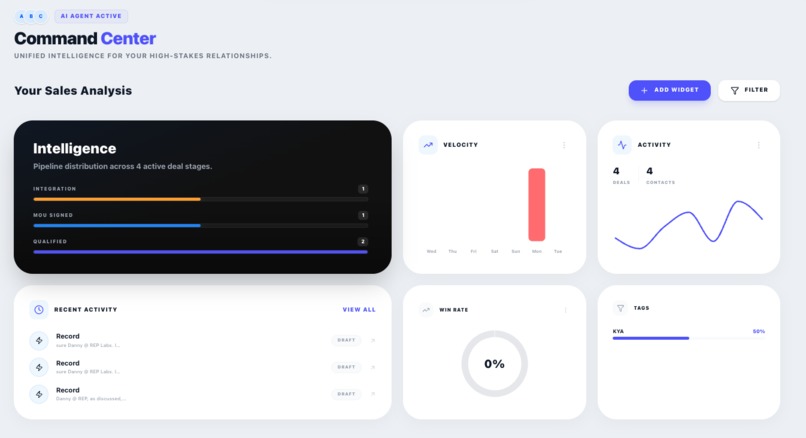
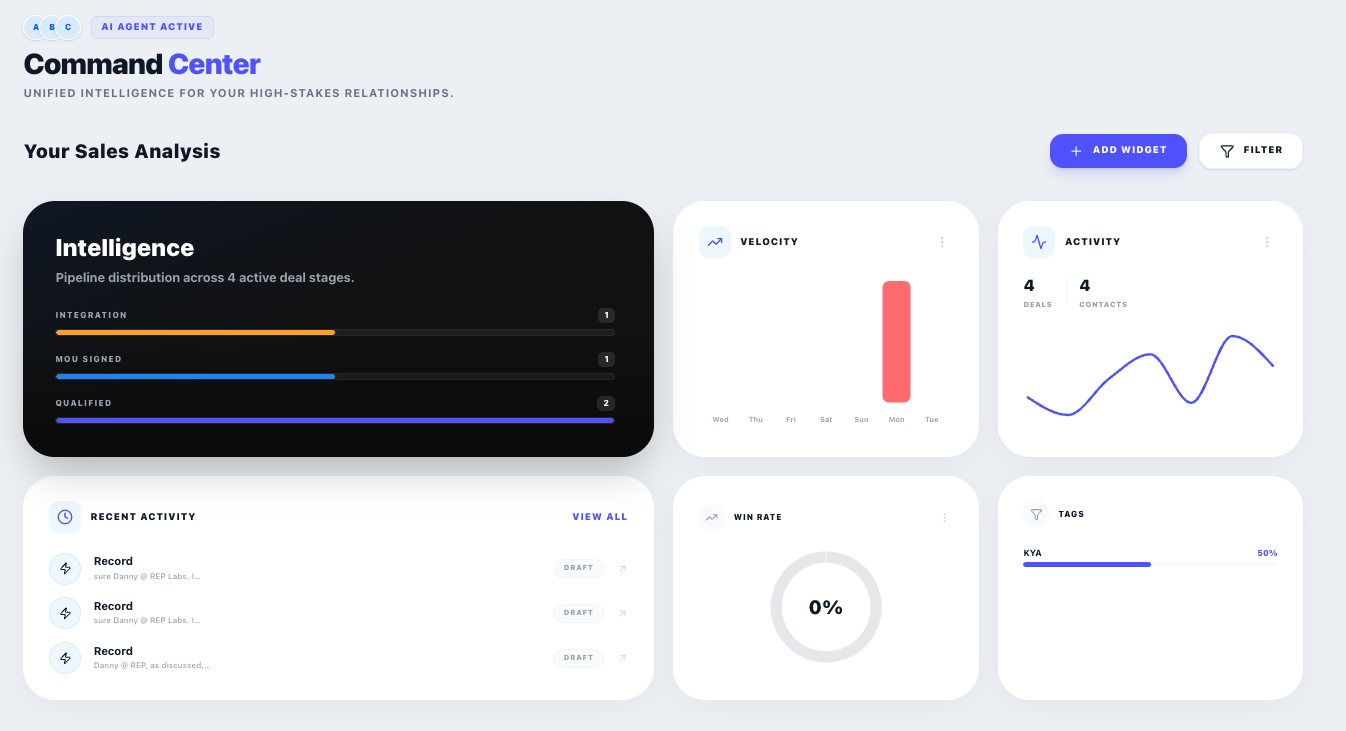
CRM dashboard with insightful charts, interact with them using NL
-
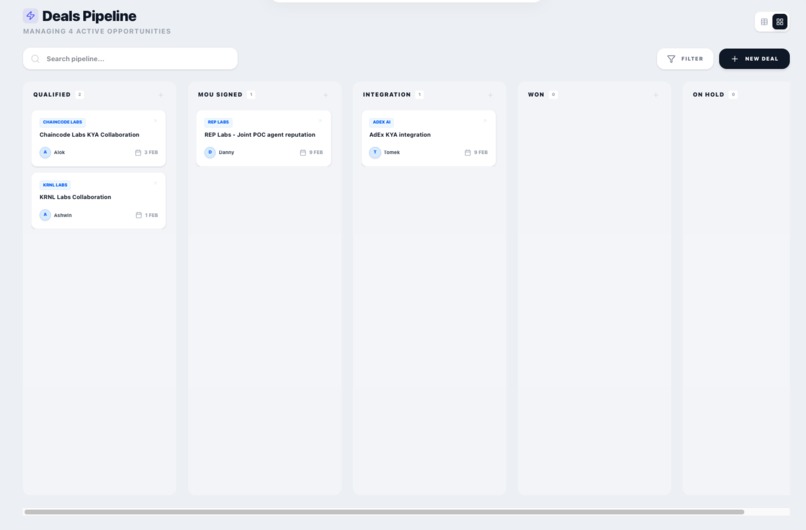
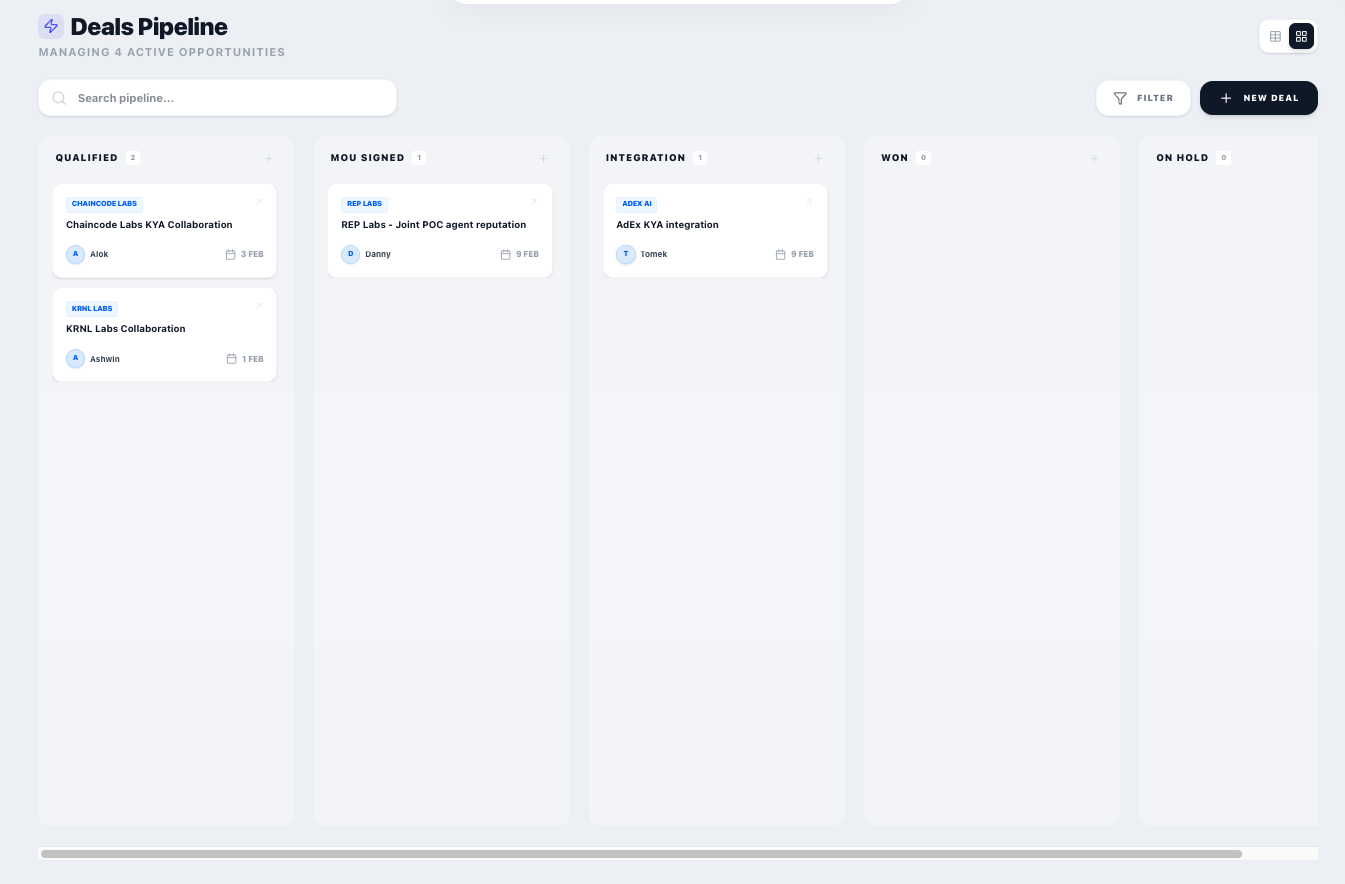
Snapshot of a deal stages in Kanban format
-
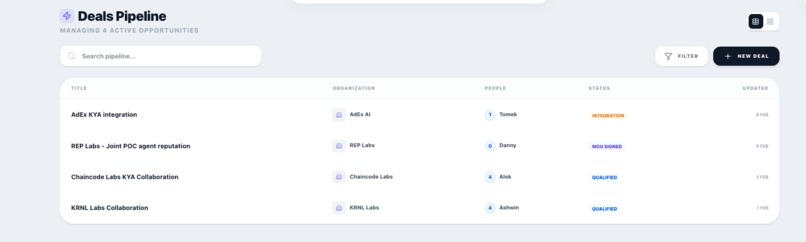
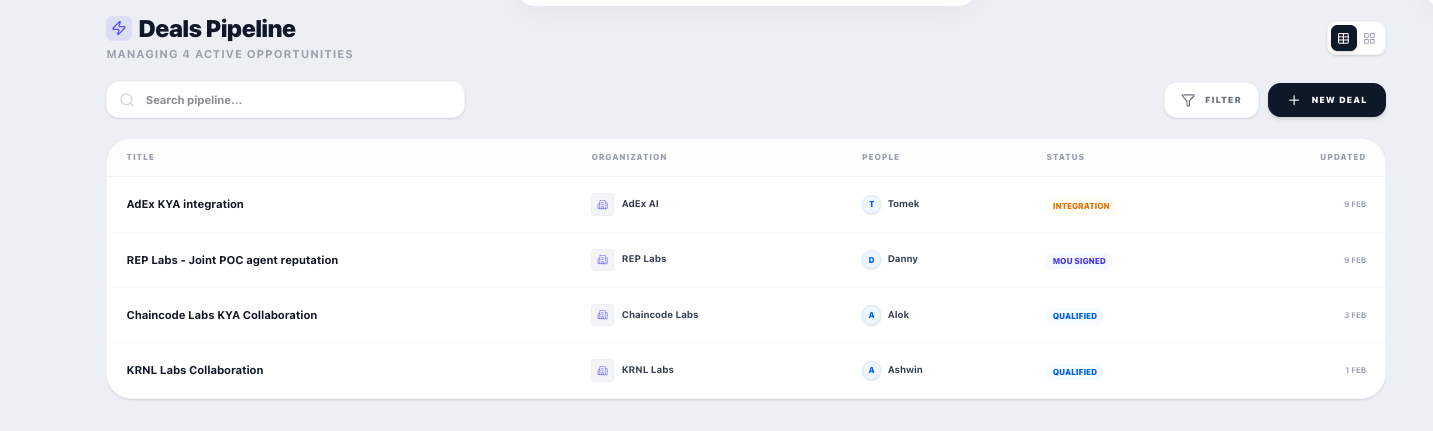
Snapshot of a deal stages in list format
-
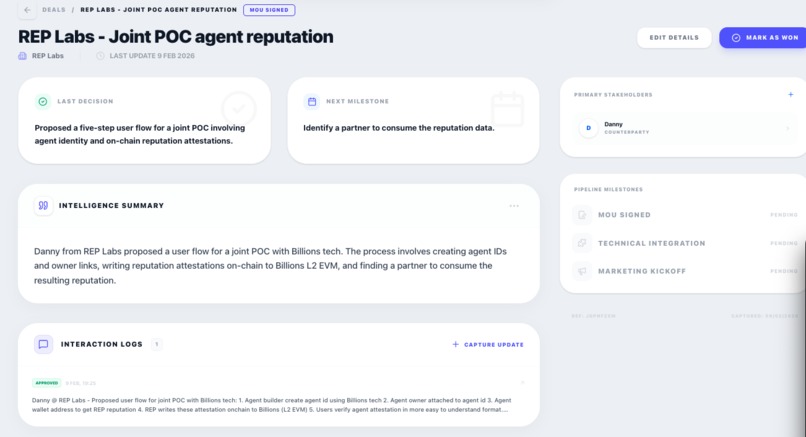
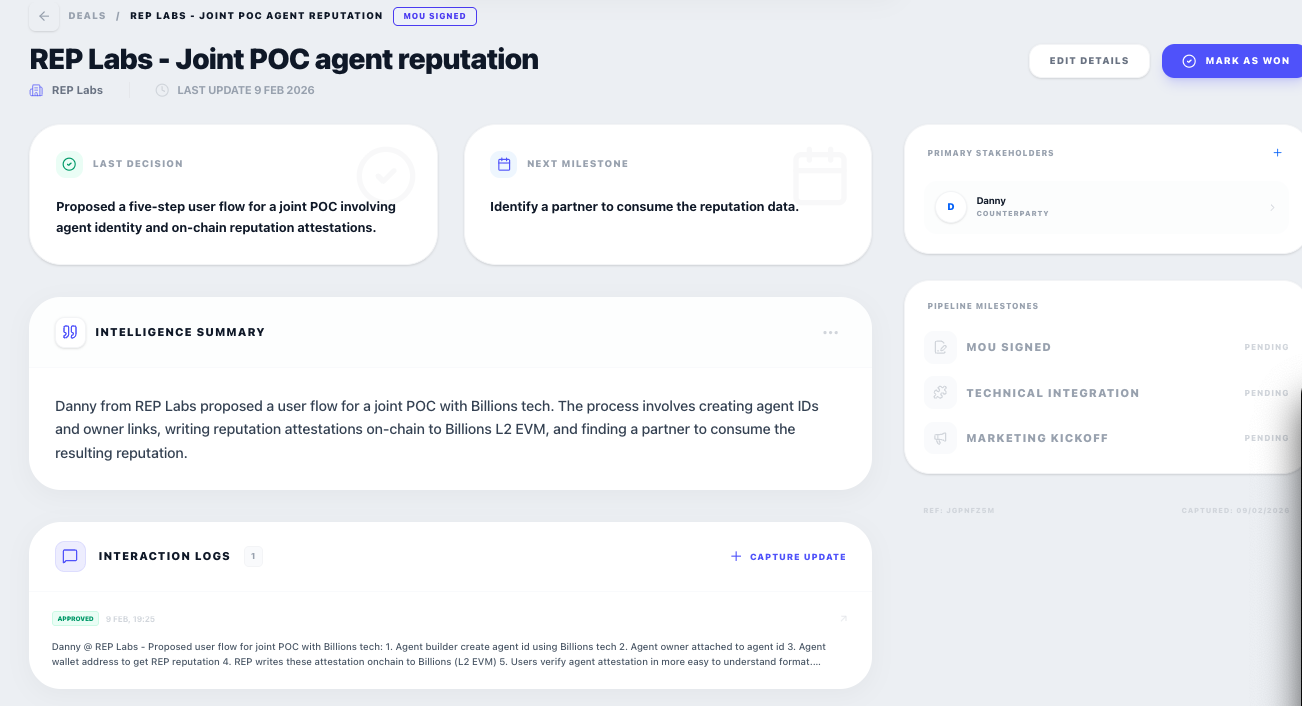
Deal details with next set of actions to take deal to won/lost stage
-
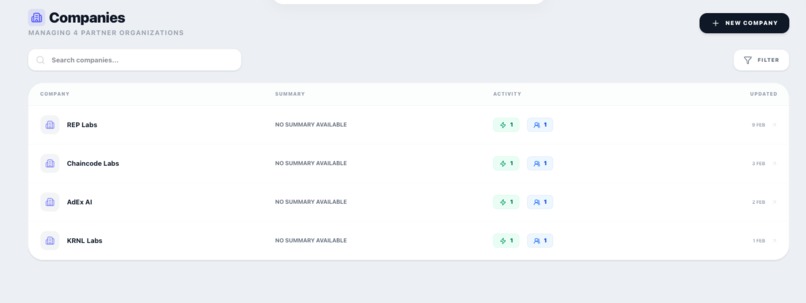
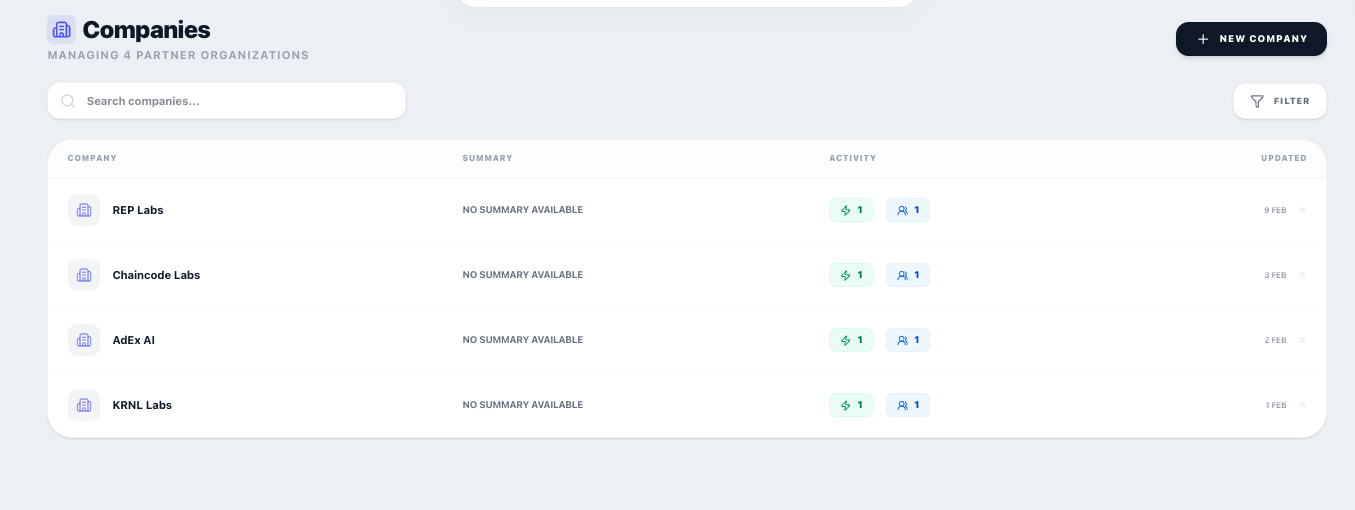
Snapshot of a org in list format
Inspiration
Sales updates live in messy places: Telegram threads, emails, meeting notes, and random docs. We kept seeing the same failure mode: the CRM becomes a “second job,” so it stops being trusted. We wanted a workflow where the CRM updates itself from reality, not from manual form-filling.
What it does
AI-CRM turns unstructured text into clean, reviewable CRM updates.
- Capture from pasted text, uploaded files, or URLs
- Extract deals, organizations, contacts, service tags, key decisions, and next steps
- Verify the proposed updates before anything touches your database
- Recall your CRM with natural language (“What did we agree with REP Labs last week?”)
- Visualize pipeline health with a stage distribution widget (no AI dependency)
How we built it
- Next.js (App Router) + TypeScript for the product UI
- Prisma + SQLite for a simple, local-first data model
- Gemini for structured extraction using JSON mode, grounded recall, and chat
- A “proposal workflow” that treats AI output as a draft, not truth
In short:
$$\text{Unstructured Input} \rightarrow \text{Structured Proposal} \rightarrow \text{Human Verification} \rightarrow \text{CRM State}$$
Challenges we ran into
- Reliability of extraction: AI output can drift, so we enforced structured responses and strong validation.
- Data integrity: avoiding duplicates and preventing polluted CRM state required careful review/approval flows.
- UI density: making “verify everything” fast on a single screen without hiding key info took iteration.
Accomplishments that we're proud of
- A human-in-the-loop workflow that makes AI safe for production-like CRM updates.
- Multi-modal capture (text/file/URL) that mirrors how operators actually work.
- A dashboard that demonstrates value even without AI: real pipeline distribution from actual deals.
What we learned
- AI is most useful when it’s treated like a copilot, not an autopilot.
- The best UX for AI systems is “suggest → verify → sync,” with clear confidence boundaries.
- Structured outputs (JSON) + validation dramatically reduce downstream complexity.
What's next for AI-CRM
- Stronger deduplication + entity resolution (contacts/orgs across aliases)
- Team workflows: roles, approvals, and audit trails
- More “judge-friendly” analytics: conversion trends, stage aging, and next-step SLAs
- Optional integrations (Gmail/Slack/Telegram) so capture is truly passive
Built With
- api
- charts
- css
- gemini
- lucide
- next.js
- prisma
- react
- recharts
- sqlite
- tailwind
- typescript

Log in or sign up for Devpost to join the conversation.