Inspiration
The inspiration for AI Creator OS came from a simple problem: one creator can have a great idea, but reaching different audiences with that idea takes a lot of extra work.
I noticed that the same content can have value for many different people. A long YouTube video could become an educational video for one audience, a funny short for another, a regional-language version for another, and several Shorts or social posts for a global audience.
But creating all of these versions usually means repeating the same work—rewriting, translating, editing, changing the style, adding captions, and adapting the content for different platforms.
That made me think: why should a creator have to start over every time they want to reach a different audience?
That question inspired me to build AI Creator OS.
The platform takes one idea or one piece of content and uses AI agents to understand it, then adapt it into different formats, styles, languages, regions, and audience-specific versions while keeping the original message and context.
The vision is simple:
One creator → one idea → many versions → many audiences → global reach
What it does
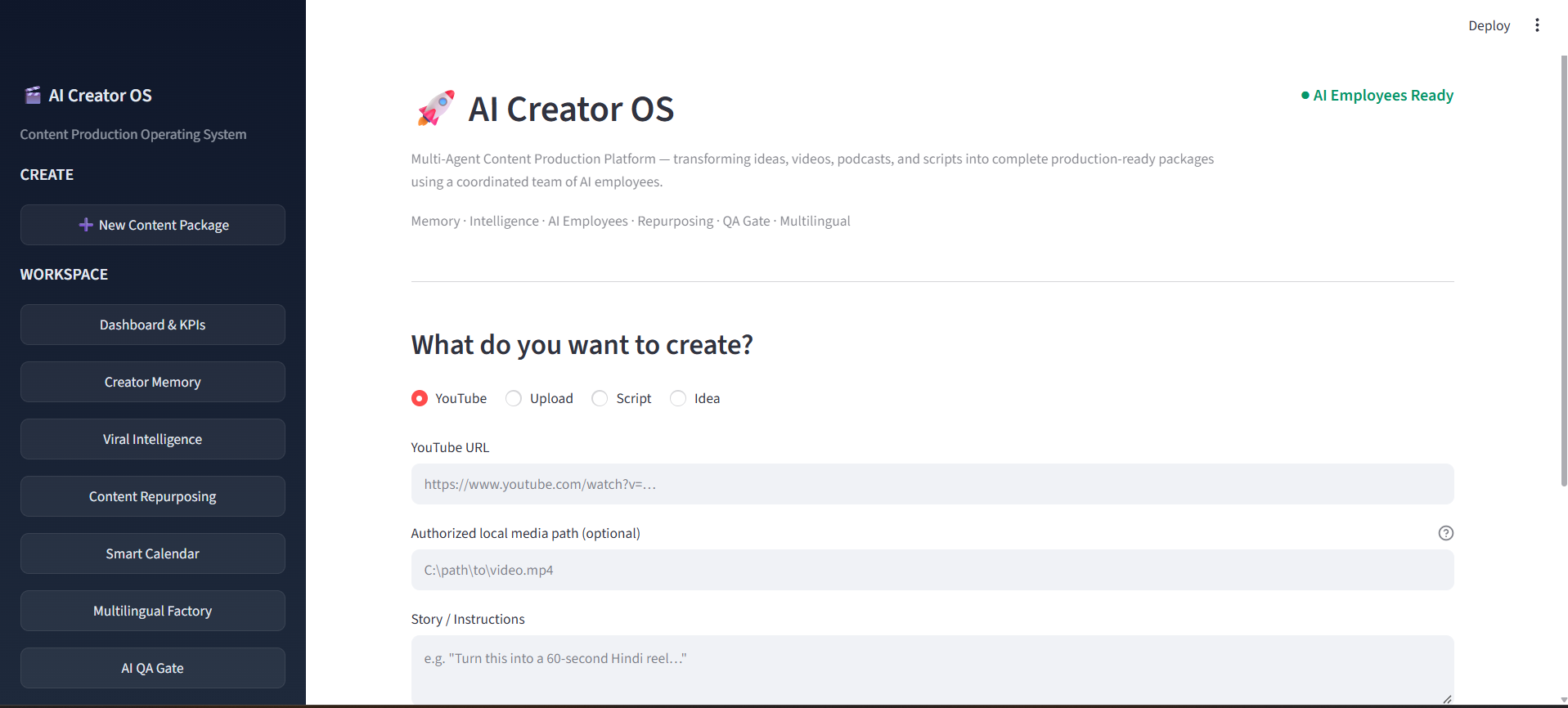
AI Creator OS helps creators turn one idea or one piece of content into many different versions for different audiences.
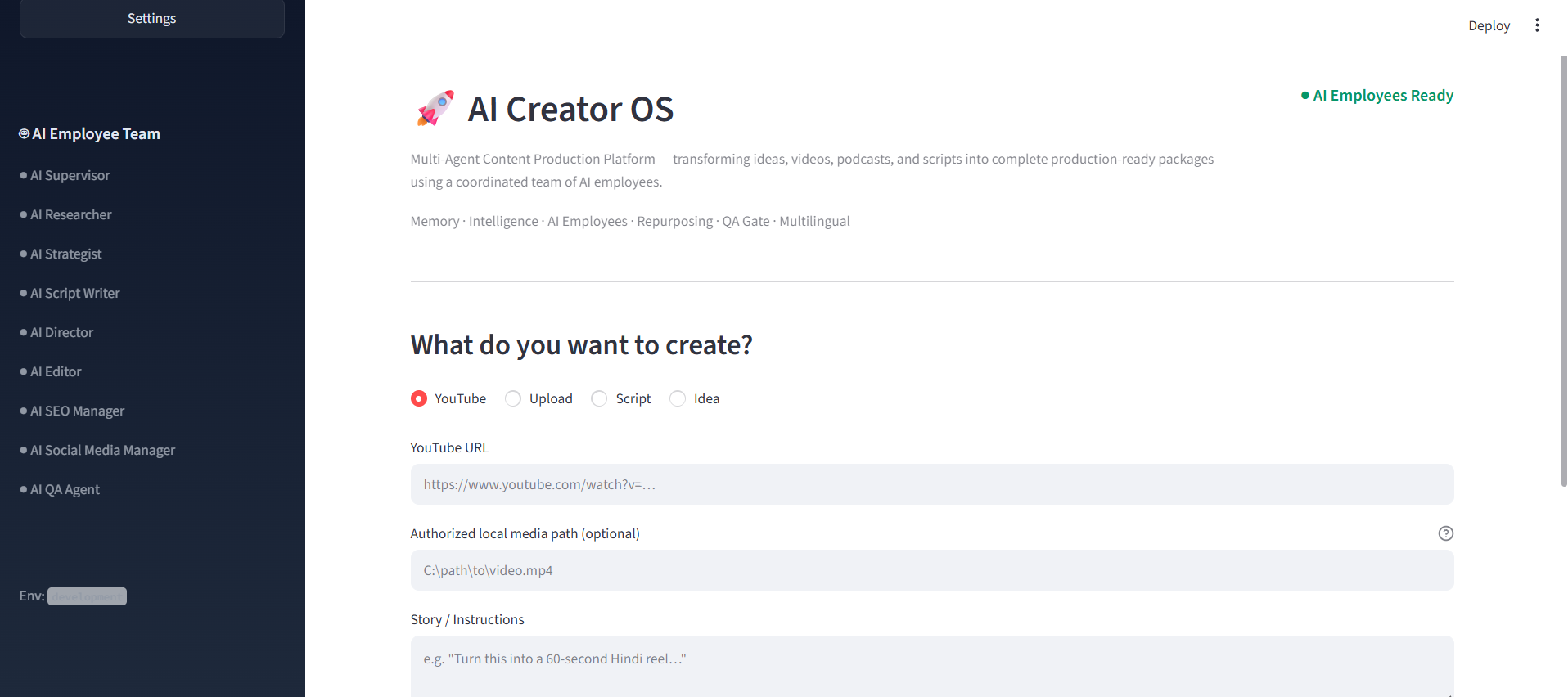
A creator can start with a YouTube video, podcast, script, uploaded video, audio file, or even a simple idea. The AI understands the content and then helps transform it into different formats, purposes, styles, languages, and regions.
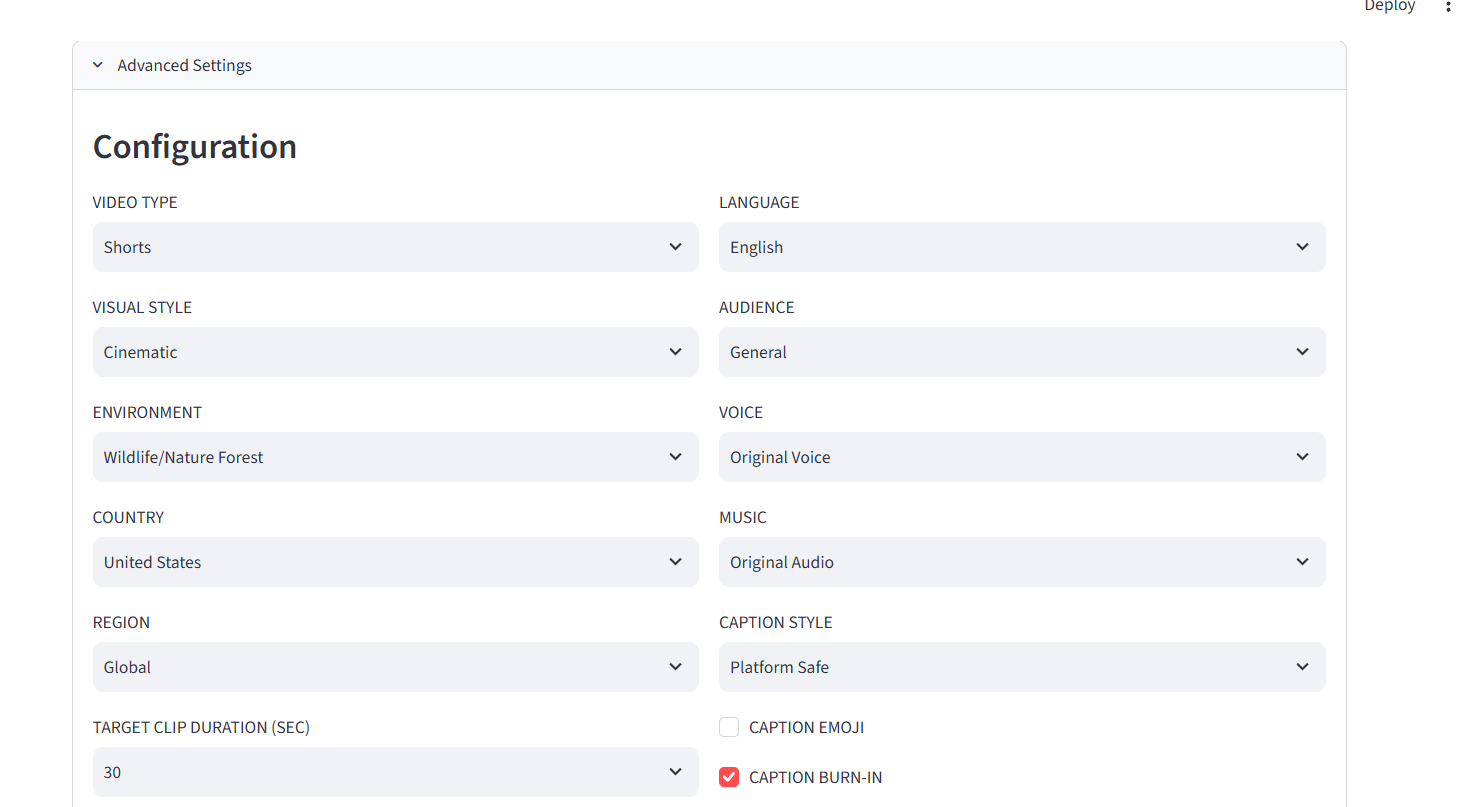
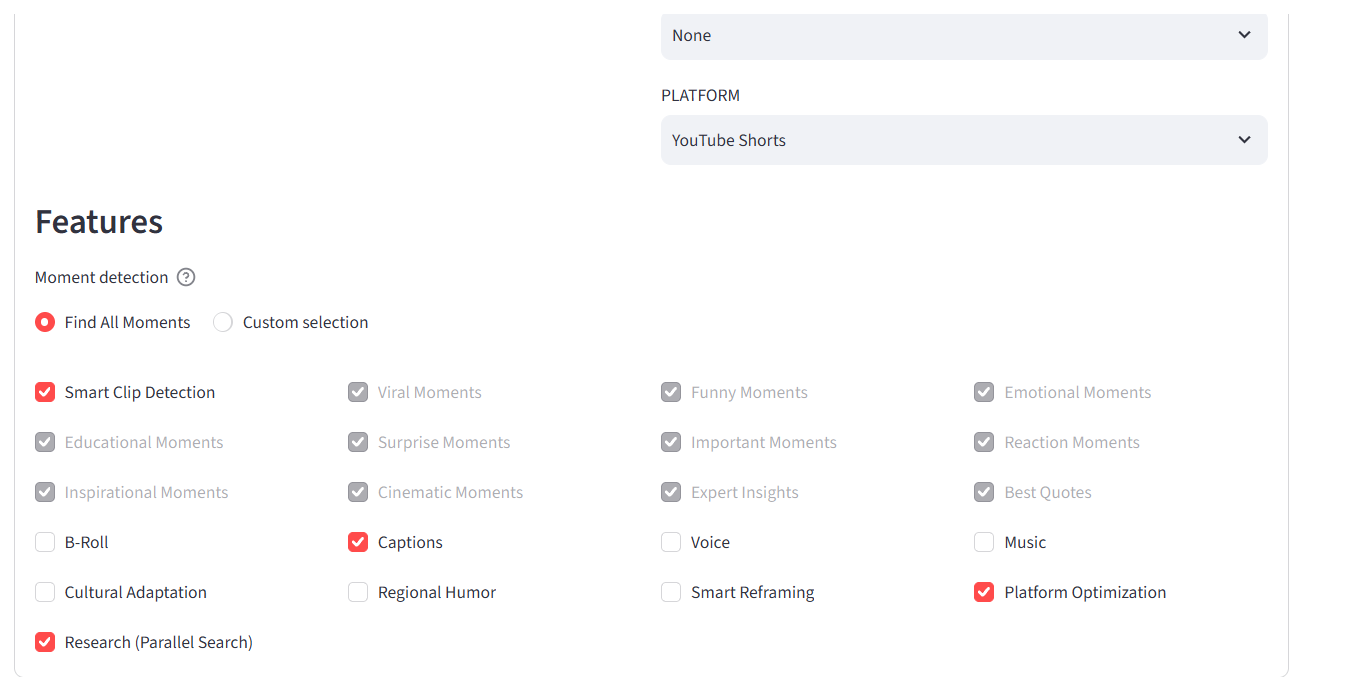
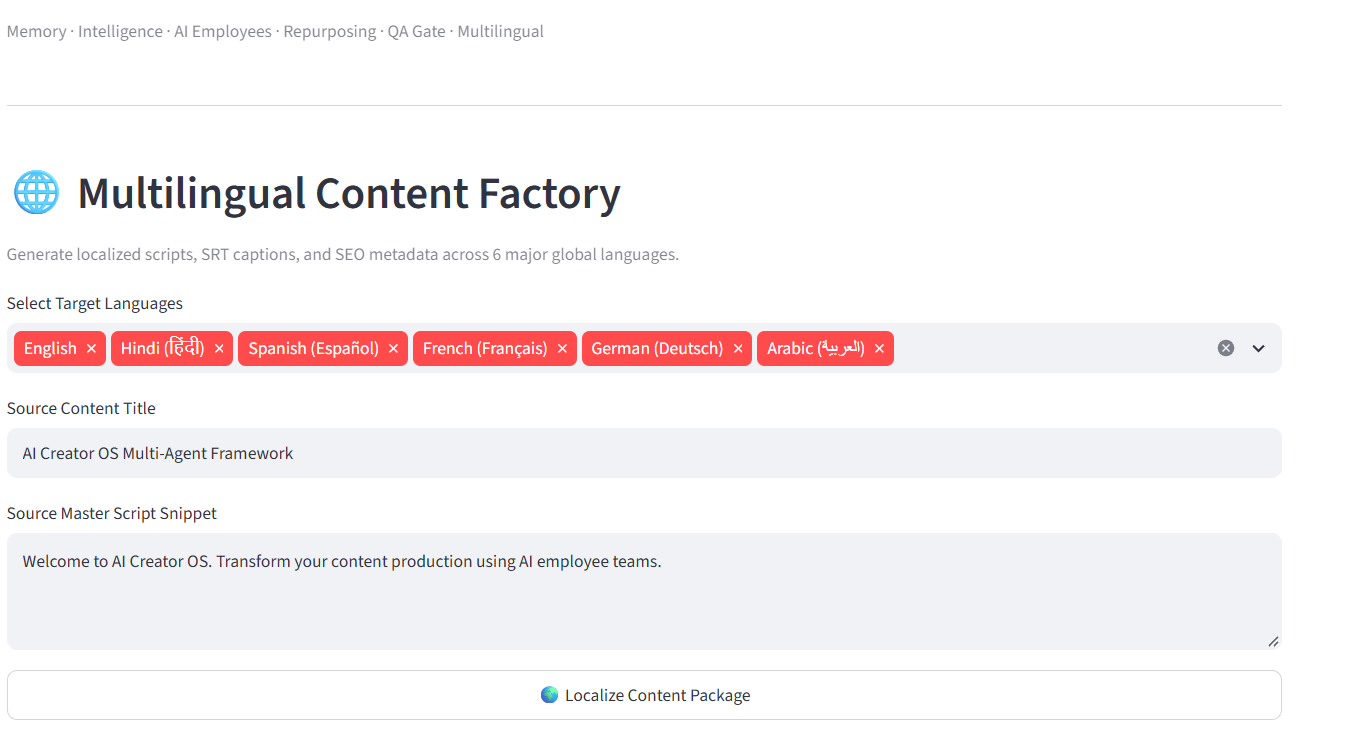
For example, one long video can become an educational version, a funny short, YouTube Shorts, Reels, a podcast clip, social media posts, captions, or a regional-language version. The creator can also adapt the same content for a specific audience or country without starting from scratch.
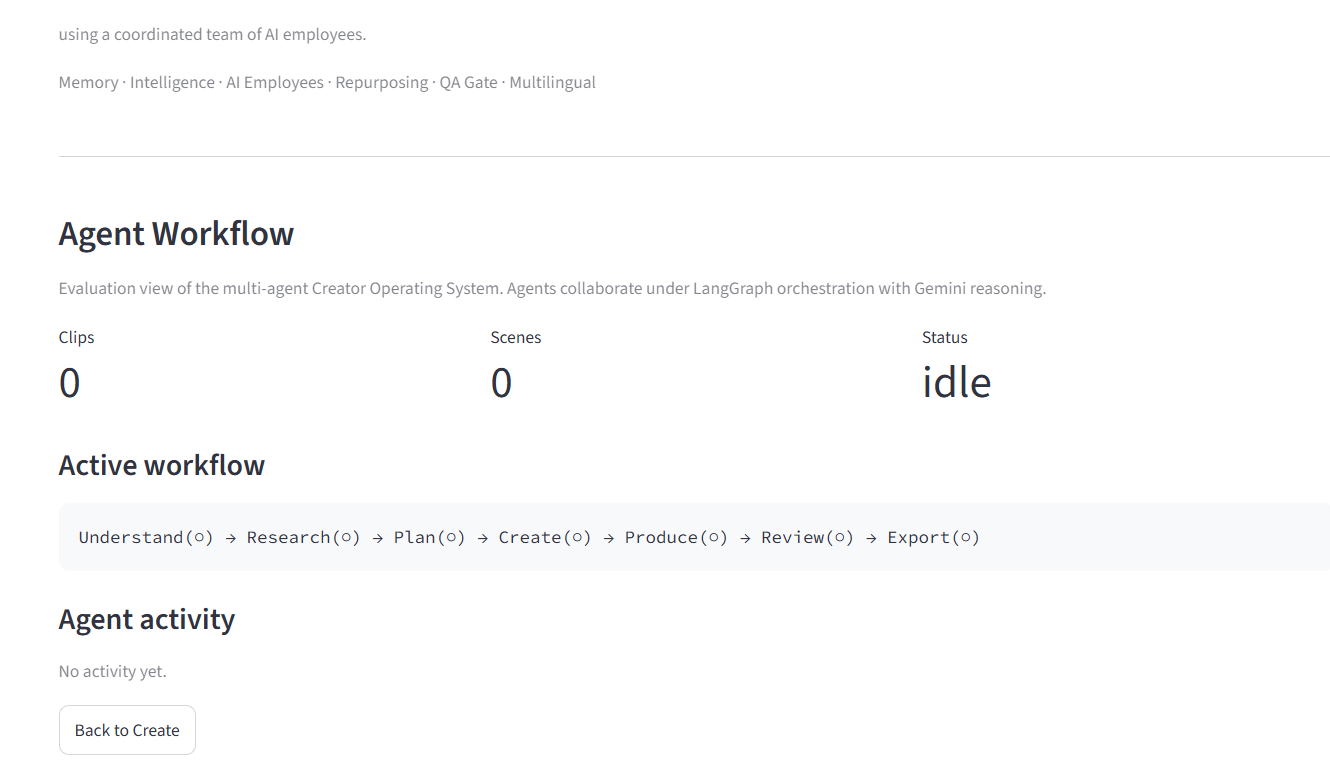
Behind the scenes, multiple AI agents work together as a creative team—researching, planning, writing, creating storyboards, generating content, editing, translating, and repurposing it.
The goal is simple:
One creator → one idea → many versions → many audiences → global reach.
How we built it
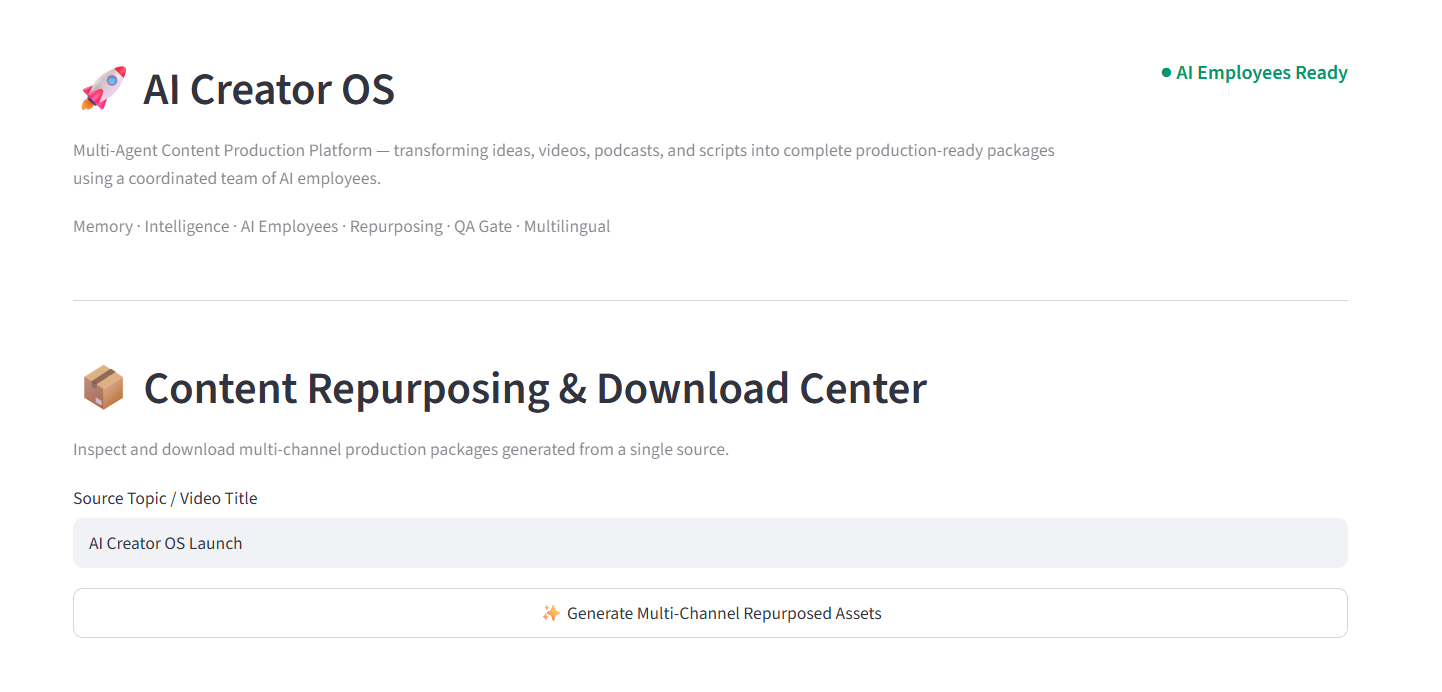
We built AI Creator OS as a multi-agent content creation and repurposing platform where different AI agents work together like a creative team.
The workflow starts with an idea, YouTube URL, video, podcast, script, or audio file. The system first understands the content and then moves it through different stages such as research, planning, script writing, storyboarding, content creation, editing, captions, and repurposing.
We used Python and Streamlit for the application, Gemini for understanding and generating content, and LangGraph to coordinate the different AI agents and workflow steps. Whisper is used for speech-to-text, while FFmpeg and OpenCV handle video and audio processing.
A key part of the system is that we don't treat every output as a separate project. The AI understands the original content and can create multiple versions from it—for example, a long-form video can become a short educational video, a funny Reel, Shorts, social media posts, captions, or a localized version for another language or region.
We designed the system so the creator provides the starting idea or content, while the AI team handles the repetitive work in the background.
The core workflow is:
One idea/content → Understand → Create → Adapt → Repurpose → Reach different audiences.
Challenges we ran into
Building AI Creator OS was challenging because we were not just building one AI feature. We were trying to connect the full content journey—from one idea or source to many different versions for different audiences.
One of the biggest challenges was making multiple AI agents work together reliably. Research, scripting, storyboarding, video creation, localization, and repurposing all depend on information from the previous step. We had to make sure the context was passed correctly through the workflow without losing the original message.
Another challenge was content adaptation. Creating a different version of the same content is not simply translating it. The style, language, examples, tone, humor, visuals, and messaging may need to change depending on the audience, region, platform, or purpose while still keeping the original meaning.
Working with real video and audio also created technical challenges. Large files, different media formats, speech-to-text, video processing, rendering, and API limitations required us to build fallback paths and handle failures without stopping the entire workflow.
We also learned that a good AI product needs to hide the complexity from the user. Instead of making creators manage many separate AI tools, we wanted them to provide one starting point and let the system handle the complicated steps in the background.
The biggest challenge—and the biggest lesson—was making the whole system work together reliably. AI generation is only one part of the problem; building a useful end-to-end product is what makes the difference.
Accomplishments that we're proud of
We are proud that we built AI Creator OS as more than just an AI video generator. We created a system that can take one idea or one piece of content and turn it into multiple versions for different audiences, formats, and purposes.
One of our biggest accomplishments is connecting multiple AI agents into one workflow. Instead of making creators use separate tools for research, writing, storyboarding, video creation, captions, translation, and repurposing, we brought these steps together into a single experience.
We are also proud of the flexibility of the platform. The same source content can be adapted into educational content, entertaining or funny Shorts, social media posts, podcast clips, localized versions, and other audience-specific formats while keeping the original message and context.
On the technical side, we successfully combined Python, Streamlit, Gemini, LangGraph, Whisper, FFmpeg, and OpenCV to create a working end-to-end content workflow.
Most importantly, we built something around a real creator problem: how to get more value and reach from the content you have already created.
Our biggest accomplishment is turning the idea of one creator doing the work of an entire creative team into a working product.
What we learned
Building AI Creator OS taught us that the hardest part of AI is not generating content—it is making the whole system work together in a useful way.
We learned how to coordinate multiple AI agents so they can understand the same source content, pass context between different stages, and work together from the initial idea to the final outputs.
We also learned that content adaptation is much more than translation. Different audiences may need different language, tone, examples, humor, visuals, formats, and cultural context. At the same time, the original message should not be lost.
Working with real video and audio taught us another important lesson: AI applications have to deal with real-world problems such as large files, different media formats, speech recognition, processing time, rendering, and API limitations.
Most importantly, we learned to focus on the creator instead of the technology. The creator should not have to understand how every AI agent works. They should be able to provide one idea or piece of content and let the system handle the repetitive work.
Our biggest lesson is that AI becomes much more valuable when it helps one piece of content reach more people in more useful ways.
Building AI Creator OS taught us that creating an AI product is about much more than getting a model to generate good text or images.
We learned how important it is to design a clear workflow and make different AI agents work together reliably. We also learned that real-world media brings its own challenges—large files, different formats, audio quality, speech recognition, video processing, and API limitations all need to be handled carefully.
One of our biggest lessons was that AI should make the user’s work easier, not make the user manage more technology. That is why we focused on keeping the experience simple while letting the system handle the complicated steps in the background.
We also learned to build for failure. When a video URL cannot be accessed or one AI step fails, the whole experience should not stop. Providing alternatives and fallback paths makes the product much more useful.
Most importantly, we learned that the best AI solutions start with a real problem and then use AI where it genuinely helps.
What's next for AI Creator OS
Our next goal is to make AI Creator OS a complete content adaptation and growth platform for creators.
We want to make it possible to take one piece of content and automatically create the right versions for different audiences, platforms, languages, regions, and purposes.
We plan to improve personalization so AI Creator OS can learn a creator’s style, understand their target audiences, and create content that feels consistent with their voice and brand.
We also want to add stronger localization, including regional languages, cultural context, local humor, voiceovers, captions, and audience-specific storytelling.
Another major focus is intelligent repurposing. A single long video, podcast, or discussion could automatically become Shorts, Reels, educational content, funny clips, social posts, blogs, thumbnails, and other useful formats.
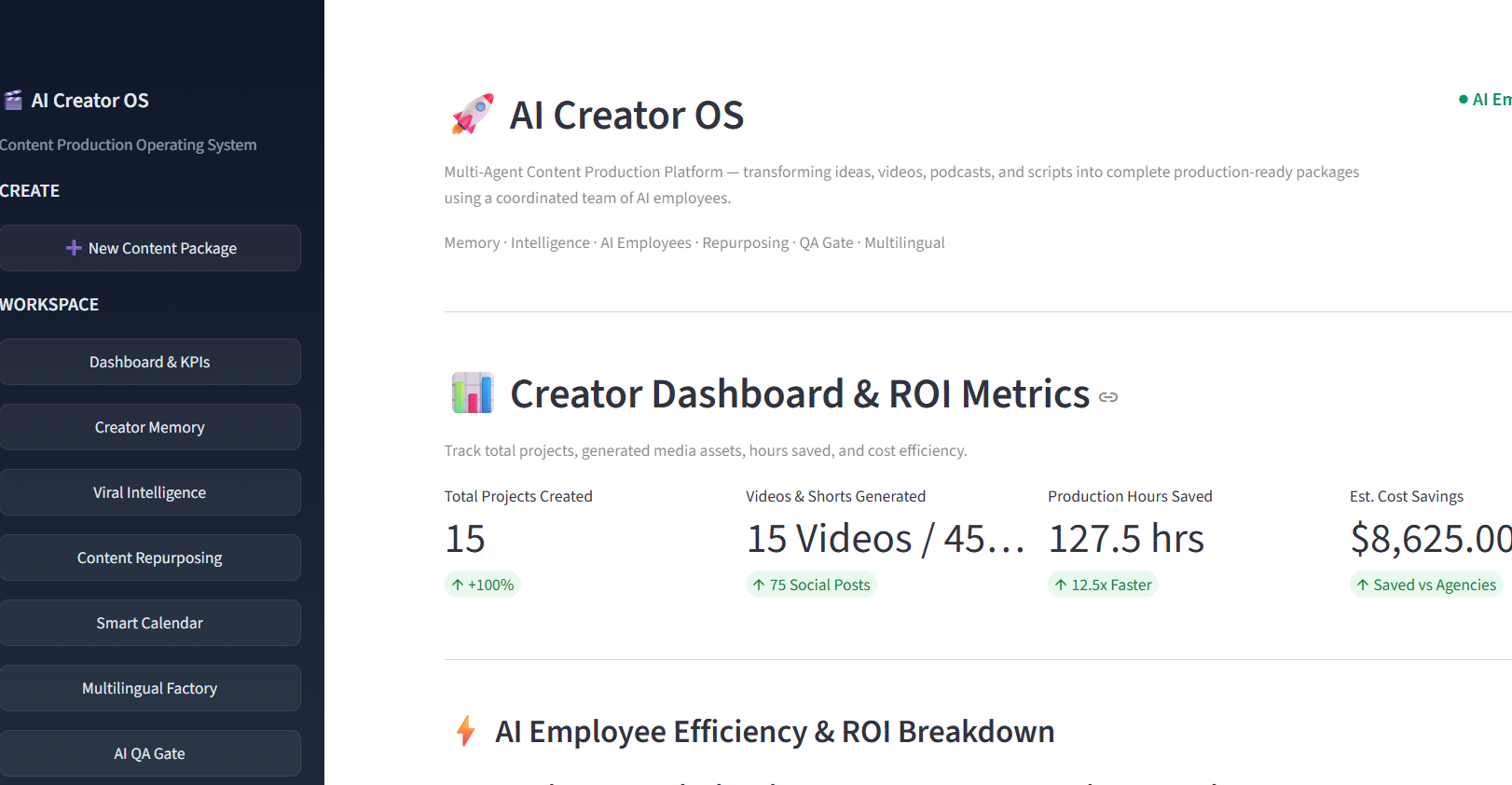
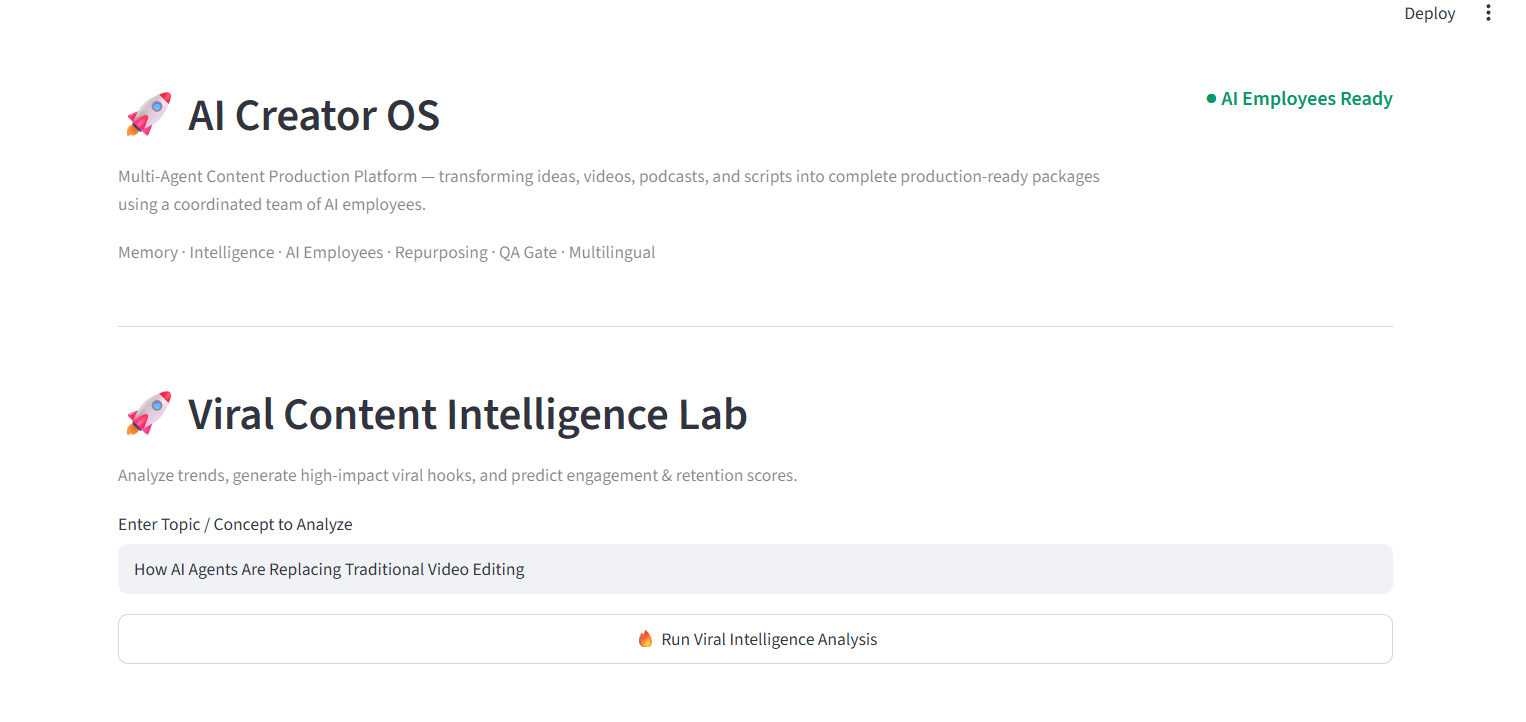
In the future, we want to add creator analytics and feedback so the system can learn what performs well and recommend what content should be created next.
Our long-term vision is to build an AI creative team for every creator—helping one person create more content, reach more audiences, and grow globally without having to repeat the same work again and again.
One creator → one idea → many versions → many audiences → global reach.


Log in or sign up for Devpost to join the conversation.