Inspiration
I built the AI Course Generator to make learning more personalized and structured. Many learners know what they want to learn but struggle to create a clear roadmap and find the right sequence of topics.
What I Learned
Through this project, I learned how to integrate LLMs into a real-world application and use prompt engineering to generate consistent, structured, and useful learning content. I also gained practical experience with Next.js, PostgreSQL, Gemini API, and authentication.
How I Built It
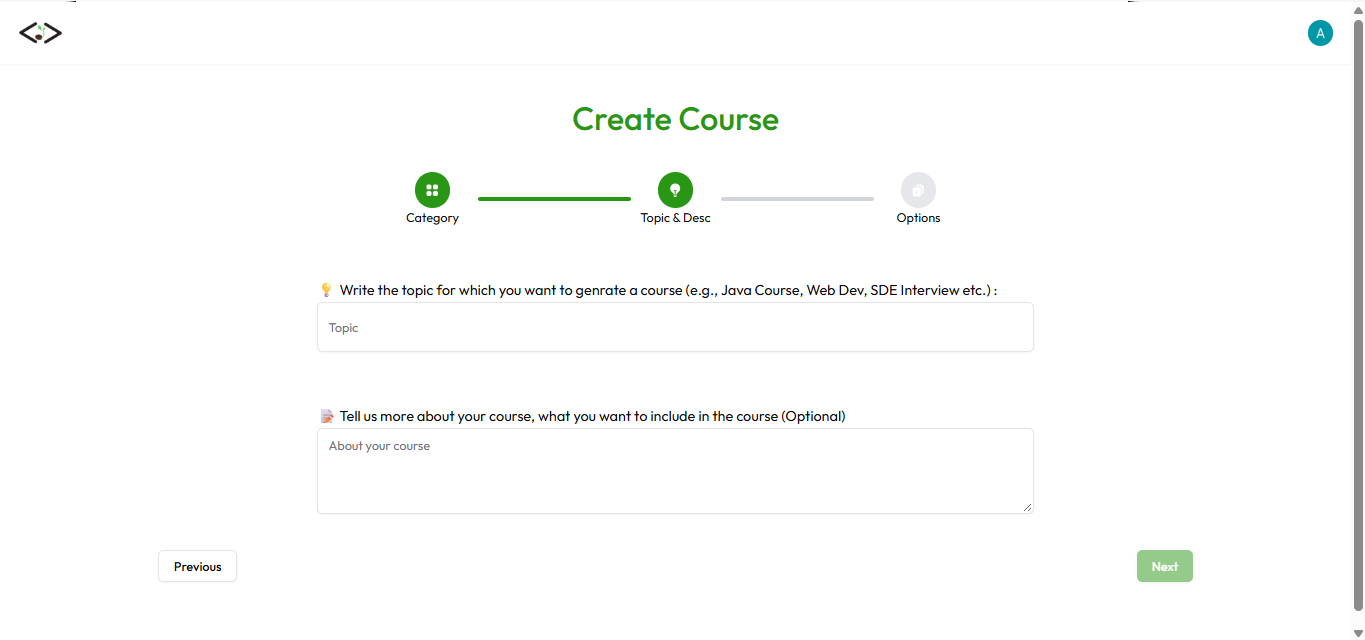
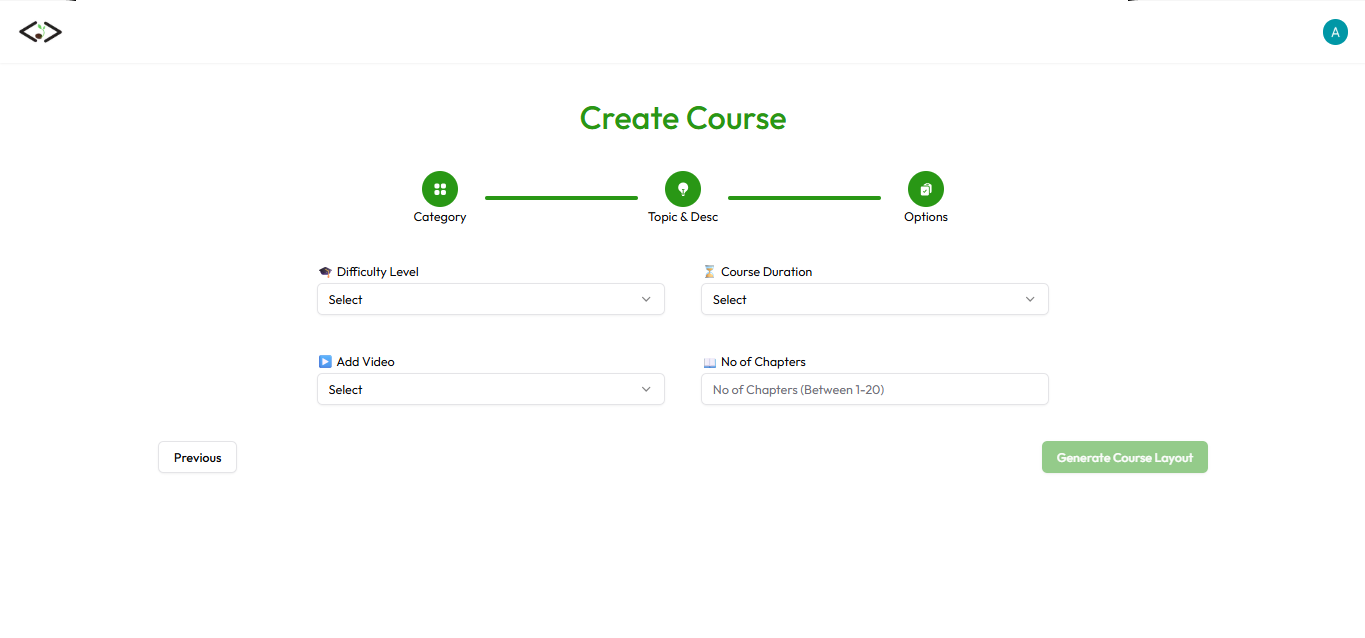
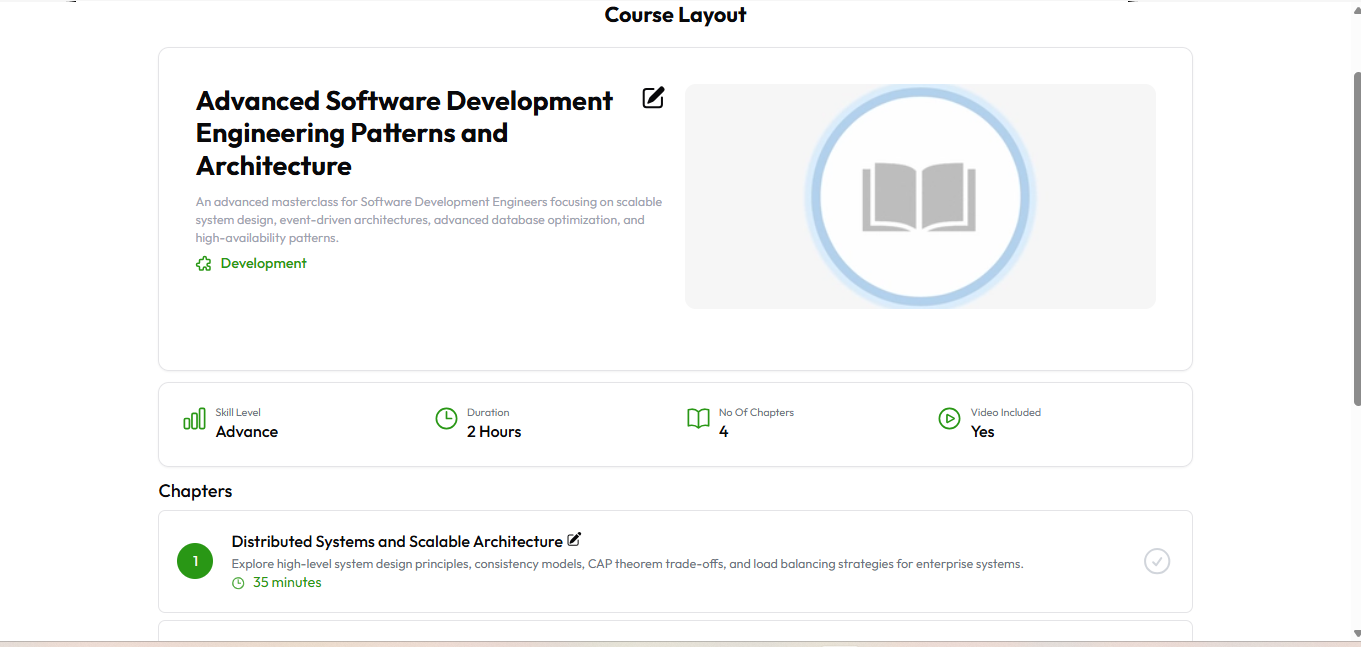
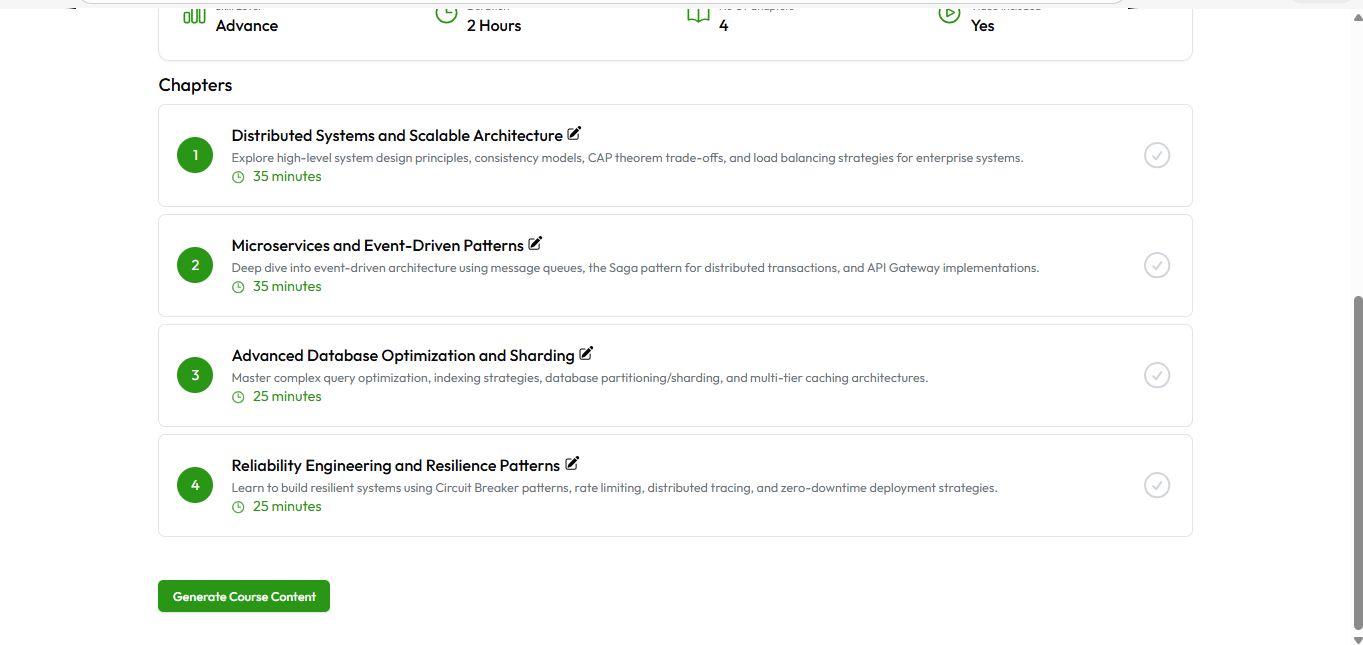
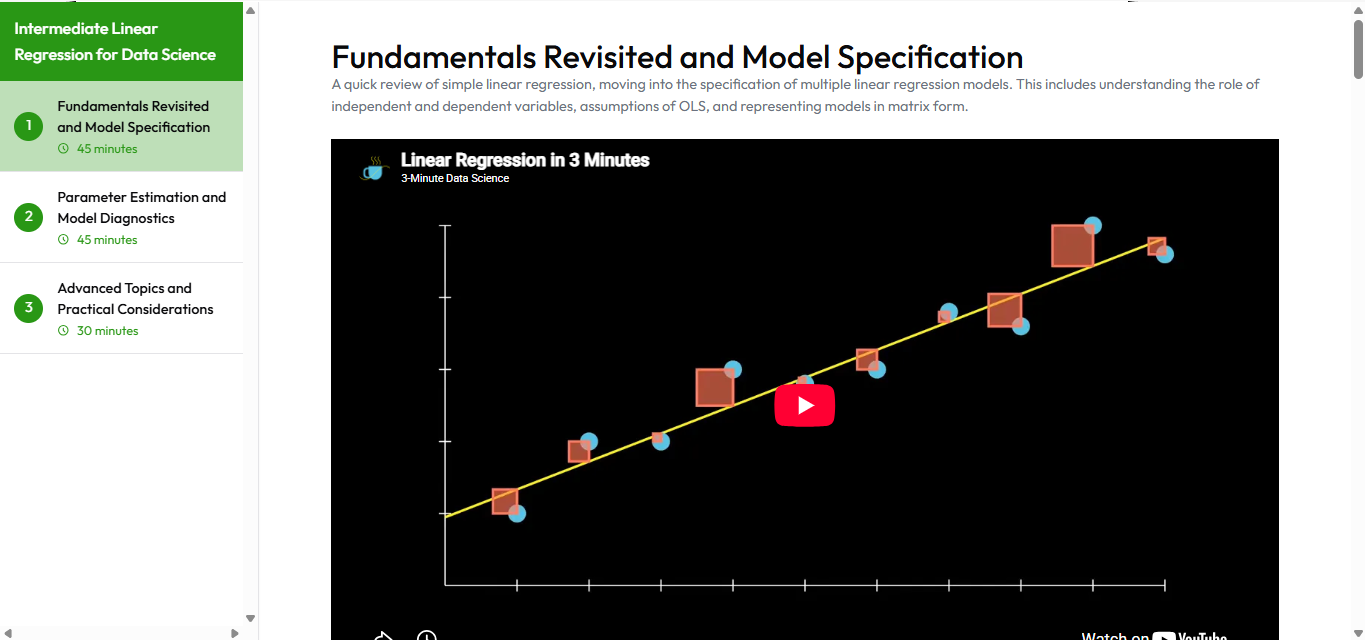
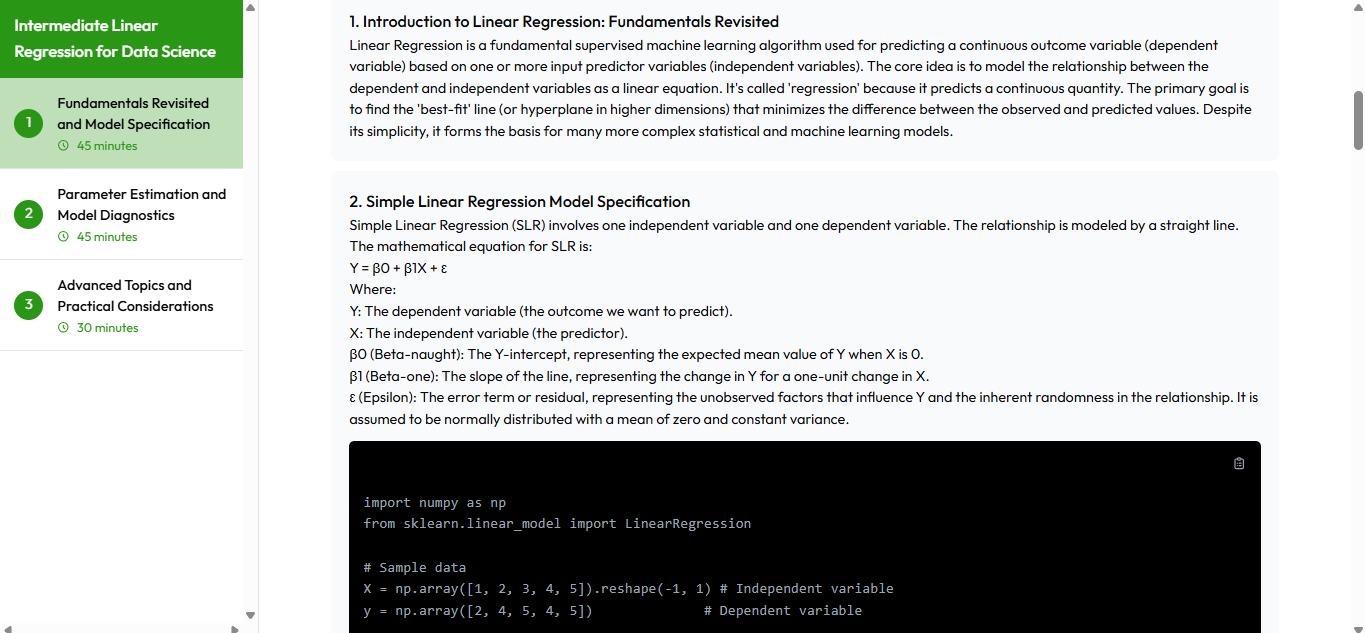
The application takes a learner's input and uses the Gemini API with carefully designed prompts to generate a personalized learning roadmap. It then converts the roadmap into structured courses and lessons and stores the generated content in PostgreSQL. The frontend was built with Next.js, with Clerk used for authentication.
Challenges
One of the main challenges was getting the LLM to consistently generate well-structured and relevant content. I addressed this through prompt refinement, structured output requirements, and iterative testing. I also focused on reducing manual content creation while keeping the generated courses useful and easy to follow.
Inspiration
I built the AI Course Generator to make learning more personalized and structured. Many learners know what they want to learn but struggle to create a clear roadmap and decide what to study first. I wanted to use LLMs and prompt engineering to turn a simple learning goal into a complete, easy-to-follow learning path.
What it does
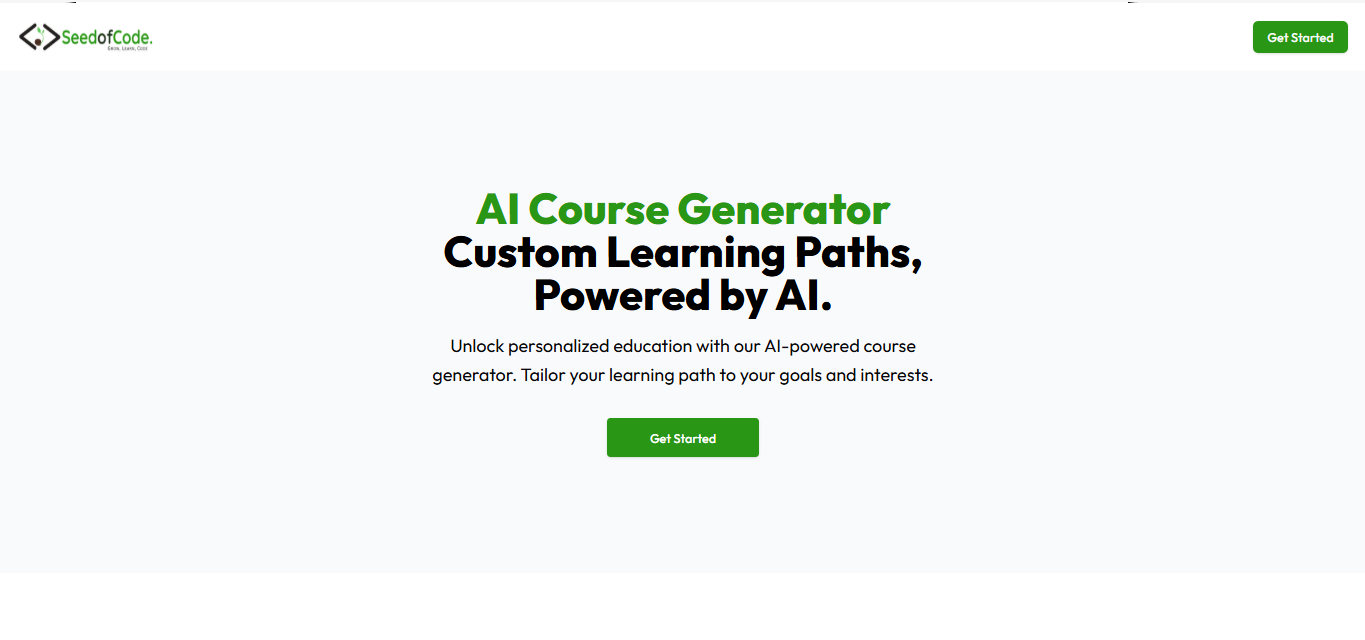
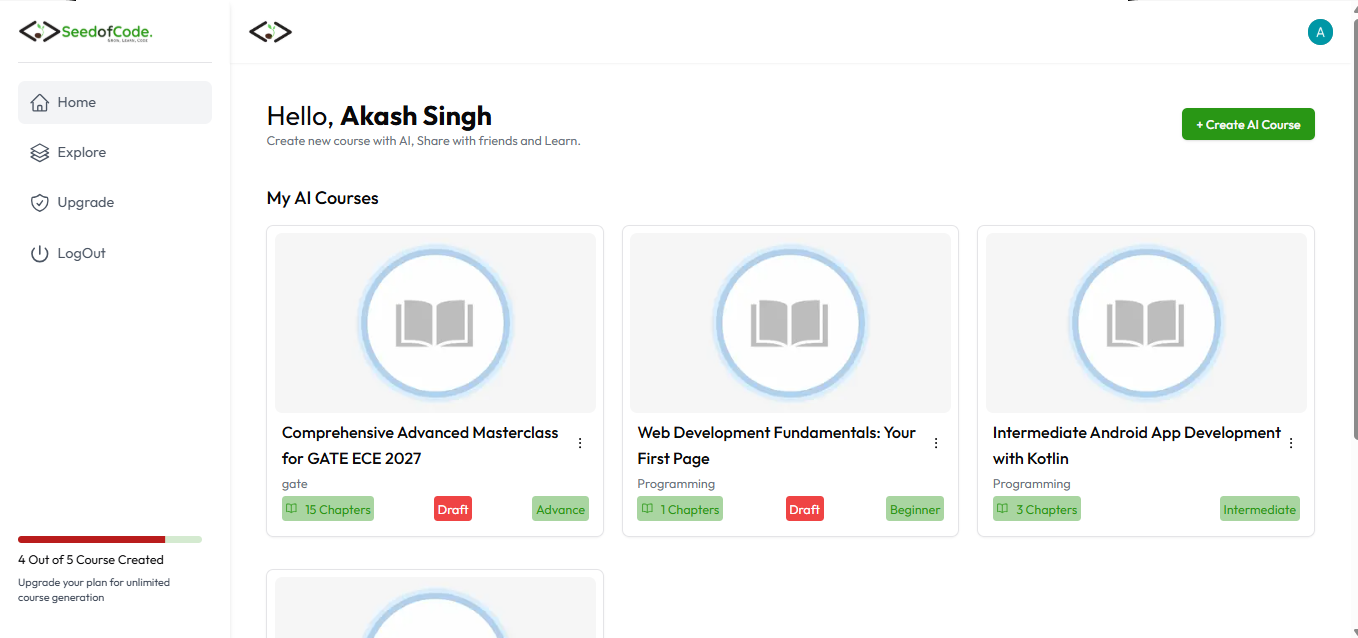
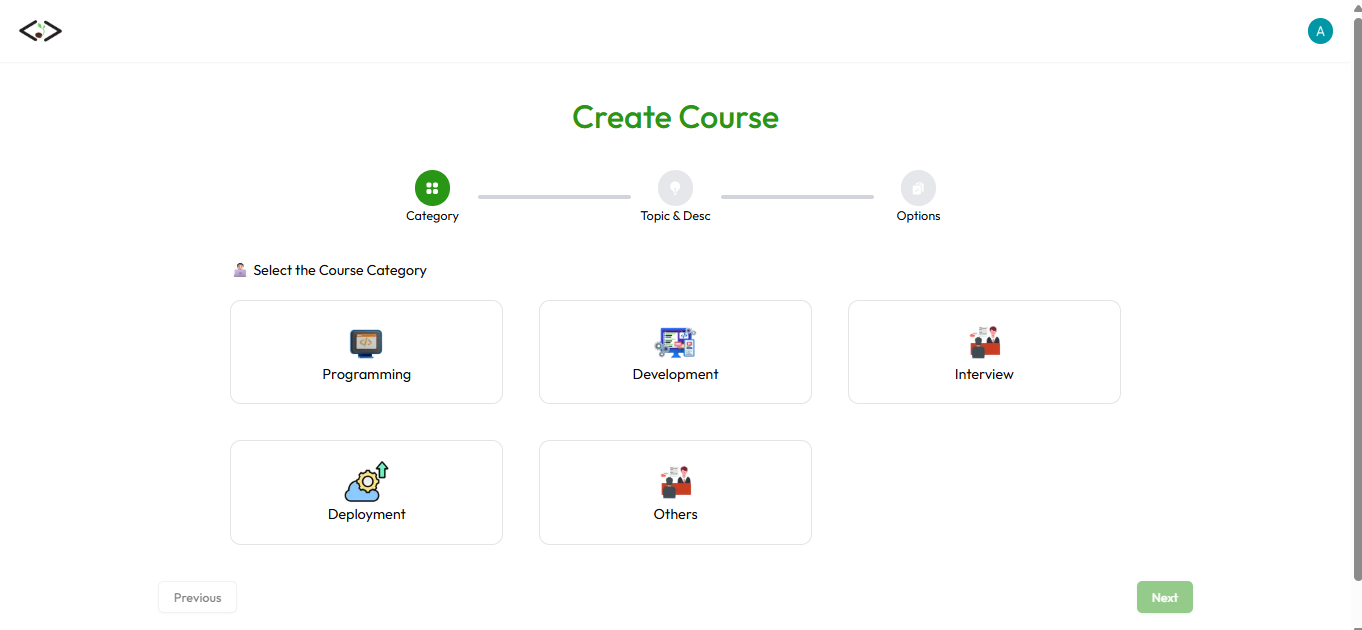
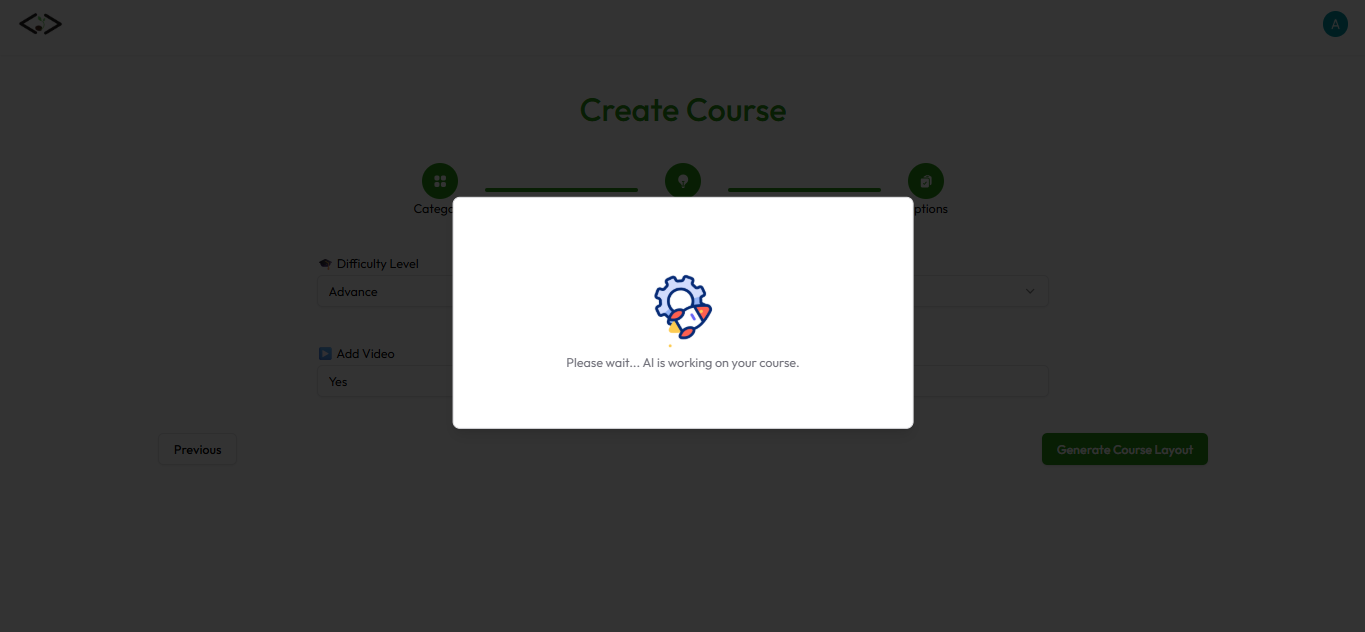
The AI Course Generator takes a user's learning goal and generates a structured learning roadmap, courses, and lessons using the Gemini API. It helps users move from a broad topic to an organized learning plan without manually creating the entire curriculum.
How we built it
I built the frontend using Next.js and used PostgreSQL for storing user and course data. The Gemini API powers the content generation, while carefully designed prompts guide the LLM to produce structured and relevant roadmaps, courses, and lessons. Clerk is used for authentication and user management.
Challenges we ran into
The biggest challenge was getting consistent and useful output from the LLM. Initial responses could vary in structure and level of detail. I improved this through iterative prompt engineering, clearer instructions, structured generation, and testing different prompts with multiple learning topics.
Accomplishments that we're proud of
The system successfully generates complete learning structures from simple user inputs. I generated 50+ courses and 200+ lessons during development and reduced manual content creation by around 40%. The project also helped me understand how LLMs can be integrated into a practical product rather than being used only as a standalone chatbot.
What we learned
I learned how to design effective prompts, integrate LLM APIs into a full-stack application, handle AI-generated content, and connect AI workflows with databases and authentication. I also learned the importance of testing and refining prompts to improve the consistency and usefulness of LLM outputs.
What's next for AI Course Generator
The next step is to make the learning experience more adaptive by allowing the system to understand a user's progress, skill level, and learning preferences. I would also like to add better course personalization, progress tracking, assessments, and AI-generated recommendations based on the learner's performance.
Built With
- ai
- api
- clerk
- full-stack-development
- gemini-api
- generative-ai
- javascript
- llm
- next.js
- postgresql
- prompt-engineering

Log in or sign up for Devpost to join the conversation.