-
-
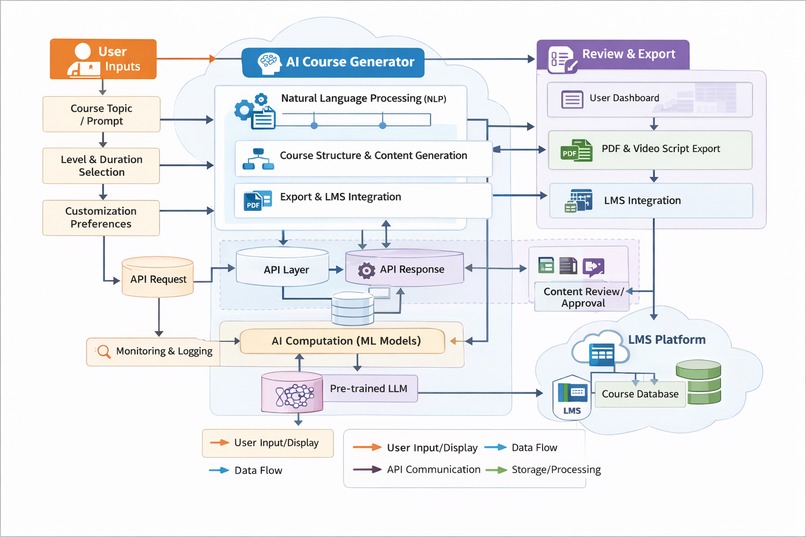
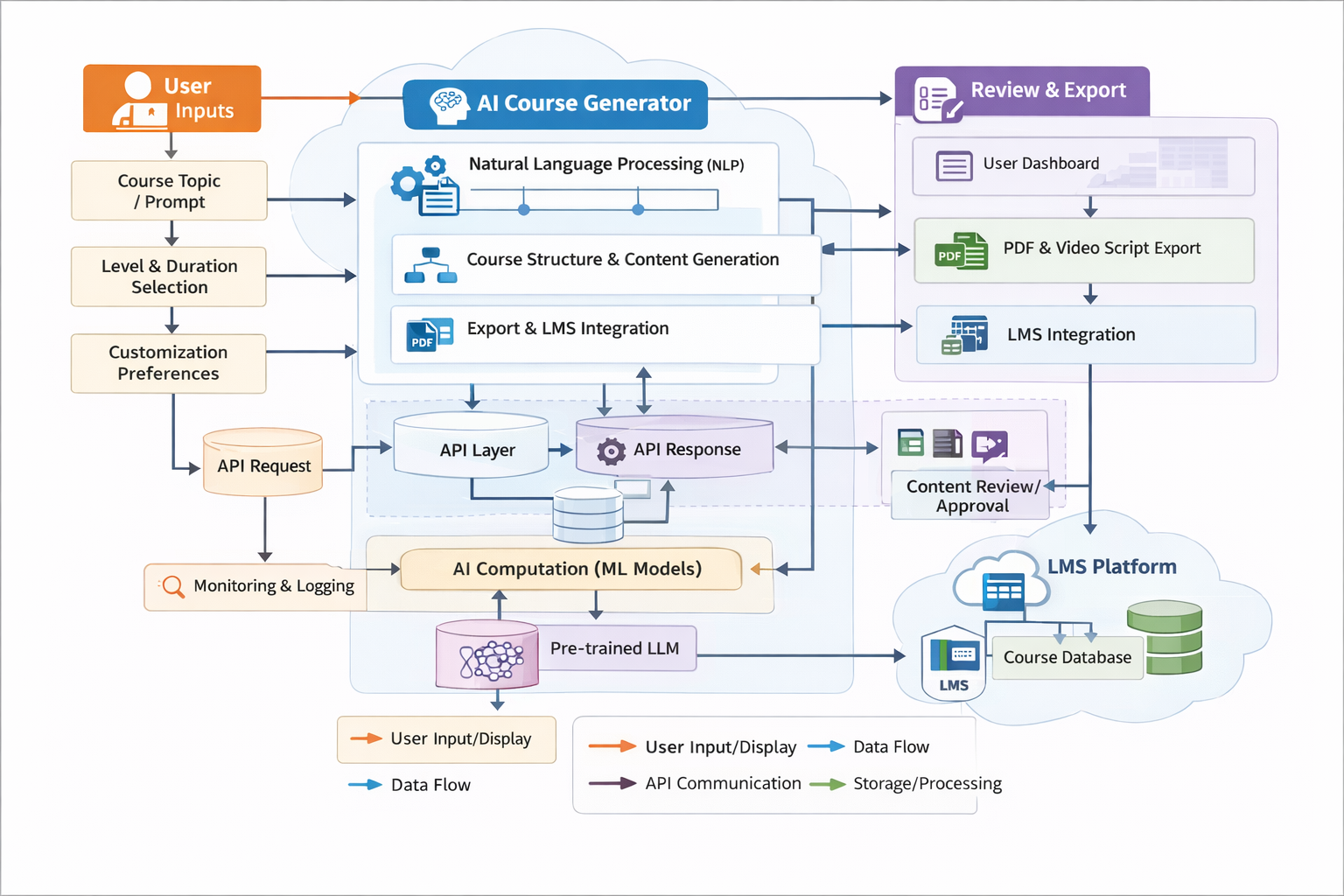
Workflow diagram
-
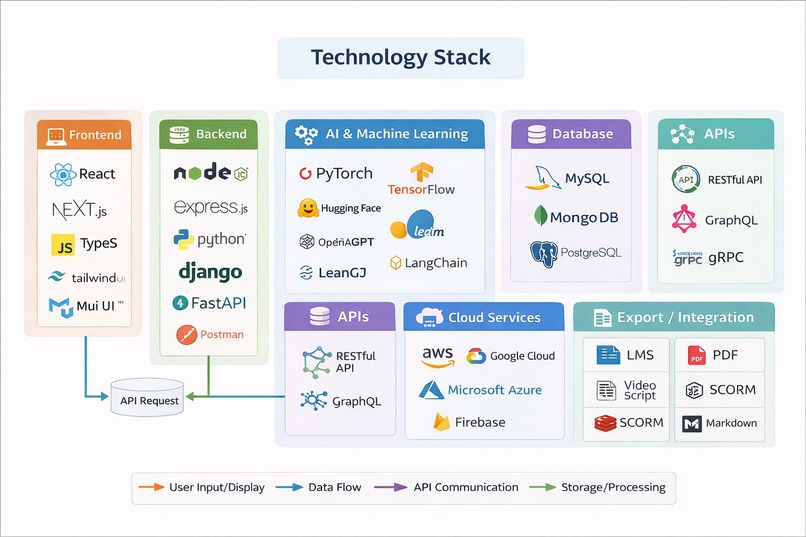
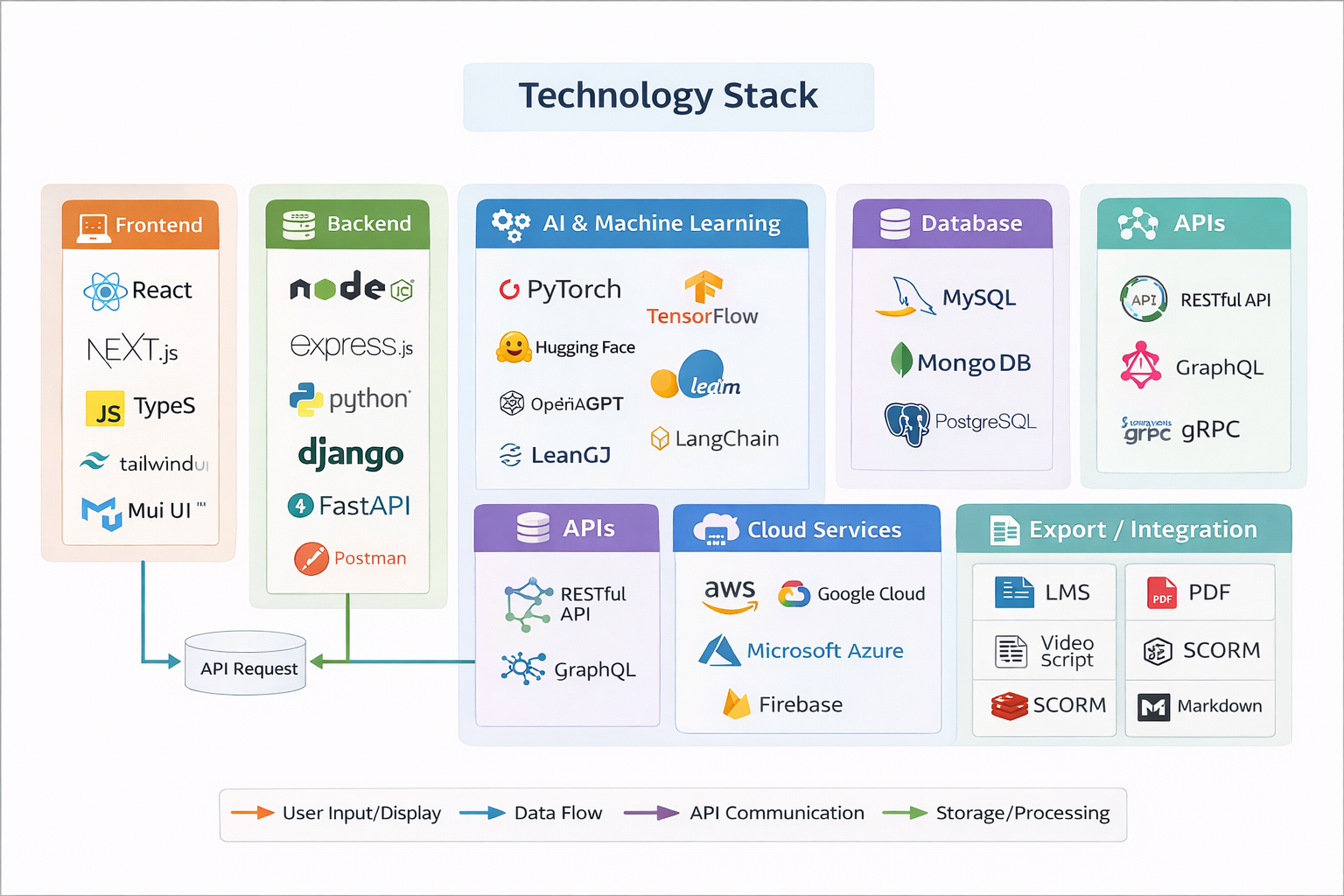
Technical Stack
Inspiration
The frustration of spending hours searching for quality learning resources inspired us. We noticed learners often abandon their goals because finding a coherent learning path through scattered YouTube tutorials felt overwhelming. We envisioned an AI system that could instantly transform vague learning goals into structured, personalized courses—democratizing access to quality education for everyone.
What it does
AI Course Generator is an intelligent learning platform that creates personalized courses on-demand. Users simply describe what they want to learn, and our multi-agent AI system generates a comprehensive course structure with carefully curated YouTube videos for each module. The platform features user authentication, real-time progress monitoring, code snippet integration, and a community dashboard where learners can discover and share courses created by others.
How we built it
We architected a full-stack application using Next.js for the frontend with Tailwind CSS for responsive design. The backend runs on Node.js with Express, connected to PostgreSQL for relational data and MongoDB for course content storage. We integrated Google's Gemini API as our primary LLM for course generation and curriculum design. The YouTube Data API powers our content curation engine, which filters and ranks videos based on relevance and quality. We implemented NextAuth for secure authentication and built an analytics dashboard using Recharts for progress visualization. Our agentic architecture employs multiple specialized AI agents—curriculum designer, content curator, and progress analyst—orchestrated through a supervisor pattern to collaboratively generate optimal learning experiences.
Challenges we ran into
Our biggest challenge was prompt engineering for consistent course structure generation—early iterations produced inconsistent module hierarchies. We solved this by implementing chain-of-thought prompting with strict JSON schema validation. Curating quality YouTube content proved difficult due to API rate limits and relevance scoring. We developed a caching layer with Redis and implemented a multi-criteria ranking algorithm weighing view count, engagement, and content freshness. Managing state across the multi-agent system required careful orchestration to prevent redundant API calls. Building an intuitive progress tracking system that meaningfully represented learning advancement without being overwhelming required multiple UI iterations based on user feedback.
Accomplishments that we're proud of
Accomplishments that we're proud of We're proud of creating a truly intelligent system that doesn't just aggregate content but understands learning pedagogy. Our multi-agent architecture successfully generates courses that rival manually curated ones. The seamless integration between AI-generated structure and real-world YouTube content creates genuinely useful learning paths. Building a scalable platform that handles concurrent course generation while maintaining response times under 10 seconds was a significant technical achievement. The community dashboard feature transformed our project from a tool into a platform, enabling knowledge sharing across our user base.
What we learned
We gained deep expertise in prompt engineering and discovered that LLM outputs require structured validation for production use. Working with multiple APIs taught us the importance of error handling, rate limiting, and fallback strategies. We learned that AI agents work best when given narrow, well-defined responsibilities rather than broad tasks. Database design for hierarchical course structures required careful schema planning to balance flexibility and query performance. Most importantly, we learned that the best AI applications solve real user problems—technology should serve learning, not complicate it.
What's next for AI Course Generator
We're implementing RAG (Retrieval-Augmented Generation) to incorporate course-specific documentation and textbooks alongside YouTube videos. Fine-tuning a custom model on educational content will improve course quality assessment. We plan to add interactive coding environments where users can practice directly within the platform. Adaptive learning algorithms will dynamically adjust course difficulty based on quiz performance and completion rates. We're building a peer review system where community members can suggest improvements to courses. Integration with learning management systems (LMS) will enable educators to deploy AI-generated courses in classroom settings. Finally, we're exploring multilingual support to make quality education accessible globally, starting with automatic transcript translation and localized content curation.
Built With
- amazon-web-services
- clerk
- elasticsearch
- express.js
- github
- google-gemini-api
- graphql
- javascript
- langchain
- mongodb
- neon
- next.js
- nextauth.js
- node.js
- pinecone
- postgresql
- prisma-orm
- railway
- react
- react-query
- recharts
- redis
- sentry
- shadcn/ui
- tailwind-css
- typescript
- vercel
- websocket
- youtube-data-api-v3
- zustand

Log in or sign up for Devpost to join the conversation.