-
-
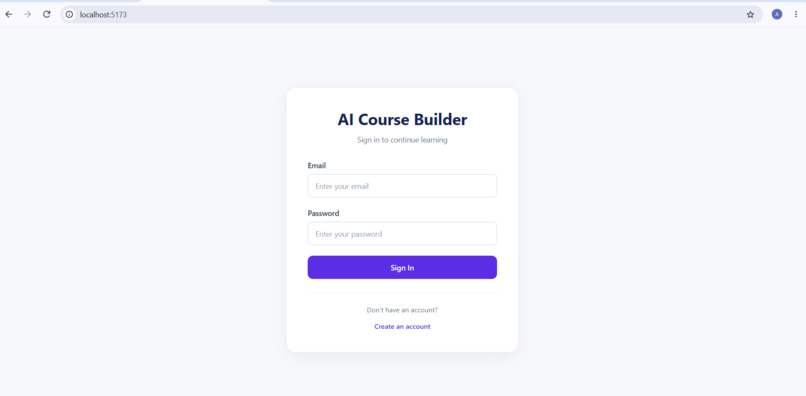
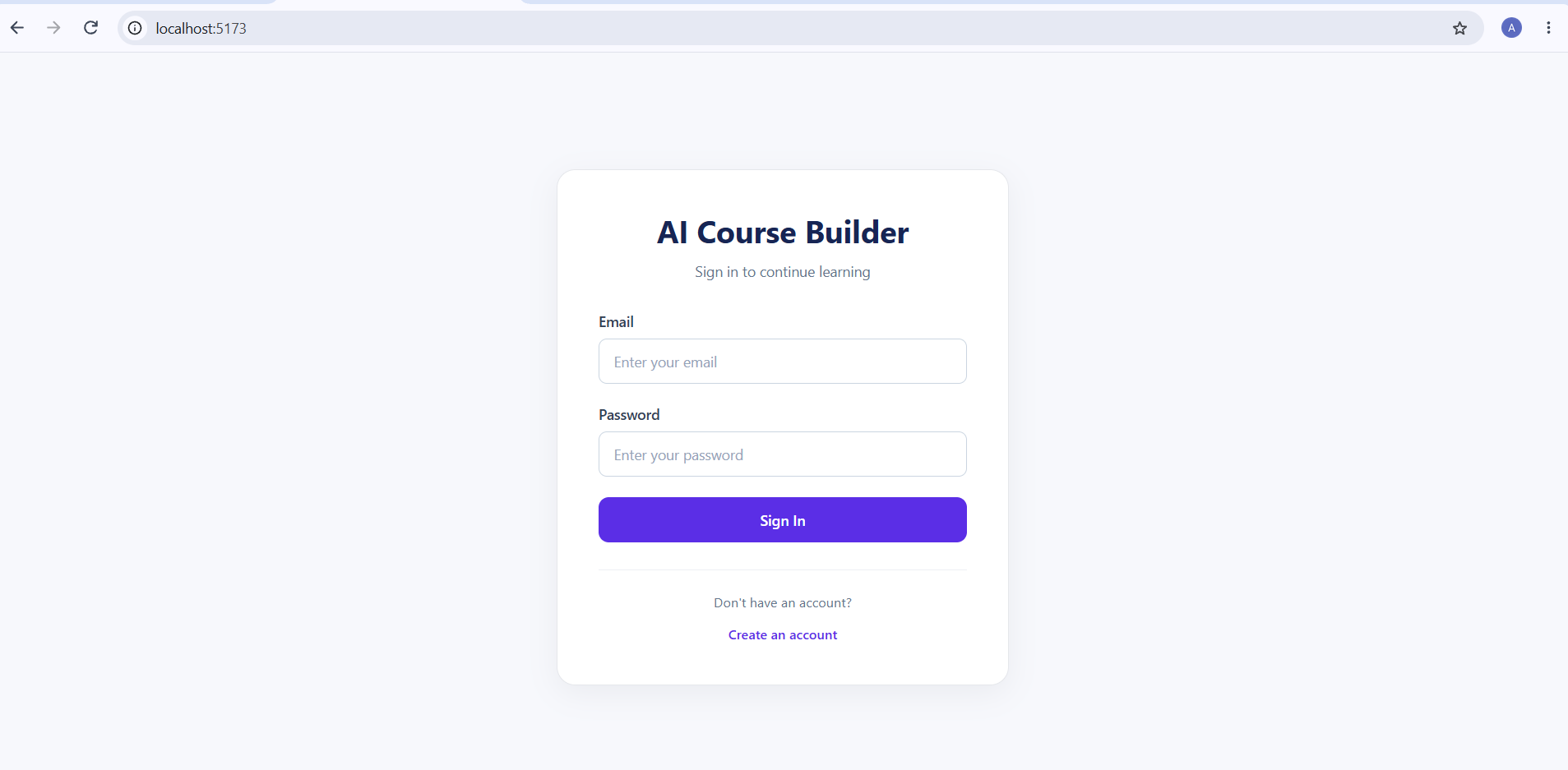
Sign in page
-
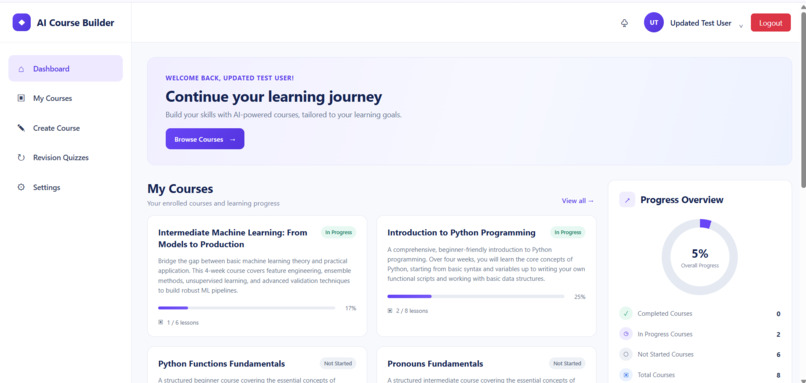
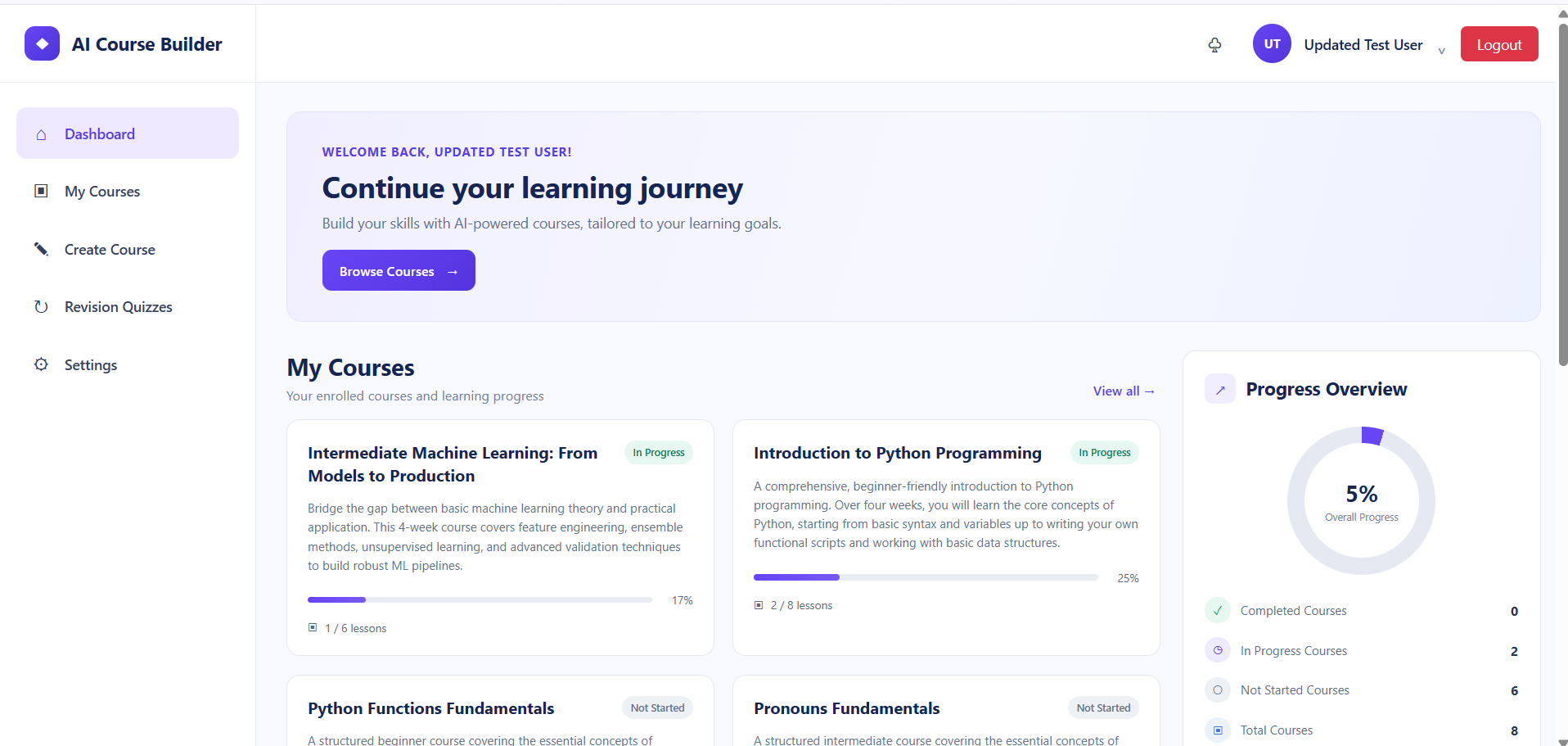
Dashboard
-
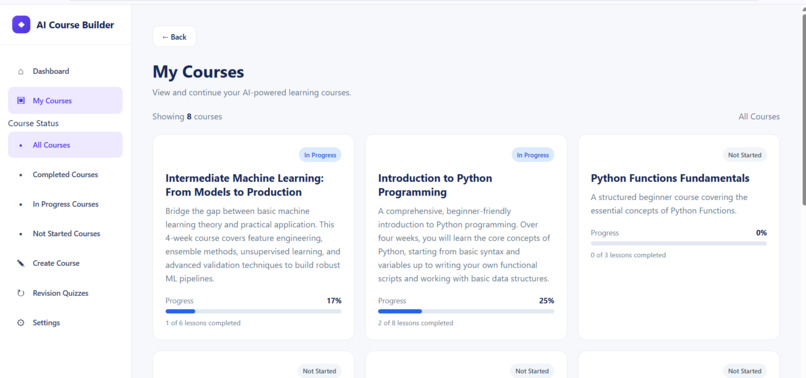
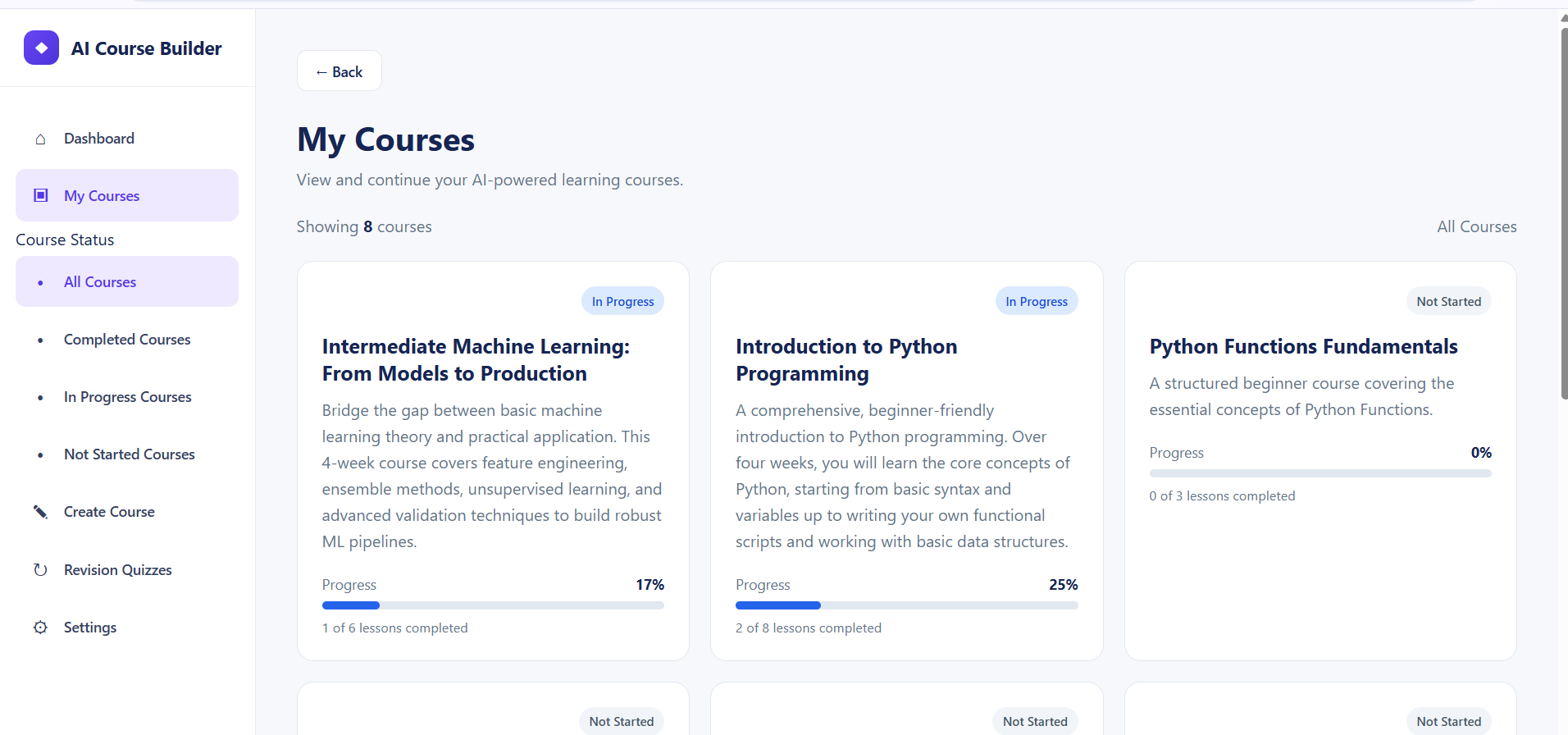
All courses created till now
-
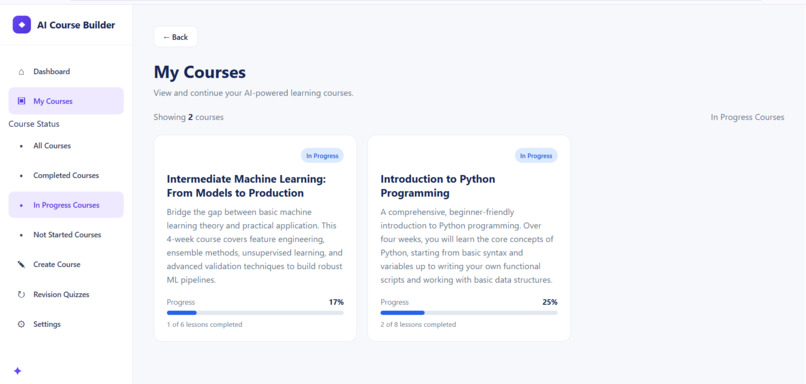
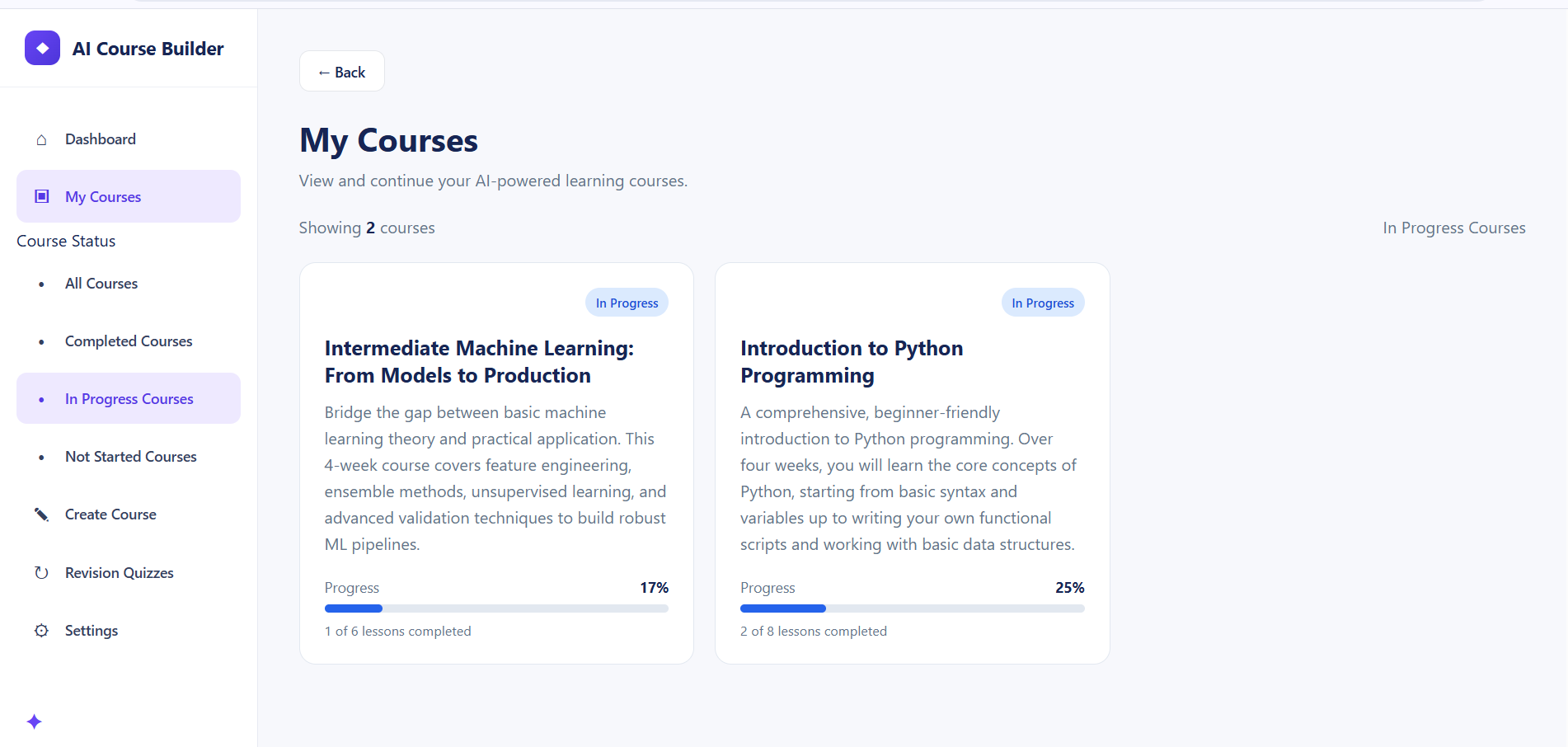
Courses in progress
-
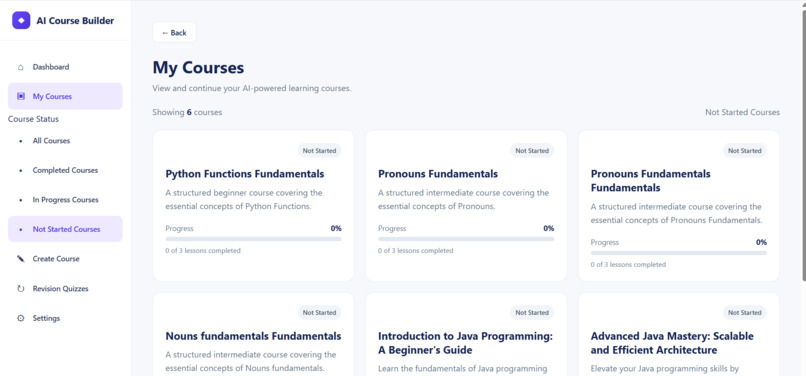
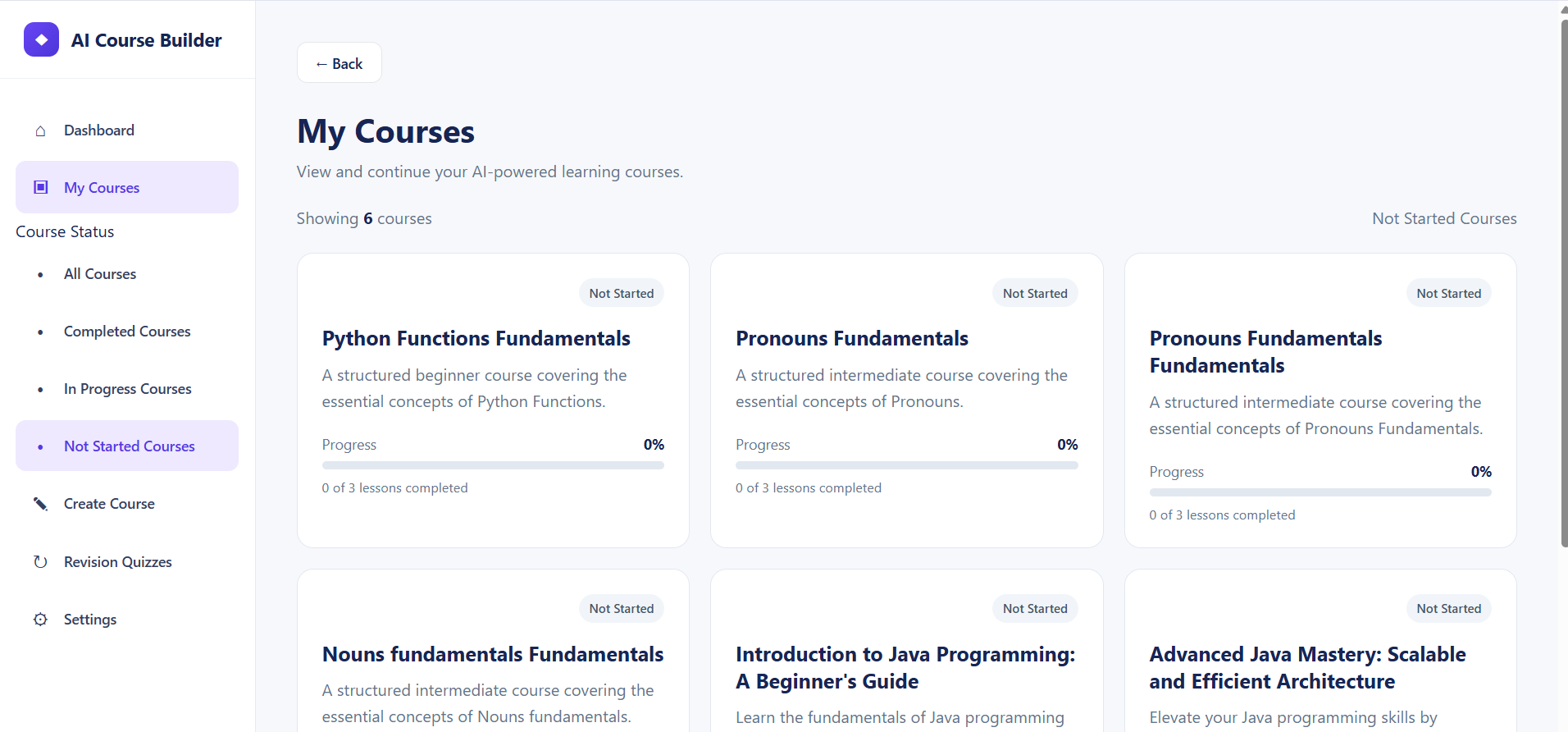
Courses not started
-
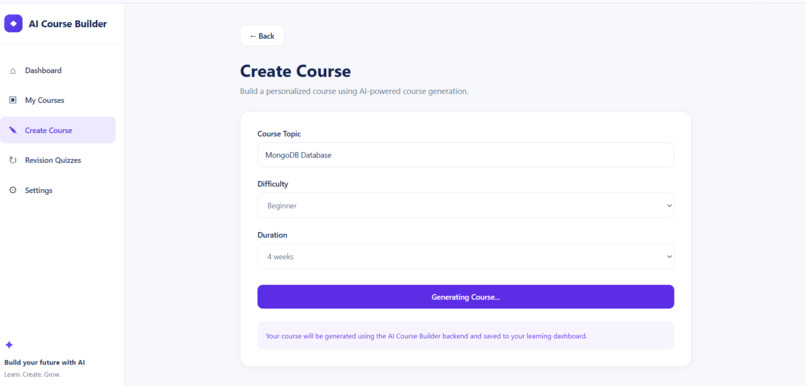
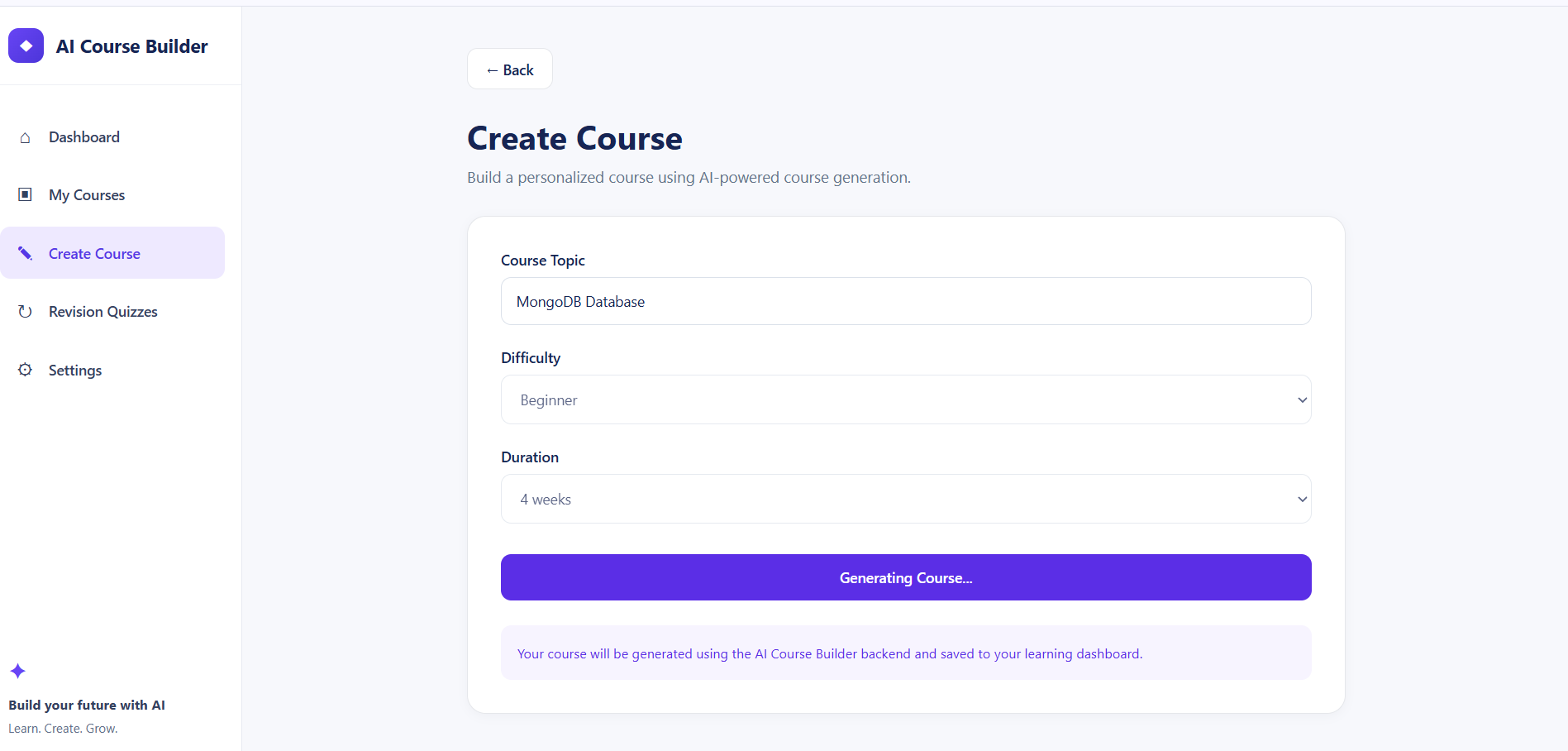
Creating new course
-
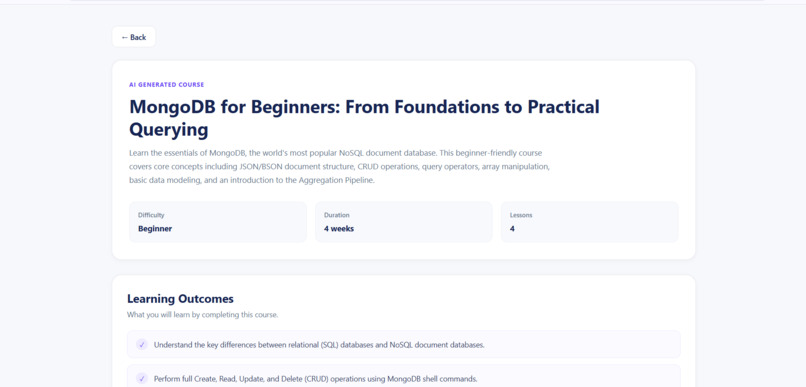
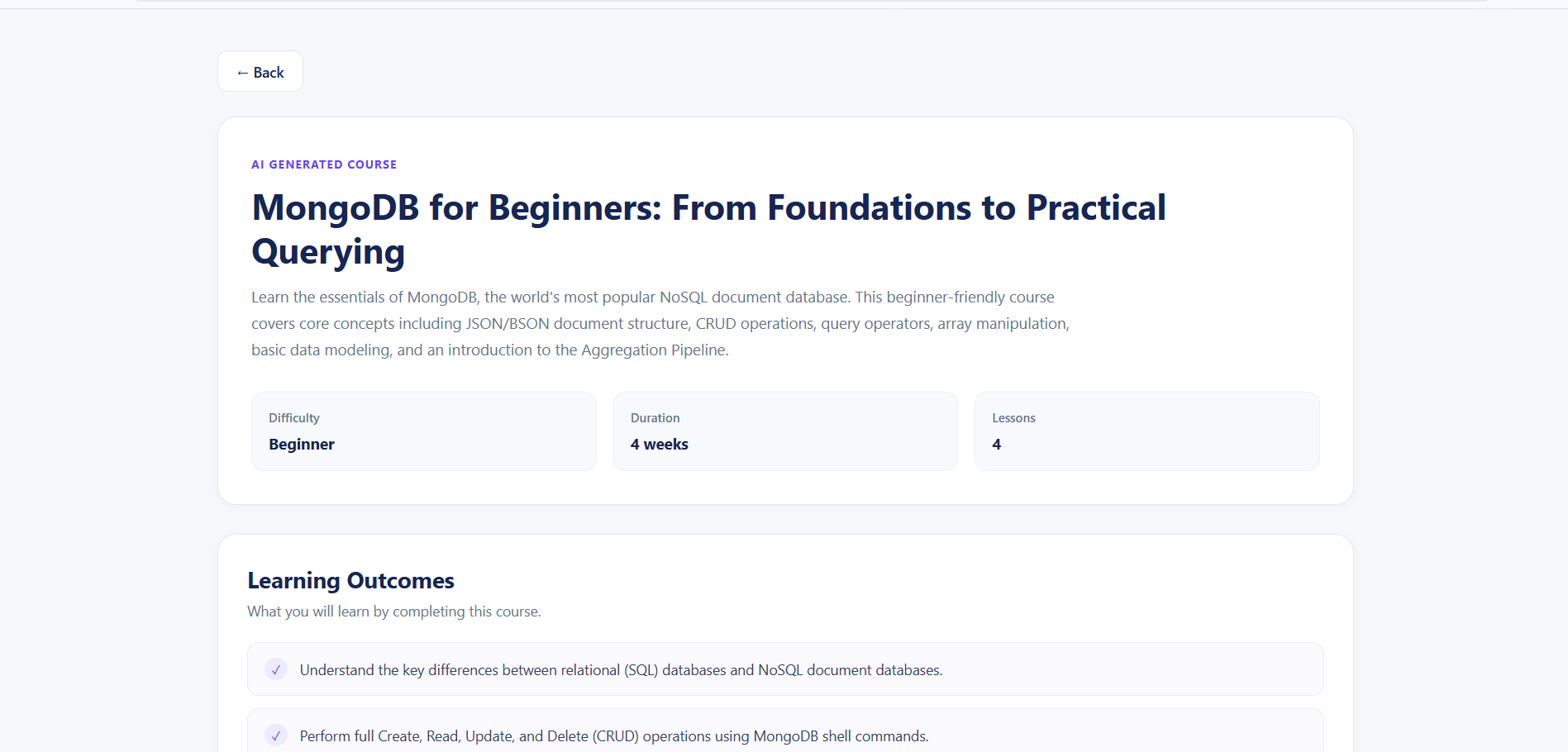
Latest course for beginners
-
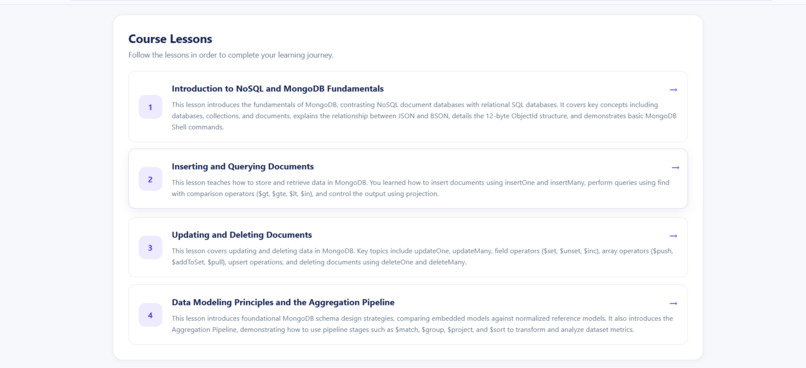
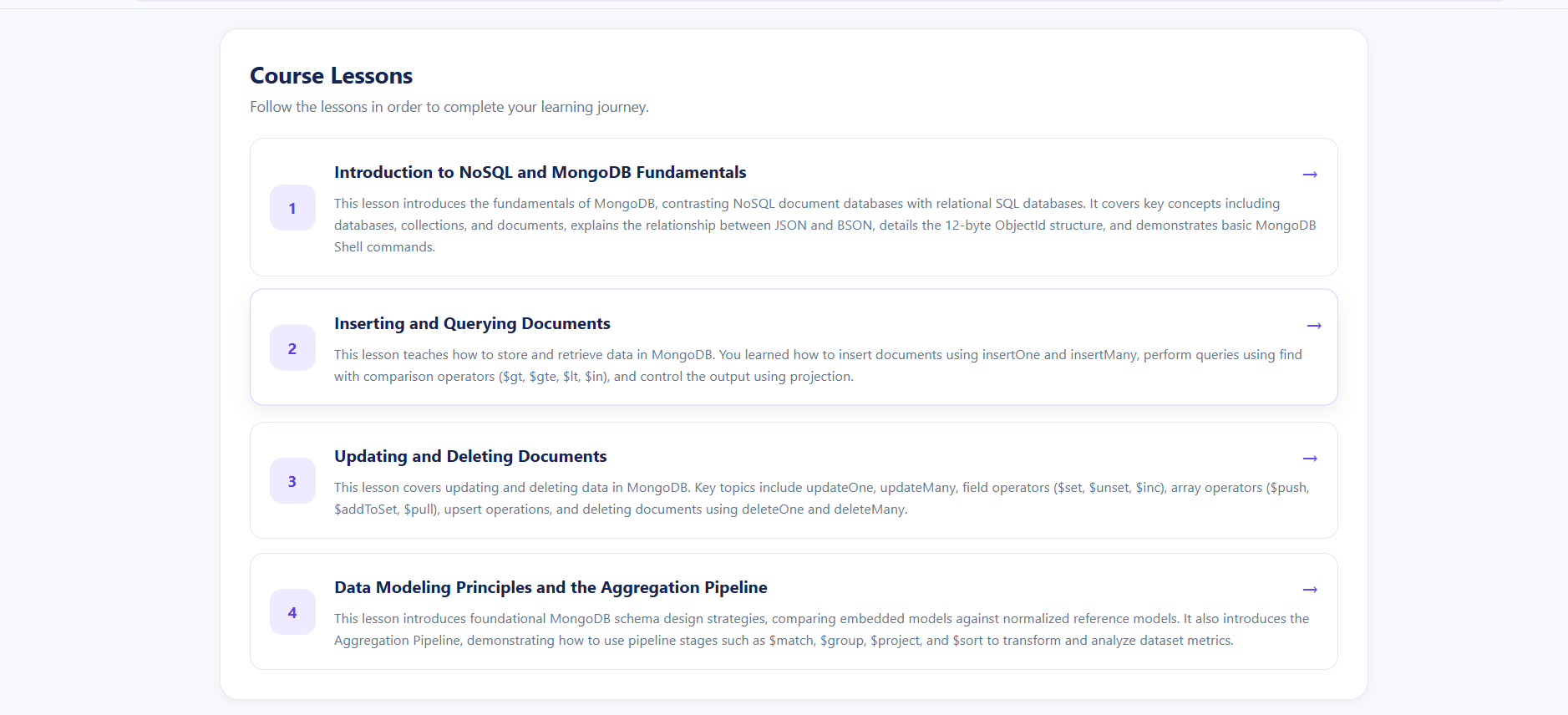
lessons created under the course
-
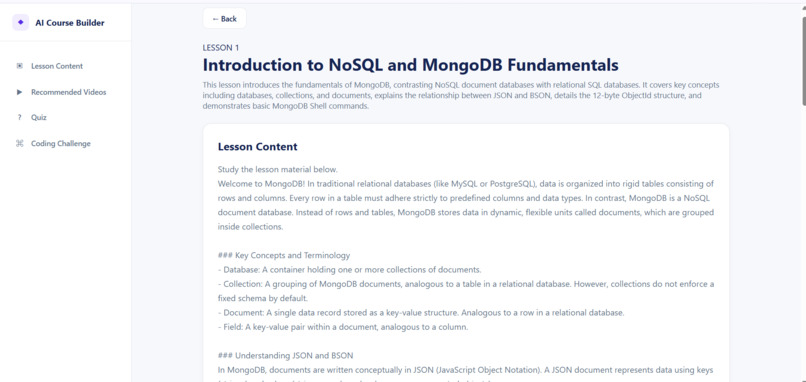
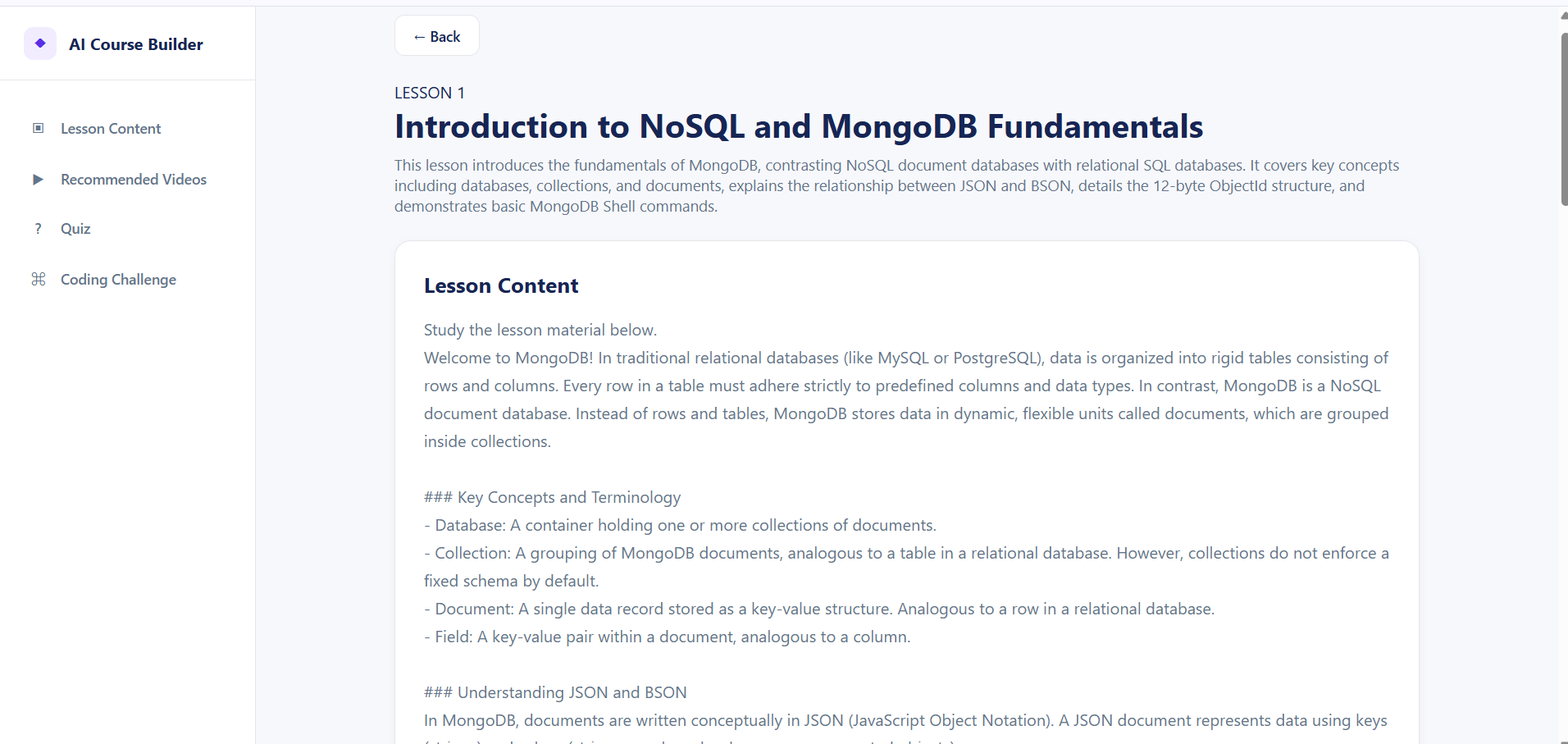
First lesson created
-
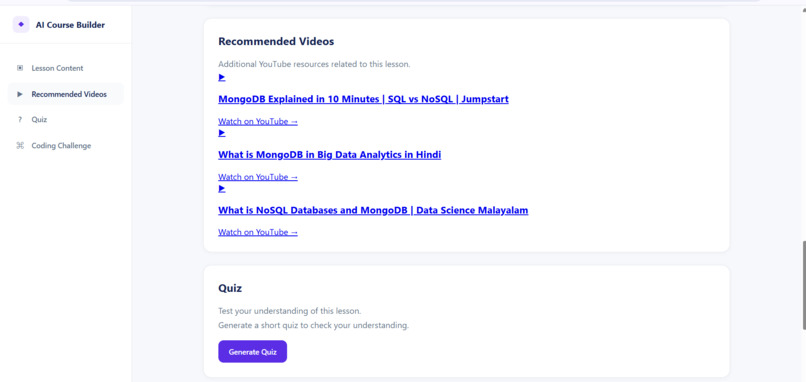
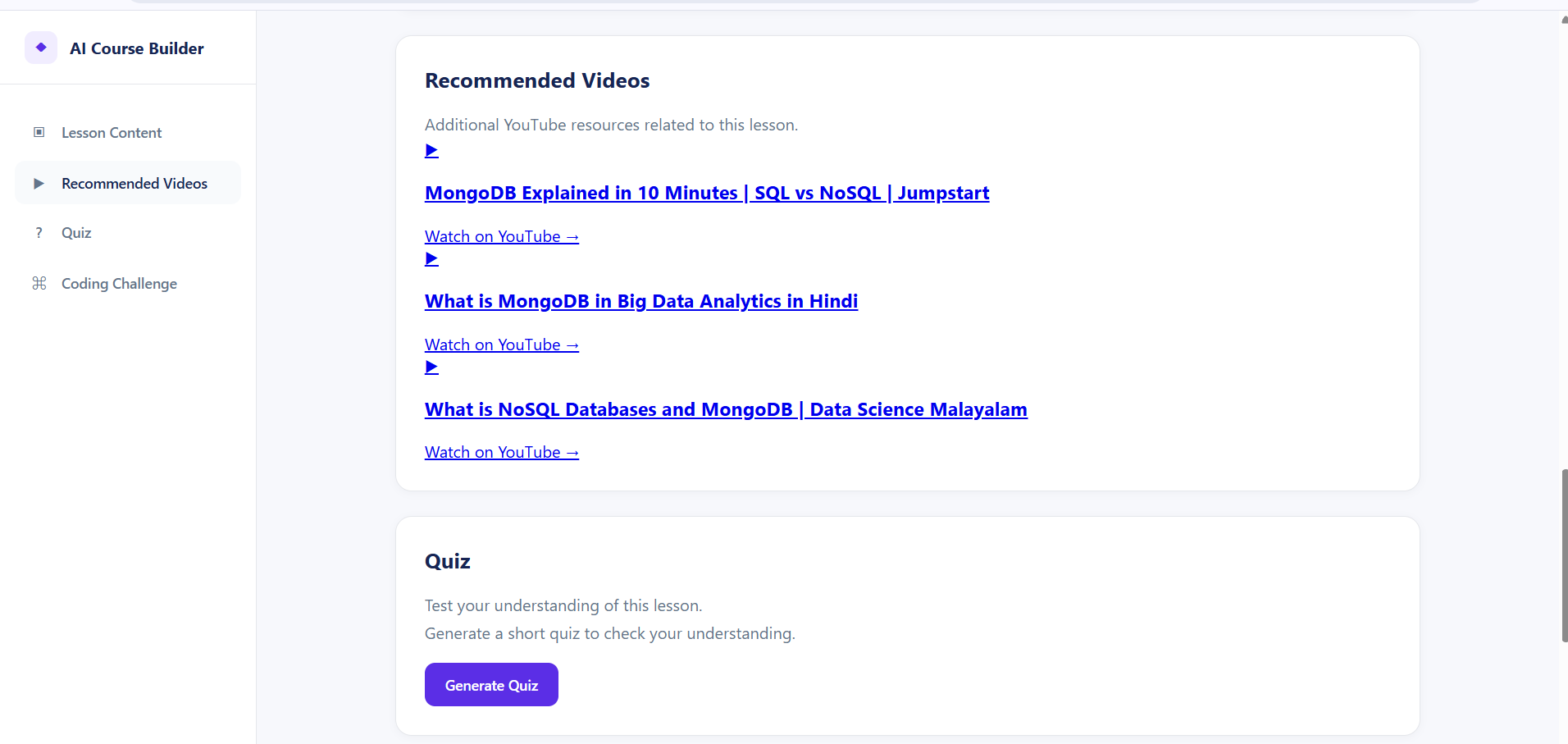
Youtube video recommendations and quiz for this lesson
-
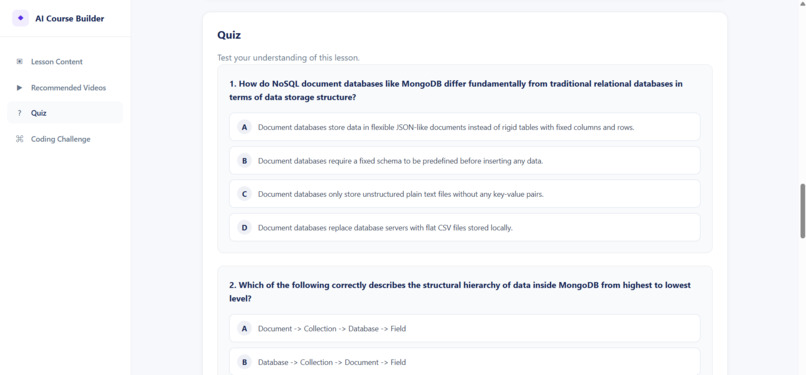
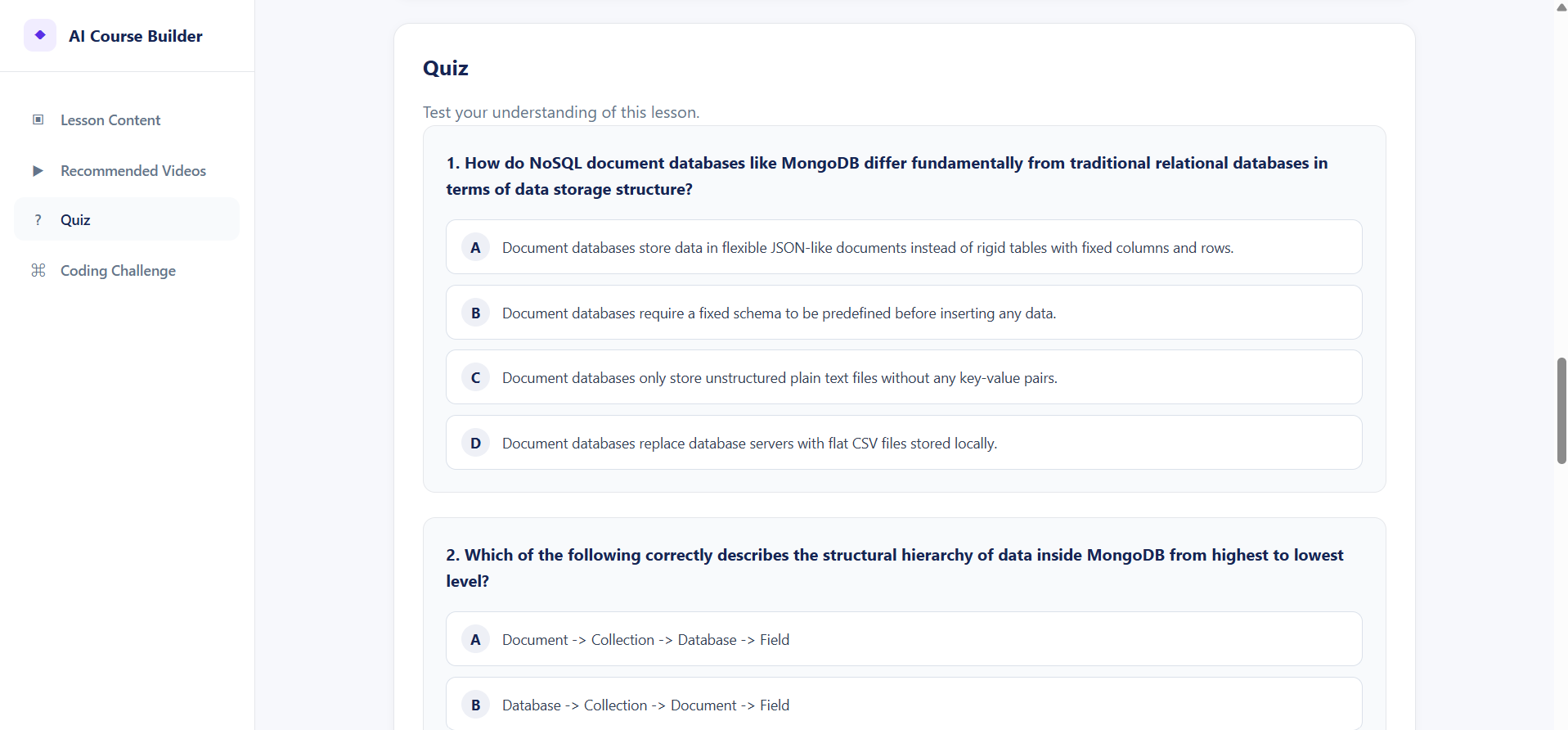
Quiz questions
-
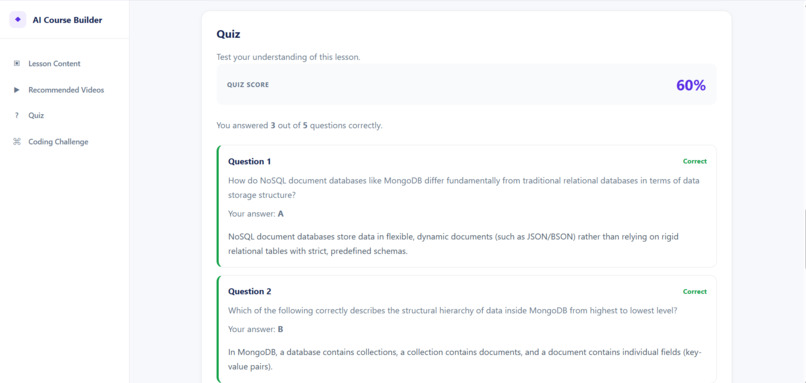
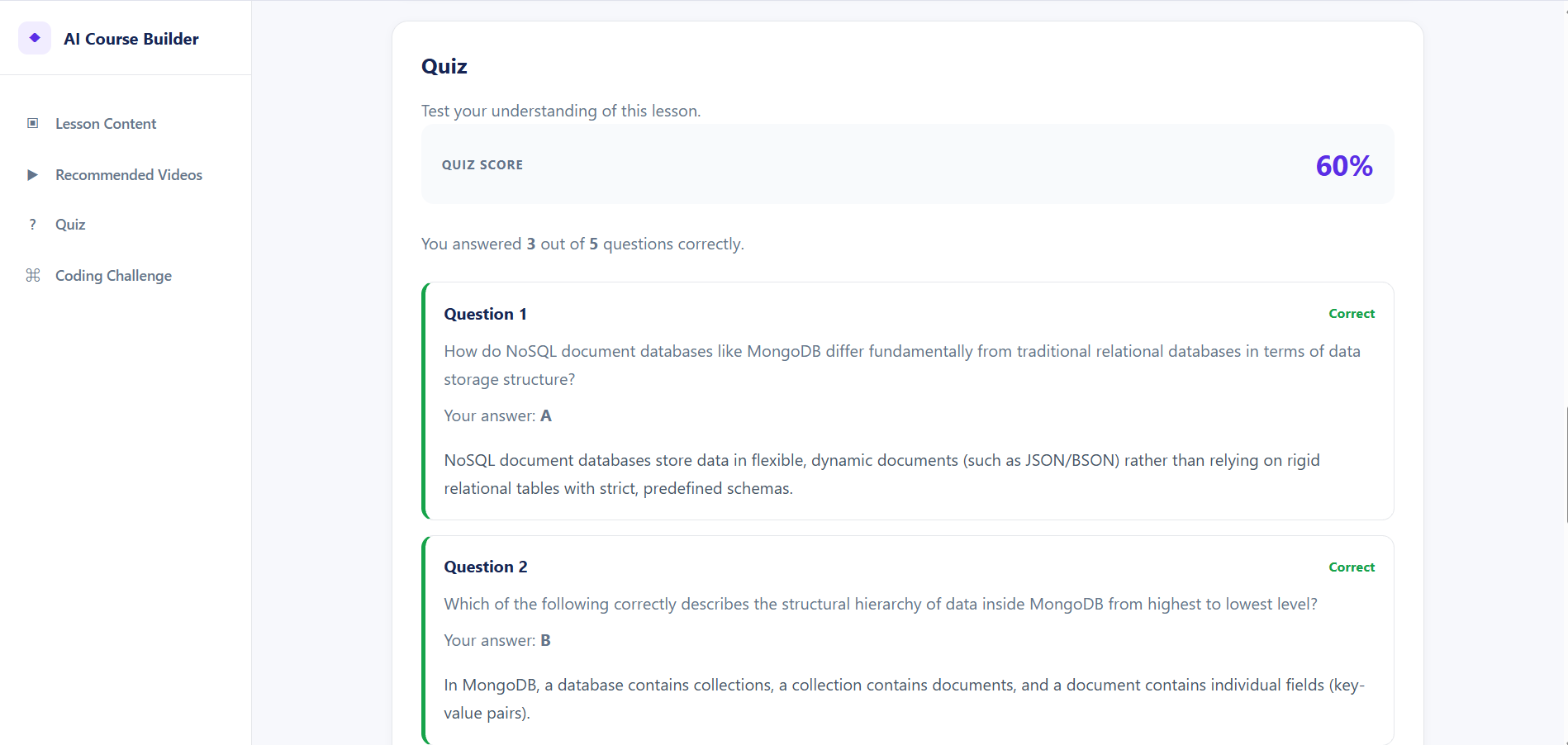
Quiz scores
-
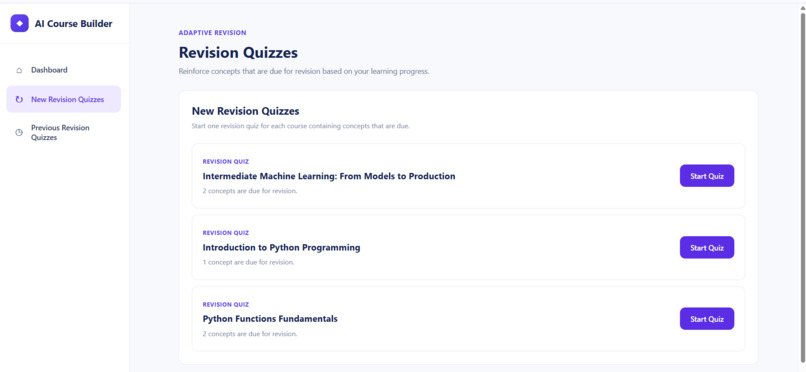
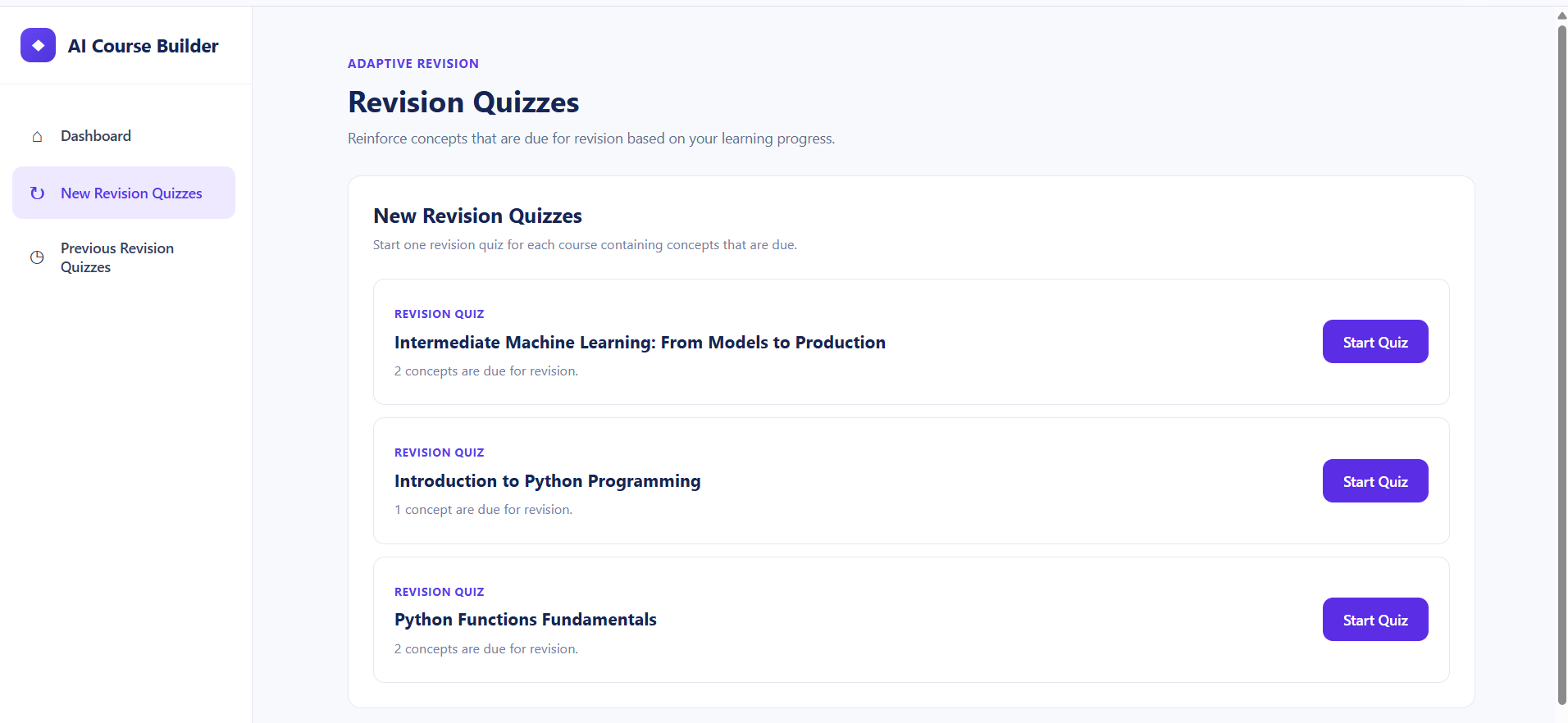
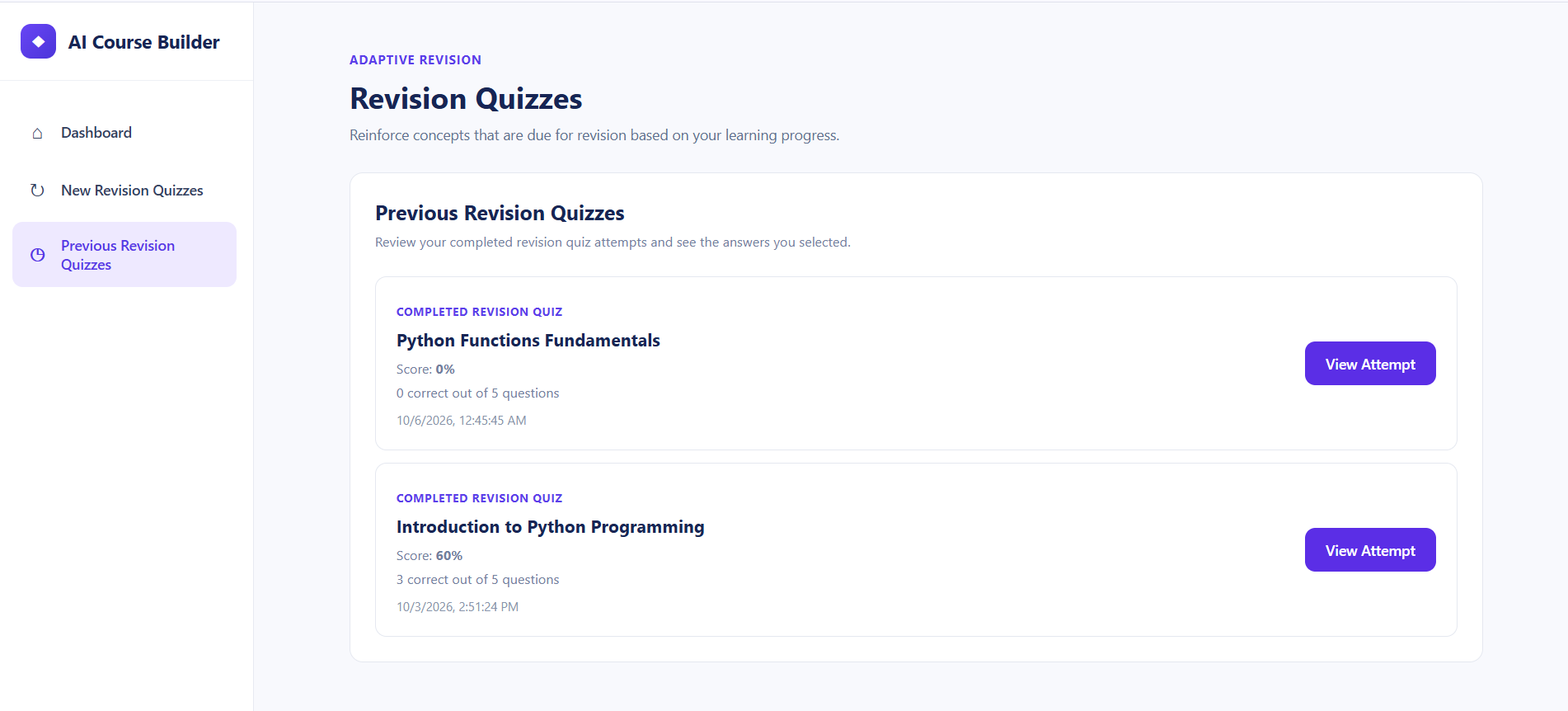
Revision quizzes generated for the previous lesson quiz a/c to the time frame and marks obtained
-
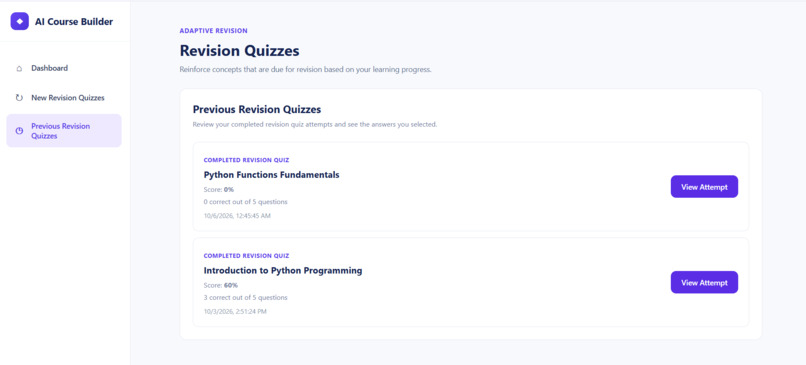
revision quiz already attempted
-
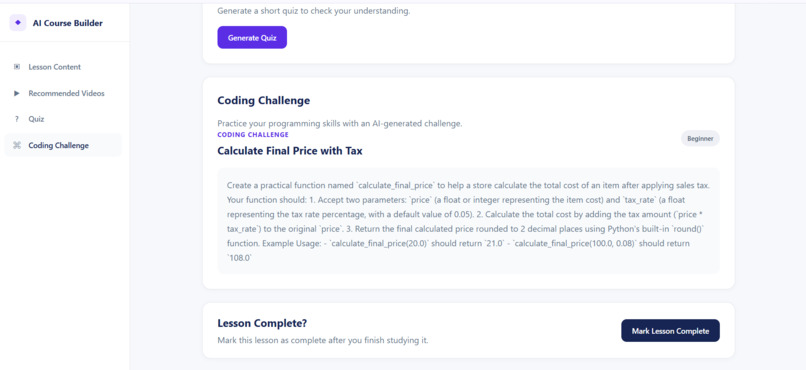
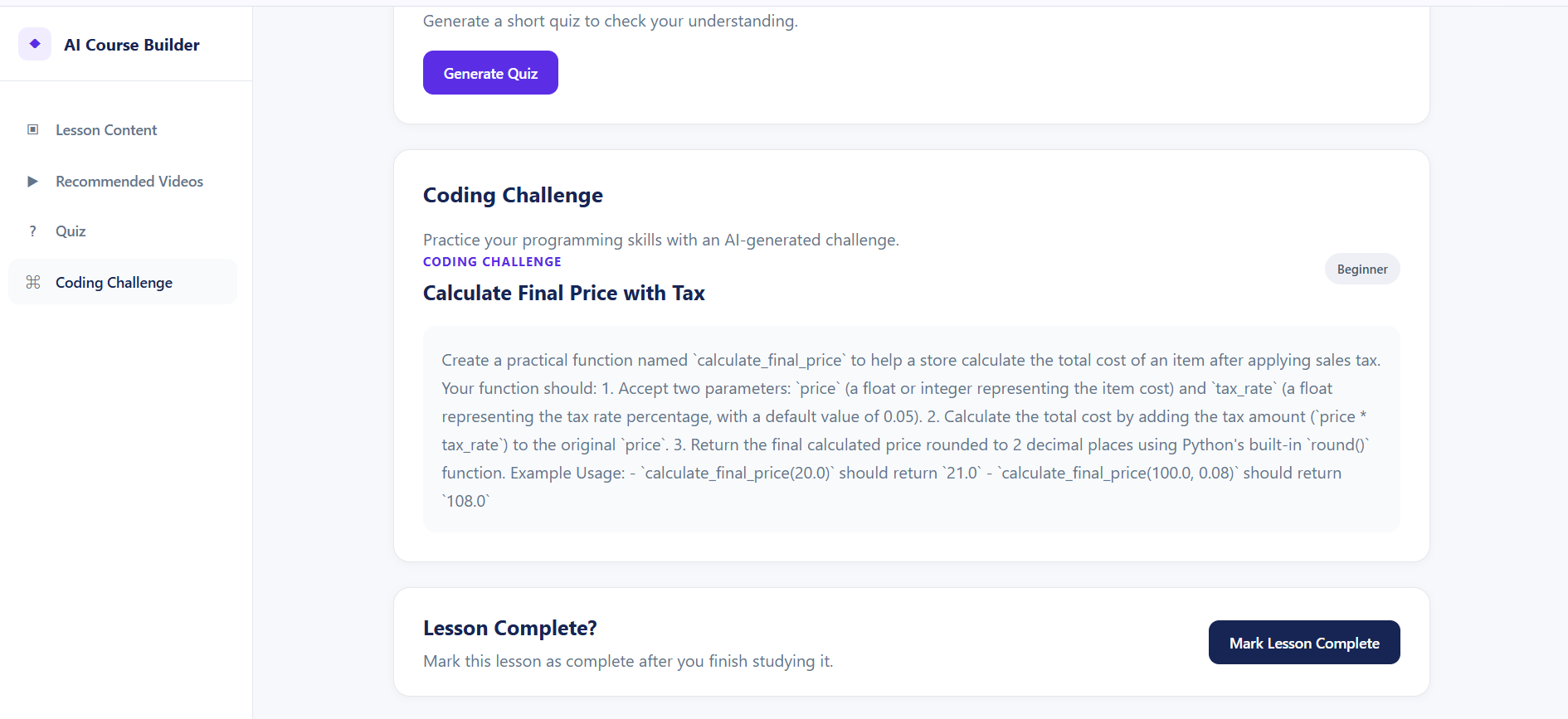
Coding questions for programming related lessons only
Inspiration
Traditional online learning platforms often provide the same learning path to everyone, regardless of their understanding or learning progress. Learners may complete lessons and quizzes, but identifying which specific concepts they struggle with and deciding what to revise next can still be difficult.
We wanted to address this gap by building a platform that does more than generate learning content. Our inspiration was to create a personalized learning experience where AI helps learners build a course, understand their progress at the concept level, and focus their revision on areas that need more attention.
This idea led to AI Course Builder with Adaptive Learning Intelligence — a platform that connects AI-powered course creation with learner modelling and adaptive revision.
What it does
AI Course Builder creates personalized learning courses based on a learner's chosen topic, difficulty level, and preferred duration.
Its key capabilities include:
- AI-powered course generation: Creates structured syllabi, learning outcomes, and lessons using AI.
- AI Knowledge Dependency Graph (AKDG): Identifies important concepts, maps them to lessons, and captures relationships such as prerequisites, related concepts, and concepts that build upon one another.
- Interactive learning resources: Provides lesson content, YouTube video resources, quizzes, and coding challenges.
- Learner Digital Twin (LDT): Maintains a rule-based learner profile using concept-level quiz performance and learning progress to identify strengths and areas requiring improvement.
- Adaptive Memory Retention Engine (AMRE): Uses quiz performance to estimate concept-level revision intervals and identify concepts that are due for review.
- Personalized revision quizzes: Generates revision quizzes based on concepts identified for review, helping learners focus on areas that need reinforcement.
The platform follows a continuous learning cycle: generate a course, learn concepts, assess understanding, track progress, and revise concepts at the appropriate time.
How we built it
We built the application using a React-based frontend and a Python Flask backend organized into five services: Authentication, Course, AI, Lesson, and Progress. A Flask API Gateway acts as the central entry point for communication between the frontend and backend services.
Our technology stack includes:
- Frontend: React 19 and Vite
- Backend: Python and Flask
- Database: PostgreSQL with SQLAlchemy ORM
- AI Integration: Gemini API using the Google GenAI SDK
- Authentication: JSON Web Tokens (JWT)
- Learning Resources: YouTube Data API v3
The AI service generates course structures, lesson content, knowledge graphs, quizzes, and coding challenges. The generated knowledge graph connects course concepts with their corresponding lessons and relationships.
We implemented the Learner Digital Twin as a rule-based system that evaluates concept-level quiz accuracy and learning progress. The Adaptive Memory Retention Engine then updates revision intervals according to quiz performance. For example, stronger performance increases the revision interval, while weaker performance shortens it.
When concepts become due for revision, the system identifies them and generates a targeted revision quiz. The learner's latest performance is then used to update the learning profile and retention schedule.
We also included a local development mode with local content generators, allowing development and testing without depending on live Gemini API calls.
Challenges we ran into
One of our main challenges was integrating multiple backend services while maintaining consistent communication and data flow across the application.
Other important challenges included:
- Structuring AI-generated content: Ensuring generated course content and knowledge graphs followed the expected structure and could be validated before being stored or used.
- Concept-level mapping: Connecting quiz questions and learning outcomes to individual concepts so that learner performance could be tracked beyond an overall quiz score.
- Building adaptive logic: Designing rules that translate quiz performance into learner strengths, areas for improvement, and revision intervals.
- Maintaining learner state: Keeping course progress, concept performance, learner profiles, and revision schedules consistent as learners interact with the platform.
- Revision quiz generation: Ensuring revision quizzes cover the concepts identified for review and avoid duplicate questions.
Balancing AI-generated content with predictable, rule-based learning logic was particularly important. We addressed this by combining AI for content generation with application-level validation and defined rules for learner modelling and revision scheduling.
Accomplishments that we're proud of
We are proud to have built an integrated learning platform that brings several learning activities together rather than treating them as separate features.
Our key accomplishments include:
- Building an end-to-end course generation and learning workflow.
- Implementing an AI Knowledge Dependency Graph to organize concepts and their relationships.
- Developing a Learner Digital Twin that tracks concept-level strengths and weaknesses.
- Implementing an Adaptive Memory Retention Engine with performance-based revision intervals.
- Generating targeted revision quizzes using concepts identified as due for review.
- Integrating authentication, course management, lessons, assessments, and progress tracking through a multi-service backend architecture.
Most importantly, we are proud of connecting course creation with ongoing learner performance and revision. The platform is designed to make learning more personalized throughout the learning journey, not just at the moment a course is generated.
What we learned
Building this project helped us understand how to integrate generative AI into a complete software application rather than using it only to produce text.
We gained practical experience with React, Flask, PostgreSQL, REST API communication, JWT authentication, and service-based backend architecture. We also learned how to work with AI-generated structured outputs and validate them before integrating them into application workflows.
One of our biggest learnings was that personalized learning requires more than generating good content. It also requires tracking what learners understand, identifying concepts that need attention, and providing opportunities for revision.
Developing the AKDG, LDT, and AMRE helped us explore how AI-generated content can work alongside structured data and rule-based intelligence to create a more connected learning experience.
What's next for AI Course Builder with Adaptive Intelligence?
We see this project as a foundation that can be extended into a more comprehensive adaptive learning platform.
Our future plans include:
- Improving retention scheduling: Evaluating and refining the AMRE rules using actual learner performance and feedback.
- Visual knowledge graph exploration: Adding an interactive graph interface so learners can explore concept dependencies and learning relationships.
- Executable coding challenges: Introducing code execution and automated evaluation to provide feedback on programming exercises.
- Enhanced learner analytics: Providing more detailed insights into learning patterns, concept mastery, and progress over time.
- Real-world evaluation: Conducting user testing to understand how effectively the platform supports learners and where the adaptive experience can improve.
Our long-term vision is to build a learning platform that not only helps learners decide what to study, but also helps them understand what they have mastered, what needs improvement, and what they should revisit next.
Built With
- flask
- gemini-api
- google-genai-sdk
- javascript
- jwt-authentication
- microservices
- postgresql
- python
- react-19
- rest-api
- sqlalchemy
- vite
- youtube-data-api-v3
