-
-
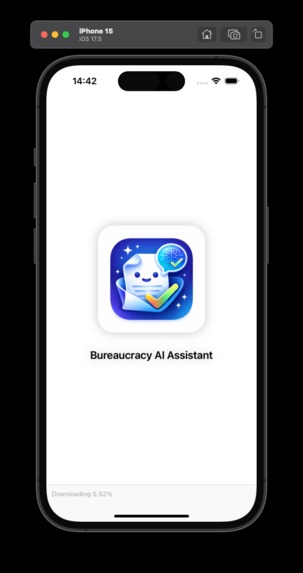
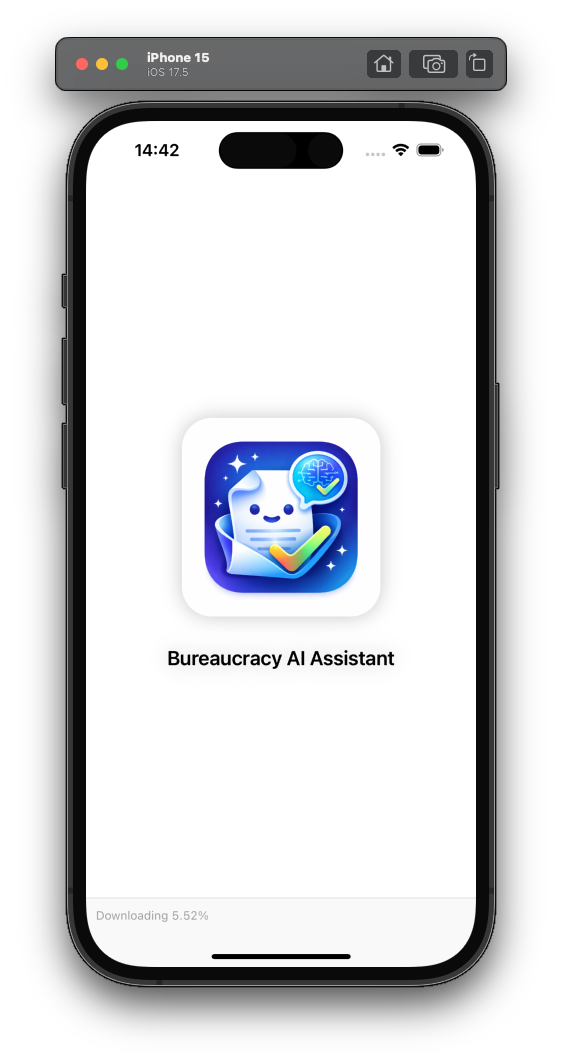
Splash Screen
-
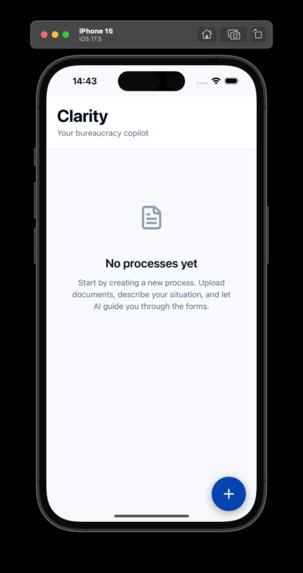
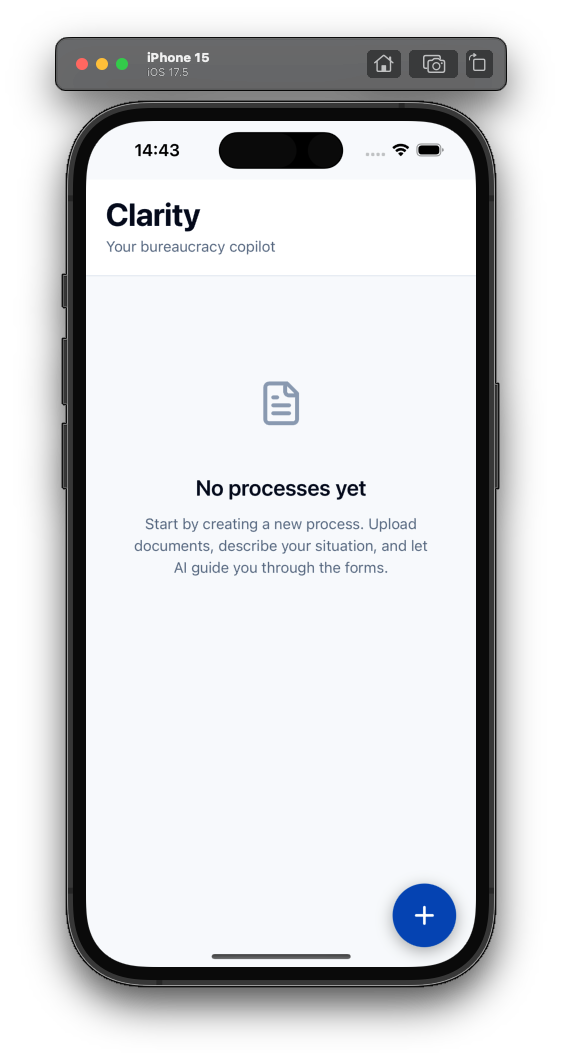
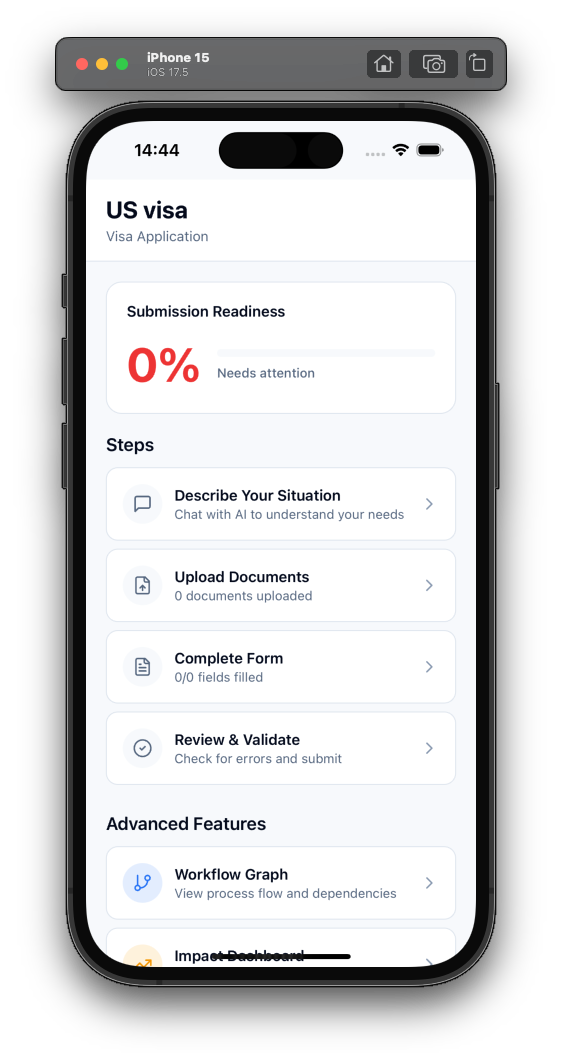
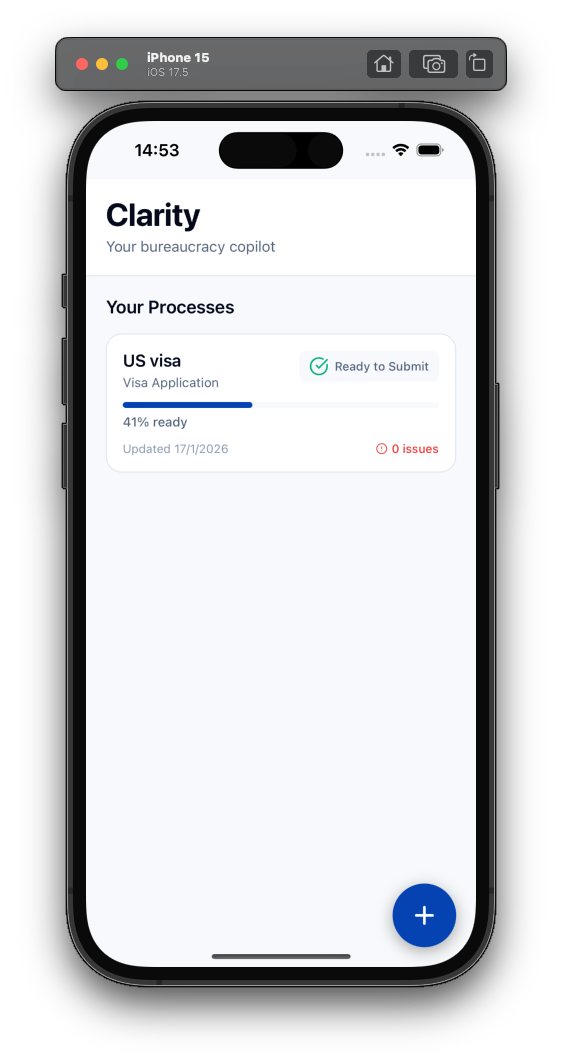
Home Page
-
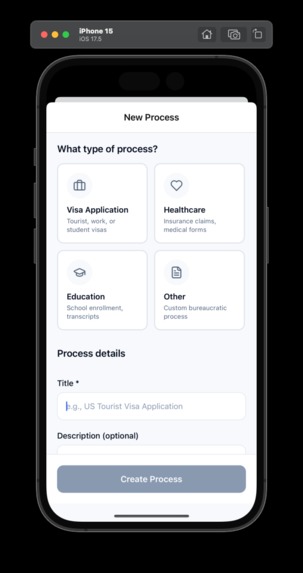
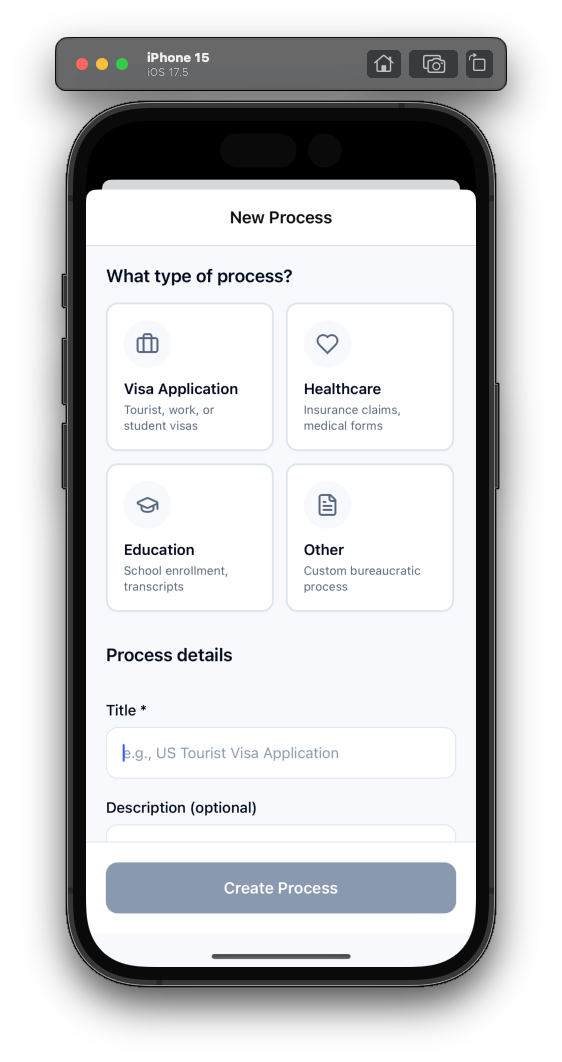
Adding a new Document type
-
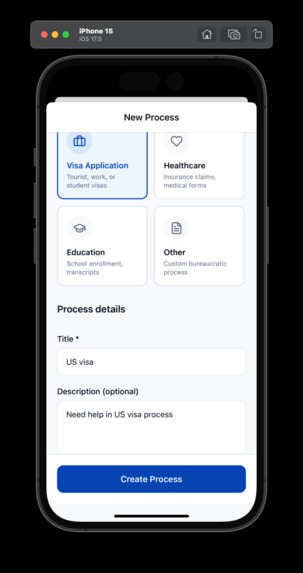
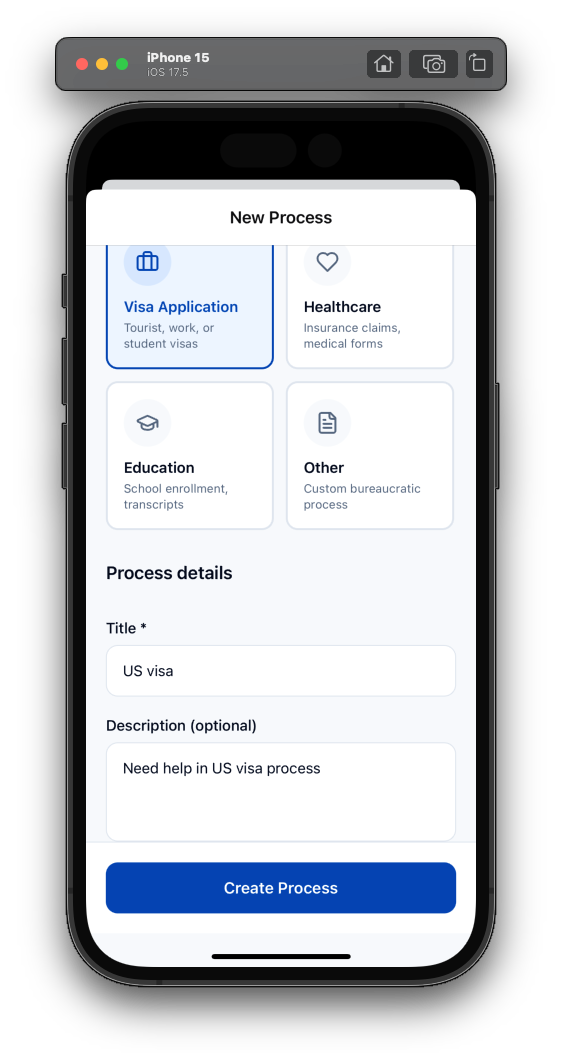
Adding info
-
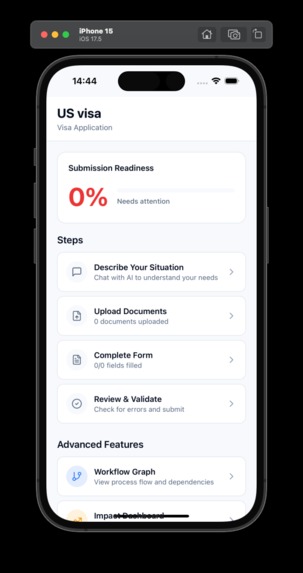
Visa help
-
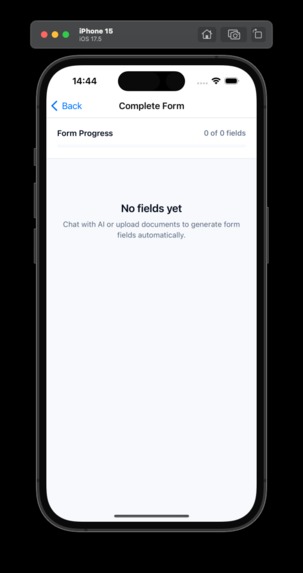
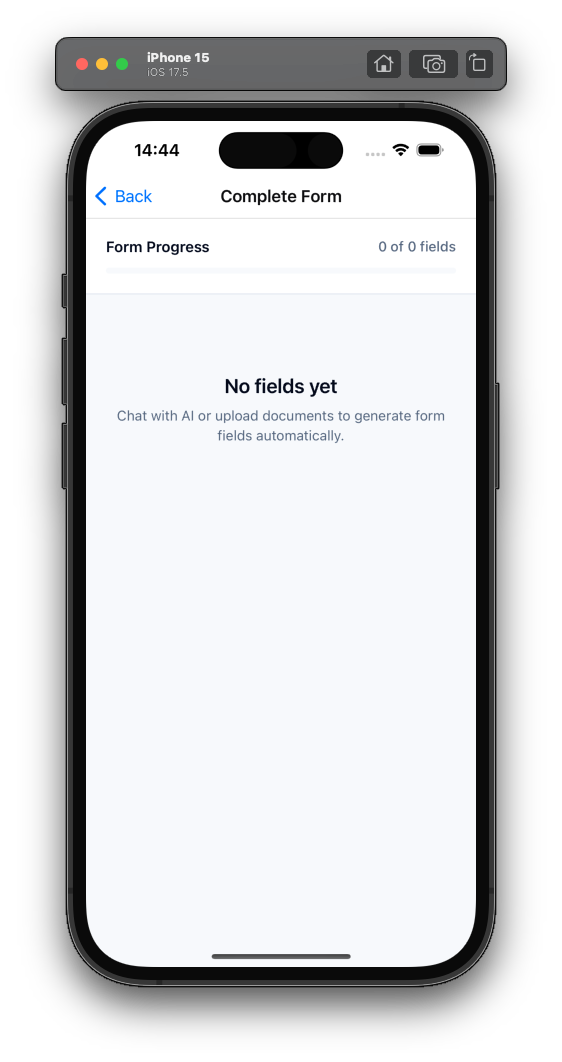
Form not present at first
-
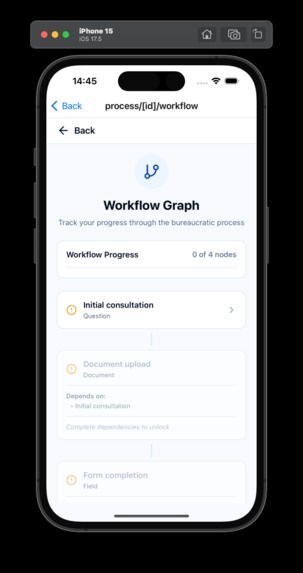
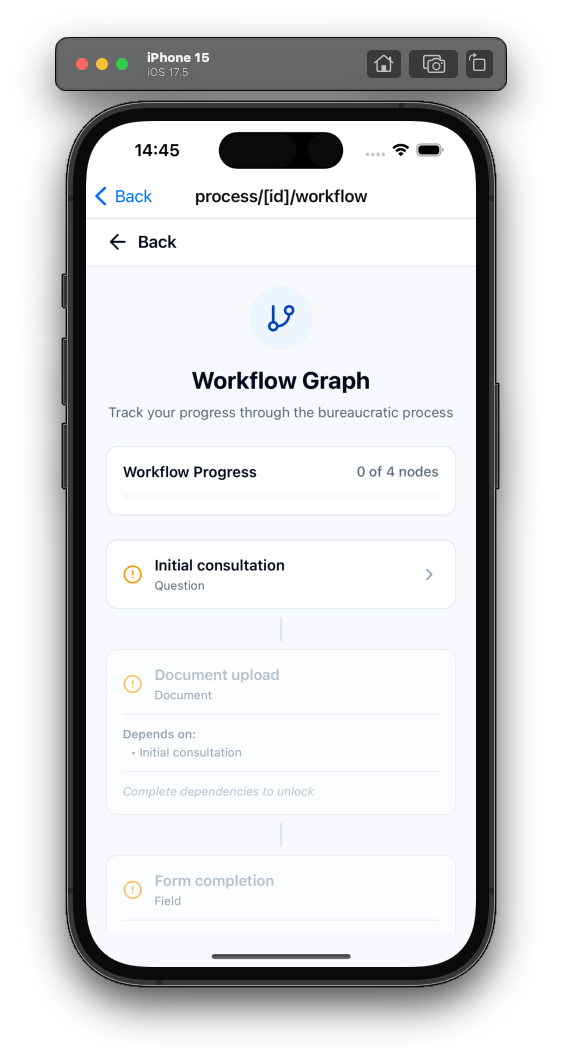
Worktime graph
-
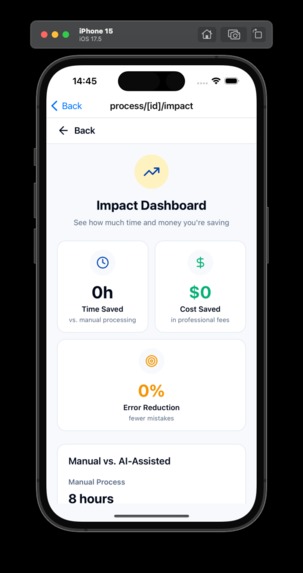
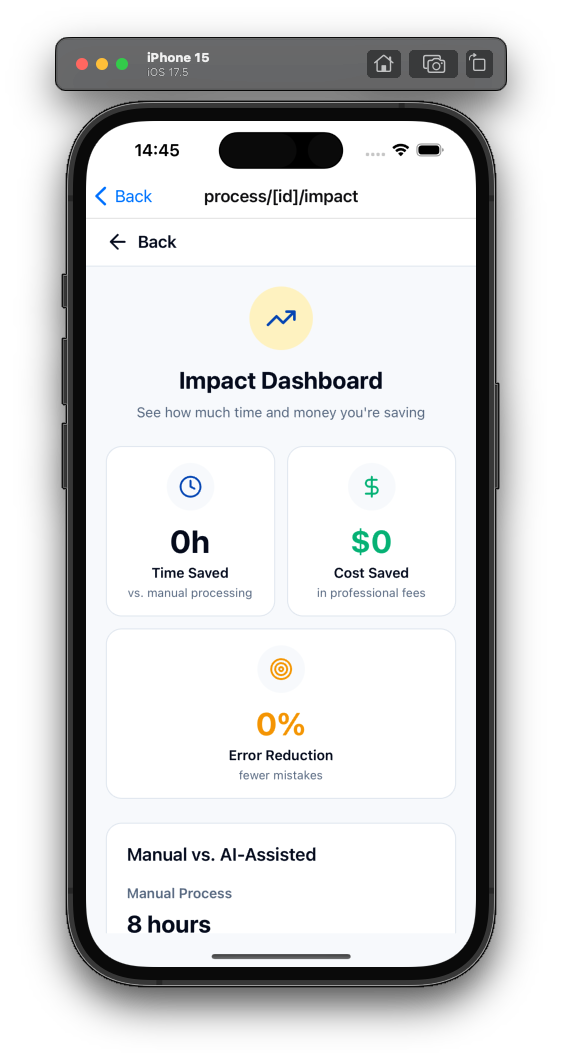
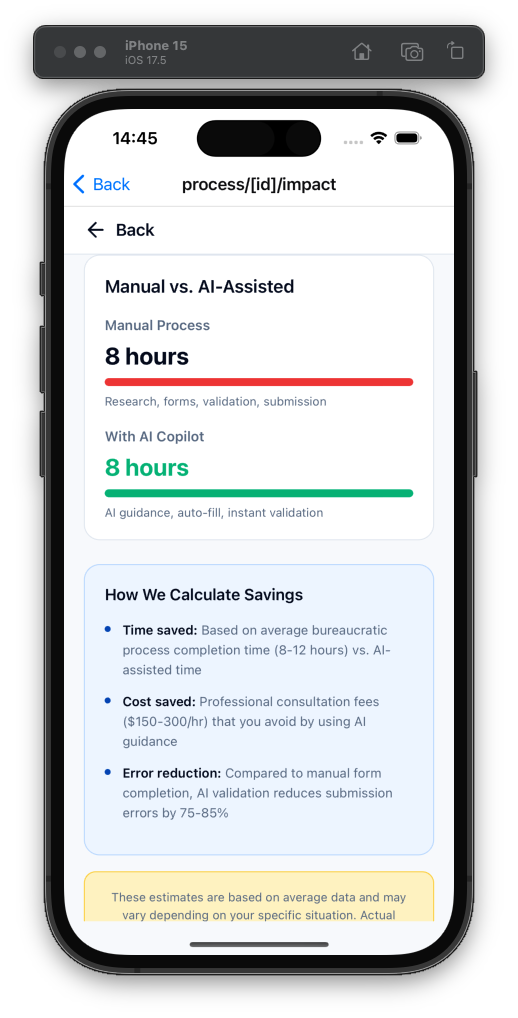
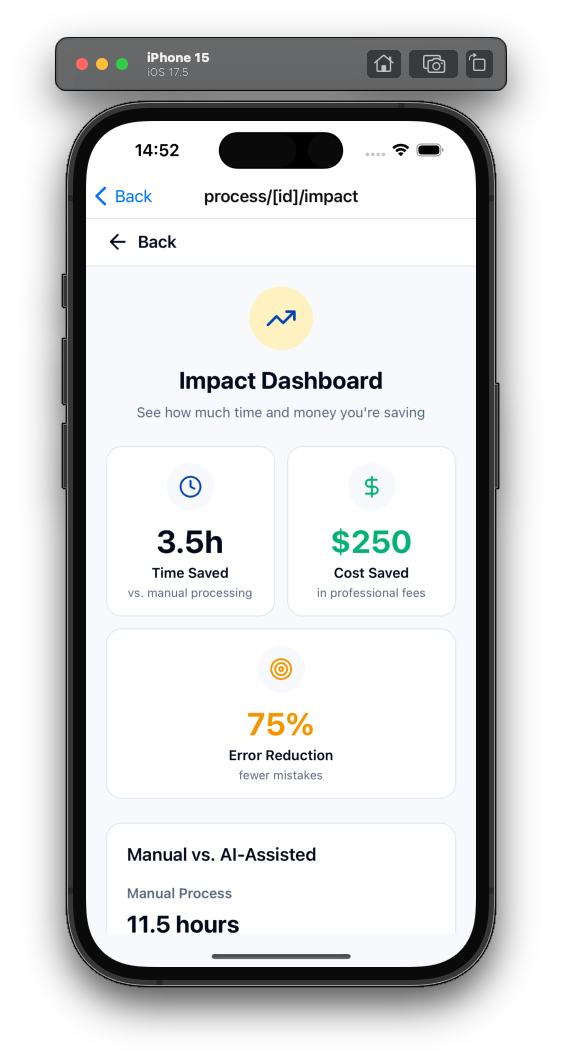
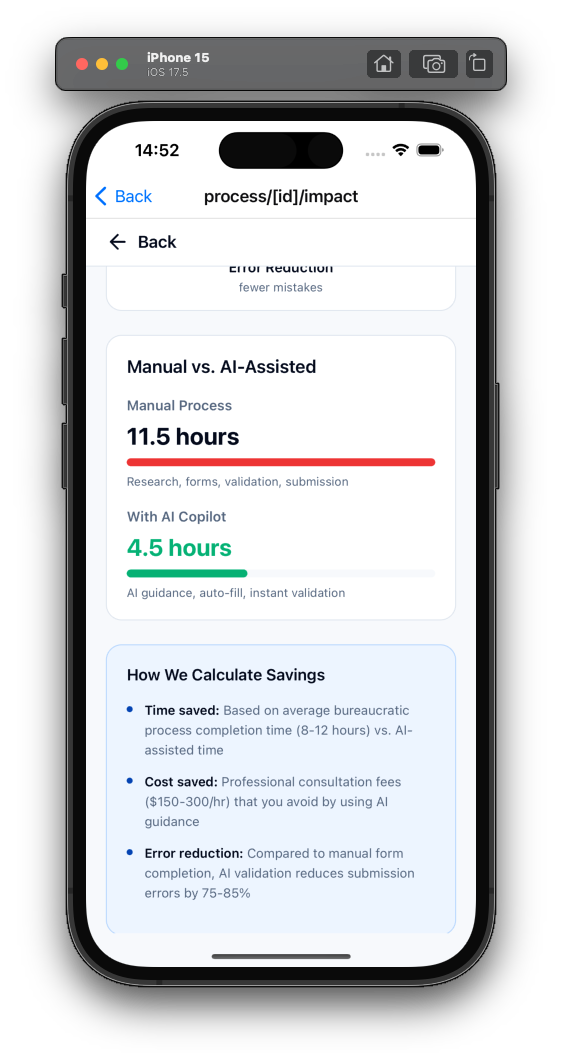
Impact Dashboard
-
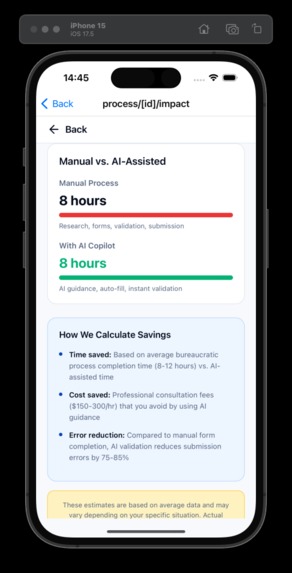
Before any impact
-
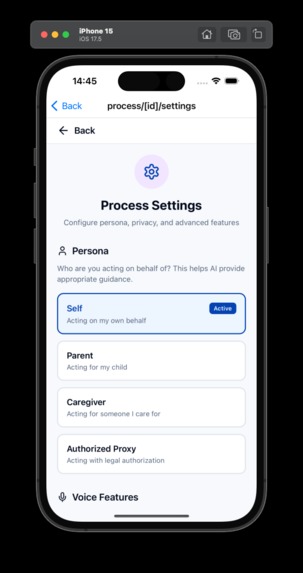
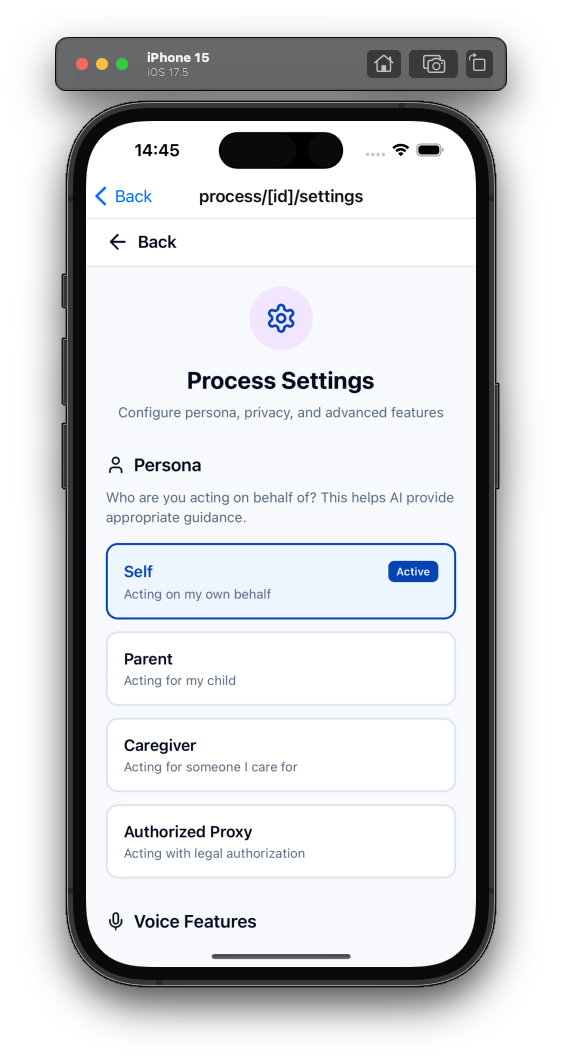
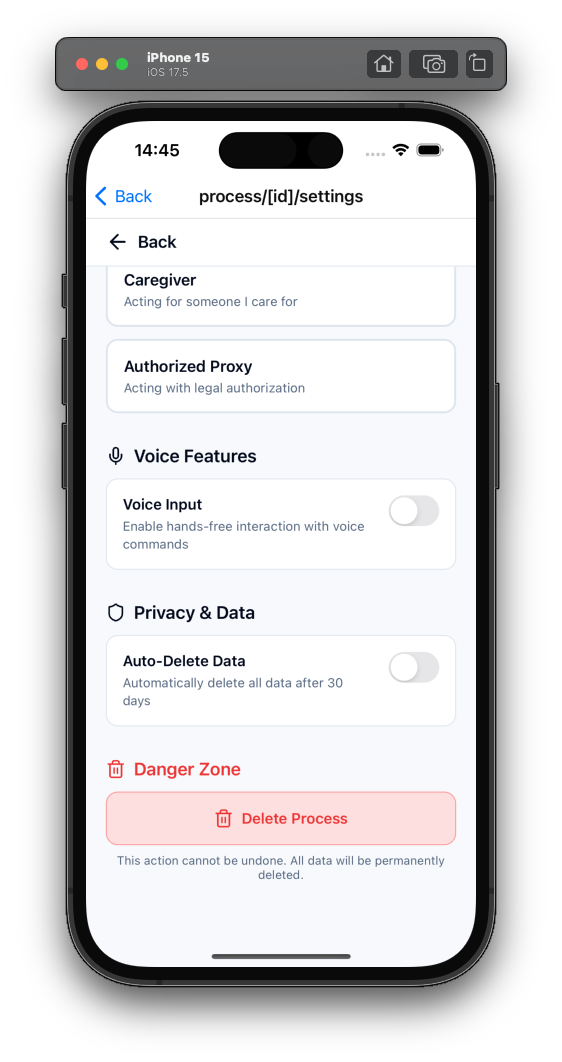
Process Settings
-
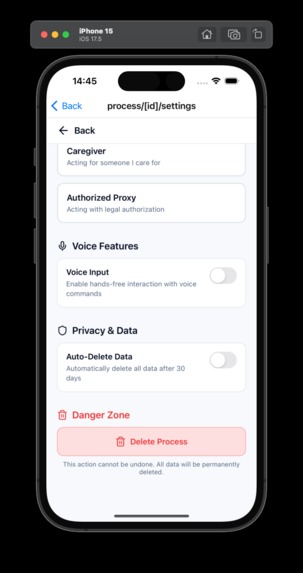
Advance Settings
-
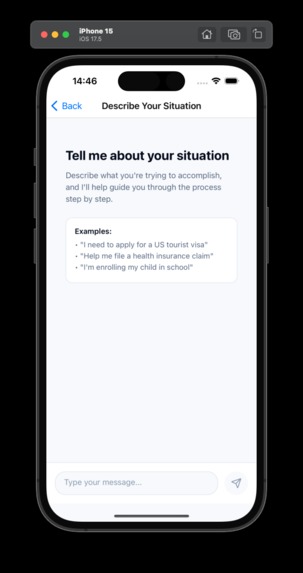
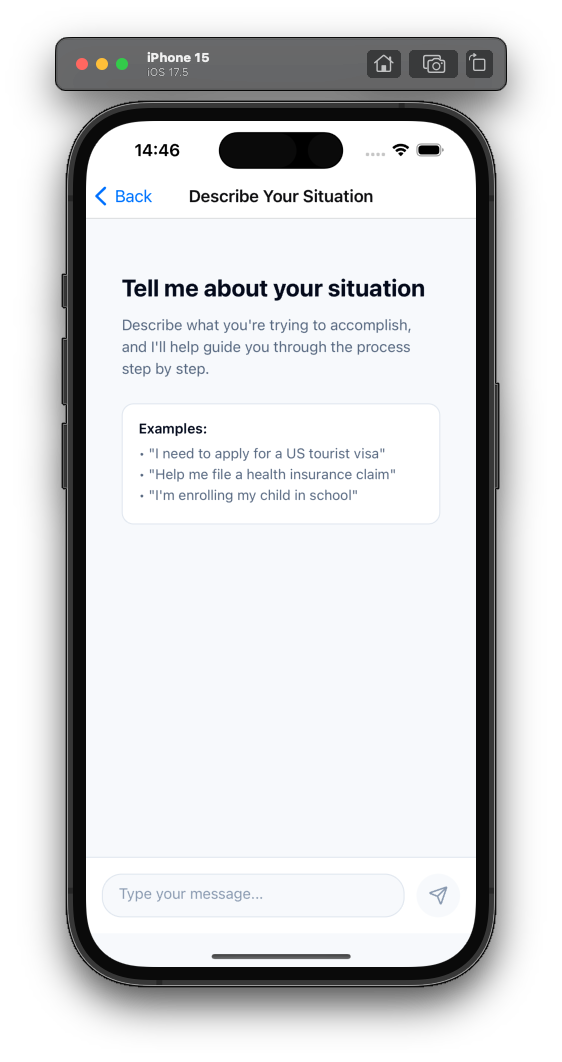
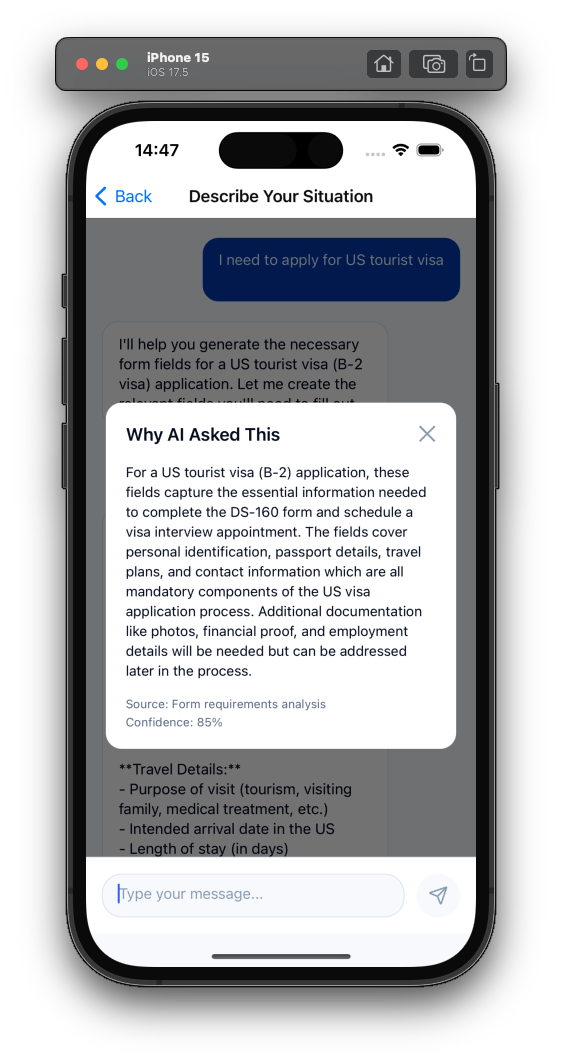
Taking AI Chat Help
-
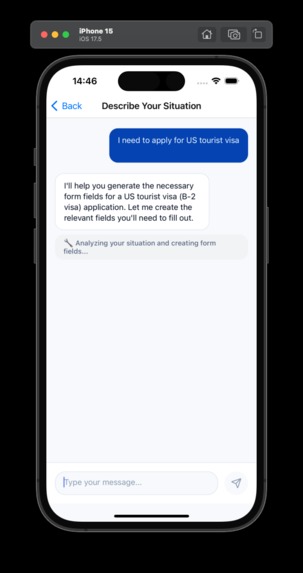
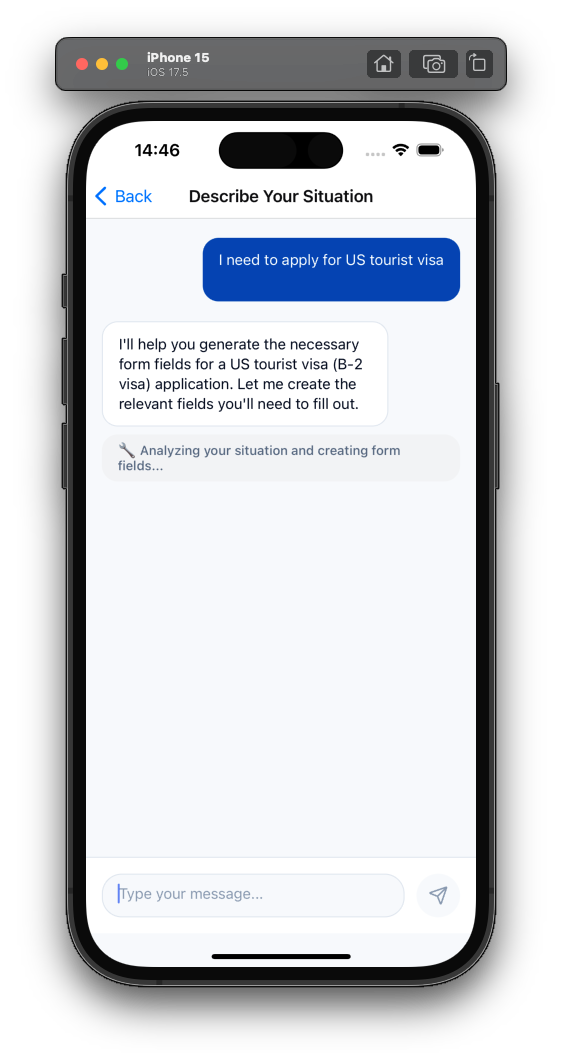
AI thinking and generating form
-
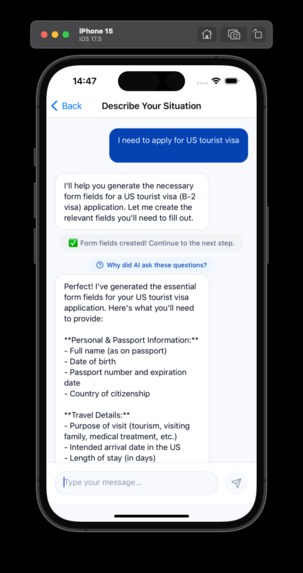
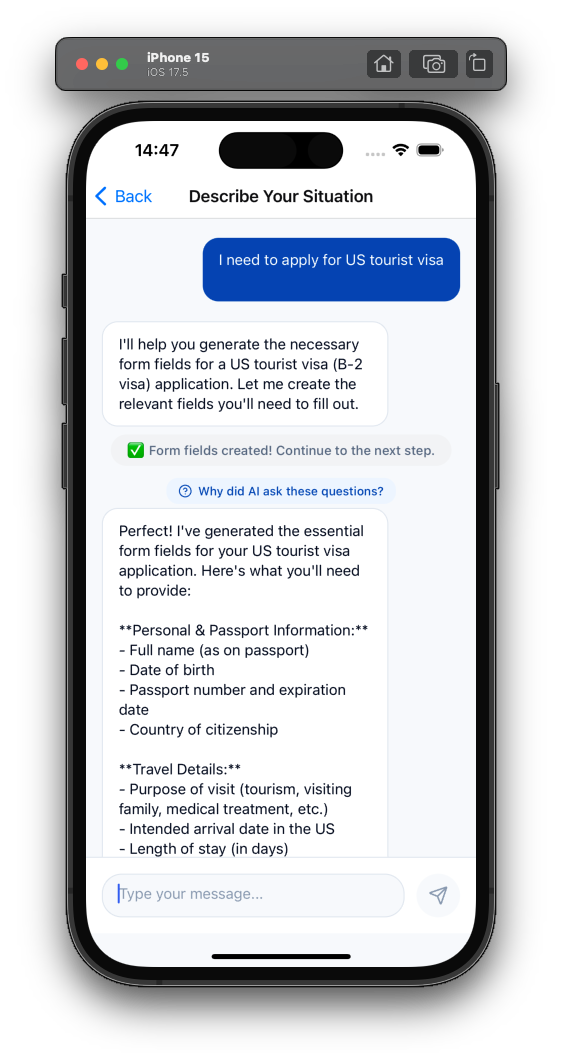
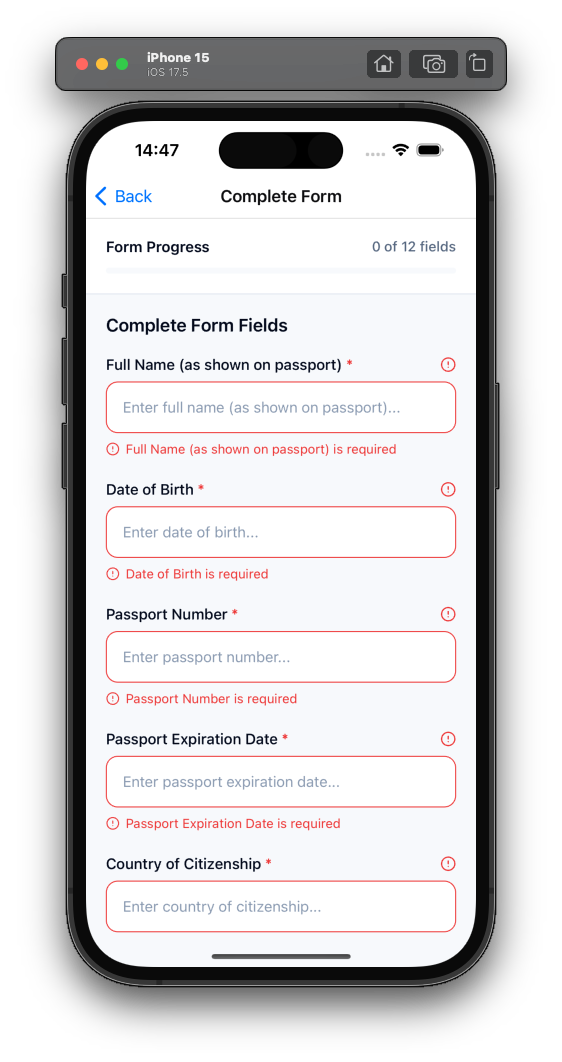
Form generated
-
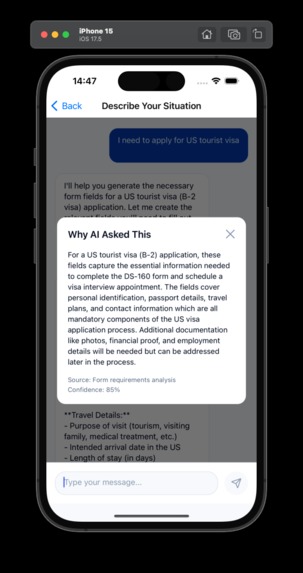
Asking AI specific questions
-
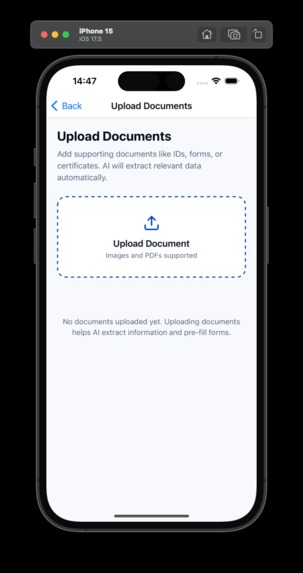
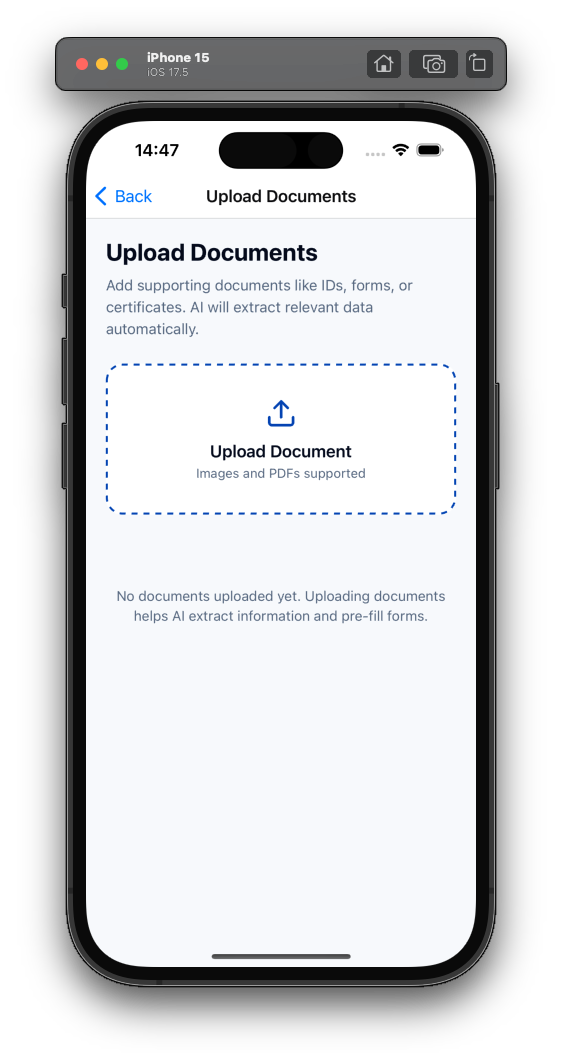
Upload Important required docs
-
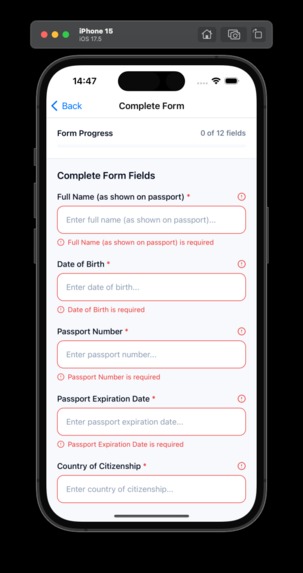
New form geenrated
-
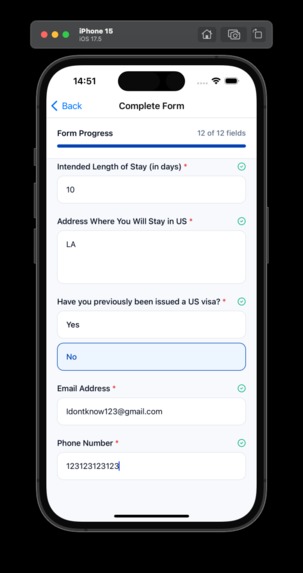
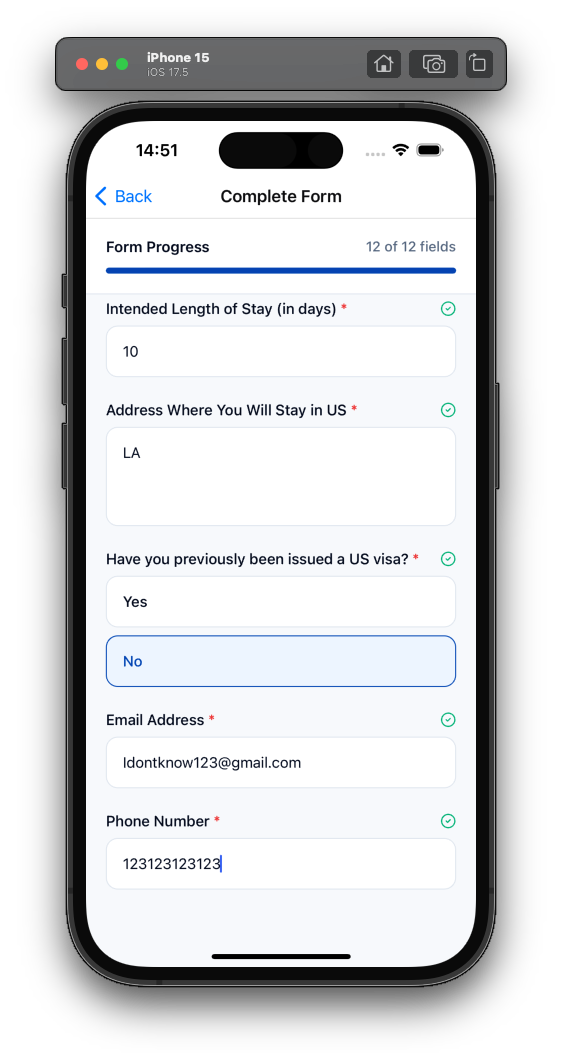
Filled info
-
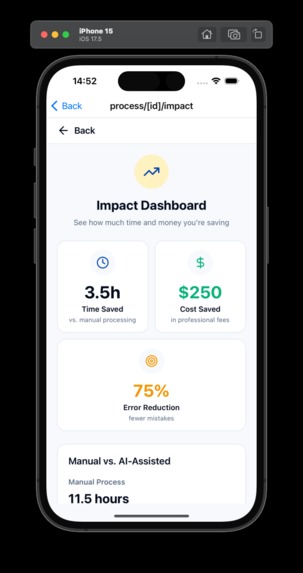
New Impact Scores
-
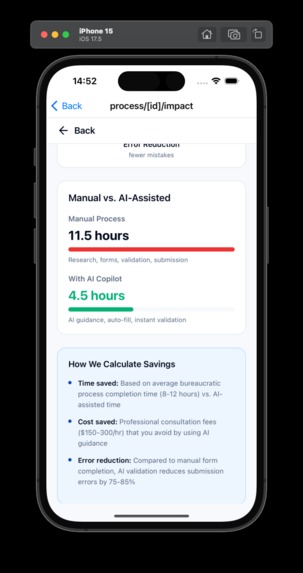
Saved Time
-
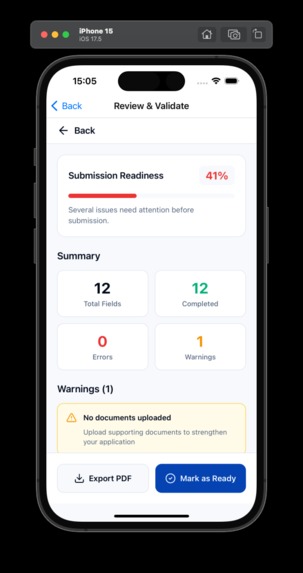
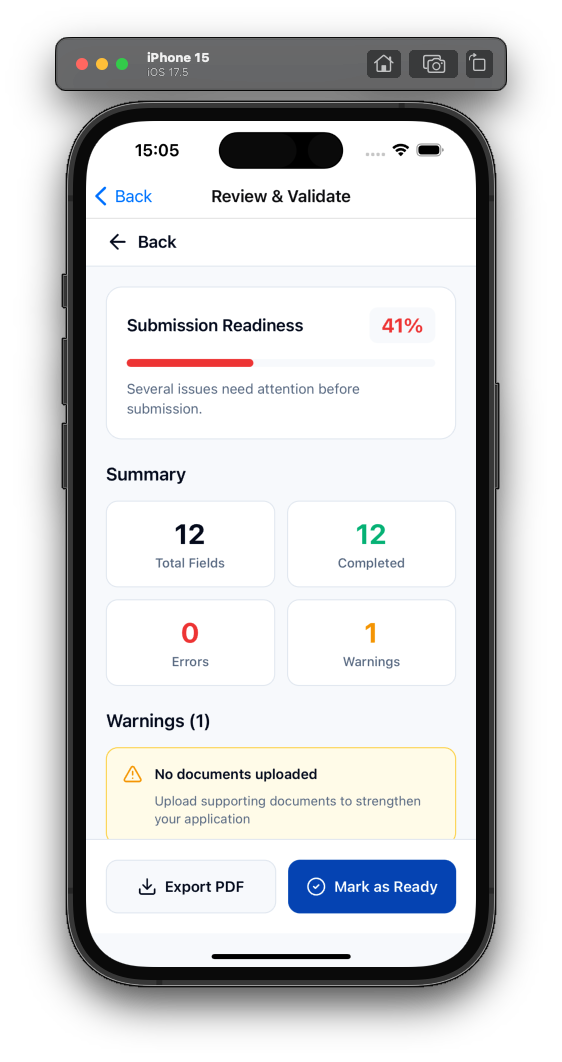
Mark As Done - Review
-
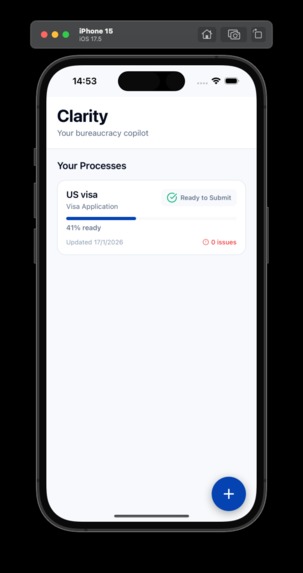
As docs was not submitted so low Score
Inspiration
Bureaucracy is one of the most universal yet under-addressed problems in the world. Whether it’s applying for a scholarship, filing a government form, submitting insurance claims, or completing institutional paperwork, people consistently lose time, money, and opportunities not because they are unqualified, but because processes are complex, opaque, and error-prone.
We were inspired by the gap between how critical these workflows are and how poorly they are designed for real users. Most existing solutions either digitize forms without reducing complexity or rely on generic AI chatbots that don’t understand rules, eligibility, or consequences. We wanted to build something fundamentally different: an AI system that understands bureaucracy as a structured process, not just text.
What it does
AI Copilot for Real-World Bureaucracy is a mobile-first application that helps users complete complex bureaucratic workflows correctly and confidently.
Users can upload documents, speak their intent, or describe their situation in natural language. The system identifies the appropriate workflow, extracts required information, validates it against official rules, and guides the user step-by-step until the submission is ready.
Key capabilities include:
- Smart questioning that asks only what’s missing
- Explain-why mode that shows the reasoning behind every requirement
- A workflow graph engine that tracks progress and dependencies
- A submission readiness score that highlights risks and gaps
- Voice-first interaction for accessibility
- Privacy-first controls with data expiry and auto-delete
- A dashboard that quantifies time and cost saved compared to manual processes
How we built it
We modeled each bureaucratic process as a directed workflow graph, where nodes represent steps or documents and edges represent conditional rules. This allowed us to combine deterministic validation (hard rules) with LLM-based reasoning (soft constraints and explanations).
The system architecture consists of:
- A cross-platform mobile frontend optimized for clarity and trust
- OCR and document parsing for structured data extraction
- An LLM-powered reasoning layer for intent detection, explanations, and guidance
- A rules and compliance engine for validation and error detection
- A privacy layer with encryption, scoped access, and automatic data deletion
By grounding AI outputs in explicit workflow states and rules, we avoided “black-box” behavior and built a system that can scale across domains and institutions.
Challenges we ran into
One major challenge was balancing flexibility with correctness. Bureaucratic rules are often ambiguous, incomplete, or change over time, which makes pure automation risky. We addressed this by introducing explainability, confidence scoring, and human-in-the-loop checkpoints instead of forcing full automation.
Another challenge was designing a mobile experience for inherently complex tasks. We had to carefully reduce cognitive load through progressive disclosure, voice interaction, and minimal questioning, while still preserving accuracy and user control.
Accomplishments that we're proud of
- Designing a workflow graph based AI system instead of a generic chatbot
- Implementing explainable AI reasoning for bureaucratic rules
- Building a submission readiness score that users can actually trust
- Creating a voice-first, accessibility-aware mobile experience
- Quantifying real-world impact through time and cost savings
- Treating privacy and data deletion as first-class features, not afterthoughts
What we learned
We learned that AI becomes far more powerful when paired with structure, constraints, and transparency. Bureaucracy is not just a language problem it’s a systems problem. By modeling processes explicitly and using AI where it adds the most value, we can build tools that are not only intelligent but also reliable and ethical.
We also learned the importance of designing for trust. In high-stakes workflows, users don’t want magic they want clarity, control, and accountability.
What's next for AI Copilot for Real-World Bureaucracy
Next, we plan to expand support for specific high-impact domains such as education aid, healthcare claims, and government services. We aim to add institution-side review tools, real-time policy updates, and localized compliance models for different countries.
Our long-term vision is to make bureaucracy understandable, accessible, and error-free for everyone regardless of background, language, or technical ability.

Log in or sign up for Devpost to join the conversation.