-
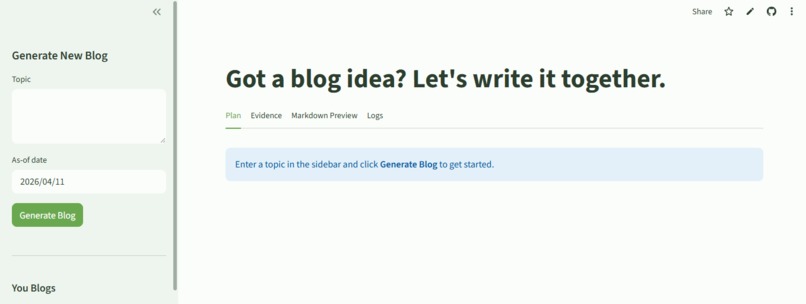
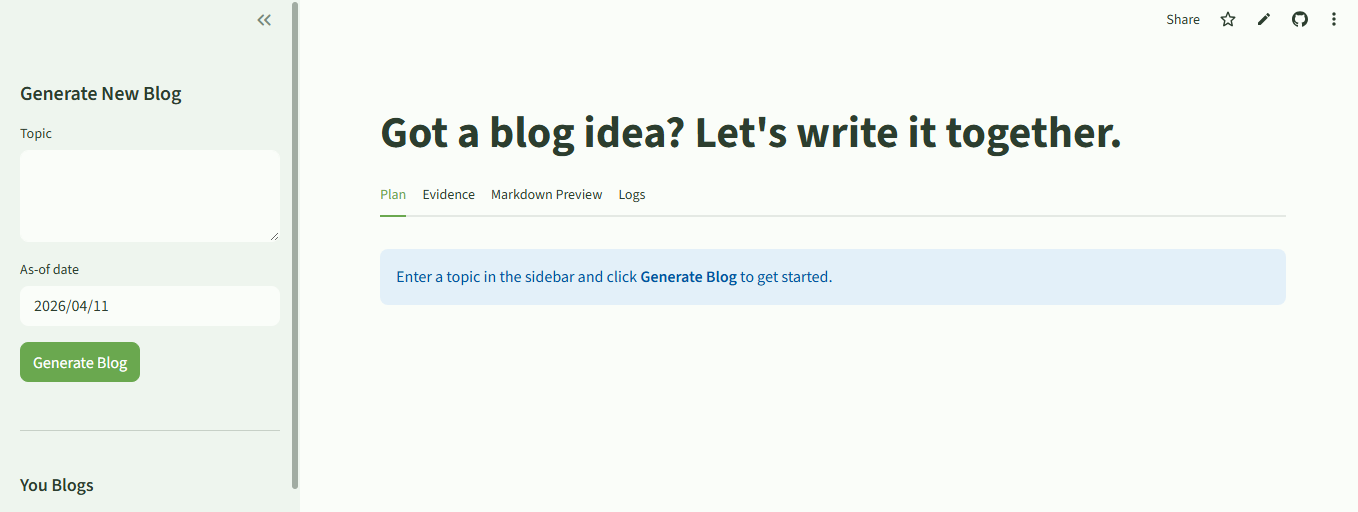
Home Screen
-
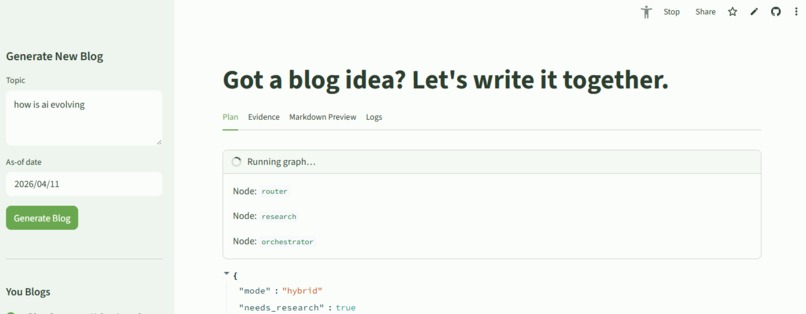
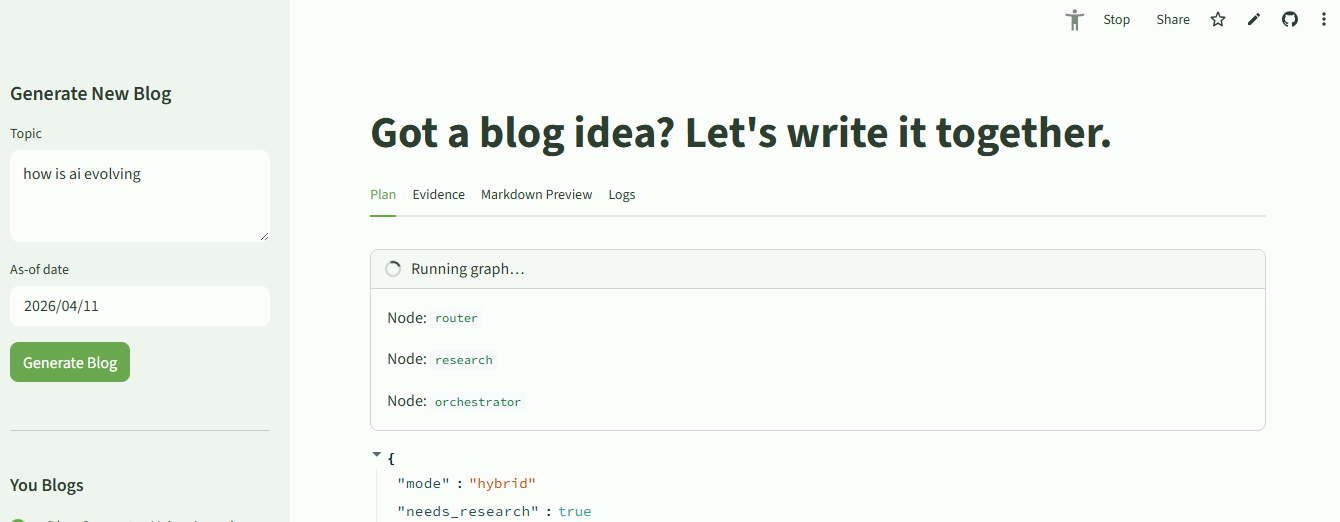
Input Processing
-
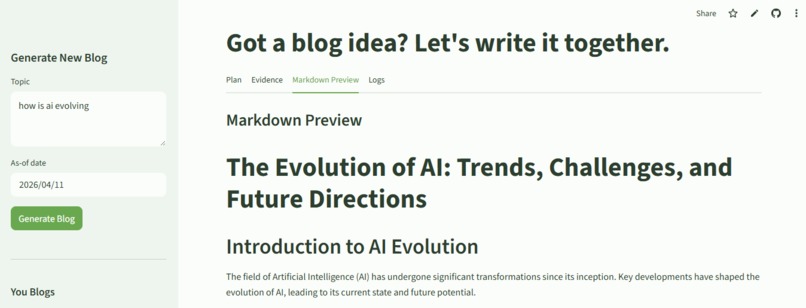
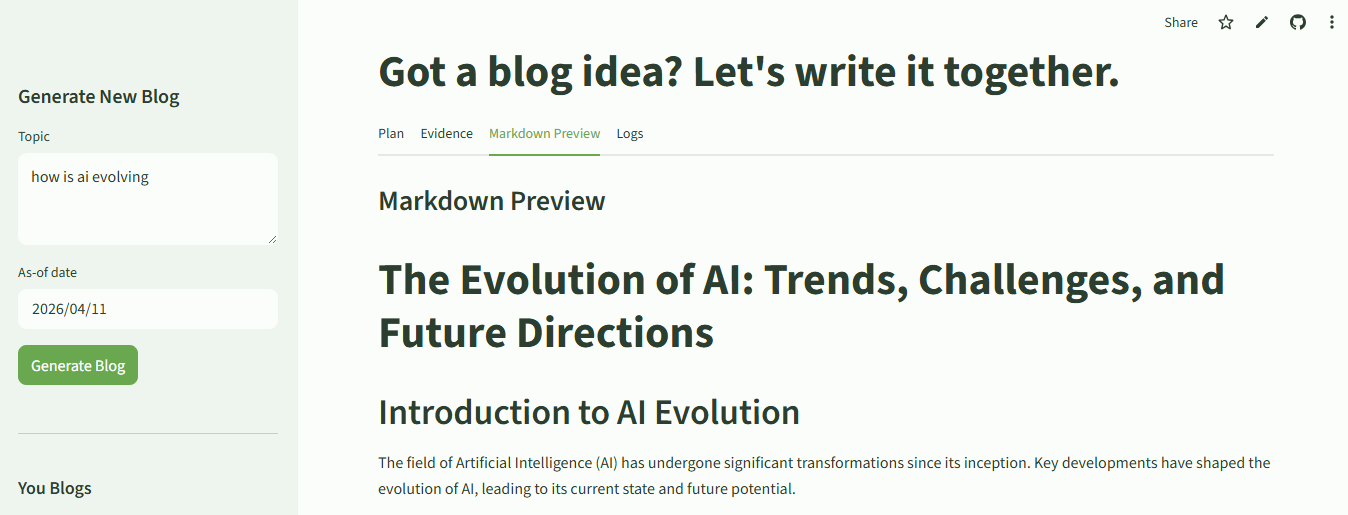
Output
Inspiration
Content creation today is either time-consuming or generic. While large language models can generate text quickly, they often lack structure, research depth, and coherence across long-form content.
The idea behind ContentFlow AI was to go beyond simple prompting and build a system that mimics how humans actually write: → plan → research → organize → write → refine
This led to the concept of using agentic workflows, where multiple AI agents collaborate to produce high-quality, structured blog content automatically.
What it does
ContentFlow AI is an AI-powered multi-agent content engine that transforms a simple topic into a fully structured, research-backed blog.
It:
- Generates a content plan with sections and structure
- Performs research (optional) to gather relevant information
- Uses multiple agents to write different sections in parallel
- Merges outputs into a coherent final blog
- Provides a clean Markdown output ready for publishing
The system ensures that content is not just generated-but thought through and assembled intelligently.
How we built it
The project is built using a modular agent-based architecture:
LangGraph → orchestrates the workflow as a stateful graph LangChain → handles LLM interactions and tool integration Groq API → powers fast LLM inference Streamlit → provides an interactive frontend UI
Workflow Design The system follows a structured pipeline:
Router → Research → Orchestrator → Workers → Reducer
Router Node: Decides whether research is required Research Node: Fetches external knowledge (if enabled) Orchestrator Node: Creates a detailed content plan Worker Nodes: Generate sections in parallel Reducer Node: Combines everything into final output
This architecture allows parallel execution and scalability, making it efficient and modular.
Challenges we ran into
- Dependency conflicts during deployment Managing compatibility between libraries (like numpy, streamlit, langchain) required careful version handling.
- Designing agent coordination Ensuring that multiple agents produce consistent and non-redundant content was tricky.
- Handling optional research flows Dynamically switching between closed-book and research-based generation added complexity.
- UI/UX limitations in Streamlit Making the interface intuitive across devices (especially mobile) required thoughtful design decisions.
- Environment variables & API keys Managing API keys securely during deployment (e.g., Groq, Tavily) was a key learning point.
Accomplishments that we're proud of
- Built a fully functional multi-agent AI system from scratch
- Implemented parallel content generation using LangGraph
- Designed a modular and extensible architecture
- Integrated real-time research capabilities (optional)
- Delivered a clean UI with real-time execution tracking
- Successfully deployed the application
What we learned
- How agentic AI systems differ from traditional prompt-based approaches
- Designing stateful workflows using graph-based execution
- Managing parallelism and orchestration in AI pipelines
- Debugging real-world deployment and dependency issues
- Importance of UX in AI applications, not just backend logic
What's next for ContentFlow AI
- Transform into a chat-based writing interface
- Improve mobile-first UI/UX design
- Add multi-source research integration
- Support multiple content formats (LinkedIn posts, scripts, newsletters)
- Introduce memory & personalization for users
- Enable one-click publishing to platforms


Log in or sign up for Devpost to join the conversation.