-
-
Hackathon Project: AI-Content-Assistant (Storyblok)
-
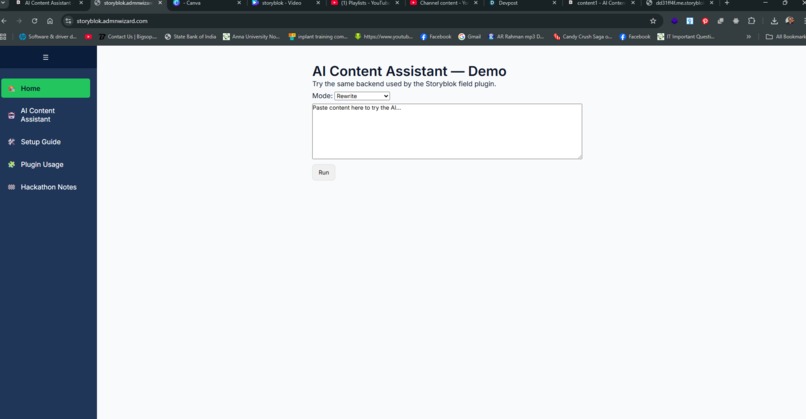
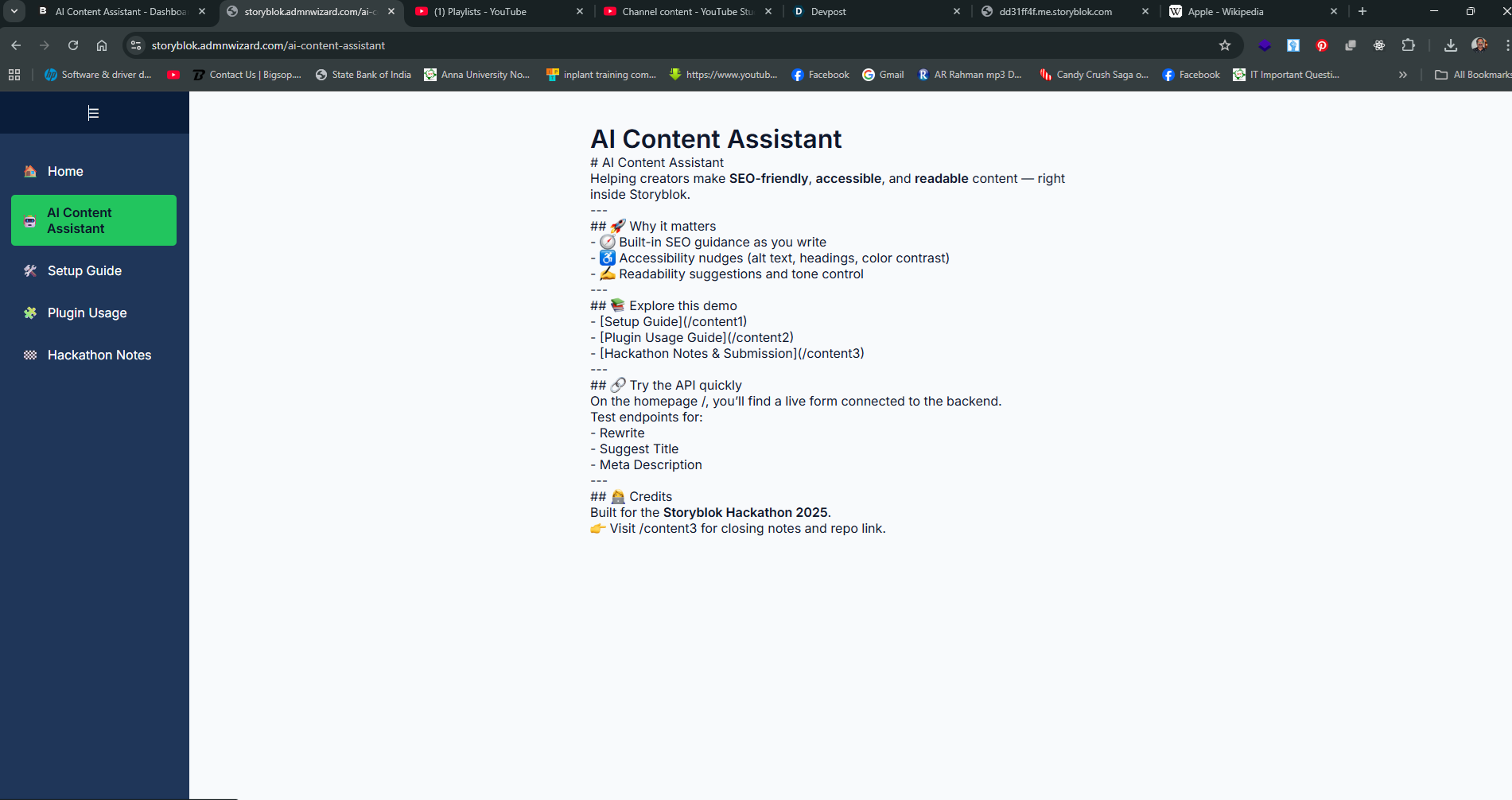
AI-Content-Assistant
-
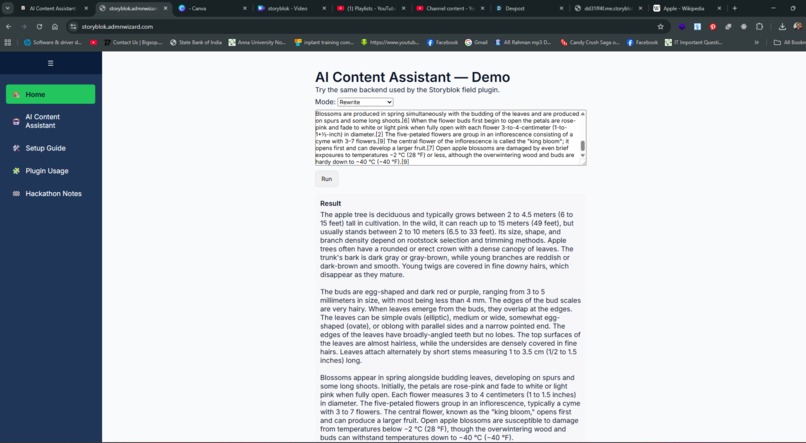
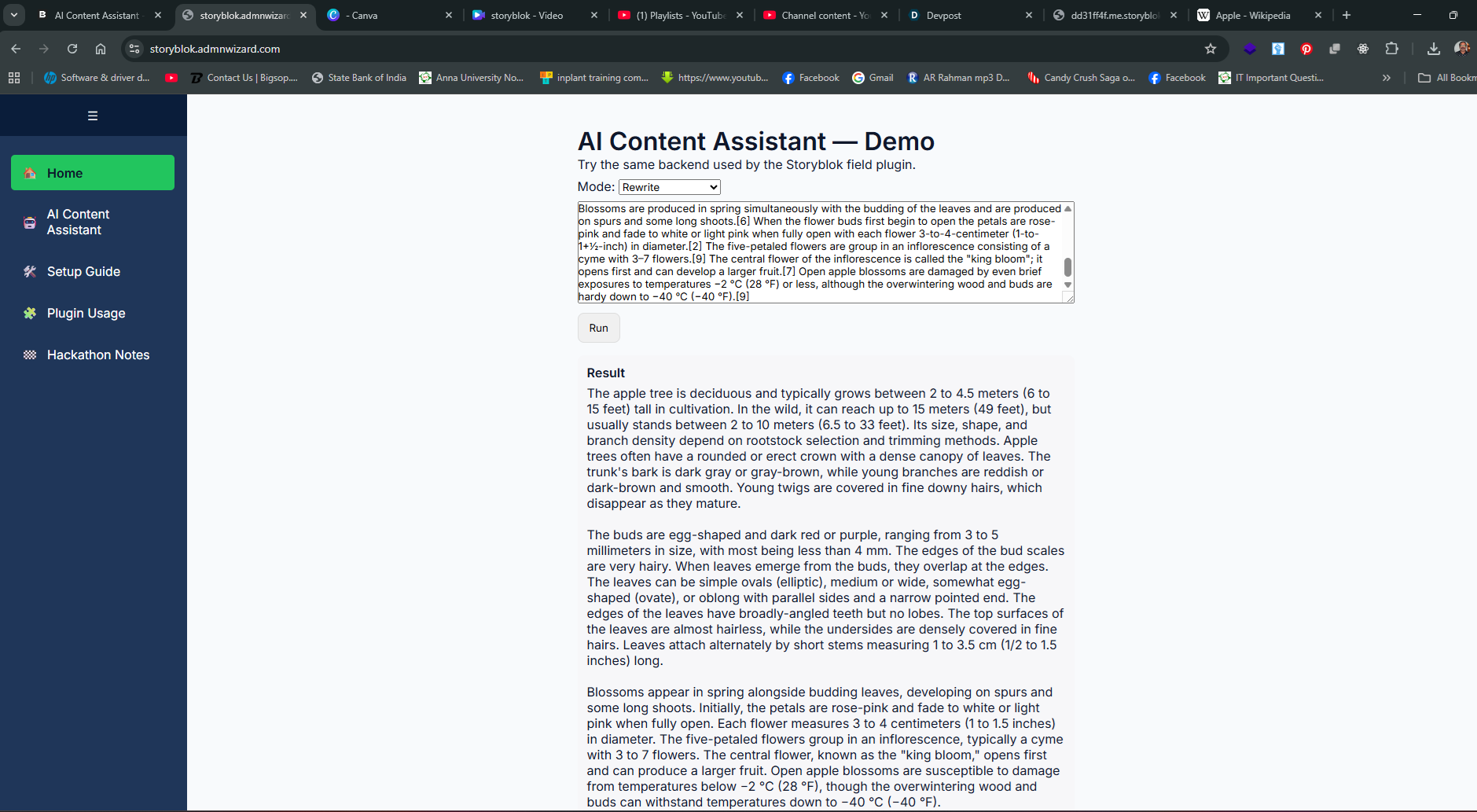
AI-Content-Assistant-Rewrite
-
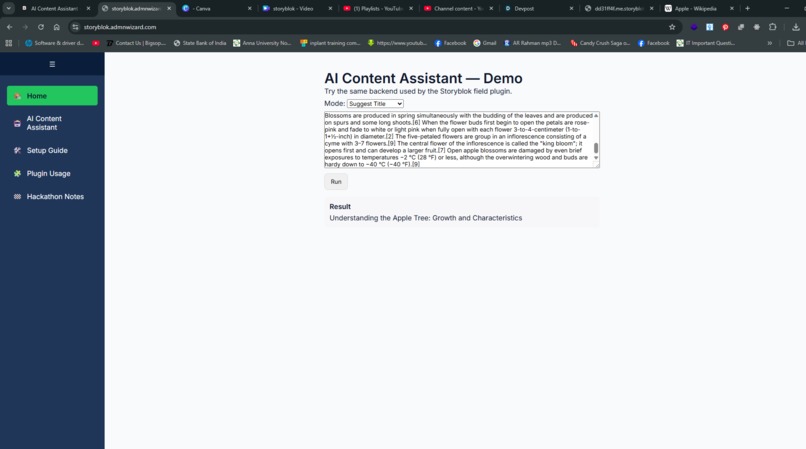
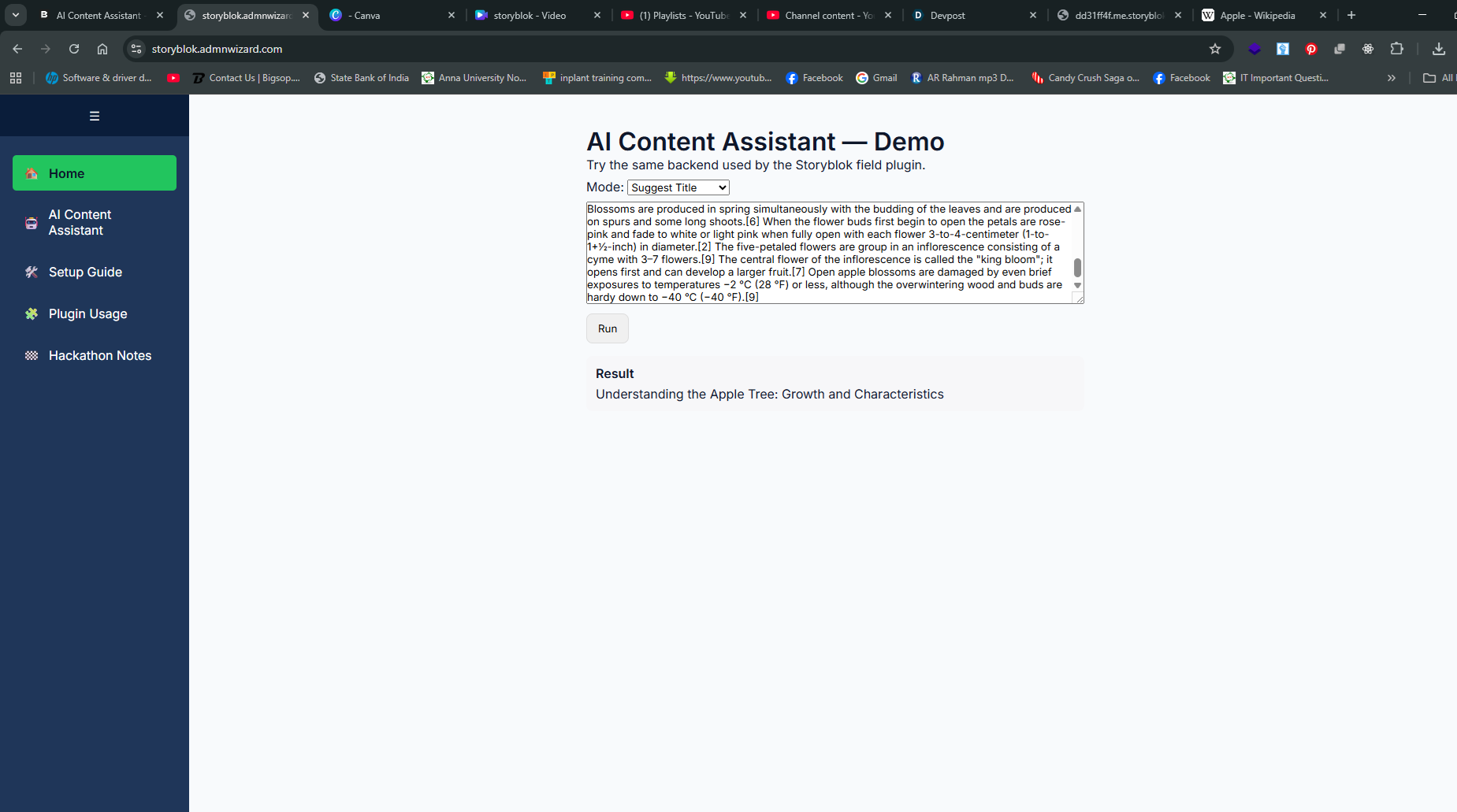
AI-Content-Assistant-Suggested-Title
-
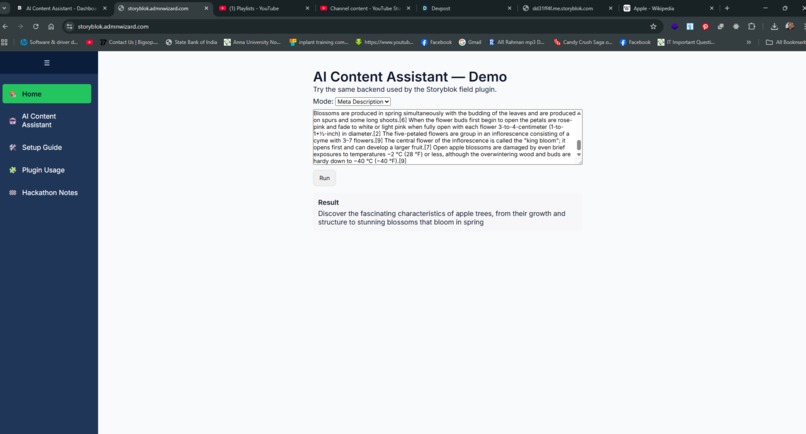
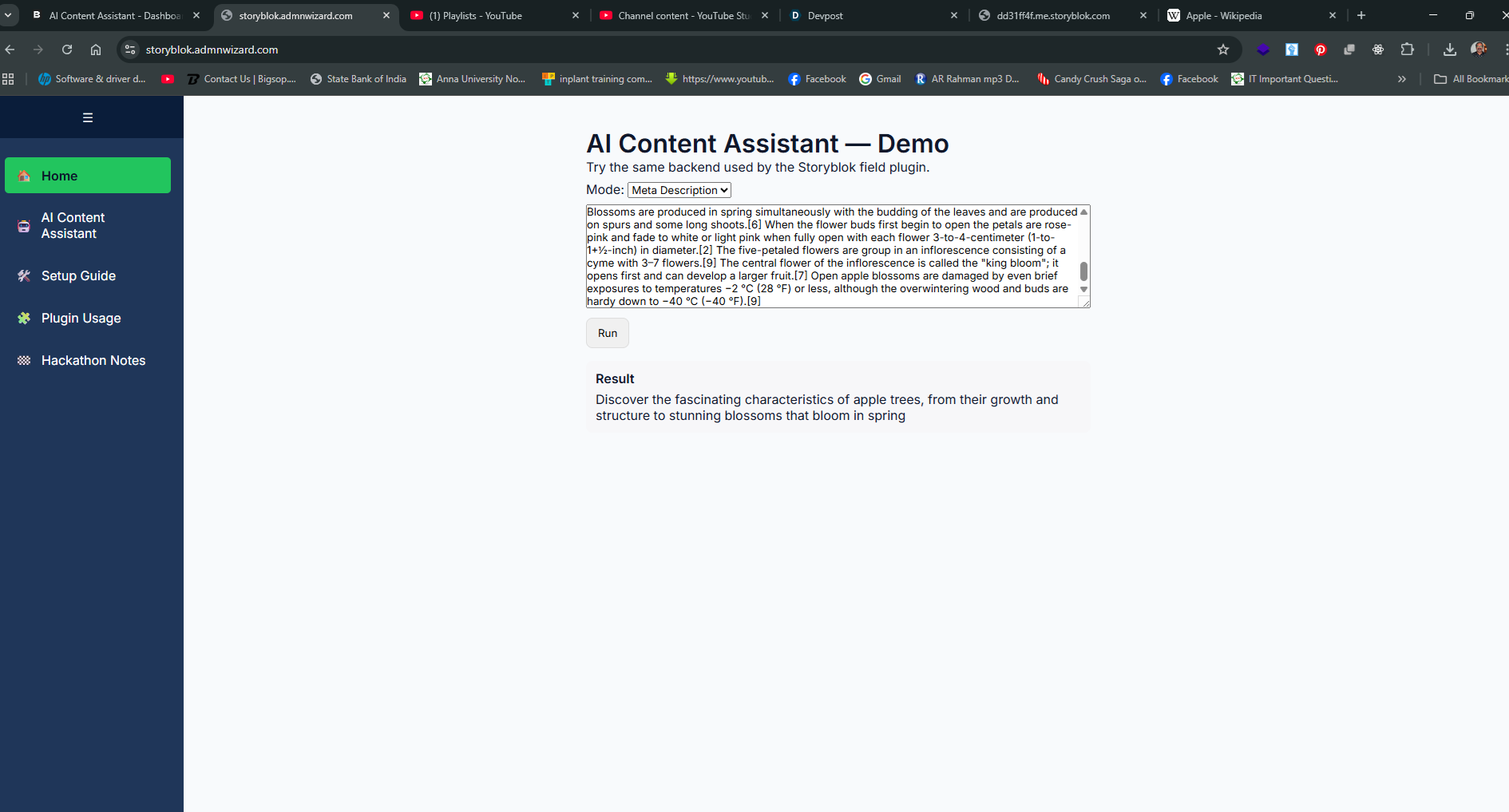
AI-Content-Assistant-MetaDescription
-
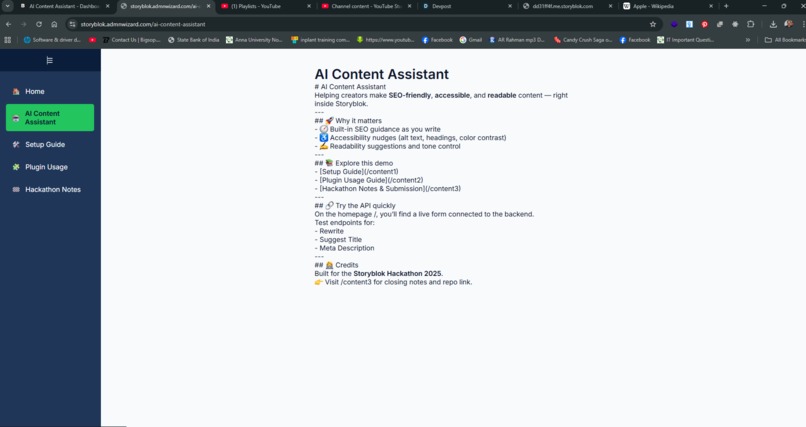
AI-Content-Assistant-Contents
-
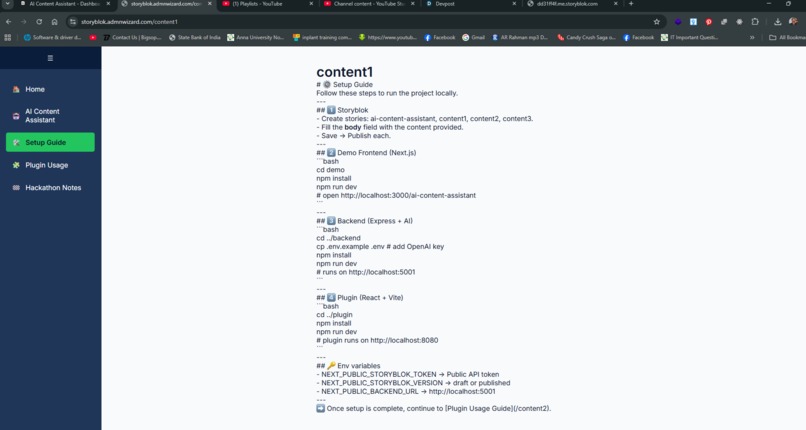
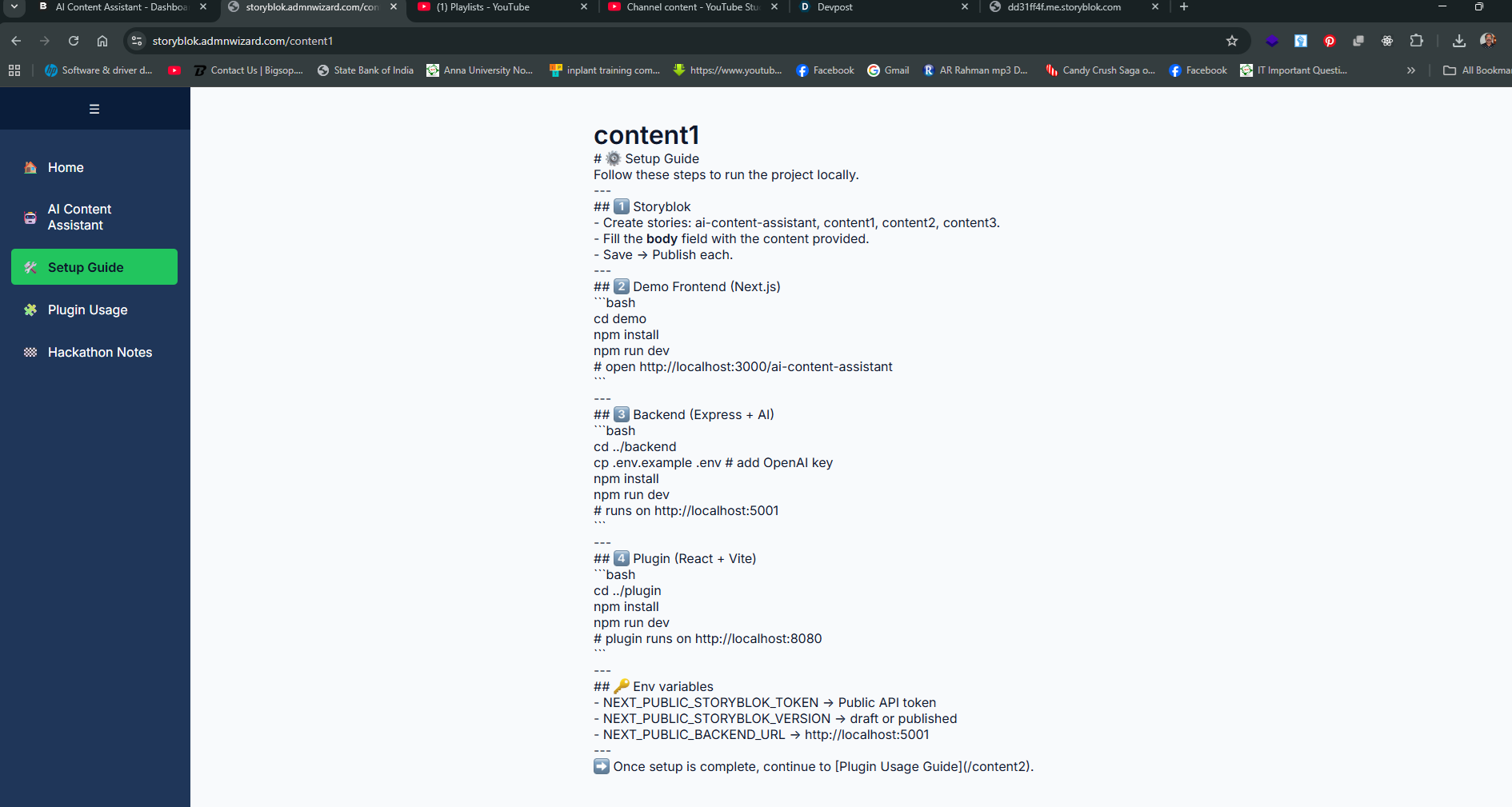
AI-Content-Assistant-Content-1
-
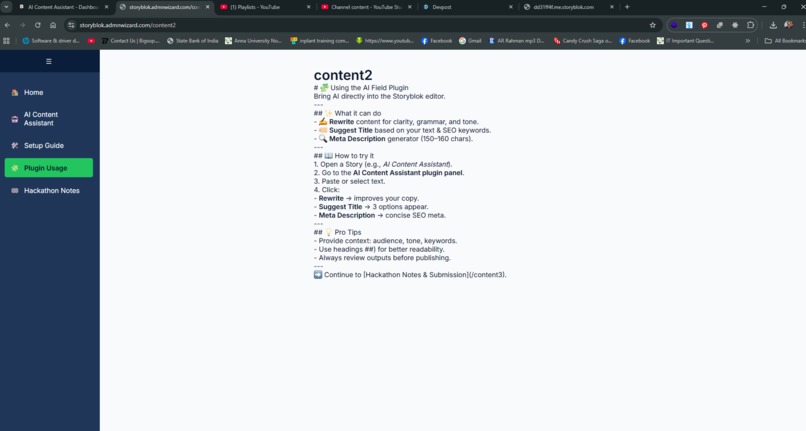
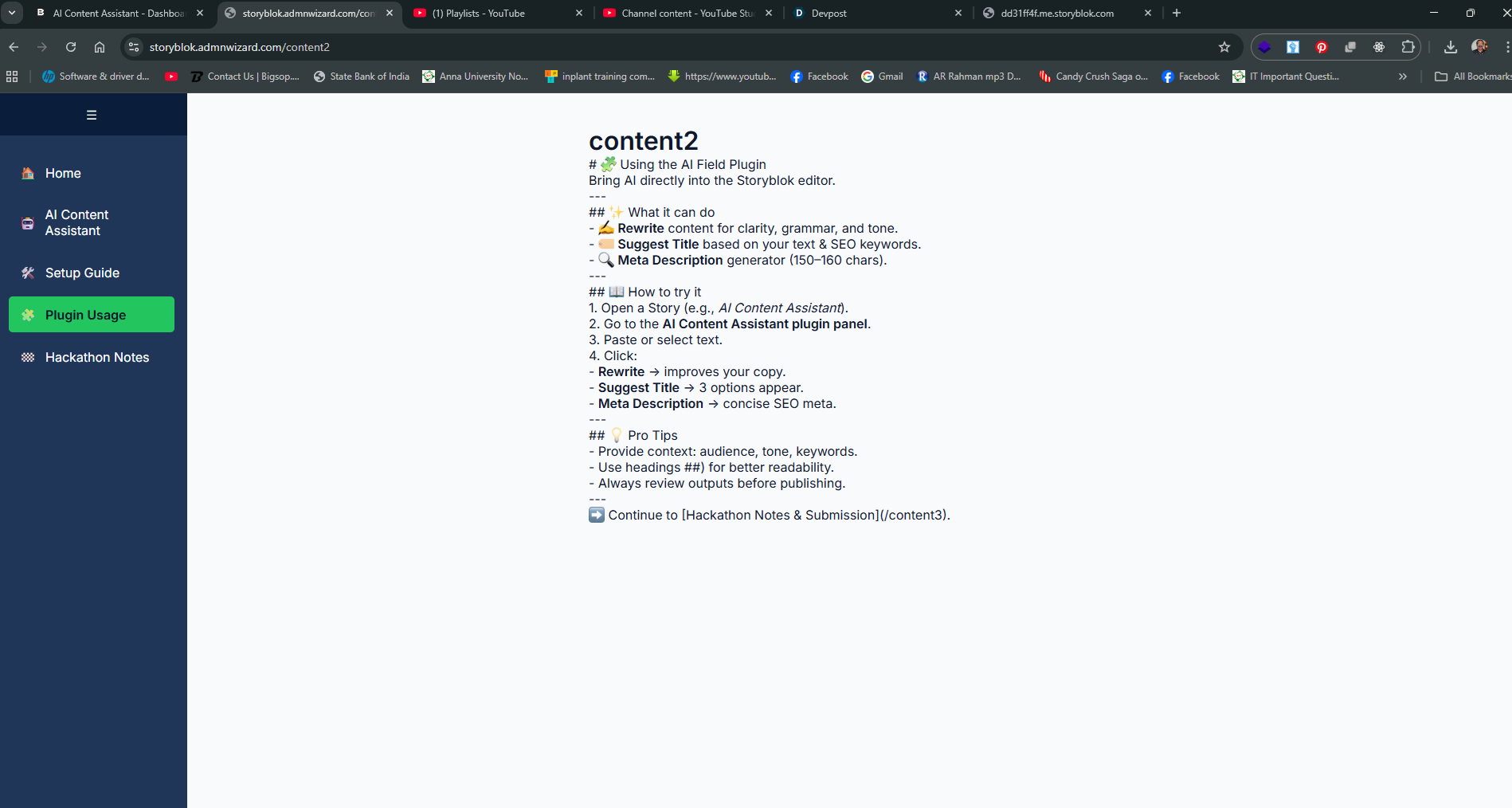
AI-Content-Assistant-Content-2
-
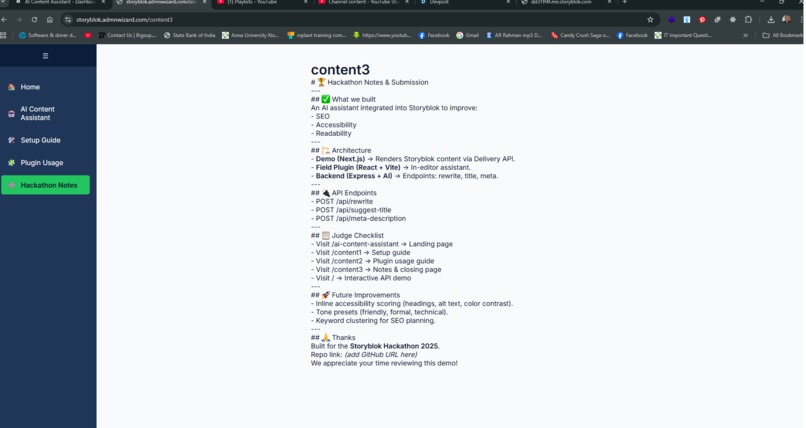
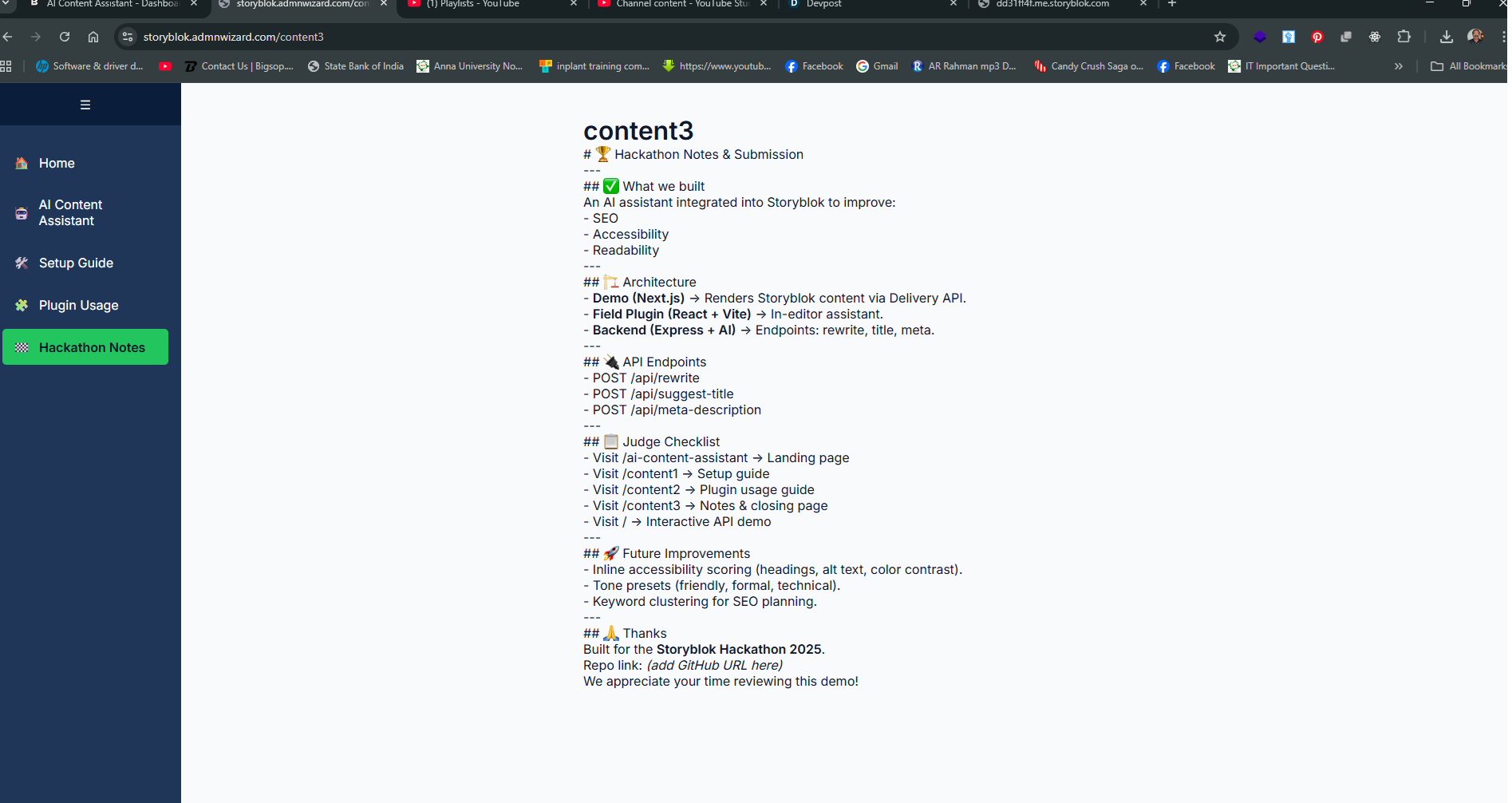
AI-Content-Assistant-Content-3
-
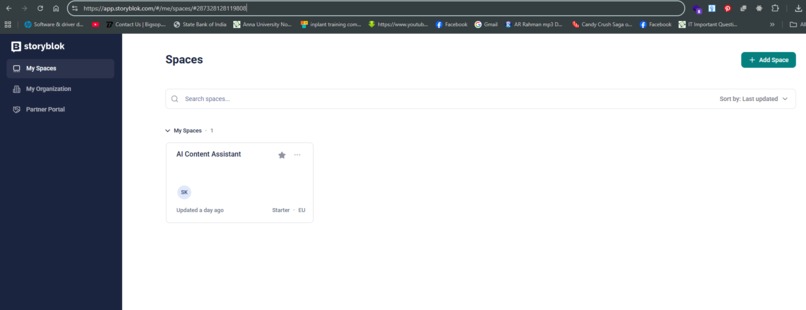
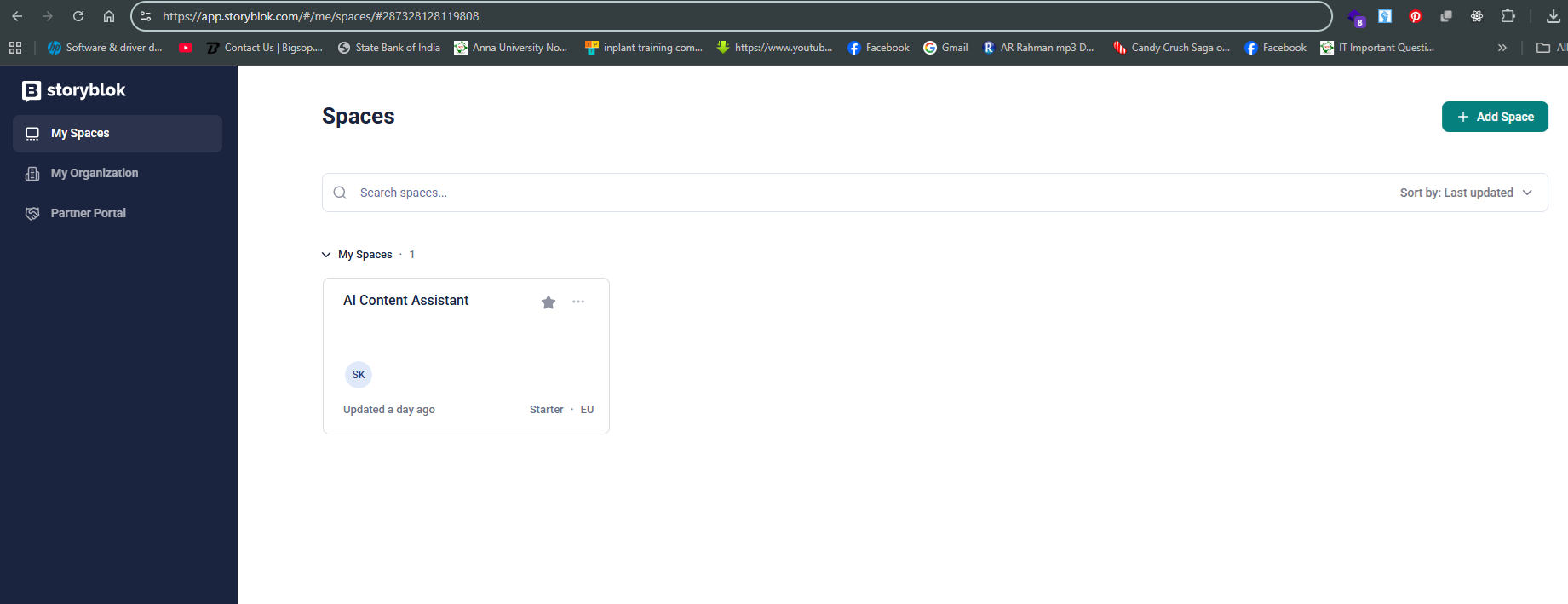
Storyblok-Space
-
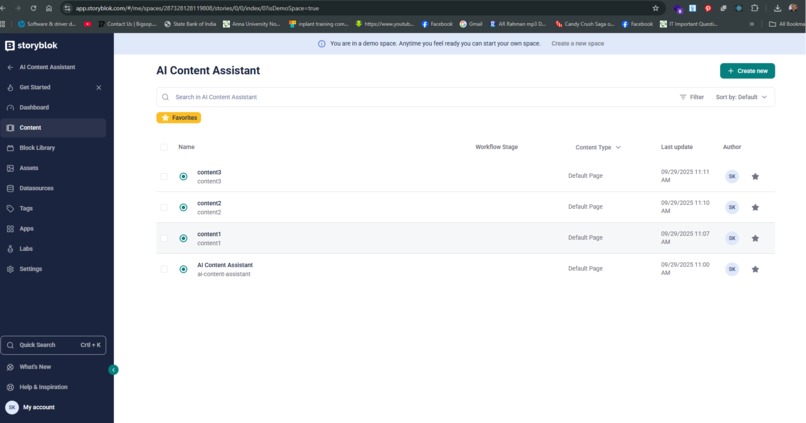
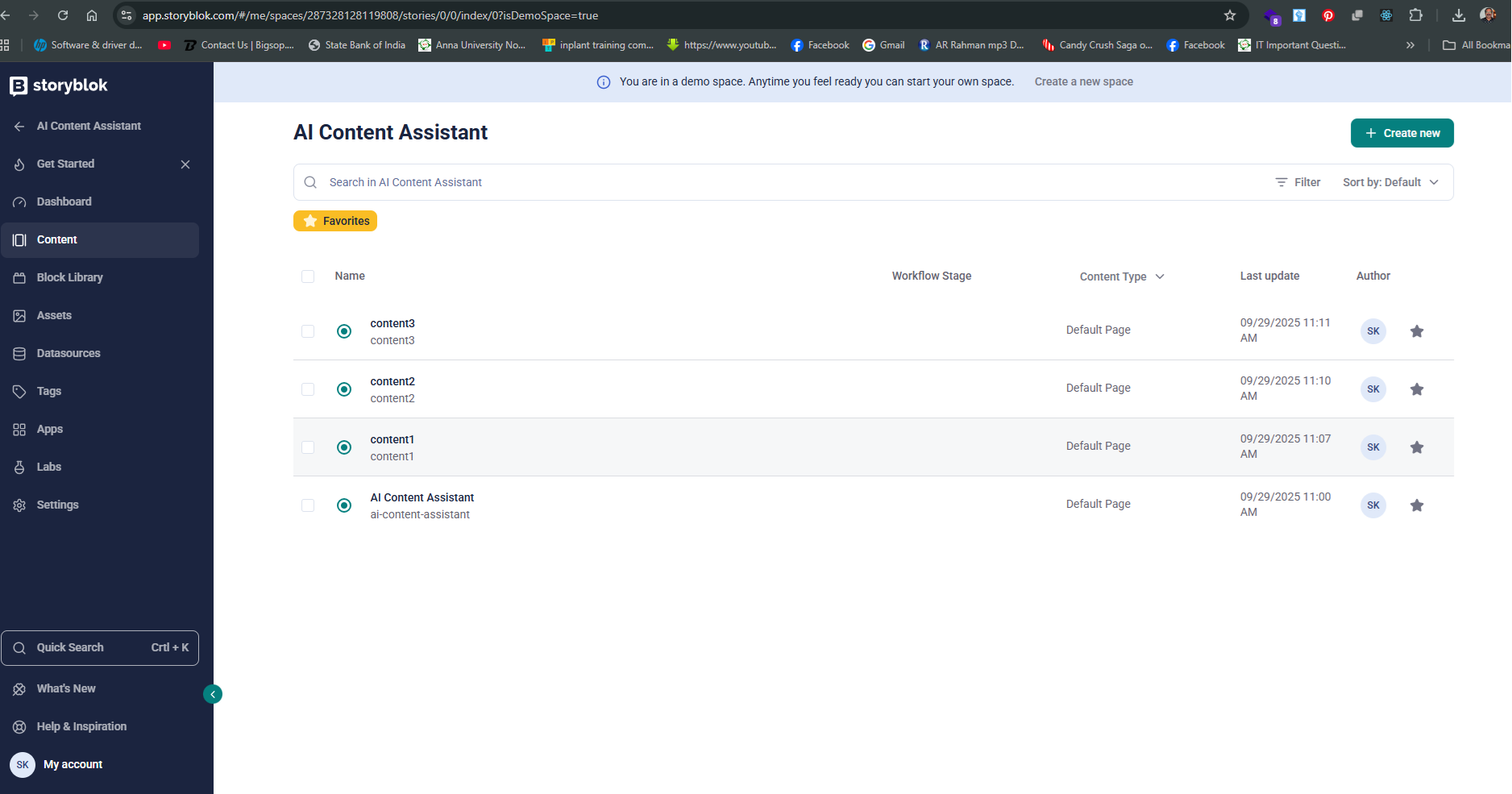
Storyblok-Contents-View
-
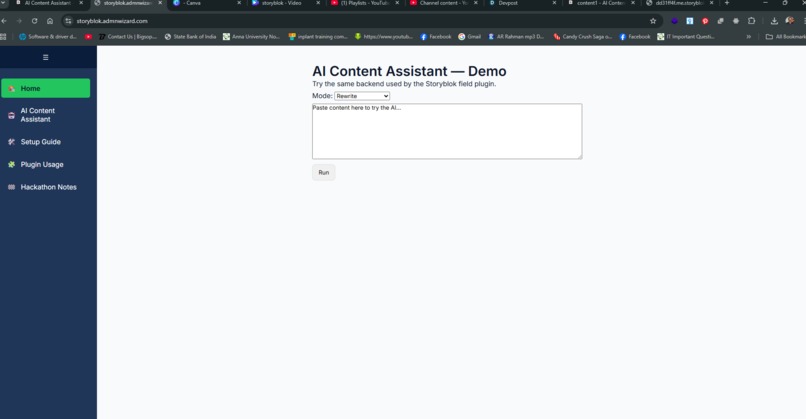
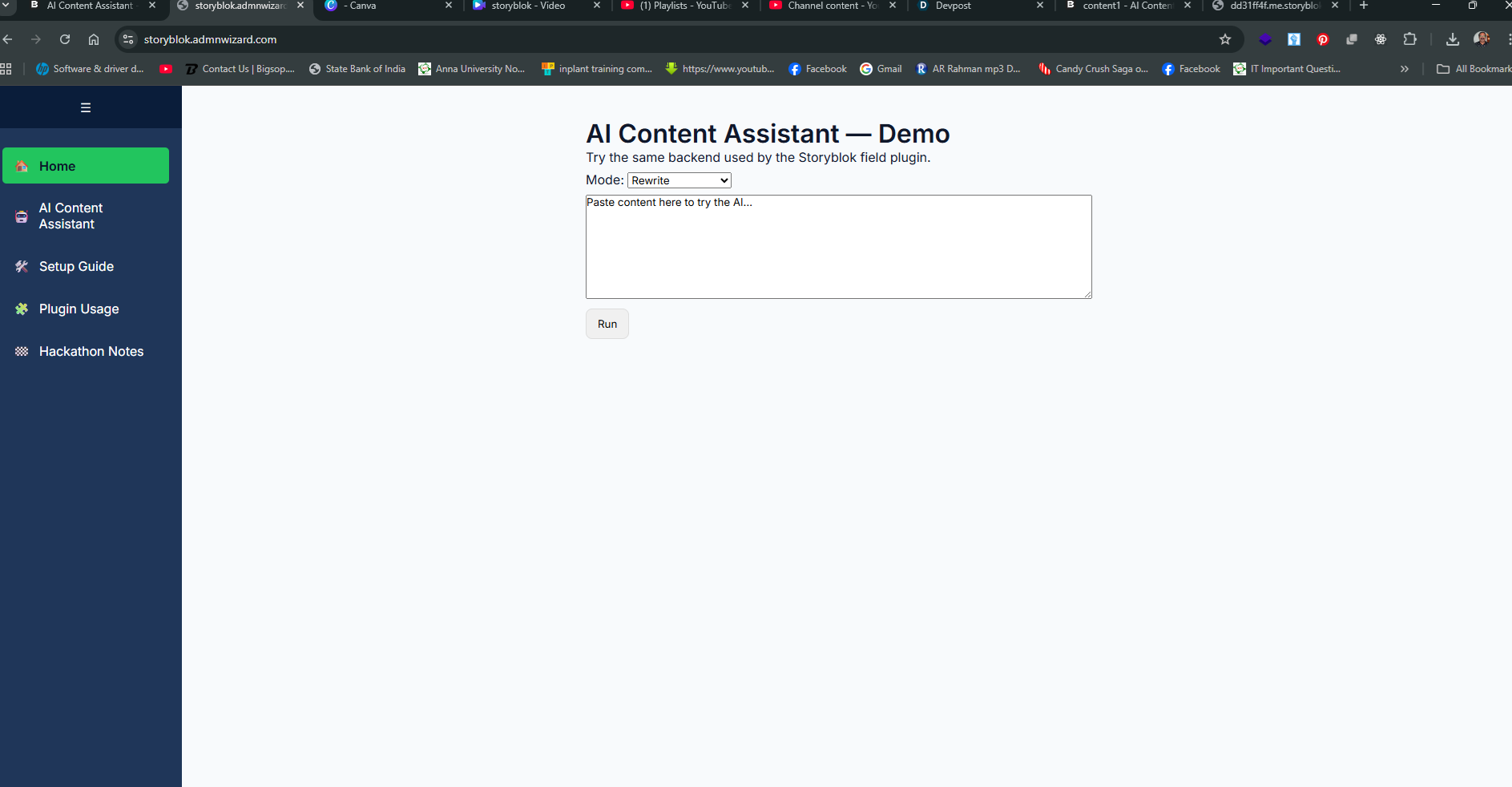
AI-Content-Assistant
-
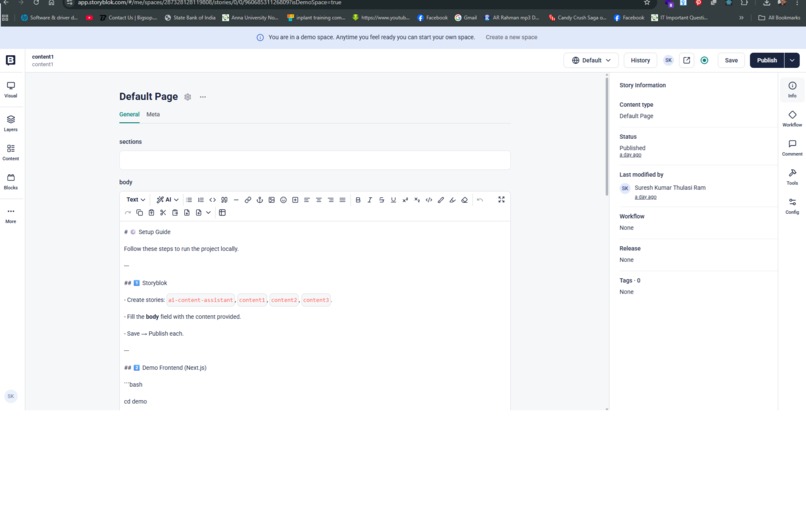
Storyblok-Deafultpage
Inspiration
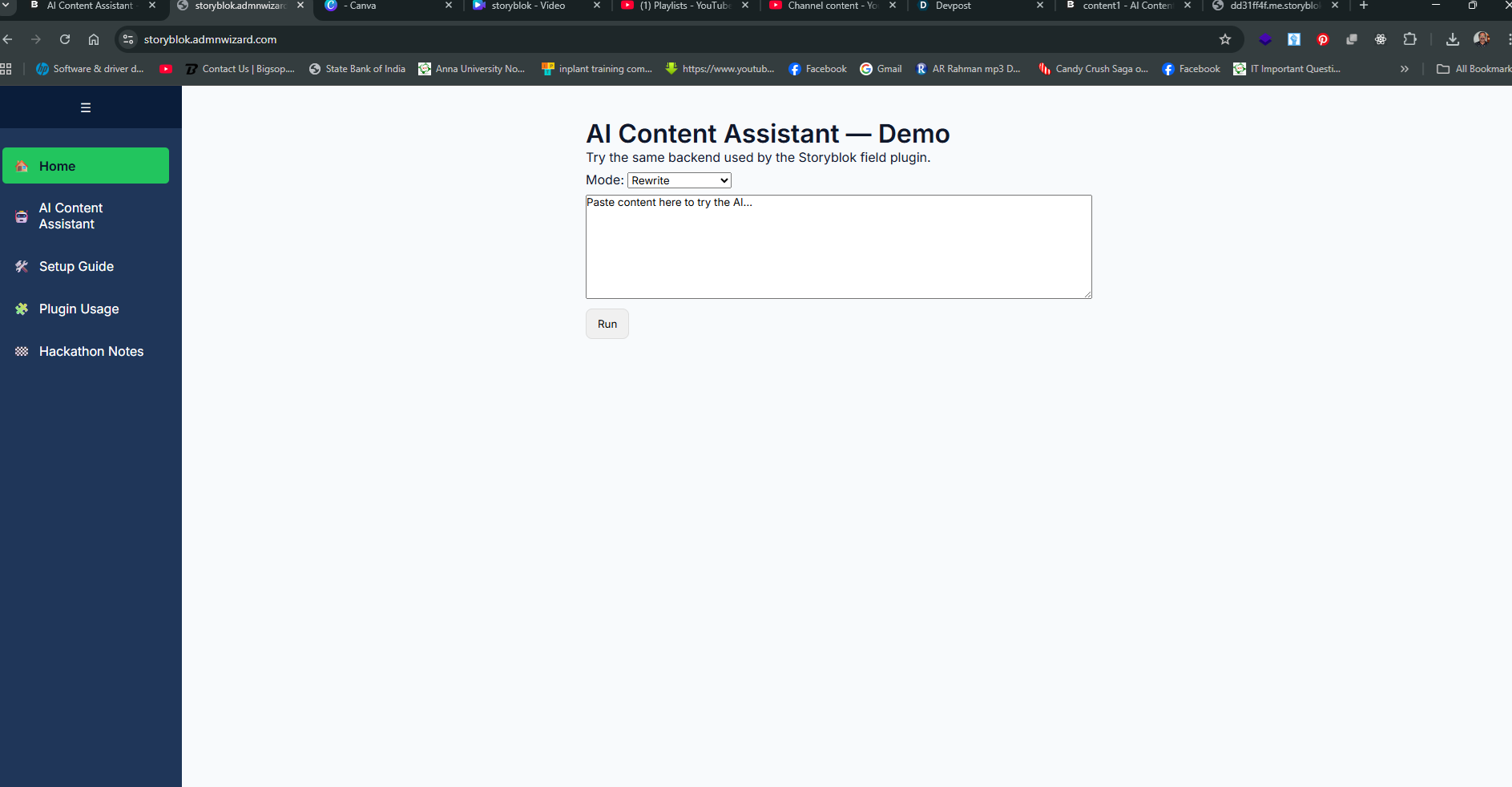
Content creators spend a huge amount of time rewriting, optimizing, and localizing their work to make it SEO-friendly, accessible, and engaging. We wanted to help them focus on creativity instead of repetitive editing tasks. Since Storyblok is already a powerful headless CMS, we saw the opportunity to integrate AI directly into the content editing workflow — making the CMS itself smarter.
What it does
The AI Content Assistant plugin lives inside Storyblok’s editor. It: Suggests SEO-friendly titles and meta descriptions. Rewrites content for clarity and readability. Generates alt text for images to improve accessibility. Provides automatic translations to support multilingual content. Updates in real-time preview, so editors instantly see the improvements.
How we built it
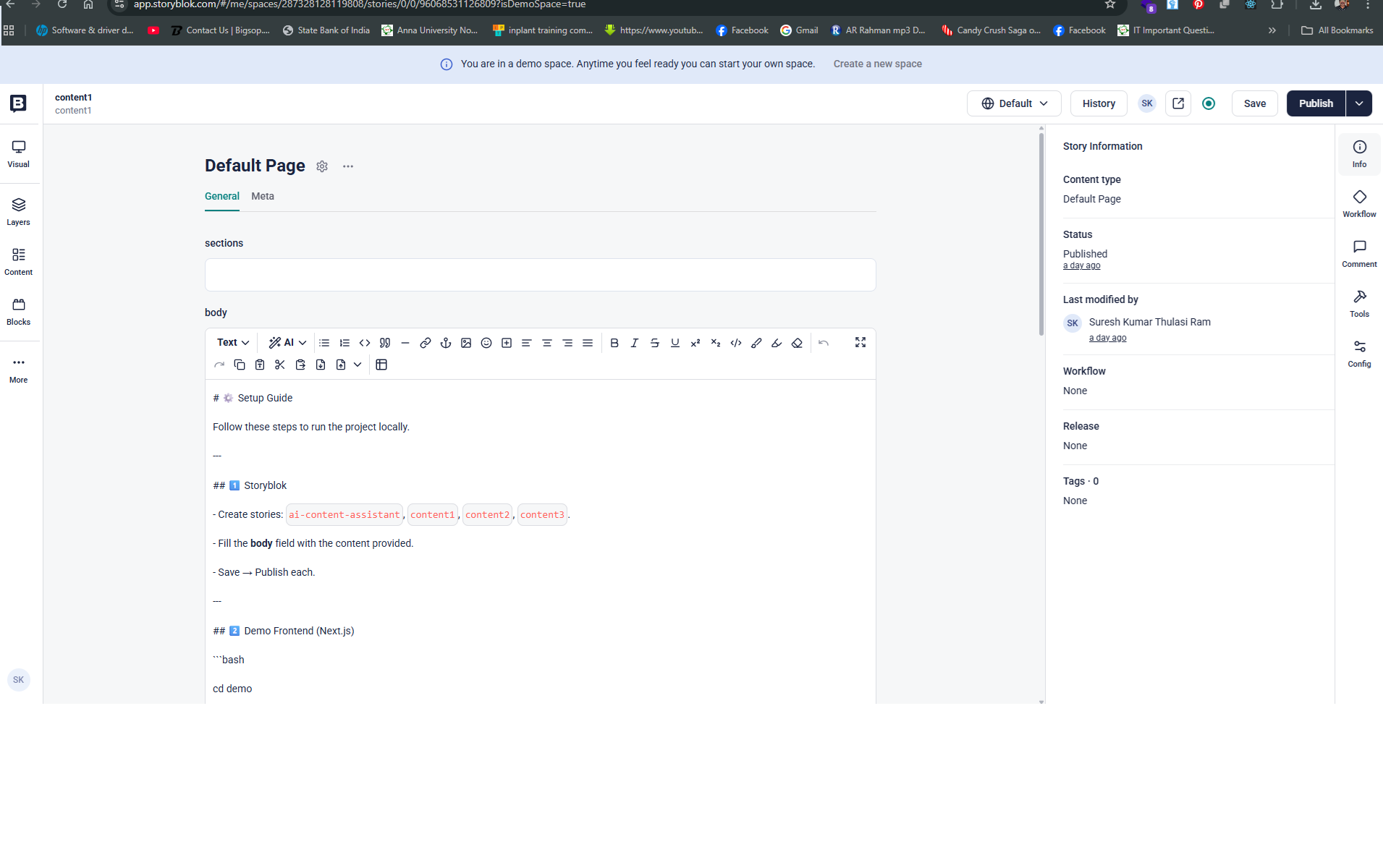
Created a custom plugin with the Storyblok Plugin SDK and React. Built a Node.js backend API that connects to AI models (OpenAI GPT). Integrated the plugin into Storyblok’s editor sidebar to allow editors to highlight text/images and request AI suggestions. Used the Storyblok Content Delivery API to fetch structured content and insert AI-enhanced suggestions. Deployed the demo frontend with Next.js + Vercel, showing how AI-improved content looks on a live site.
Challenges we ran into
Learning how to extend Storyblok with a custom plugin in a short timeframe. Handling rate limits and API response times from the AI provider. Making sure AI-generated content didn’t lose the original context or tone of the editor’s writing. Syncing updates between Storyblok’s live preview and the AI assistant plugin.
Accomplishments that we're proud of
Built a working Storyblok plugin that editors can use directly. Successfully combined AI + CMS in a way that’s practical and impactful. Delivered multiple features (SEO, readability, alt text, translation) in a single assistant. Created a demo that non-technical users can try out without needing to understand the code.
What we learned
How to integrate AI into headless CMS workflows. Best practices for creating Storyblok plugins. The importance of balancing automation vs. human creativity — AI helps, but editors still need control. Learned a lot about optimizing AI prompts for SEO and accessibility use cases.
What's next for AI Content Assistant for Storyblok
Adding tone/style customization (e.g., “Make it formal”, “Make it fun”). Deeper SEO analysis (keyword density, readability score, competitor checks). Offline caching of AI results to save tokens and speed up responses. Open-sourcing the plugin so the Storyblok community can use and improve it. Exploring integration with other AI providers (HuggingFace, Together.ai) to reduce costs.


Log in or sign up for Devpost to join the conversation.