-
Introduction
-
System Workflow of project
-
Technology
-
Benefits
Inspiration
Construction projects generate thousands of documents, drawings, inspection reports, emails, WhatsApp conversations, and site photos. Critical decisions are often buried in these files, making it difficult for engineers to find the right information when they need it. Teams frequently waste valuable time searching for documents or repeating mistakes because previous project knowledge is lost.
We wanted to build a solution that acts as a "digital memory" for construction projects—one that remembers every document, decision, and discussion, and can answer questions instantly using AI.
What it does
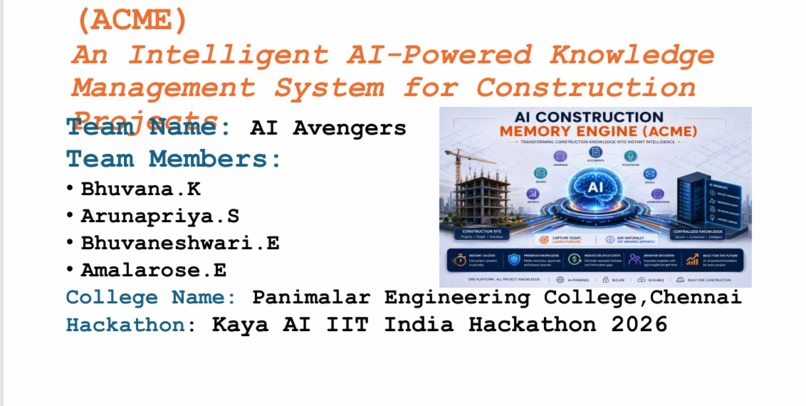
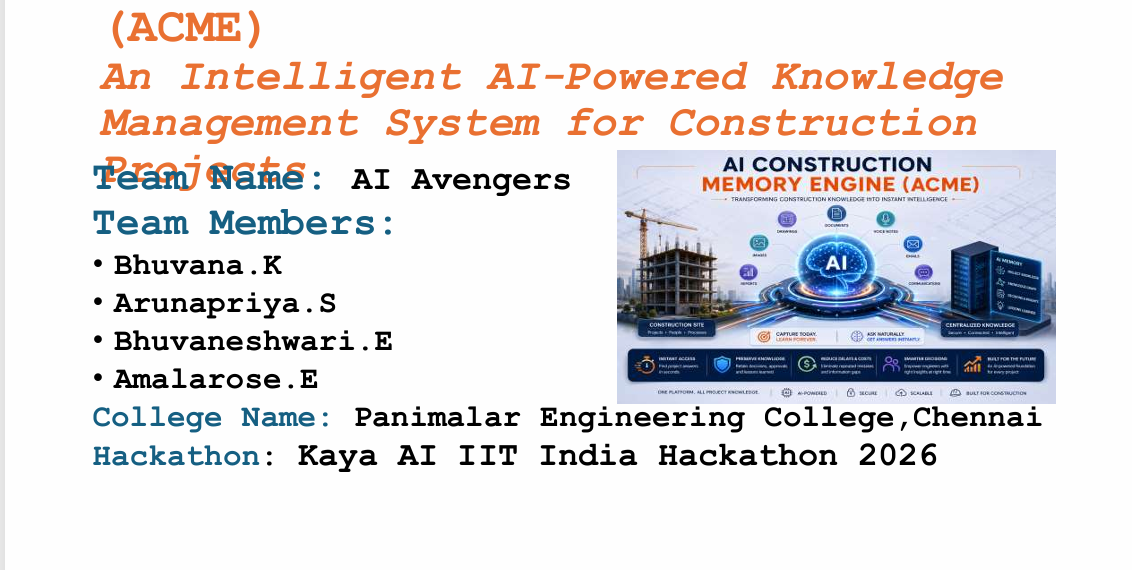
AI Construction Memory Engine (ACME) is an AI-powered knowledge management platform for construction projects.
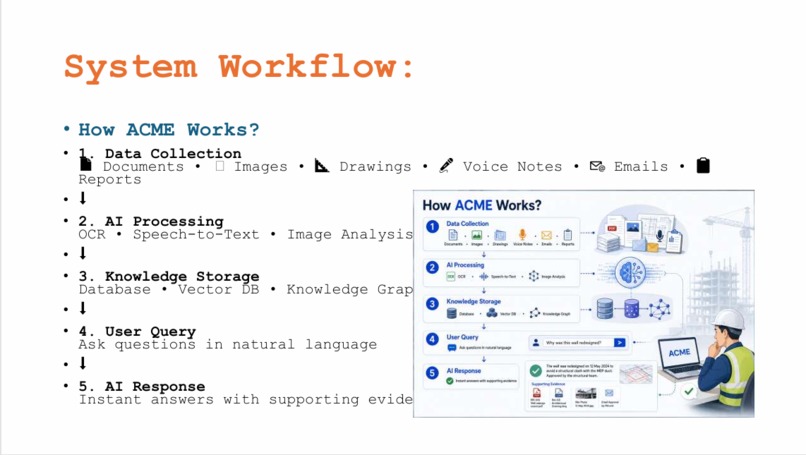
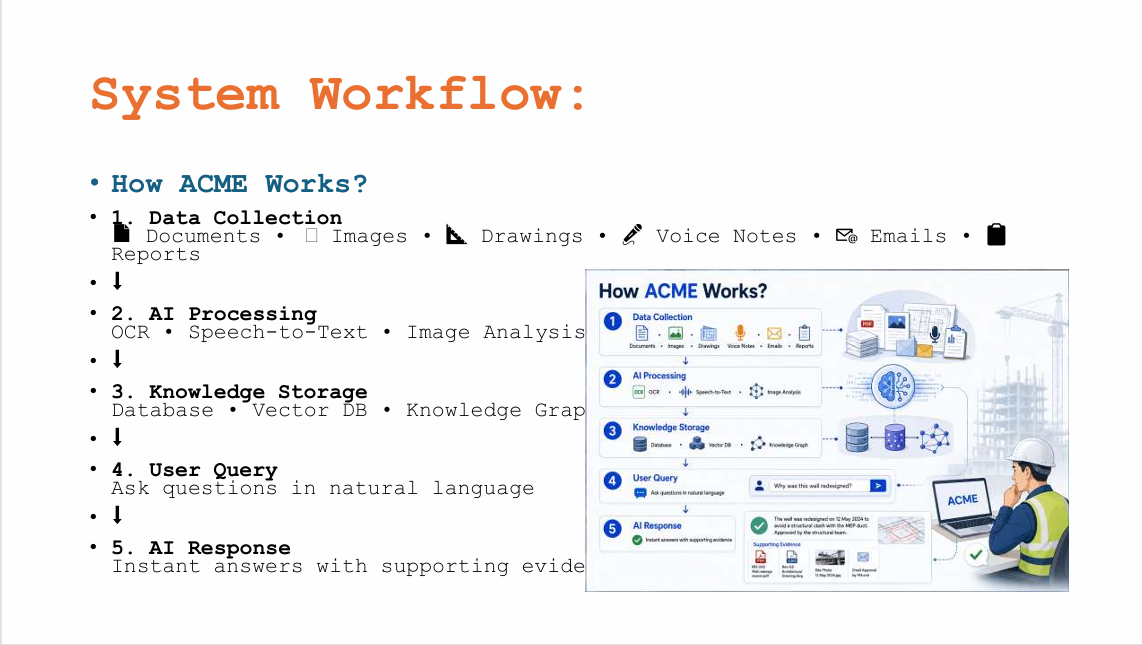
It collects information from multiple sources such as PDFs, drawings, images, voice notes, emails, and reports. Using OCR, speech recognition, and AI, the system converts this information into a searchable knowledge base.
Users can simply ask questions like:
Why was this design changed? Who approved this material? Show all safety incidents from last month. Find the latest structural drawing.
ACME retrieves the most relevant information and provides accurate answers along with supporting documents.
How we built it
We designed ACME using a modern AI architecture.
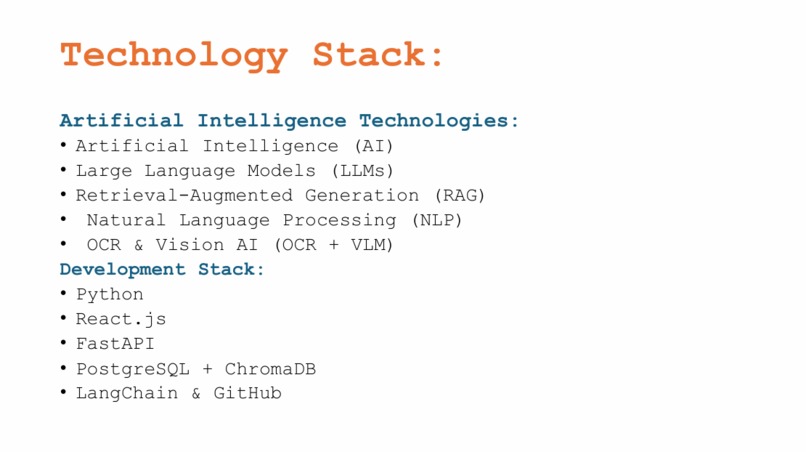
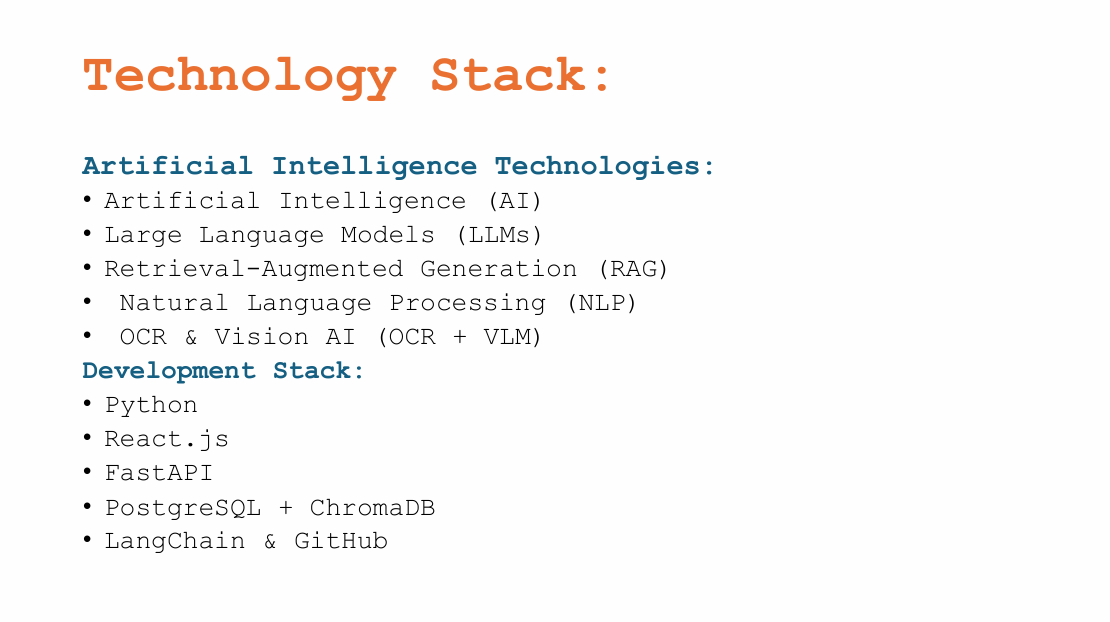
React for the user interface. FastAPI for backend services. OCR to extract text from scanned documents. Speech-to-Text for voice notes. Vector Database (FAISS/ChromaDB) to store document embeddings. Retrieval-Augmented Generation (RAG) to retrieve relevant project information. Large Language Models (LLMs) to generate reliable answers with source references.
The system indexes every uploaded file and creates a centralized knowledge repository that grows throughout the project lifecycle.
Challenges we ran into
One of the biggest challenges was handling multiple data formats. Construction information exists in PDFs, CAD drawings, images, handwritten notes, and voice recordings.
Another challenge was ensuring AI provides trustworthy answers instead of hallucinating. We addressed this by implementing a Retrieval-Augmented Generation (RAG) pipeline so every response is grounded in actual project documents.
Designing a scalable architecture capable of supporting large construction projects was another important consideration.
Accomplishments that we're proud of
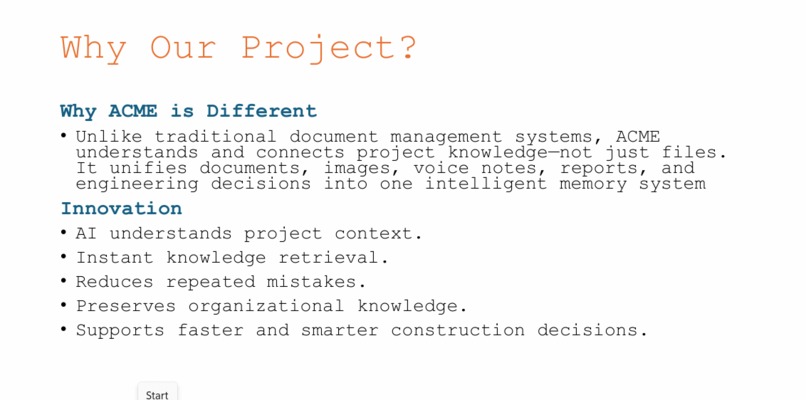
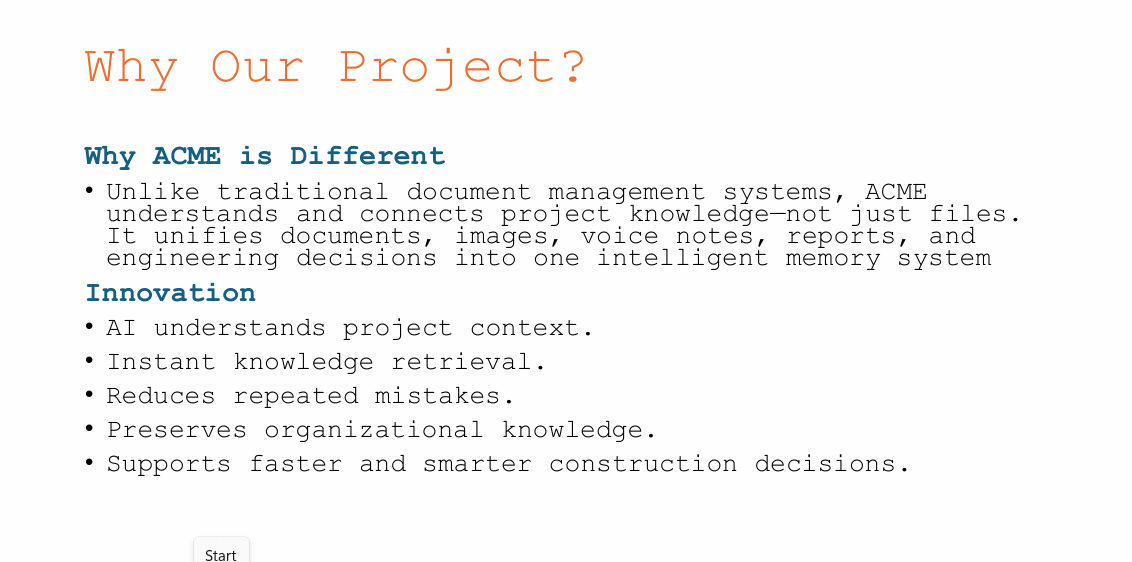
Built a unified AI knowledge engine for construction. Made project information searchable using natural language. Reduced dependency on manual document searching. Created a scalable architecture that can support projects of any size. Designed an AI assistant capable of preserving organizational knowledge across multiple construction projects.
What we learned
This project showed us that AI is most valuable when it helps people access knowledge instead of replacing expertise.
We learned how Retrieval-Augmented Generation, vector databases, OCR, and Large Language Models can work together to solve real-world industry problems. We also gained experience designing AI systems that prioritize accuracy, transparency, and usability.
What's next for AI Construction Memory Engine (ACME)-For construction
Our vision is to make ACME an intelligent construction assistant used across the entire project lifecycle.
Future enhancements include:
BIM (Building Information Modeling) integration. CAD drawing understanding using Vision AI. Real-time IoT sensor integration from construction sites. Mobile application for field engineers. Predictive analytics for project delays and risks. Multilingual support for site workers. Integration with project management platforms like Primavera and Microsoft Project. AI-generated project reports and compliance documentation. Enterprise deployment with role-based access control and advanced security.
Built With
- css
- fastapi
- google-cloud
- java
- longchain
- python

Log in or sign up for Devpost to join the conversation.