-
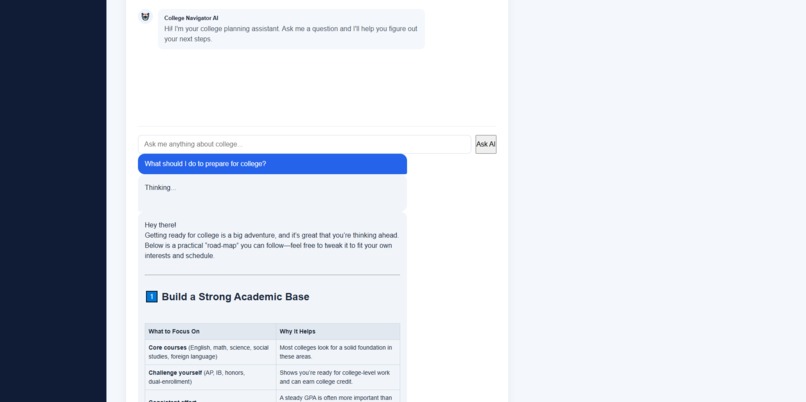
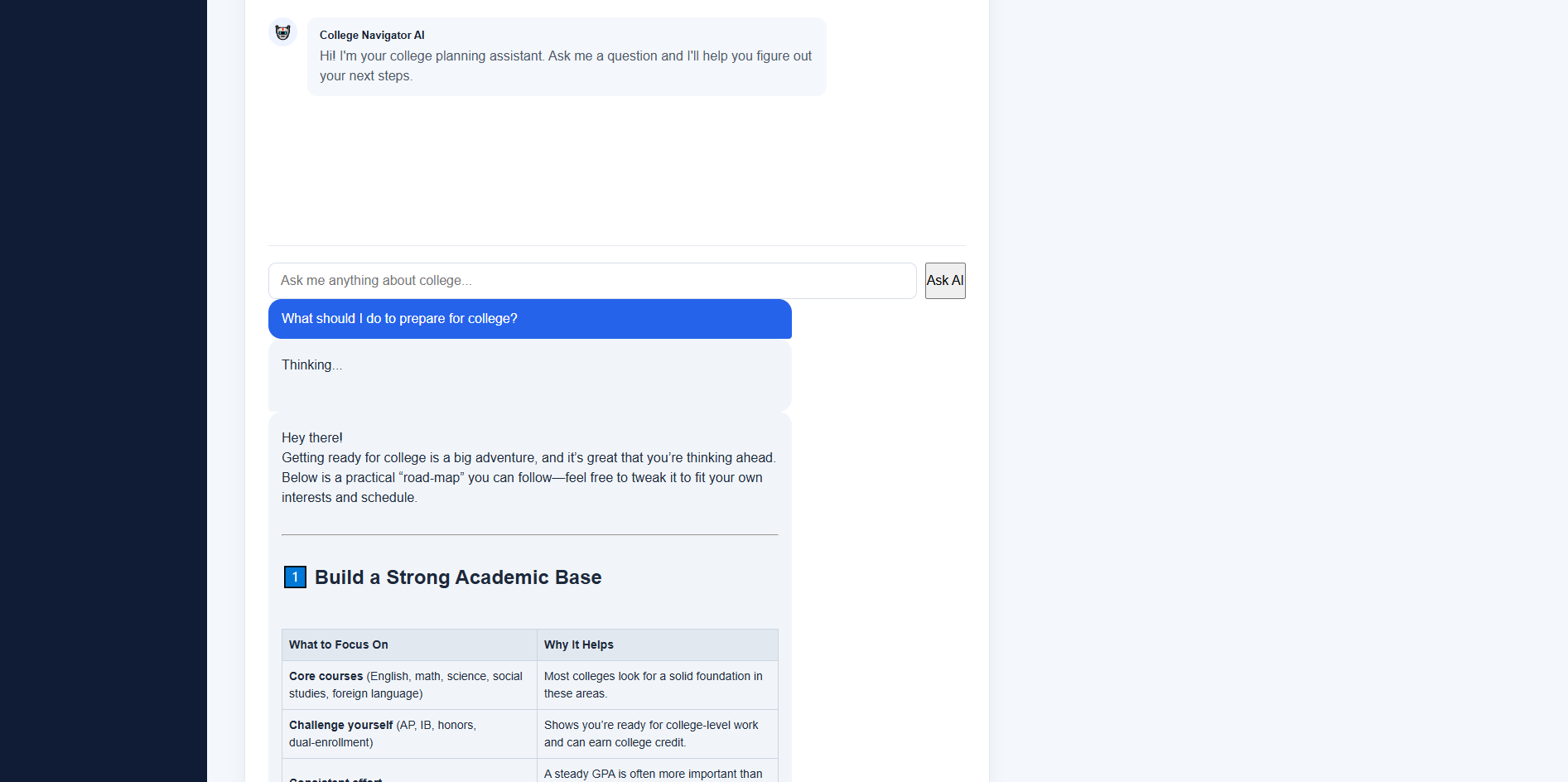
Built-in AI Chatbot
-
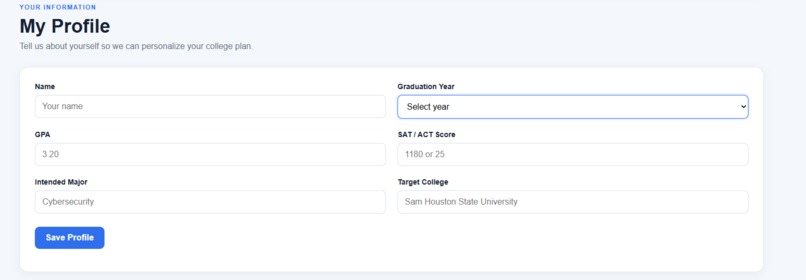
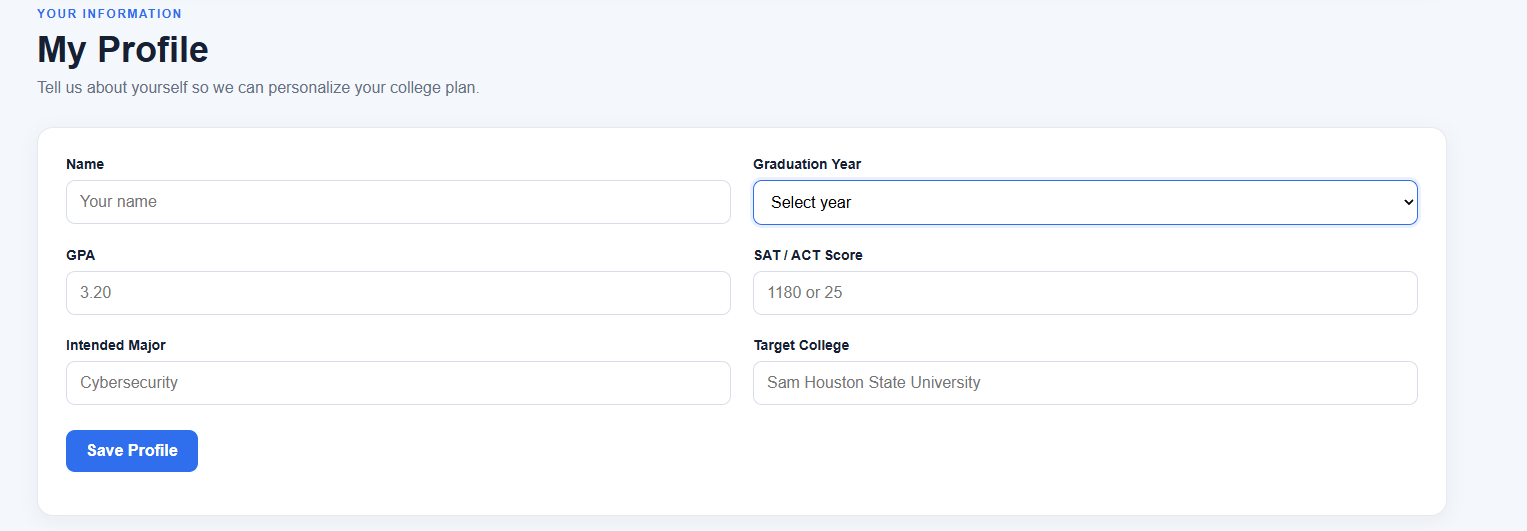
Custom profile
-
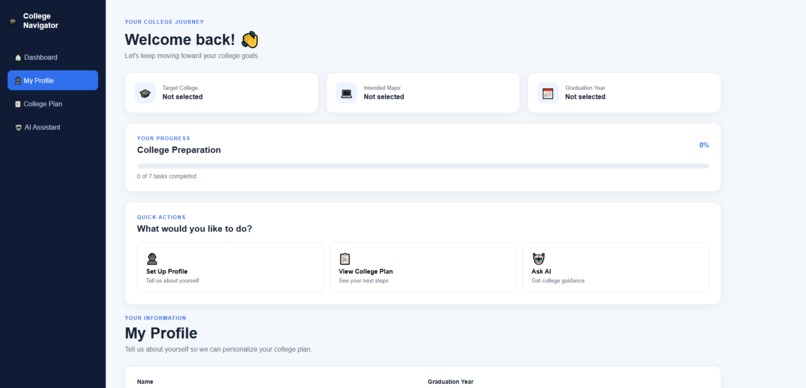
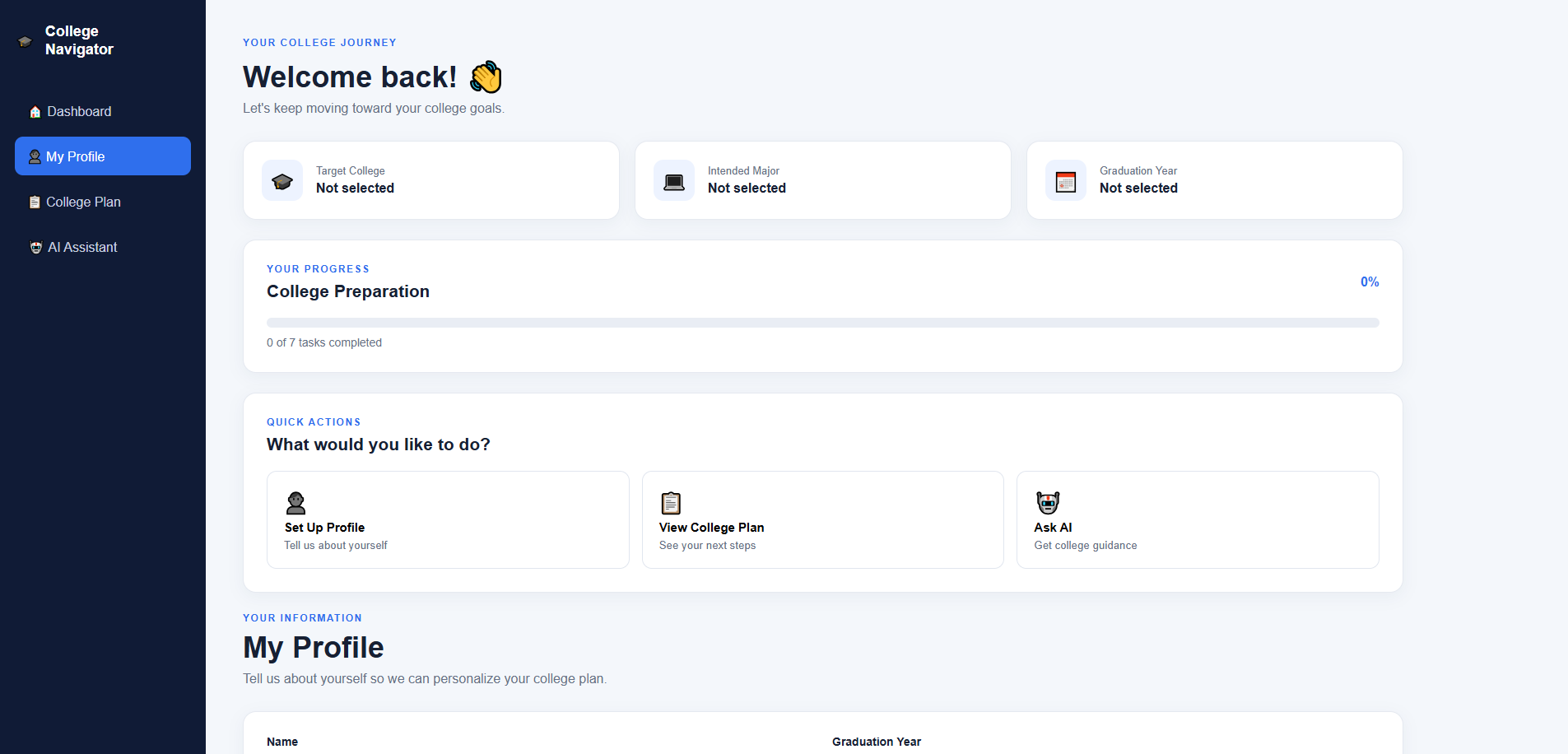
Main page
Inspiration
The inspiration for AI College Navigator came from how overwhelming the college planning process can be for high school students. Students have to research colleges, majors, admissions information, test scores, deadlines, and applications across many different websites. We wanted to create a tool that could bring these pieces together and give students a personalized starting point. The goal was to use AI to make college planning feel less confusing and more manageable.
What it does
AI College Navigator is an AI-powered college planning assistant for high school students. Students can create a profile with information such as their GPA, test scores, graduation year, intended major, and target college. The system uses this information to match students with colleges that may be a strong fit for their academic profile and interests. It also includes an AI assistant for personalized college-planning questions, a college preparation checklist, and a progress tracker to help students stay organized.
How we built it
We built AI College Navigator using HTML, CSS, and JavaScript for the frontend and Python with Flask for the backend. We used Featherless AI with the openai/gpt-oss-20b model to power the AI assistant. The application sends relevant student profile information to the backend so the AI can provide personalized responses. We also created a college matching system that compares a student's intended major, GPA, and test scores with college information to generate potential matches. LocalStorage is used to save profile information and planning progress in the browser.
Challenges we ran into
One of our biggest challenges was connecting the frontend to the Python backend and getting the AI API to communicate correctly with the application. We also had to figure out how to securely handle the API key without exposing it in the frontend or GitHub repository. Another challenge was making AI responses easy to read instead of displaying them as one large block of text. We improved the interface by formatting AI responses into readable sections, lists, and chat bubbles. We also had to design a matching system that uses structured information instead of relying entirely on AI to decide which colleges to recommend.
Accomplishments that we're proud of
We are proud that we were able to turn an idea into a working AI application with multiple connected features. The project doesn't just provide an AI chatbot; it combines student profiles, college matching, personalized AI responses, a college planning checklist, and progress tracking. We are especially proud of making the AI respond using information from the student's profile, because it makes the experience feel more personalized. We also created the project with a real-world problem in mind rather than building an AI feature without a clear purpose.
What we learned
Throughout the project, we learned how different parts of a software application work together. We gained experience with frontend development, Python and Flask APIs, connecting an application to an AI model, handling API keys securely, and using JavaScript to communicate with a backend. We also learned that building an AI application requires more than simply connecting a model to a website. The surrounding logic, user experience, data, and reliability of the application are just as important.
What's next for AI College Navigator
The next step for AI College Navigator is expanding the college database and making the information more comprehensive and current. We want to add live college data, application deadlines, scholarship matching, financial-aid information, housing information, and more detailed college comparisons. We also want to improve the matching system so students can filter schools by location, cost, campus size, distance from home, and other preferences. Ultimately, we want AI College Navigator to become a complete college-planning platform that students can use from the beginning of their college search through the application process.
Built With
- academics
- ai
- chatgpt
- college
- css3
- data
- html5
- javascript
- openai
- python
- research
- tool

Log in or sign up for Devpost to join the conversation.