Inspiration
We were inspired by the idea of making chess more interactive and accessible using engineering. Traditional chess engines exist digitally, but we wanted to bring that intelligence into the physical world. Our goal was to combine mechanical systems, electronics, and AI to create a board that could both play and teach.
What it does
Our project is an AI powered chess board that assists players in real time. It analyzes the current board state and suggests optimal moves while also evaluating player decisions. The system provides immediate feedback, helping users improve their strategy as they play.
How we built it
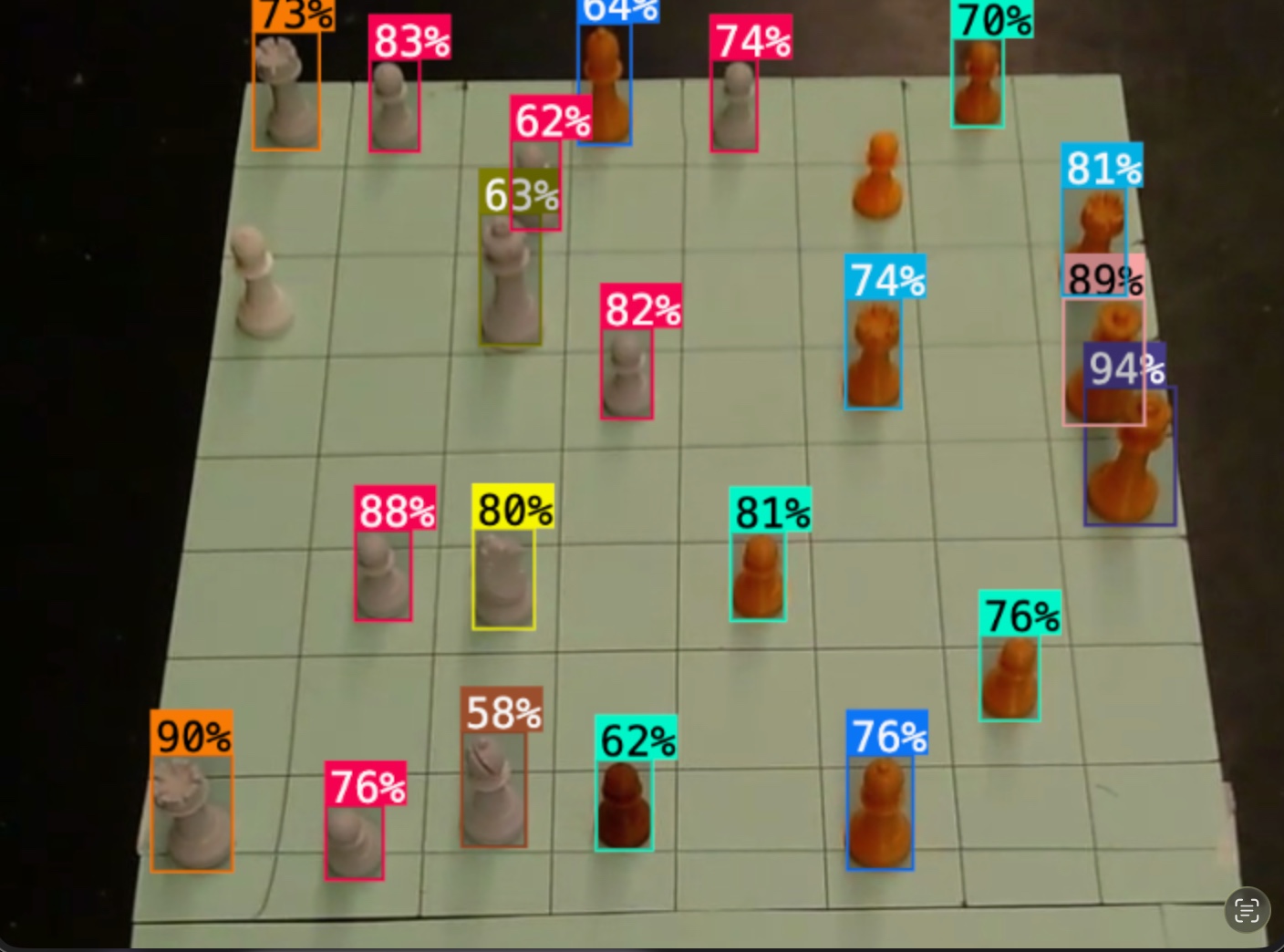
We initially designed a gantry system using aluminum extrusion, belts, pulleys, and stepper motors to move an electromagnet underneath the board. This allowed us to physically move pieces across the board. On the software side, we worked on integrating a chess engine and planned to use computer vision to detect moves.
After encountering hardware issues, we pivoted to an LED based system. We implemented LEDs beneath the board to indicate recommended moves and provide feedback, while still using our AI backend to evaluate gameplay.
Challenges we ran into
One of our biggest challenges was a stepper motor driver failure, which prevented reliable control of our gantry system. We also faced time constraints and integration challenges between hardware and software. Aligning mechanical precision with electronics and control systems proved more complex than expected.
Accomplishments that we’re proud of
We successfully designed and built a working gantry prototype and integrated multiple engineering disciplines into one system. Our ability to pivot quickly and still deliver a functional AI driven chess assistant was a major accomplishment. We are especially proud of creating a system that remains interactive and useful despite hardware setbacks.
What we learned
We learned the importance of adaptability in engineering projects. Hardware failures are inevitable, and being able to pivot quickly is critical. We also gained experience in system integration, combining mechanical design, electronics, and software into one cohesive project.
What’s next for AI Chess
In the future, we plan to repair and improve the gantry system to achieve full physical automation. We also want to enhance the computer vision system for accurate move detection and refine the user interface. Ultimately, our goal is to create a fully autonomous chess board that both plays and teaches at a high level.

Log in or sign up for Devpost to join the conversation.