-
-
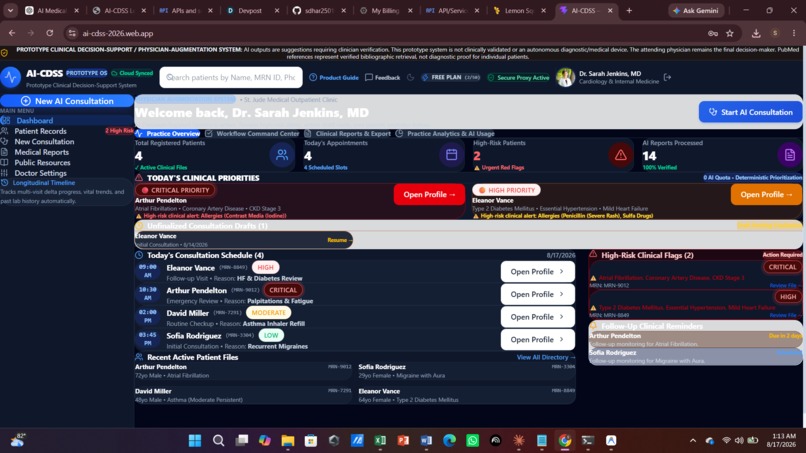
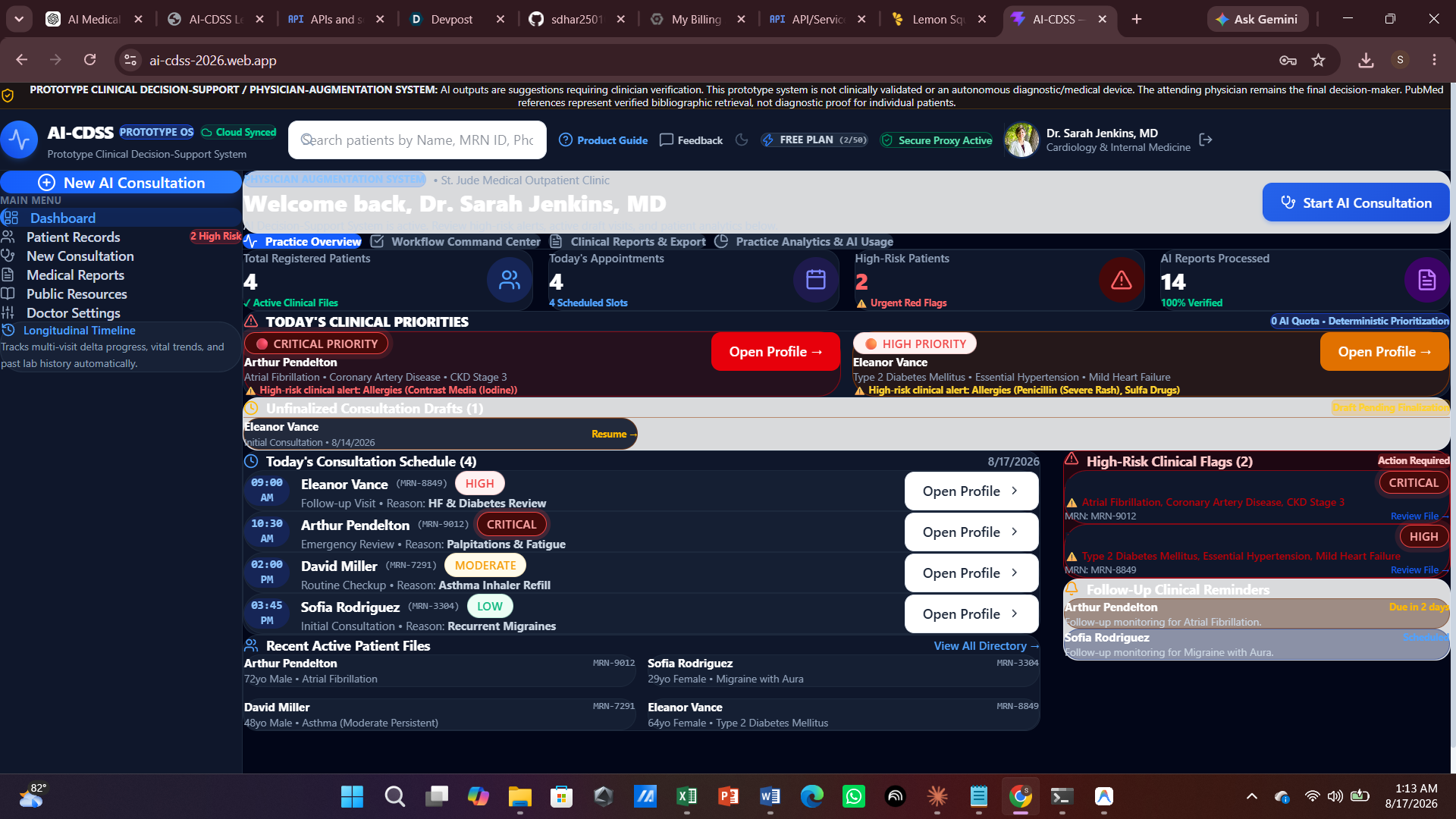
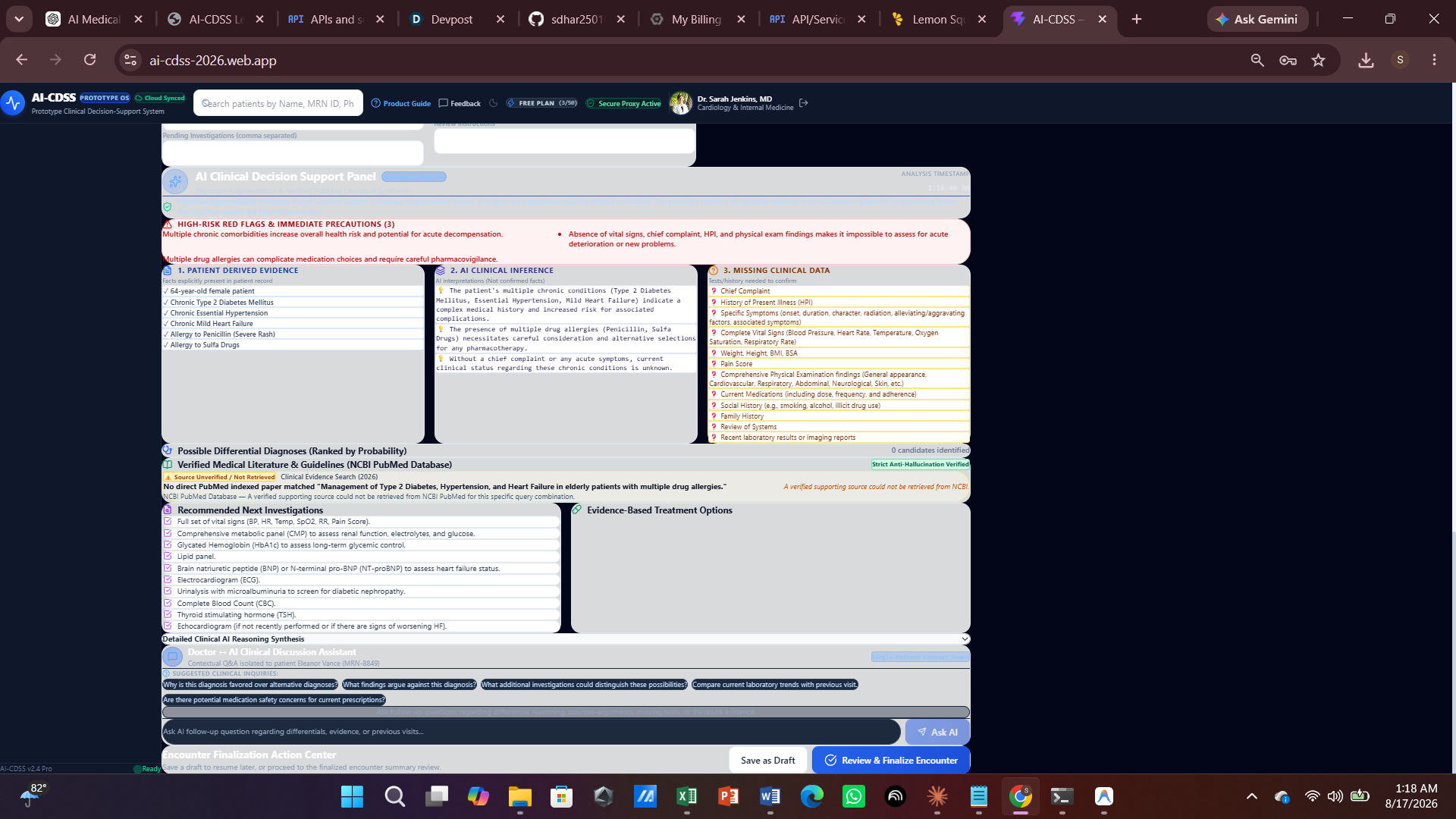
Dashboard
-
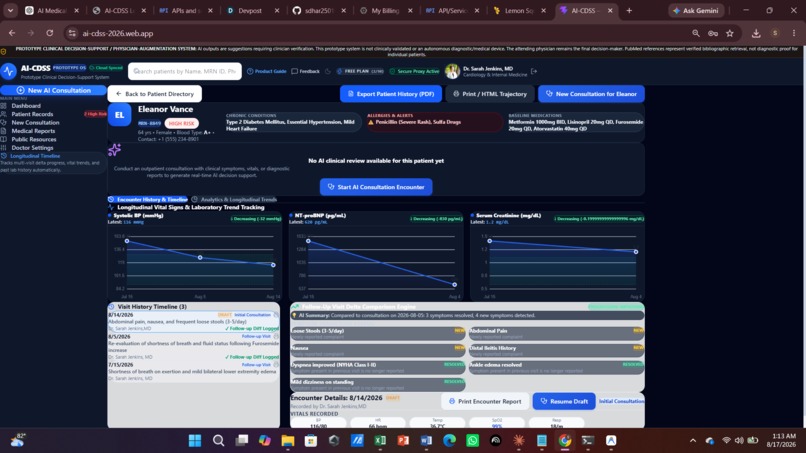
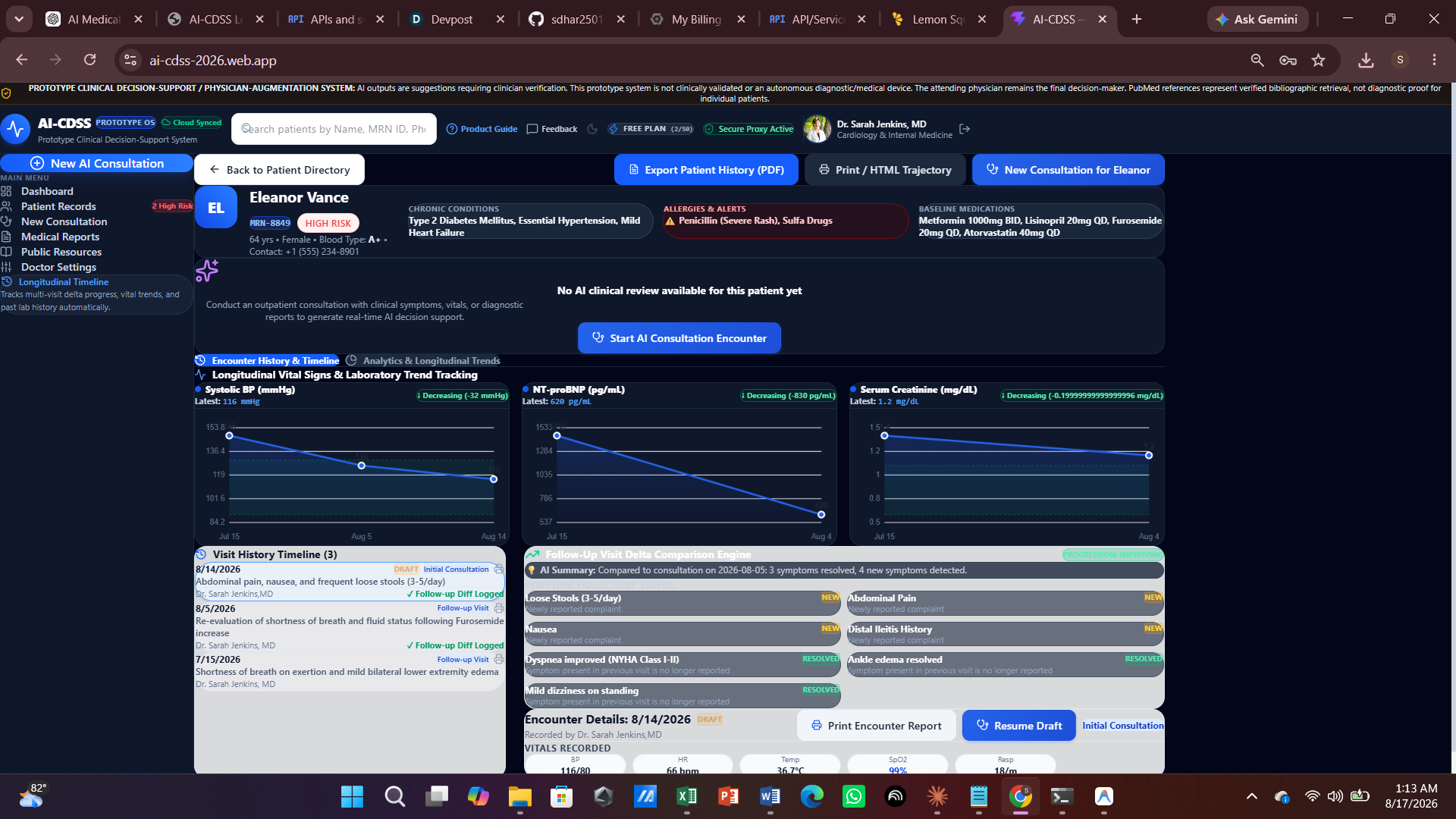
Patient profile — full app
-
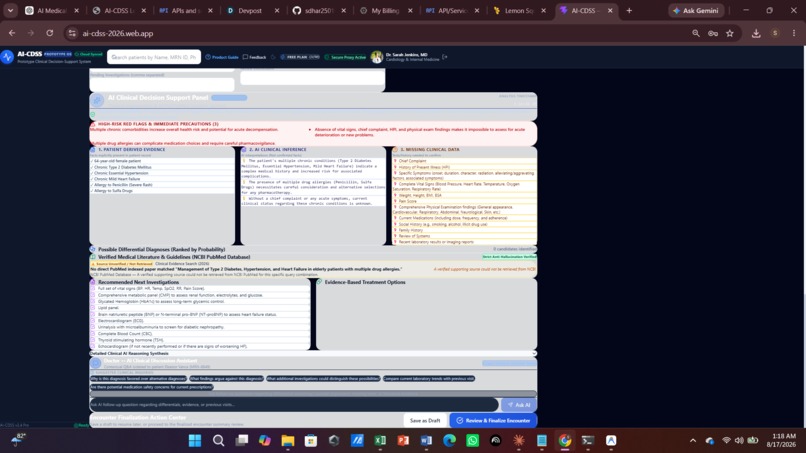
AI decision panel
-
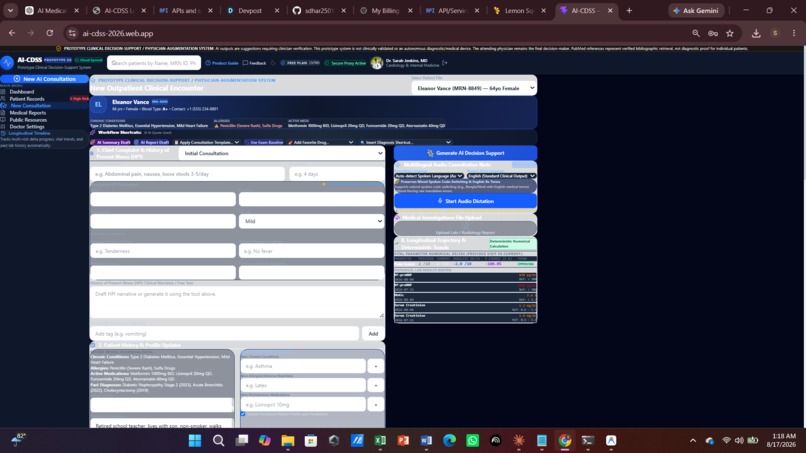
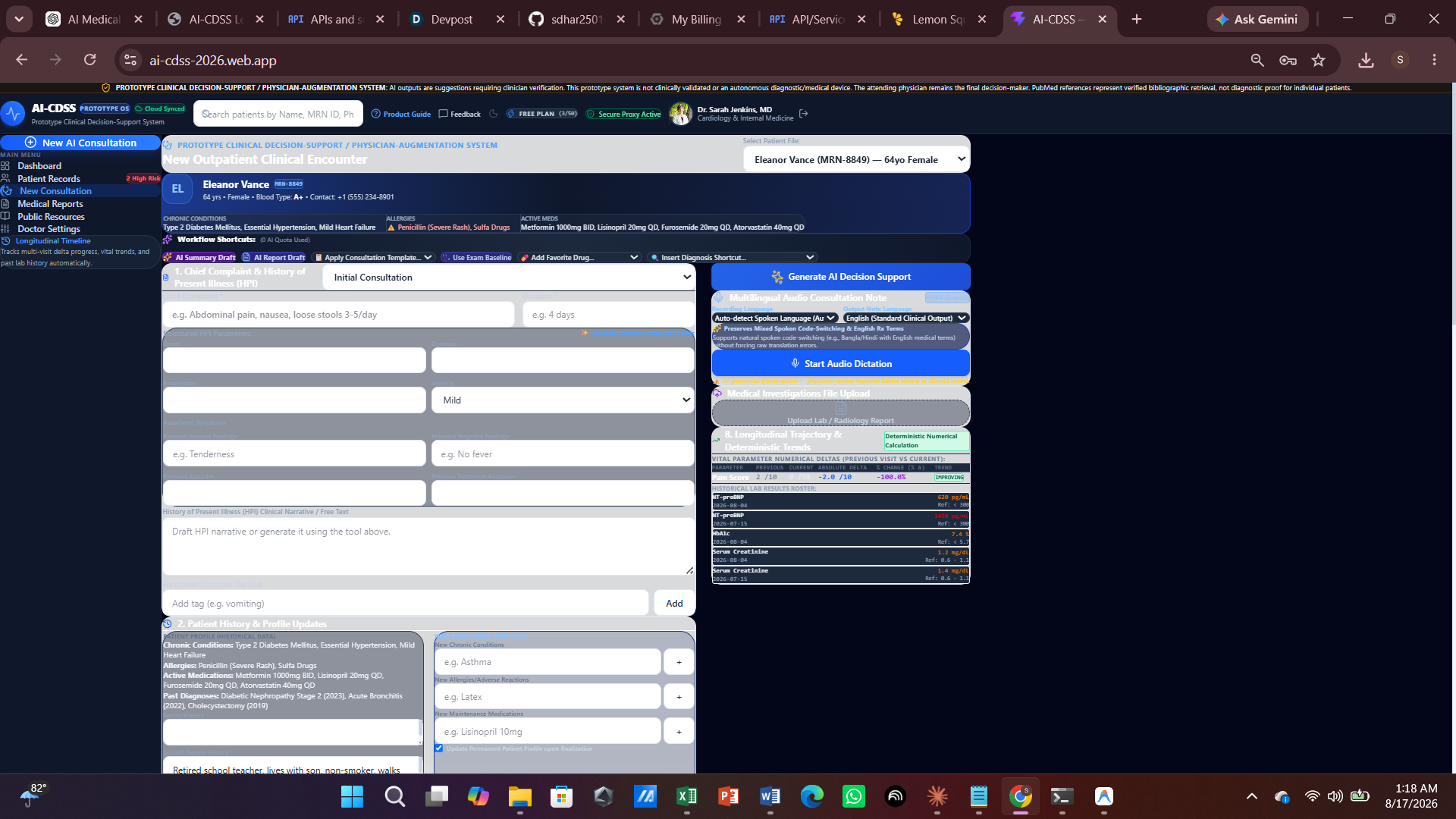
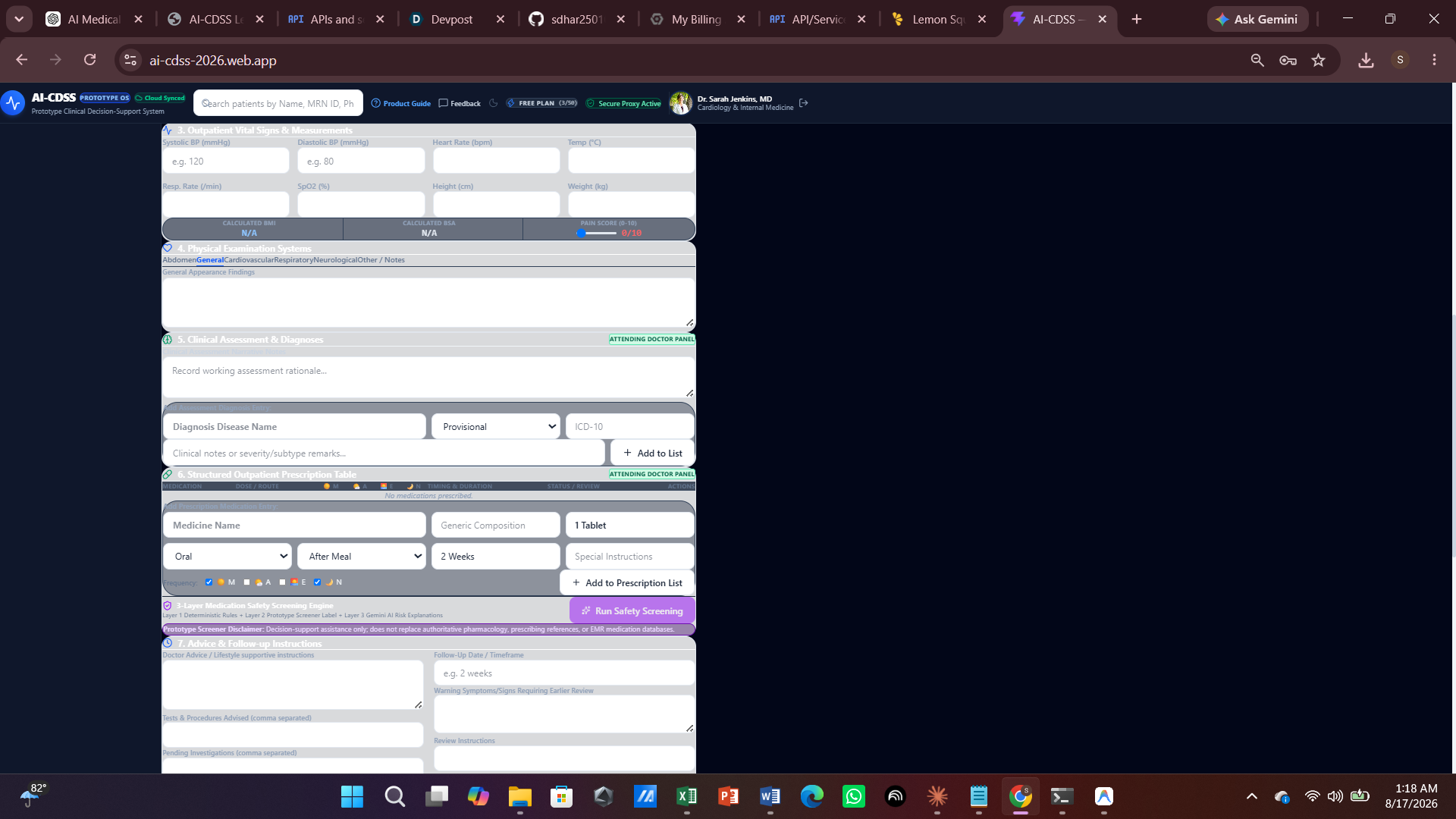
New Patient Consultation Part 1
-
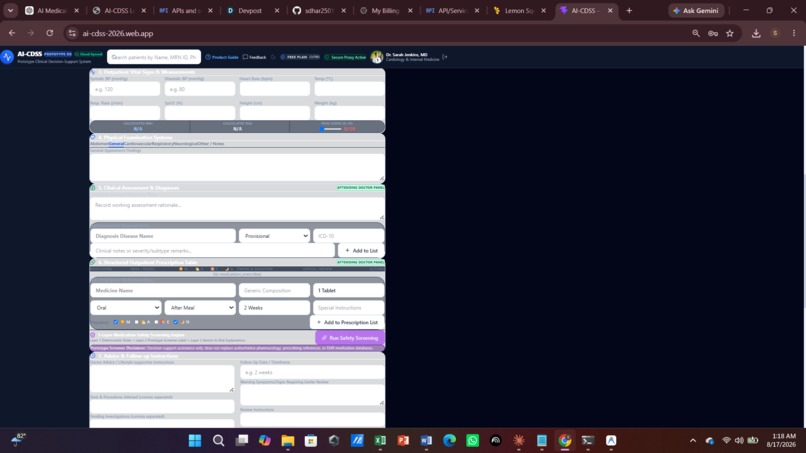
New Patient Consultation part 2
-
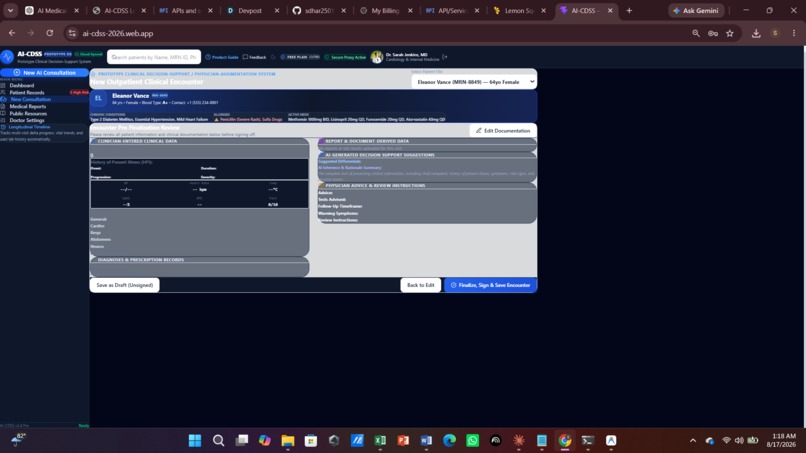
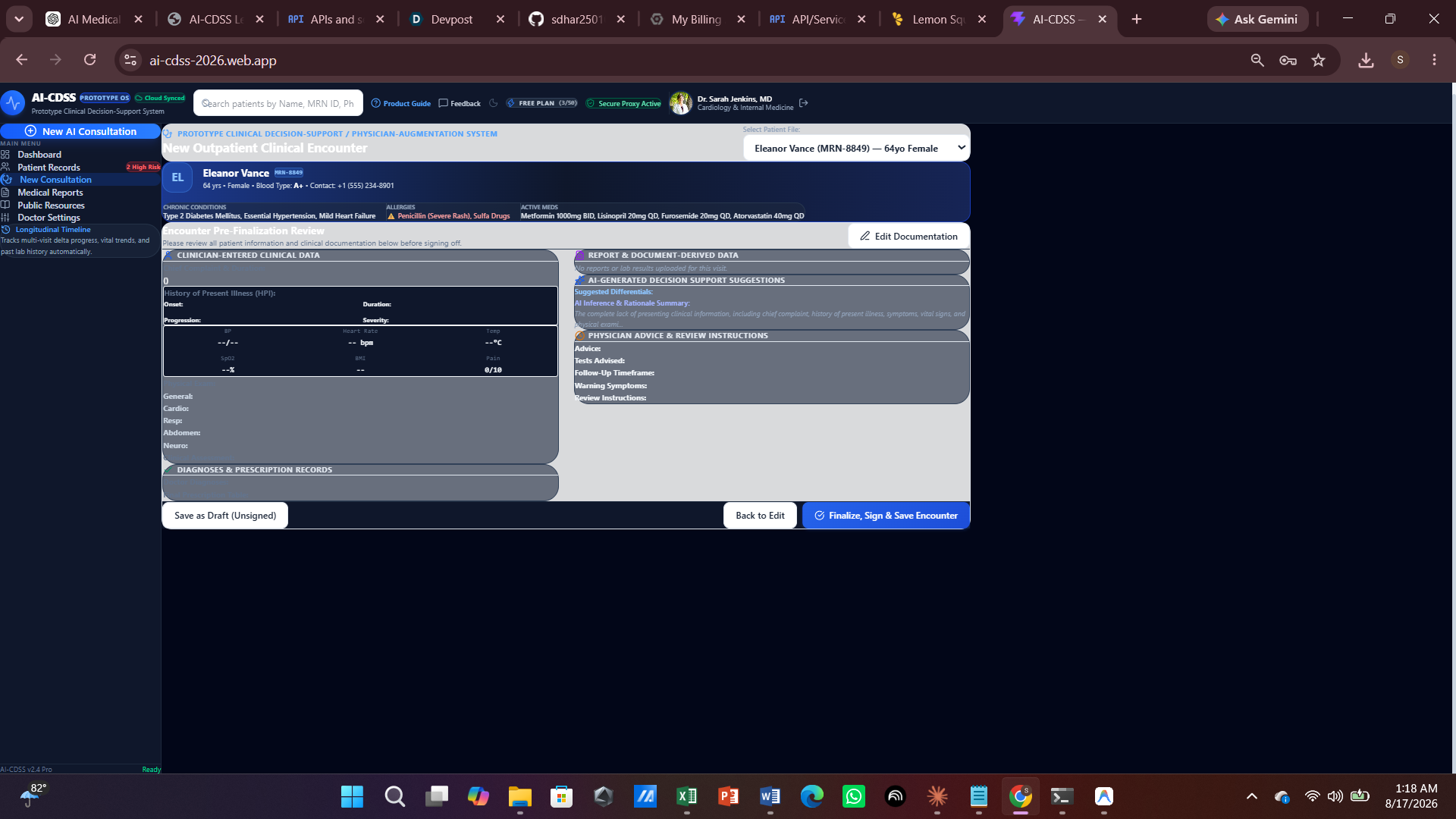
Final Review and Save
Inspiration
Outpatient clinicians often have the opposite of a data shortage: they have too much information spread across patient history, reports, laboratory results, medications, and medical literature. The difficult part is turning all of that information into useful clinical context quickly and safely.
We built AI-CDSS to explore a physician-centered approach to this problem: instead of replacing clinical judgment, AI should help organize information, surface relevant evidence, identify medication-safety considerations, and highlight longitudinal changes so the physician can make the final decision.
What We Built
AI-CDSS is an AI-assisted clinical decision-support platform for outpatient workflows.
A physician can:
- maintain patient records and longitudinal encounters
- review structured clinical information and uploaded reports
- use Gemini-powered clinical decision support to generate differential considerations and reasoning
- retrieve relevant PubMed literature
- perform medication-safety checks
- review longitudinal patient trends
- document encounters with AI-assisted workflows
- export and print clinical reports
- manage usage and subscription tiers
The system is intentionally physician-in-the-loop. AI outputs are presented as decision support and require clinician verification rather than being treated as autonomous diagnoses.
How AI Is Used
Gemini is integrated directly into the deployed application through our secure server-side AI proxy.
AI is used for clinical reasoning support, conversational assistance, report analysis, medication-safety workflows, and interpretation of longitudinal clinical information.
The workflow is:
Patient context → AI analysis → evidence and safety insights → physician review → final clinical decision
This makes AI part of the operational workflow rather than simply adding a standalone chatbot.
Google Technology
The application is built around Google Cloud and Firebase infrastructure, including Firebase Authentication, Firestore, Firebase Hosting, Cloud Functions, and Gemini/Vertex AI services.
Firestore provides UID-scoped clinical persistence, while Cloud Functions provide the protected server-side AI and subscription-related APIs.
What Makes It Different
Most clinical AI demonstrations focus on generating an answer.
AI-CDSS focuses on the workflow surrounding the answer.
It brings together patient context, longitudinal information, evidence retrieval, medication safety, documentation, and physician review in one workspace.
The goal is not autonomous medicine. The goal is to give clinicians a better information and decision-support layer while keeping the physician in control.
Challenges We Faced
One of the hardest parts was making the system reliable while moving from an early prototype architecture toward an authoritative Firestore-backed application.
During development we addressed:
- UID-scoped patient isolation
- Firestore-first clinical writes
- migration and offline-cache behavior
- prevention of prototype/demo data leaking into new patients
- defensive handling of incomplete clinical records
- recovery from stale frontend chunks and runtime failures
- protection of AI endpoints with Firebase authentication
- secure subscription webhook handling
These issues shaped the final architecture significantly.
What We Learned
We learned that building an AI product for a high-stakes workflow is not only about model quality.
Data integrity, authorization, persistence, failure handling, observability, and human oversight are equally important.
AI-CDSS therefore evolved from an AI feature prototype into a complete workflow-oriented application designed around those constraints.
Business Model
AI-CDSS is designed as a SaaS product for physicians and clinical practices.
The application supports a free tier and a premium subscription model, with subscription infrastructure implemented through Lemon Squeezy.
Our current focus is validating the product and workflow with users while building toward sustainable clinical software adoption.
Current Status
AI-CDSS is deployed as a working web application and has undergone extensive automated regression testing covering authentication, patient isolation, Firestore persistence, clinical export, AI authorization, billing logic, reliability, prototype-data isolation, and Firestore payload safety.
Live application:
Built With
- cloud-firestore
- firebase
- firebase-authentication
- firebase-cloud-functions
- firebase-hosting
- gemini-api
- google-cloud
- lemon-squeezy
- pubmed-api
- react
- tailwind-css
- typescript
- vite

Log in or sign up for Devpost to join the conversation.