-
-
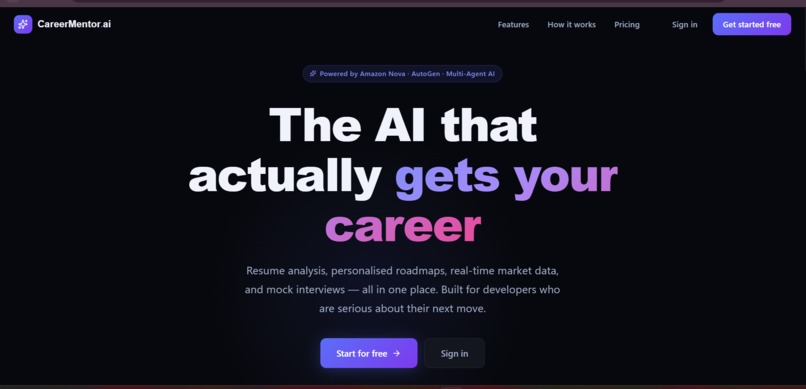
Landing page
-
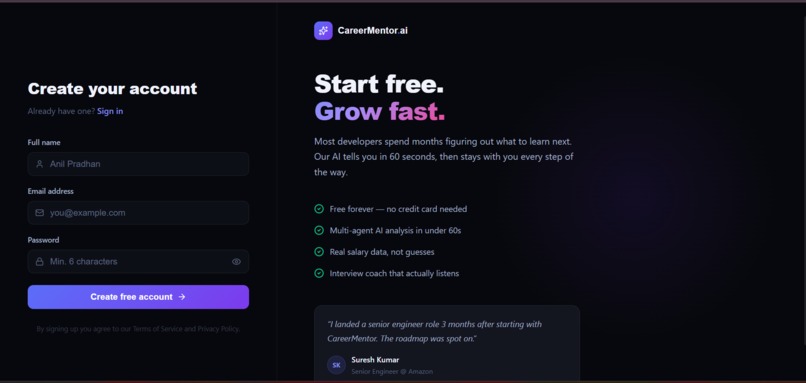
Sign In page
-
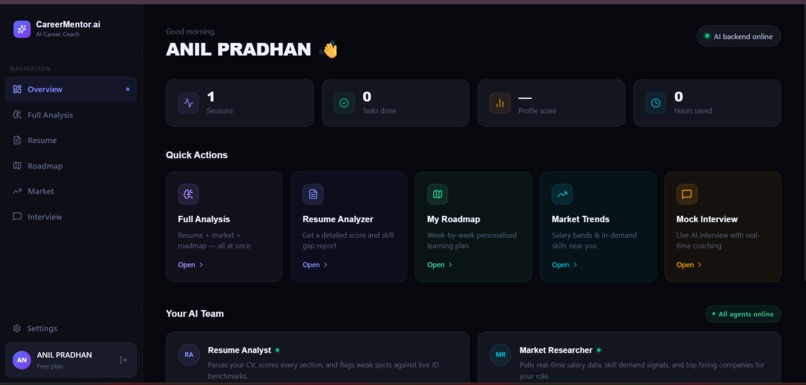
Dashboard page
-
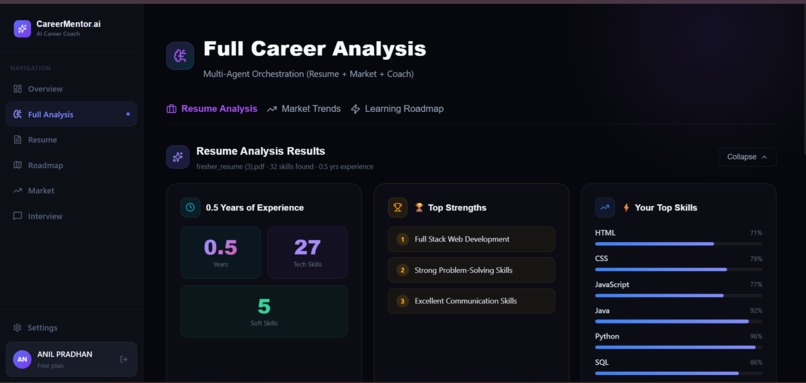
full career analysis,resume.
-
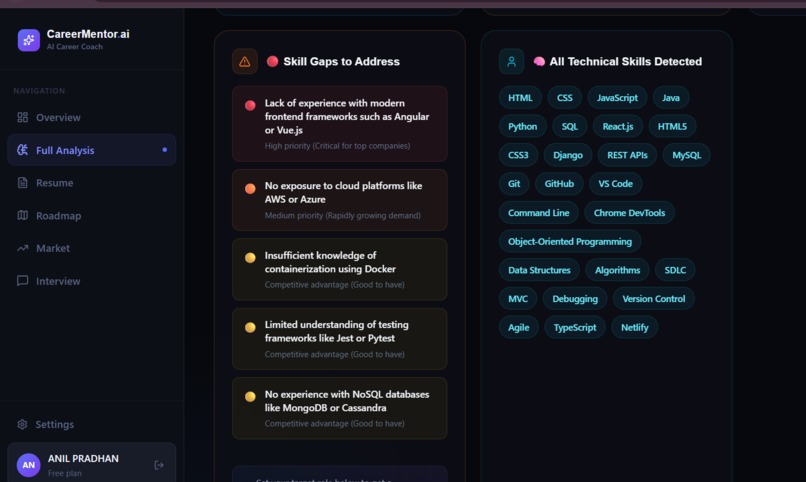
skill gap analysis
-
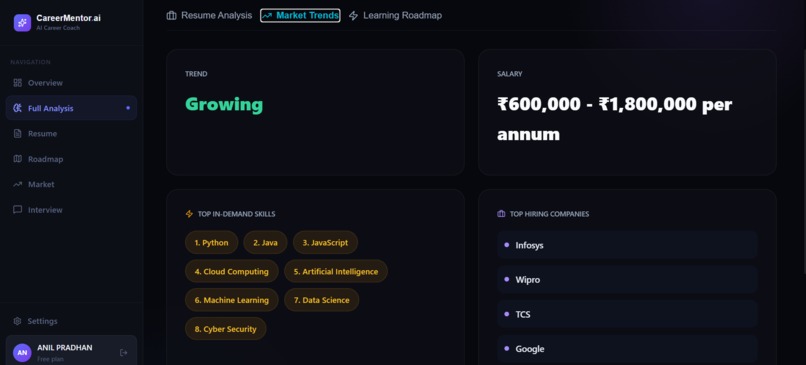
Market trend Analysis
-
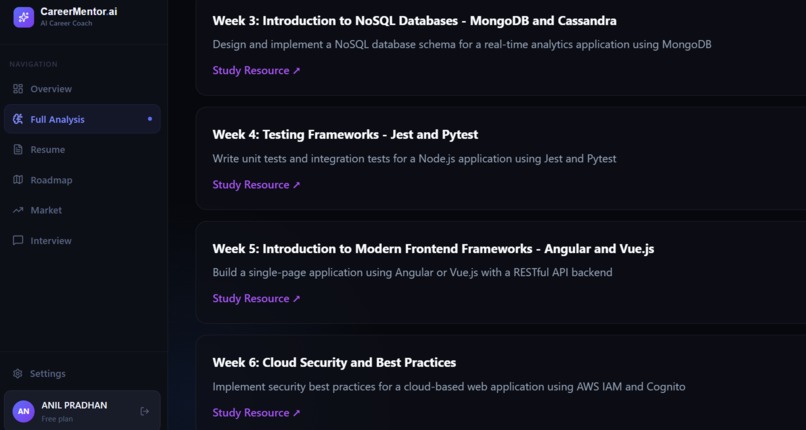
Roadmap suggestion
-
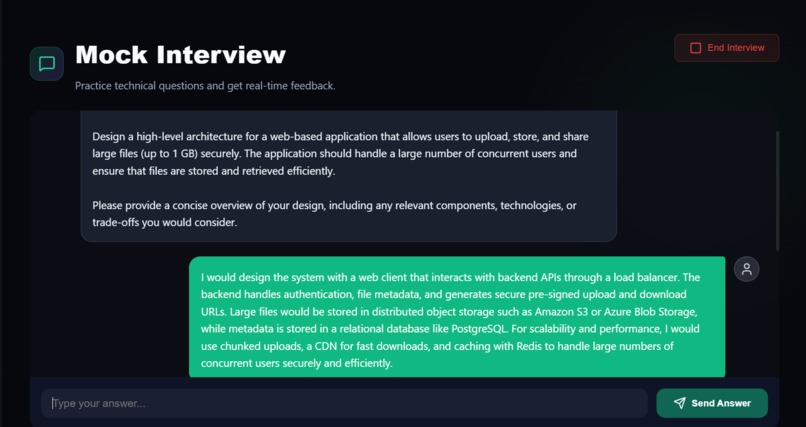
Mock interview answering
-
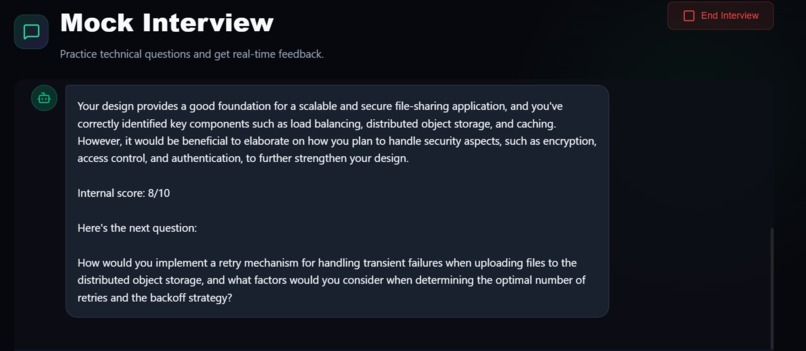
Interview score detection
-
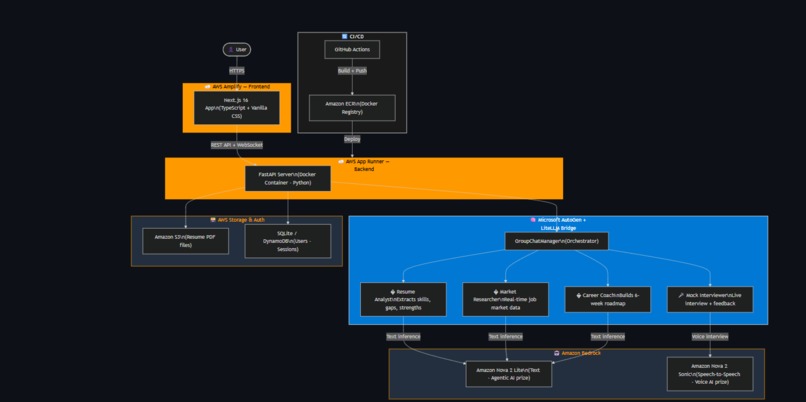
Architecture Diagram


Inspiration
Many students and developers struggle with the same question: “What should I learn next to reach my career goals?” Information about skills, job requirements, interview preparation, and career paths is scattered across multiple platforms. As a student myself, I experienced this confusion while trying to decide which skills to focus on and how to prepare for real-world jobs.
This inspired me to build AI Career Mentor, a platform that acts like a team of AI career experts. Instead of searching across multiple resources, users can get a complete career analysis in one place — including resume feedback, learning roadmaps, job market insights, and mock interviews.
What it does
AI Career Mentor is a multi-agent AI platform that helps students and developers accelerate their careers through intelligent guidance.
The platform includes several AI-powered modules:
- Resume Analysis – evaluates resumes and identifies skill gaps
- Career Roadmap Generator – creates personalized learning plans
- Market Intelligence – analyzes job market trends and salary ranges
- Mock Interview Coach – simulates technical interviews and provides feedback
All of these components work together using a multi-agent architecture, where specialized AI agents collaborate to generate a complete career strategy.
How we built it
The system is built as a full-stack application with a modular AI architecture.
Frontend:
- Next.js with TypeScript for the user interface
- Custom UI components for dashboards and analysis tools
Backend:
- FastAPI (Python) for high-performance APIs
- WebSocket support for real-time interview simulations
- SQLAlchemy with SQLite for persistent data storage
AI Architecture:
- Microsoft AutoGen for multi-agent orchestration
- Agents communicate using a GroupChat system
- AI models include Amazon Nova models via Amazon Bedrock
Cloud & Infrastructure:
- AWS Amplify for frontend hosting
- AWS App Runner for backend deployment
- Amazon S3 for file storage
- Amazon Bedrock for AI inference
This architecture allows the system to scale while keeping AI processing modular and efficient.
Challenges we ran into
Building a multi-agent AI system presented several technical challenges.
One challenge was coordinating multiple AI agents so they could collaborate effectively without generating conflicting responses. This required designing structured prompts and agent roles so each agent focused on a specific task.
Another challenge was integrating different AI providers and ensuring the system could switch between them easily. To solve this, the project was designed with a flexible configuration system that allows different AI providers to be used depending on the deployment environment.
Finally, implementing real-time interactions such as mock interviews required WebSocket communication between the frontend and backend.
What we learned
Through this project, I gained experience in:
- Building full-stack AI applications
- Designing multi-agent AI systems
- Integrating cloud services and AI APIs
- Deploying scalable applications
This project demonstrated how AI agents can collaborate like a team of human experts to solve complex problems such as career guidance.
Built With
- amazon-bedrock
- amazon-nova-2-lite
- amazon-nova-2-sonic
- amazon-web-services
- aws-amplify
- aws-app-runner
- docker
- fastapi
- jwt-authentication
- microsoft-autogen
- next.js
- python
- sqlalchemy
- sqlite
- typescript
- websockets


Log in or sign up for Devpost to join the conversation.