-
-
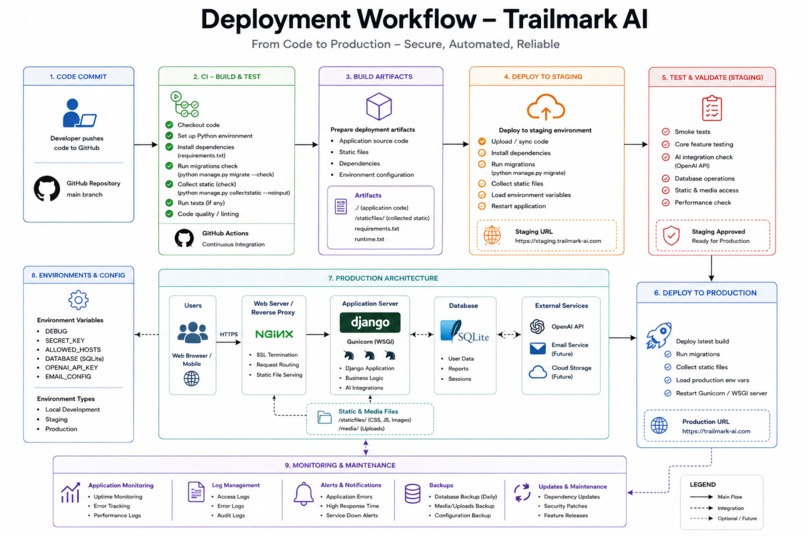
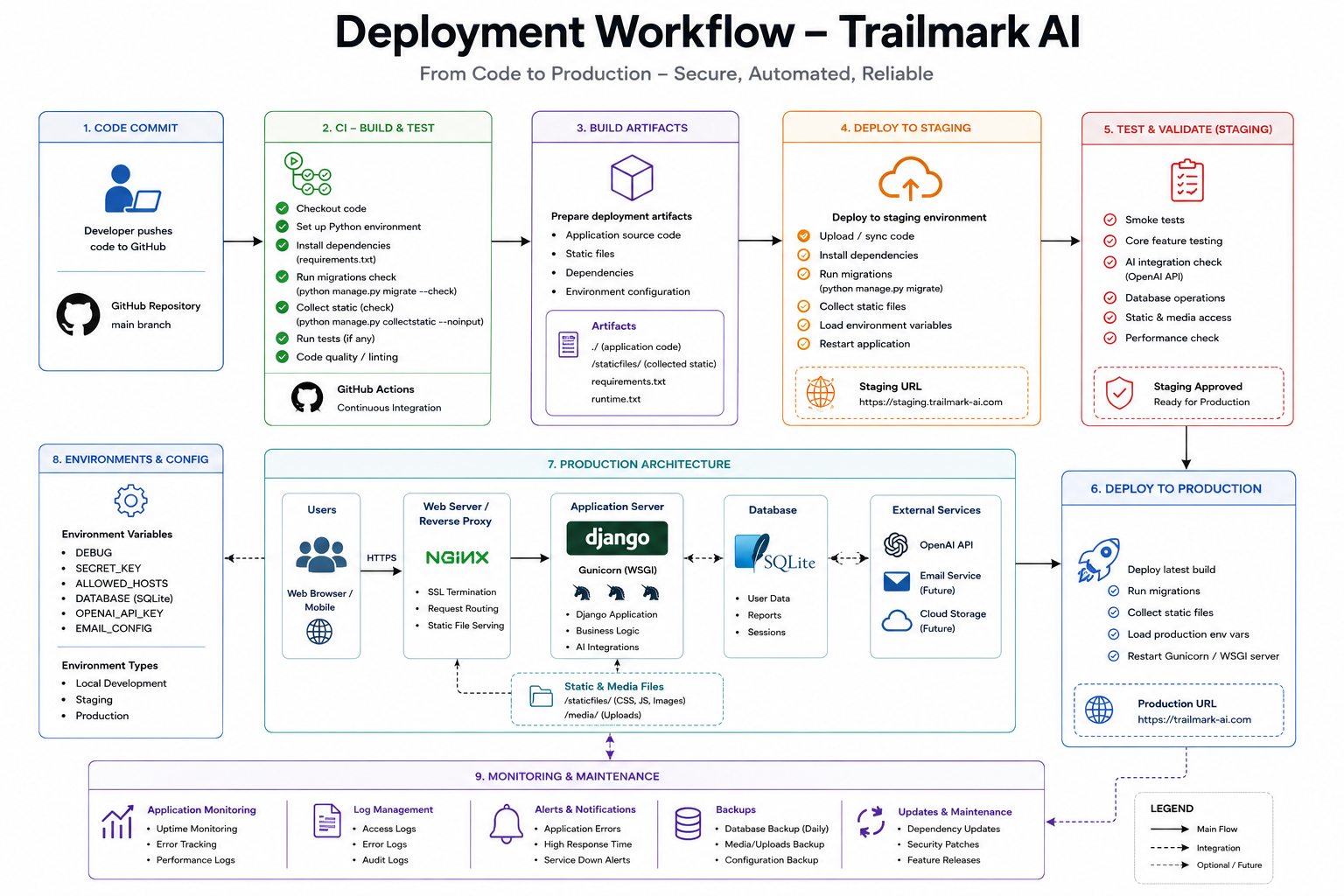
CI/CD deployment pipeline for Trailmark AI, from code commit through staging, production, and ongoing monitoring.
-
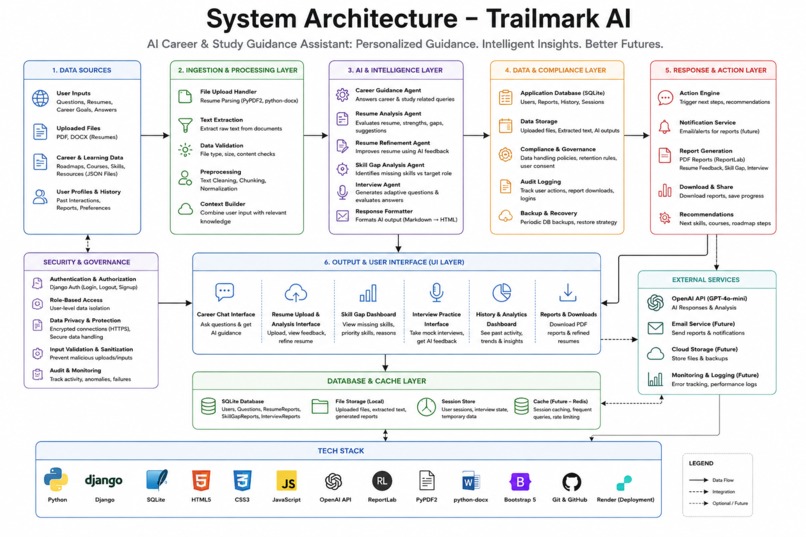
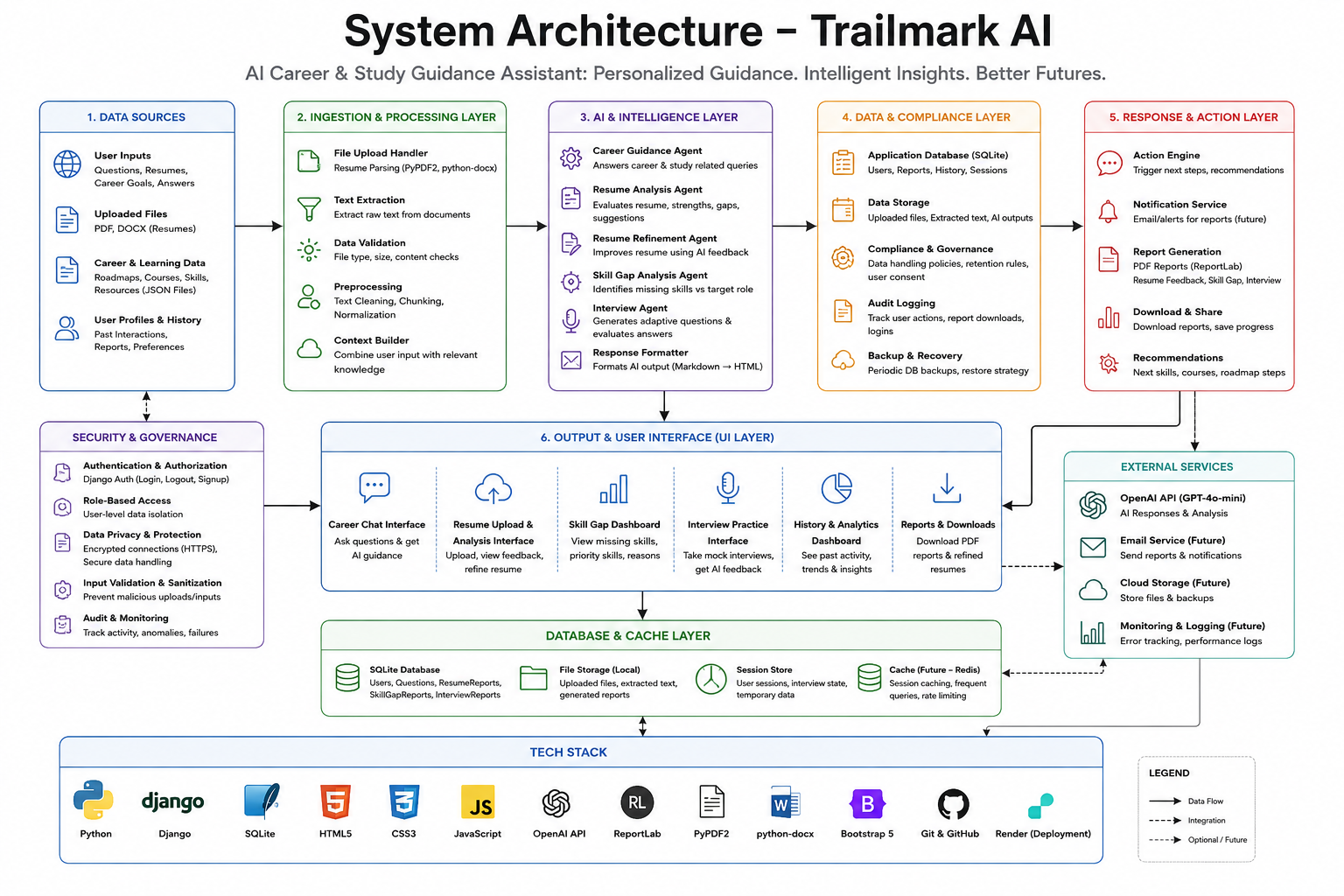
System architecture diagram showing Trailmark AI's data flow across ingestion, AI processing, storage, and the user interface layer.
-
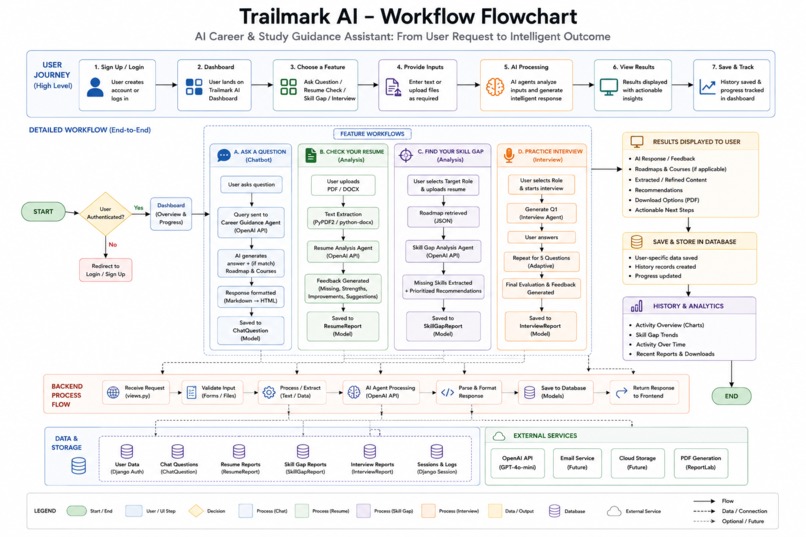
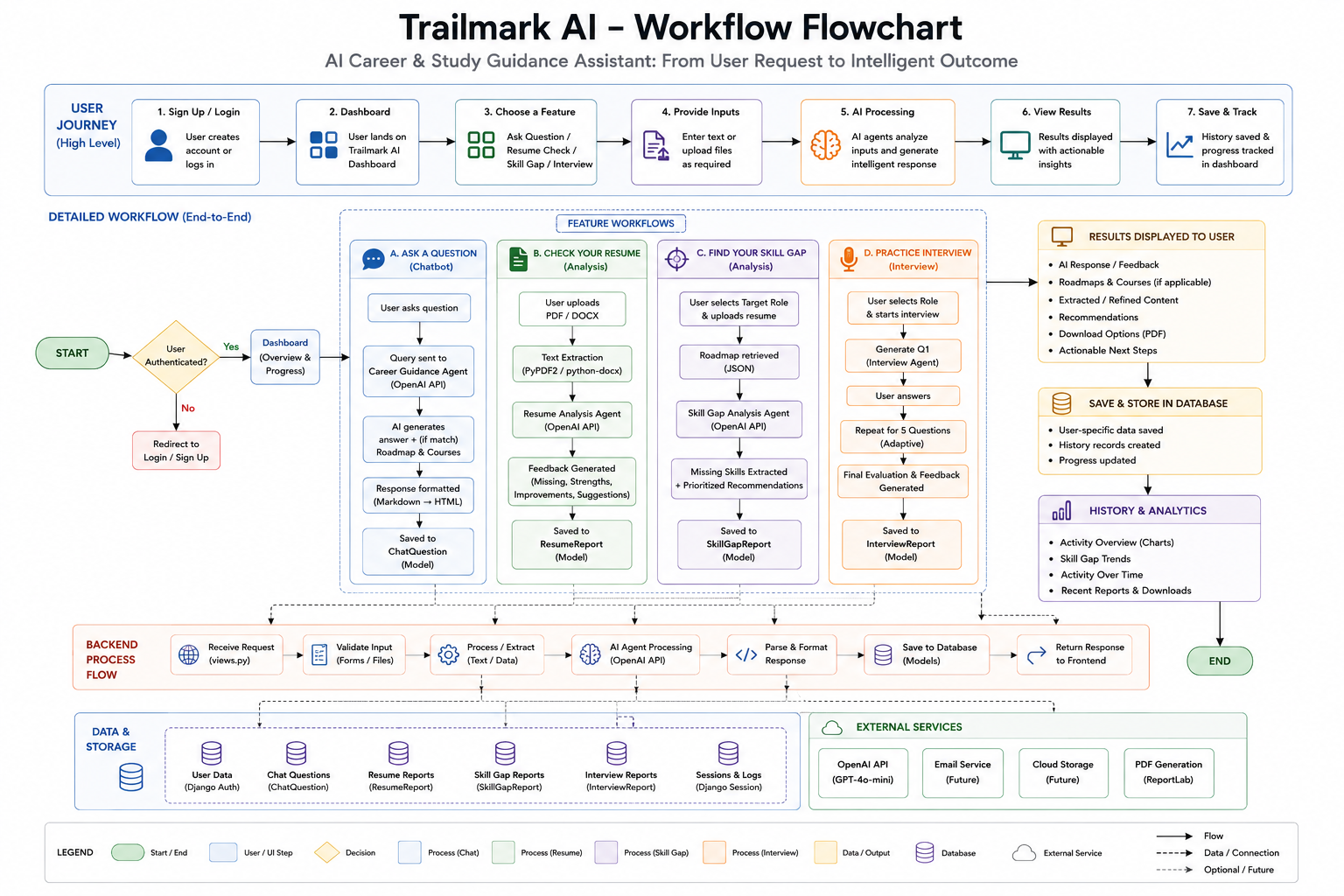
End-to-end user journey and backend workflow for Trailmark AI's four core features, from request to AI response and data storage.
-
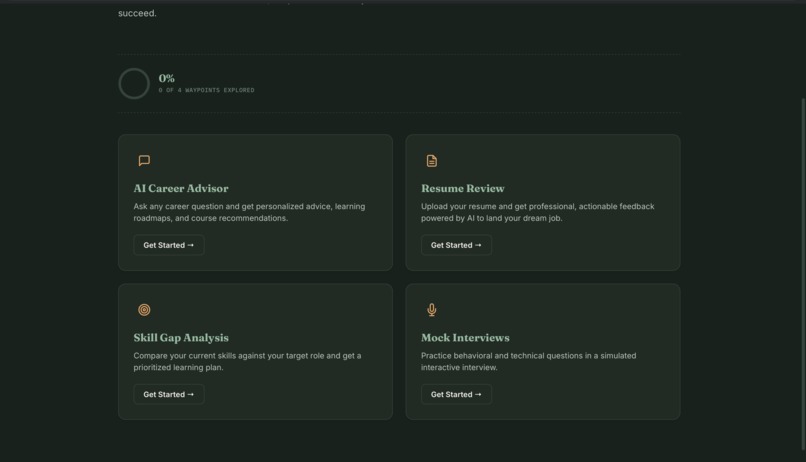
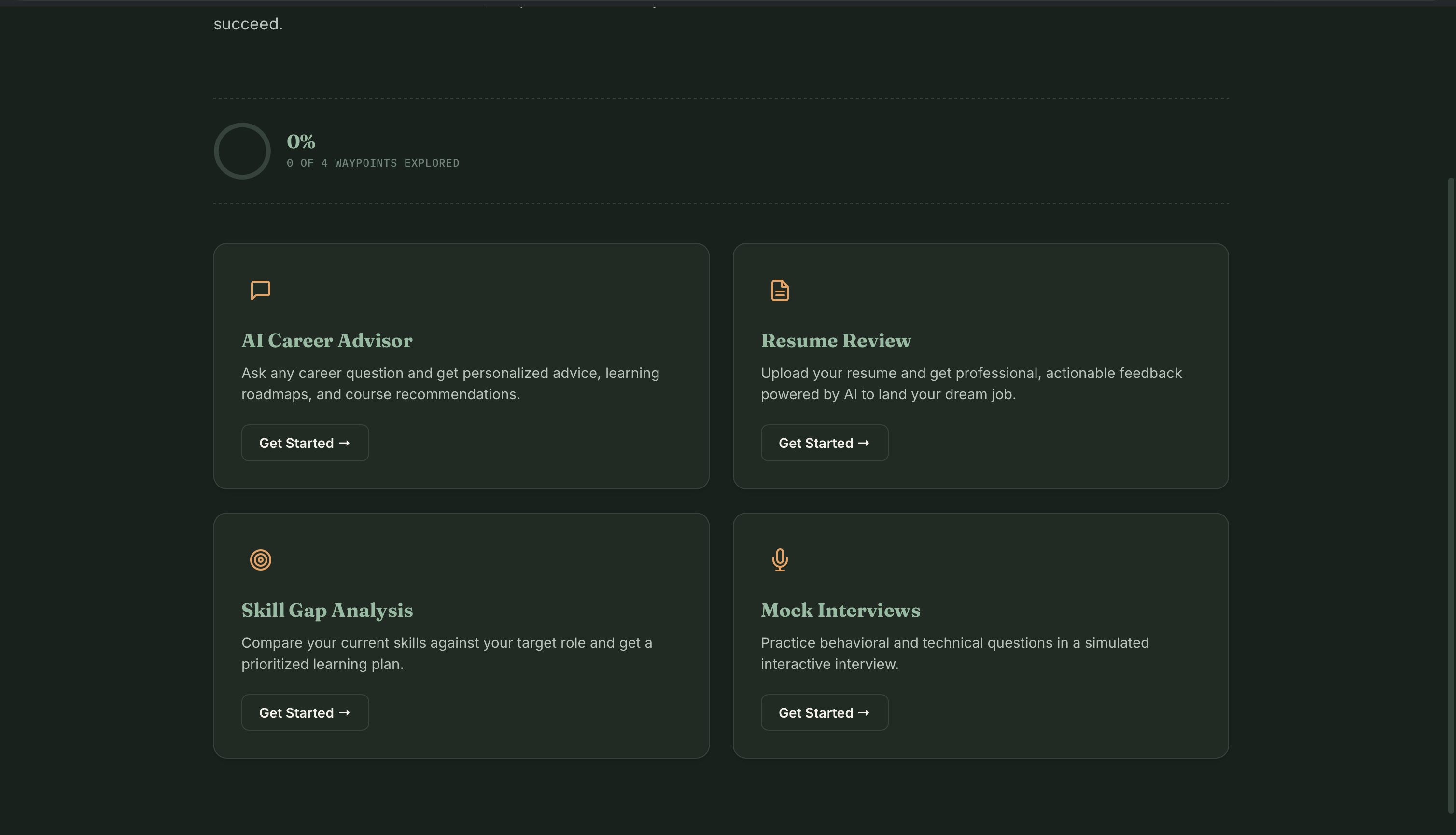
Trailmark dashboard with progress tracker and feature overview.
-
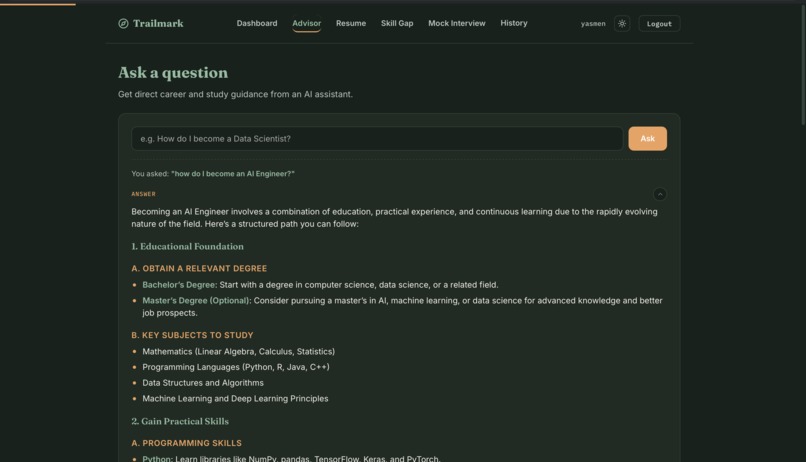
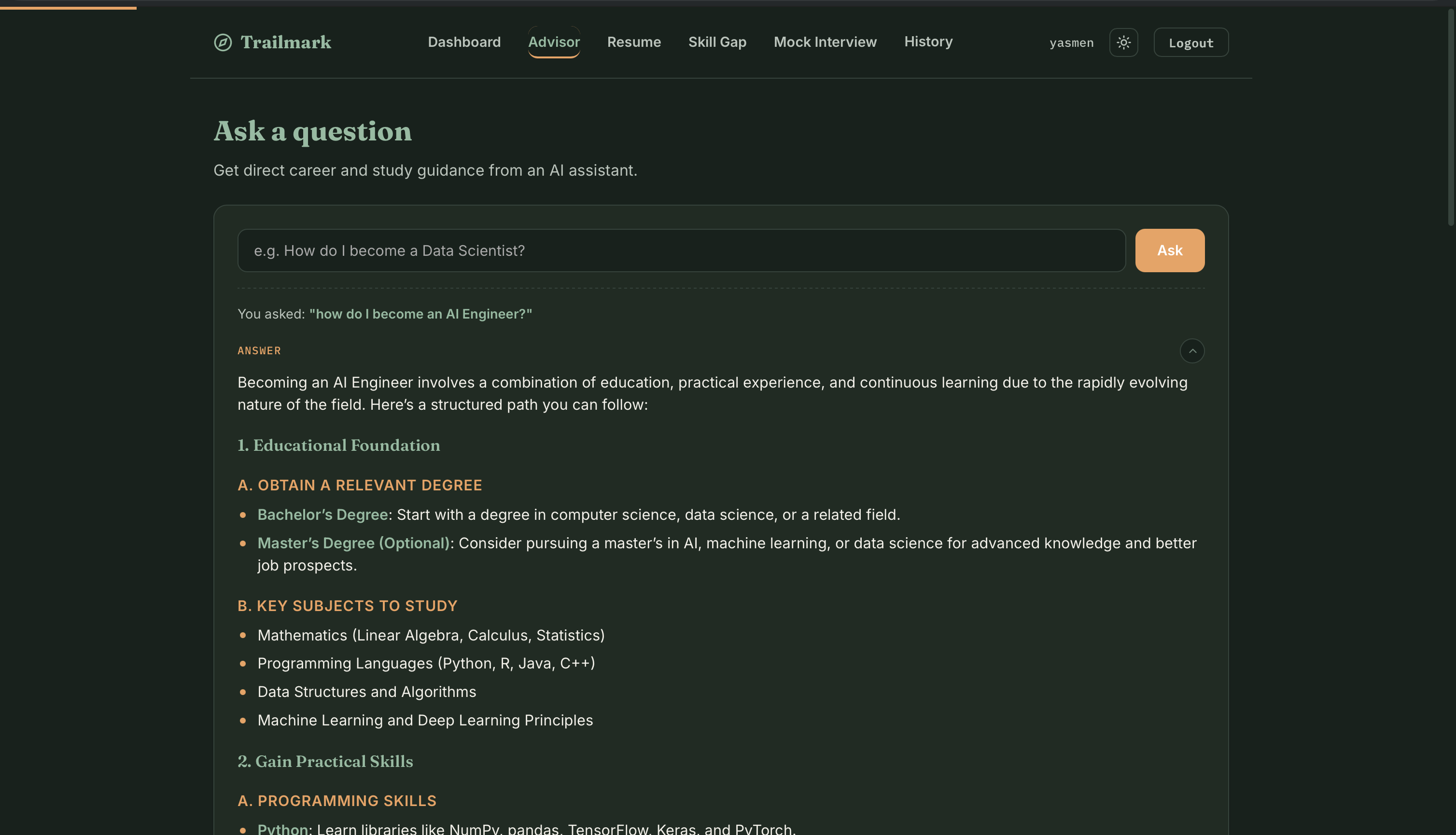
AI Career Advisor answering a user's career question.
-
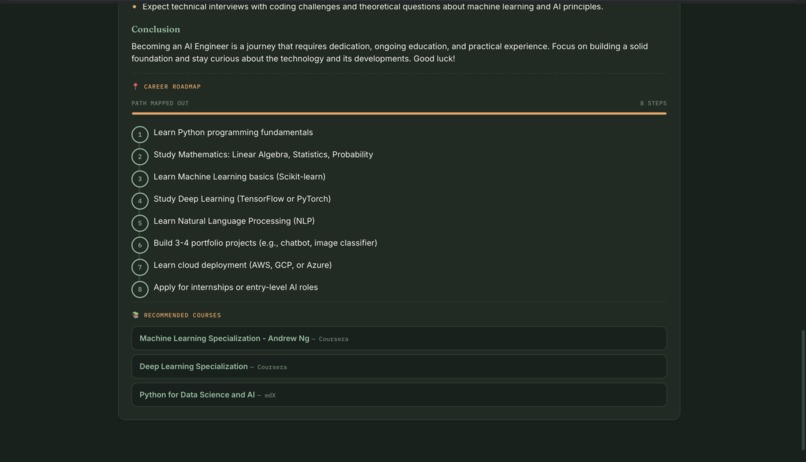
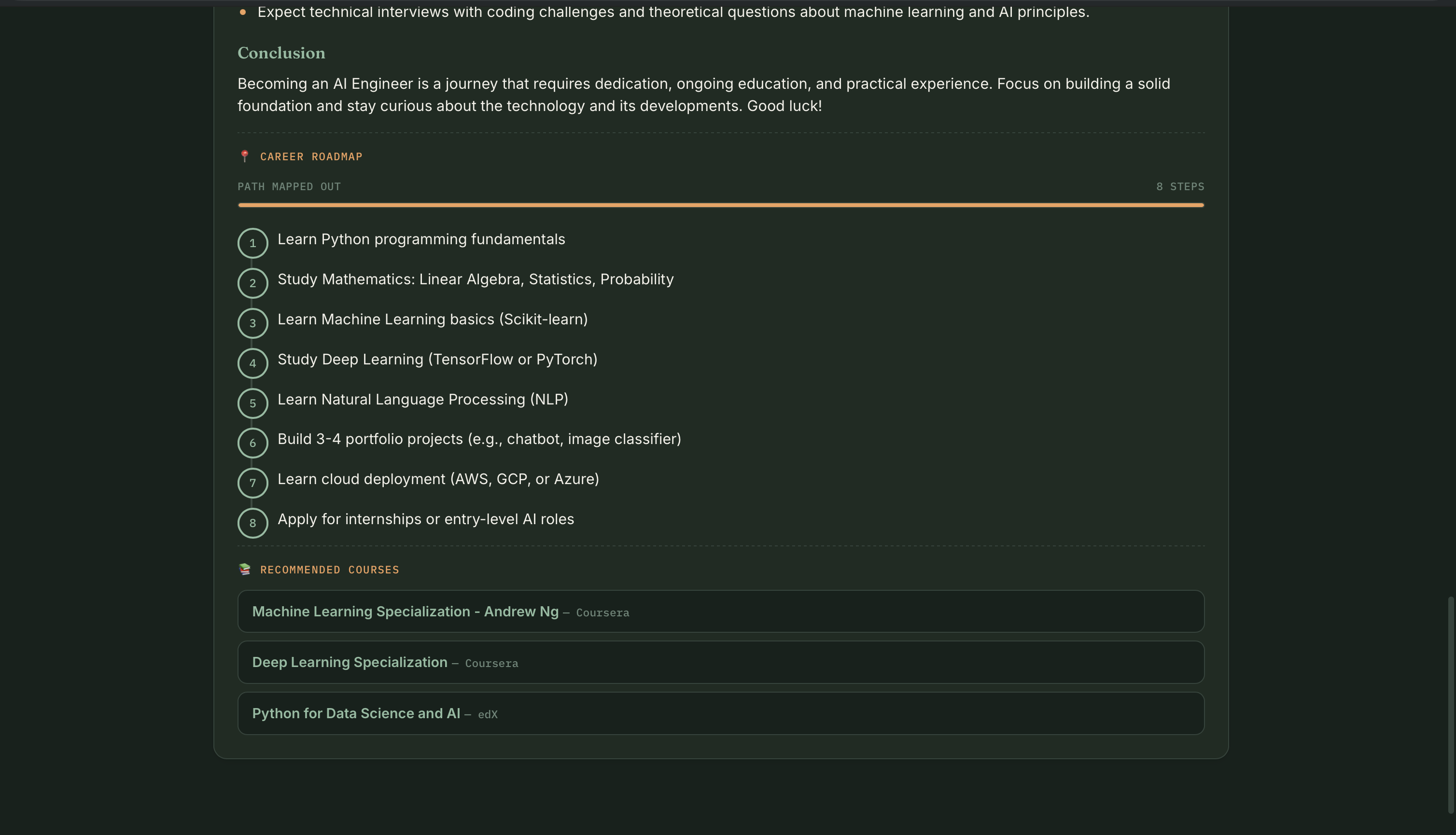
AI Career Advisor generating a personalized roadmap, framework recommendations, and course suggestions for an AI Engineer query.
-
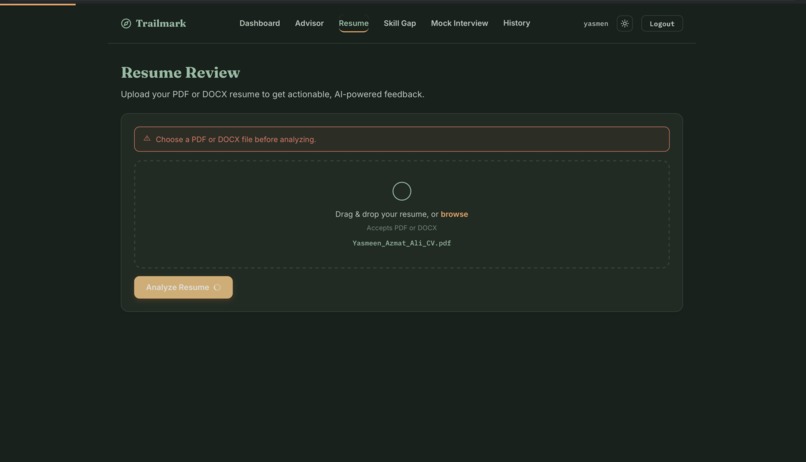
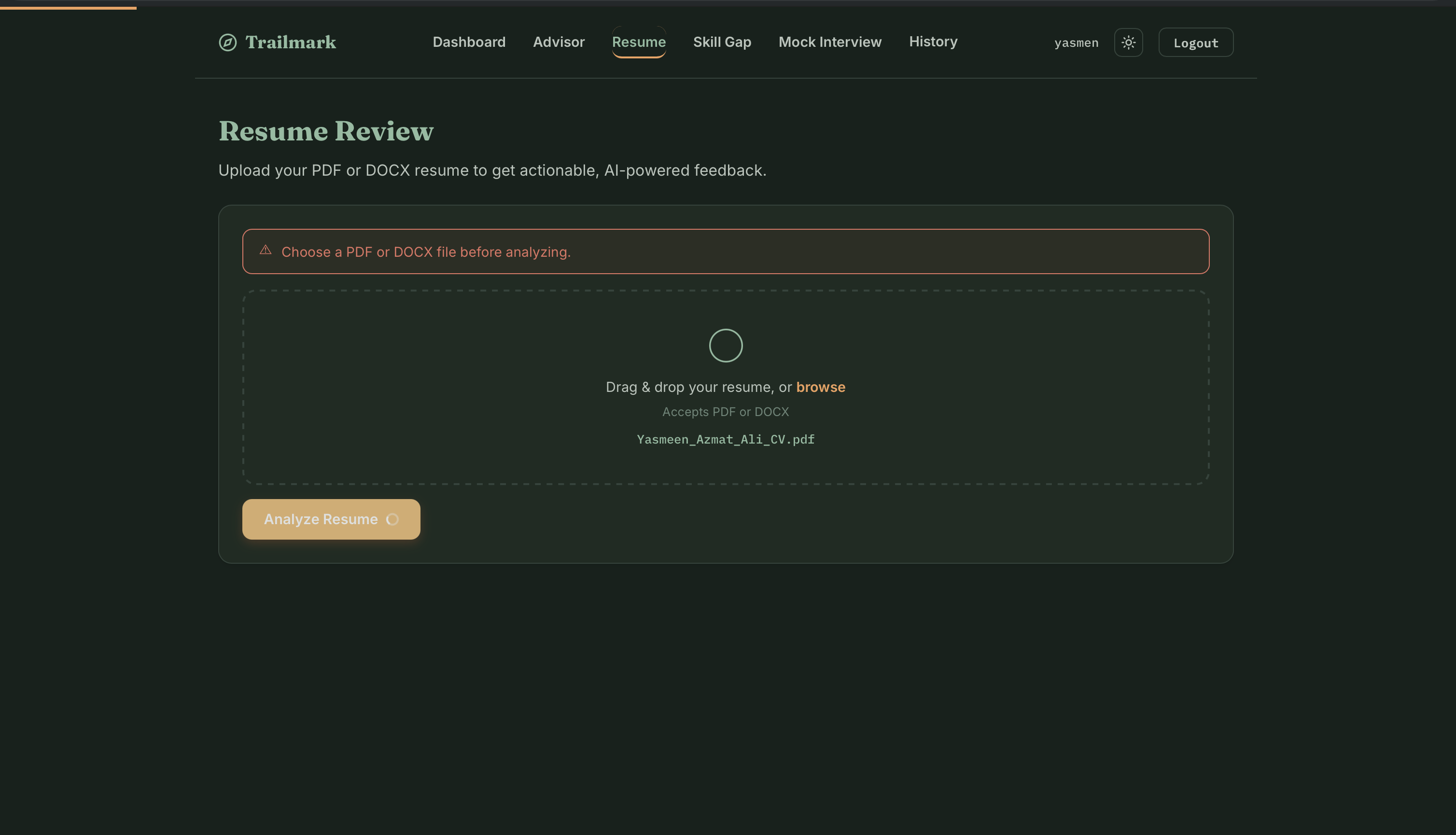
Resume upload interface for AI-powered review.
-
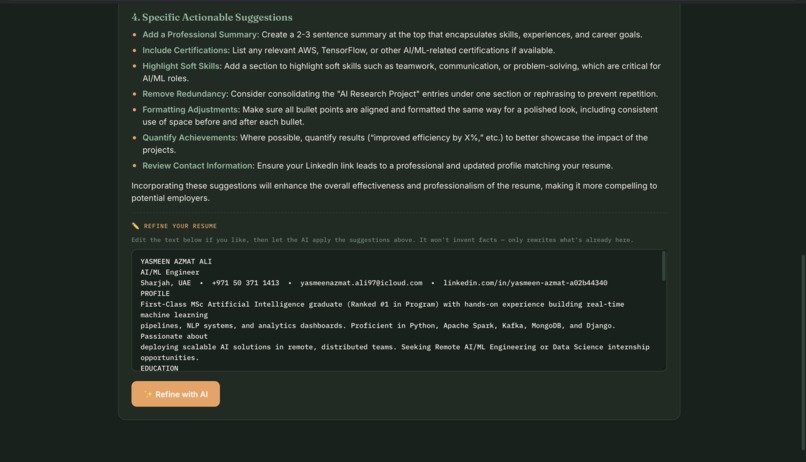
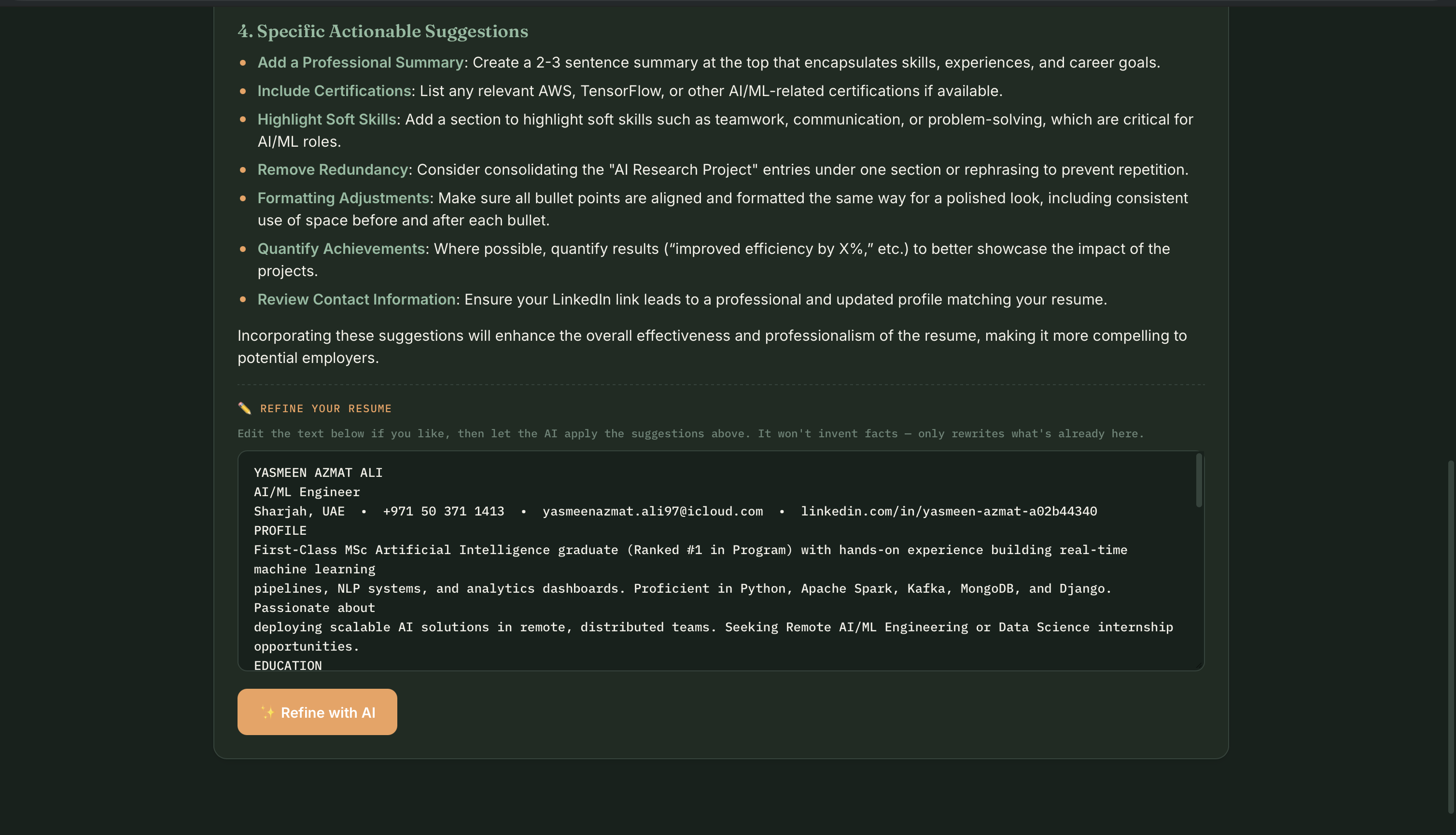
Resume feedback with actionable improvement suggestions.
-
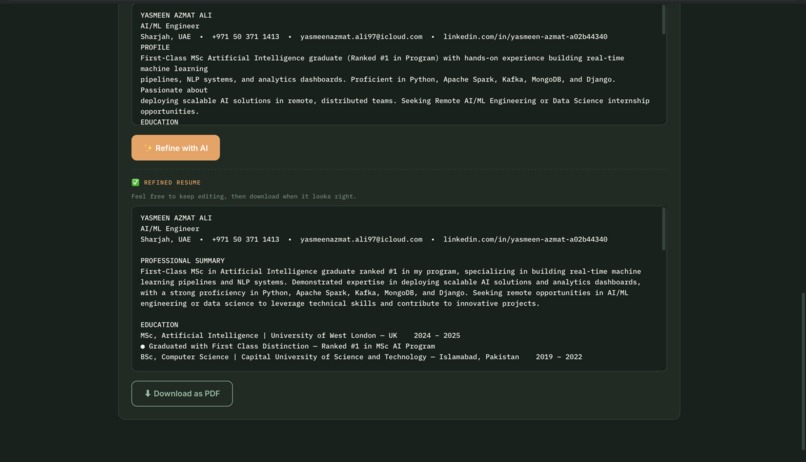
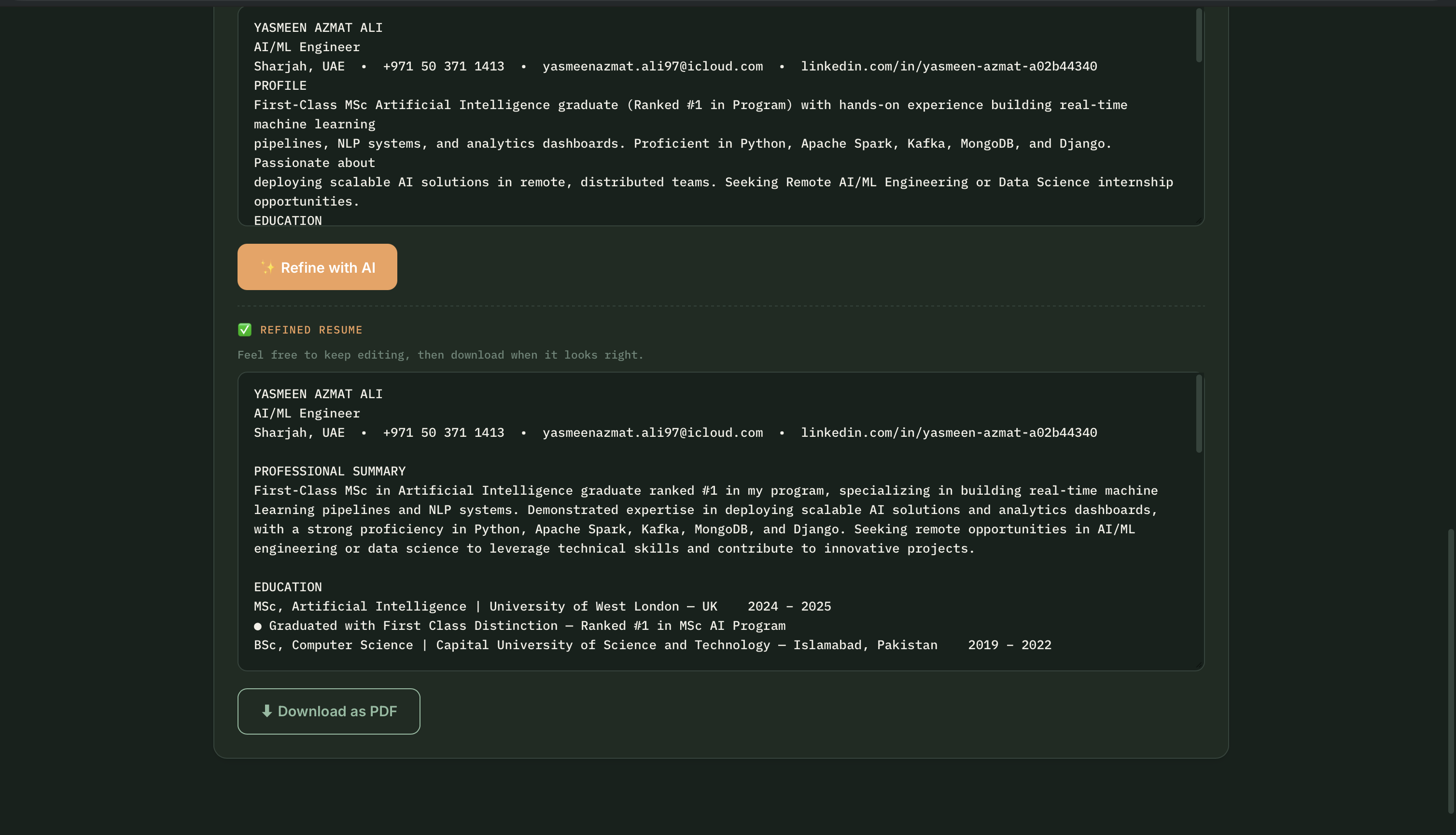
AI-refined resume ready for download.
-
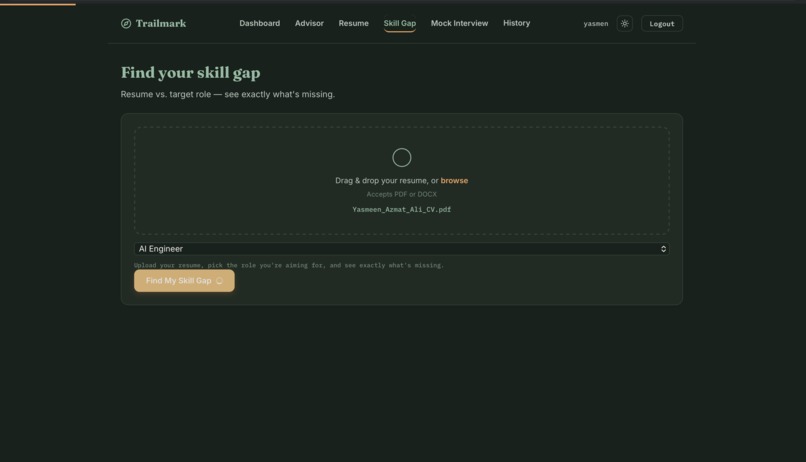
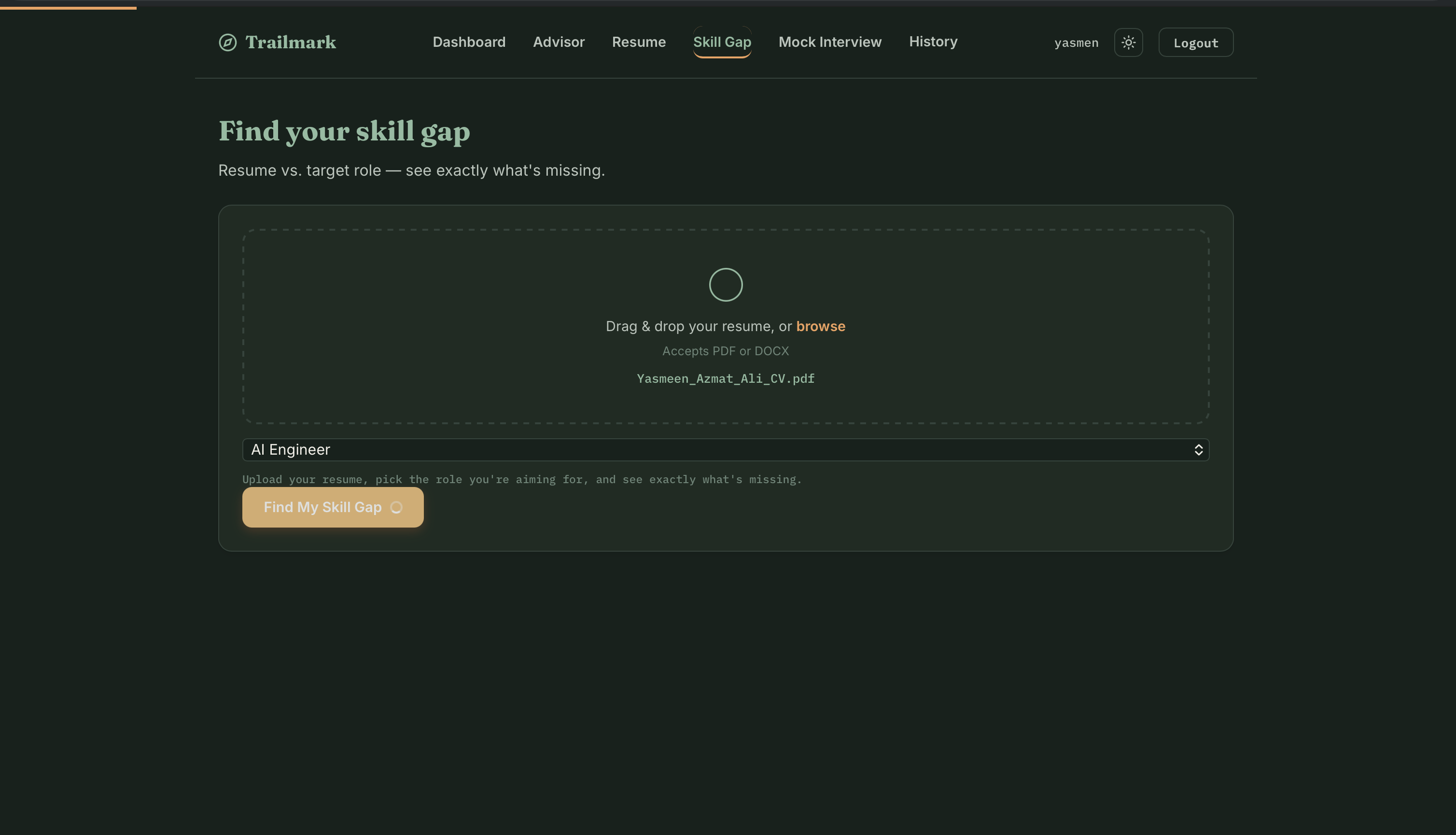
Skill gap analysis setup: resume and target role selection.
-
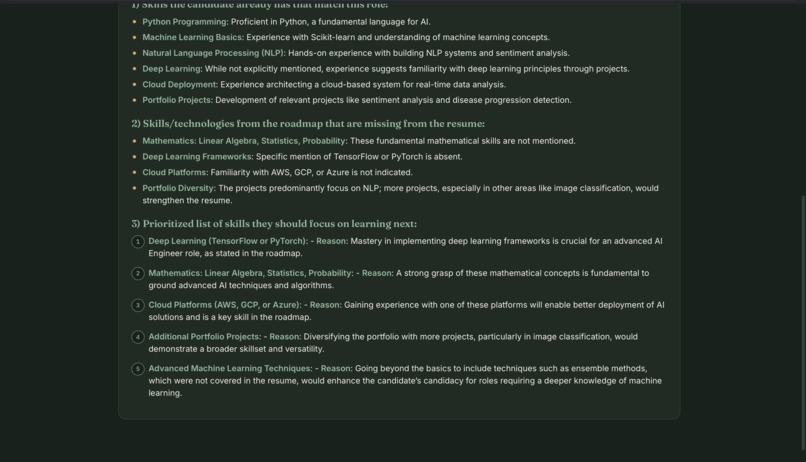
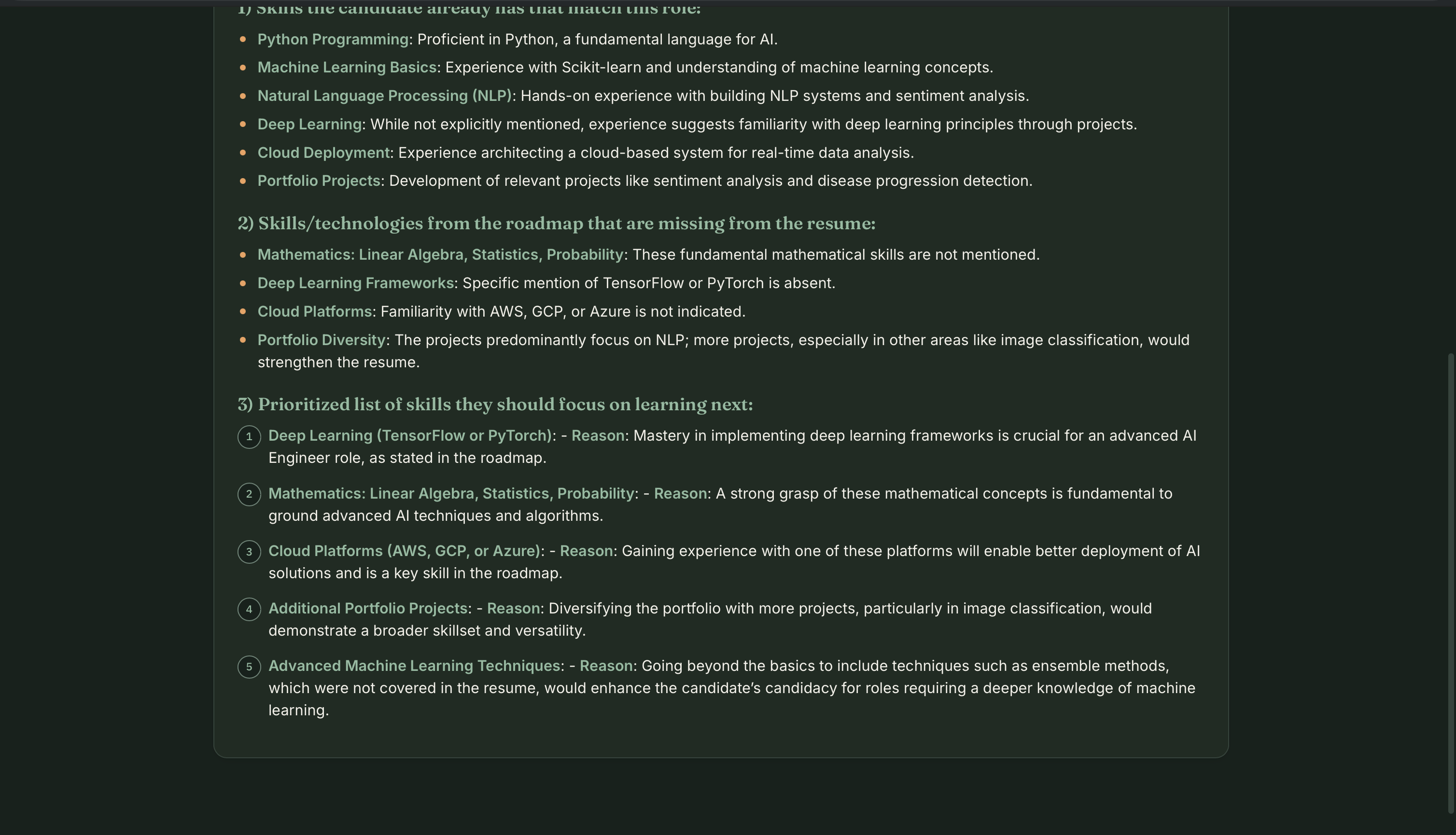
Skill gap report showing matched candidate skills.
-
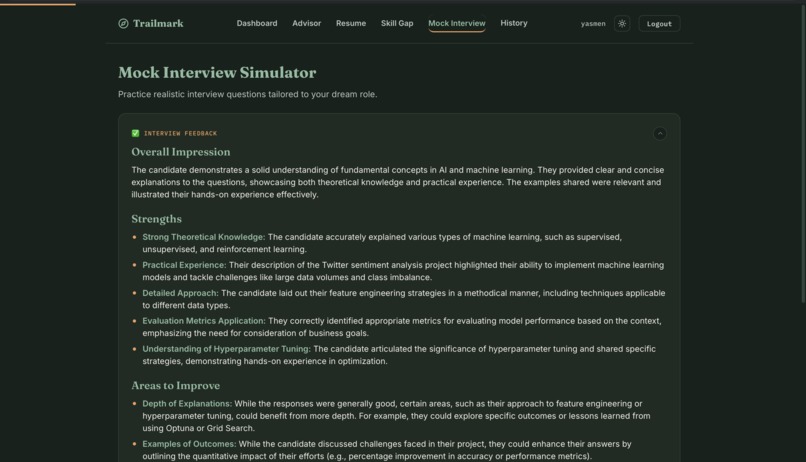
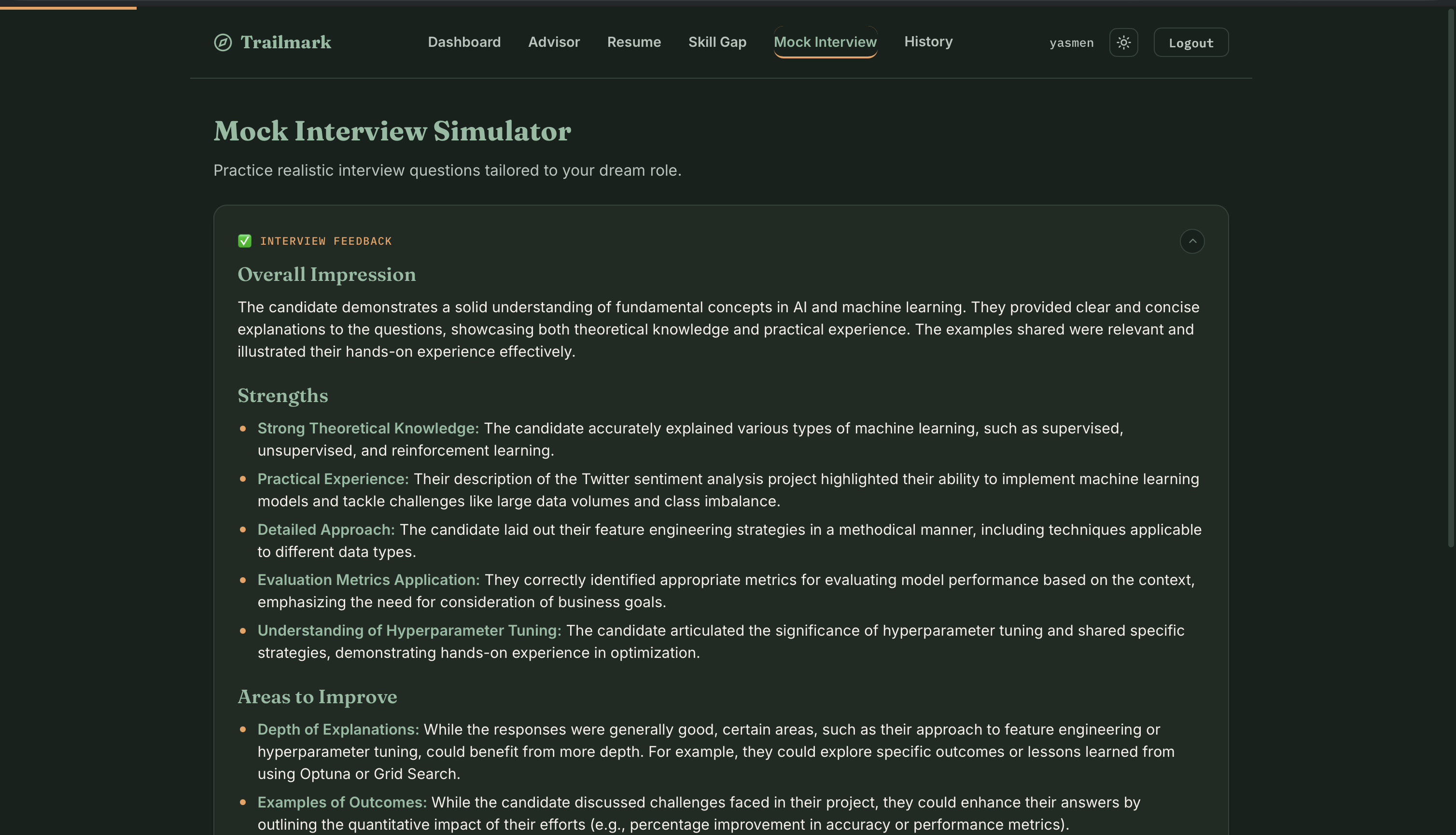
AI-generated mock interview feedback and strengths.
-
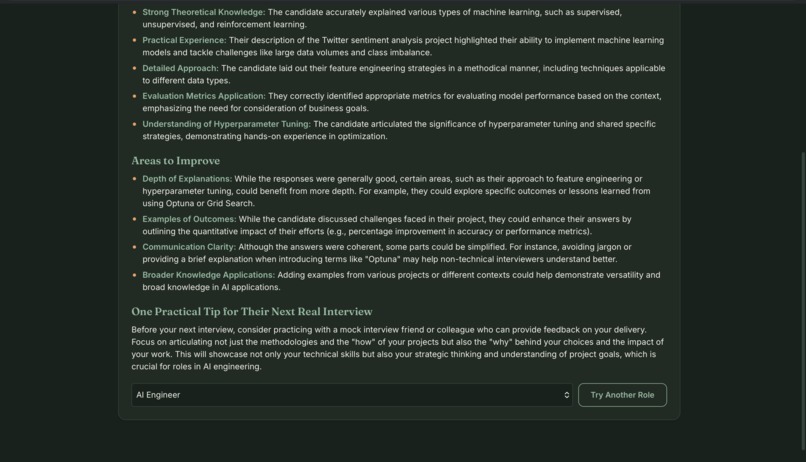
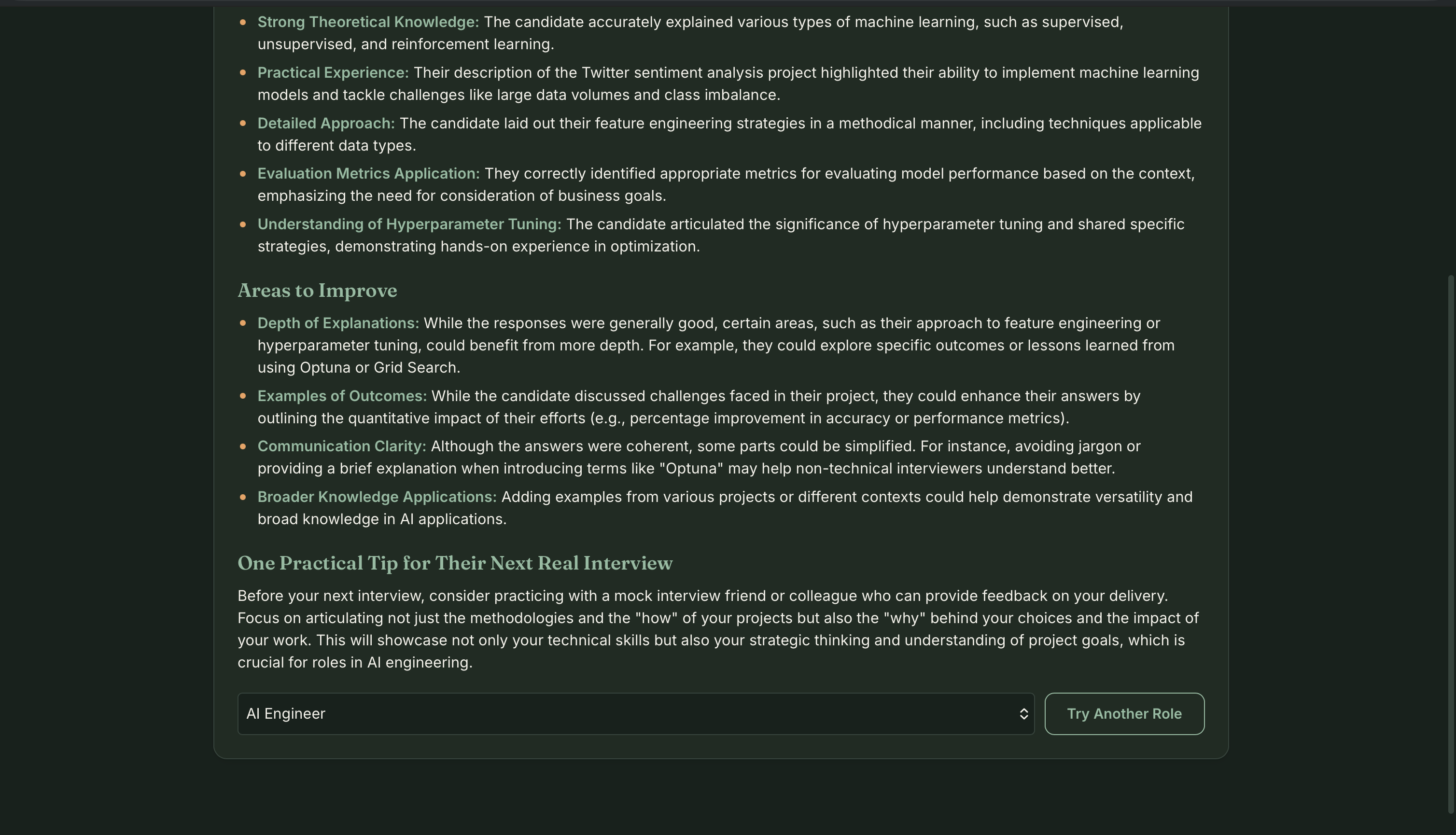
Interview feedback with improvement areas and tips.
-
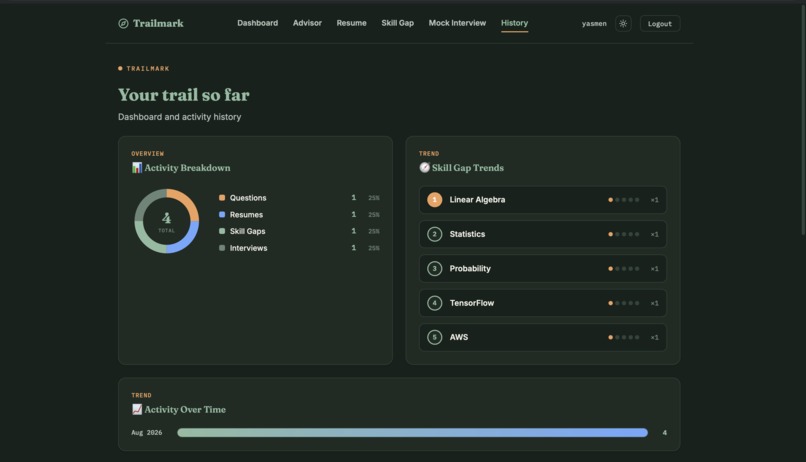
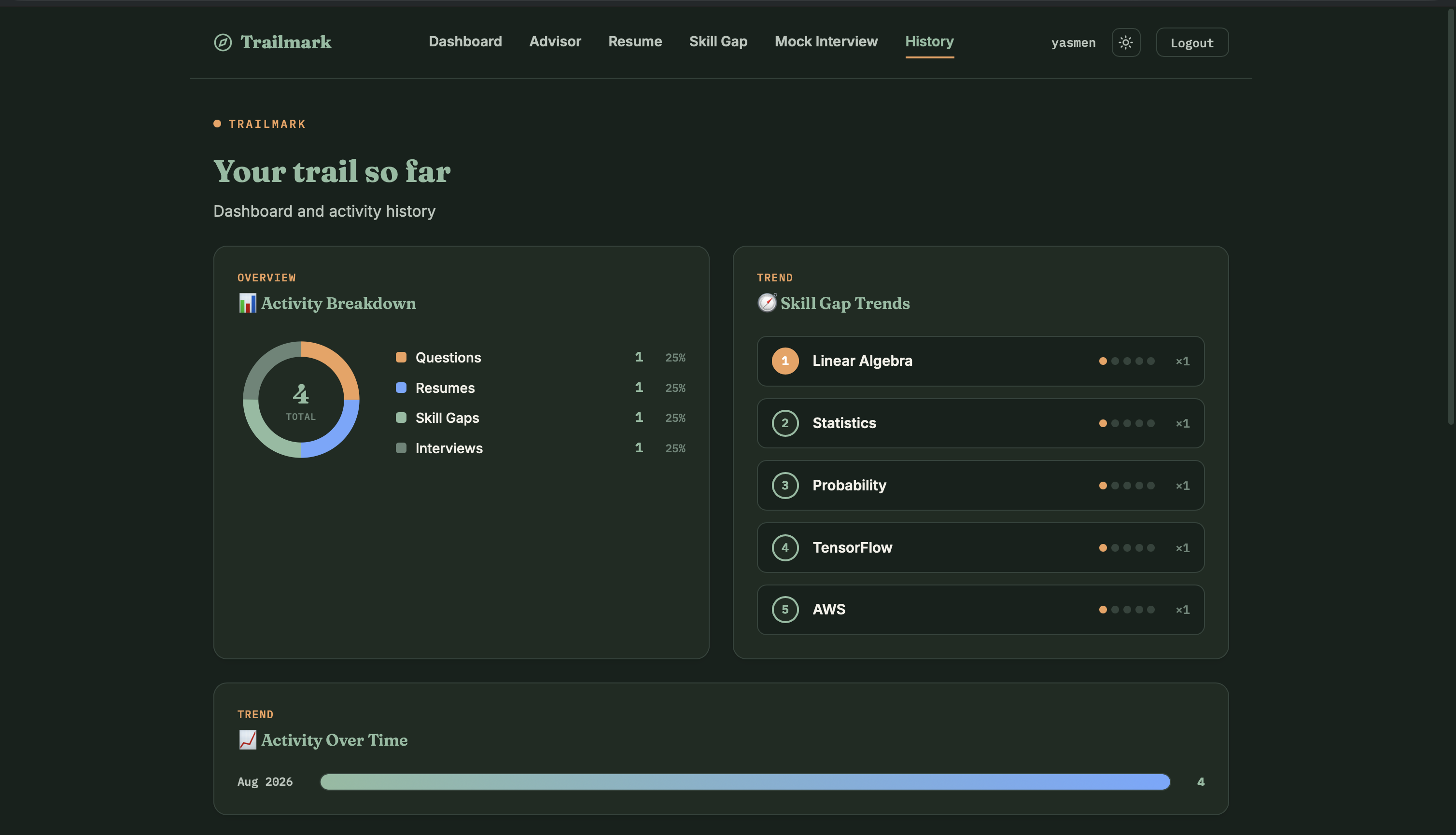
Activity dashboard with usage breakdown and skill gap trends.
-
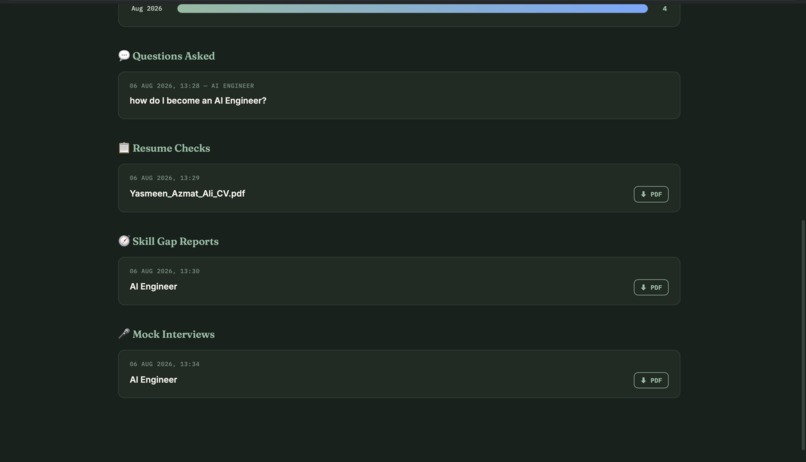
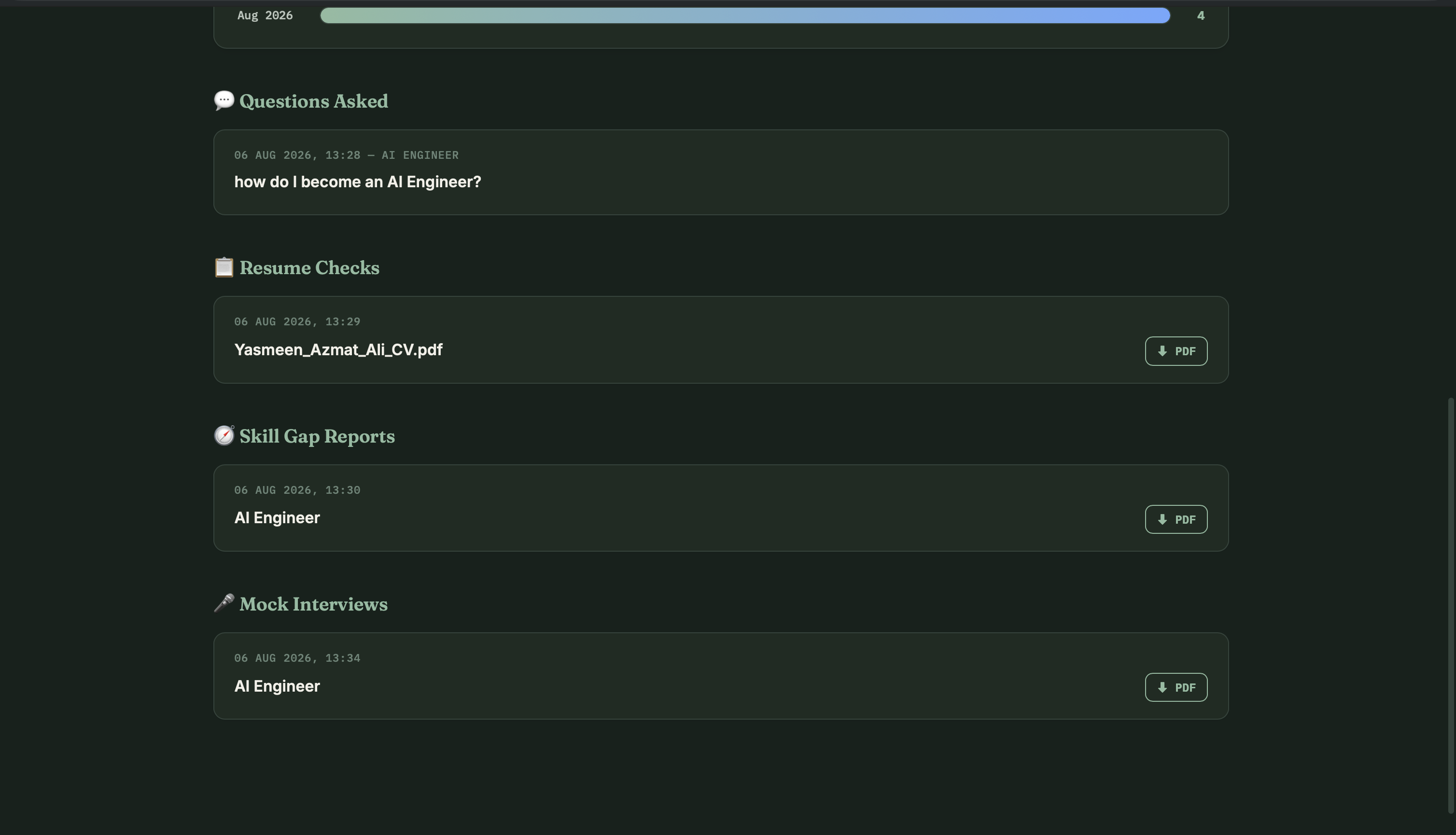
Activity history log with exportable PDF reports.
Inspiration
Choosing and preparing for a career is one of the most overwhelming parts of being a student: figuring out what roadmap to follow, whether your resume is actually good enough, what skills you're missing for a target role, and how you'd hold up in a real interview. Most students end up piecing this together from scattered YouTube videos, random blog posts, and guesswork. We wanted to build one place that could actually walk someone through all of it a trail guide for your career, marking out each waypoint along the way. That's where the name Trailmark comes from.
What it does
Trailmark is an AI-powered career and study guidance platform built around four connected waypoints: Ask a Question -> get direct career/study guidance from an AI assistant, plus an auto-generated step-by-step roadmap and curated course recommendations when your question matches one of 20 supported career paths. Check Your Resume -> upload a PDF or DOCX resume and get structured AI feedback covering missing sections, strengths, and specific actionable suggestions. You can then edit the extracted text and click "Refine with AI" to have it rewritten using that feedback without ever inventing new facts, employers, or achievements. Find Your Skill Gap -> upload your resume and pick a target role. The AI compares your resume against that role's roadmap and tells you exactly what's missing and what to prioritize learning next. Practice an Interview -> a 5-question mock interview for your chosen role, with structured feedback at the end covering strengths, areas to improve, and one practical tip. Every report can be exported as a branded PDF. A personal Dashboard landing page introduces all four tools, tracked by a circular progress ring, and a History page gives you a full activity dashboard a donut chart breaking down your activity, a ranked list of the skills that keep coming up as missing, and a monthly activity trend so you can see patterns over time, not just a one-off result.
How we built it
Backend: Django, with one view per feature and a shared "render home" helper that keeps every waypoint's result available on the page as you move between them. AI: OpenAI's GPT-4o-mini for chat answers, resume feedback, resume refinement, skill-gap analysis, and interview questions/feedback each with its own tailored system prompt. Resume parsing: PyPDF2 and python-docx to extract text from uploaded PDF/DOCX files. PDF export: ReportLab, rendering each AI report into a branded PDF on demand. Frontend: Server-rendered Django templates, no separate frontend framework, styled around a custom design system ("Trailmark") using Fraunces for headings, Inter for body text, and IBM Plex Mono for labels. A tab-based navigation (Dashboard, Advisor, Resume, Skill Gap, Mock Interview, History) with client-side switching, light/dark mode that persists across every page, drag-and-drop file uploads, an animated progress ring, and a page-loader bar on every submission. Auth & data: Django's built-in auth system with per-user history, backed by SQLite. Deployment: Live on both Render, with WhiteNoise for static file serving and Gunicorn as the production server on Render.
Challenges we ran into
Managing state across a multi-step flow. Since each feature is its own step, we had to balance two competing needs: letting users move between features without losing earlier results, while still ensuring a fresh session starts clean rather than showing stale data. A subtle frontend bug. An early version of our loading-state logic occasionally interfered with form submission timing, causing dropped data on submit. We resolved it by adjusting when the UI update fires relative to the browser's own submission process. Designing analytics that hold up with little data. Our first chart design looked awkward with small or sparse datasets. We redesigned it as a donut chart with a ranked list, which stays clear and readable regardless of how much activity a user has. Deployment consistency across environments. Getting the app running reliably across local development and two separate hosting platforms required carefully aligning dependencies and environment-specific configuration a useful reminder that "works locally" isn't the same as "works in production." Graceful failure handling. Since the app depends on an external AI service, we built in proper error handling so a failed request shows a friendly message instead of breaking the page.
Accomplishments that we're proud of
A complete, working AI career-guidance product covering four distinct student needs in one connected flow, not four disconnected tools. 20 fully mapped career roadmaps with real, verified course links. Exportable, professional-looking PDF reports for every feedback type. A polished, cohesive UI with full dark mode support, loading states, and thoughtful error handling the kind of detail that's easy to skip under time pressure but makes the product feel finished. An analytics dashboard that turns raw usage into an actual insight (which skills you keep lacking), not just a vanity counter. Successfully deployed and live on two separate platforms, tested end-to-end.
What we learned
Small UX decisions does a result stay on screen? does the page scroll to it? does it collapse if it's long? matter as much as the AI logic itself for making a tool feel usable rather than just functional. Session state is a powerful but easy-to-misuse tool. We learned to be deliberate about what persists across actions versus what should reset, rather than making everything sticky by default. Browser form-submission timing has real gotchas that are easy to miss until you actually click through your own product. Deploying to multiple platforms early even before a project feels "done" catches environment-specific bugs far earlier than waiting until the end.
What's next for AI-Career-Guidance-Assistant
Tracking multiple resume versions over time, with a skill-gap-closing comparison across versions. A DOCX export option for the refined resume (currently PDF-only). Richer analytics: deeper trends over time, not just cumulative totals. Expanded interview practice with role-specific question banks and voice-based practice. Lightweight mentor/recruiter sharing via a read-only link to a roadmap or resume feedback report.
Team Member Roles
Yasmeen Azmat Ali : Backend Developer & AI Integration Lead. Built the Django backend architecture and developed the Advisor, Resume Review, Skill Gap Analysis, Mock Interview, and History features end-to-end, including full integration with the OpenAI API. Mohammed Ayaan :Frontend UI/UX Designer. Led the visual design direction and interface styling, along with resource collection for career roadmaps and courses. Gagan : Project Media Lead. Produced the deployment workflow diagram, system architecture diagram, demo video, and presentation materials. Sai Krishna : Deployment Engineer. Handled deployment and hosting setup for the live application.
Built With
- css3
- django
- git
- github
- google-fonts
- gpt-4o-mini
- gunicorn
- html5
- javascript
- markdown
- openai-api
- pypdf2
- python
- python-docx
- pythonanywhere
- render
- reportlab
- sqlite
- whitenoise


Log in or sign up for Devpost to join the conversation.