Inspiration
As students, we know how difficult it can be to find the right internship. Opportunities are spread across different websites, job descriptions contain different requirements, and it is not always clear whether our current skills are enough to apply.
We also noticed another problem: a resume can list many technical skills, but it does not always show what a student can actually do. We wanted to build something that helps students understand their strengths, identify what they need to improve, and find opportunities that fit their current abilities.
That idea became AI Career Finder.
What it does
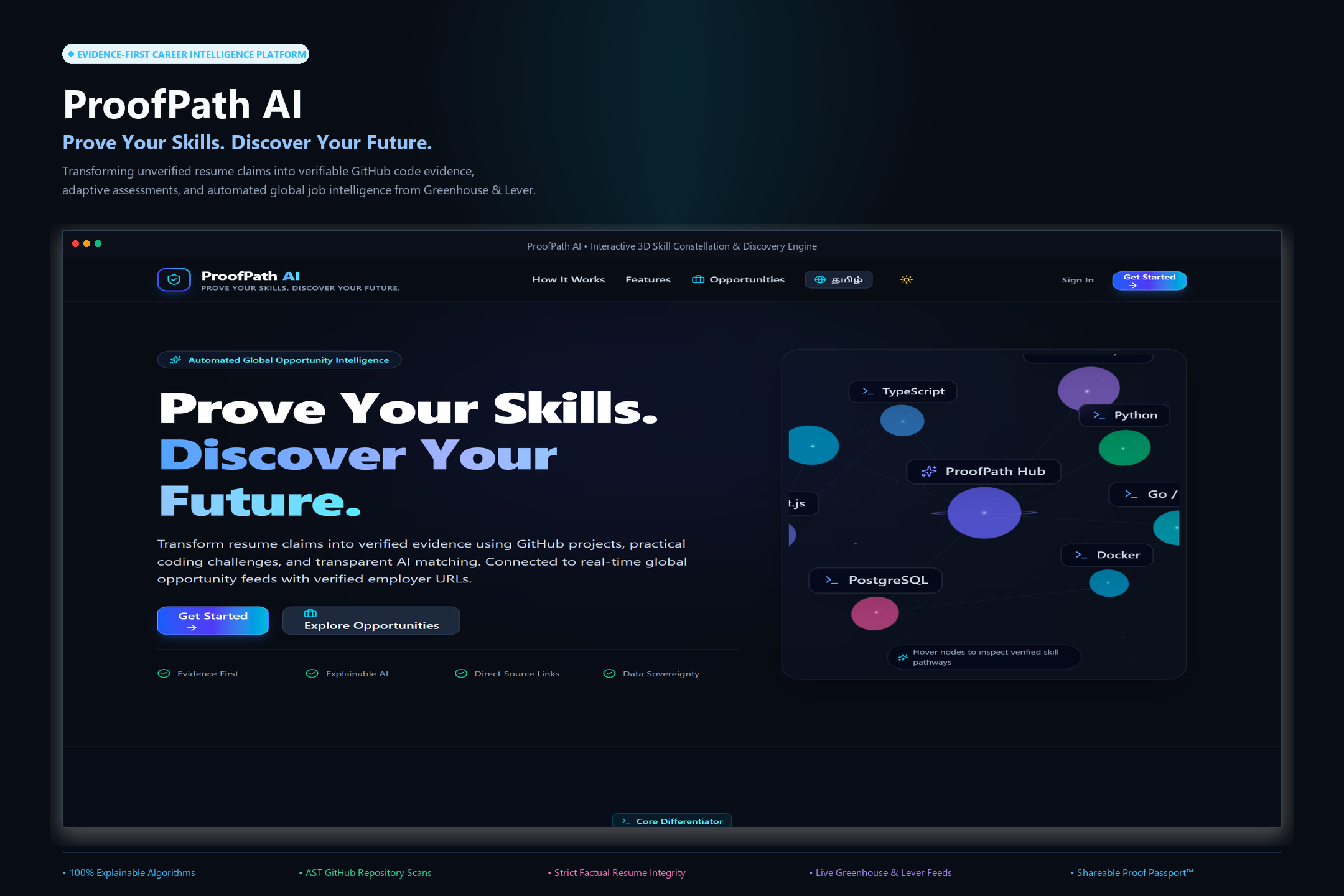
AI Career Finder is designed to help students move from simply listing skills on a resume to building evidence of those skills.
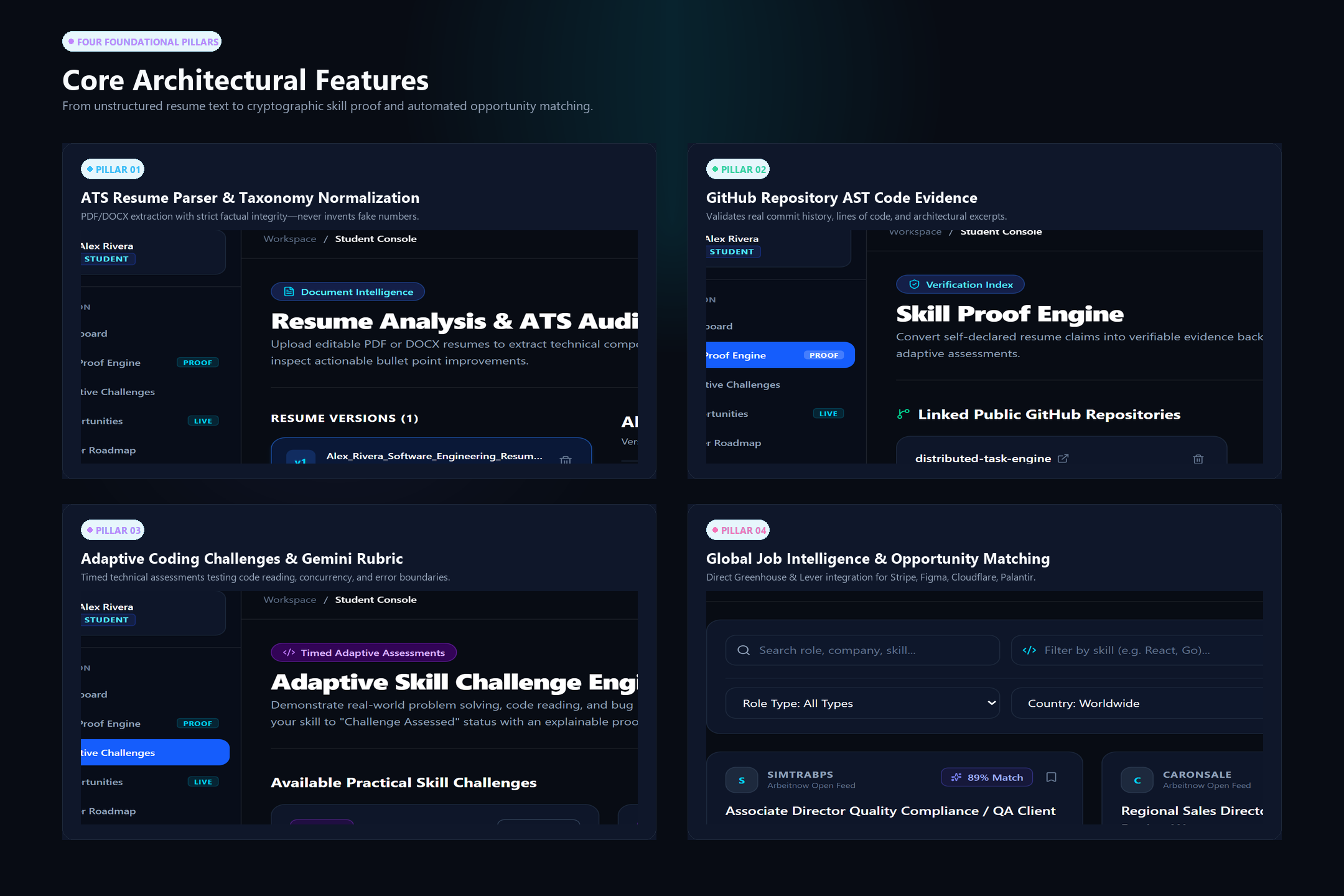
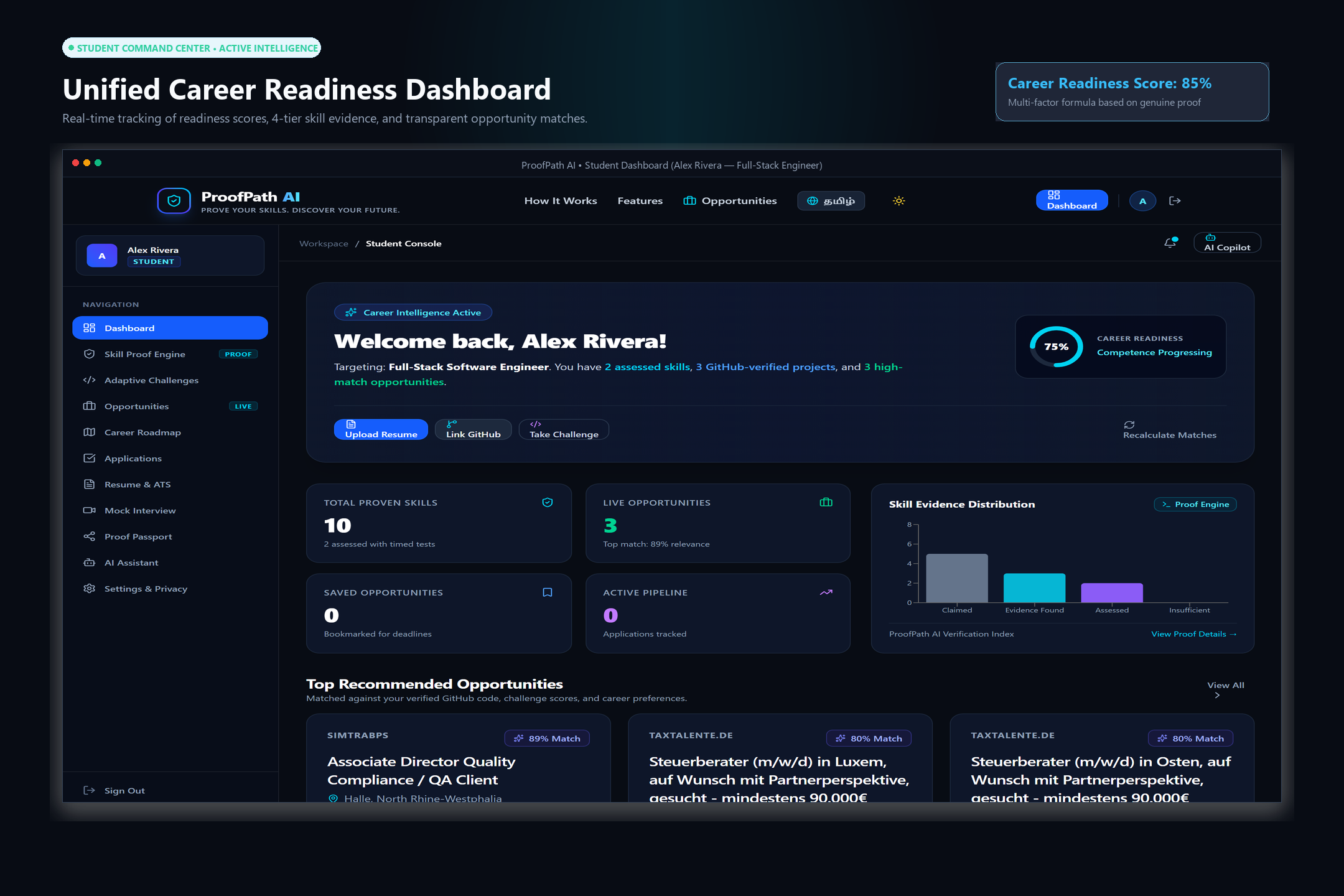
Students can upload their resumes, analyse their technical skills, and connect their public GitHub repositories. The platform examines available project evidence and helps distinguish between skills claimed on a resume and skills supported by practical work.
Based on the student's profile and internship requirements, the system recommends relevant opportunities and explains why each one may be a good fit. It also highlights missing skills and suggests practical challenges and learning activities to help students improve.
Students can save interesting internships, track their application progress, and create a shareable portfolio of selected projects and assessment results.
Our goal is not just to show students more job listings. It is to help them understand what they can offer and what they can do next.
How we built it
We chose a web-based architecture that allows us to develop the product without maintaining separate backend and database services.
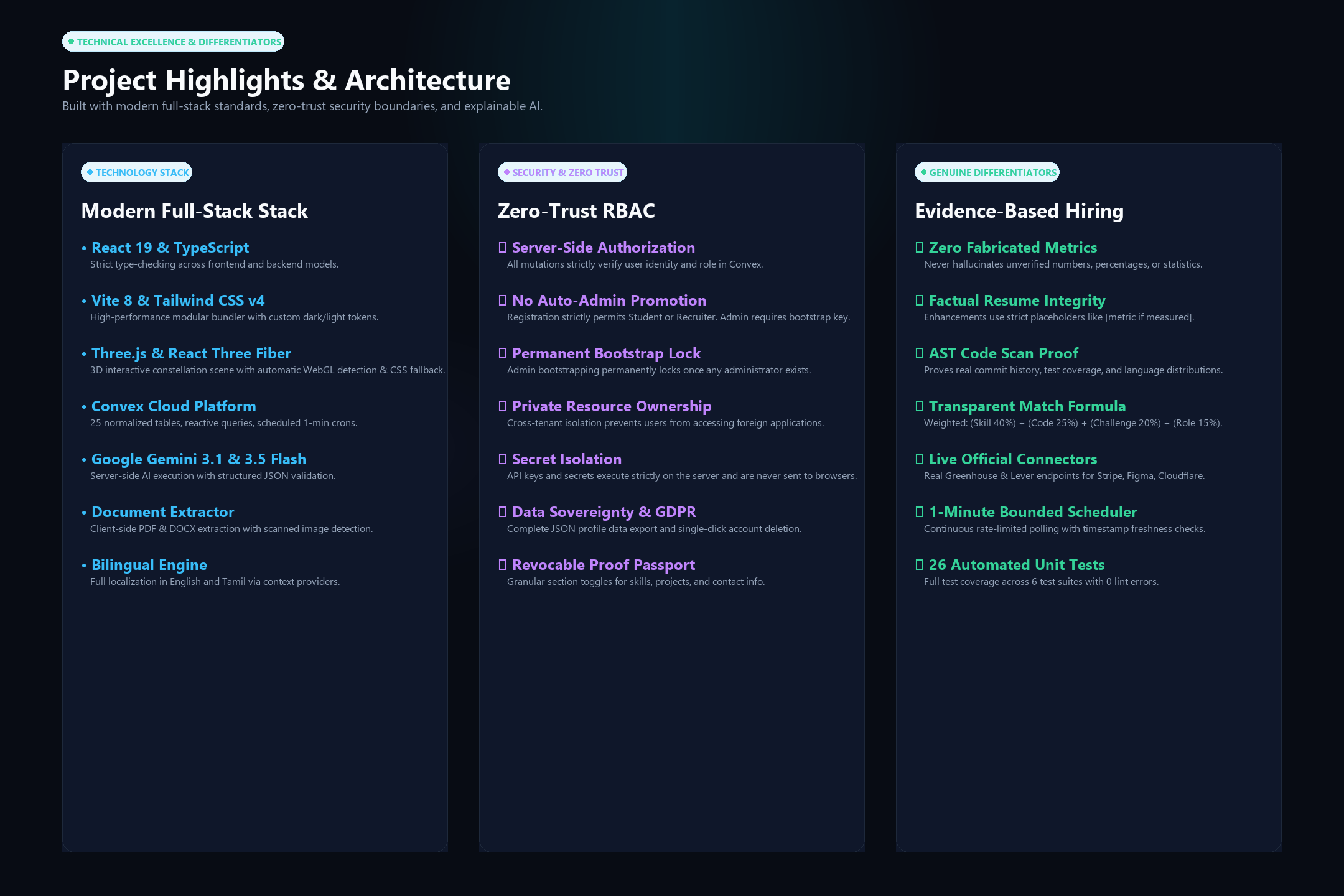
- React, Vite and TypeScript: Used for building a responsive and interactive user interface.
- Tailwind CSS: Used to create a consistent design across the dashboard, skill reports and internship pages.
- Convex: Used for the backend, database, file storage and application workflows.
- Google Gemini API: Used for structured resume analysis, personalised challenges, career guidance and explanations.
- Semantic embeddings and vector search: Designed to compare student profiles with internship requirements based on meaning rather than exact keyword matches.
- GitHub REST API: Used to access public repository information and identify potential evidence of technical skills.
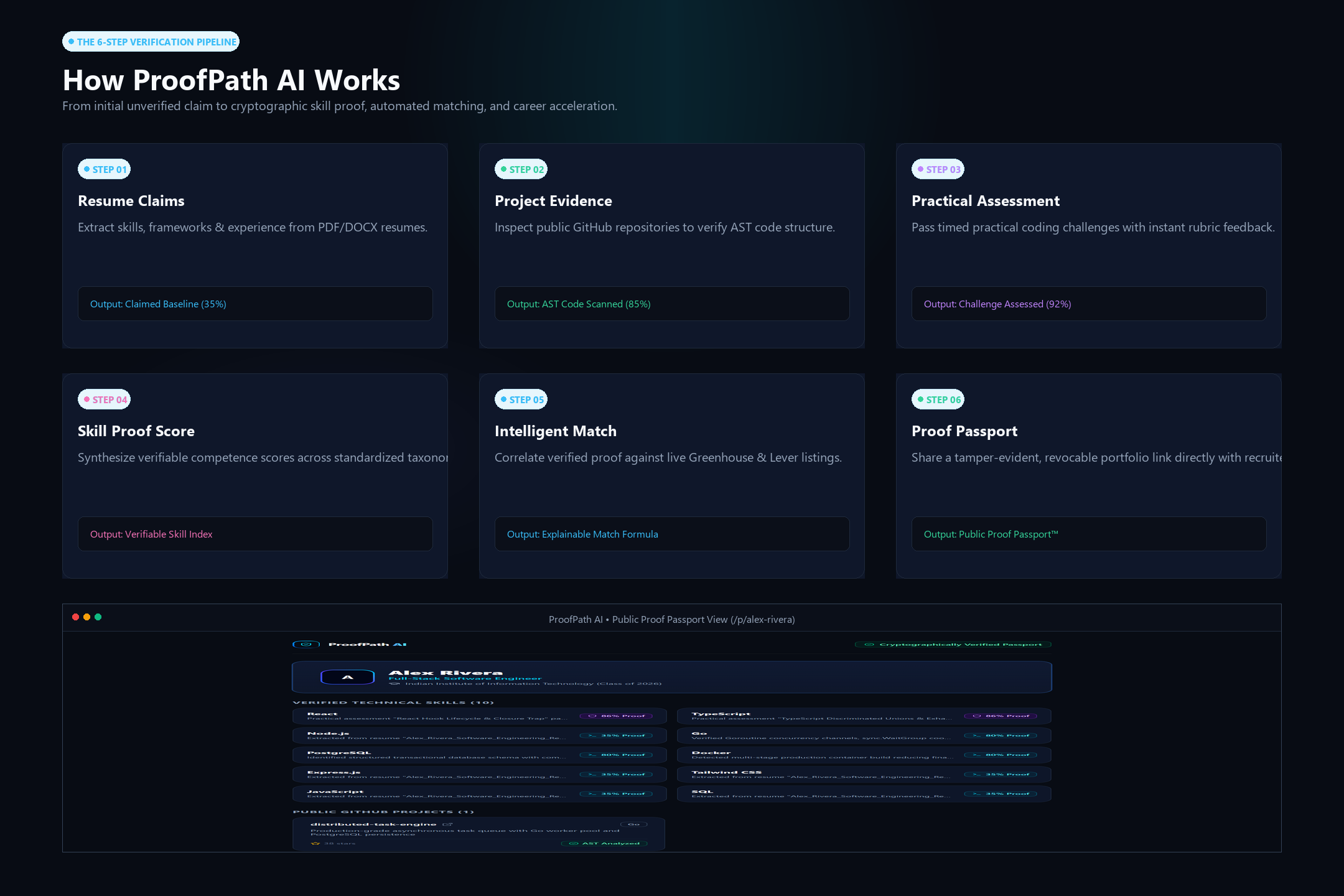
The central workflow connects resume claims, project evidence and practical assessment results before generating internship recommendations. We also aim to validate AI responses, protect private user information and keep recommendations explainable.
Challenges We Ran Into
One of the main challenges is deciding how to evaluate a skill fairly. Finding the word "Python" in a resume is easy, but determining whether a student has used Python in a meaningful project requires more context.
Another challenge is handling different resume formats and project structures. The same skill can be described in several ways, while some projects provide stronger evidence than others.
We also need to make sure that AI-generated explanations are useful without presenting guesses as verified facts. Internship information introduces another challenge because availability and deadlines can change.
These challenges have shaped our approach: show the available evidence, explain the limitations, and give students practical next steps instead of making unsupported promises.
Accomplishments We're Proud Of
We are proud of the idea behind the Skill Proof Engine. Instead of treating a resume as the final answer, it brings together skills, project evidence and practical assessments to create a more useful picture of a student's progress.
We are also working towards connecting the entire journey in one place: analyse a resume, understand skill gaps, practise those skills, discover relevant internships and track applications.
For us, the most meaningful outcome is a tool that helps students take action rather than leaving them with another list of things they should learn.
What We Learned
We learned that a useful AI product needs more than a good model. The information entering the system must be reliable, the results must be understandable, and users must be able to see why a recommendation was made.
We also learned the importance of separating a skill claim from supporting evidence and actual assessment performance. A repository alone cannot prove complete expertise, and an AI-generated score should never be presented as a guarantee of job selection.
These lessons helped us focus on transparency, practical feedback and a better experience for students.
What's Next for AI Career Finder
Our next goal is to make the platform more useful in real-world situations.
We plan to improve internship data coverage through reliable sources, strengthen practical skill assessments, add more personalised learning paths, and support Tamil and English interfaces. We also want to expand the shareable Proof Passport so students can present selected projects and assessment results to recruiters.
As the platform grows, we want to evaluate its matching quality using real test cases, improve the accuracy of skill extraction, and make sure students understand both the strengths and limitations of every recommendation.
Ultimately, we want AI Career Finder to help students answer three questions: What skills can I demonstrate? What should I improve? Which opportunity should I pursue next?


Log in or sign up for Devpost to join the conversation.