Inspiration
Municipal corporations receive complaints about road damage, water supply, waste management, drainage, and other civic issues. Handling these complaints manually can lead to delays, incorrect department assignments, and difficulties tracking progress. We were inspired to build a smarter solution that uses Artificial Intelligence to make municipal grievance management faster, more organized, and transparent for citizens.
What We Built
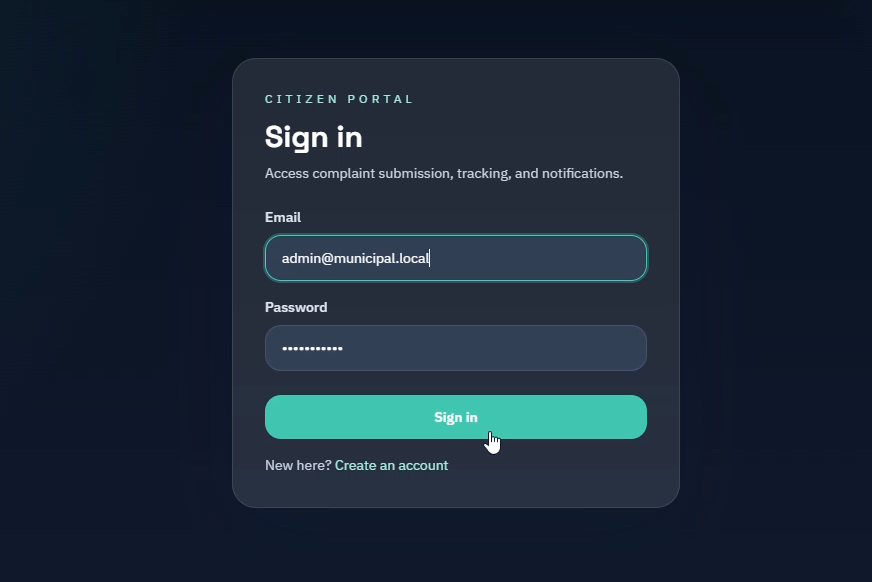
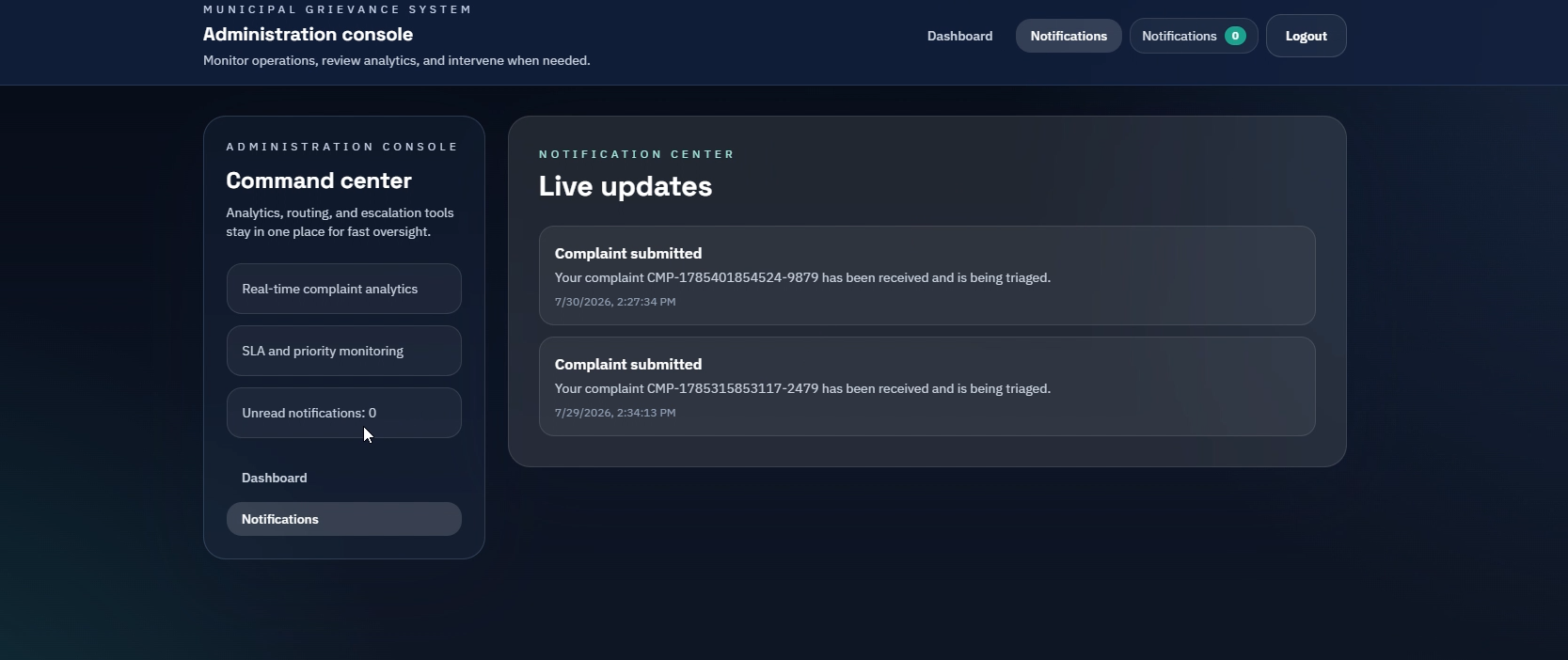
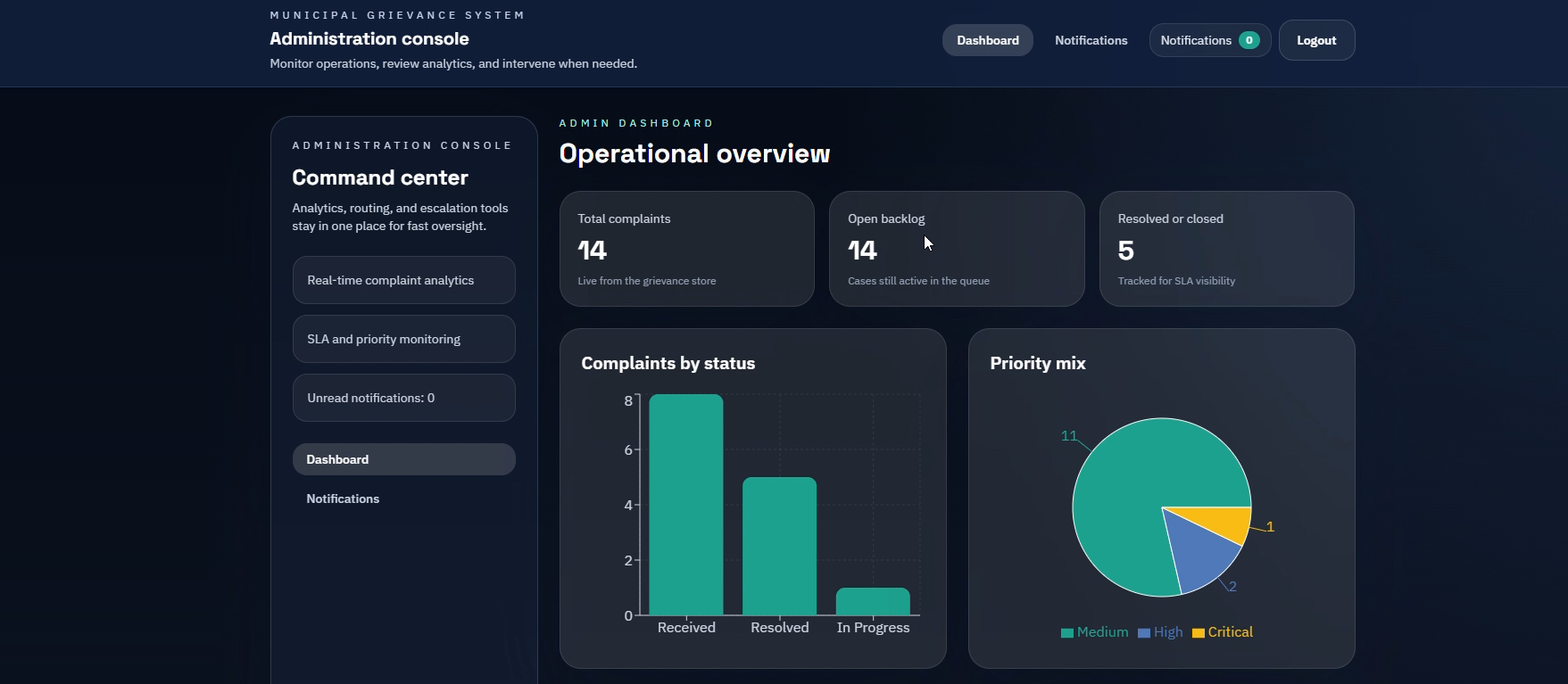
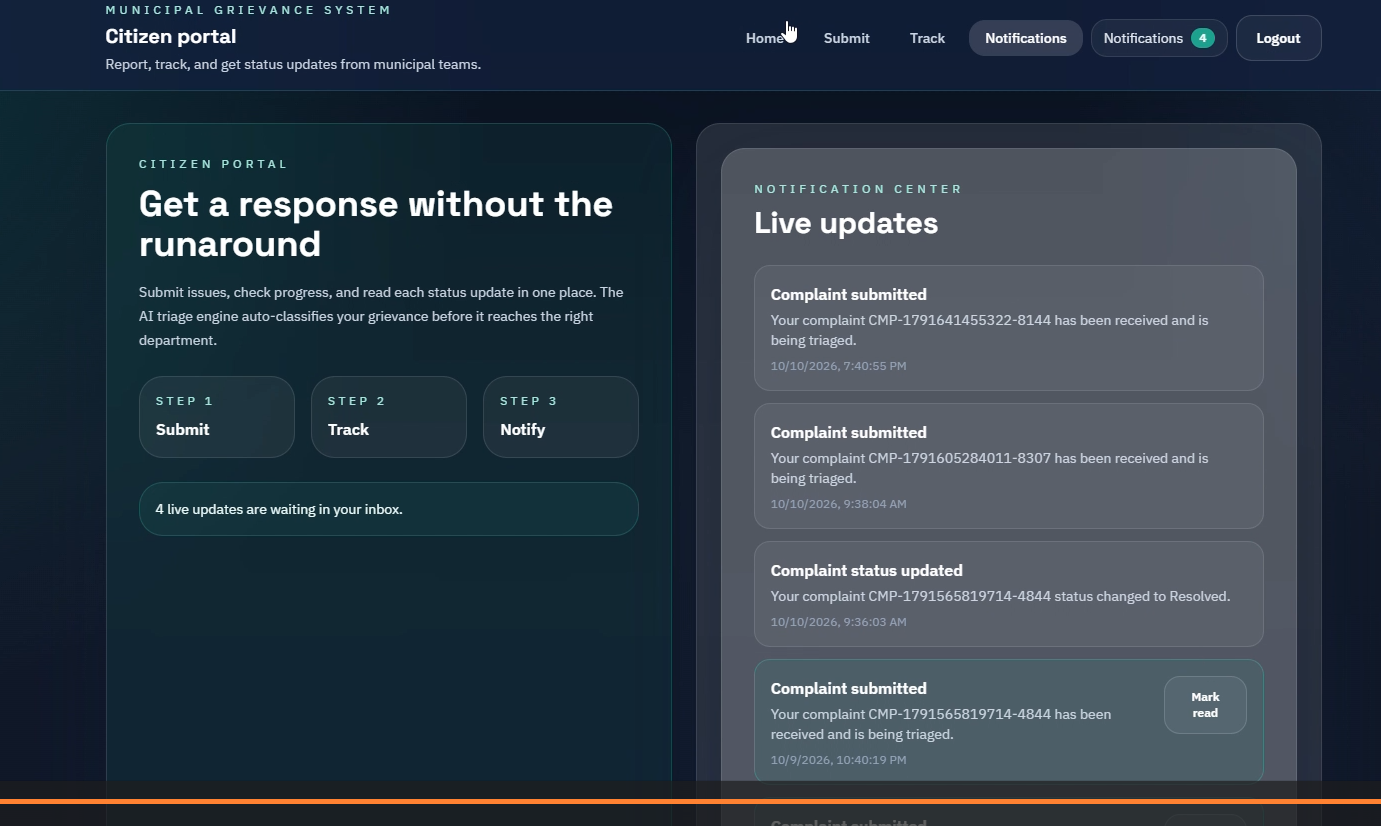
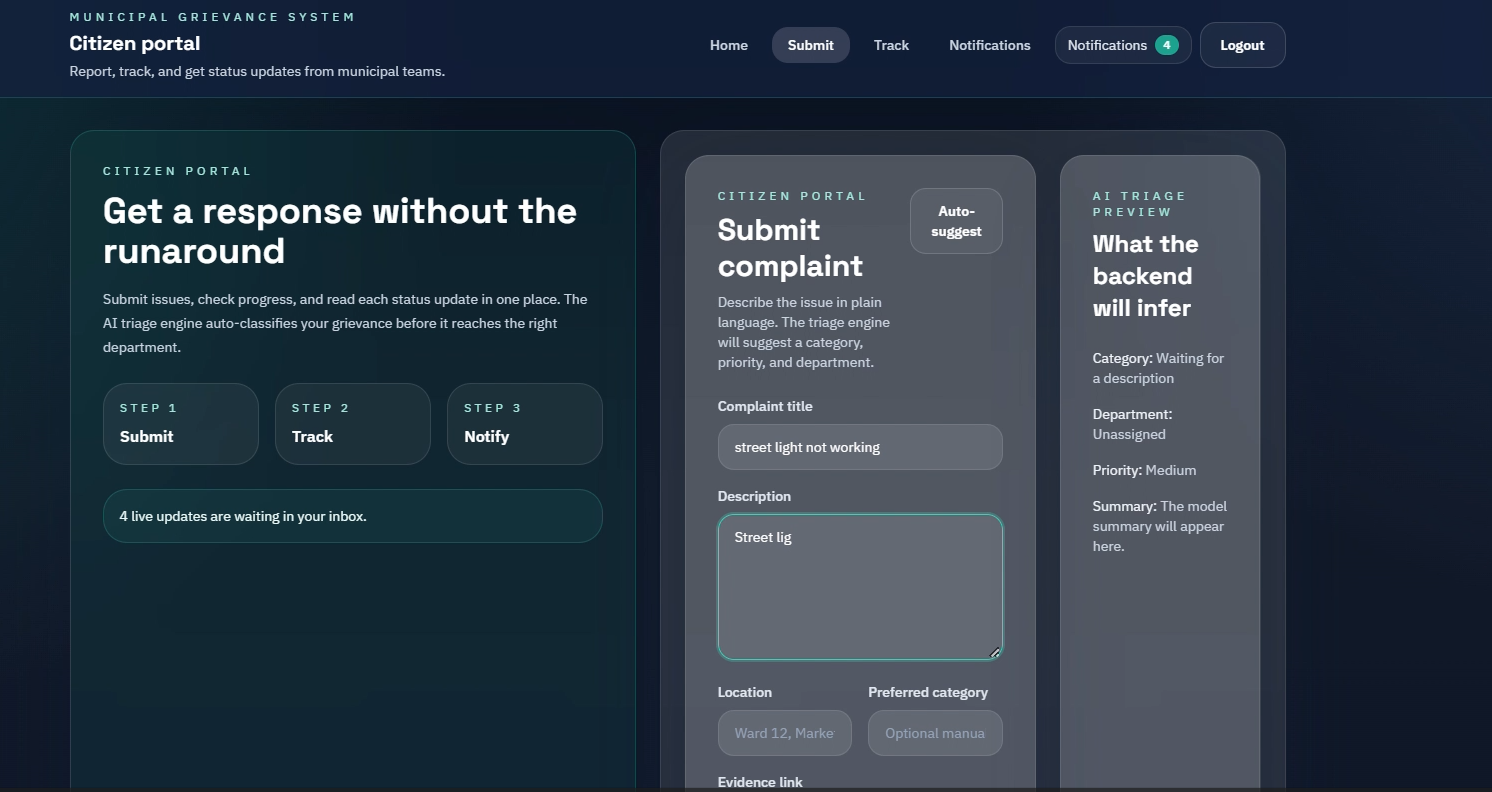
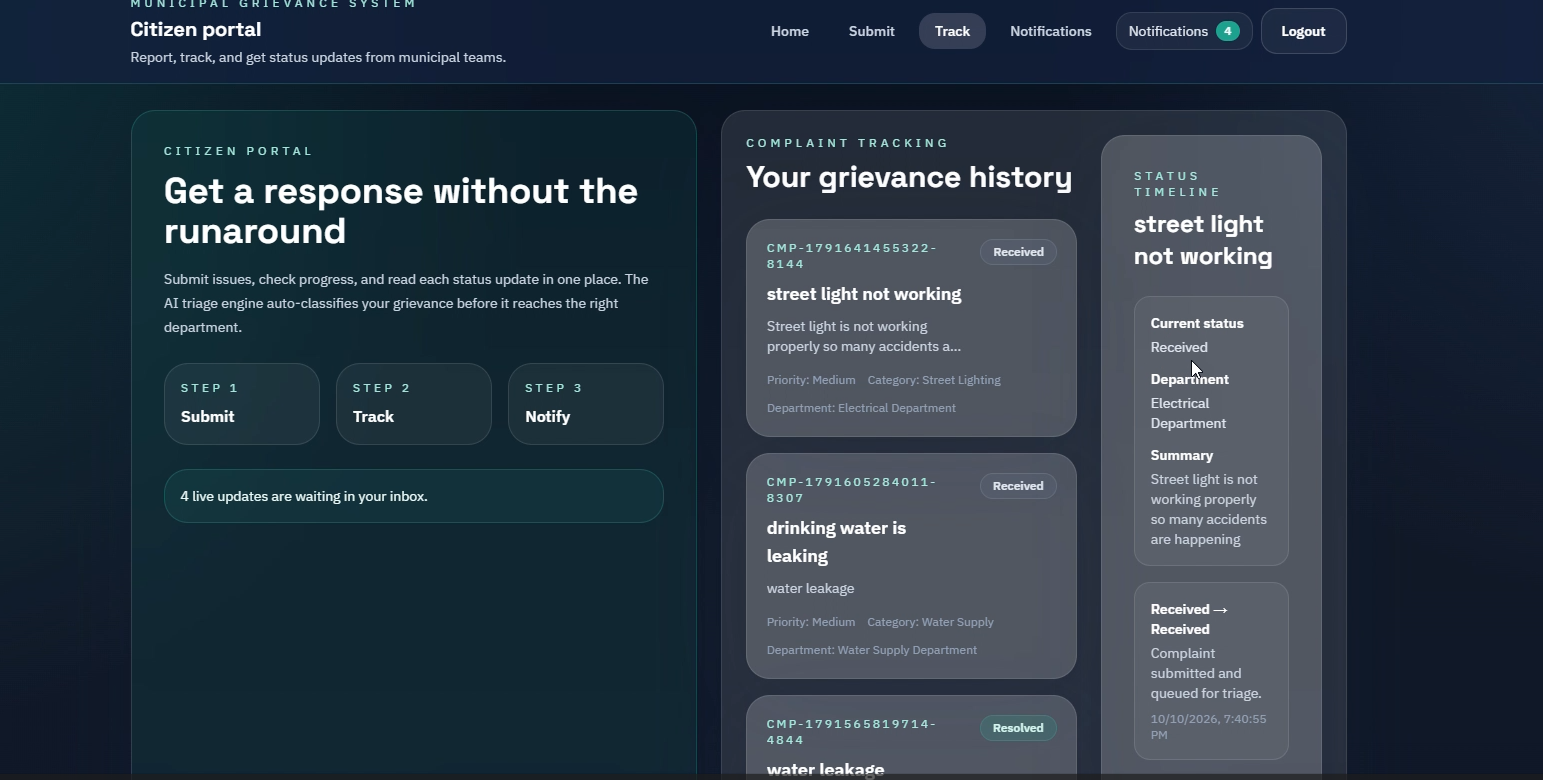
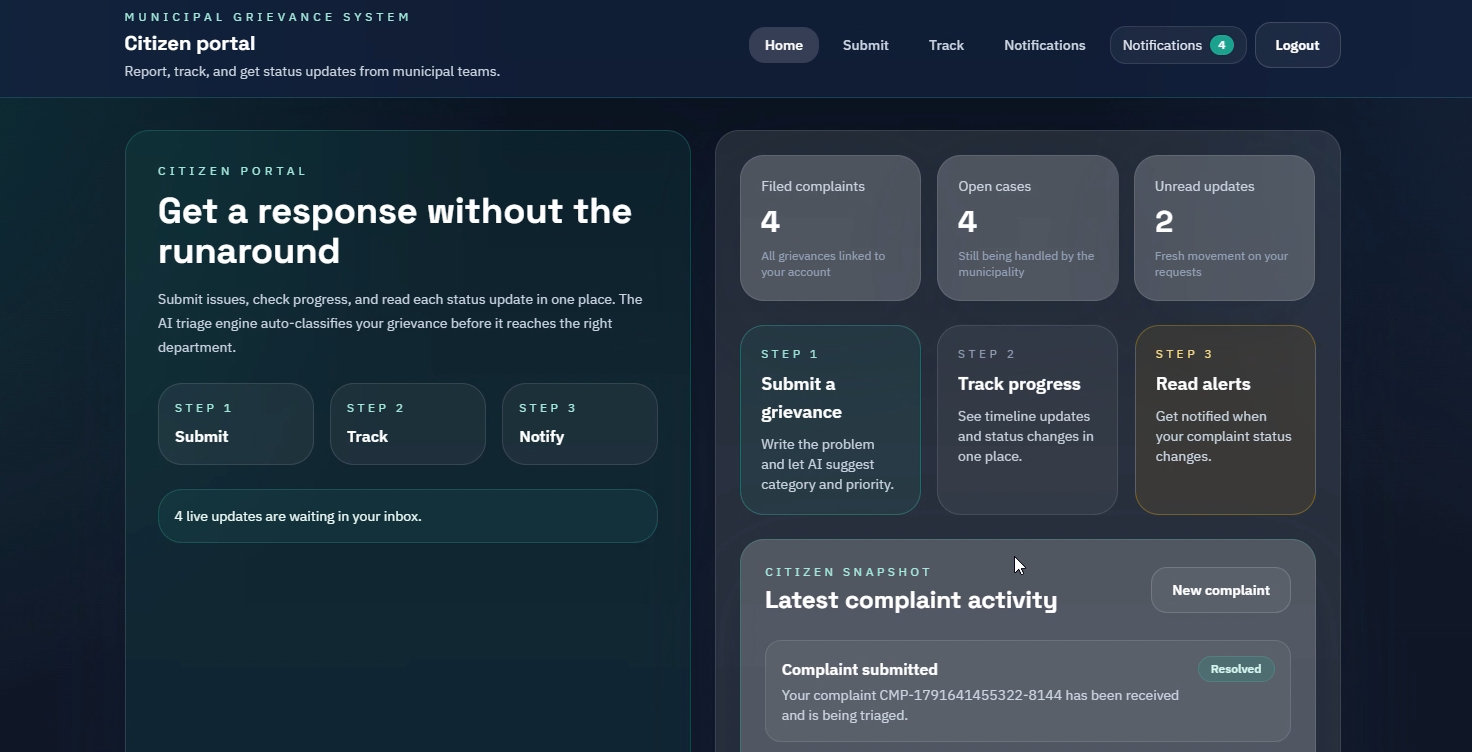
AI-Powered Grievance Triage and Resolution Agent for Municipal Corporations is a web-based platform designed to simplify the complaint management process. Citizens can submit complaints and track their status, while administrators can monitor complaints and manage their progress.
The system uses AI to analyze complaint descriptions, identify the complaint category and priority, generate a short summary, and route the complaint to the appropriate municipal department. A rule-based fallback classifier is also planned to support basic classification when the AI service is unavailable.
How We Built It
We designed the application using modern web technologies:
- Frontend: React, Vite, and Tailwind CSS for a responsive user interface.
- Backend: Node.js and Express for server-side logic and REST APIs.
- Database: MongoDB Atlas for storing complaint details, user information, and status logs.
- AI Integration: Google Gemini API for analyzing complaint text and generating structured classification results.
- Additional Tools: Socket.IO for real-time updates, Nodemailer for email notifications, and Recharts for dashboard visualizations.
The proposed workflow begins when a citizen submits a complaint. The backend processes the complaint, AI analyzes its content, and the system determines its category, priority, and responsible department. The complaint is then stored for tracking and administrative management.
What We Learned
Through this project, we gained knowledge of full-stack web development, REST API integration, database design, AI-powered text processing, and the importance of clear user interfaces. We also learned how AI can support real-world public service applications by reducing repetitive manual tasks and helping organize large numbers of complaints.
Challenges We Faced
One of the main challenges was designing a reliable way to classify complaints written in different styles and levels of detail. Another challenge was handling AI service limitations, such as API availability and usage quotas. We addressed these design challenges by planning structured AI outputs, a rule-based fallback mechanism, and a modular backend architecture.
Ensuring correct department routing, assigning meaningful priority levels, and maintaining transparent complaint status updates are also important challenges that we aim to address through implementation and testing.
Future Scope
Future improvements include Tamil-language complaint support, duplicate complaint detection using location information, enhanced notifications, improved analytics, and a dedicated mobile application. These additions could make the platform more accessible and useful for municipal authorities and citizens.
Our Vision
Our vision is to make civic grievance management more intelligent, accessible, and accountable by connecting citizens, AI, and municipal departments through a single platform.
Built With
- artificial-intelligence
- express.js
- git
- github
- google-gemini-api
- javascript
- jwt-authentication
- mongodb-atlas
- natural-language-processing-(nlp)
- node.js
- nodemailer
- react
- recharts
- rest-api
- socket.io
- tailwind-css
- vite

Log in or sign up for Devpost to join the conversation.