-
-
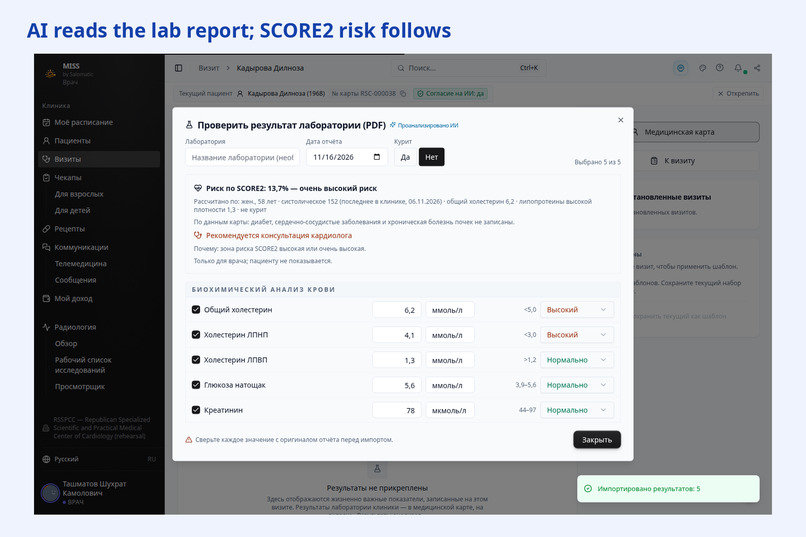
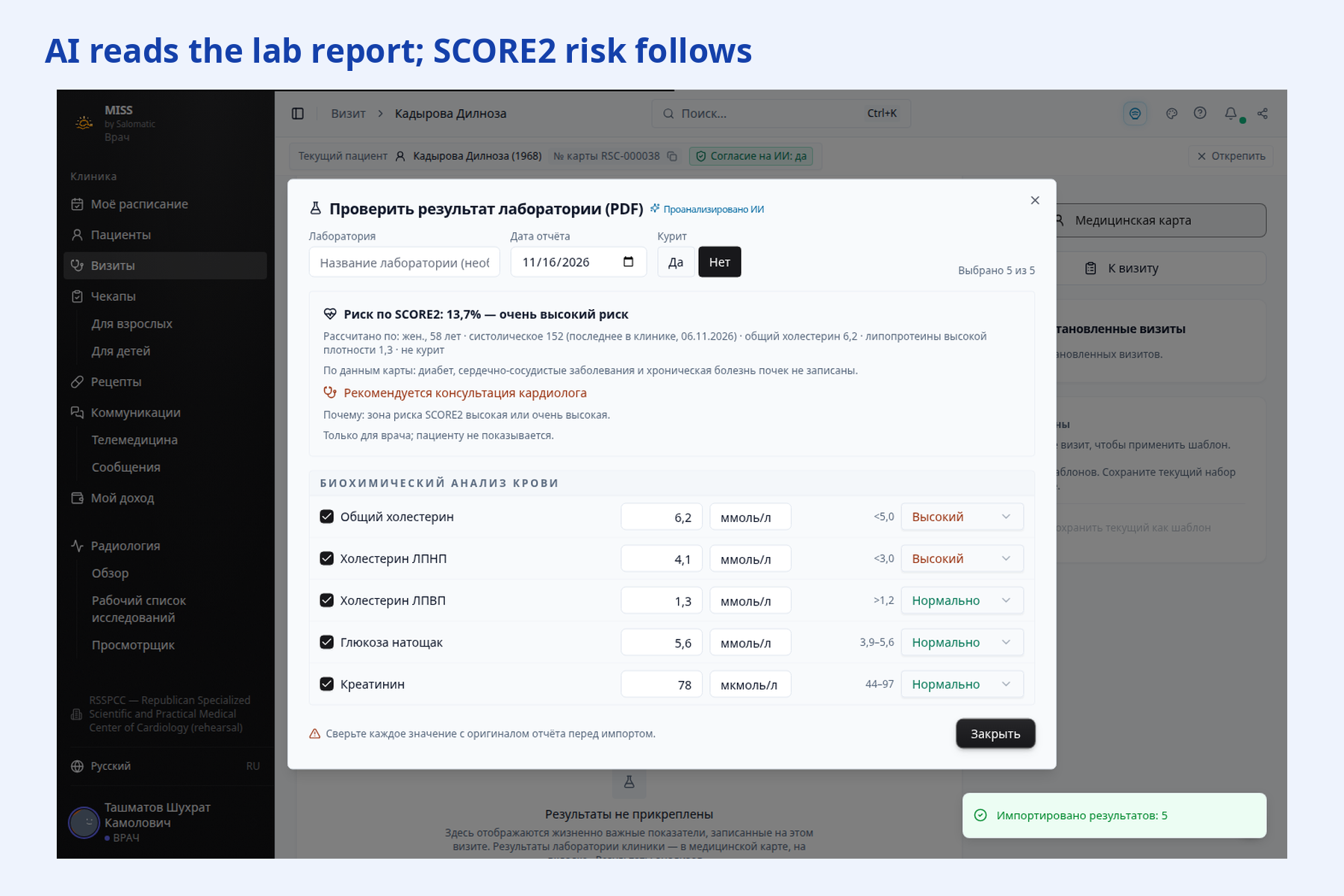
The doctor uploads a lab PDF. AI turns it into rows to check and confirm, and the SCORE2 10-year heart risk appears at once.
-
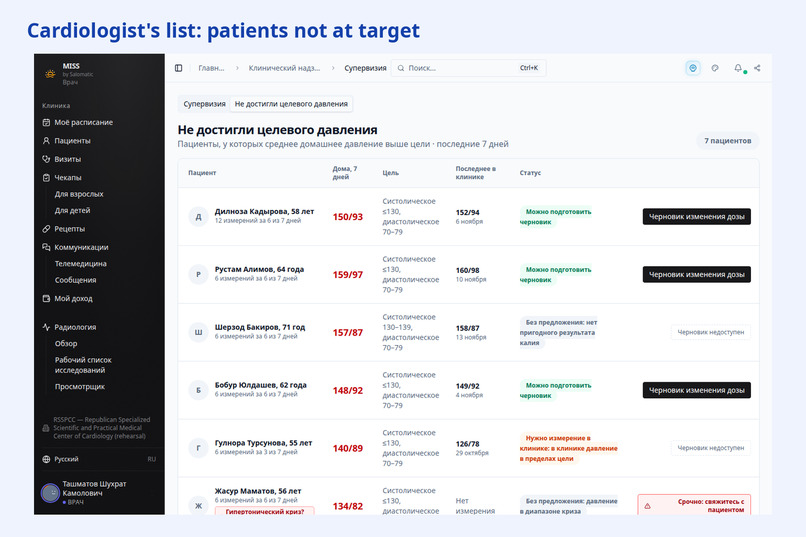
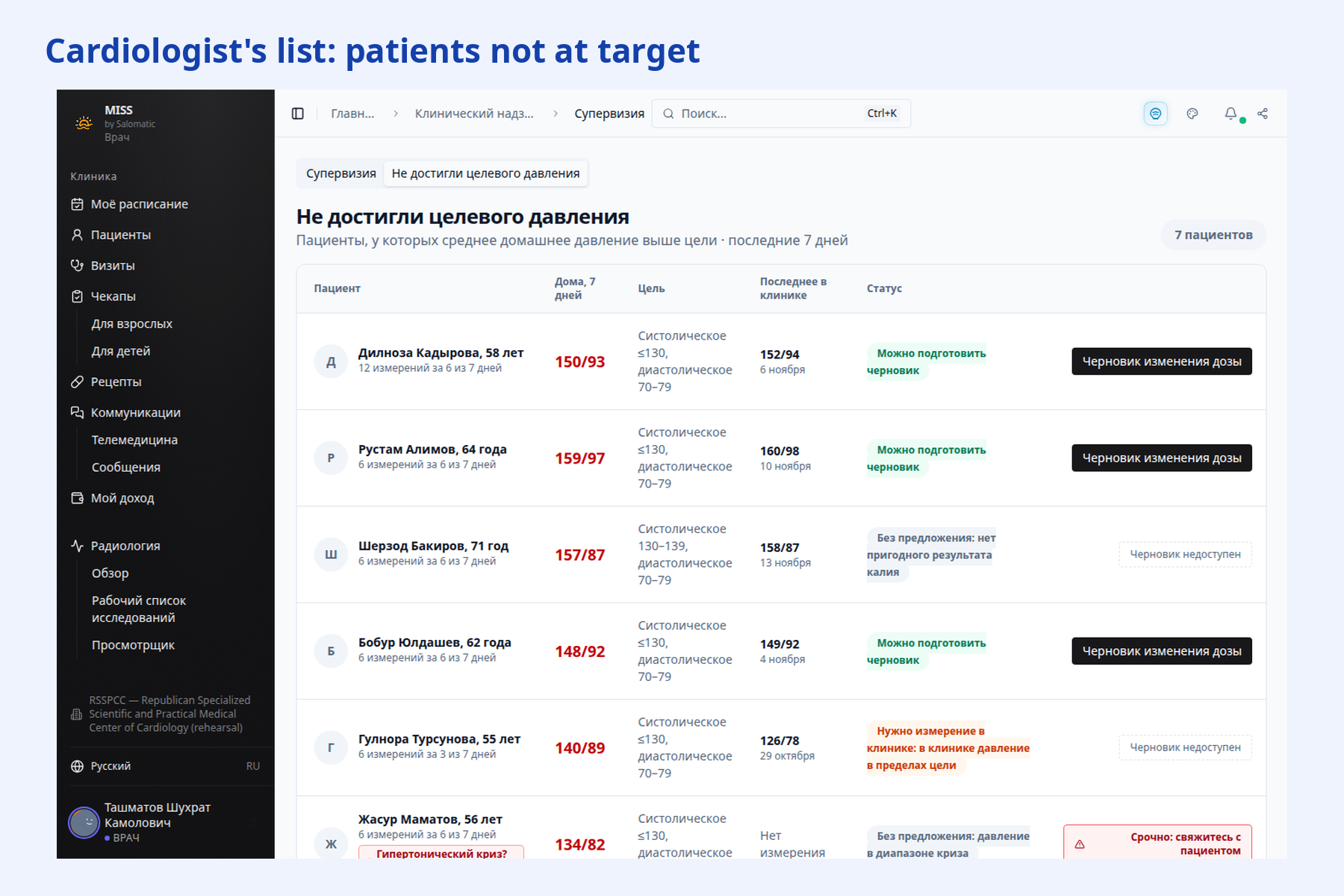
The cardiologist's list of patients whose home blood pressure is still above the target the doctor set for them.
-
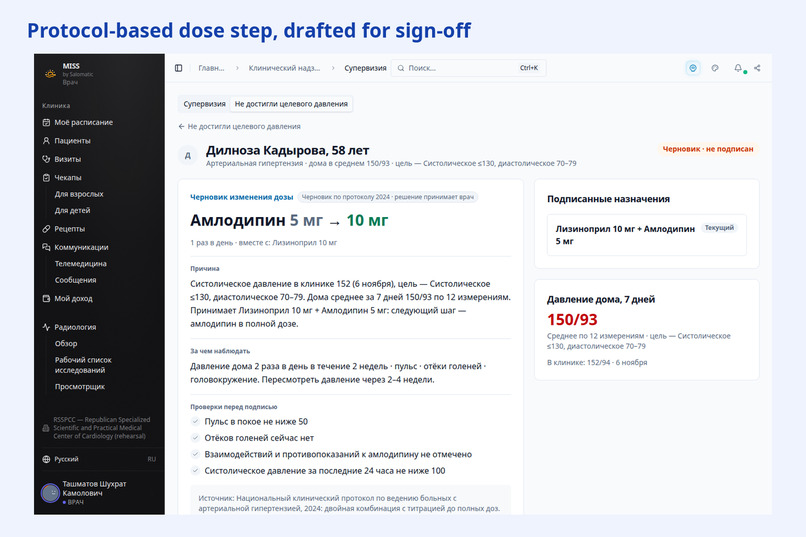
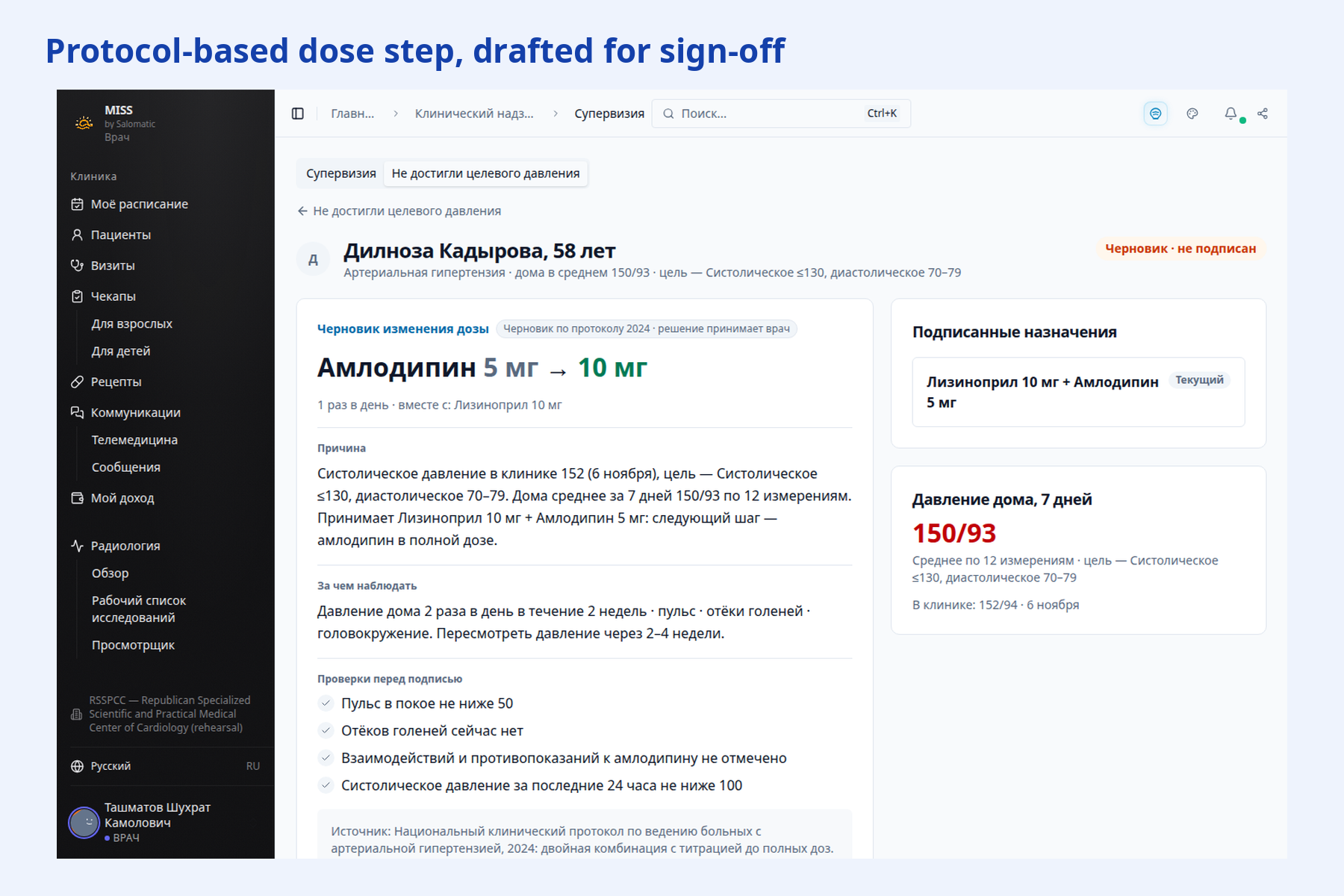
A dose step drafted from the national protocol: amlodipine 5 to 10 mg, with reason, checks and source.
-
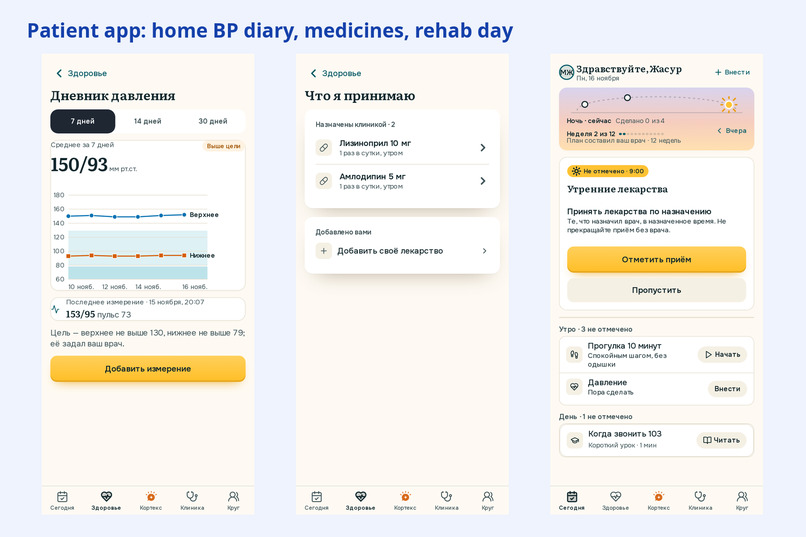
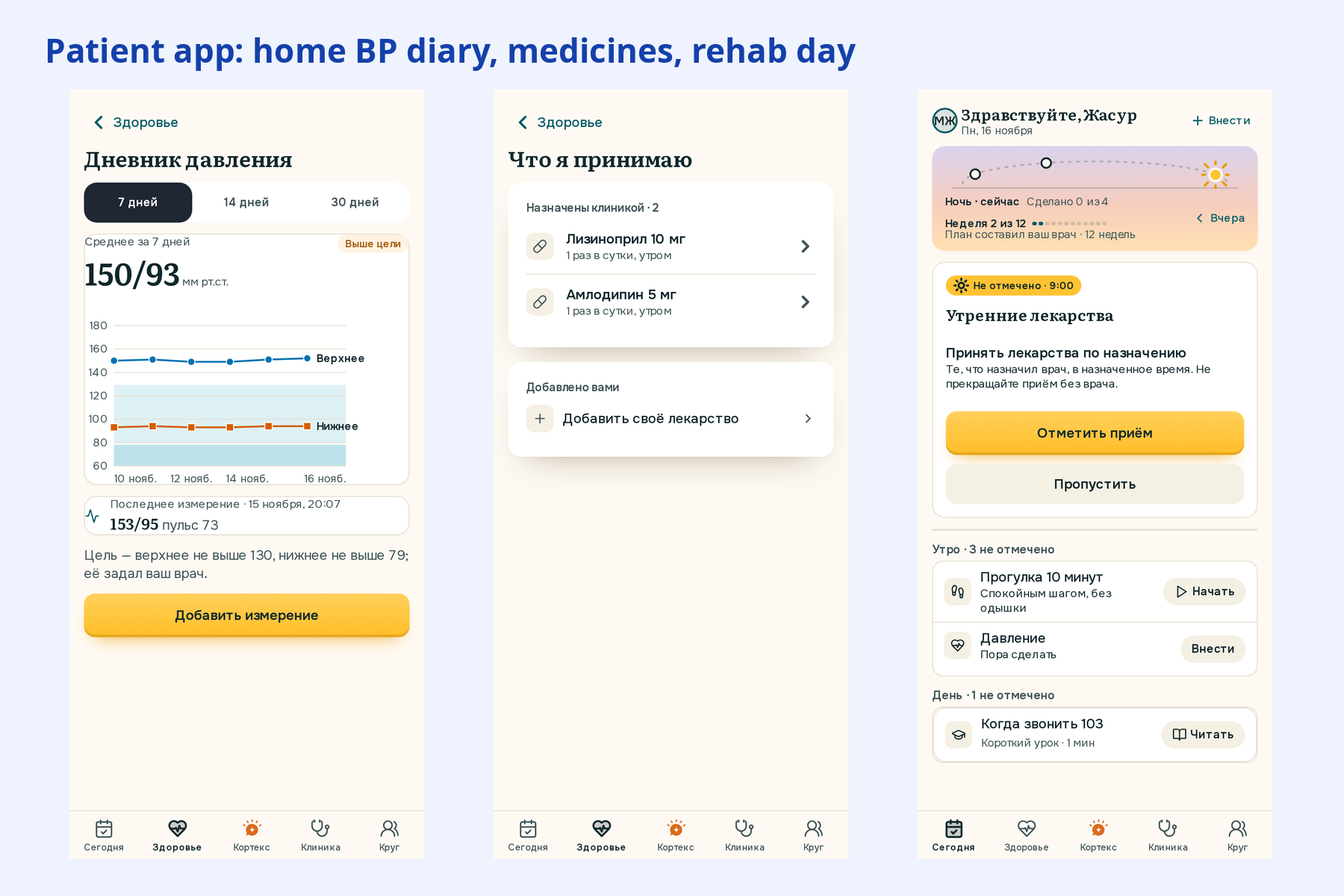
The patient's app: the home blood pressure diary, the medicines the clinic prescribed, and today's rehabilitation tasks.
-
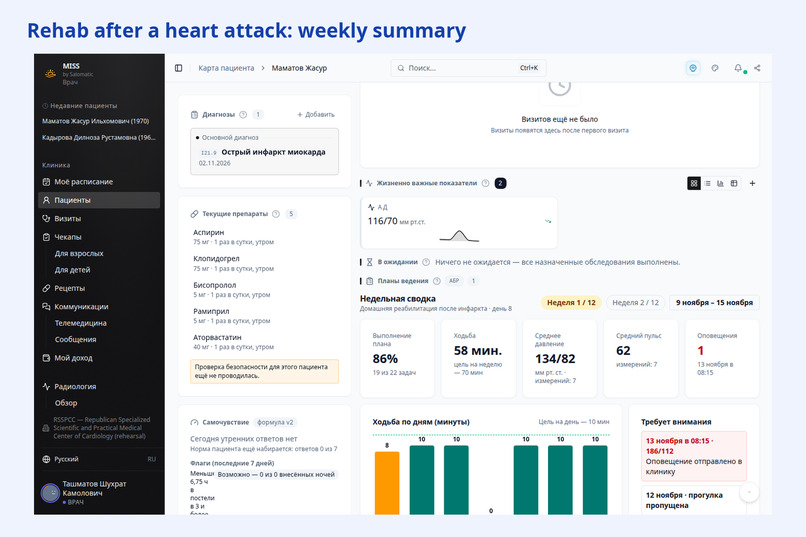
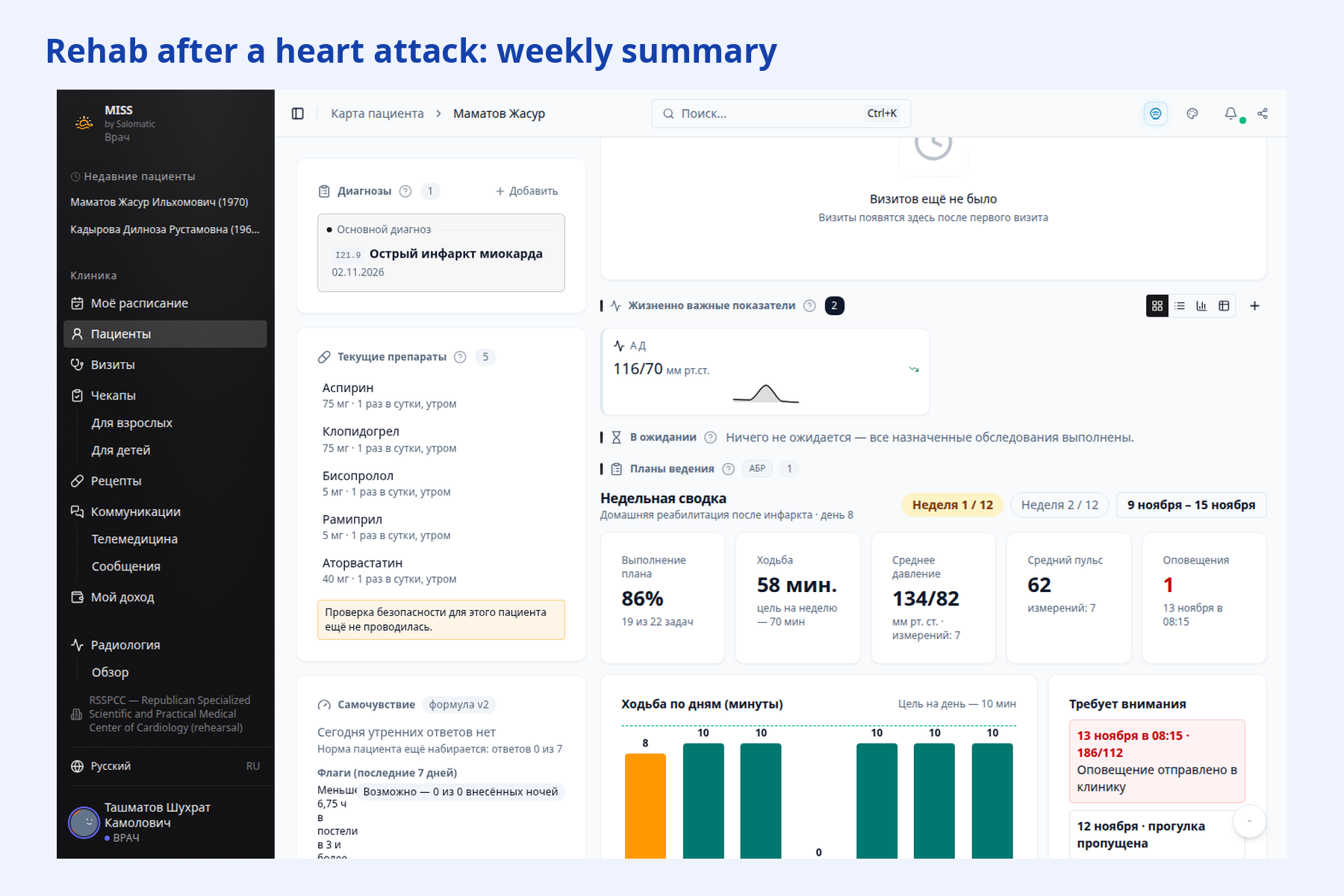
Rehabilitation after a heart attack: the week's tasks done, walking minutes, blood pressure and alerts, in the doctor's chart.
Inspiration
Cardiovascular diseases remain a leading cause of death worldwide, and uncontrolled arterial hypertension is one of their most important preventable risk factors.
In Uzbekistan, approximately 8 million adults aged 30–79 live with hypertension, yet only 18% have their blood pressure adequately controlled, according to WHO estimates.
As medical professionals, we see a major gap in cardiovascular care: patients receive treatment during medical appointments, but what happens between those appointments?
Many patients forget their medications, do not regularly monitor their blood pressure, or fail to recognize early warning signs. Meanwhile, physicians lack continuous access to information about their patients' condition.
We were inspired to create a solution that connects patients and healthcare professionals beyond hospital walls.
AI Cardio Assistant was born from a simple idea: What if artificial intelligence could help doctors identify patients who need attention before serious complications develop?
Our goal is to make hypertension management continuous, accessible, proactive, and personalized.
What it does
AI Cardio Assistant is an AI-powered digital healthcare platform designed to support the prevention, monitoring, and management of cardiovascular diseases, with an initial focus on arterial hypertension.
The platform integrates several key functions:
- AI-powered cardiovascular risk assessment: Supports the evaluation of cardiovascular risk using established clinical tools such as SCORE2 and SCORE2-OP when appropriate.
- Intelligent medical document processing: Extracts relevant laboratory values from photographs, scanned reports, and PDF documents for physician verification.
- Bilingual AI voice assistant: Enables patients to report blood pressure, pulse, symptoms, and medication adherence naturally in Uzbek or Russian.
- Remote blood pressure monitoring: Organizes home measurements into structured digital records and identifies repeated readings above individualized targets.
- Medication adherence support: Provides reminders and records missed doses based on physician-prescribed treatment plans.
- Smart patient prioritization: Highlights patients who may require earlier clinical attention.
- Physician-supervised decision support: Prepares guideline-informed suggestions that doctors can approve, modify, or reject.
- Post-discharge rehabilitation monitoring: Supports a proposed 12-week follow-up pathway based on physician-approved rehabilitation plans.
For example, a patient could simply say:
"My blood pressure is 155 over 95, my pulse is 86, and I forgot to take my medication today."
The system is designed to convert this information into a structured record, monitor changes over time, and make relevant findings available to the treating physician.
Our core principle: AI assists doctors — it never replaces their clinical judgment.
How we built it
AI Cardio Assistant was developed as a clinical and technological project concept through collaboration involving the Republican Specialized Scientific and Practical Medical Center of Cardiology in Uzbekistan and technology partner SALOMATIC.
We started by identifying the main problems in outpatient hypertension management: insufficient monitoring between appointments, poor medication adherence, delayed recognition of uncontrolled blood pressure, and limited physician access to patient-reported information.
Based on these challenges, we designed a system organized around four interconnected clinical workflows:
- Risk assessment: Collecting relevant medical information and supporting cardiovascular risk evaluation.
- Continuous monitoring: Recording blood pressure, pulse, symptoms, and medication adherence through accessible patient interactions.
- Clinical decision support: Identifying concerning patterns and preparing information for physician review.
- Rehabilitation and follow-up: Supporting continuity of care after hospitalization.
We designed the proposed interaction between patient-reported information, AI-assisted processing, clinical records, and a physician-facing monitoring interface.
Special attention was given to bilingual accessibility, patient safety, clinical guideline integration, and human oversight.
The current development stage includes the clinical concept, functional architecture, workflow design, and evaluation strategy. A working bilingual voice-enabled prototype and its technical validation are planned as subsequent development milestones.
Challenges we ran into
Building a medical AI solution presents challenges that go far beyond conventional software development.
1. Clinical safety and reliability
Medical recommendations must be accurate, evidence-based, and appropriate for each patient. We addressed this at the design level by requiring physician review before any treatment modification.
2. Language accessibility
Many patients in Uzbekistan communicate primarily in Uzbek or Russian. Designing a system that can reliably understand blood pressure measurements, medication names, and medical terminology in both languages is a significant technical challenge.
3. Transforming medical data into useful decisions
Collecting thousands of measurements is not enough. Physicians need meaningful information that highlights patients requiring attention without creating unnecessary alerts.
4. Patient engagement
A digital health platform must be easy to use, particularly for older patients and individuals with limited technological experience. This motivated our voice-first approach.
5. Medical data privacy
Protecting sensitive patient information requires appropriate consent, secure access, encryption, and clear accountability.
6. Demonstrating real clinical effectiveness
The biggest challenge is proving that AI-assisted monitoring can improve hypertension control compared with conventional follow-up. This requires rigorous clinical evaluation rather than relying on technical demonstrations alone.
Accomplishments that we're proud of
Although clinical implementation and validation remain future milestones, we are proud of the foundations we have established.
A clinically grounded healthcare concept
We designed the project around a major public health challenge supported by epidemiological evidence and cardiovascular research.
An integrated approach to hypertension management
Instead of creating another isolated blood pressure diary, we developed a concept that connects cardiovascular risk assessment, remote monitoring, medication adherence, physician decision support, and rehabilitation.
A bilingual, accessibility-focused design
We prioritized Uzbek and Russian voice interaction to make digital cardiovascular care more practical for patients who may struggle with complicated applications.
Physician-centered AI safety
We incorporated human oversight as a central design requirement. Physicians retain authority over treatment decisions, and the proposed platform includes pathways for responding to emergency warning signs.
A measurable clinical research strategy
We established a plan for a six-month pilot study comparing AI-supported monitoring with conventional outpatient follow-up.
The primary outcomes will be changes in systolic blood pressure and the proportion of patients achieving individualized blood pressure targets.
Collaboration between medicine and technology
The project brings together cardiovascular clinical expertise and technological development, creating a foundation for a solution designed around real healthcare needs.
What we learned
The most important lesson from developing AI Cardio Assistant is that successful medical AI is not defined by how many decisions it makes, but by how effectively it supports safe and meaningful clinical decisions.
We learned that even sophisticated AI technology has limited value unless it fits naturally into clinical workflows and addresses problems experienced by patients and physicians.
We also recognized that home blood pressure monitoring alone is insufficient. Its value increases when combined with structured medical follow-up, treatment adherence support, and timely physician intervention.
Another key insight was the importance of accessibility. Technology designed for healthcare must accommodate different languages, age groups, and levels of digital literacy.
Finally, we learned that medical innovation must be evaluated through measurable clinical outcomes. A technically impressive system is only the beginning; the ultimate goal is better patient care.
What's next for AI Cardio Assistant
Our next priority is to transform the clinical concept into a functional, clinically testable digital health platform.
Phase 1 — Prototype development
Develop a bilingual Uzbek–Russian voice assistant capable of recording blood pressure, pulse, symptoms, and medication adherence.
Build a physician dashboard displaying patient measurements, longitudinal trends, and prioritized follow-up needs.
Phase 2 — Technical evaluation
Test voice recognition accuracy, medical data extraction, alert reliability, and physician approval workflows using synthetic or appropriately authorized data.
Phase 3 — Clinical pilot
Following the necessary institutional and ethical approvals, conduct a six-month comparative pilot study involving patients with arterial hypertension.
Our primary research questions are:
- Does AI-supported monitoring improve systolic blood pressure control compared with conventional outpatient follow-up?
- Does it increase the proportion of patients achieving individualized blood pressure targets?
We also plan to assess medication adherence, patient engagement, usability, and physician workload.
Phase 4 — Expansion and integration
Explore integration with healthcare information systems, broader cardiovascular risk management, and additional chronic disease monitoring pathways.
Our long-term vision is to make AI Cardio Assistant a scalable digital health solution for Uzbekistan and other healthcare systems facing similar challenges.
Our mission is simple: to transform hypertension care from occasional medical appointments into continuous, intelligent, physician-guided support — because better cardiovascular care should not end when a patient leaves the hospital.
Built With
- bun
- elysia
- google-gemini
- next.js
- postgresql
- react
- react-native
- typescript
