-
-
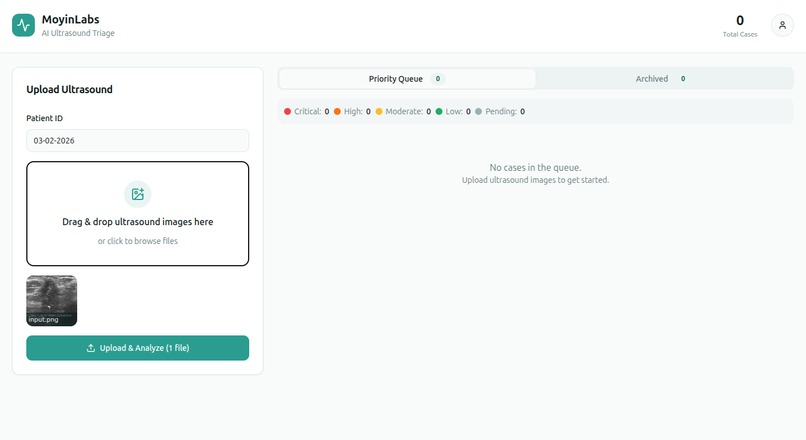
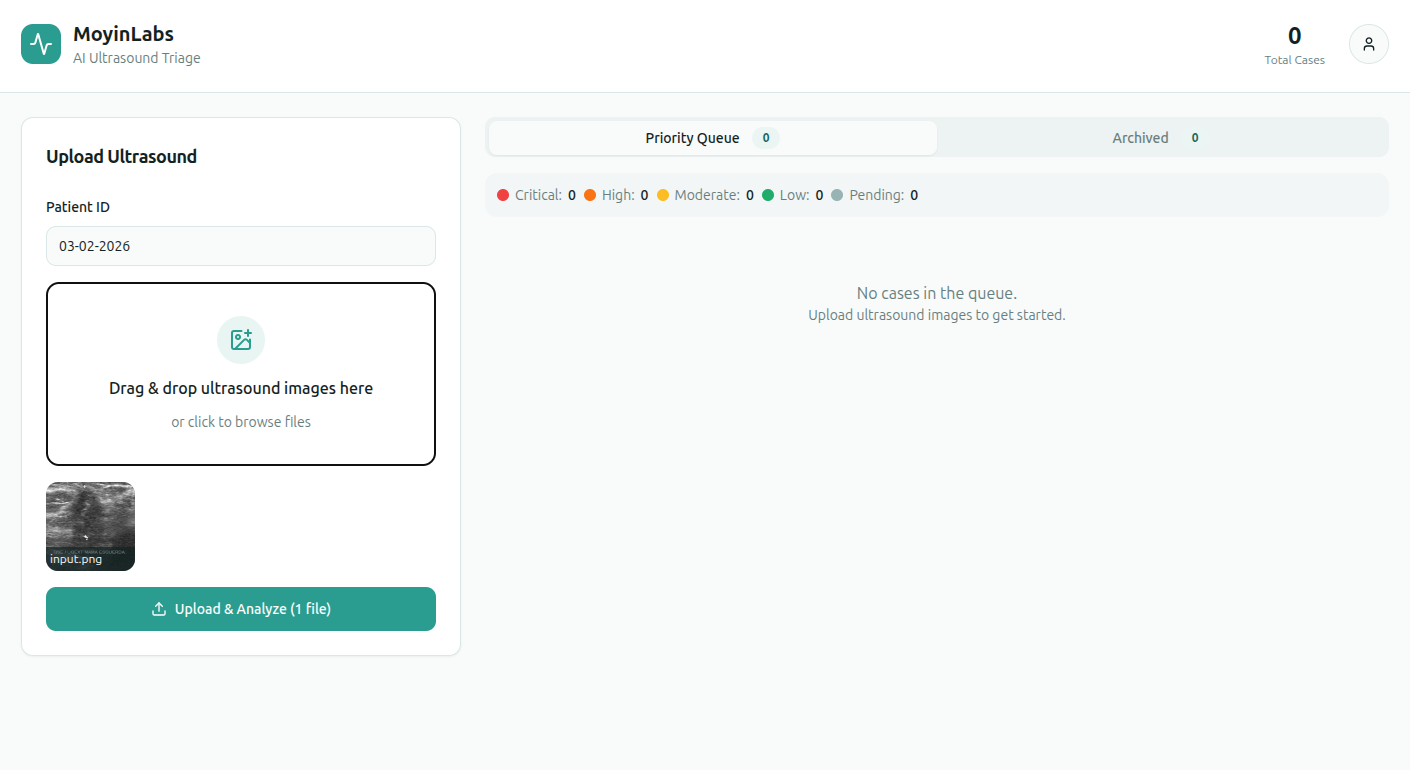
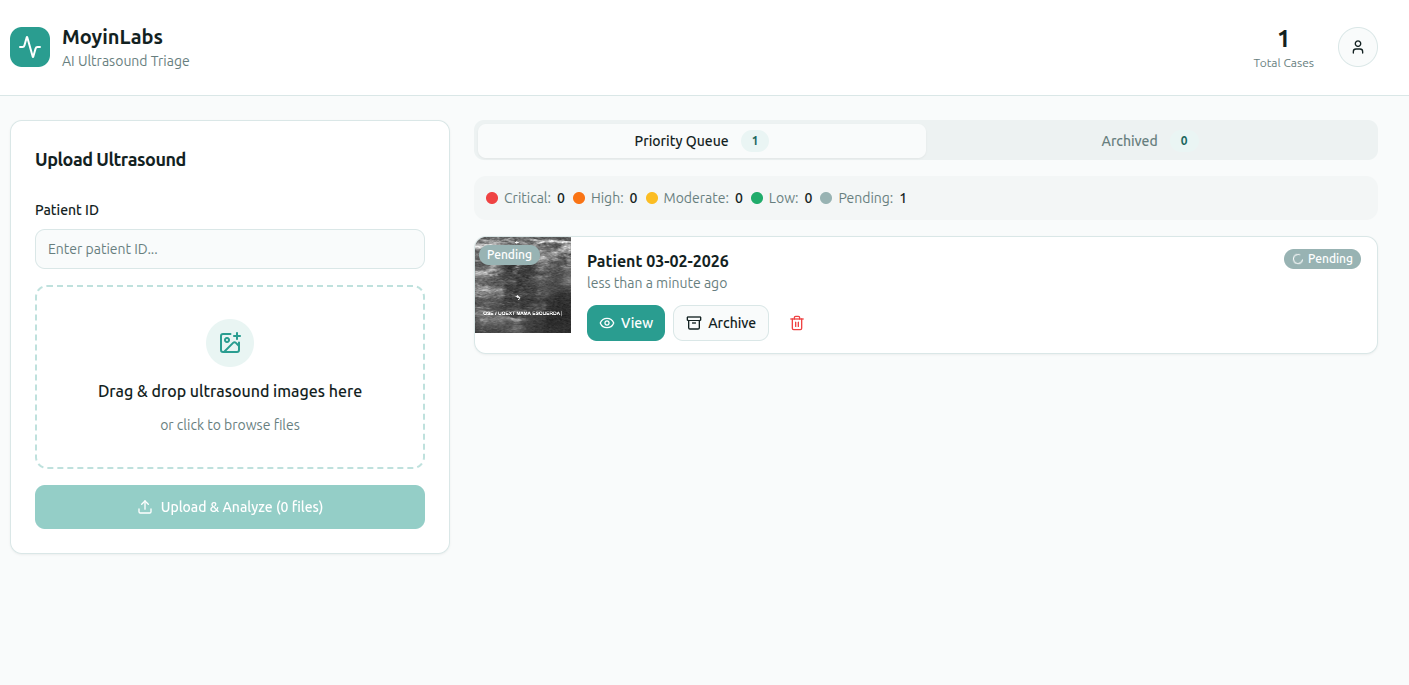
Home screen
-
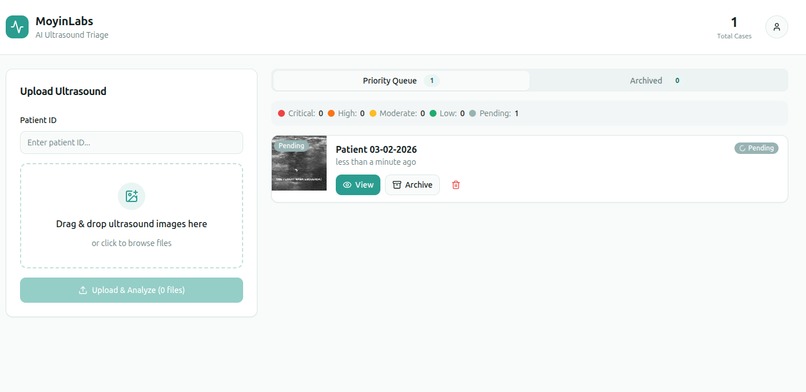
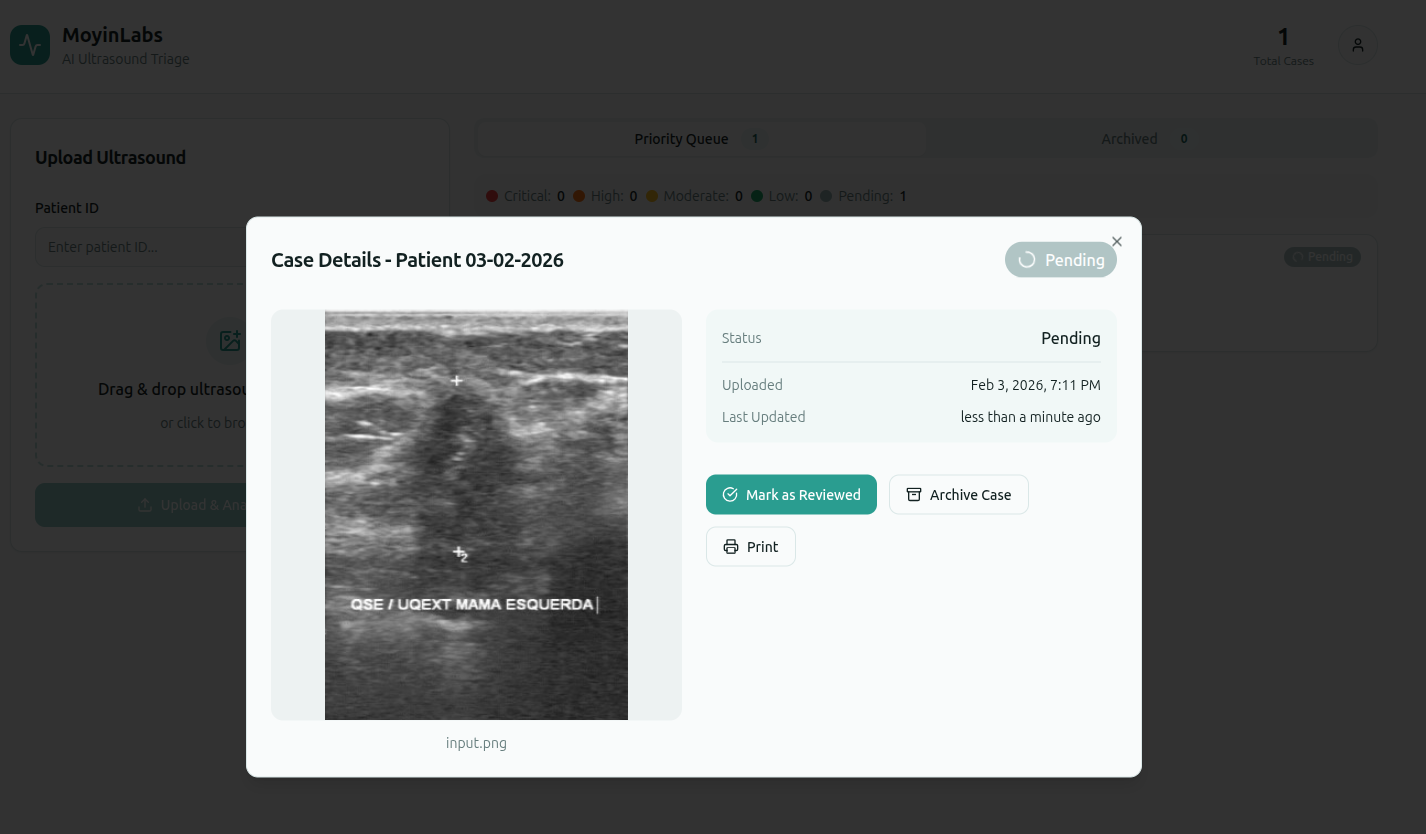
Input ultrasound image pending
-
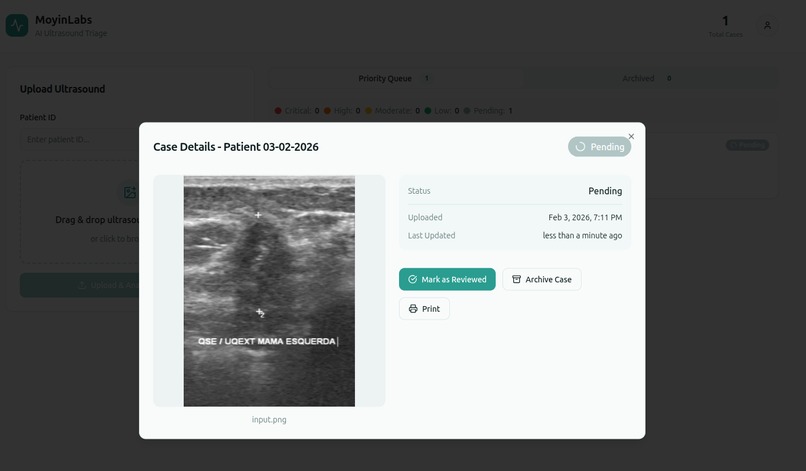
Pending case view
Inspiration
Breast cancer outcomes depend heavily on early detection, yet in many healthcare settings radiologists are overburdened or unavailable. Most AI systems frame this as a binary classification problem, but clinical decision-making is rarely binary. What matters in practice is risk and urgency, not just labels.
This project was inspired by the idea that AI should assist triage, not replace clinicians—helping prioritize high-risk cases so limited expert time is spent where it matters most.
What it does
AI Cancer Triage System analyzes breast ultrasound images and produces:
- Class probabilities (normal, benign, malignant)
- A calibrated risk score between 0 and 1
- A triage-oriented output that helps rank cases by urgency
Instead of making a hard diagnosis, the system estimates how risky a case is, enabling clinicians to review the most critical cases first.
How we built it
- Trained a convolutional neural network (EfficientNet backbone) on breast ultrasound images.
- Designed a lightweight classification head to keep the model efficient and deployable.
- Applied temperature scaling on validation data to calibrate model confidence.
- Converted calibrated probabilities into a continuous risk score rather than a single class label.
- Built a web interface and backend using AI-assisted development tools (vibe coded with lovable.dev), replacing placeholder inference logic with real model predictions.
- Integrated the model into an end-to-end pipeline from image upload to risk estimation.
Challenges we ran into
- Neural networks are often overconfident, which is dangerous in medical settings.
- Connecting a real ML model to an AI-generated backend under tight time constraints required careful debugging.
- Balancing medical responsibility with hackathon scope—ensuring the system supports clinicians rather than pretending to diagnose.
- Limited time meant architectural decisions had to be simple but defensible.
Accomplishments that we're proud of
- Built a fully working risk-based triage system, not just a classifier.
- Successfully implemented post-training calibration to improve reliability.
- Delivered an end-to-end AI system under a strict deadline.
- Designed the system with clinical decision support in mind rather than pure accuracy.
What we learned
- Model calibration is as important as accuracy in real-world AI.
- Continuous risk estimates are more useful than hard predictions for medical triage.
- AI-assisted “vibe coding” can accelerate development, but ML integration still requires deep technical understanding.
- Clear problem framing prevents overengineering and improves impact.
What's next for AI Cancer Triage System
- Clinical validation on larger and more diverse datasets.
- Improved risk modeling using ordinal or cost-sensitive learning.
- Integration with hospital workflows and PACS systems.
- Support for additional imaging modalities and explainability tools.
- Collaboration with clinicians to refine triage thresholds and usability.
Built With
- pandas
- python
- pytorch
- react
- replicate
- scikit-learn
- supabase
- tailwind
- vite


Log in or sign up for Devpost to join the conversation.