-
-
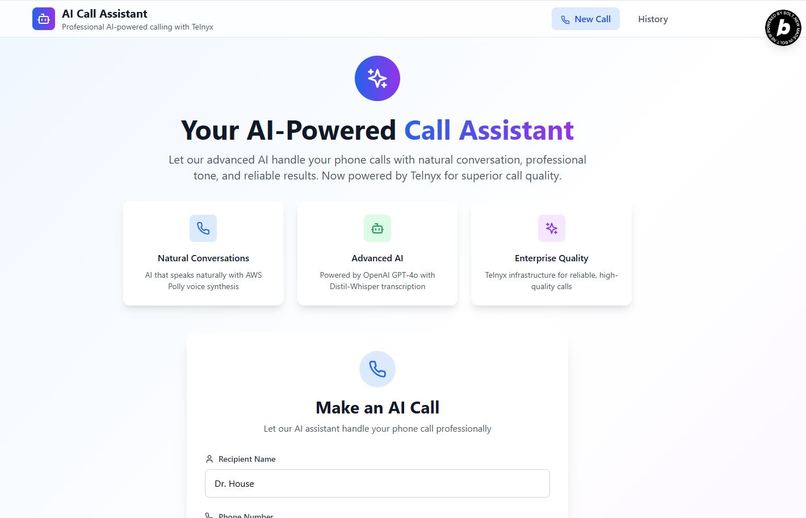
Landing Page
-
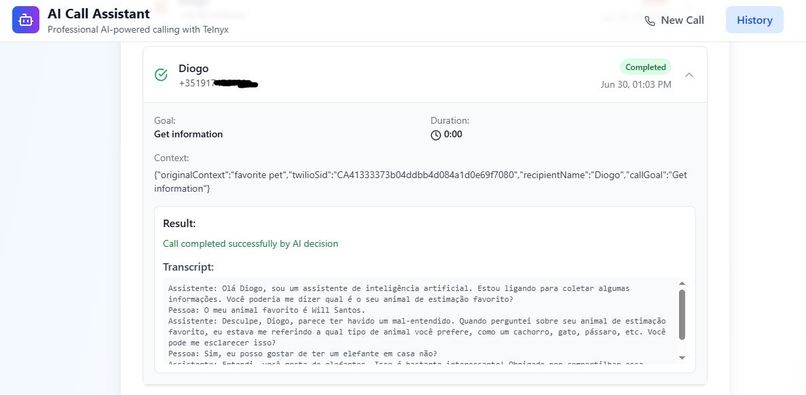
Call Transcript
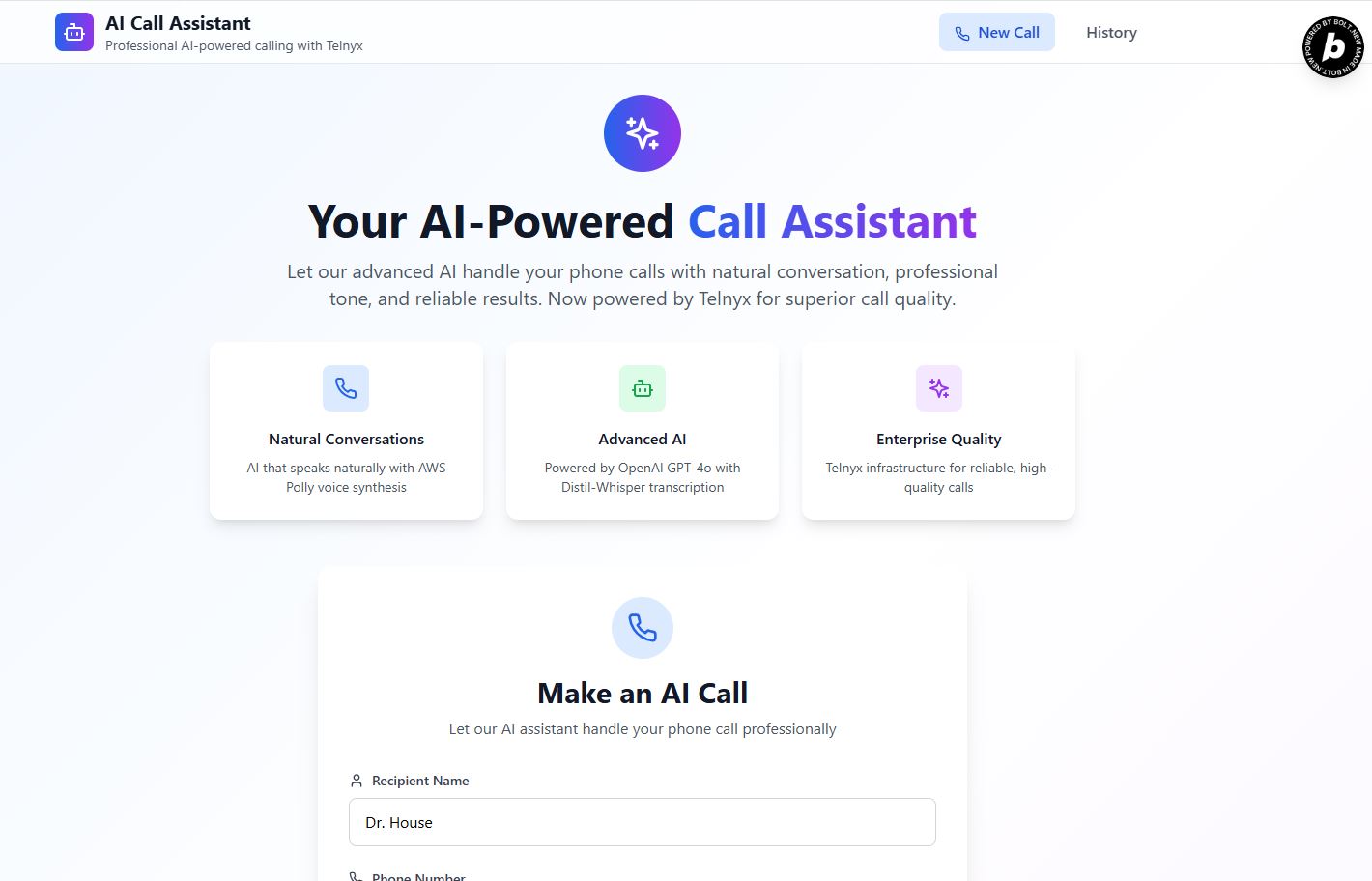
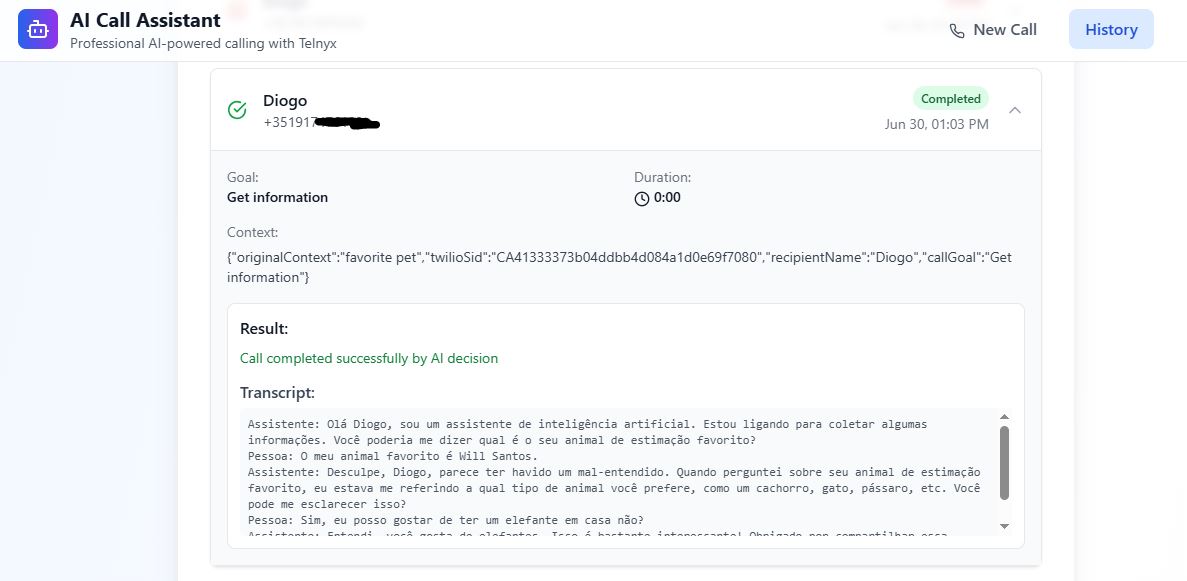
Inspiration
We've all experienced the frustration of spending hours on hold, playing phone tag, or struggling to communicate in a second language over the phone. As developers, we saw an opportunity to revolutionize phone communications by combining the latest AI models with real-time voice technology. The idea sparked when one of us missed an important appointment because we couldn't get through to reschedule - we thought, "What if AI could handle these calls for us?"
What it does
AI Call Assistant is a full-stack application that enables AI agents to make professional phone calls on your behalf. Users can:
- Initiate AI-powered calls with custom objectives (scheduling, inquiries, follow-ups)
- Monitor calls in real-time with live transcription and status updates
- Choose AI personalities powered by GPT-4 or Claude
- Support multiple languages with natural voice synthesis
- Track call history with recordings, transcripts, and outcomes
- Integrate seamlessly with existing phone systems via Twilio/Telnyx
The AI agent speaks naturally, understands context, handles interruptions, and can navigate complex phone trees - just like a human assistant would.
How we built it
Our tech stack leverages cutting-edge technologies:
- Frontend: React + TypeScript + Tailwind CSS for a responsive, type-safe UI
- Backend: Supabase for real-time database, authentication, and Edge Functions
- AI Brain: OpenAI GPT-4 / Anthropic Claude for conversation intelligence
- Voice: Multiple TTS providers (ElevenLabs, AWS Polly) for natural speech
- Telephony: Twilio/Telnyx integration for reliable phone connectivity
- Real-time: WebSockets for live call monitoring and updates
We architected the system with modularity in mind - separating concerns between call initiation, conversation management, and voice synthesis. Edge Functions handle webhook events, ensuring low latency and scalability.
Challenges we ran into
Last-minute Twilio Account Suspension: Just when we thought everything was working perfectly, our Twilio account got blocked unexpectedly. With the deadline approaching, we had to rapidly pivot our entire telephony infrastructure to Telnyx. This meant rewriting webhook handlers, updating API calls, and adjusting to different webhook formats - all while maintaining backward compatibility.
Real-time Voice Latency: Achieving natural conversation flow required optimizing our pipeline to minimize delays between speech recognition, AI processing, and voice synthesis.
Webhook Reliability: Phone providers send multiple webhooks that must be processed correctly and in order. We built robust error handling and state management to ensure call continuity.
Voice Quality: Finding the right balance between natural-sounding voices and processing speed led us to implement multiple TTS providers with fallback options.
Conversation Context: Teaching the AI to maintain context throughout a call, handle interruptions, and recover from misunderstandings required sophisticated prompt engineering.
Security: Protecting sensitive call data while maintaining real-time performance meant implementing proper authentication and encryption at every layer.
Accomplishments that we're proud of
- Sub-second response times making conversations feel natural
- Multi-provider architecture ensuring reliability with automatic failover
- Comprehensive diagnostic tools for debugging complex telephony issues
- Production-ready error handling that gracefully manages edge cases
- Clean, modular codebase that's easy to extend and maintain
- Real-time monitoring interface that provides transparency into AI decision-making
What we learned
- Edge Functions are powerful: Supabase Edge Functions provided the perfect balance of scalability and ease of deployment for handling webhooks
- Voice synthesis has come far: Modern TTS can produce remarkably human-like speech, but provider selection matters greatly
- Prompt engineering is crucial: The difference between a robotic and natural conversation often comes down to carefully crafted system prompts
- Real-time systems are complex: Managing state across distributed webhooks requires careful architecture planning
- User trust is paramount: Providing visibility into what the AI is doing builds confidence in autonomous systems
What's next for AI Call Assistant
- Advanced conversation flows: Visual flow builder for complex multi-step conversations
- Calendar integration: Automatic scheduling with Google Calendar/Outlook
- SMS fallback: Seamlessly switch to text when calls aren't answered
- Analytics dashboard: Insights into call performance and conversation metrics
- Team collaboration: Multiple users managing a pool of AI agents
- Custom voice cloning: Train the AI to speak in your own voice
- API marketplace: Allow developers to build on top of our platform
Our vision is to make AI Call Assistant the go-to solution for businesses and individuals who want to reclaim their time while maintaining professional communication standards.
Built With
- anthropic
- aws-polly
- claude
- css3
- edge-functions
- elevenlabs
- git
- github
- gpt-4
- html5
- javascript
- lucide-react
- netlify
- node.js
- openai
- postgresql
- react
- real-time-database
- rest-api
- sql
- supabase
- tailwind-css
- telnyx
- tts
- twilio
- typescript
- vite
- webhooks
- websockets
- whisper

Log in or sign up for Devpost to join the conversation.