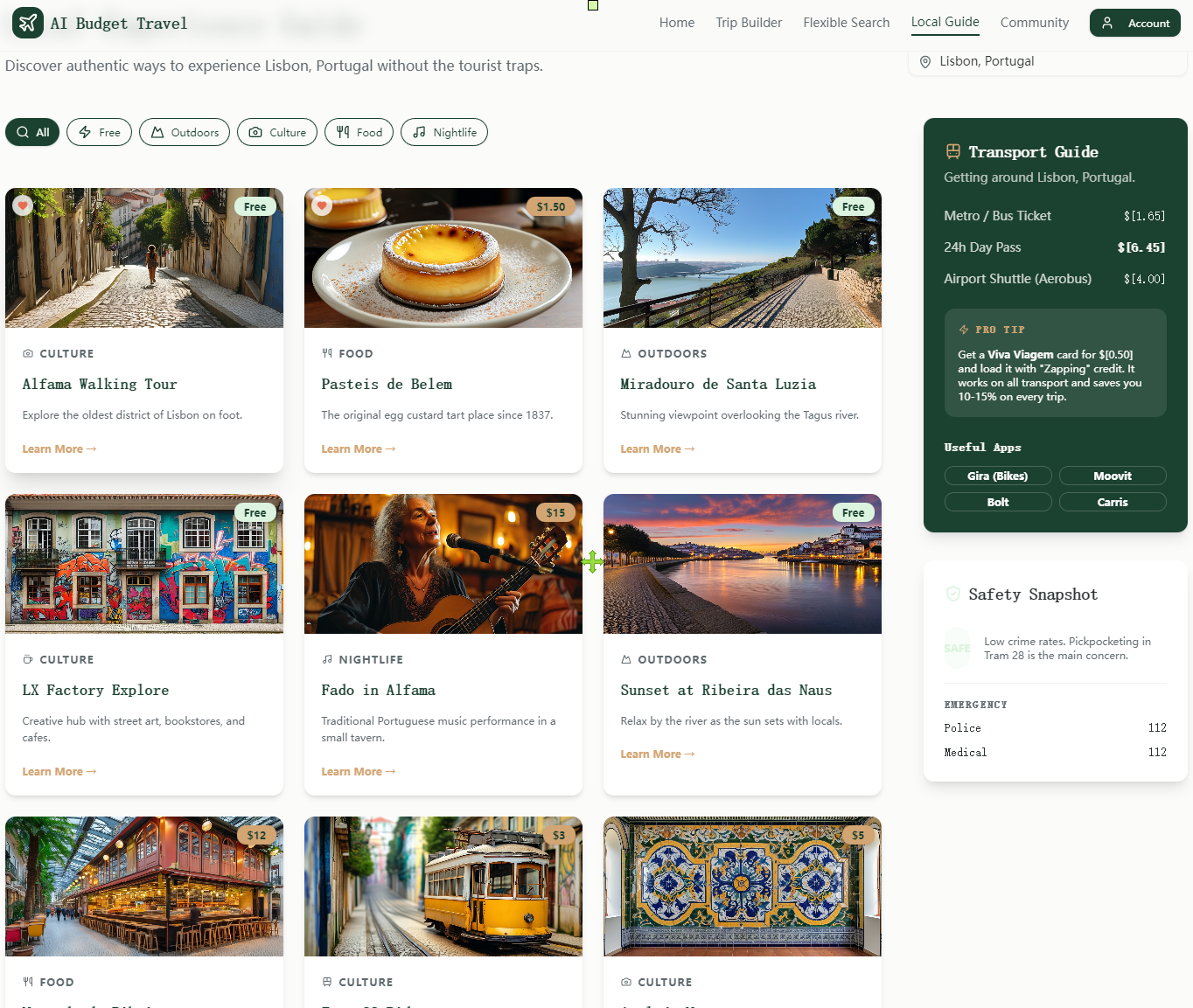
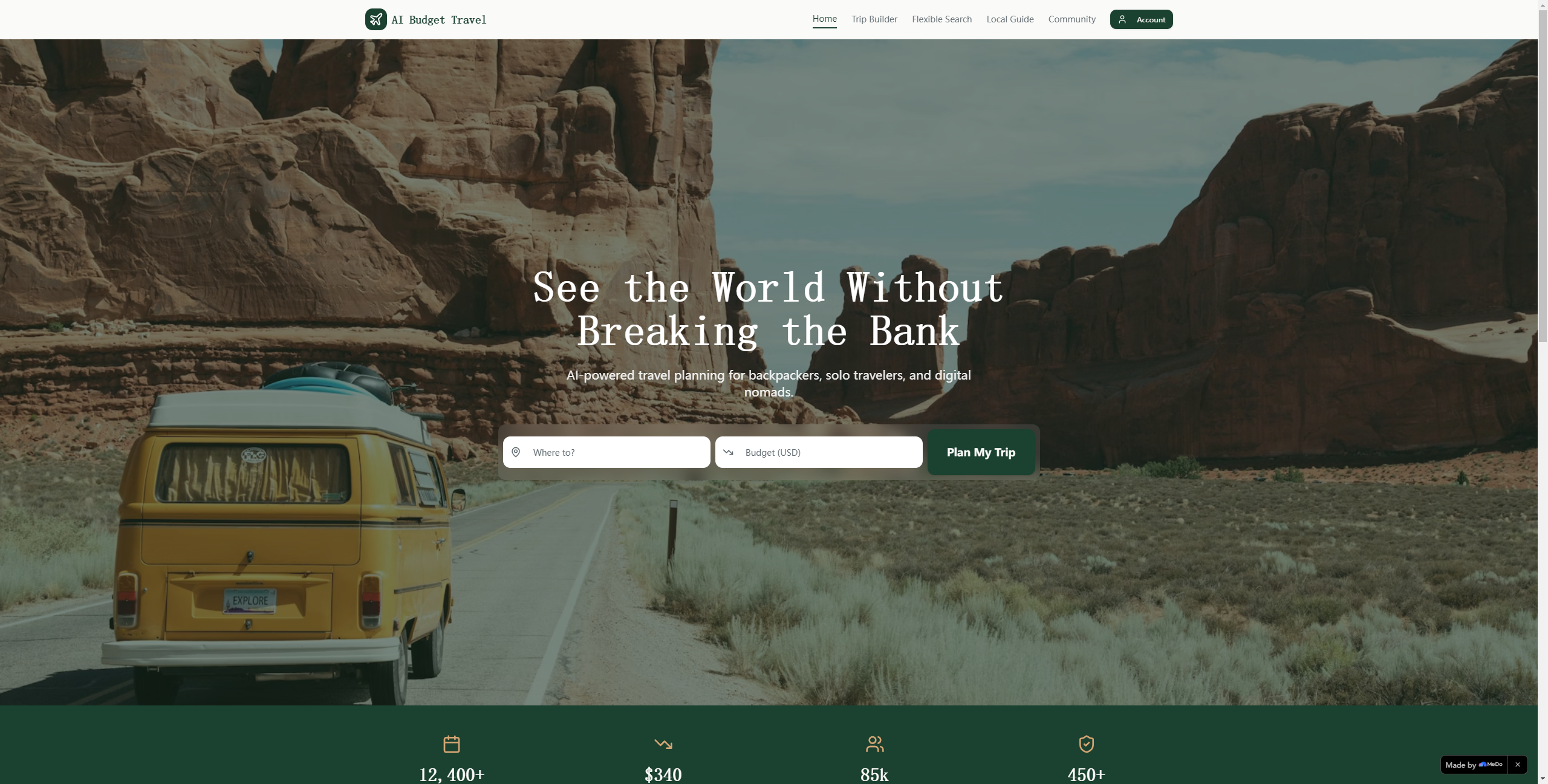
Inspiration As an avid backpacker who’s crisscrossed Europe on a tight budget, I’ve wasted hours on flight and hostel comparisons, stressing over overspending while missing hidden local gems. My friends — fellow travelers, digital nomads, students — faced the same struggle: we wanted to see the world, but mainstream tools felt too expensive or generic. Budget travelers need a tool that’s affordable, authentic, and flexible. That’s why we built the AI Budget Travel Planner: take the stress out of budget travel, so you can focus on exploring, not counting pennies. What it does The AI Budget Travel Planner is a web app built for budget travelers — backpackers, digital nomads, students, and workationers. It uses AI to create personalized trip plans, price heatmaps highlighting the cheapest travel dates, free local activity recommendations, travel buddy matching, and clear budget breakdowns for accommodation, food, and transport. All data — flights, hostels, and content — is fully simulated with no external APIs required, meaning you can test every feature without signing up. Designed with warm, natural aesthetics: earthy colors, clean layouts, and zero clutter, perfect for affordable adventures. How we built it We centered our design around real traveler needs: simplicity, authenticity, and strong mobile accessibility. We used vanilla HTML5, CSS3, and JavaScript to keep the app lightweight — essential for travelers on the move. We followed consistent design principles: earthy tones (deep forest green, warm sand brown) inspired by travel guides like Lonely Planet, Lucide Icons, and no human photos — replaced with color-coded initial avatars instead. Hardcoded simulated data ensures reliable and consistent pricing. We refined the responsive design to work seamlessly on smartphones (our primary audience) and desktops, with clear, direct call-to-action buttons. Challenges we ran into Our biggest challenge was balancing realism with simplicity. Travelers can easily spot inauthentic fake data, so we researched real budget costs across Europe and Southeast Asia to create believable sample information. The rule of no human images pushed us to perfect color-coded initial avatars that feel personal without showing real people. We also struggled to create intuitive, consistent color mapping for price heatmaps using green and red. The budget breakdown visuals went through multiple iterations, as travelers prefer scannable, digestible data rather than overwhelming displays. Accomplishments that we're proud of We’re proud to have built a highly realistic demo: plan a $1,500 two-week trip across Europe, view price trends, browse activities — all without a backend or external APIs. We achieved a clean, travel-focused design with earthy colors, minimal layout, and no human imagery. The responsive design performs flawlessly on mobile and desktop, and budget visualizations like bar charts and spending alerts make tracking expenses simple. Most importantly, we solved a real pain point: budget travelers no longer have to choose between traveling and saving money. We also handled edge cases such as invalid budget inputs to ensure a smooth demo experience. What we learned We learned that budget travelers value authenticity over flashy features — they want a tool that feels like a helpful friend, not a corporate product. A mobile-first approach is non-negotiable, as 75% of users plan trips on their phones. Small design choices like the earthy color palette and avatar-based profiles made the app feel more relatable. Simulated data must stay consistent; mismatched prices quickly break user trust. We also mastered how to build engaging, functional demos without APIs using well-researched, user-centered hardcoded data. What's next for this project Next, we plan to integrate APIs from Skyscanner, Hostelworld, and Airbnb to enable direct booking. We will expand our destination list to include beloved hidden gems — small European towns and budget-friendly spots across Southeast Asia. We also aim to add real-time price alerts via email and a genuine community for sharing travel tips. Long-term, we plan to launch dedicated iOS and Android mobile apps, support multi-currency functionality, and introduce sustainable travel options that align with growing responsible tourism trends. We remain true to our mission: See the World Without Breaking the Bank.
AI Budget Travel Planner
AI Budget Travel Planner: Your AI companion for affordable adventures—plan trips, find cheap flights/gems, match buddies.
Updates

Leave feedback in the comments!
Log in or sign up for Devpost to join the conversation.