-
-
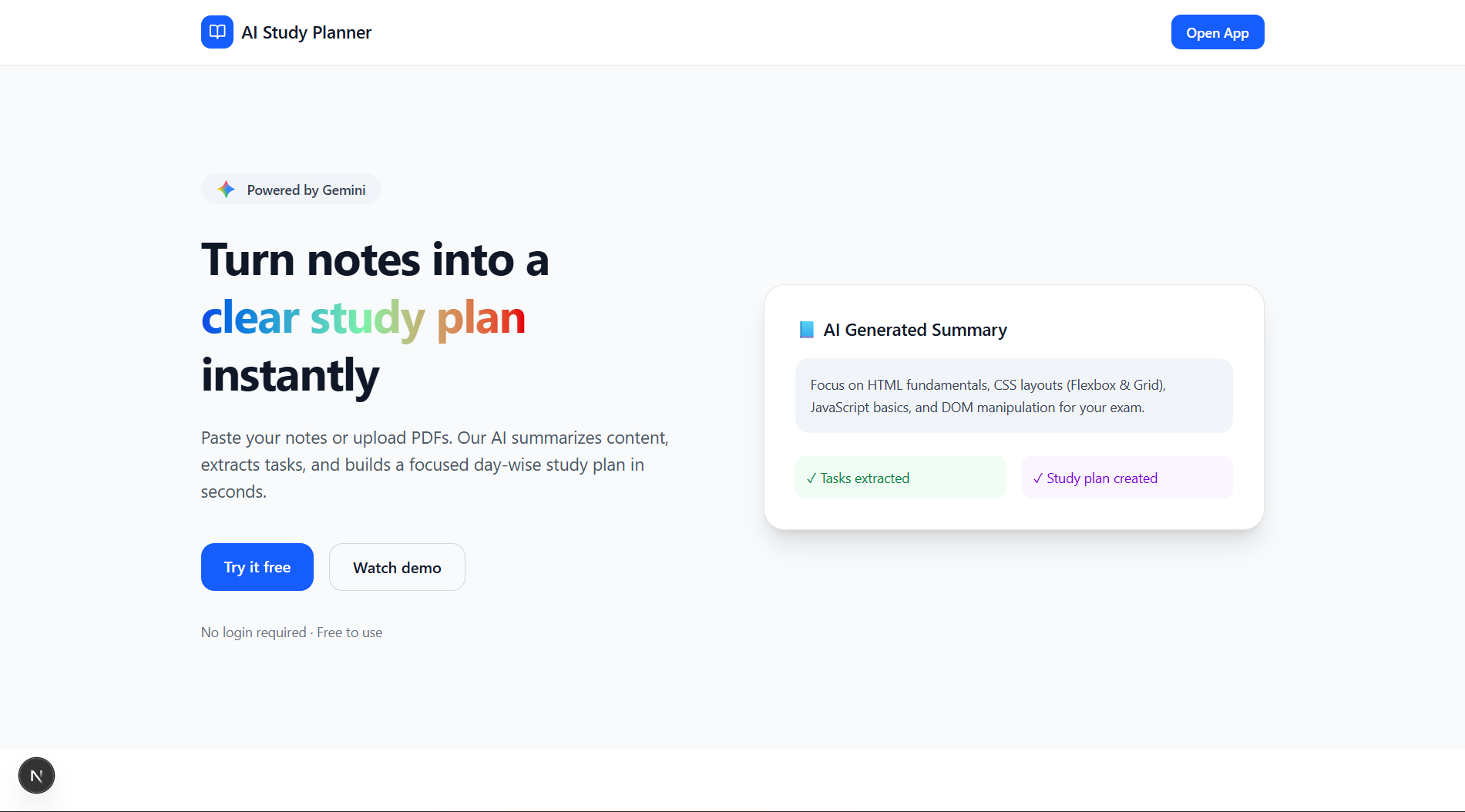
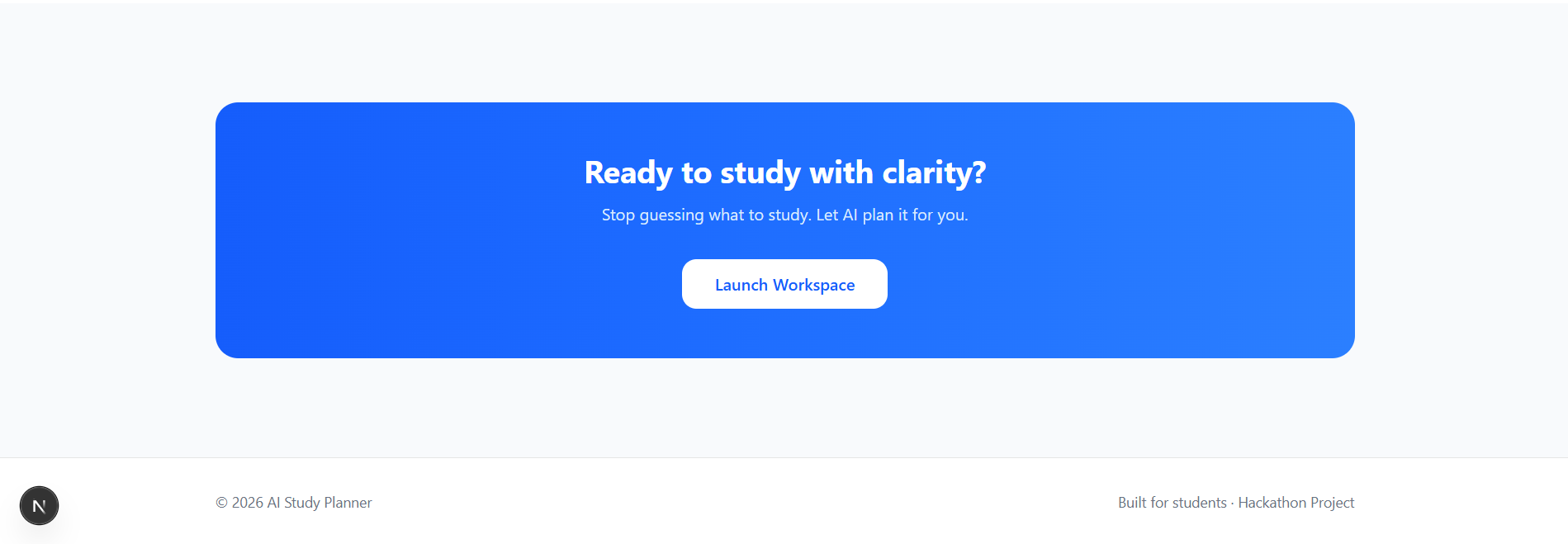
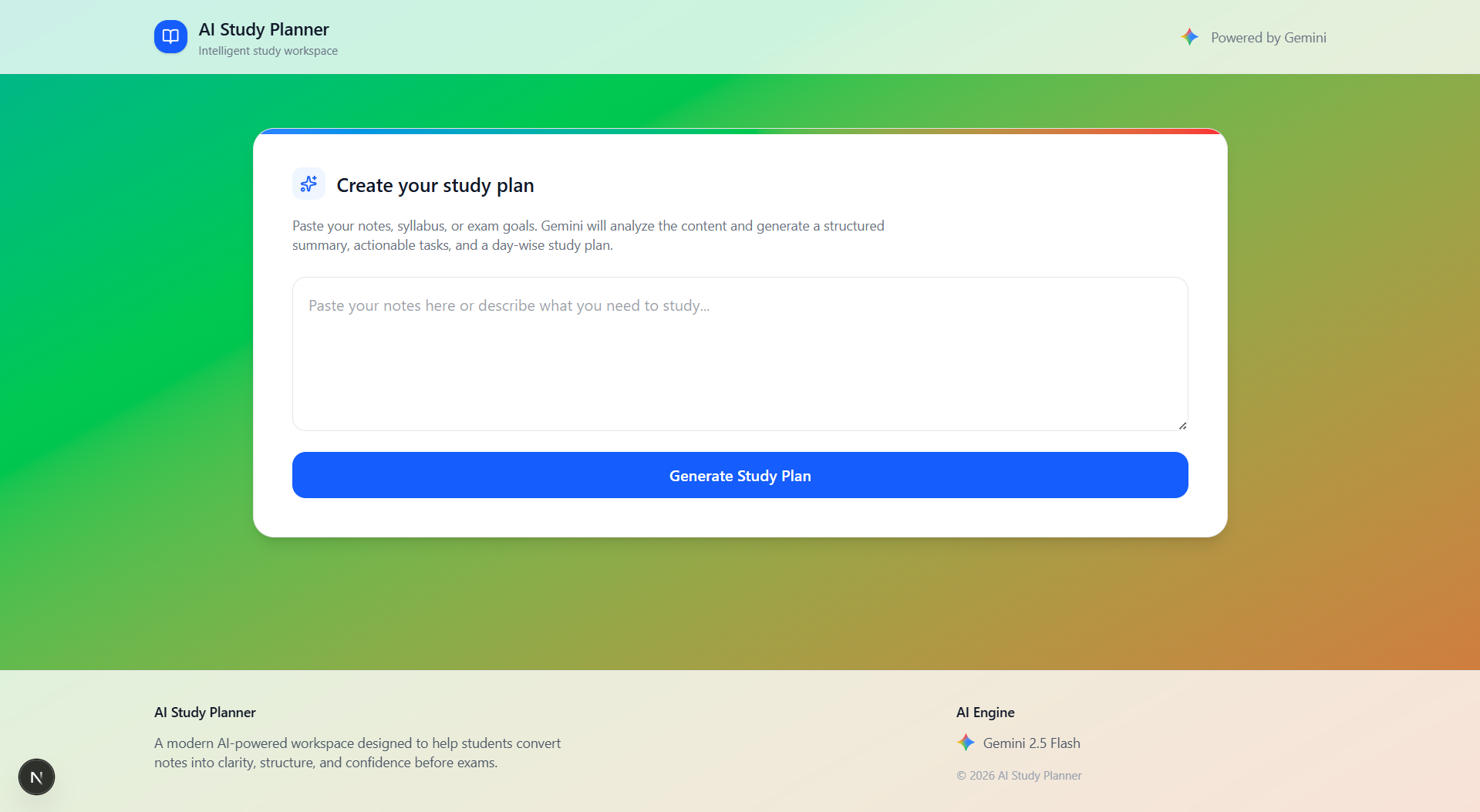
Landing Page
-
Landing Page
-
Landing Page
-
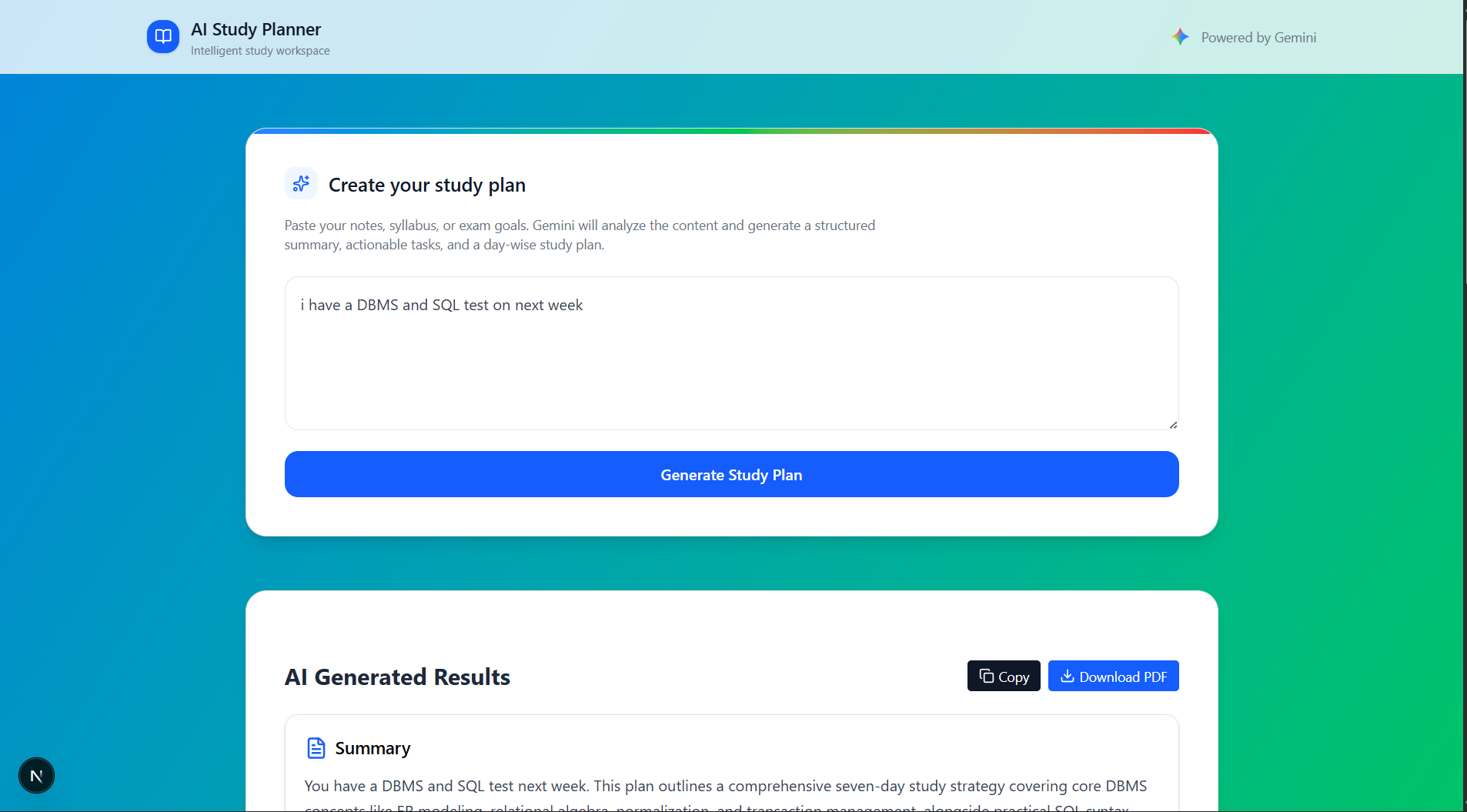
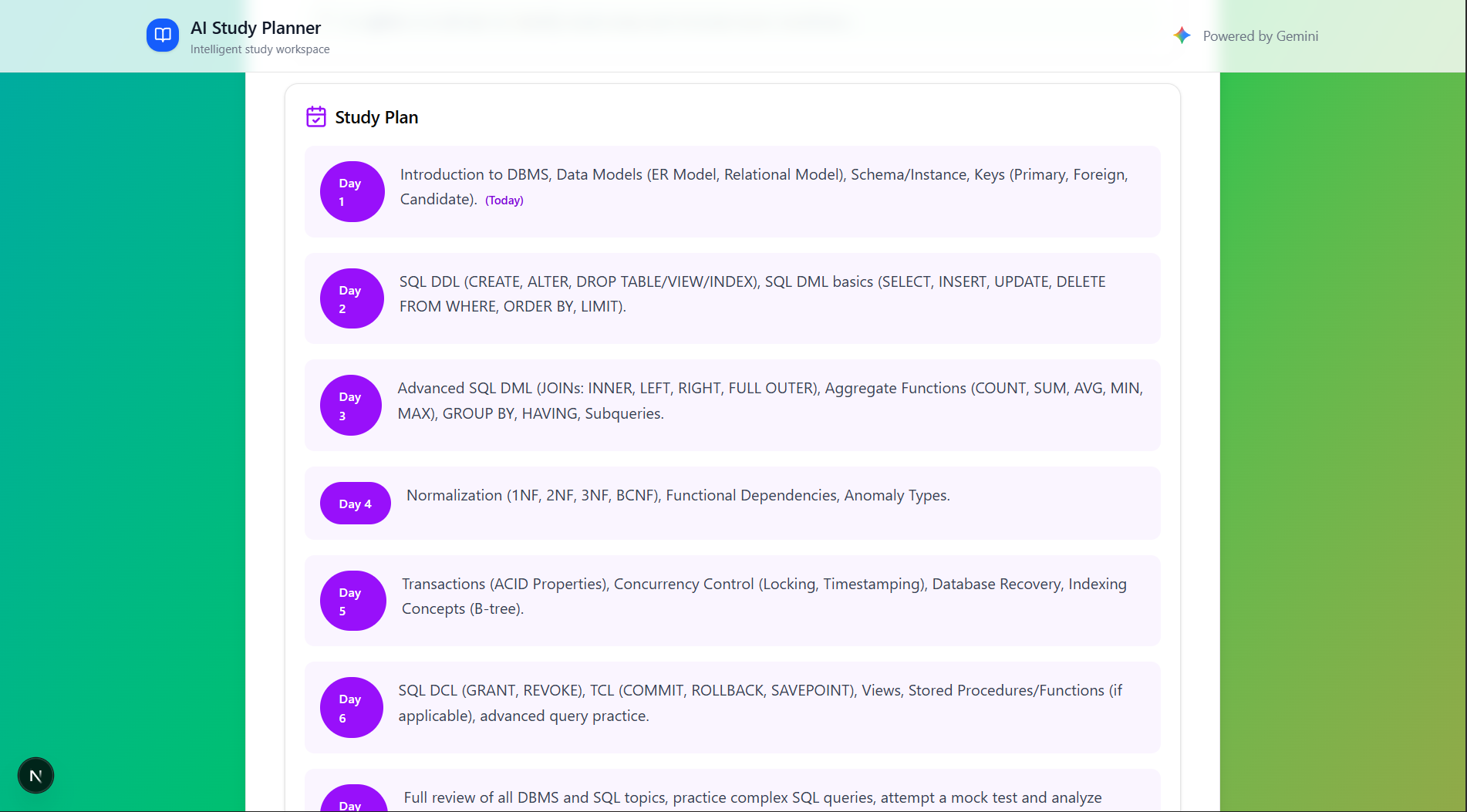
WorkSpace Page
-
WorkSpace Page
-
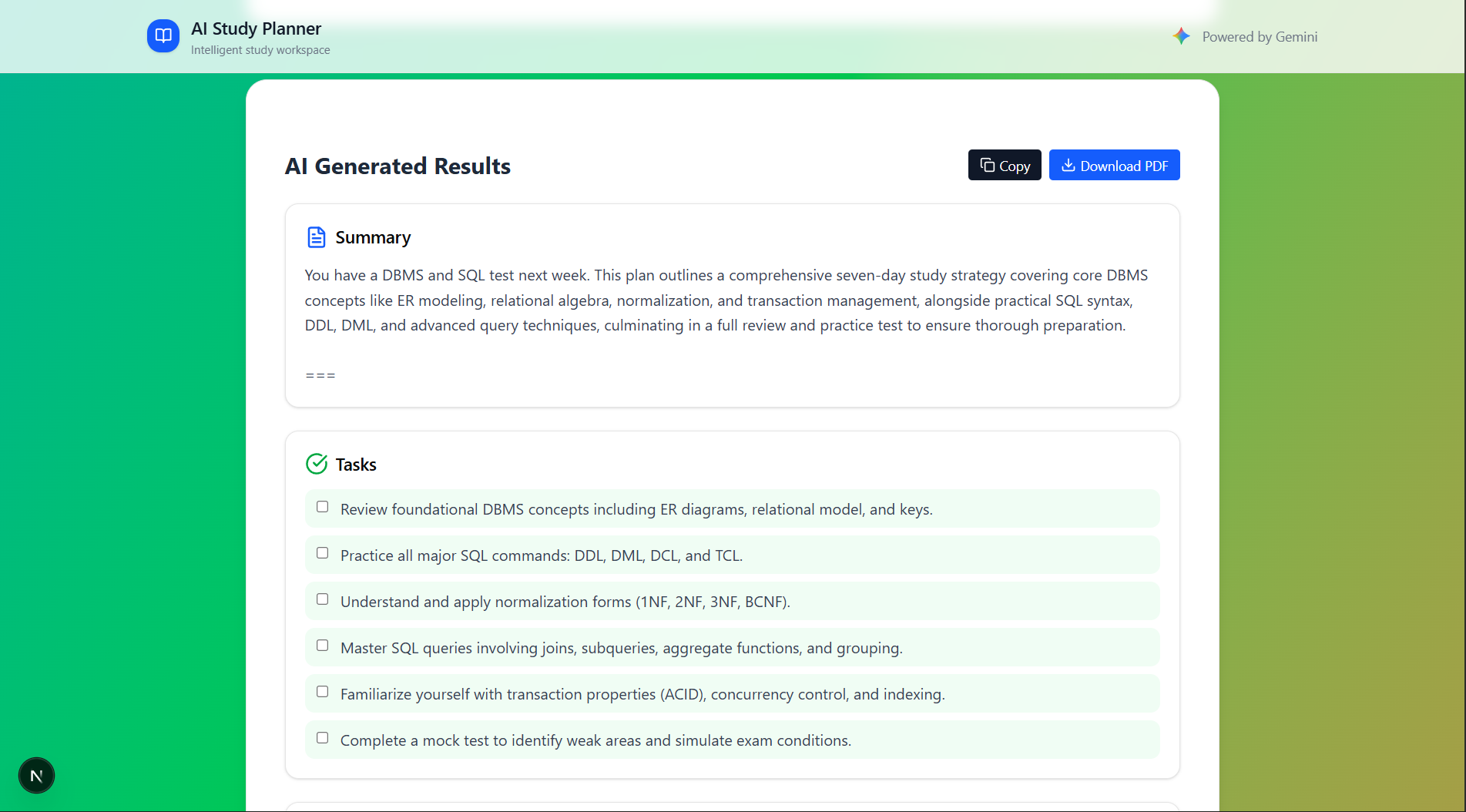
WorkSpace Page
-
WorkSpace Page
📘 AI Study Planner – Project Story
💡 Inspiration
As a student, I’ve often faced situations where exams or interviews were just days away, and I had large amounts of unstructured notes, PDFs, or syllabi. The hardest part wasn’t studying itself — it was figuring out what to study first, what matters most, and how to plan time effectively.
I wanted to build something that could instantly turn messy notes into clarity: a clean summary, actionable tasks, and a realistic study plan. With the release of Gemini 3, this hackathon felt like the perfect opportunity to solve a real student pain point using next-generation AI reasoning.
🚀 What the Project Does
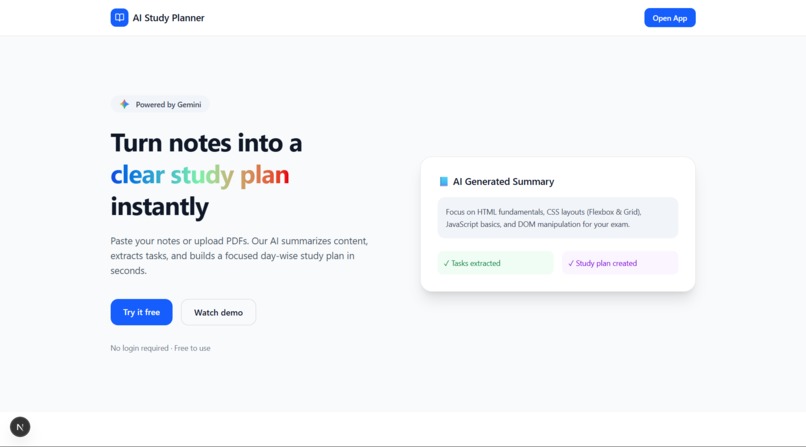
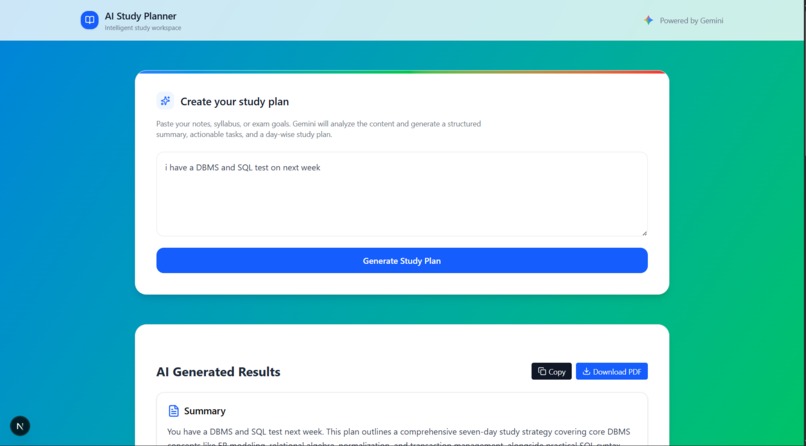
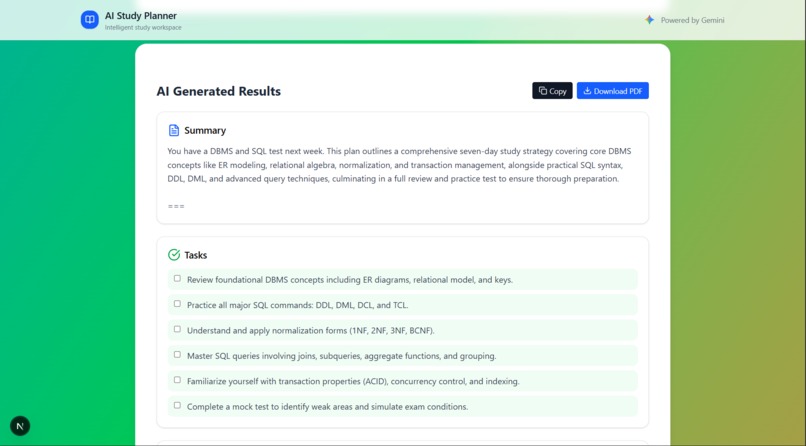
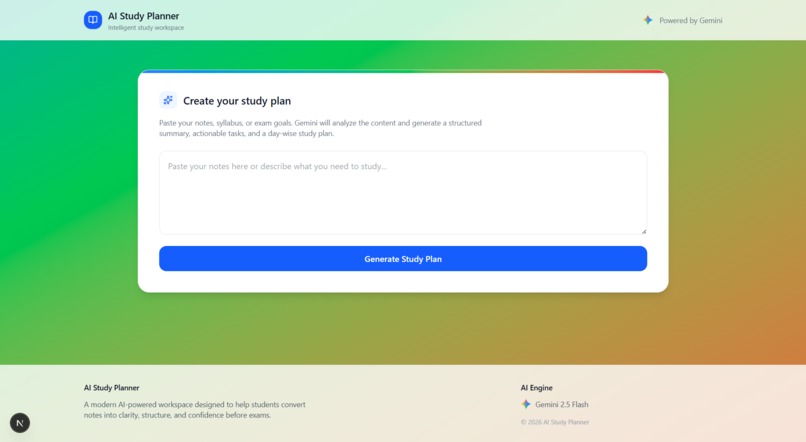
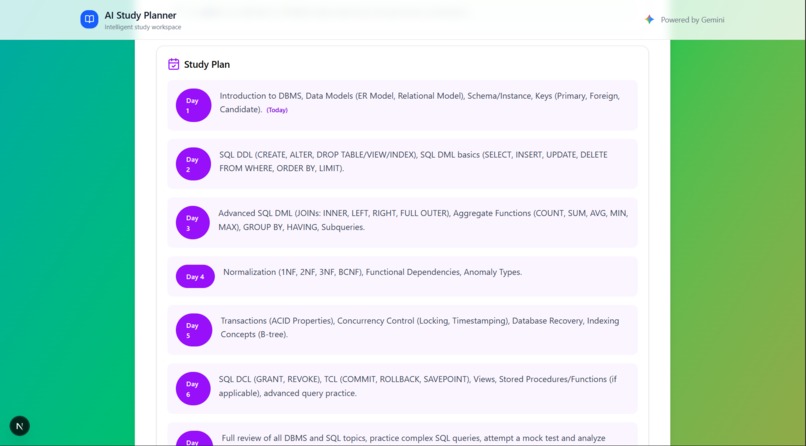
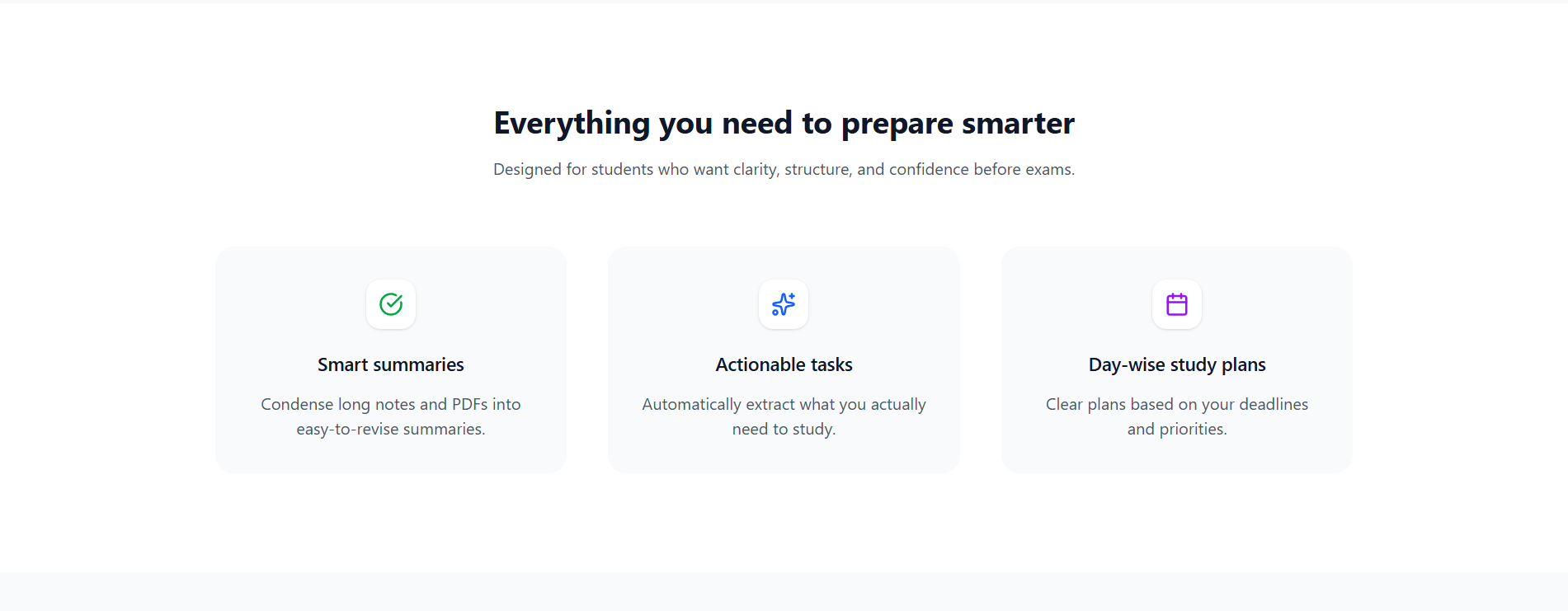
AI Study Planner is an AI-powered workspace that helps students prepare smarter by:
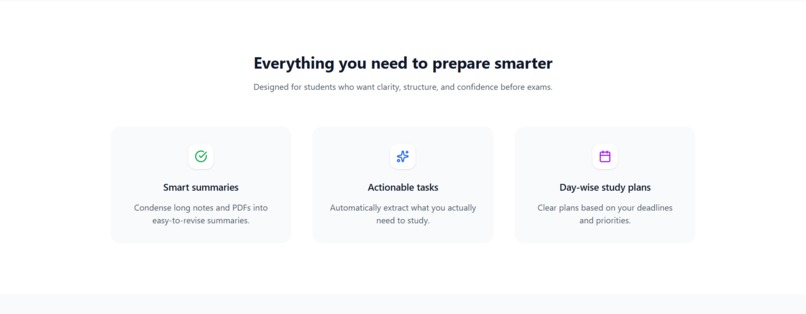
- Summarizing long notes or syllabus content
- Extracting clear, actionable study tasks
- Generating a structured, day-wise study plan
- Allowing users to export the plan as a PDF for offline revision
The application is designed to be simple, fast, and distraction-free, so students can focus entirely on preparation rather than planning.
🛠️ How I Built It
Tech Stack
- Next.js (App Router) – frontend & API routes
- TypeScript – type safety and maintainability
- Tailwind CSS – clean, modern UI
- Gemini 2.5 Flash (Gemini 3 family) – AI reasoning and content generation
Gemini Integration
The core of the application uses the Gemini API to analyze user-provided notes. I carefully designed prompts to ensure Gemini returns output in a strict, structured format, which allows the frontend to reliably parse and display:
- A concise summary
- A list of tasks
- A day-wise study plan
Gemini’s fast reasoning capabilities made it possible to generate meaningful, structured responses even for large inputs, while keeping latency low.
📚 What I Learned
- How to design deterministic AI outputs instead of free-form text
- Best practices for integrating LLMs into real products
- Handling API limitations, rate limits, and model availability
- Structuring a clean SaaS-style UI with a clear separation between landing page and workspace
- Exporting AI-generated content into real-world formats like PDF
This project significantly improved my understanding of prompt engineering, AI reliability, and product-focused frontend design.
⚠️ Challenges I Faced
Model availability & quotas:
Understanding which Gemini models were available, supported, and usable under free-tier limits required careful testing and iteration.Output consistency:
Early versions produced mixed or repeated content. I solved this by enforcing strict output markers and robust parsing logic.UX balance:
Making the interface feel professional without overwhelming users was challenging. I iterated multiple times to achieve a clean, focused workspace experience.
🌟 What’s Next
Future improvements could include:
- User accounts and saved study plans
- Progress tracking and reminders
- PDF uploads with document parsing
- Dark mode and accessibility enhancements
🎯 Final Thoughts
AI Study Planner is built to solve a real, everyday problem for students. By combining thoughtful UI design with Gemini’s powerful reasoning capabilities, the project demonstrates how AI can move beyond chat interfaces and become a practical productivity tool.
Thank you for checking it out!
Built With
- gemini-3-api
- github
- html5
- nextjs
- tailwind-css
- typescript


Log in or sign up for Devpost to join the conversation.