-
-
Landing
-
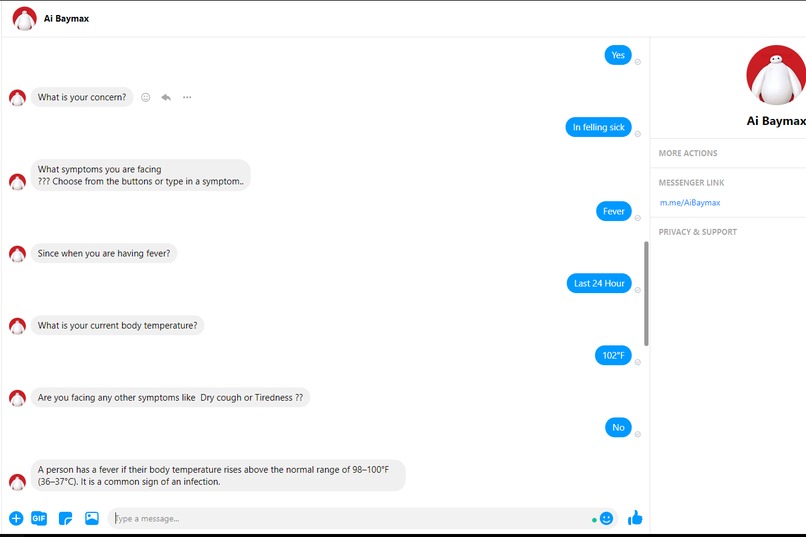
Demo Screenshot

Inspiration
What it does
gBaymax is an offline AI healthcare assistant inspired by Baymax from Big Hero 6. It offers empathetic support for users by assessing symptoms, providing wellness tips, setting reminders, and engaging in friendly conversation all without requiring an internet connection. Using quantized Gemma-3n models, gBaymax runs efficiently on smartphones and edge devices, ensuring privacy and accessibility even in low-connectivity areas.
How I built it
I built gBaymax using the instruction-tuned, quantized gemma-3n-E2B-it-IQ4_XS.gguf model, running inference through the lightweight llama.cpp runtime. The assistant’s personality was crafted with prompt engineering to reflect Baymax’s caring, gentle tone and literal yet comforting style. The frontend prototype was developed in Python with Gradio to simulate conversational interactions, with plans for mobile deployment in the future.
Challenges I ran into
Balancing performance and model size: Ensuring the model runs smoothly on limited hardware while maintaining conversational quality. Persona tuning: Designing prompts that capture Baymax’s unique blend of empathy, literalness, and humor was tricky with a small model. Offline capability: Implementing a fully offline system meant no cloud support, so all processing had to be highly optimized. Limited training data: The Gemma-3n model is powerful but not perfect for healthcare dialogue out-of-the-box, requiring careful prompt design.
Accomplishments that I'm proud of
Successfully running a 2.9GB quantized model on mobile-equivalent hardware with responsive, meaningful conversations. Capturing Baymax’s personality in a chatbot through clever prompt engineering. Demonstrating the feasibility of privacy-first, offline AI healthcare assistants using open models. Creating a foundation for expanding to voice interaction and personalized health monitoring.
What I learned
The power of quantization: how smaller models can deliver impressive results when carefully chosen and tuned. The importance of persona and prompt engineering to humanize AI interactions. Technical insights into deploying large language models on edge devices using llama.cpp and GGUF formats. Challenges and opportunities in building privacy-respecting AI assistants for real-world health use cases.
What's next for gBaymax :
Integrate voice input/output using Whisper and TTS for hands-free interaction. Build mobile apps for Android and iOS with optimized runtime support. Enhance emotional intelligence and mood tracking capabilities. Add multilingual support and expanded health diagnostic functions. Collaborate with healthcare professionals to validate and expand use cases.
Built With
- gemma
- livekit
- llama.cpp
- python


Log in or sign up for Devpost to join the conversation.