-
-
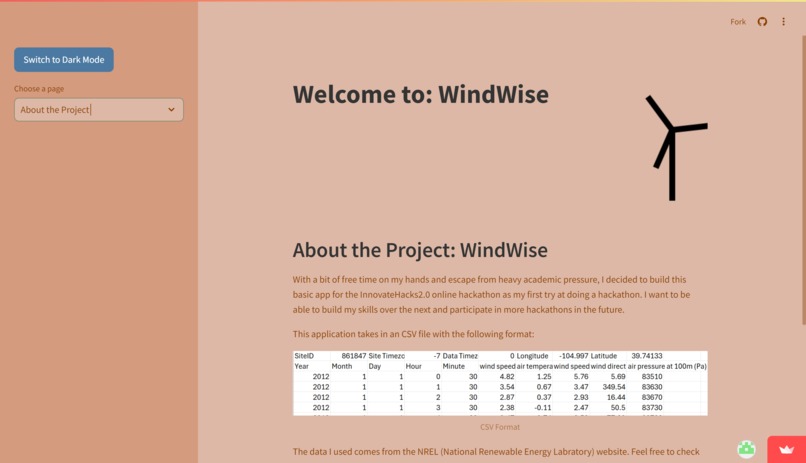
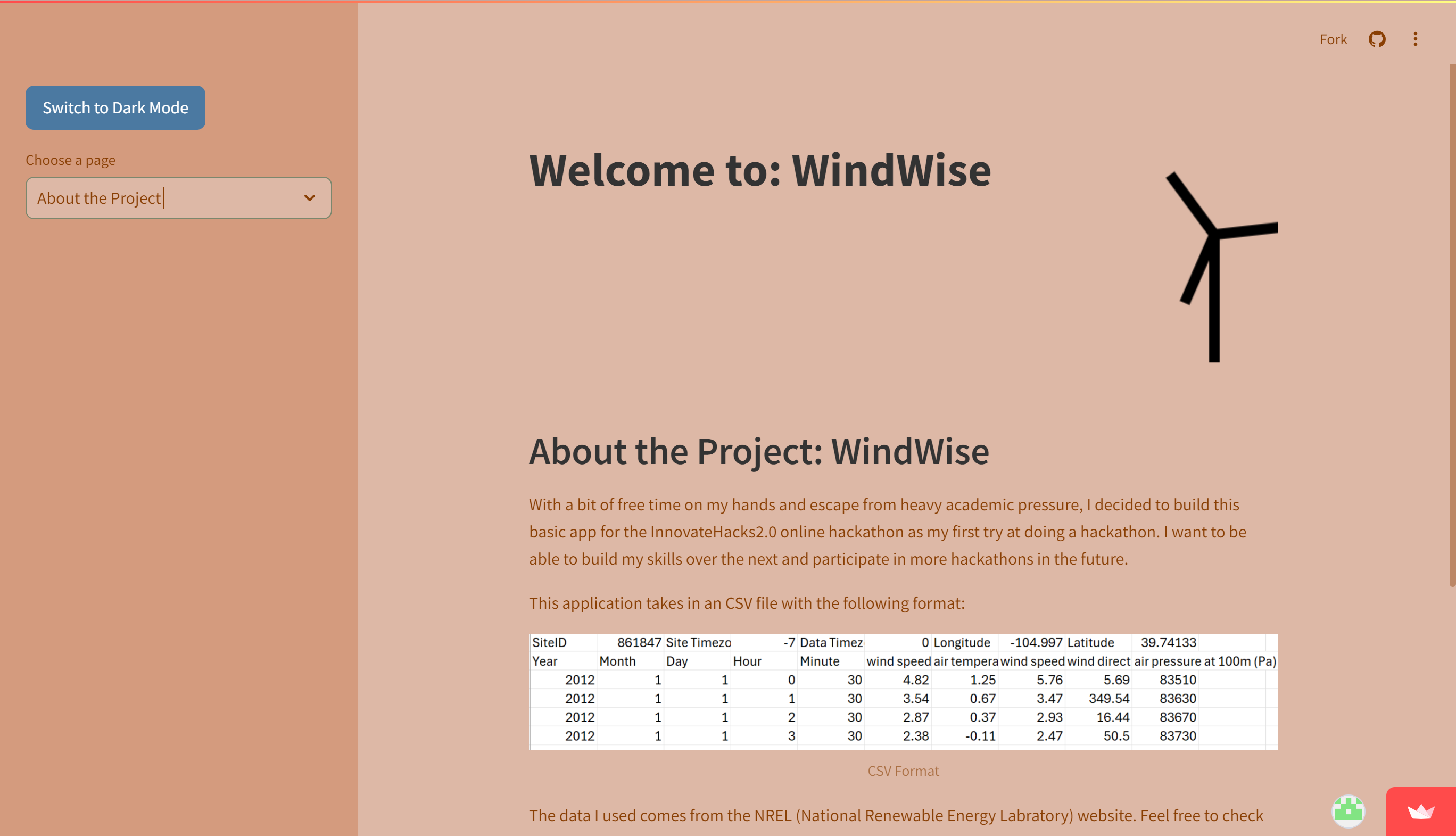
screenshot of the "about the project" page
-
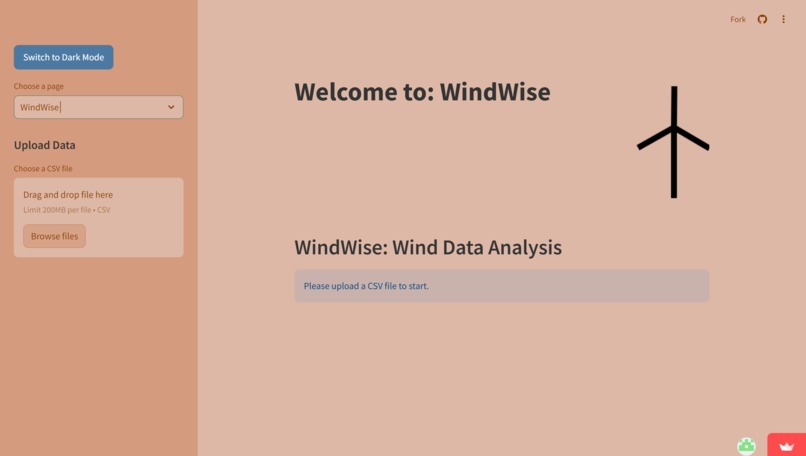
screenshot of the windwise page
-
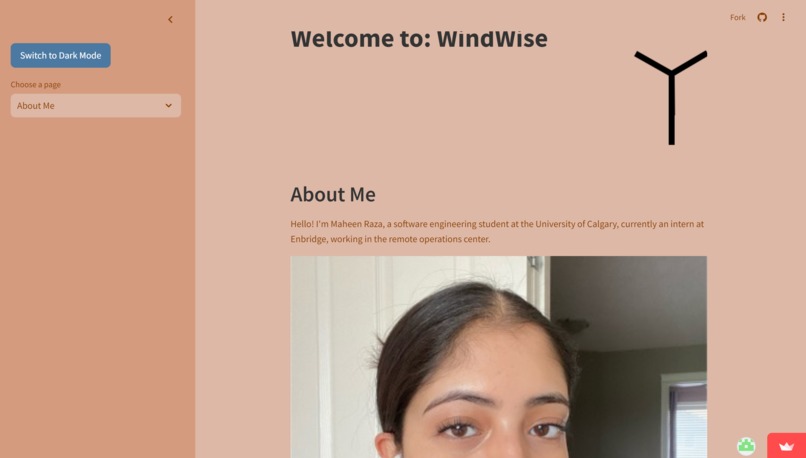
screenshot of the "about me" page
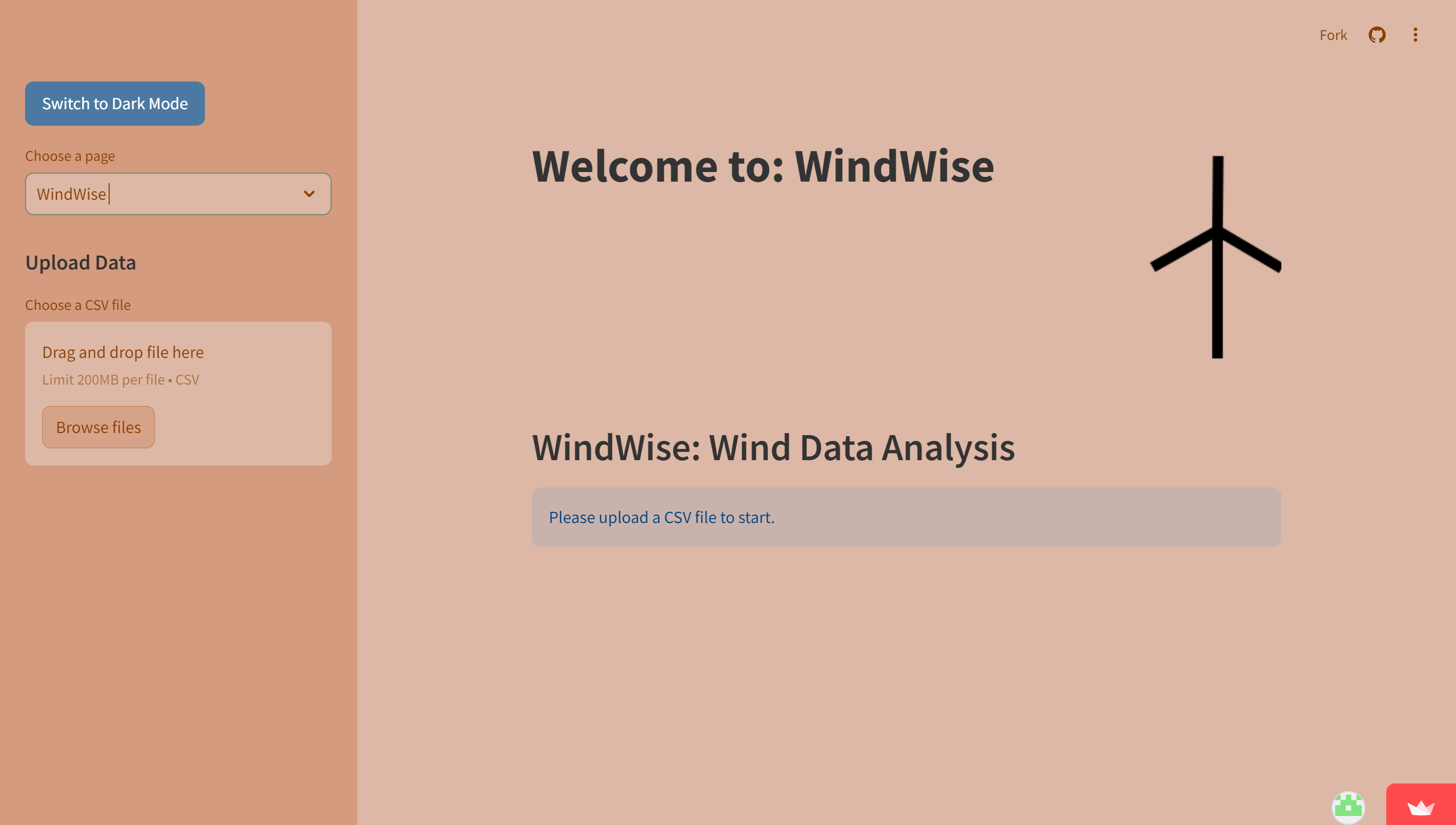
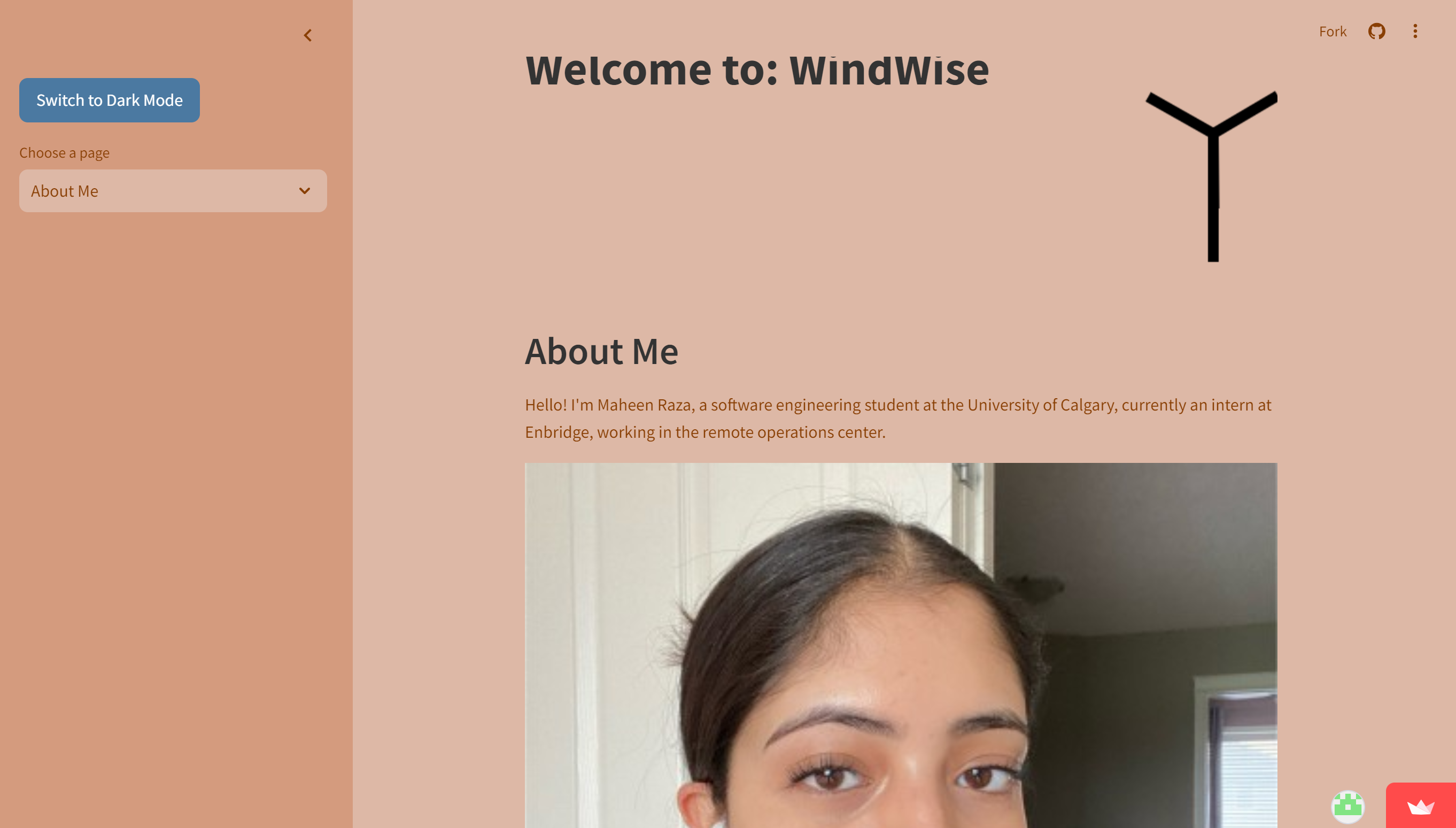
Before diving into the details of my project, I want to share the motivation behind participating in this hackathon. My name is Maheen Raza, and I am currently a software engineering student at the University of Calgary, where I am completing a 16-month internship in the energy industry. With ten months remaining, I’ve found myself inspired by the continuous learning and hands-on experience it offers. This internship is my first professional role, and while I thoroughly enjoy the experience, I miss the student atmosphere and the collaborative energy of working with peers who are also passionate about learning. Participating in this hackathon was a chance to reconnect with that spirit—to learn, expand my skills, and challenge myself outside of my professional and academic environment. Innovate Hack provided the ideal platform to step outside my routine and push my coding skills in a new context.
The inspiration for my project stemmed directly from my work in the energy sector. I work closely with data from wind turbines, focusing on production metrics and other critical data across various wind sites owned by Enbridge. Given how integral energy is to our lives—from heating our homes to powering our devices—I was motivated to create a wind turbine analysis tool. This web-based tool was built using Python, Streamlit, HTML, and CSS, and aims to offer insights into wind turbine performance and data-driven forecasting.
The app allows users to upload an Excel file with data fields like year, month, day, hour, minute, wind speed at 100m, air temperature at 100m, wind speed at 120m, wind direction at 100m, and air pressure at 100m. While these parameters may seem highly specific, they are sourced directly from the NREL (National Renewable Energy Laboratory) wind resource database. Upon data upload, the tool provides basic summaries and facilitates further analysis. The analysis comprises two sections: Exploratory Data Analysis (EDA) and Modeling & Prediction. Under the EDA tab, users can view plots of wind speed over time, the rolling mean of wind speed, and the relationship between wind speed and air temperature. The Modeling & Predictions tab includes linear regression and ARIMA for forecasting future wind speeds.
One challenge I encountered was finding reliable data sources. With a wealth of resources available, I determined that the NREL offered the most trustworthy wind turbine data. Additionally, selecting models for analysis posed a challenge; ultimately, I chose to use some models I had learned in university and introduced ARIMA as a new approach to expand my knowledge.
A major accomplishment for me was building a fully functional web application independently. This was also my first hackathon experience, and I’m proud that I could balance this project alongside my other responsibilities, dedicating time daily to bring it to life.
Throughout this project, I gained valuable skills in project and time management, breaking down tasks into manageable steps to stay productive without feeling overwhelmed. I also gained technical knowledge, especially about ARIMA (Autoregressive Integrated Moving Average), which is used to predict future values based on historical data. In my project, ARIMA forecasts future wind speeds using past data trends.
As for the future of WindWise, I am eager to receive feedback from others to refine and expand the tool. I plan to enhance it with a backend for file storage, additional predictive features, advanced visualization tools, and integration with weather data for more comprehensive insights.

Log in or sign up for Devpost to join the conversation.