-
-

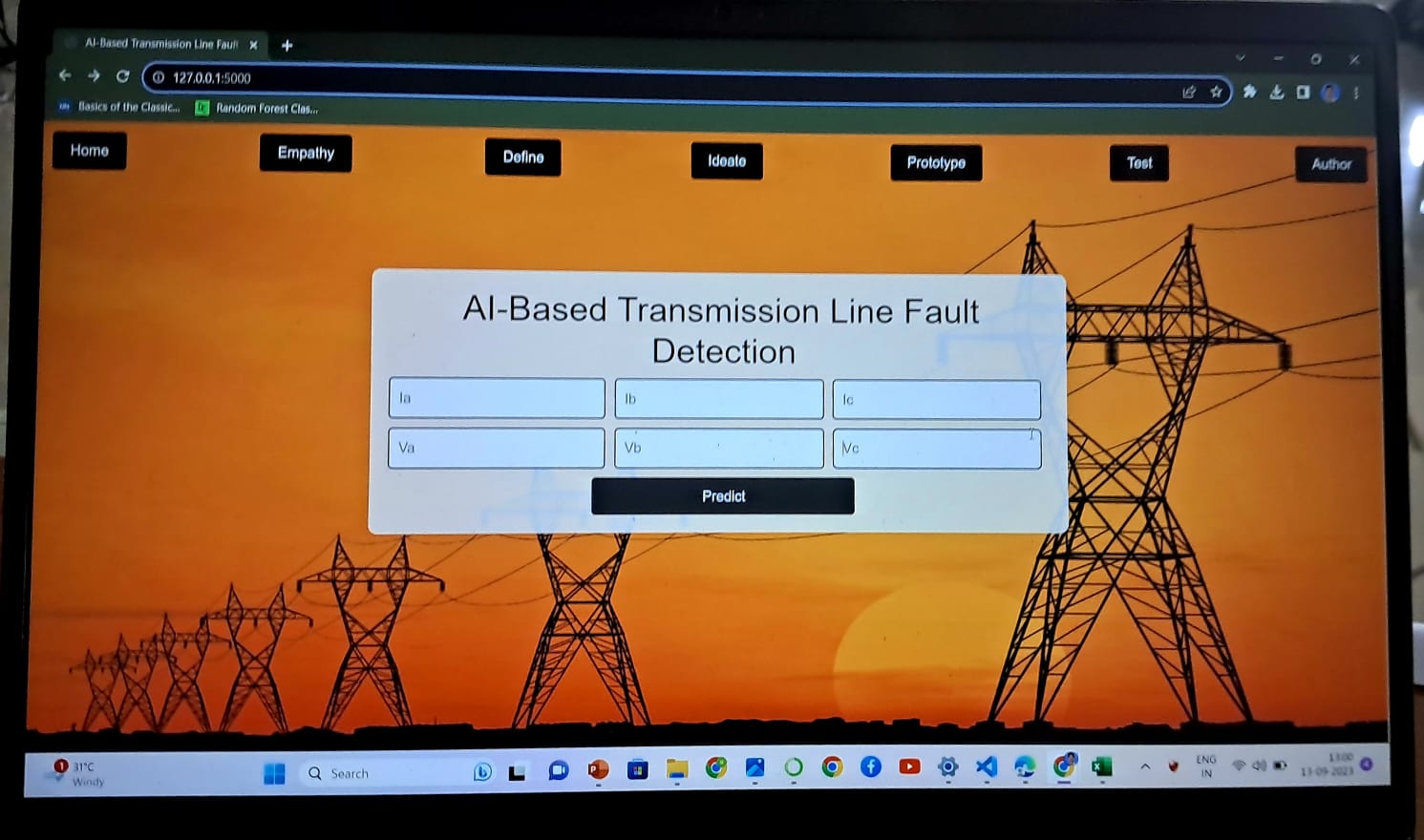
interface
Inspiration
Our journey into the world of AI-based transmission line fault detection was sparked by our passion for electrical and electronics engineering. As students in this field, we couldn't ignore the vital importance of a reliable power grid. The thought of a world without power due to transmission line faults or failures inspired us to seek innovative solutions. We aimed to bridge the gap between electrical engineering expertise and the cutting-edge world of AI technology.
What it Does
Our project, "AI-Based Transmission Line Fault Detection" by Power Masters, is a transformative solution for the power distribution sector. At its core, it integrates artificial intelligence and machine learning to identify various problems in transmission lines, such as ground faults, line faults, single line to ground faults, double line to ground faults, and triple line to ground faults. We harnessed the power of the Random Forest algorithm to create a robust fault detection system. To make it accessible, we developed an intuitive interface that allows power distribution professionals and technicians to input specific values related to the transmission line. The AI-based system analyzes these values and accurately predicts the type of fault in the transmission line.
How We Built It
Our project is the result of meticulous planning and collaboration. We began by assembling a dedicated team of electrical engineering and AI enthusiasts. To train our machine learning model, we utilized a diverse dataset of 12,000 data points, covering a wide range of fault scenarios. The Random Forest algorithm was the linchpin, allowing our system to make precise predictions by creating an ensemble of decision trees. In addition to the machine learning component, we developed a user-friendly front-end model using the Django framework. This interface serves as a valuable tool for power distribution professionals, making it accessible and easy to use.
Challenges We Ran Into
Our journey was not without its challenges. We encountered skepticism from those who questioned the applicability of AI in the power distribution sector. Technical obstacles included managing vast datasets and ensuring the system's resilience in adverse weather conditions. However, these challenges only fueled our determination to succeed. The responsibility we felt toward ensuring the grid's reliability as future electrical engineers was a powerful motivator.
Accomplishments That We're Proud Of
Our project represents the successful fusion of electrical engineering expertise with AI technology. We've created a system that can identify faults in transmission lines with remarkable precision, ensuring the reliability of the power grid. We are particularly proud of the diverse dataset we used, which allowed our machine learning model to comprehensively learn and recognize fault patterns. Our user-friendly interface makes our solution accessible and valuable to professionals in the power distribution sector.
What We Learned
Our journey into AI-based fault detection has depend our understanding of the immense potential of machine learning algorithms. We've learned how data-driven solutions can address real-world challenges. We've gained practical experience in harnessing the Random Forest algorithm for accurate predictions, as well as the development of intuitive user interfaces. Our project has reinforced our belief in the power of innovation and the significance of electrical engineering in ensuring a reliable power grid.
What's Next for AI-Based Transmission Line Fault Detection by Power Masters
The future of our project holds exciting possibilities. We plan to further refine and expand our fault detection system, incorporating more advanced AI techniques. We aim to develop predictive maintenance capabilities to pre-emptively address potential issues. Additionally, we aspire to collaborate with industry professionals and utilities to implement our solution on a broader scale, making the power grid even more reliable and resilient.


