-
-
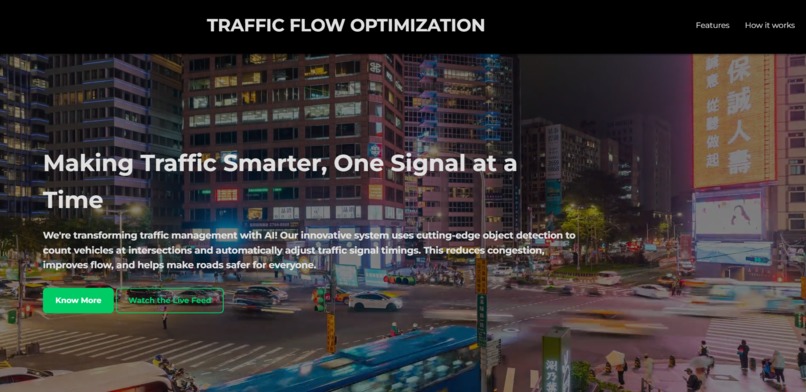
Landing Page
-
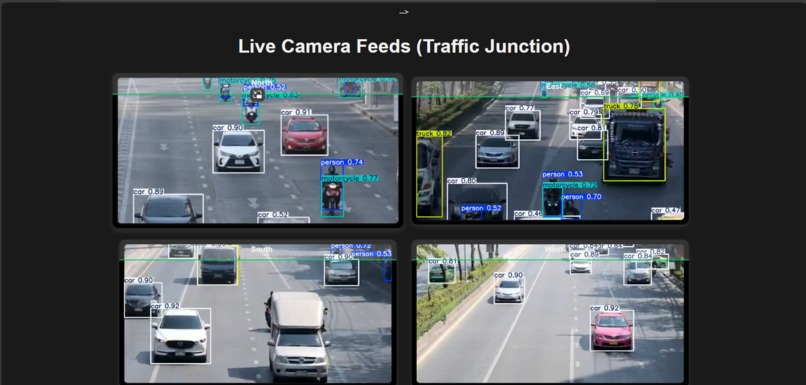
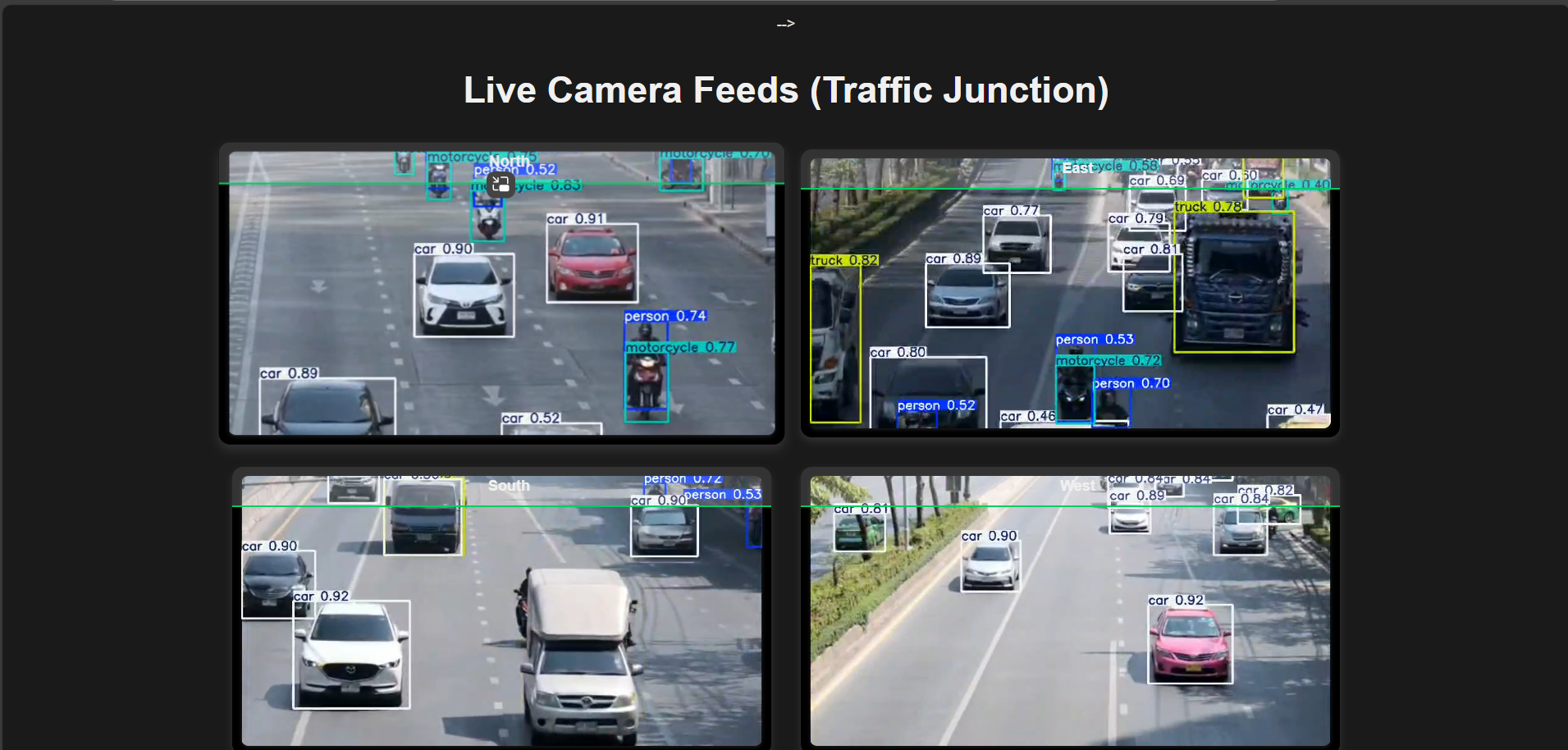
Object Detection
-
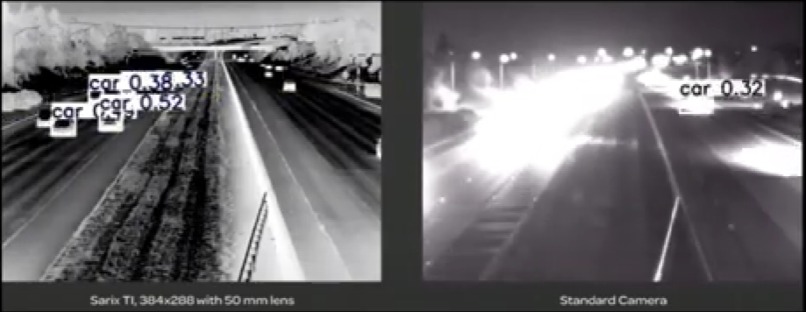
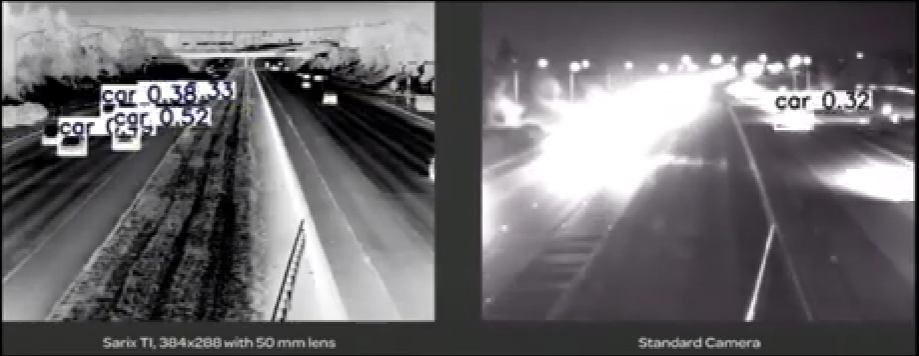
Night Vision Object Detection
-
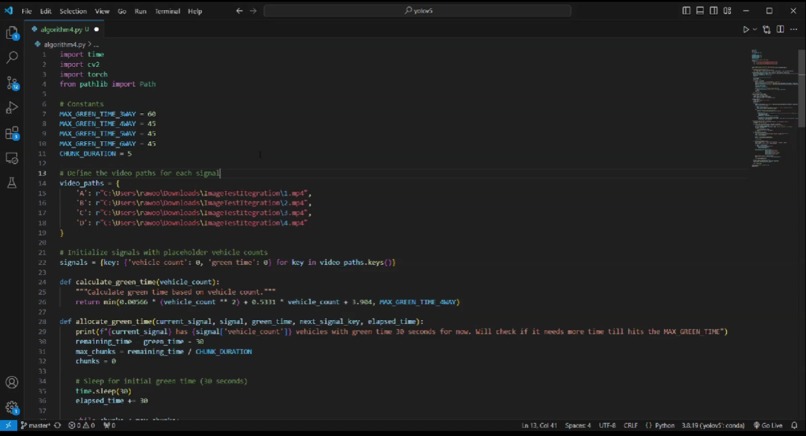
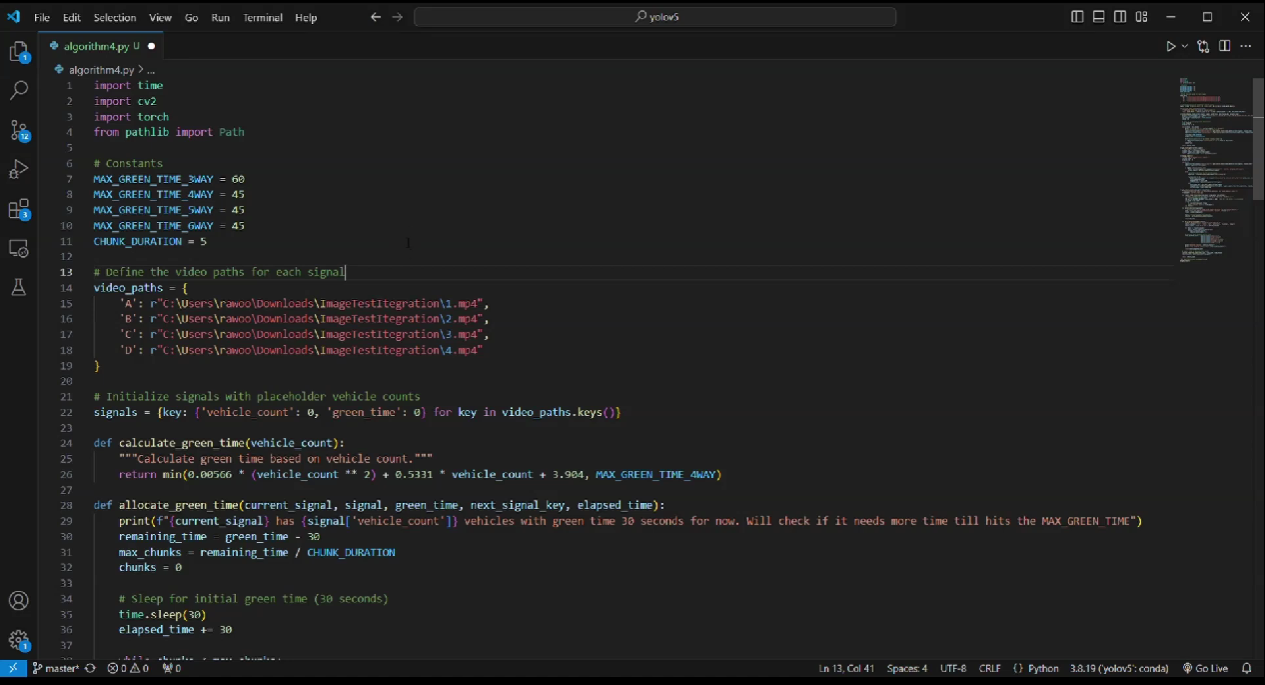
Code
-
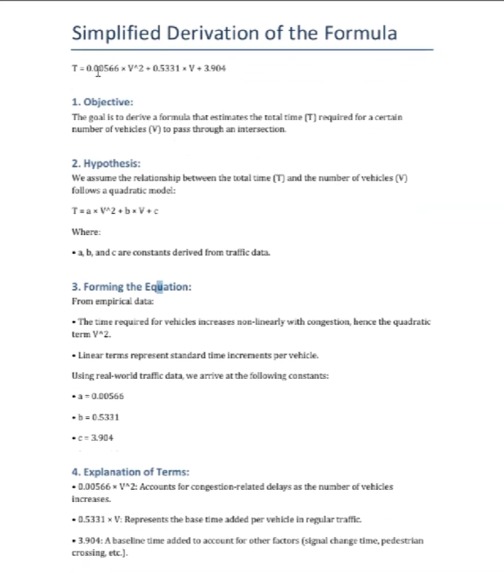
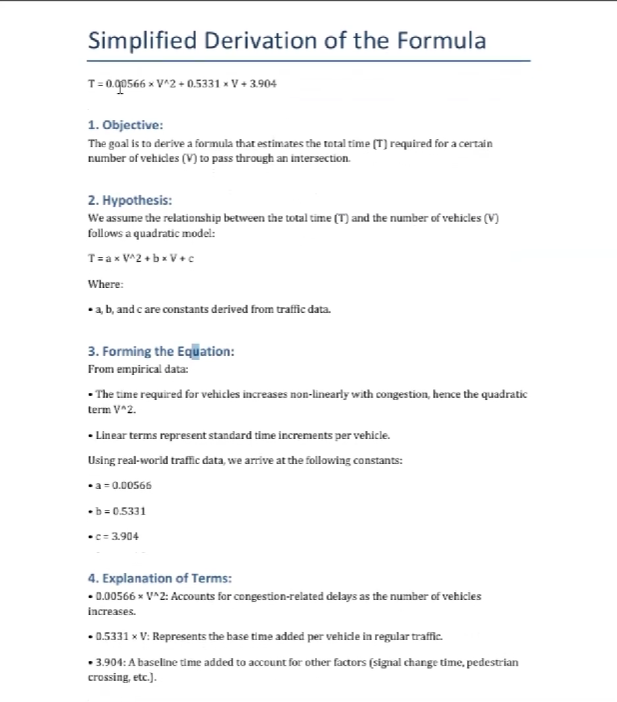
Fitting Equation Of Line
-
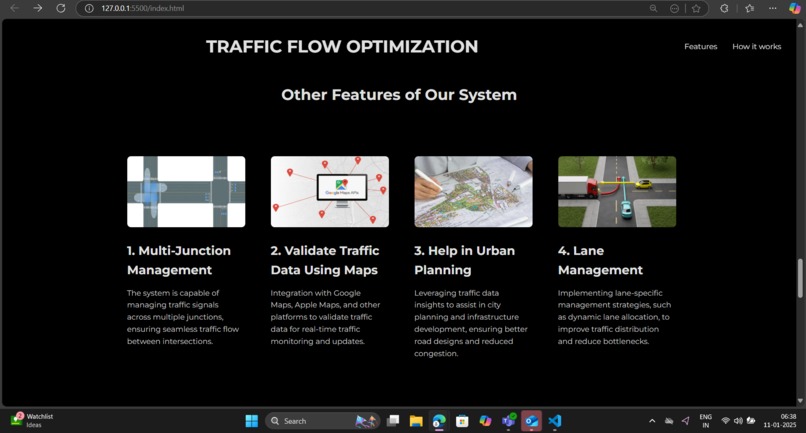
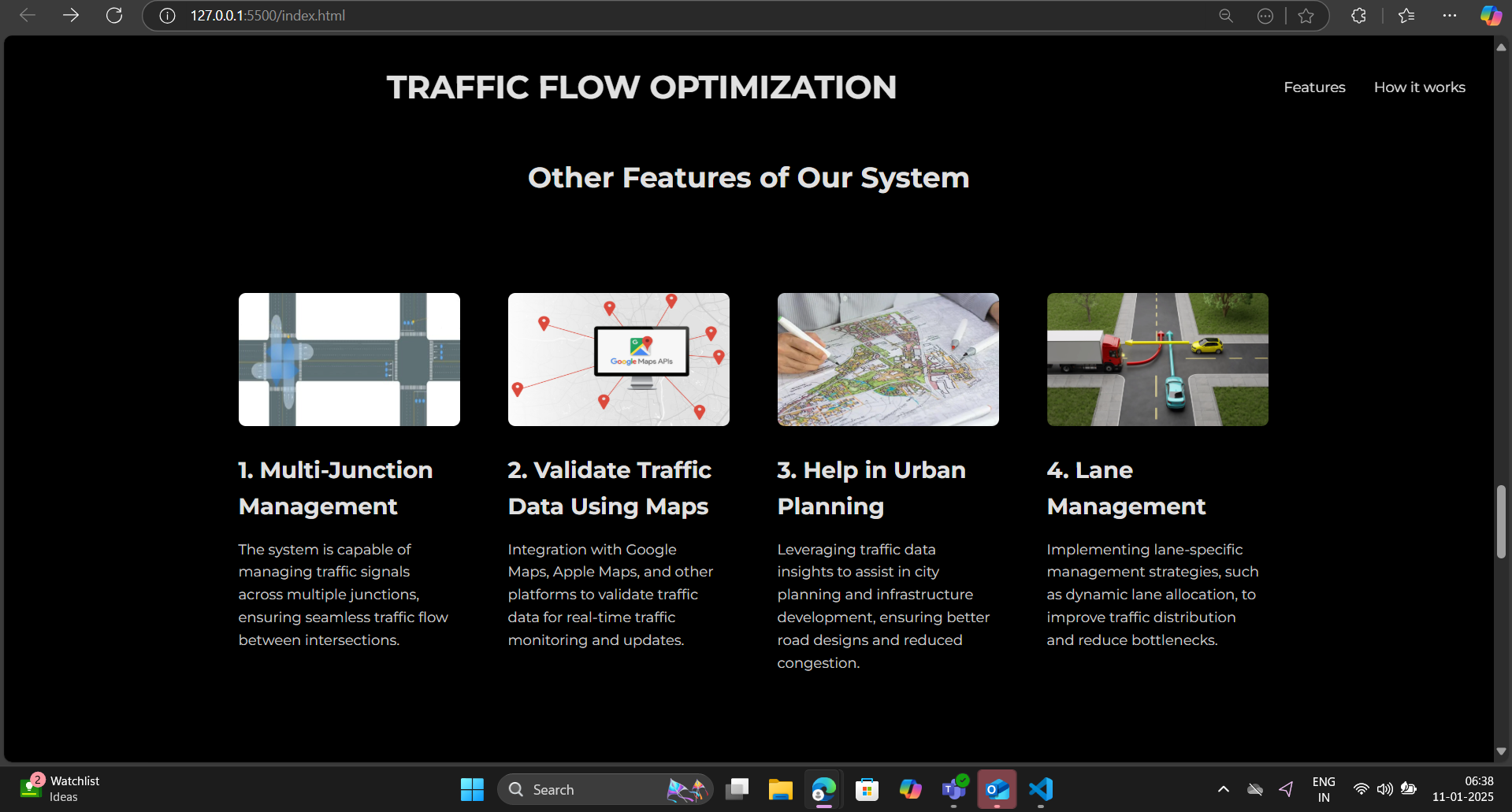
Features
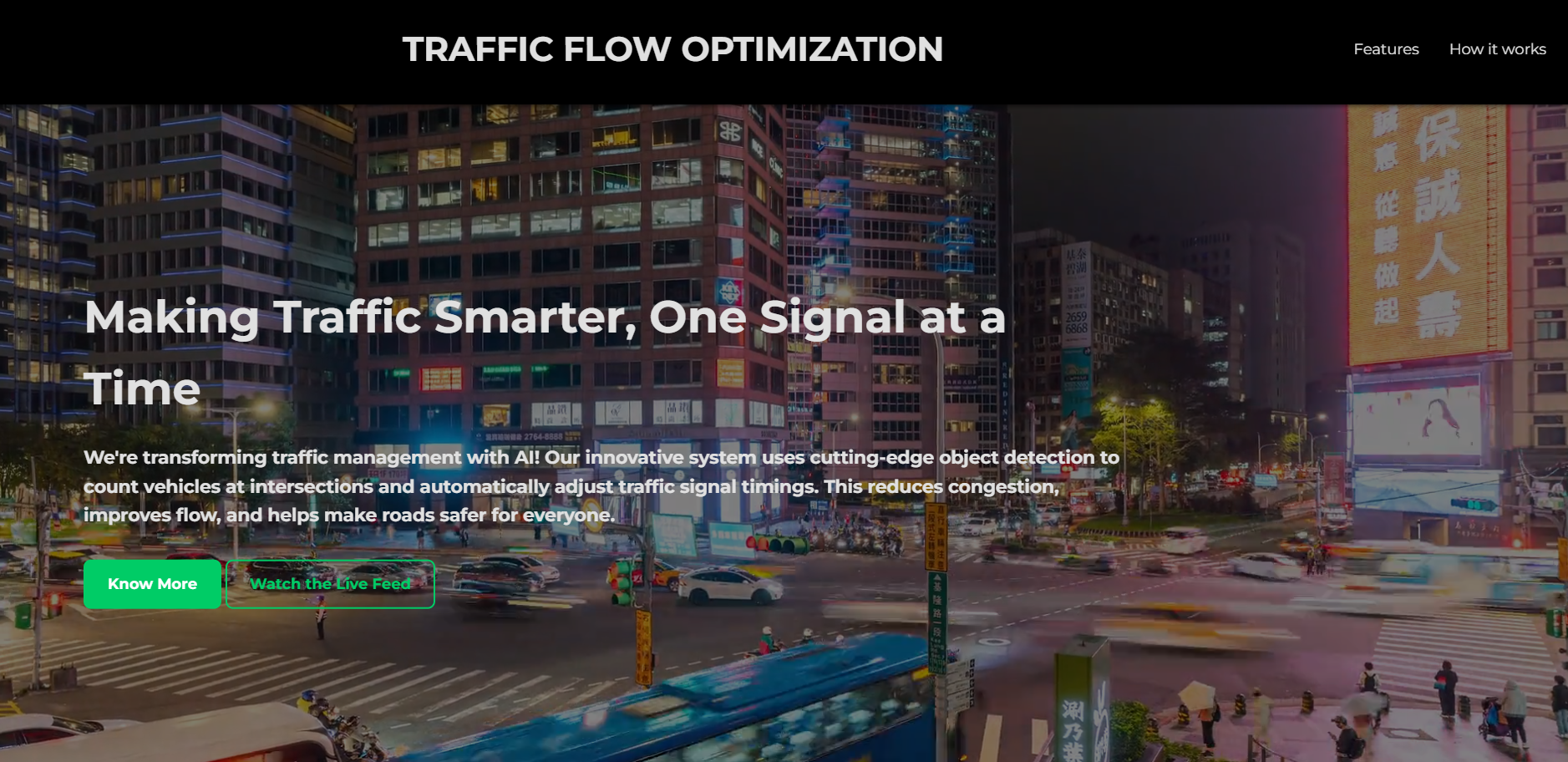
AI-Based Traffic Flow Optimization
Inspiration
Traffic congestion in urban areas wastes time, increases fuel consumption, and contributes to pollution. Inspired by the potential of AI to make cities smarter, we aimed to build a solution that improves traffic management, reduces congestion, and enhances overall commuting experiences.
What It Does
Our project predicts traffic congestion in real-time and suggests optimized routes for vehicles. It also provides actionable insights for city planners, including peak congestion times and locations, enabling smarter urban planning.
How We Built It
- Data Gathering: We used open traffic APIs and simulated datasets to model real-world traffic scenarios.
- AI Integration: Machine learning models were trained to predict traffic flow and detect congestion patterns.
- Frontend Development: A user-friendly web interface was developed using HTML, CSS, and JavaScript to visualize traffic data and recommendations.
- Backend Implementation: APIs were built to connect the AI models with the frontend, ensuring seamless data processing.
- Visualization: Incorporated real-time traffic heatmaps and predictive analytics for easy interpretation by users.
Challenges We Ran Into
- Data Limitations: Gathering real-time traffic data with sufficient granularity was a significant hurdle.
- Model Optimization: Balancing accuracy and computational efficiency of AI models required multiple iterations.
- Frontend-Backend Integration: Ensuring smooth communication between components while maintaining real-time responsiveness was challenging.
Accomplishments That We're Proud Of
- Successfully deploying a predictive model that provides real-time traffic insights.
- Creating a visually appealing and intuitive interface for users.
- Overcoming technical challenges to deliver a fully functional prototype.
What We Learned
- Effective traffic management requires a combination of data science, urban planning, and user-centered design.
- Collaboration and iterative development are key to overcoming technical and logistical challenges.
- AI has immense potential to transform public systems, and even small optimizations can have a large-scale impact.
What's Next for AI-Based Traffic Flow Optimization
- Integration with IoT Devices: Linking the system with smart traffic signals and connected vehicles for enhanced real-time response.
- Scalability: Expanding the project to handle larger datasets and more complex urban traffic systems.
- Advanced Predictive Analytics: Incorporating deep learning models to improve prediction accuracy.
- Public Deployment: Collaborating with municipal bodies to pilot the solution in real-world traffic scenarios.
- Sustainability Features: Including environmental impact analysis to further reduce emissions and fuel wastage.
Built With
- amazon-web-services
- python
- pytorch
- react
- tensorflow
- yolov8

Log in or sign up for Devpost to join the conversation.