-
-
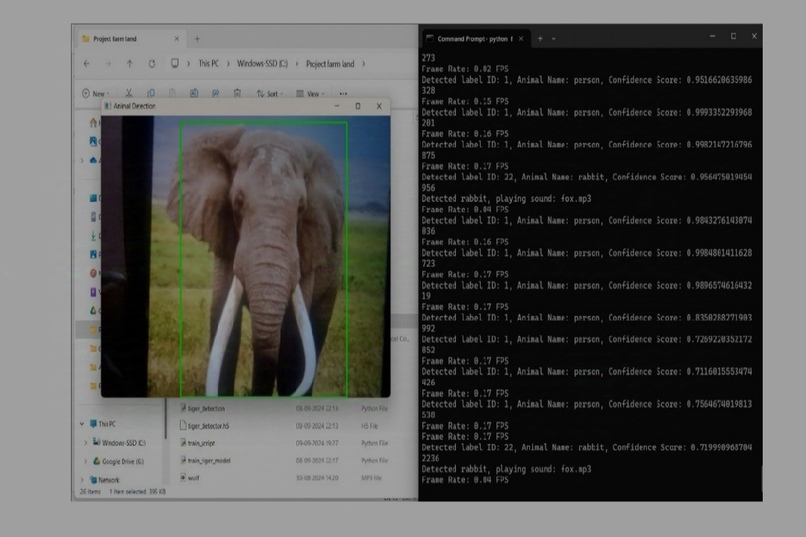
AI-based animal detection system identifies an elephant, logging detections and confidence scores, and plays sounds for deterrence.
Inspiration
The system was inspired by the increasing agricultural losses caused by wildlife invading farmlands near forests and hilly regions. Conventional solutions such as fencing, trenching, and IoT-based monitoring are often insufficient, leaving farmers vulnerable to crop damage by animals, birds, and insects. The project sought to develop an effective, AI-driven approach to protect crops and ensure sustainable agricultural practices.
What it does
The AI-based system uses cameras integrated with machine learning (ML) and deep learning (DL) algorithms to continuously monitor farmland for potential threats. It detects animal intrusions in real-time, triggers specific sounds to deter animals, and uses ultraviolet (UV) rays to manage birds and insect pests. The system alerts farmers promptly to allow timely intervention and minimize crop damage.
How we built it
The system incorporates hardware and software components for real-time monitoring and response. Cameras installed across the farm capture images and videos, which are preprocessed to filter out noise. Machine learning and deep learning models, trained using the YOLO algorithm, detect animal types, triggering specific responses. The AI-driven cameras, sound generation modules (using PyAudio), and IoT services (like AWS IoT) work together to automate monitoring and deterrence actions. Integration with cloud services such as Twilio API and Firebase Cloud Messaging supports remote alerting.
Challenges we ran into
Some challenges included high initial setup costs, maintaining reliable internet connectivity for IoT services, ensuring system accuracy under diverse environmental conditions, and integrating hardware components seamlessly. Moreover, differentiating between different types of animals in real-time using ML models required fine-tuning the algorithms for high accuracy.
Accomplishments that we're proud of
The project achieved autonomous monitoring and high accuracy in detecting animal intrusions. It provided a safer and more effective alternative to traditional methods, reducing risks for farmers while protecting crops. The system's design emphasized proactive maintenance and sustainable agricultural practices, making a significant impact on minimizing crop destruction and maximizing yields.
What we learned
The project deepened the understanding of AI/ML applications in agriculture and the challenges associated with deploying AI-driven solutions in real-world scenarios. We learned the importance of hardware-software integration, especially in agricultural settings, where environmental variability can affect system performance. Working with edge AI models and leveraging IoT services also expanded our knowledge of cloud-based and real-time data processing technologies.
What's next for AI-Based System for Crop and Human Protection
Future enhancements include improving the system's scalability, optimizing algorithms for different geographic regions, and integrating additional features such as weather data to improve decision-making. Plans to collaborate with agricultural organizations and expand deployment across different types of farms are in progress. Continuous testing and refinement will ensure the system remains reliable and effective in protecting crops and supporting sustainable agricultural practices.
Built With
- arduino-**cloud-services**:-aws-iot
- dart-**frameworks**:-pytorch
- edge-ai-models
- firebase-cloud-messaging-**databases**:-mongodb-**apis**:-twilio-api-**other-technologies**:-yolo-(object-detection)
- flutter-**platforms**:-raspberry-pi
- languages**:-python
- opencv

Log in or sign up for Devpost to join the conversation.