Inspiration
Healthcare accessibility remains a challenge for many people due to cost, availability, and long wait times for medical consultations. Many individuals turn to the internet for self-diagnosis, which can often lead to misinformation and anxiety. We wanted to create an AI-driven solution that provides reliable preliminary assessments based on symptoms while encouraging users to seek professional medical advice when needed. Try it Out: https://symptom-checker-x4c1.onrender.com
What it does
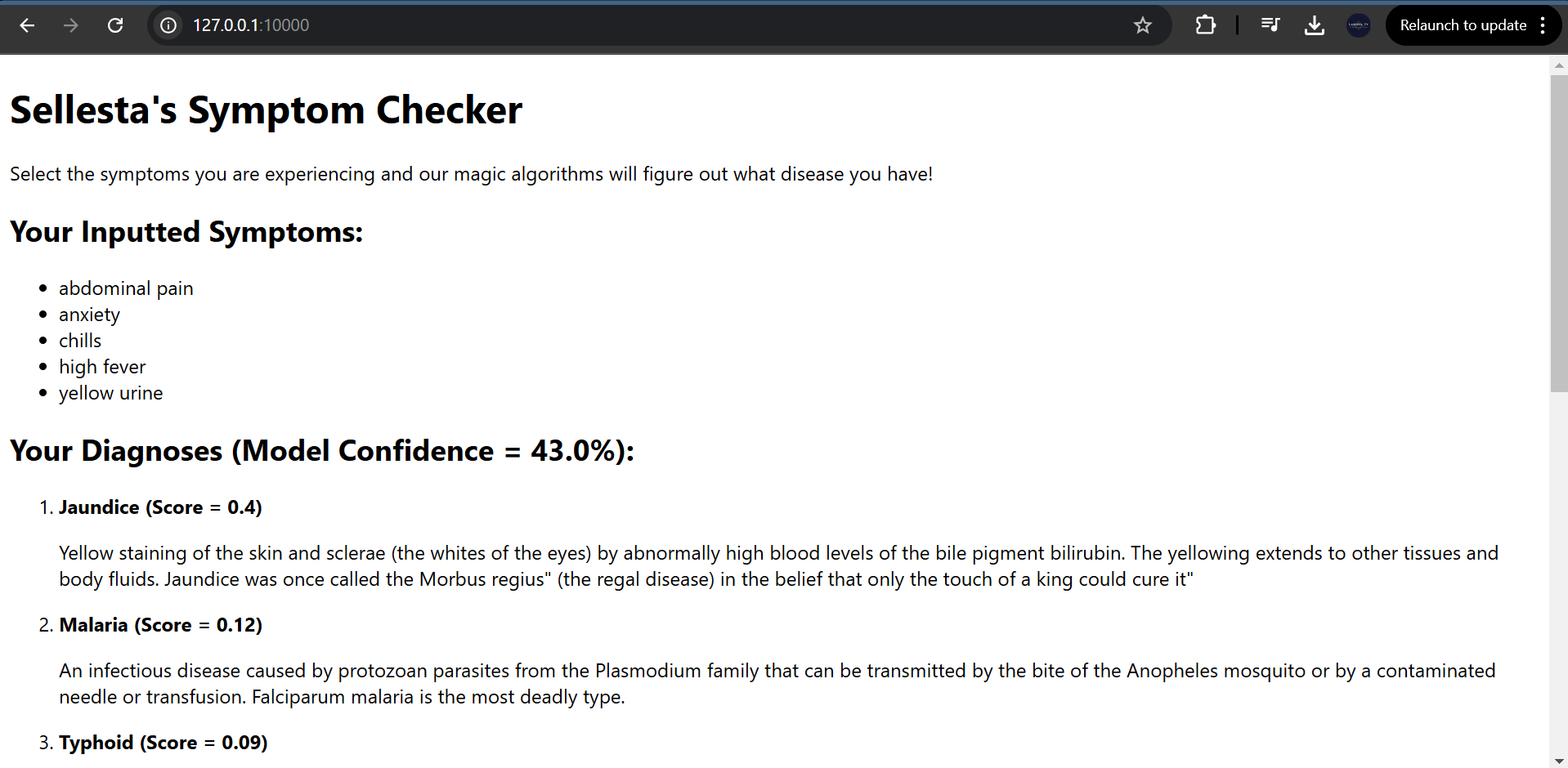
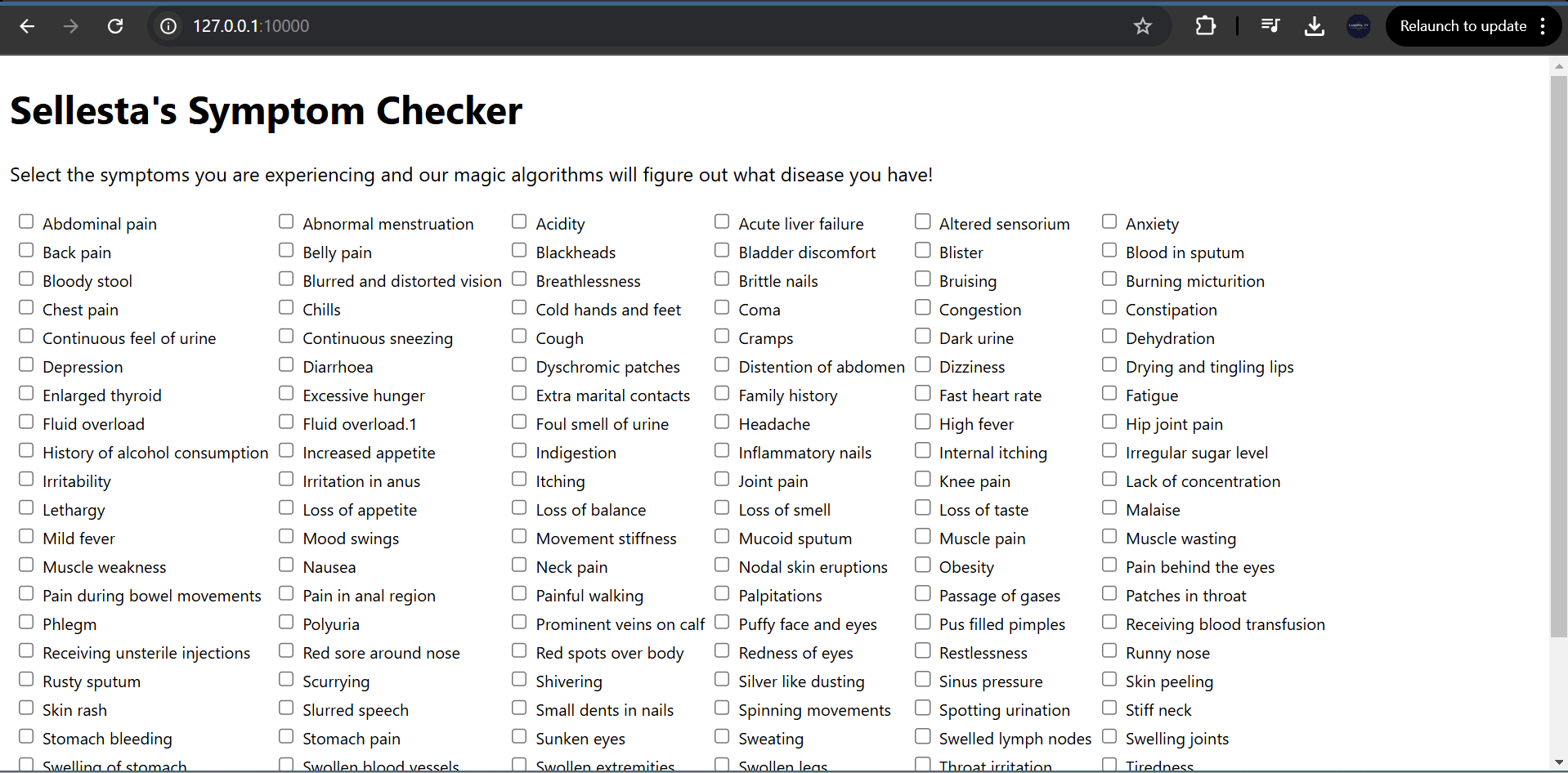
Our AI-based Symptom Checker allows users to input their symptoms through text or voice commands. The system then leverages machine learning models trained on medical datasets to analyze the symptoms and provide potential conditions, severity assessments, and recommendations. Additionally, the app can integrate with APIs like BetterDoctor to help users find nearby healthcare providers for further consultation.
How we built it
Trained using medical symptom datasets with TensorFlow and integrated into the app. Leveraged the BetterDoctor API for doctor recommendations.
Challenges we ran into
Finding high-quality, reliable symptom datasets to train our model was a challenge. Ensuring the AI model provided relevant and accurate assessments required multiple iterations. Balancing simplicity with functionality to ensure a smooth user experience. Some APIs had rate limits or required specific configurations, making integration tricky.
Accomplishments that I'm proud of
Successfully trained an AI model capable of analyzing symptoms and providing meaningful insights. Developed a working prototype that integrates with Firebase and BetterDoctor API. Designed an intuitive user interface that allows seamless symptom input and feedback retrieval. Created a scalable system that can be further improved with additional datasets and functionalities.
What I learned
The importance of high-quality medical datasets for training AI models. How to integrate machine learning into a mobile application effectively. The complexities of API integration for healthcare applications. Best practices for ensuring an intuitive and user-friendly app design.
What's next for AI-based Symptom Checker
Incorporate more diverse datasets to improve diagnostic accuracy. Expand accessibility by supporting multiple languages. Collect real-time health data from smartwatches and other wearables for a more comprehensive analysis. Work towards compliance with healthcare regulations for wider adoption.
Built With
- flash
- joblib
- kagglehub
- machine
- machine-learning
- naive
- natural-language-processing
- pandas
- python
- random
- sklearn
- tensor


Log in or sign up for Devpost to join the conversation.