Inspiration
We noticed that most cybersecurity solutions focus on post-incident analysis or periodic audits, leaving organisations vulnerable in between. Our inspiration was to shift from reactive to proactive security — giving organisations the power to understand their cyber risk in real time, as it happens.
What it does
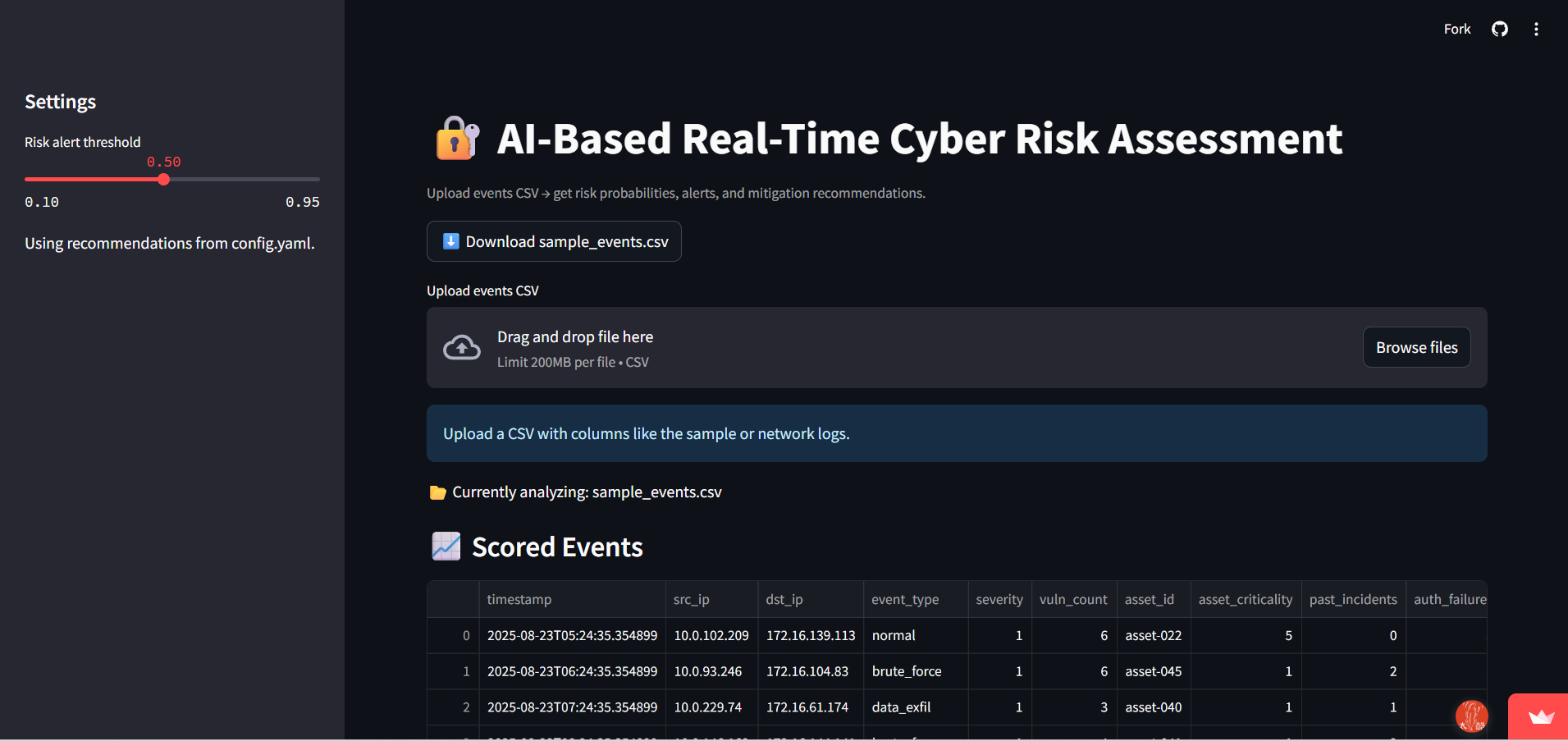
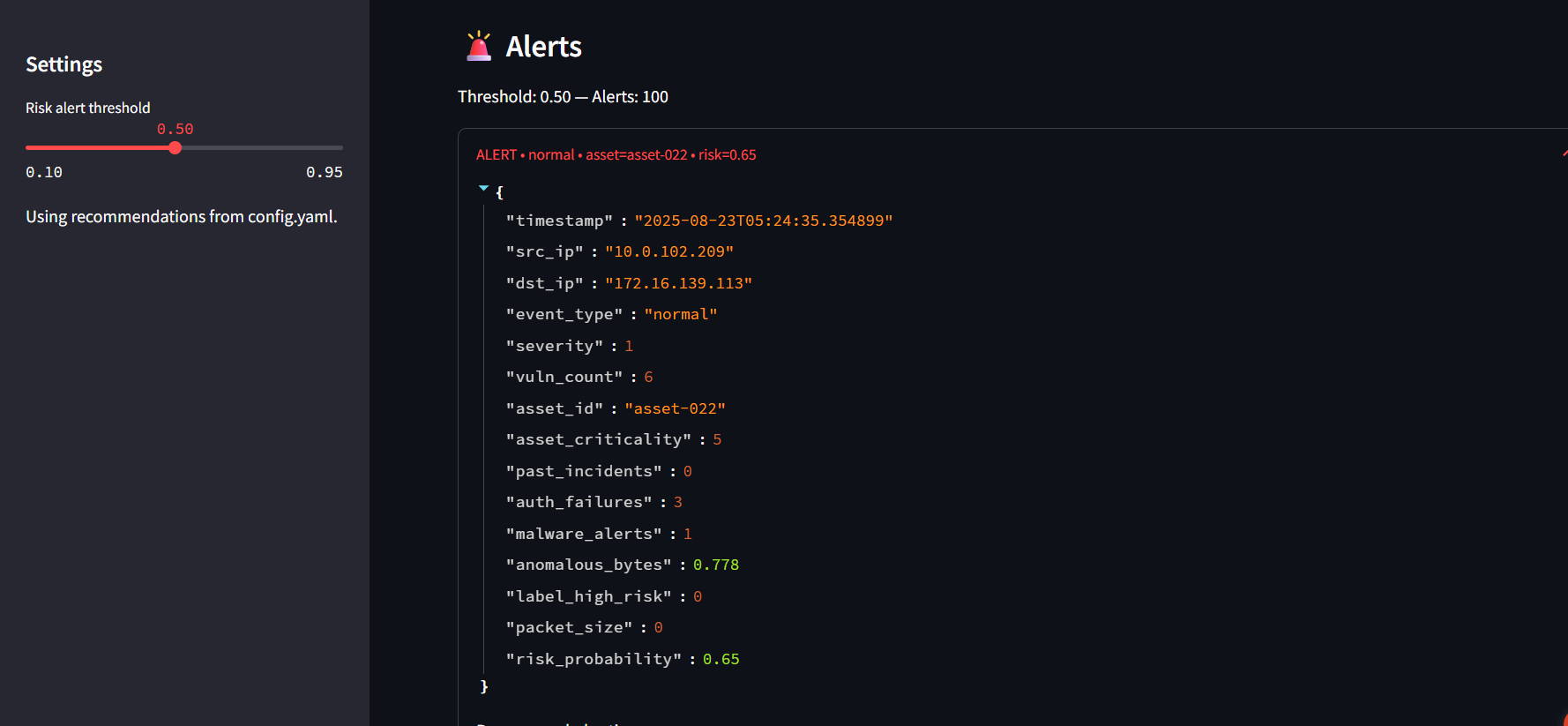
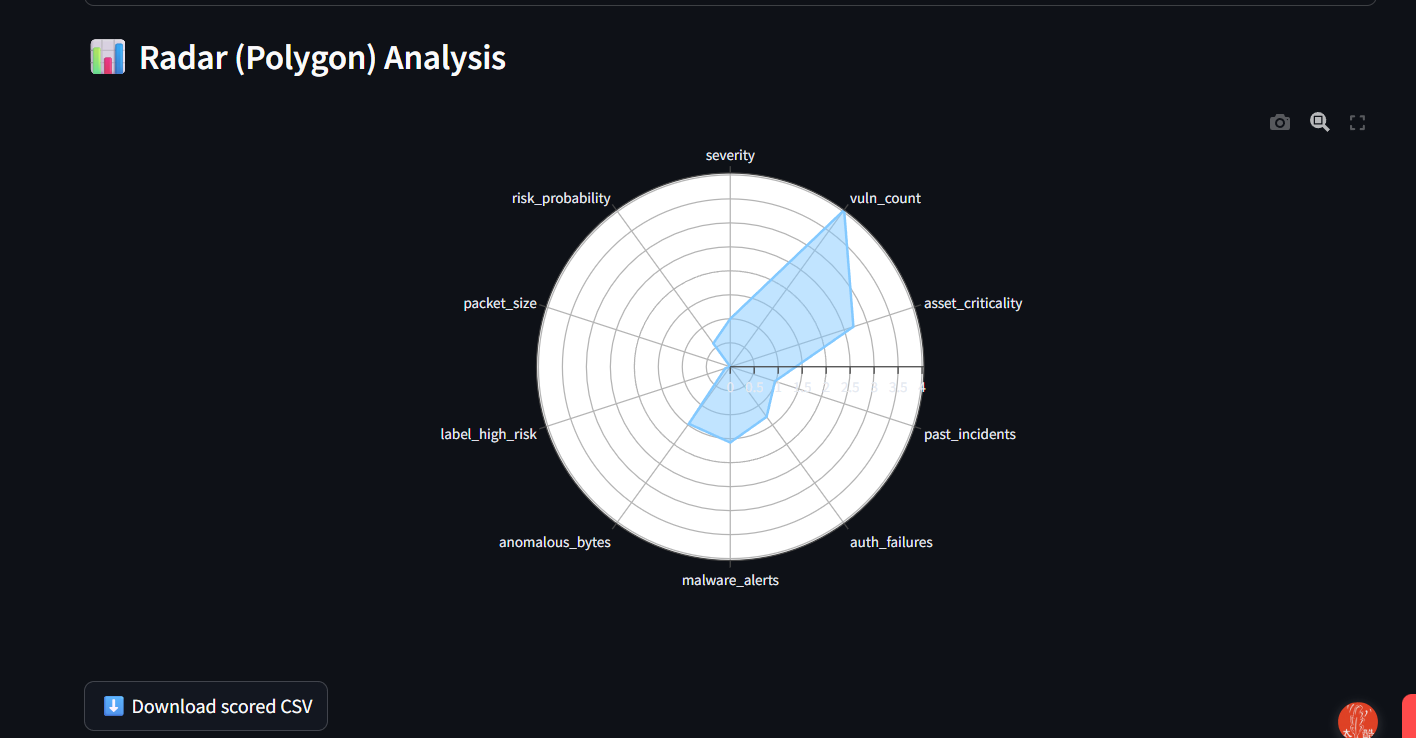
Our platform continuously collects security event data, analyses patterns using artificial intelligence, and provides a real-time risk score. It highlights emerging threats, visualises risk trends, and suggests practical steps to reduce exposure — all through a simple, interactive dashboard designed for security teams.
How we built it
We built a seamless system using Python for data processing, scikit-learn for machine learning, and FastAPI to serve real-time predictions. The frontend is powered by Streamlit, offering a sleek interface for instant interaction. Everything runs inside Docker containers, making it easy to deploy and scale.
Challenges we ran into
The hardest part was dealing with noisy, incomplete data from various sources. We also needed to ensure our model could process inputs fast enough to deliver predictions in real time. Balancing accuracy and usability — so the tool doesn’t overwhelm users with too many false alerts — was a constant design consideration.
Accomplishments that we're proud of
- Successfully developed a live cyber risk assessment tool that delivers instant, actionable insights.
- Designed a clean, intuitive dashboard that makes complex security data easy to understand.
- Built a robust backend pipeline that handles diverse, high-volume event streams with low latency.
- Packaged the solution in Docker for easy deployment in any environment.
What we learned
- Data quality is the foundation of good AI in cybersecurity.
- Real-time prediction demands careful engineering of APIs and data pipelines.
- Security solutions must not only be accurate but also easy to use under stressful conditions.
- Dockerization greatly simplified testing, deployment, and scaling.
What's next for AI-Based Real-Time Cyber Risk Assessment
- Integrate automated incident responses to reduce manual workload.
- Expand the system to ingest data from more sources (cloud apps, IoT devices).
- Improve risk prediction models using advanced algorithms like deep learning.
- Add customizable dashboards and alert thresholds for different user roles.
- Move towards a fully cloud-native architecture for better scalability and availability.
Built With
- ai
- csv
- fastapi
- machine-learning
- python
- streamlit

Log in or sign up for Devpost to join the conversation.