Inspiration
Cybersecurity is one of the fastest-growing challenges in the digital world. Traditional methods of risk assessment are often reactive and slow. Our goal was to create a proactive, intelligent system that provides real-time visibility into cyber risks and empowers organisations to act before incidents escalate.
What it does
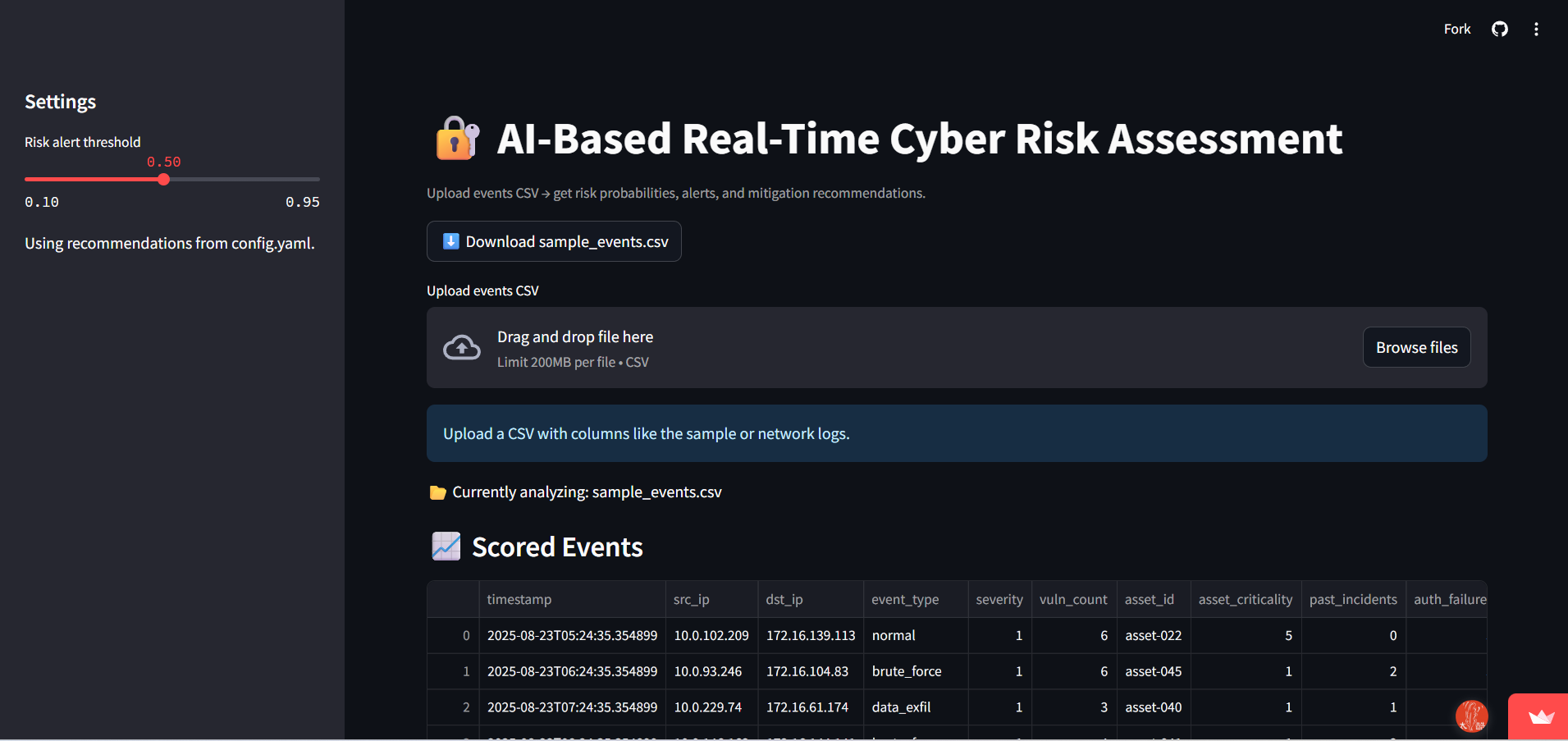
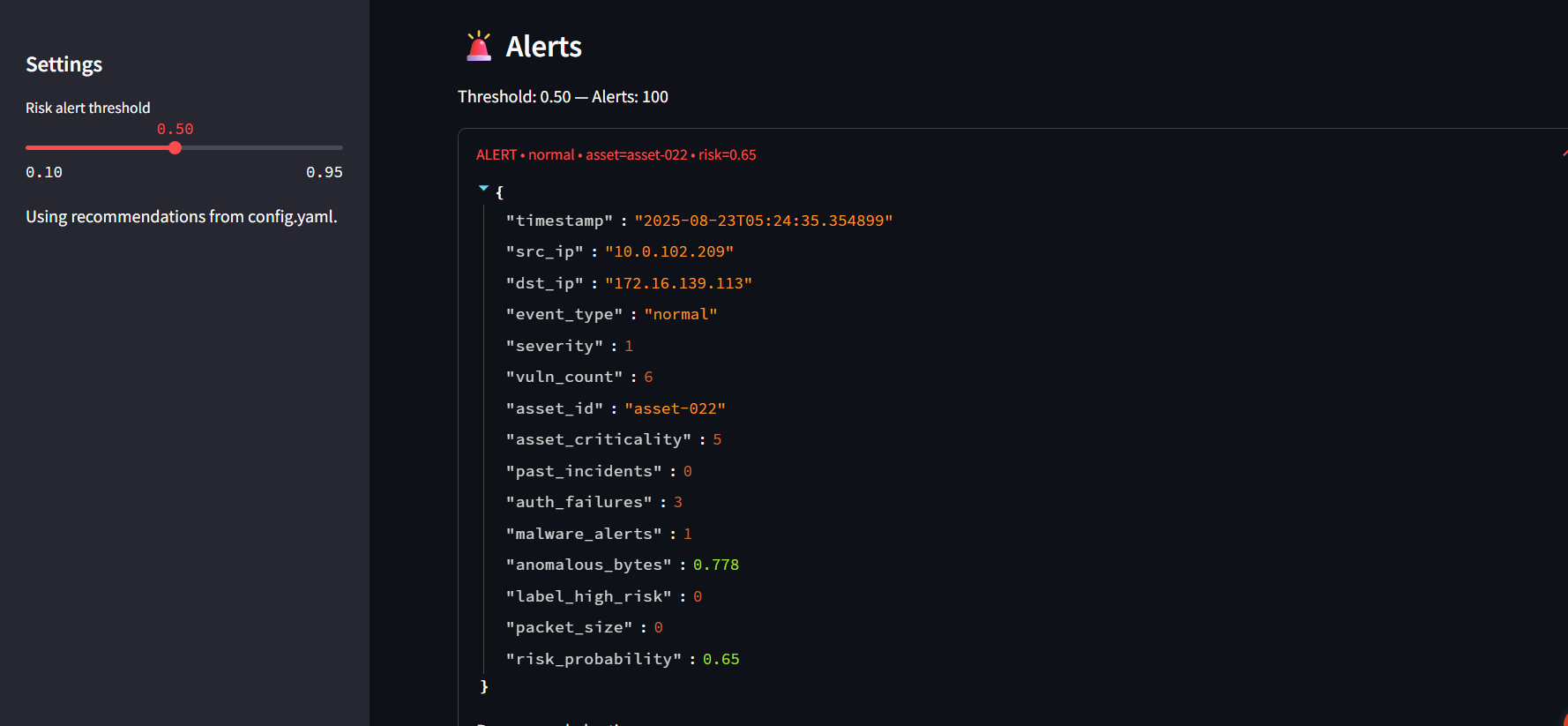
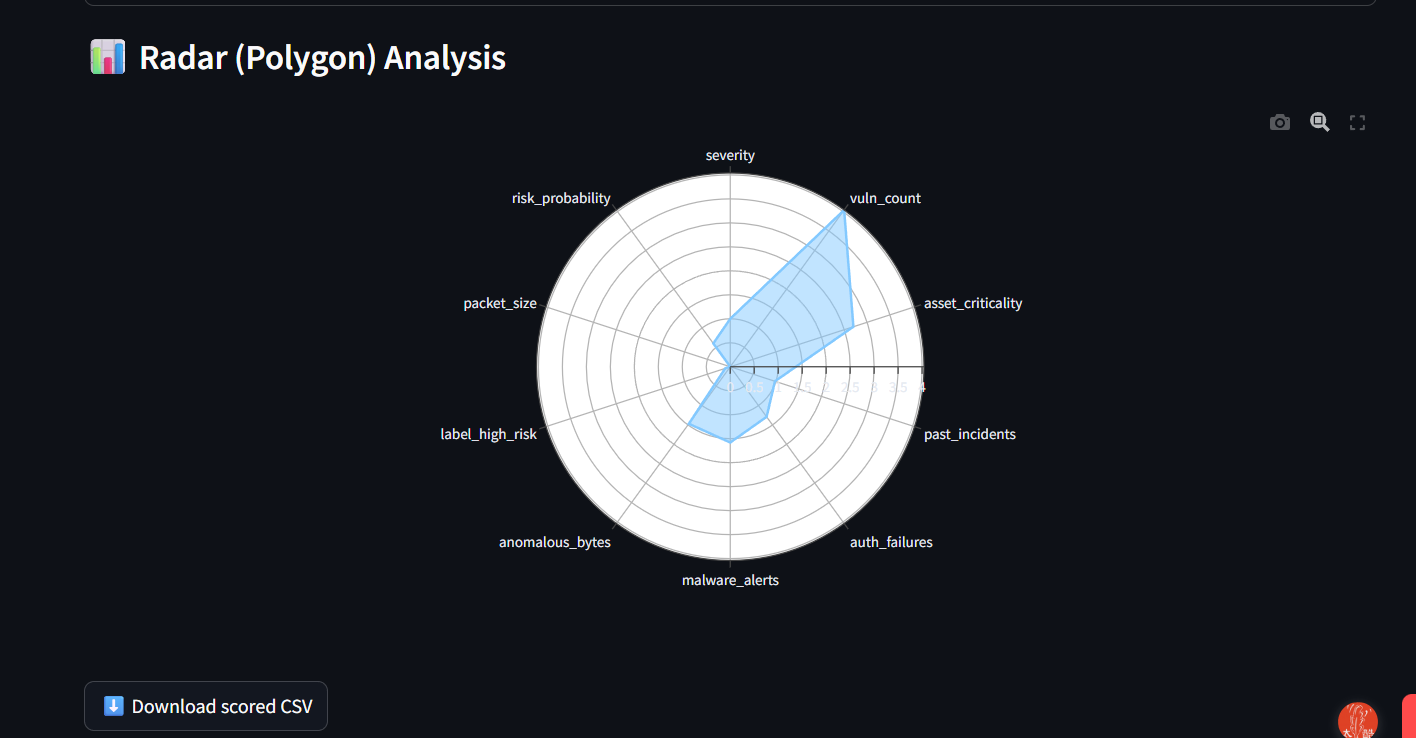
This project continuously monitors security events, analyses them using machine learning models, and calculates a dynamic cyber risk score. It provides clear visualisations of risk trends, flags critical threats, and offers mitigation advice — all in real time, via an easy-to-use web interface.
How we built it
We combined data engineering, machine learning, and web development technologies. Logs and event data are ingested and processed with Python and Pandas. The risk scoring engine is powered by a machine learning model trained on historical cyber event data. FastAPI serves the scoring API, and Streamlit delivers an interactive dashboard. We use Docker to containerise the application for consistent deployment across environments.
Challenges we ran into
- Collecting and normalising data from multiple heterogeneous sources in real time.
- Building a model that accurately predicts risk without overwhelming the user with false alerts.
- Ensuring low latency in prediction and dashboard updates to maintain a real-time experience.
- Creating a user interface that balances detailed insights with simplicity.
Accomplishments that we're proud of
- Developed a fully functional real-time cyber risk assessment tool from scratch.
- Built a scalable solution with Docker to simplify deployment.
- Achieved strong performance with accurate threat detection and minimal false positives.
- Designed a visually appealing and intuitive dashboard that makes complex data actionable.
What we learned
- Real-time data processing requires careful architectural planning to avoid bottlenecks.
- Effective feature engineering is critical for machine learning in cybersecurity.
- User experience matters: clear visuals and actionable insights are essential for security operations teams.
- Continuous model retraining and monitoring are key for adapting to evolving threats.
What's next for AI-Based Real-Time Cyber Risk Assessment
- Integrate automated incident response workflows for faster mitigation.
- Implement more advanced models (e.g., neural networks) for anomaly detection.
- Support additional data sources like cloud infrastructure and IoT sensors.
- Add user role management and alert customisation for enterprise environments.
- Explore integrating threat intelligence feeds to improve risk predictions.
Built With
- fastapi
- llm
- model
- python
- streamlit

Log in or sign up for Devpost to join the conversation.