-
-
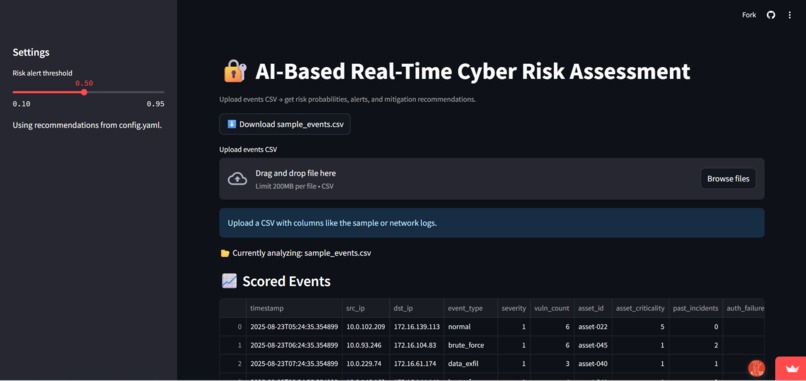
Input file
-
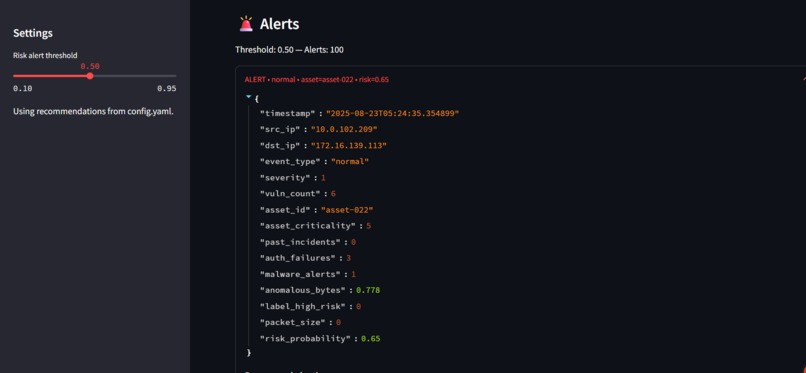
Data in SIEM
-
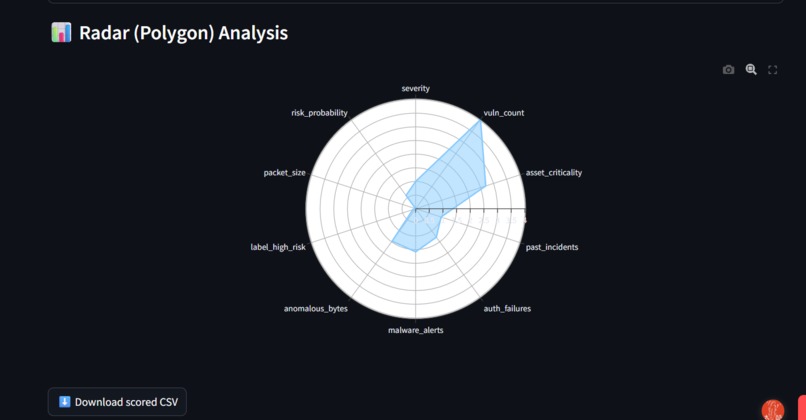
Graph
Inspiration
In today’s digital era, cyber threats evolve rapidly, and traditional risk assessment methods are often too slow to keep up. We wanted to build an intelligent solution that leverages AI to continuously analyse and assess cyber risks in real time, helping organisations stay one step ahead of attackers.
What it does
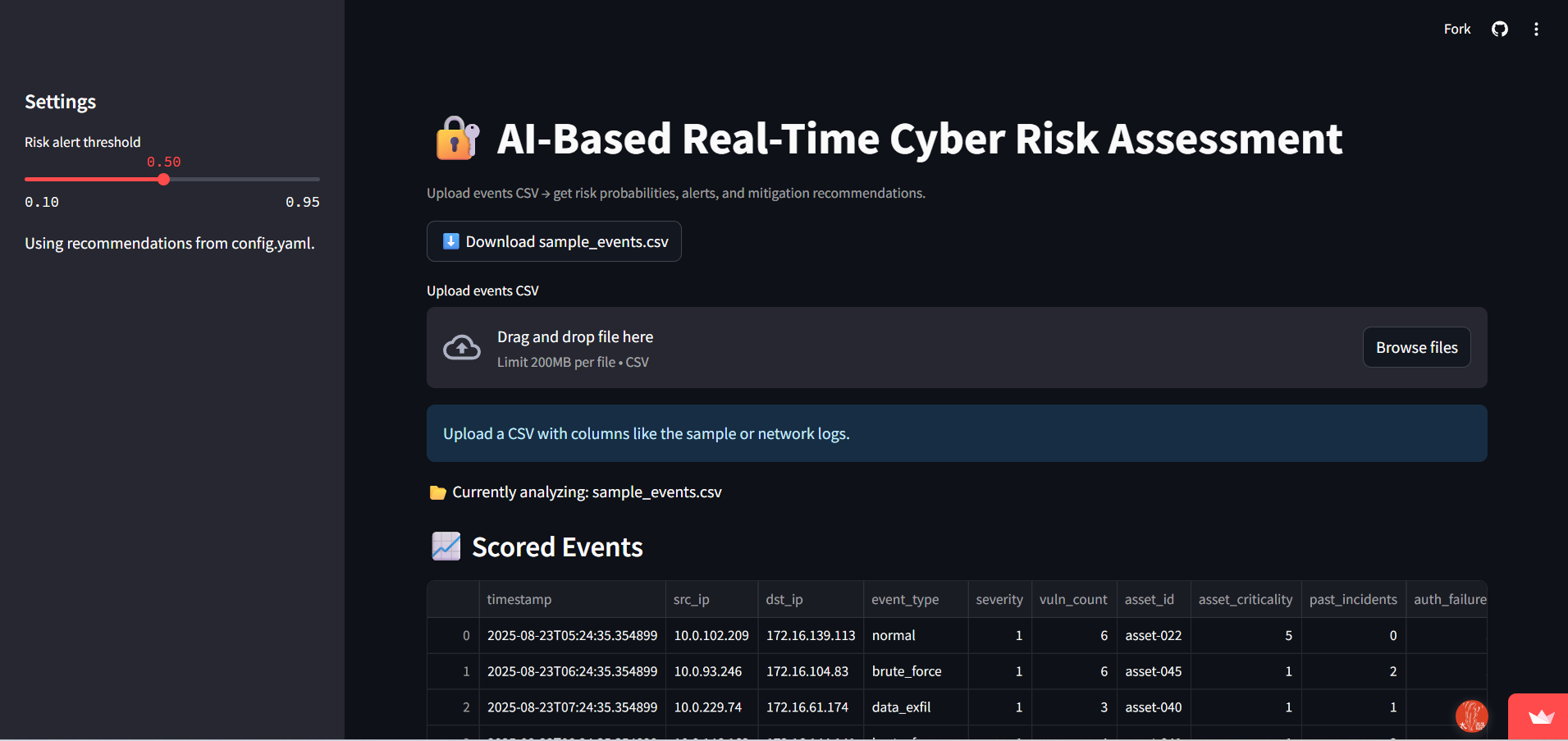
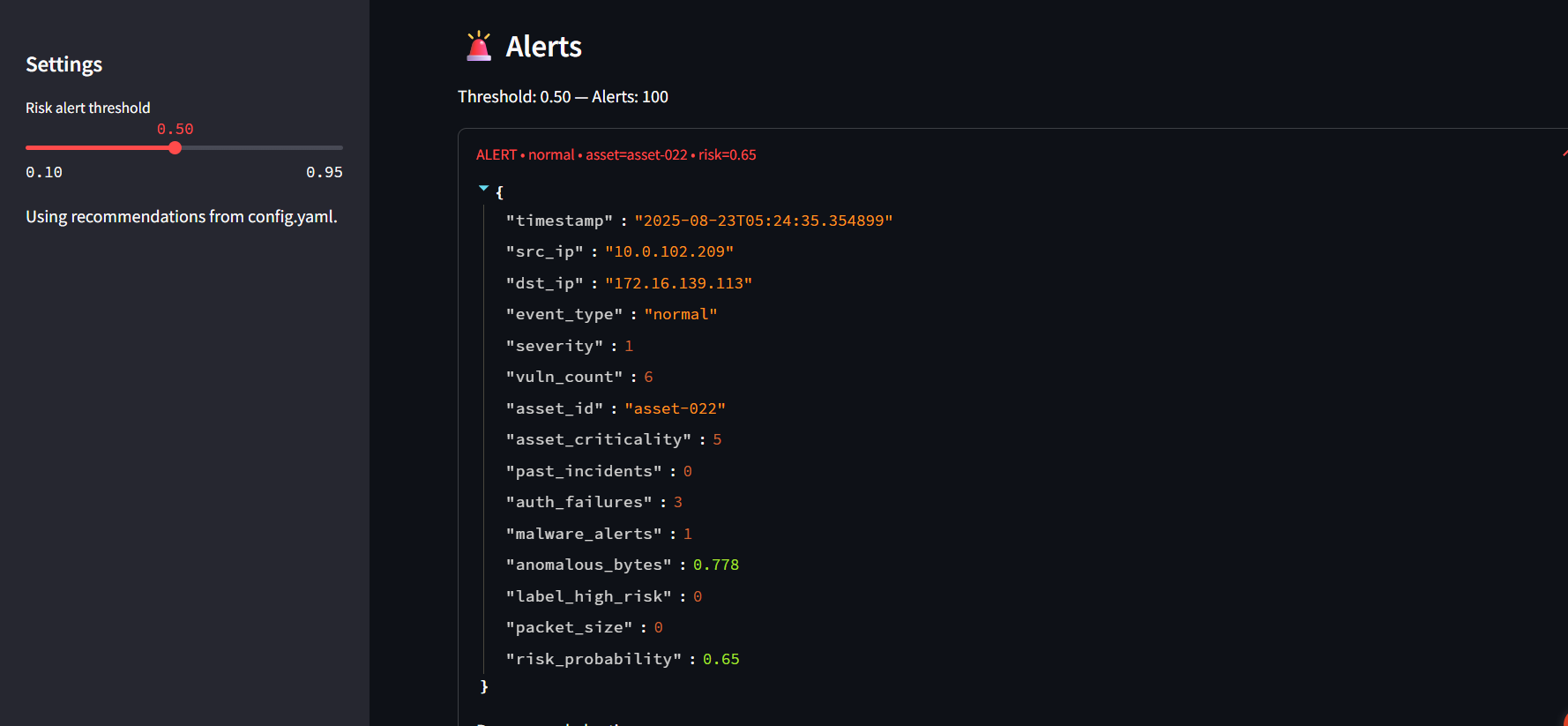
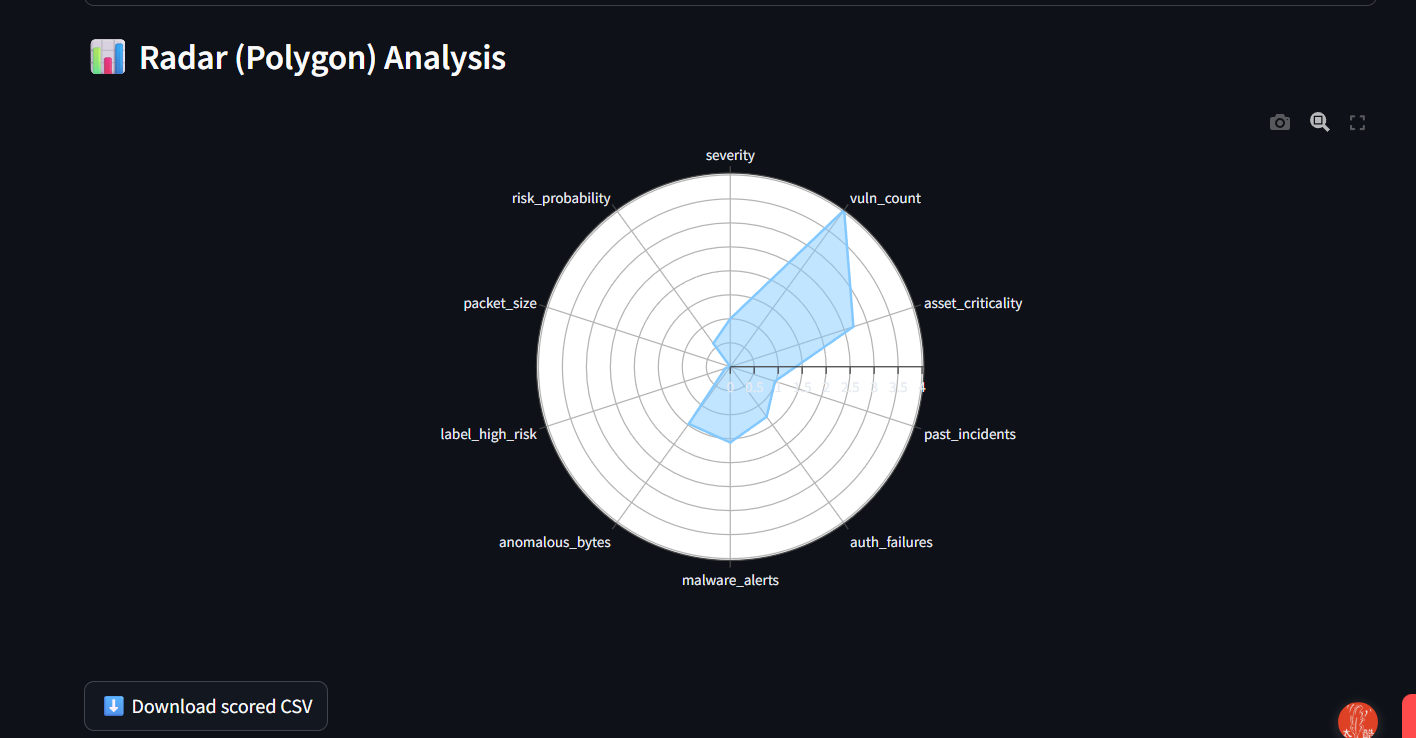
Our system collects real-time event data from various sources (e.g., logs, network activity) and processes it using advanced machine learning algorithms. It provides instant risk scores, threat alerts, actionable mitigation recommendations, and visual analytics through an intuitive dashboard to empower security teams to respond immediately.
How we built it
We developed the solution using Python, FastAPI for backend services, and Streamlit for the user interface. Data preprocessing and feature engineering were implemented using Pandas, and we trained machine learning models with scikit-learn. Real-time scoring is powered by an API that connects the frontend to the prediction engine, while Docker ensures easy deployment and scalability.
Challenges we ran into
- Handling noisy and inconsistent log data from various sources.
- Designing a risk scoring model that balances false positives and false negatives.
- Ensuring real-time processing performance without system lag or downtime.
- Integrating the backend with a user-friendly dashboard while maintaining security best practices.
Accomplishments that we're proud of
- Successfully built an end-to-end AI pipeline that performs live risk assessment.
- Achieved accurate threat detection with a well-calibrated risk score model.
- Designed a clean, easy-to-use dashboard that visualises real-time analytics and alerts.
- Enabled rapid deployment using Docker for easy scaling in production environments.
What we learned
- Data quality and preprocessing are as important as model design in cybersecurity applications.
- Real-time system design requires efficient data pipelines and low-latency API responses.
- Visual clarity and actionable insights are crucial for security teams to quickly make informed decisions.
- Security itself is an ongoing challenge, even when building security tools.
What's next for AI-based real-time cyber risk assessment
- Implement more advanced deep learning models for improved anomaly detection.
- Expand data source integrations (cloud services, endpoint logs, IoT devices).
- Add automated remediation suggestions with direct integrations to firewalls and SIEM systems.
- Improve scalability with distributed processing and cloud-native deployment.
- Develop a mobile app for on-the-go monitoring and alerting.
Built With
- fastapi
- machine
- python
- streamlit

Log in or sign up for Devpost to join the conversation.