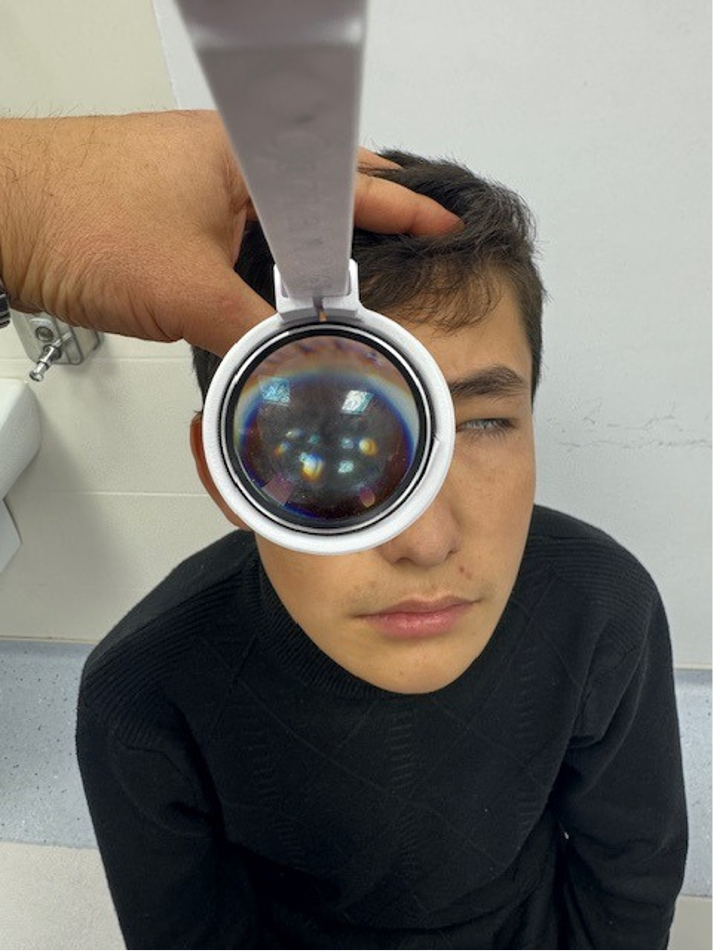
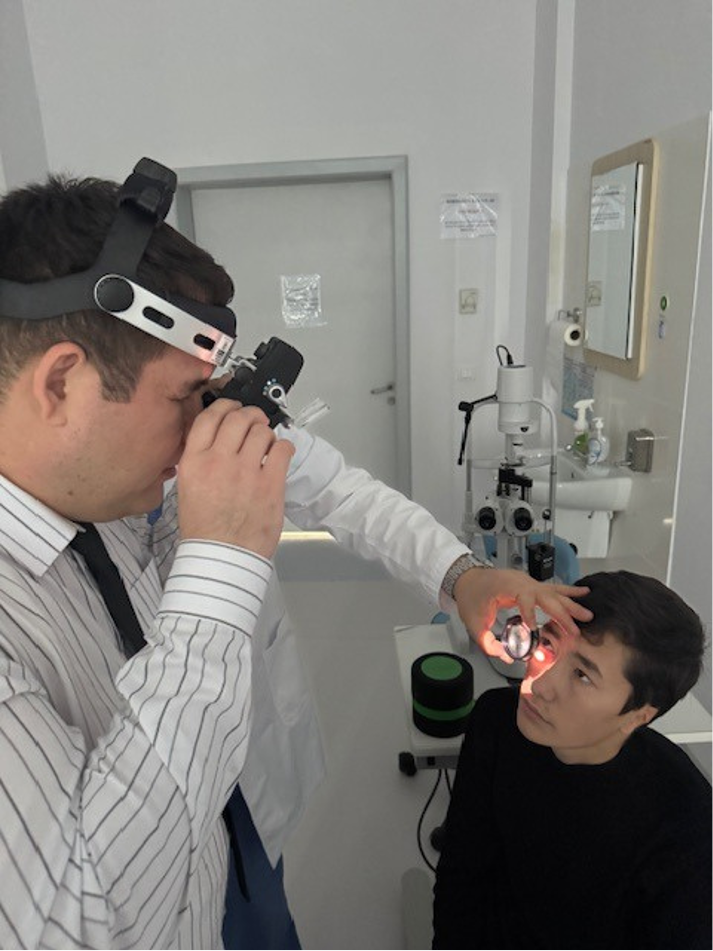
🌟 InspirationMyopia has become one of the most common vision problems worldwide, affecting billions of people. Early detection can prevent severe complications such as retinal detachment and glaucoma, but clinical diagnosis requires expensive equipment and direct access to ophthalmologists. Our inspiration came from the idea of using AI and computer vision to make early myopia screening more accessible to everyone — especially in regions where medical resources are limited. We wanted to explore how a Python-based AI system could analyze ophthalmoscopic retinal images and provide non-diagnostic insights to support vision care directly from a device everyone carries.
🔍 What it does?
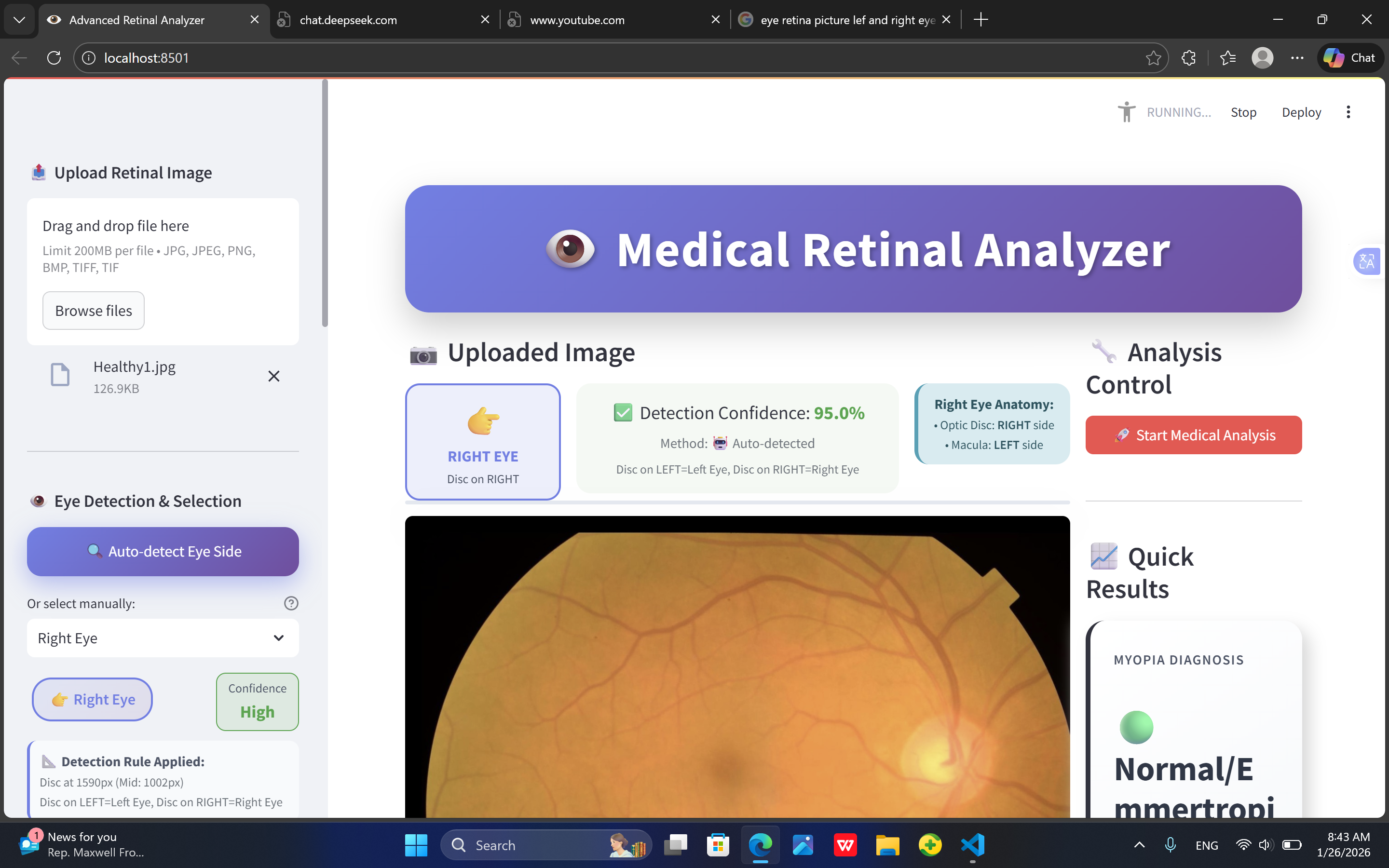
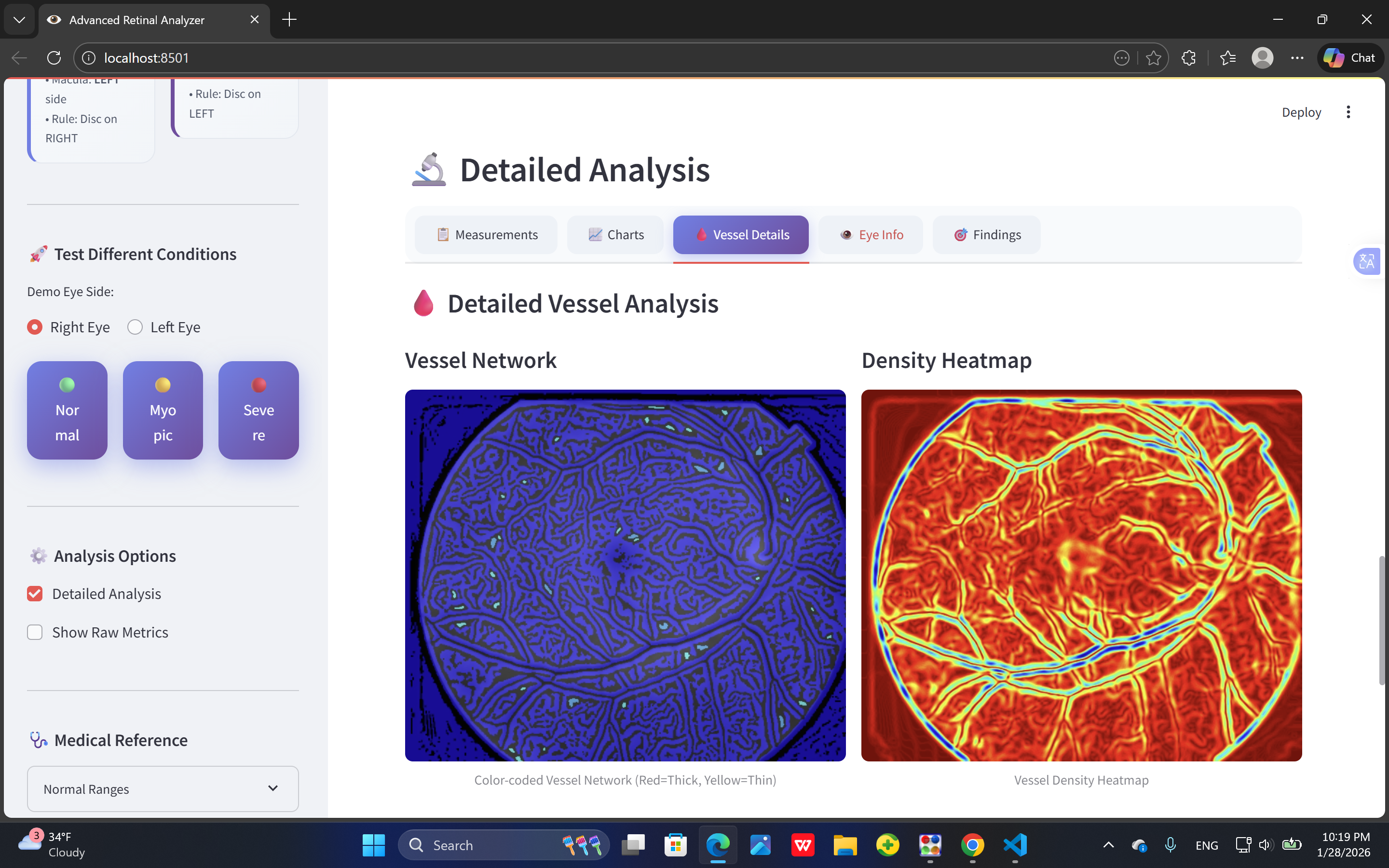
Our system acts as an AI-powered screening support tool that evaluates the severity of myopia. By analyzing key structural features of the eye from retinal (fundus) images, the software classifies the level of myopia into three distinct categories: mild, moderate, or severe. Now fully integrated with smartphones, it allows for accessible, early eye screening on the go.
🛠️ How we built it?
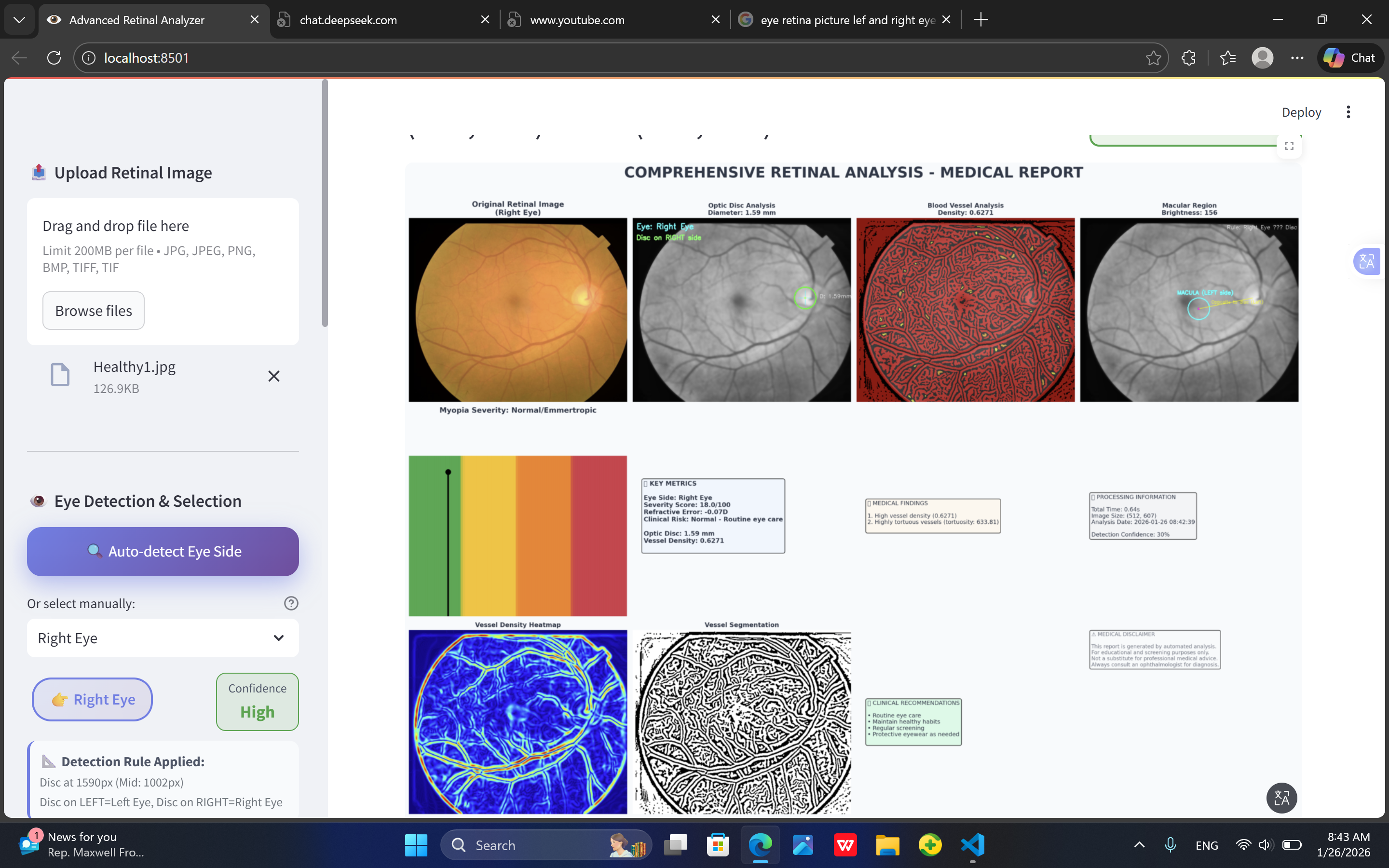
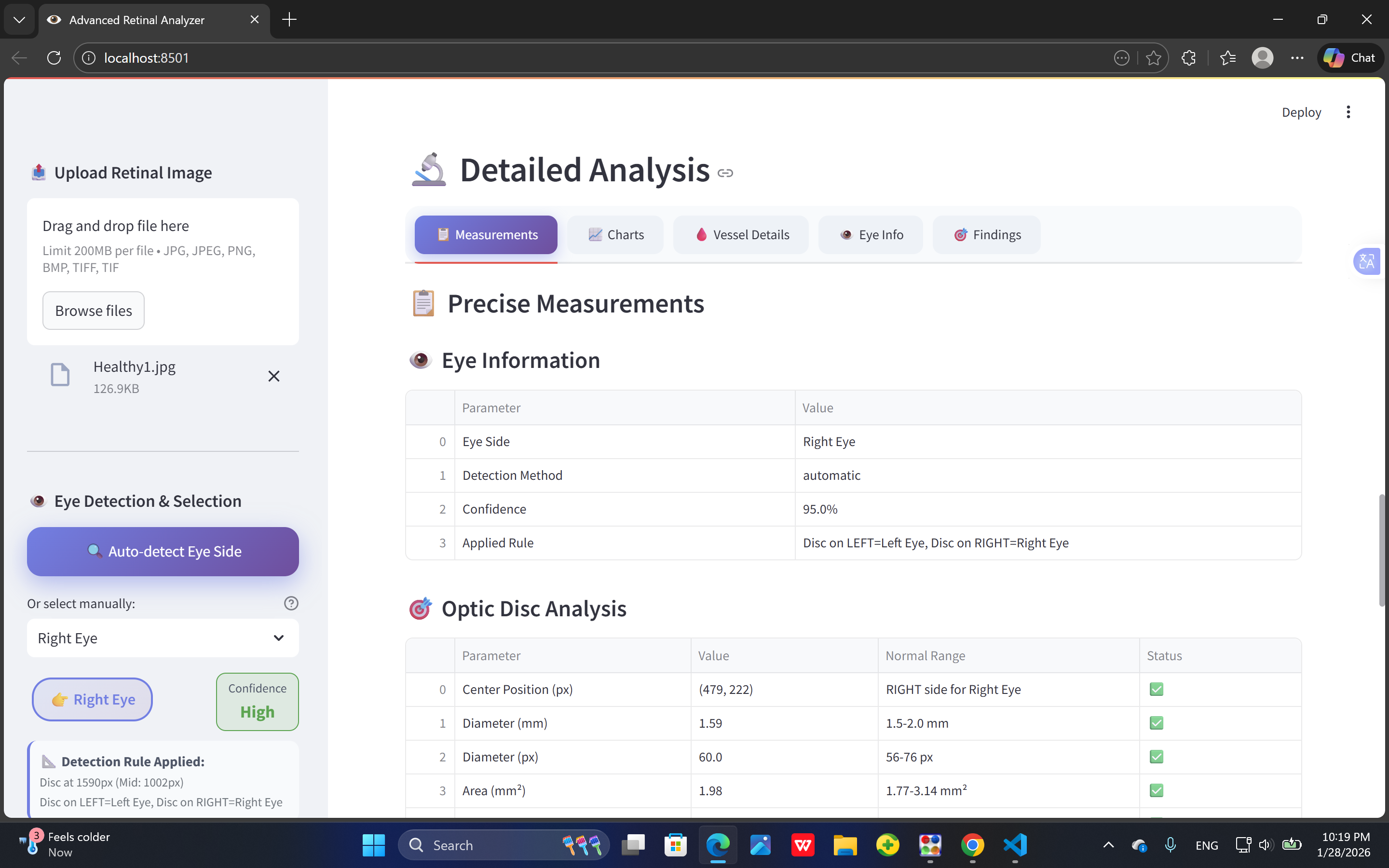
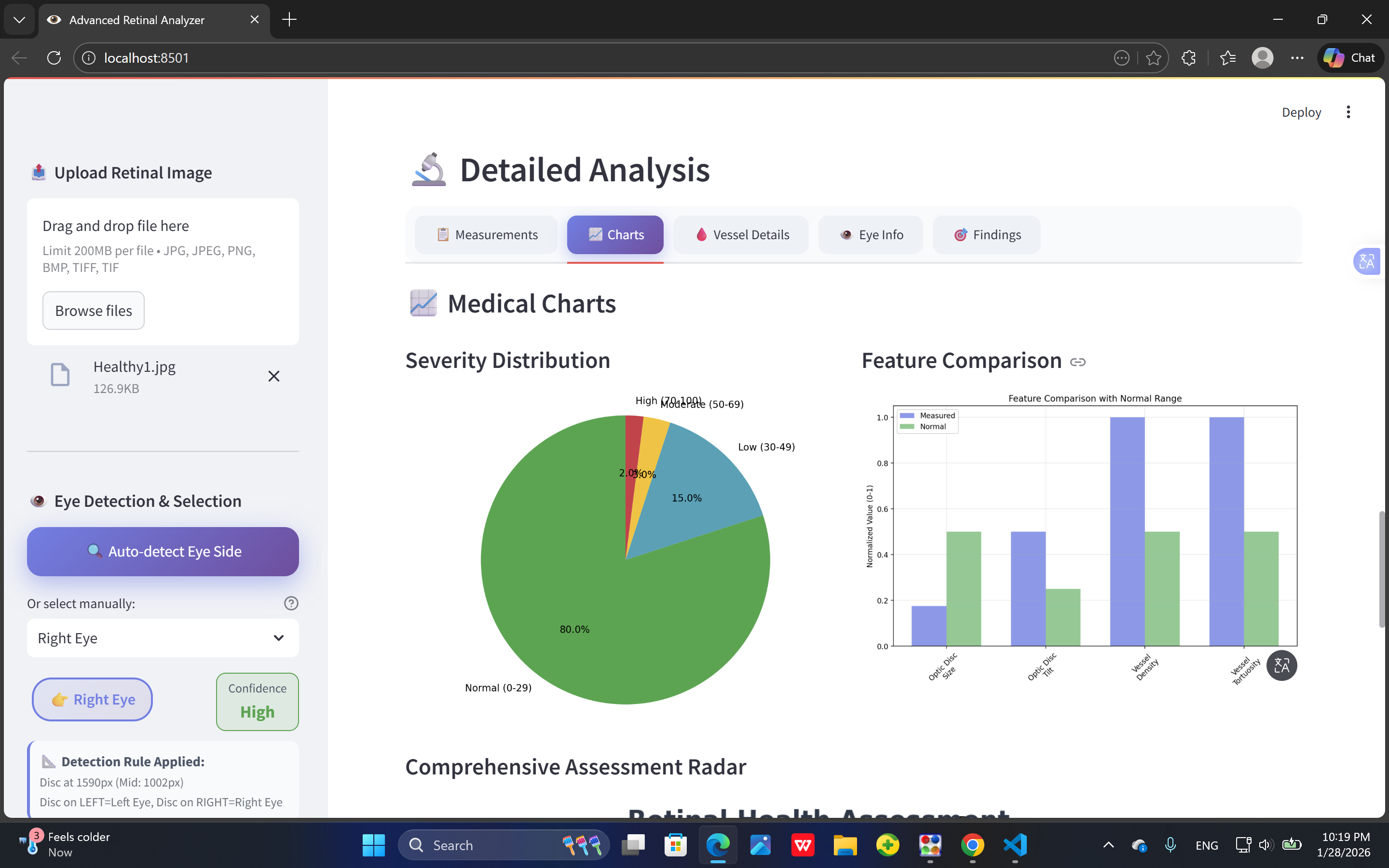
We developed a robust Python-based AI pipeline to process and analyze retinal images, which we have now successfully integrated with mobile technology. The workflow consists of five core stages: 🖼️ Image Preprocessing: Raw images are converted to grayscale, enhanced with histogram equalization, and filtered using Sobel and Gaussian methods for edge and vessel enhancement. 📐 Feature Extraction: We focused on structural and texture-based features correlated with myopia, specifically measuring the optic disc shape, foveal pit curvature, and retinal vessel density . 🧠 AI Inference: We utilized a pretrained Convolutional Neural Network (CNN) from specialized Python AI libraries to carry out the classification. 📱 Mobile Integration: We successfully bridged this AI backend with a smartphone interface, allowing users to process ophthalmic data in a portable setup. 📊 Visualization: OpenCV and Matplotlib were implemented to map and display the specific regions associated with potential myopic changes.
🚧 Challenges we ran into
📊 Limited Datasets: Obtaining high-quality, clinical retinal images with reliably labeled myopia grades was difficult. 📷 Model Generalization: Ensuring the algorithm performs consistently across different fundus camera types and lighting conditions. ⚡ Mobile Optimization: Managing large medical image files and maintaining fast AI processing speeds on standard smartphone hardware. ⚖️ Ethical Constraints: Avoiding medical misinterpretation and clearly defining this tool purely as a screening support asset, not a clinical diagnosis replacement.
🏆 Accomplishments that we're proud of
🚀 Successfully building a functional, end-to-end computer vision pipeline for complex medical image analysis. 📲 Integrating our heavy AI pipeline directly with a smartphone setup, making professional-grade screening portable. 💡 Proving that accessible, resource-friendly AI screening is possible without needing multi-million dollar clinical hardware. 🗺️ Creating highly detailed, mapped visualizations that highlight specific areas of myopic change on the retina.
📚 What we learned
🏥 How to apply AI and computer vision directly to real-world medical imaging problems. 🎯 The critical importance of precise data preprocessing in improving the accuracy of neural network predictions. 📲 The complex process of adapting desktop-heavy AI algorithms to work efficiently with mobile platforms. 🤝 The profound need for ethical AI development, especially when handling sensitive health data and managing user expectations.
🚀 What's next for Smartphone-Integrated AI Retinal Analysis for Myopia
We plan to expand our dataset and integrate state-of-the-art deep learning architectures such as ResNet or Vision Transformers (ViT) to push detection accuracy further. Now that the smartphone integration is active, our ultimate goal is to collaborate with certified ophthalmologists for clinical validation studies and roll out a public cloud-based platform for real-time retinal screening worldwide.

Log in or sign up for Devpost to join the conversation.