-
-
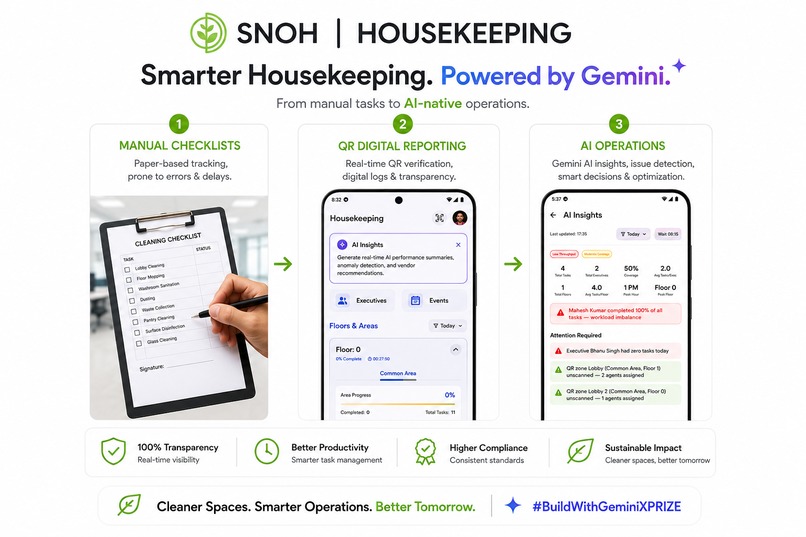
From Manual Checklists to AI-Native Operations.
-
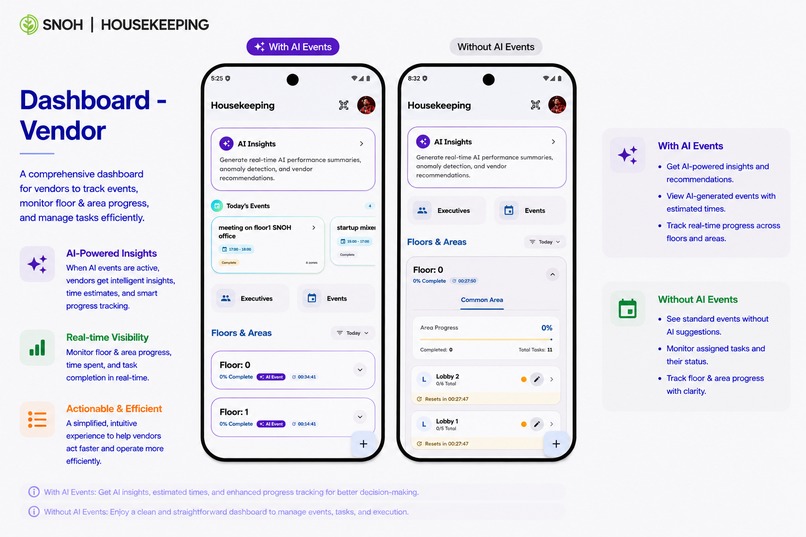
All facility operations at your fingertips
-
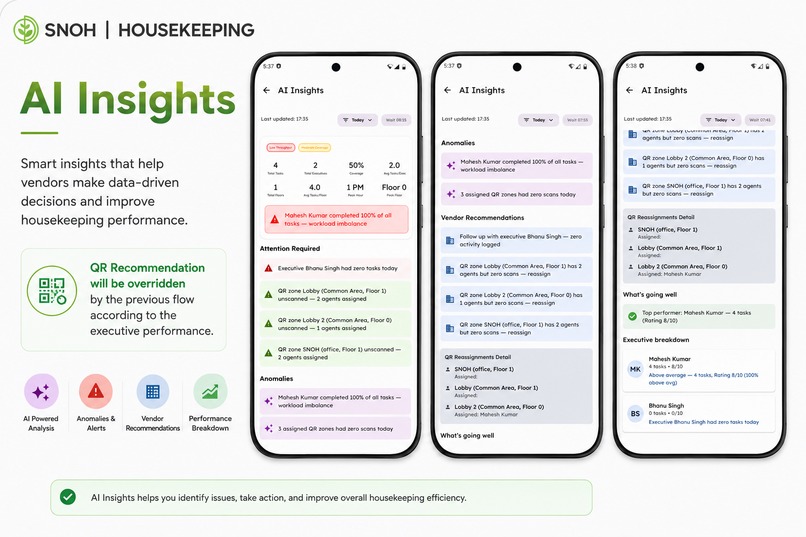
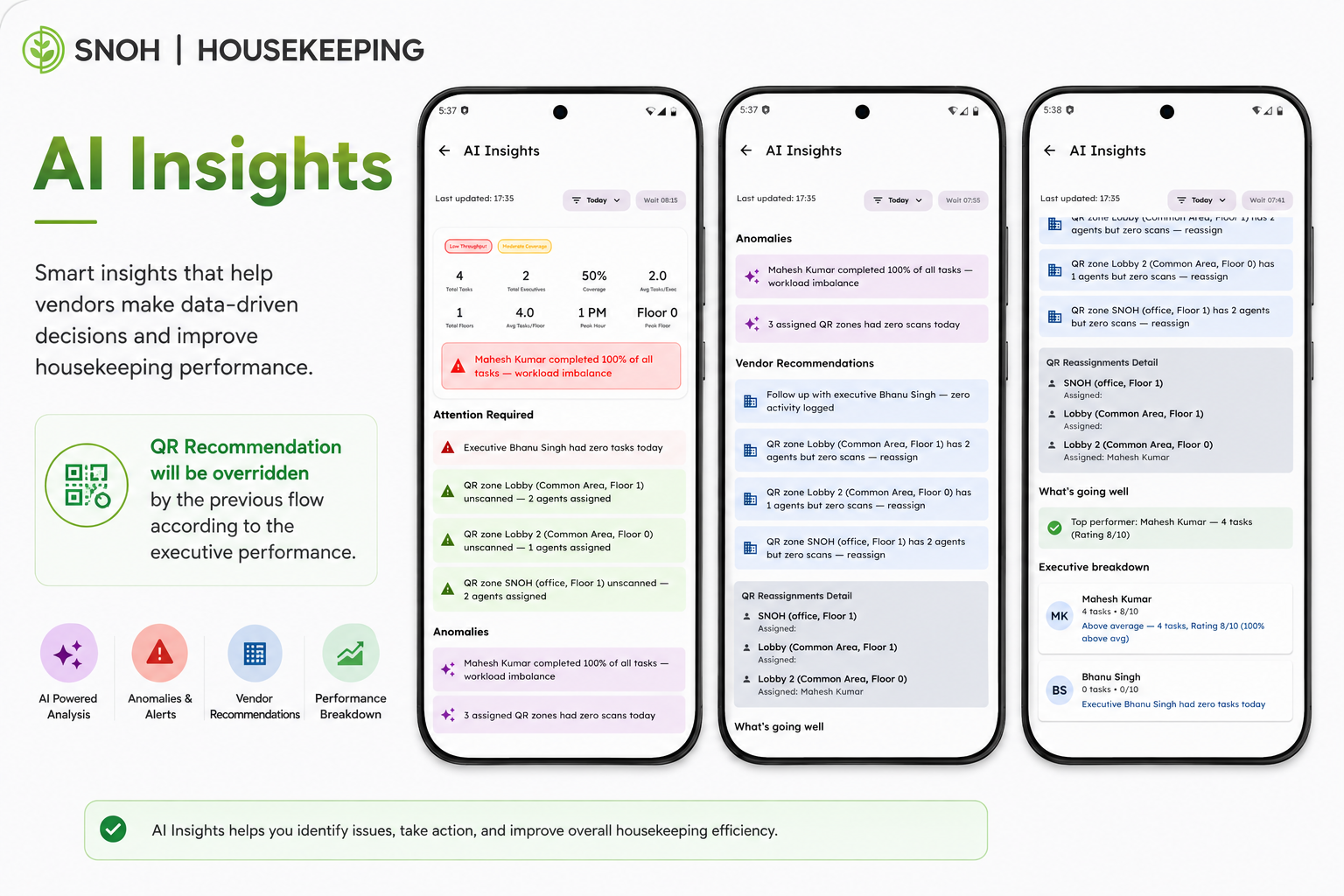
AI insights helps you identify issues, take action, and improve overall housekeeping efficency.
-
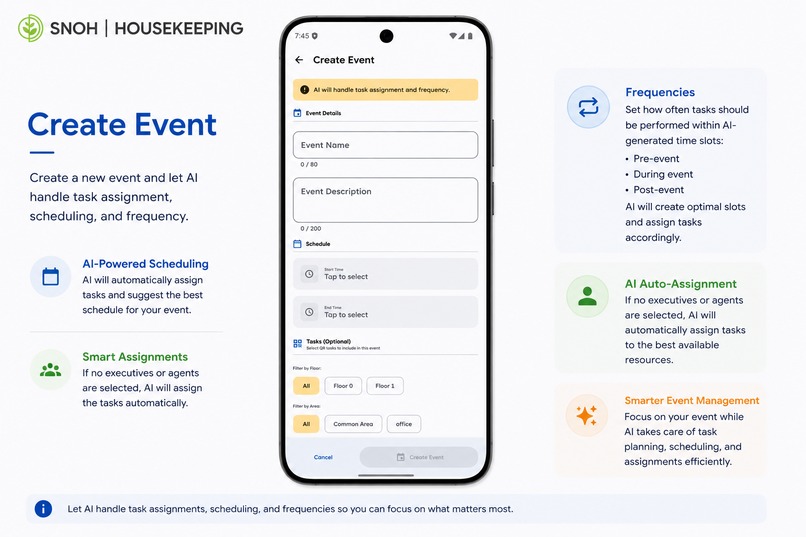
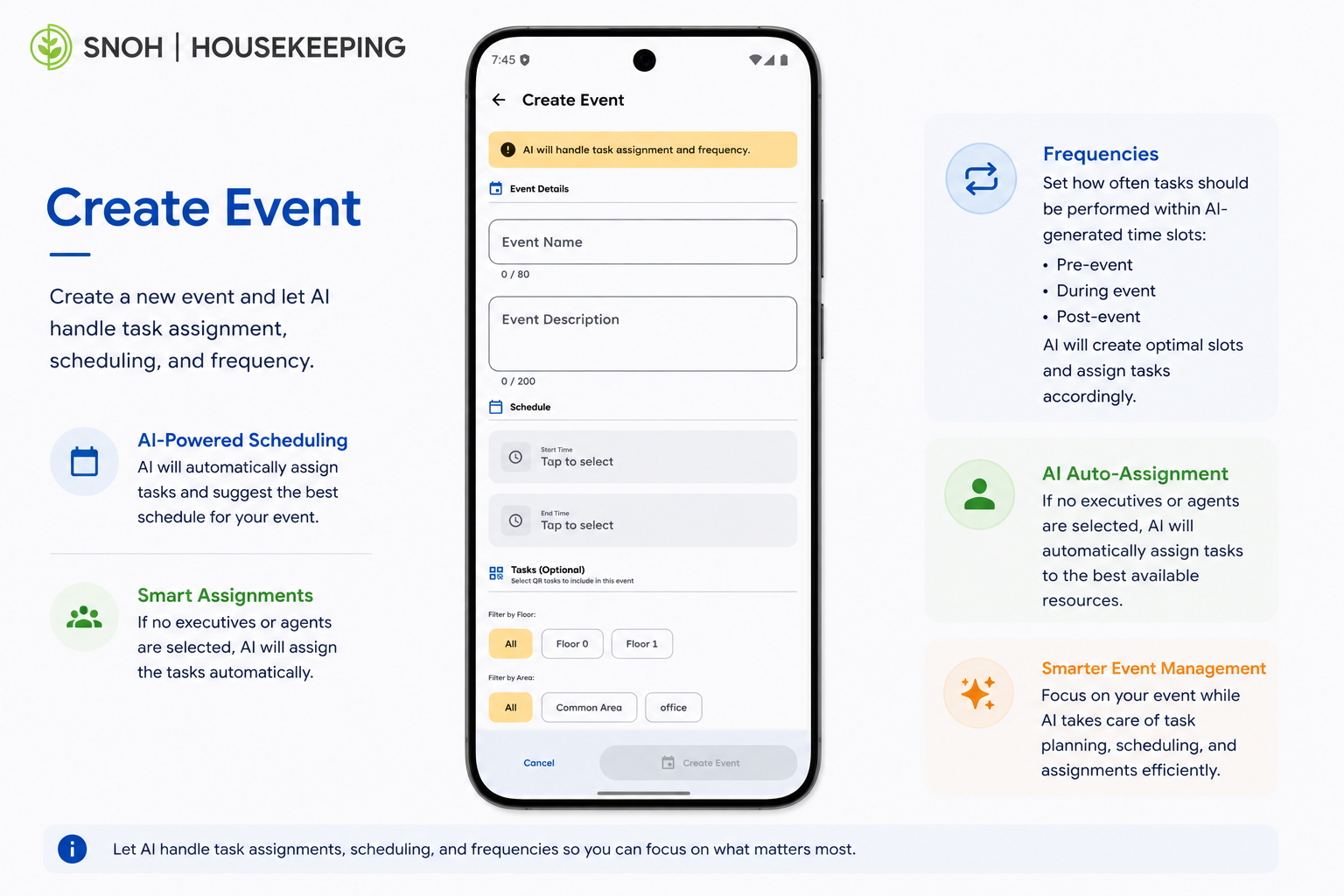
Let AI handle task assignments, scheduling, and frequencies so you can focus on what matters most
-
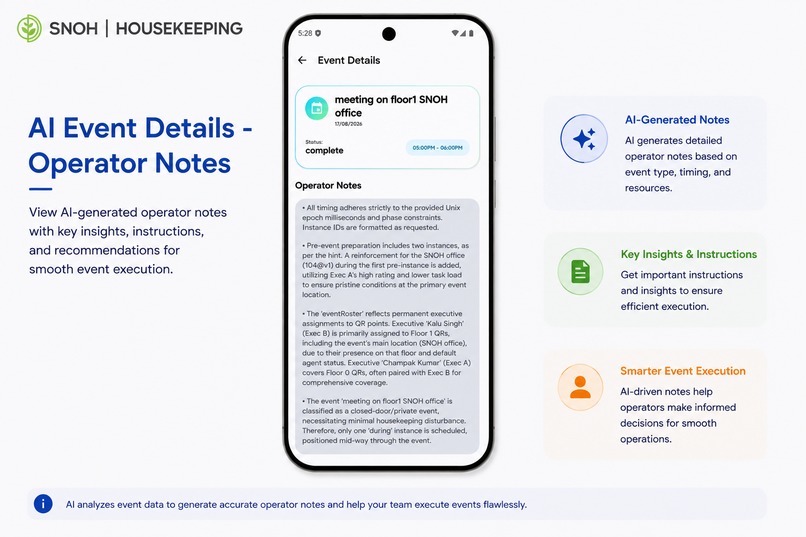
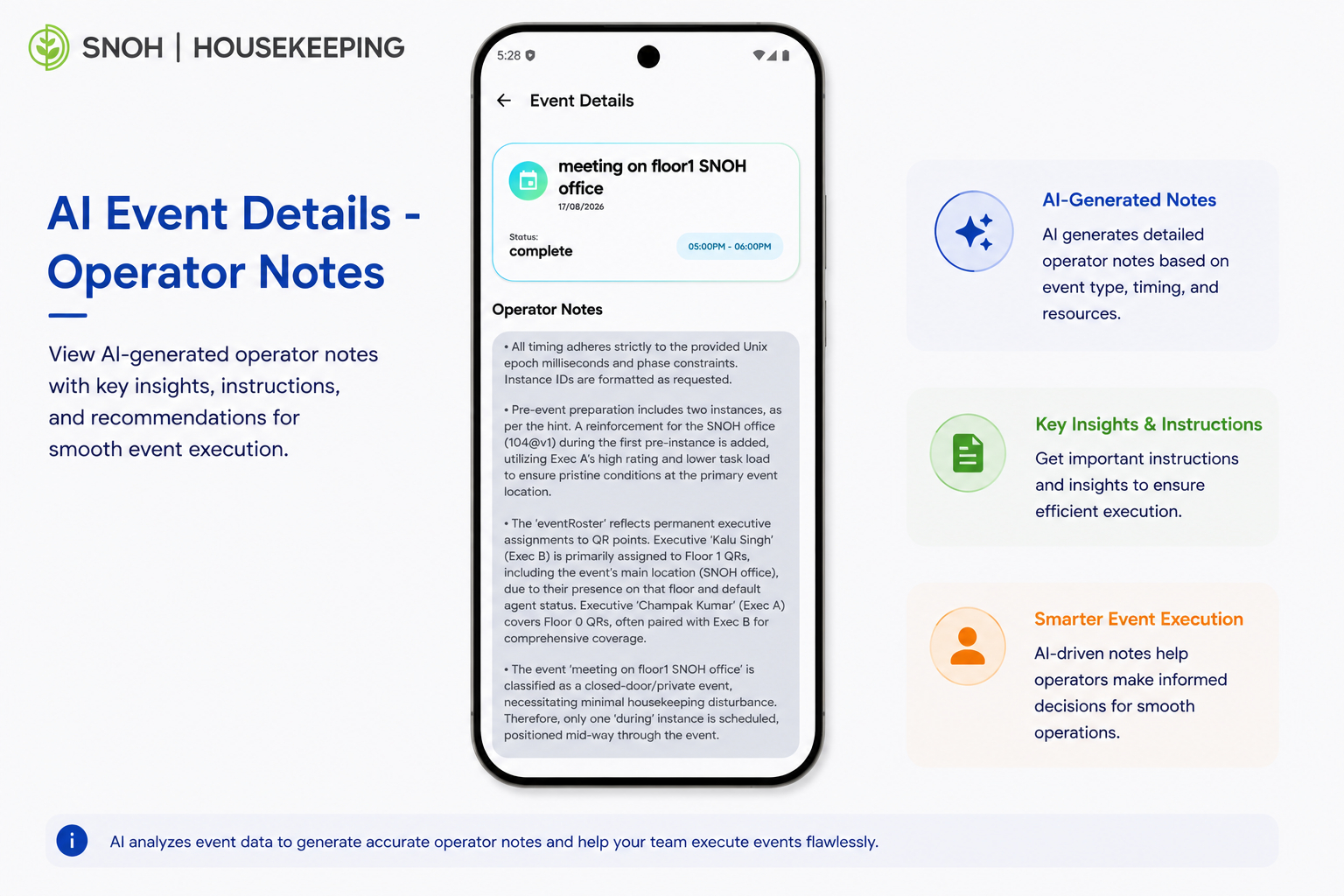
AI analyzes event data to generate accurate operator notes and help your team execute events flawlessly
-
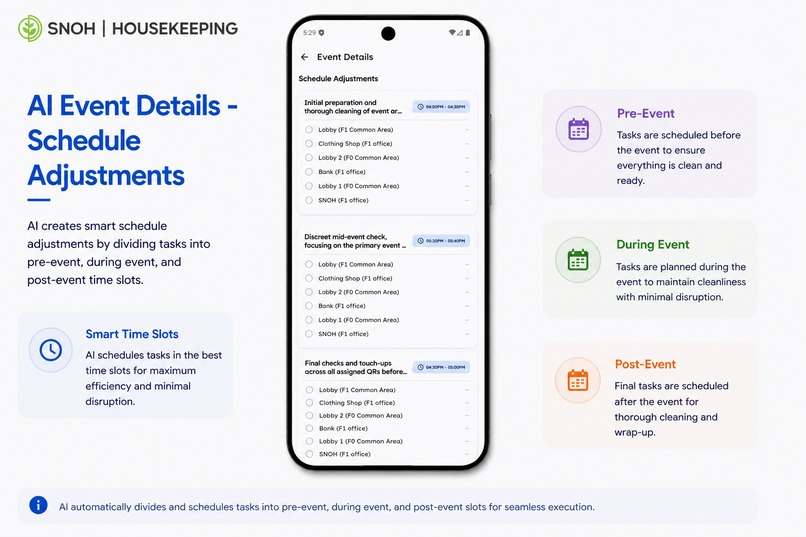
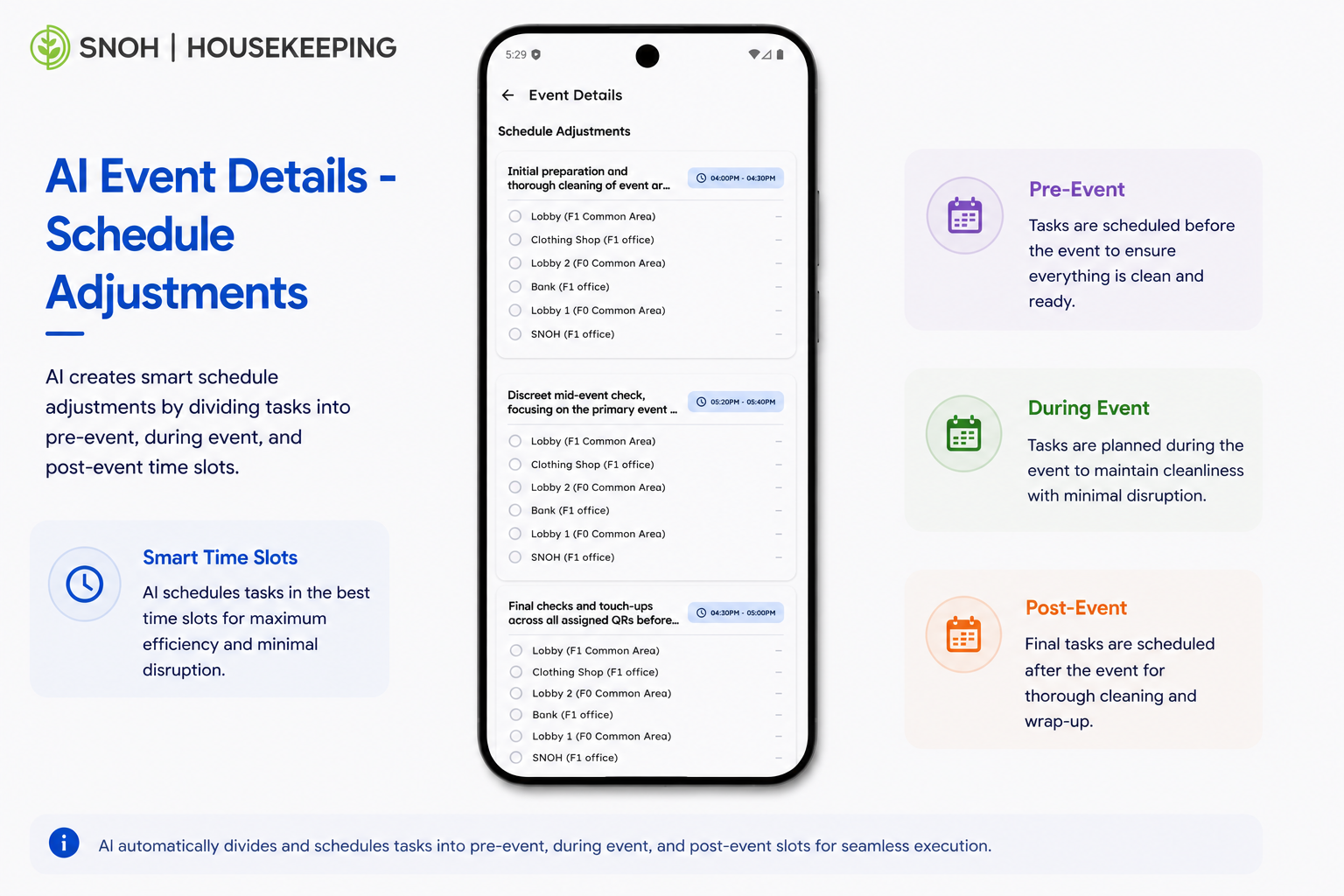
AI automatically divides and schedules tasks into slots for seamless operations
-
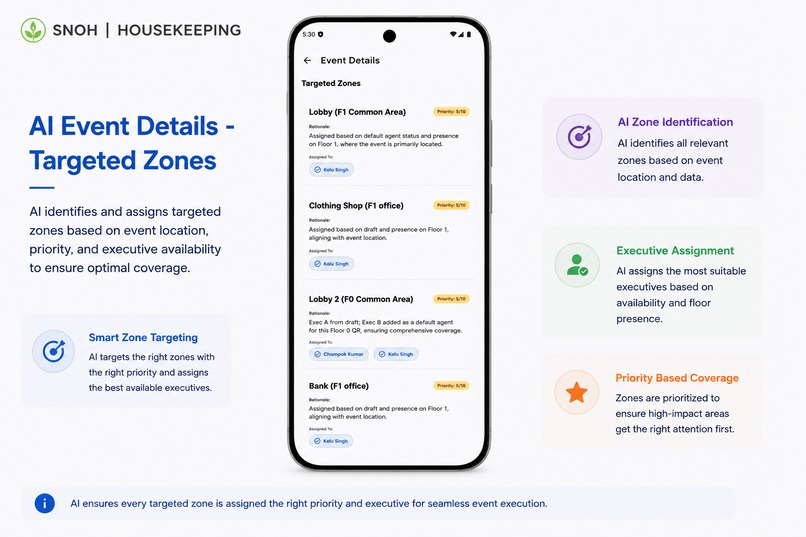
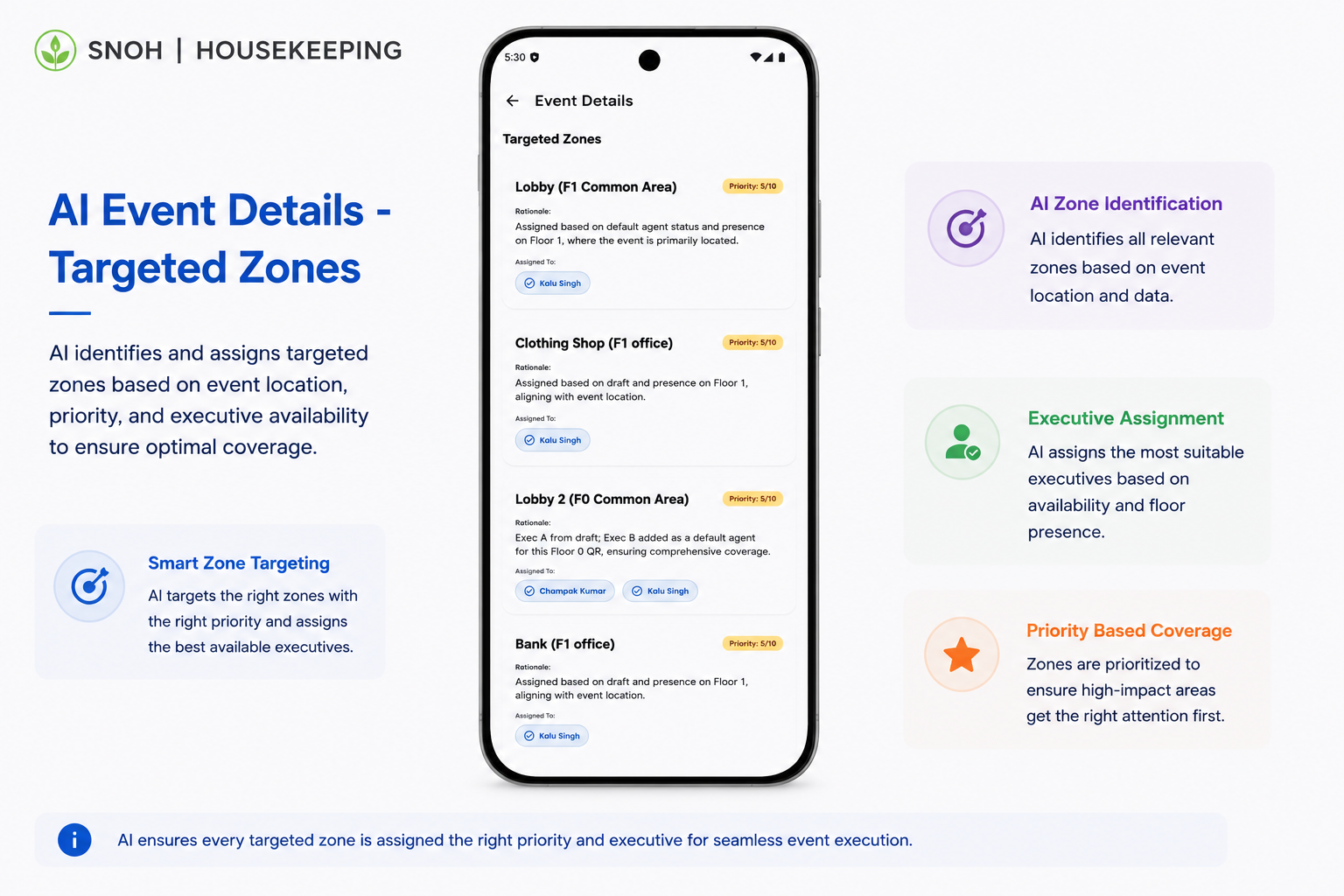
AI ensures every targeted zone is assigned the right priority and executive for seamless execution
-
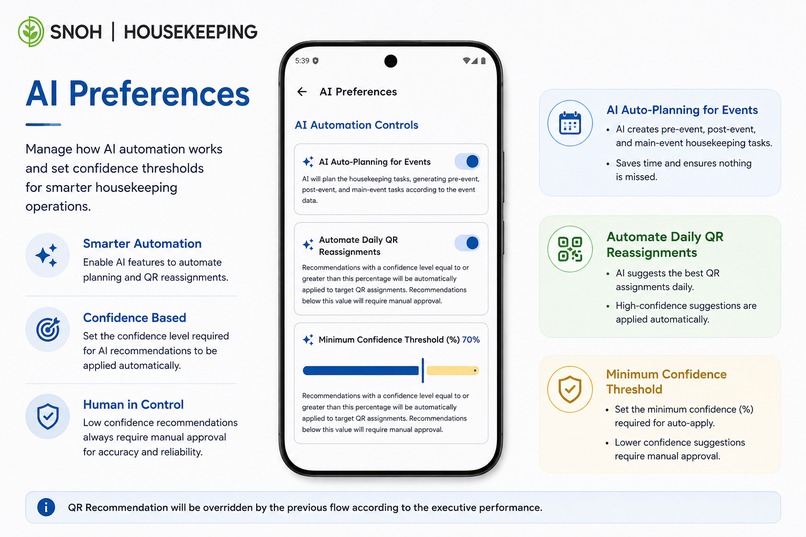
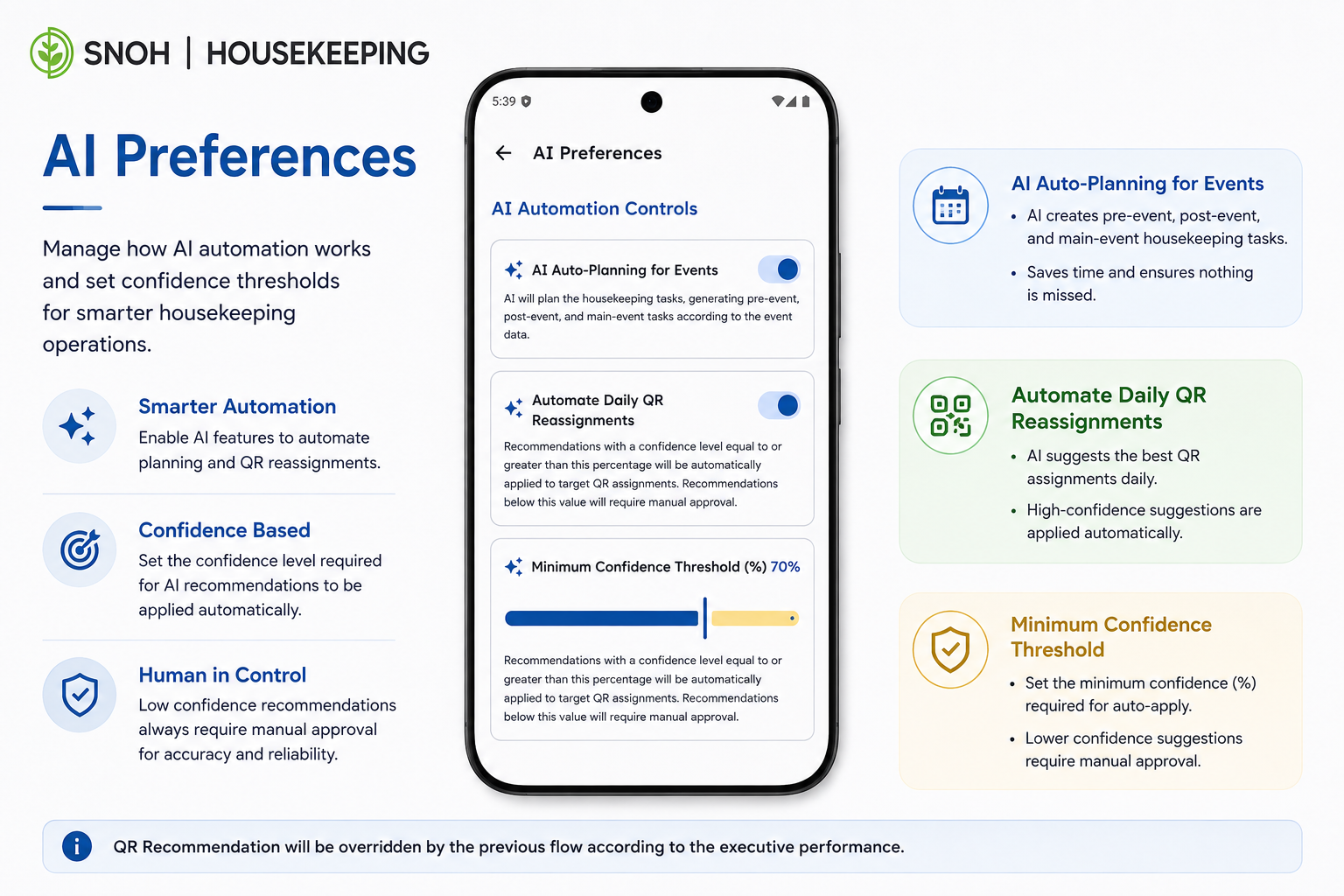
QR Recommendation will be overridden by the previous flow according to the executive performance
-
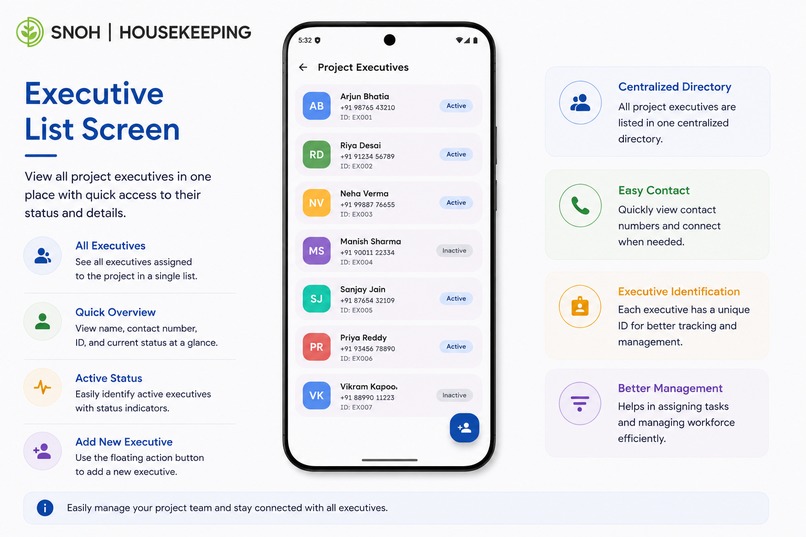
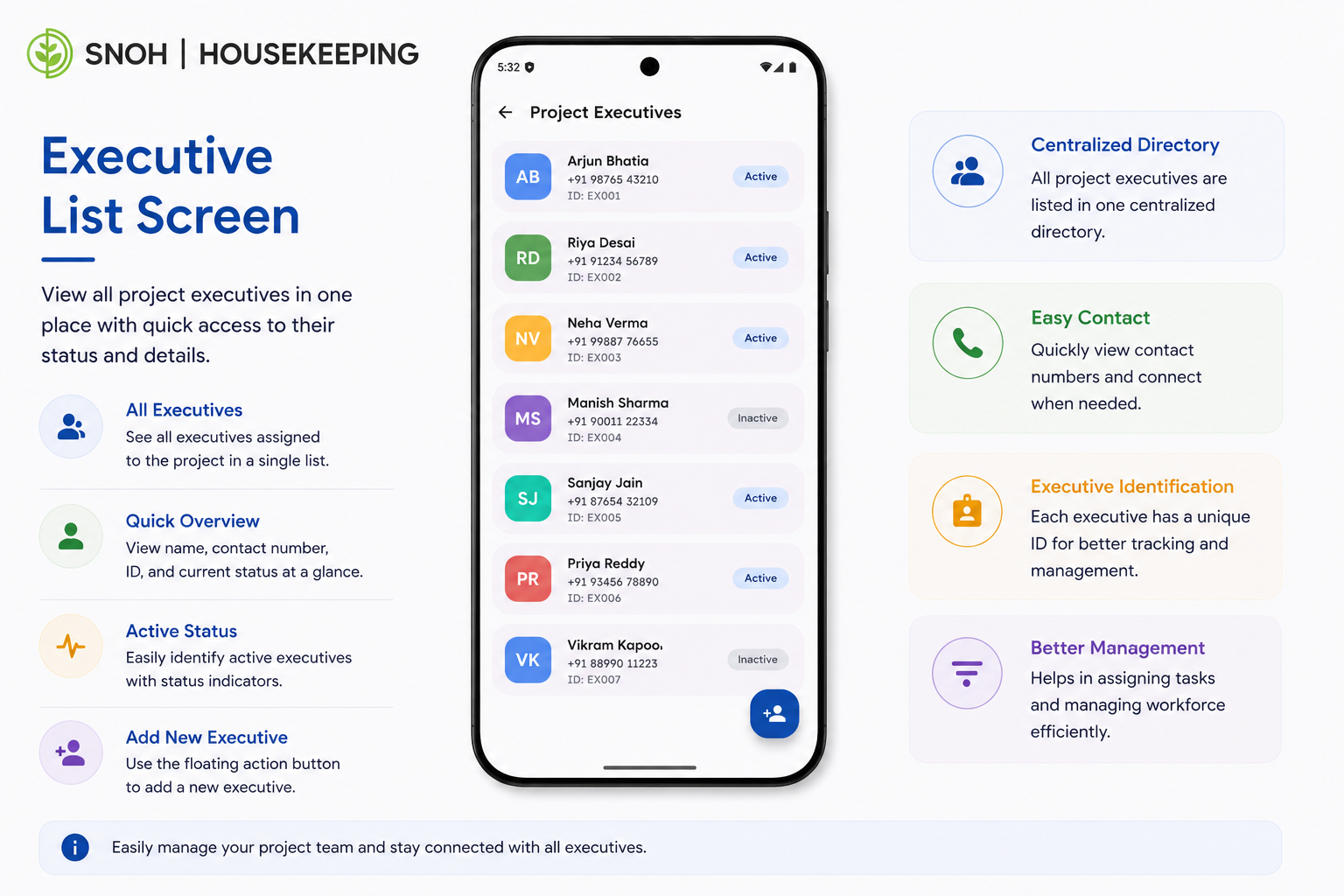
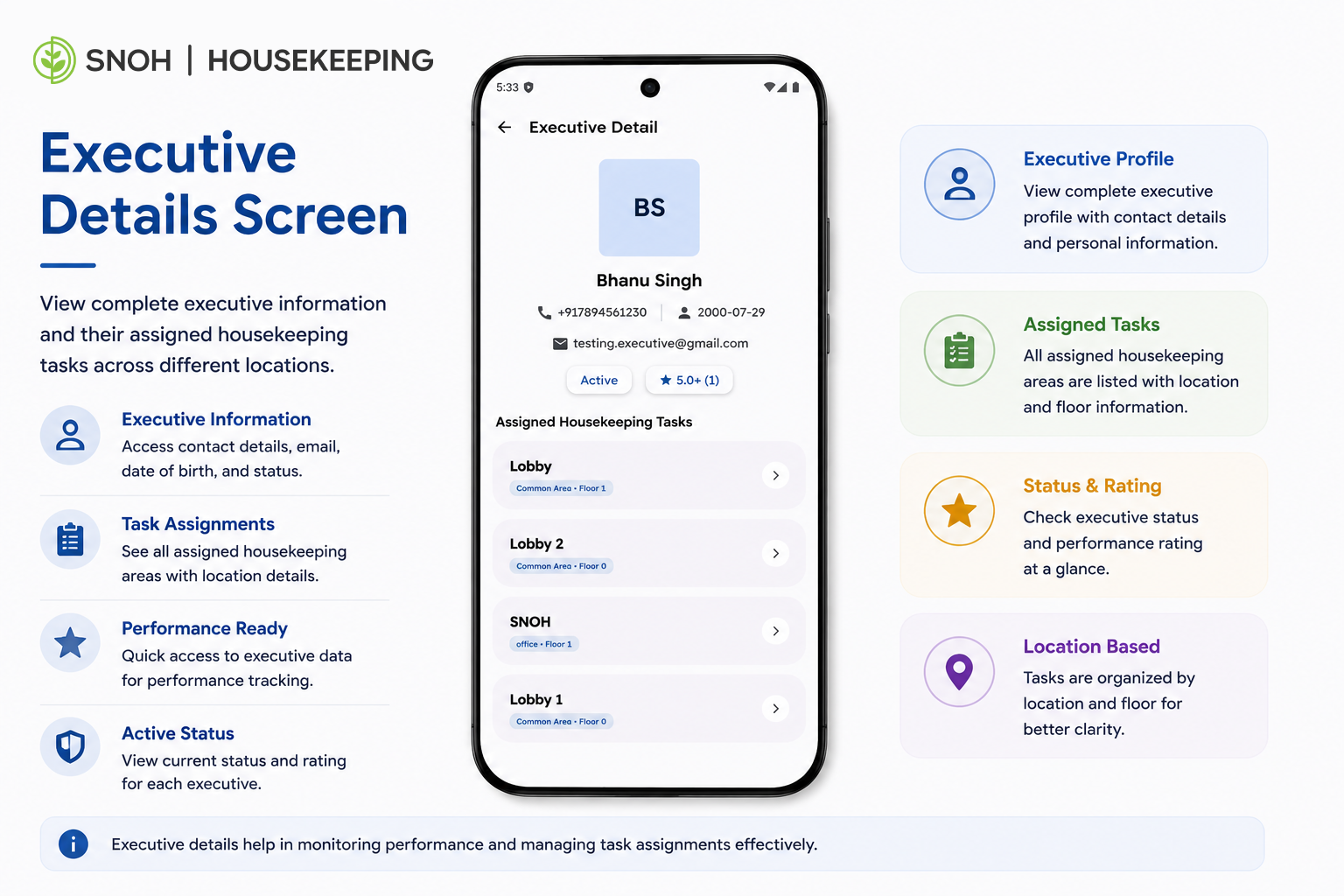
Easily manage your project team and stay connected with all executives.
-
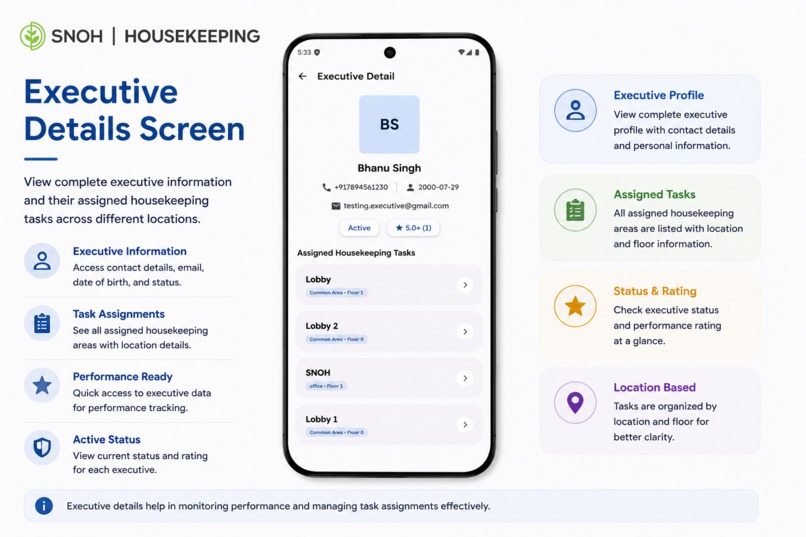
Executive details help in monitoring performance and managing task assignments effectively
-
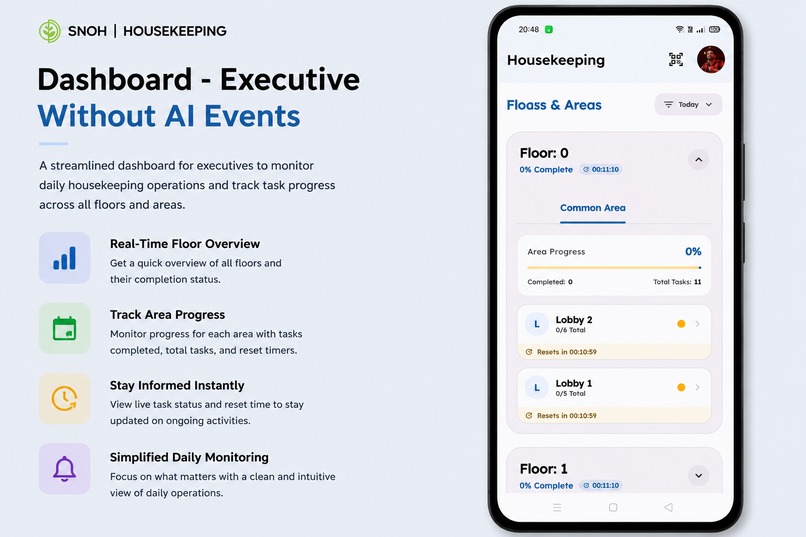
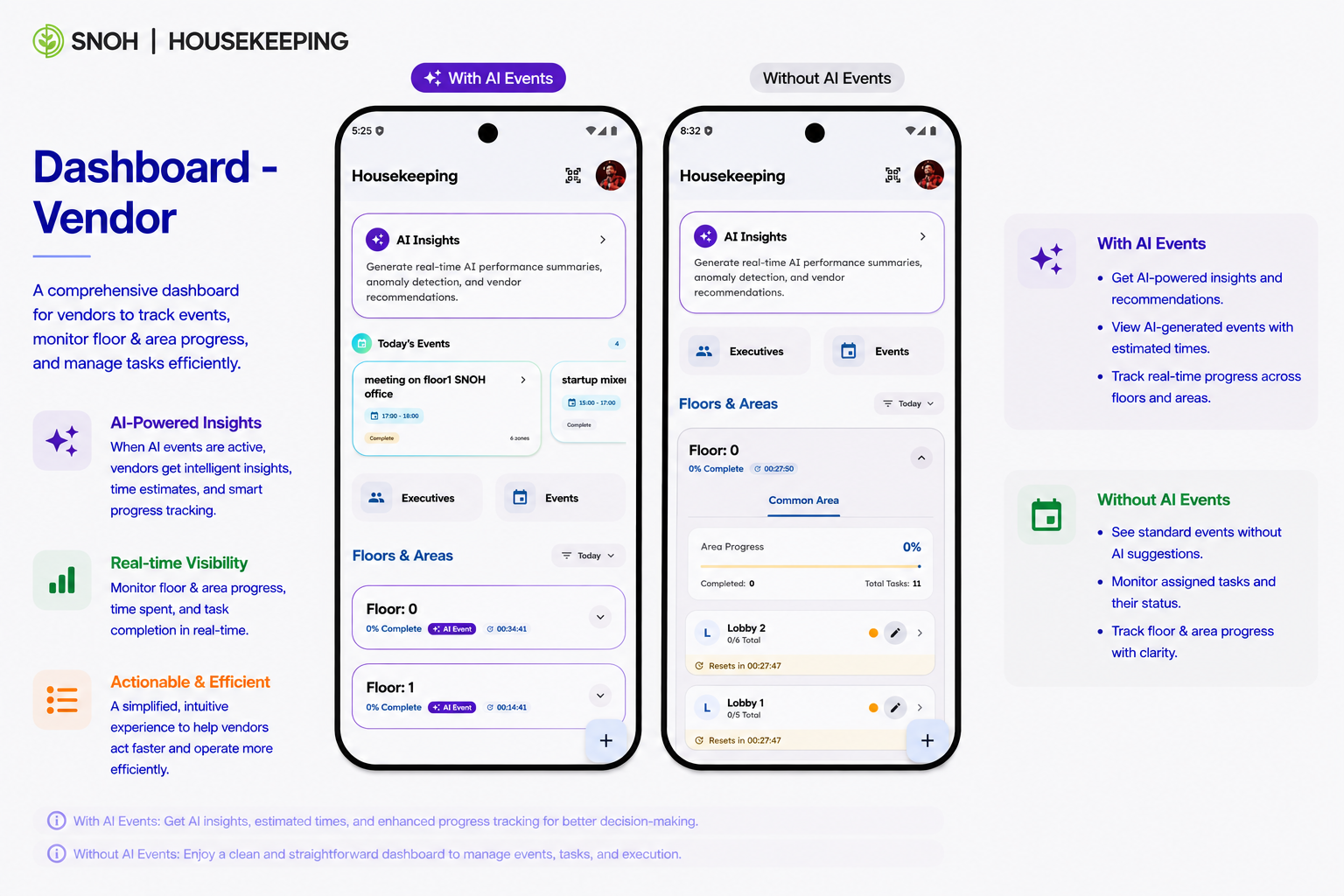
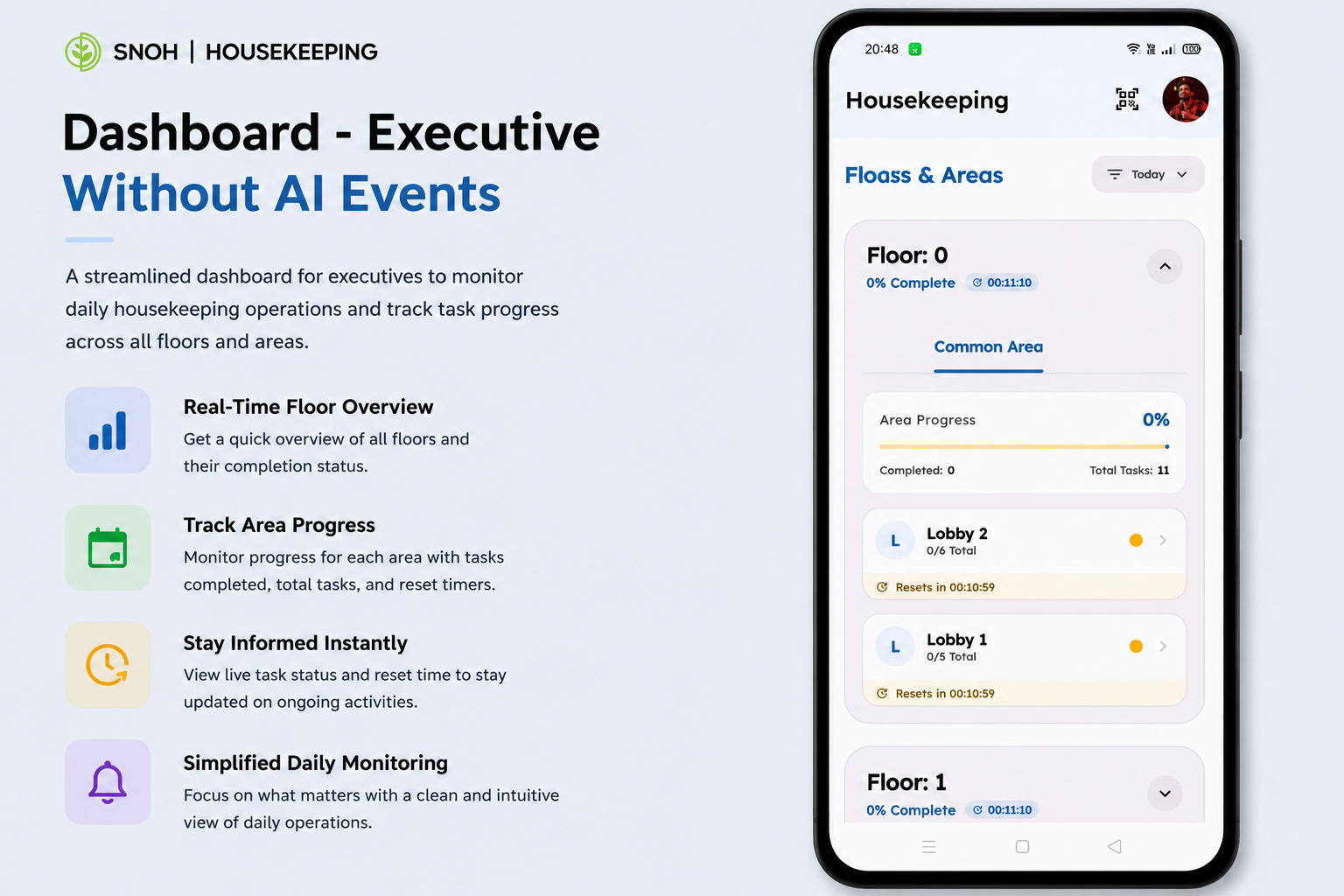
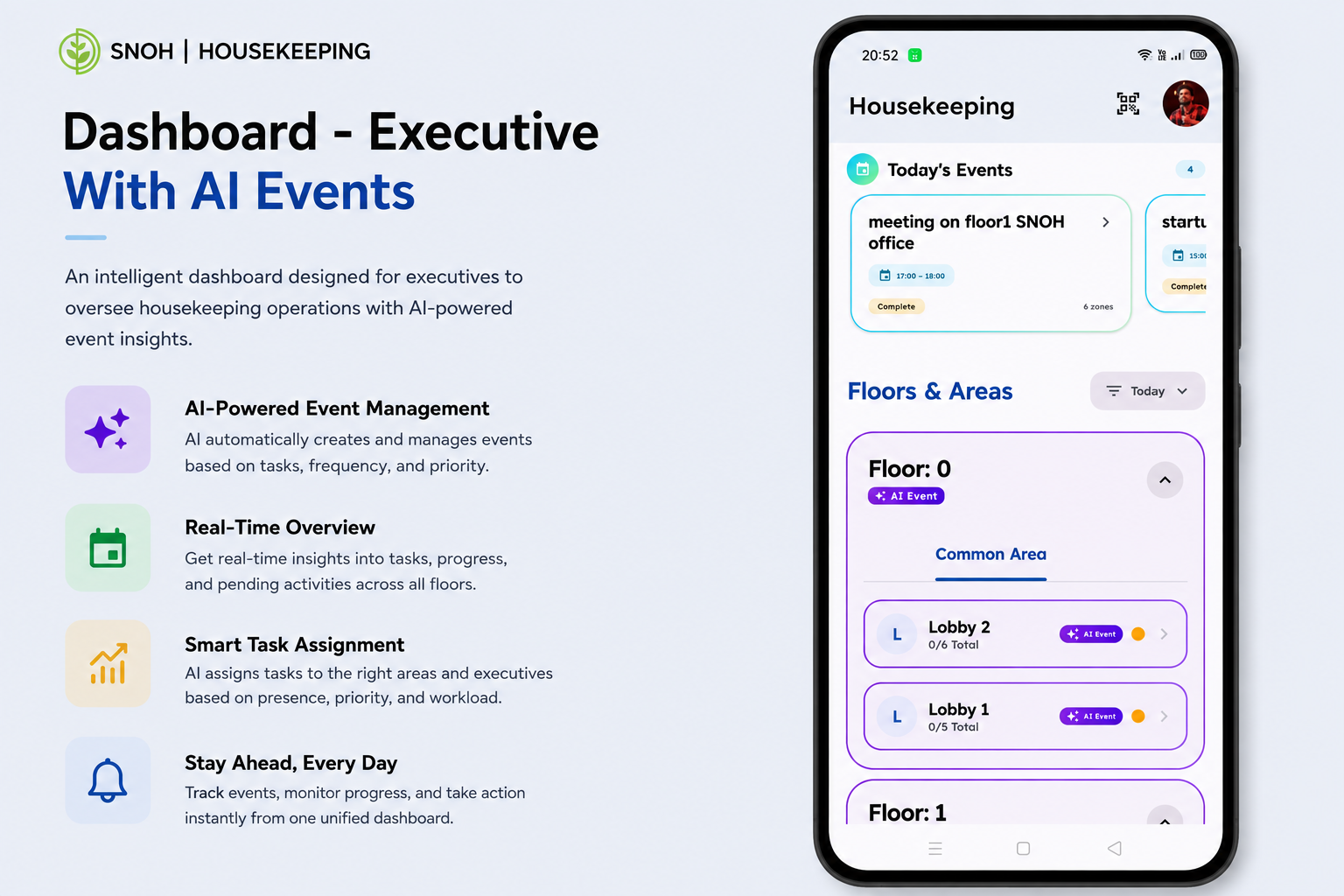
A streamlined dashboard for executives to monitor daily housekeeping operations and track task progress across all floors and areas
-
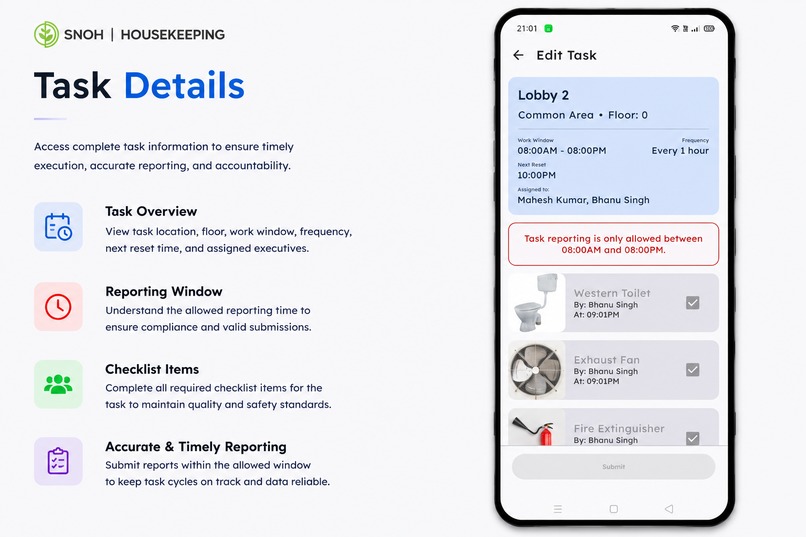
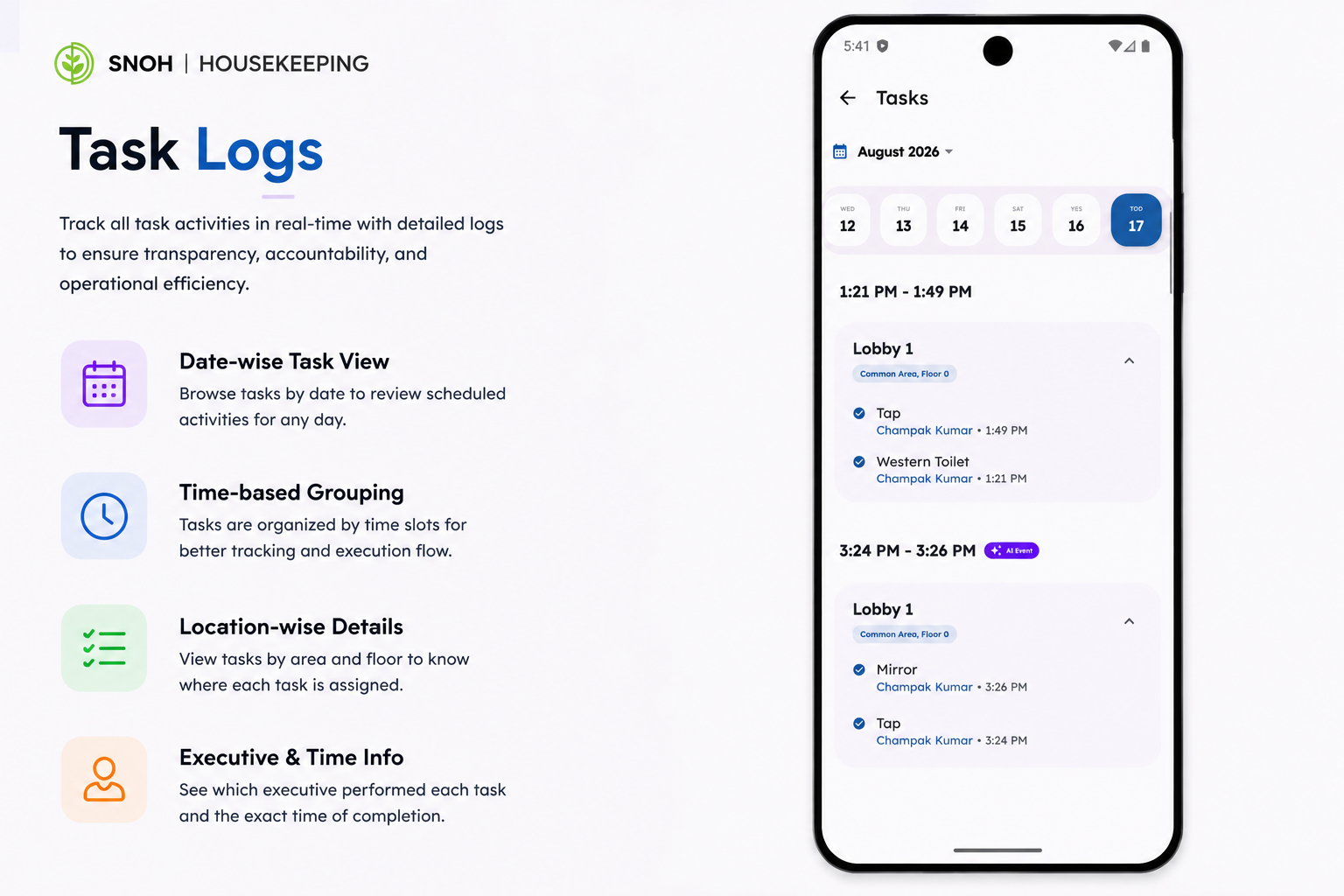
Increase transparency and monitoring using SNOH Housekeeping platform
-
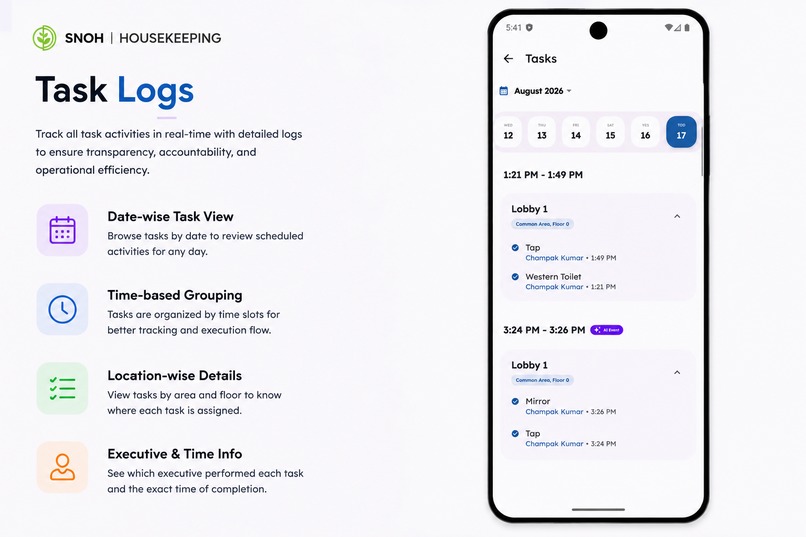
All the daily tasks logs are maintained at one location
-
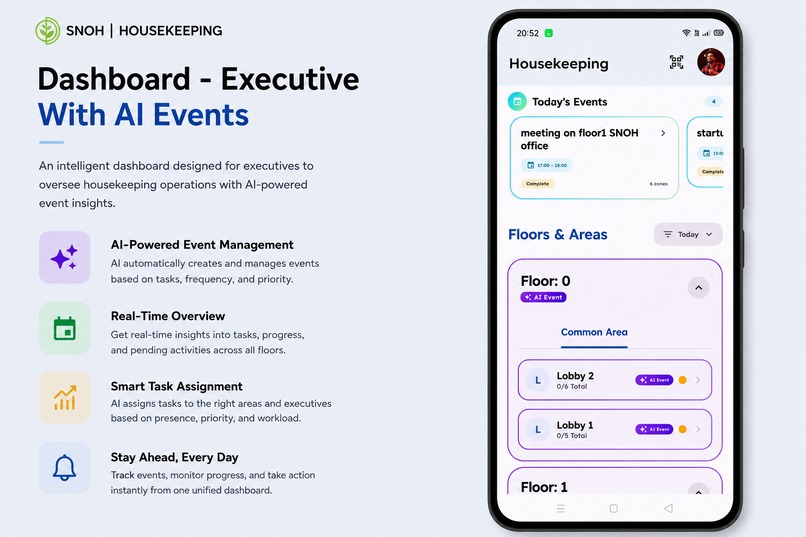
An intelligent dashboard designed for executives to oversee housekeeping operations.
-
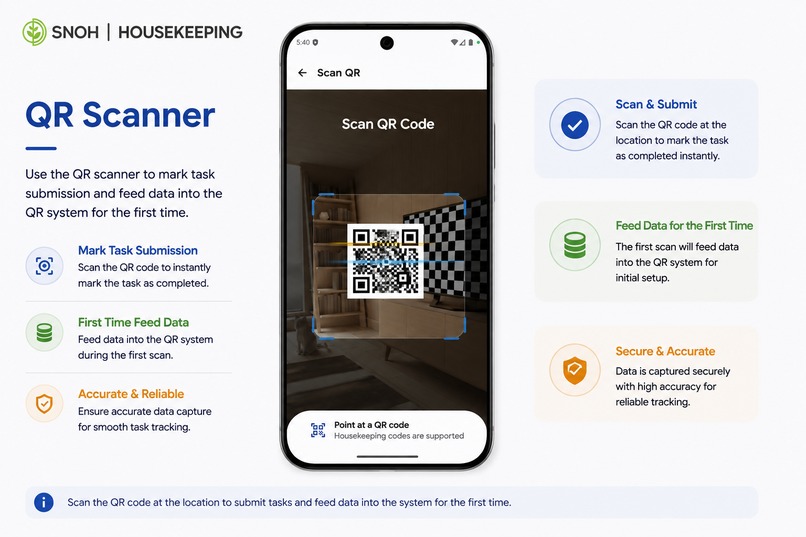
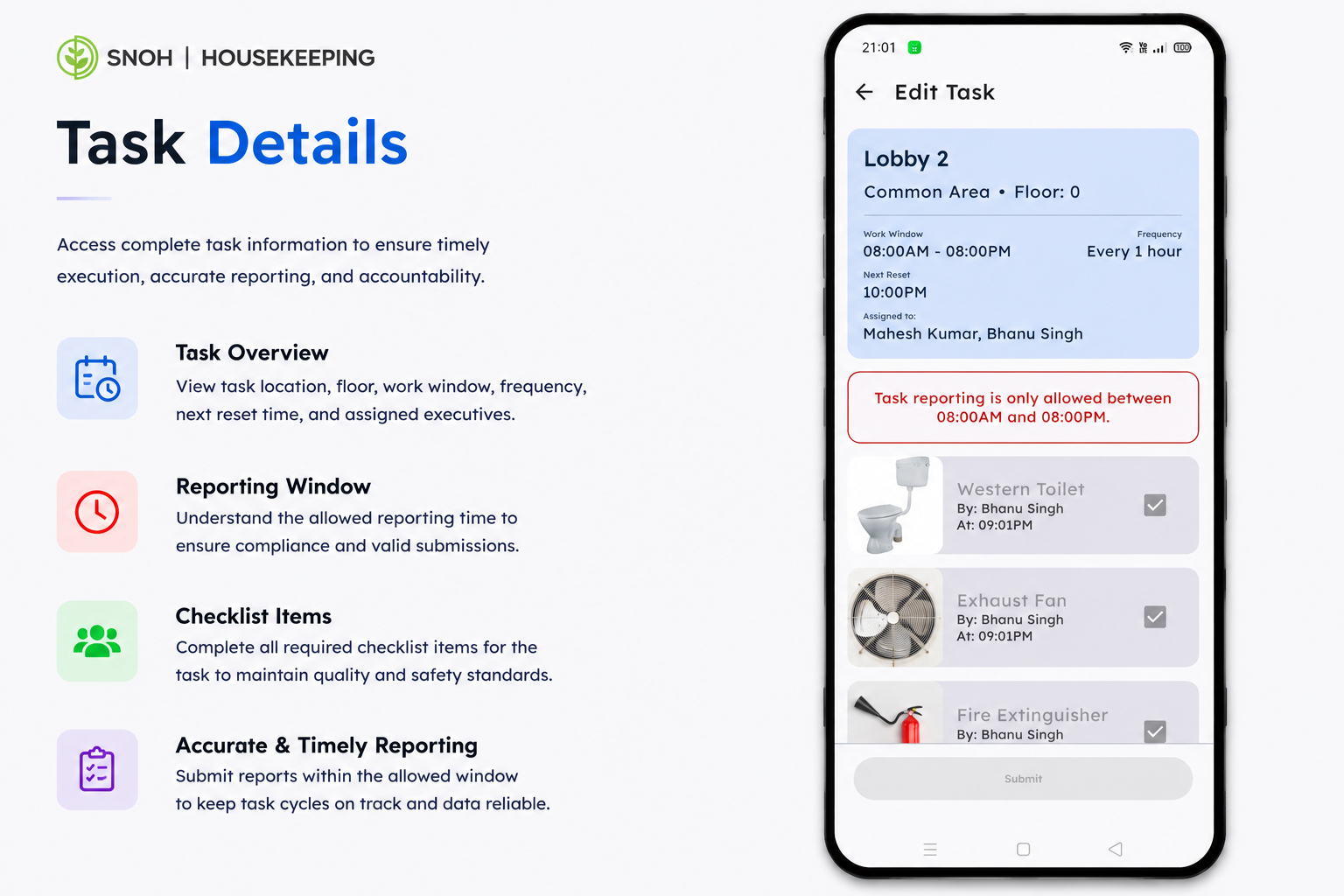
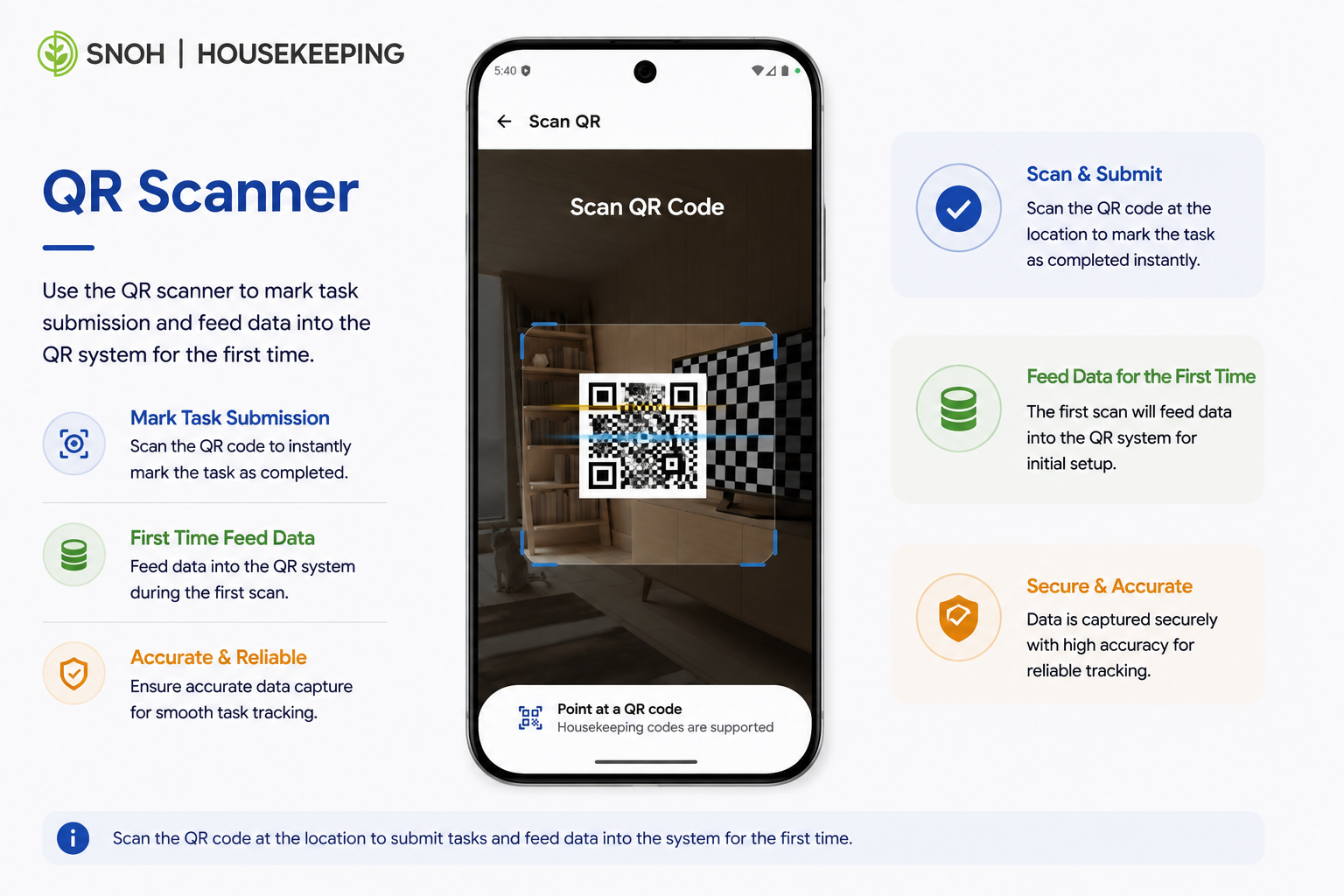
Scan the QR code at the location to submit tasks and feed data into the system for the first time.
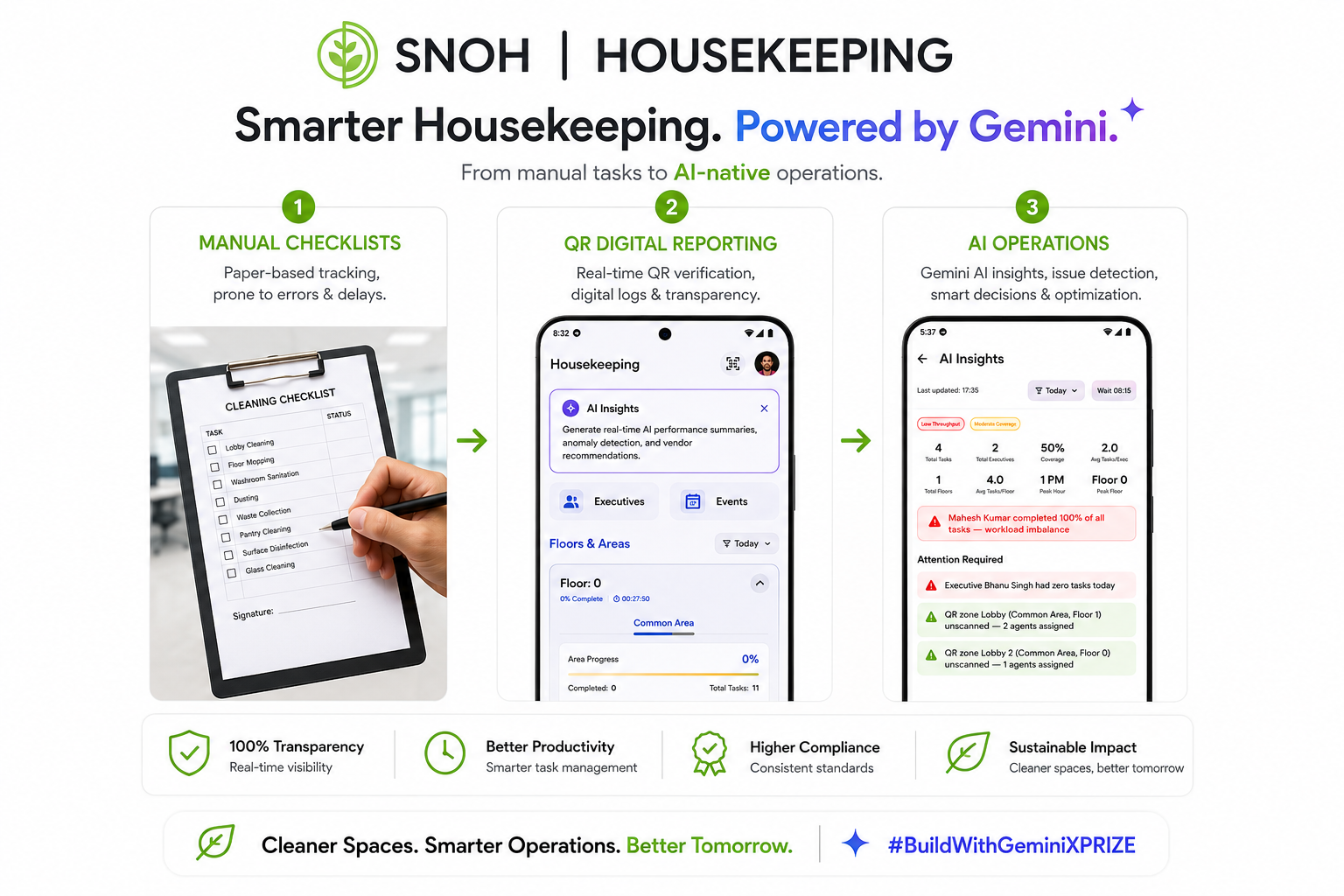
From Paper Checklists to an AI Operating Layer
We started with a problem that is still common across physical facilities: many everyday operations are still managed manually.
In hotels, malls, restaurants, hospitals, airports, campuses, venues, and other facilities, workers may still rely on paper checklists, manual registers, spreadsheets, phone calls, and messaging groups to record what was cleaned, inspected, completed, or missed. Managers then have to collect those records, understand what happened, identify problems, and decide what needs to happen next.
The problem is bigger than the paperwork itself. When operational activity remains fragmented and manual, valuable operational data is difficult to capture, analyze, and use to improve the way a facility operates.
A checklist can confirm that a task was completed, but it does not easily reveal how performance changes over time, which areas repeatedly require attention, whether workloads are balanced, or how operations should change when an event or unexpected situation occurs.
Our First Step: Digitize the Operation
Our first goal was not AI.
It was digitization.
We began building the infrastructure needed to move physical facility operations into a digital system: organizations, facilities, buildings, floors, rooms and zones, executives, housekeeping tasks, projects, events, and QR-identified physical locations.
QR codes became an important bridge between the physical and digital worlds. Instead of a worker simply ticking a box on a paper sheet, a physical location can be connected to a digital task and its operational record.
Workers can receive tasks, update their progress, and use QR codes to connect activity at a physical location with the digital system.
This gave us something paper checklists could not: structured operational data.
From Data to Operational Feedback
Once operations were digitized, we could start asking questions that were previously difficult to answer:
- Which areas are being serviced consistently?
- Which tasks are being missed?
- Which executives are overloaded?
- Where are anomalies appearing?
- Which QR points have unusual activity?
- Where could work be reassigned?
This became our second stage: turning operational records into feedback.
Our housekeeping intelligence workflow analyzes QR task activity and operational performance to identify patterns, anomalies, workload issues, and performance problems. It can produce structured recommendations and QR reassignment recommendations for the operations team.
This created an important feedback loop:
Work happens → data is captured → performance is analyzed → the operations team receives feedback → operations improve.
At this point, we had moved beyond a digital checklist. We were building an operational intelligence platform.
Then We Asked: Why Should Humans Make Every Decision?
This led us to the next question.
If the system already has information about the facility, workforce, tasks, locations, schedules, and historical performance, why should a manager still have to manually combine all of that information every time an operational situation changes?
That became the motivation for introducing Gemini.
We wanted AI to do more than answer questions about our data. We wanted it to participate in operational decision-making.
Gemini as the Operational Reasoning Layer
Our event-planning workflow provides Gemini with context about an event, facility, QR locations, executives, workload, existing assignments, and operational performance.
Instead of returning an unstructured checklist, Gemini produces a structured operational plan containing an event roster, timed operational instances, potential reinforcements, operational notes, and a confidence/data-completeness signal.
The event-planning architecture supports multiple instances, allowing an event to be treated as a sequence of operational phases rather than a single checklist.
This changes the starting point from:
"We have an event. Someone needs to figure out what to do."
toward:
"The system understands the event and prepares an operational plan using the facility and workforce context."
Our second AI workflow provides the other side of the loop by analyzing what is actually happening and identifying where operational changes may be needed.
This is the transition we are building toward:
Digitize → Measure → Understand → Recommend → Automate.
How We Built It
We built the system around Google Cloud and Firebase.
The backend uses TypeScript and Firebase Cloud Functions, with Firestore for persistent organizational and facility data and Realtime Database for time-sensitive operational information. Google Genkit provides the AI orchestration layer, with Gemini running through Vertex AI.
The client application follows a Clean Architecture structure using Kotlin and Compose Multiplatform. The application is divided into feature, domain, and data layers, with Firebase and local Room storage providing the data infrastructure.
QR codes provide the physical-world connection between digital operations and physical locations. The system is also designed for imperfect real-world environments: housekeeping tasks can be cached locally, and actions taken without connectivity can be synchronized when connectivity returns.
What We Learned
One of our biggest lessons was that AI-native does not mean AI-only.
People working inside a facility understand things that are difficult to completely encode into software: unusual situations, customer expectations, safety concerns, physical constraints, and exceptions.
Our goal is therefore not to remove people from the operation.
Humans remain responsible for physical execution, judgment, accountability, and exceptional situations. AI handles the information-heavy coordination layer: understanding operational context, identifying patterns, planning work, allocating resources, and surfacing decisions.
We also learned that structured AI outputs are critical for operational software. Free-form AI responses are difficult to validate and difficult to turn into reliable application behavior. Our AI workflows therefore use defined schemas and structured recommendation codes so that AI decisions can be interpreted by the application.
We also learned that data quality matters. A plan generated from incomplete facility or workforce information should not be treated the same way as a plan generated from rich operational context. This is why the event-planning output includes a confidence/data-completeness signal.
The Hard Part
The hardest part has not been calling Gemini.
The difficult part is connecting AI to the real operational world.
An AI model needs context about physical locations, people, workloads, schedules, historical performance, and existing assignments. Its output then needs to fit into application schemas, business rules, task systems, realtime databases, and worker workflows.
At the same time, the physical world is unpredictable. A worker may be unavailable. An event may become busier than expected. A task may be delayed. Connectivity may disappear.
This is why we are building Gemini into the operational architecture rather than treating it as a separate AI feature.
Building the Business This Way
Building the business this way has changed how we think about the future of facility operations.
Our current workflows start with concrete facility and housekeeping operations, but the underlying problem is much broader. The same operational foundation can apply to hotels, malls, restaurants, airports, hospitals, factories, warehouses, campuses, large-scale events, venues, and other physical environments where people, places, tasks, schedules, and changing conditions need to be coordinated.
We see a future where natural language becomes another way to initiate an operation.
For example, a manager could say:
"We have a 500-person event tomorrow. Prepare the facility from 2 PM, maintain operations throughout the event, and handle post-event restoration."
Gemini could interpret that intent, create the relevant event structure, gather the required facility and workforce context, and begin the operational decision-making process.
The voice interface itself is not the goal. The goal is to allow human intent to become structured, executable operations.
This represents the next step in our progression:
Paper checklist → Digital operation → Operational data → AI insights → AI-assisted decisions → AI-driven operations → Natural-language orchestration.
Category Impact
We see a strong opportunity in Professional Services Access.
Today, sophisticated facility and operations expertise often depends on experienced managers, supervisors, consultants, and specialized teams. Smaller organizations may not have access to the same operational expertise or infrastructure as large enterprises.
We are building toward a different model: an AI operations expert that can understand the context of a physical environment and help turn that context into executable decisions.
The fundamental change is not simply replacing paper with an app, or adding a chatbot to facility software.
It is making operational expertise more accessible through an AI-native system that can understand facilities, coordinate people and tasks, analyze operational data, and help organizations make better decisions.
Our long-term vision is an AI operating layer for the physical world—one that understands facilities, coordinates people and tasks, learns from operational data, and helps organizations run complex physical operations more effectively.
We are building toward a future where operational expertise is not limited by the number of managers a business can afford, and where AI does not simply sit beside the business—it becomes part of how the business operates.
Built With
- ai-agents
- ai-automation
- android
- clean-architecture
- cloud-functions
- compose-multiplatform
- firebase
- firebase-authentication
- firebase-realtime-database
- firestore
- gemini
- generative-ai
- genkit
- google-cloud
- jetpack-compose
- koin
- kotlin
- kotlin-multiplatform
- qr-code
- room-database
- typescript
- vertex-ai


Log in or sign up for Devpost to join the conversation.