

About the Project
Inspiration
In today's digital world, fake identity documents and document fraud are serious problems. Manual document verification can take time and may not always identify suspicious alterations. This inspired us to develop an AI-Based Fake Identity & Document Screening System that helps make document verification faster, smarter, and more secure.
What We Built
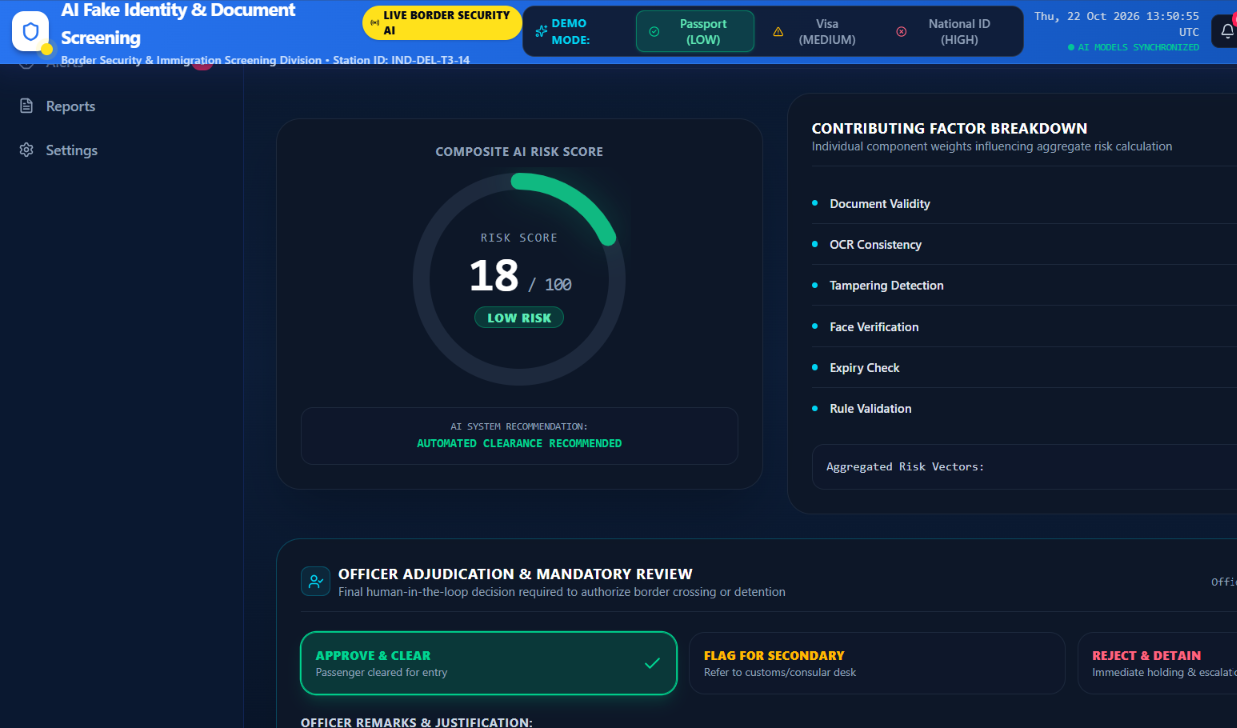
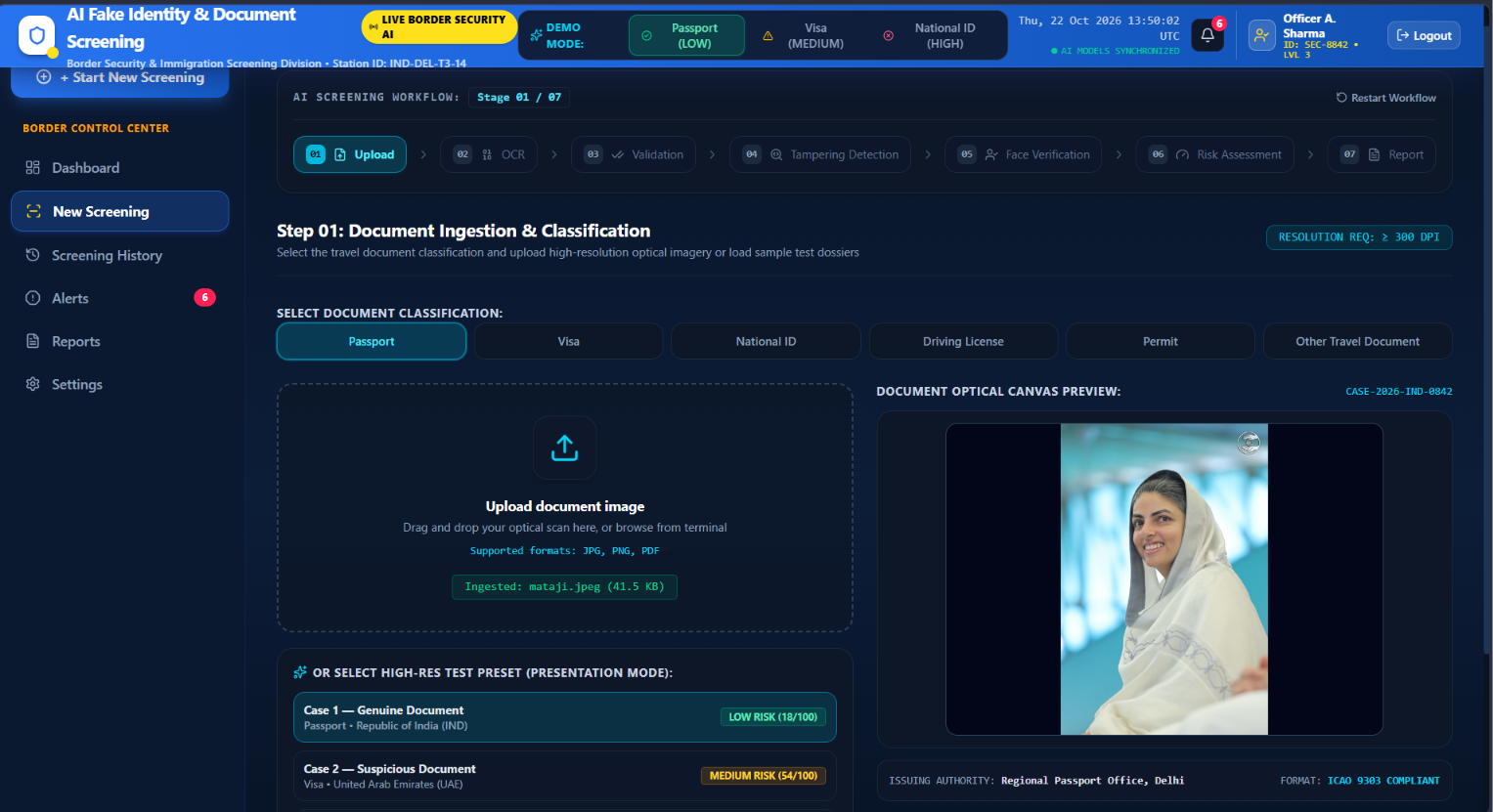
Our project uses Artificial Intelligence (AI), Optical Character Recognition (OCR), and Computer Vision to support document verification. Users can upload identity documents, extract text, check for inconsistencies, and identify potential signs of tampering. The system can also support facial verification by comparing a person's face with the photograph on the submitted document.
The goal is to help organizations identify suspicious documents and reduce the effort required for manual verification.
How We Built It
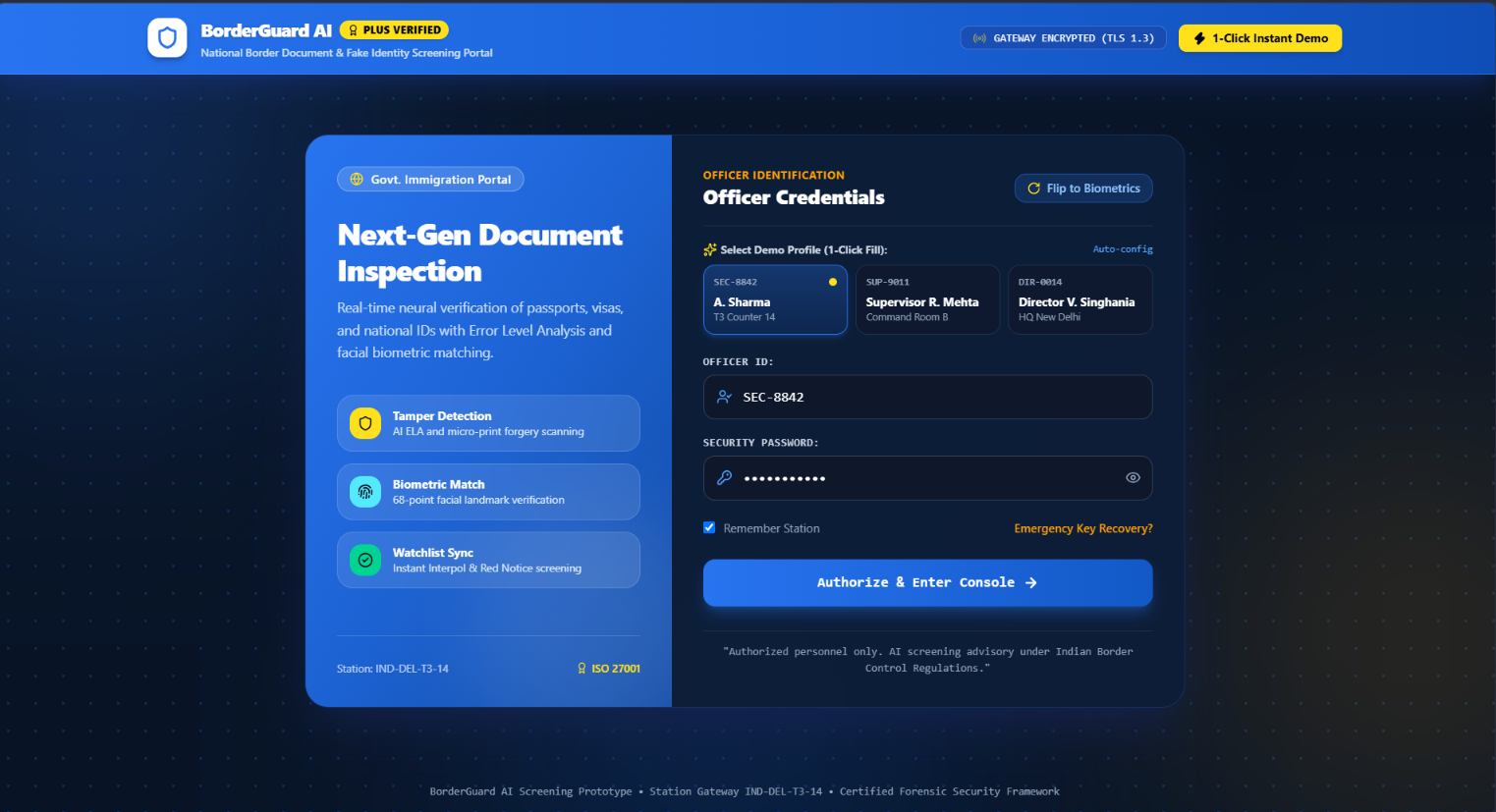
We designed the system with a user-friendly interface and a backend for document processing and verification. Our planned technology stack includes HTML, CSS, and JavaScript for the frontend, Python and Flask for backend development, Tesseract OCR for text extraction, OpenCV for image processing, and a database for storing verification records.
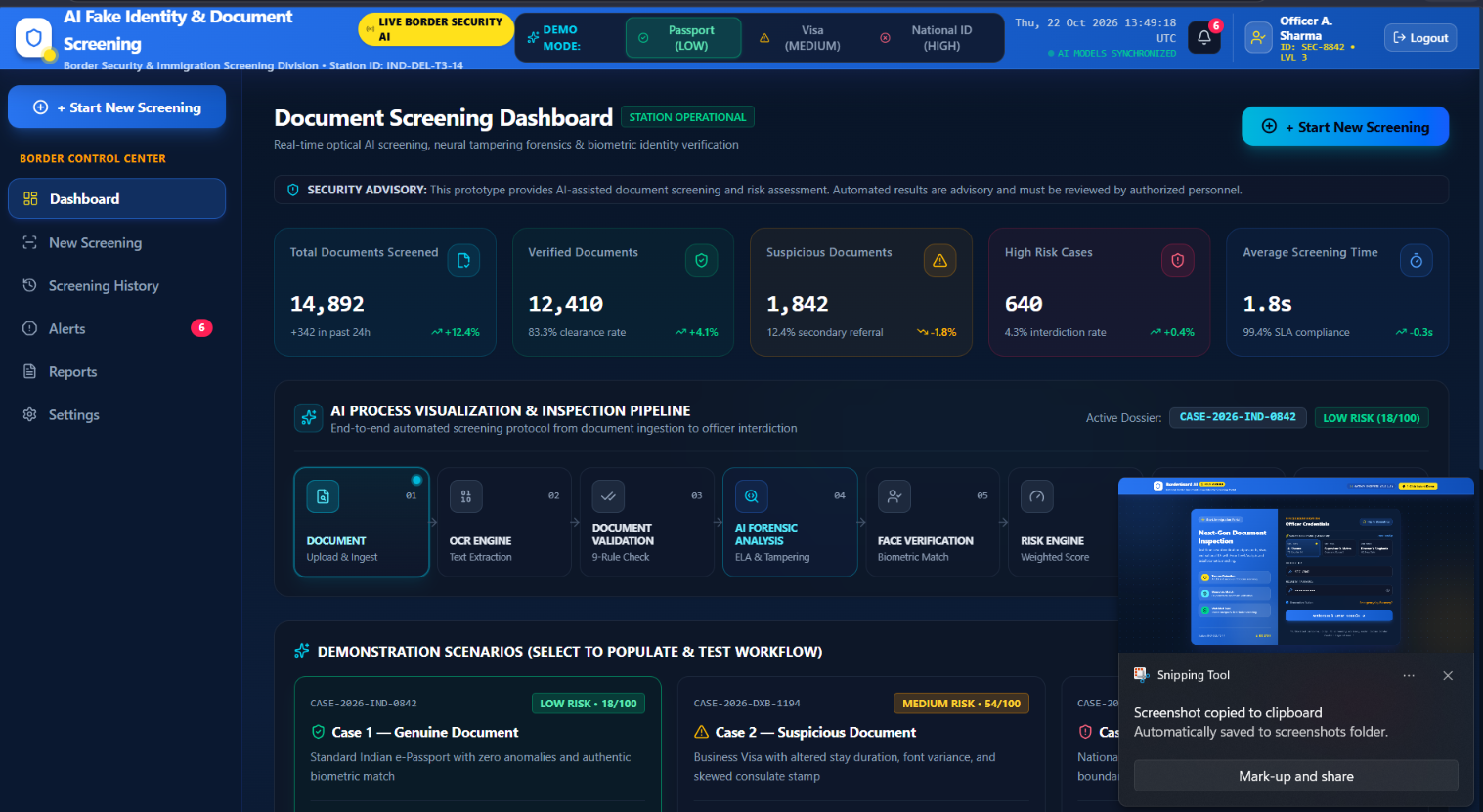
The system follows a workflow: document upload, text extraction, document analysis, verification results, and risk reporting. Suspicious cases can be flagged for further human review.
What We Learned
Through this project, we explored how AI and computer vision can address real-world security challenges. We learned about document processing, OCR, backend development, database integration, and the importance of designing secure and reliable verification systems. We also understood that AI-generated results should be treated as indicators rather than unquestionable proof.
Challenges We Faced
Some key challenges included handling different document formats, extracting text from low-quality images, identifying possible document alterations, and ensuring that verification results are reliable. Integrating multiple technologies into a single workflow was another challenge. These challenges helped us understand the importance of testing, accuracy, security, and continuous improvement.
Future Scope
In the future, we aim to improve detection accuracy, support more document types, strengthen facial verification and liveness checks, and introduce better reporting and audit features.
Conclusion
Our AI-Based Fake Identity & Document Screening System aims to make document verification more efficient, secure, and accessible. We hope this project can help organizations identify potential fraud earlier and build greater trust in digital identity verification.
What it does
Built With
- artificial-intelligence
- computer-vision
- css
- cybersecurity
- data
- document-verification
- facial-recognition
- flask
- fraud-detection
- html
- javascript
- machine-learning
- mongodb
- natural-language-processing
- ocr
- opencv
- postgresql
- python
- rest-api
- tesseract-ocr


Log in or sign up for Devpost to join the conversation.