-
-
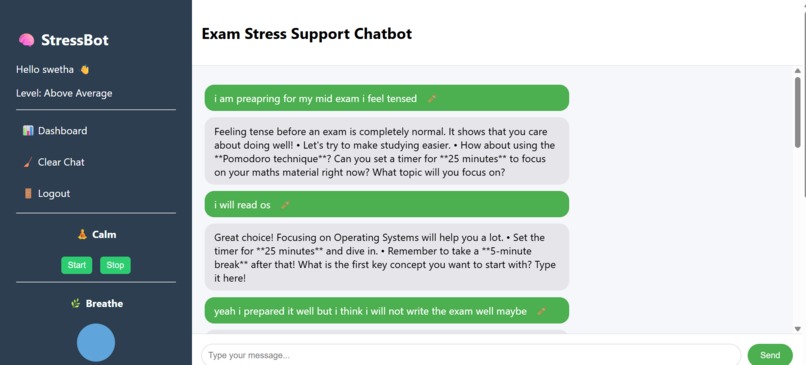
an overview of how this system looks like
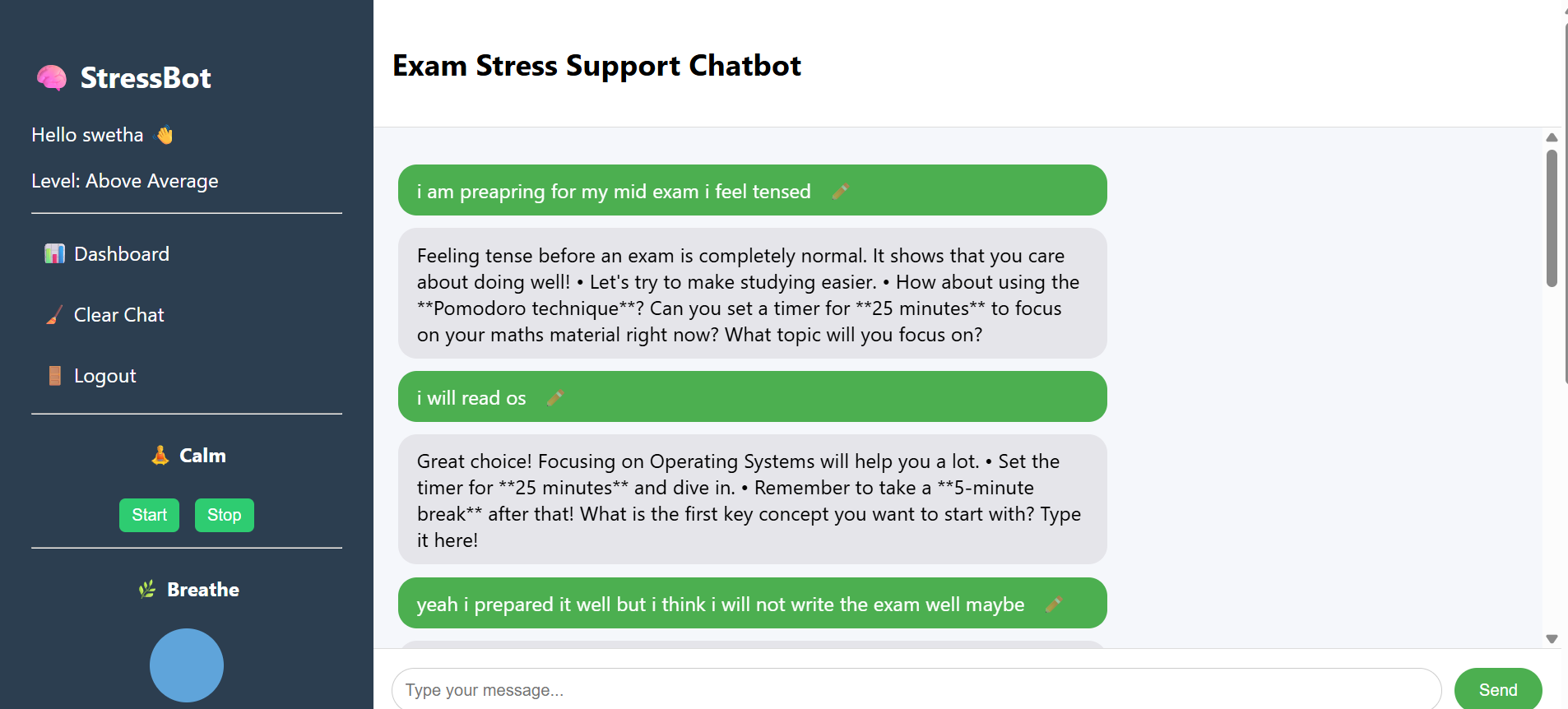
Inspiration
Exam season shouldn't mean the sacrifice of a student's mental health. We noticed a massive gap in the EdTech space: there are thousands of apps that help you study, and thousands of apps that help you meditate, but nothing that connects the two. When a student is panicking at 2:00 AM, a generic Pomodoro timer doesn't help. We wanted to build an intelligent companion that doesn't just tell you what to study, but actively monitors your mental well-being and steps in when you are on the verge of burnout.
What it does?
Our project is a multimodal AI study buddy that seamlessly blends academic coaching with mental health triage.
🧠 Context-Aware AI Chat: A conversational agent that provides tutoring, comfort, and study strategies based on your unique profile.
📸 Real-Time Emotion Detection: Uses the user's webcam to analyze facial expressions. The AI combines this visual data with text input to deliver deeply empathetic, emotionally intelligent responses.
📅 Smart Study Plan Generator: Automatically builds personalized, actionable study schedules based on the student's exam dates and weak subjects.
🎮 Interactive Coping Tools: Features physics-based relaxation tools like a "Worry Jar" for chaotic thoughts, a "Brain Dump Shredder" to destroy anxieties, and mini-games like Tic-Tac-Toe for cognitive breaks.
🤝 Peer Break Room: A real-time, anonymous matchmaking system that pairs stressed students together for mutual support and quick game sessions.
How I built it
We engineered a robust full-stack web application using a modern tech stack:
Backend: We used Python and Flask to handle the core routing, session management, and backend logic.
AI Integration: We leveraged the Open AI API, utilizing advanced prompt engineering techniques to create a specialized coaching persona that reacts differently to high vs. low stress levels.
Real-Time Features: We integrated Socket.IO (Web Sockets) to power the live multiplayer Peer Break Room and instant messaging.
Frontend: Built with vanilla JavaScript, HTML5, and CSS3, featuring custom animations, a Markdown parser for rendering AI tables, and a dynamic Chat GPT-style sidebar.
Database: We utilized a relational database (SQLite) to track user profiles, save chat histories, and log emotion/stress data over time to create a personalized dashboard.
Challenges I ran into
The "State Machine" Trap: We initially struggled with the AI getting stuck in loops when generating study plans. If a user changed their mind mid-conversation, the bot would keep asking for "hours available." We had to engineer a custom "escape hatch" in the backend logic to let the AI dynamically drop tasks and pivot back to normal conversation.
Multimodal Context: Figuring out how to simultaneously pass text data and live webcam emotion states to the AI in a way that felt natural (not robotic) took significant prompt tuning and testing.
Session Management: Keeping track of different chat threads and ensuring WebSockets fired correctly without reloading the page required precise JavaScript event handling.
Accomplishments that i'm proud of
Successfully fusing biometric data (facial emotion) with natural language processing to create an AI that actually "feels" empathetic.
Building the interactive "Brain Shred"—taking a proven psychological coping mechanism and turning it into a visual, satisfying digital experience.
Designing an architecture that doesn't just talk, but actually generates structured, useful data (like Markdown tables for study plans) on command.
What I learned
Prompt Engineering is Code: We learned that treating the system prompt like a strict set of rules (using frameworks for Role, Context, Task, and Format) drastically improves the API's output reliability.
The History API: We learned how to manipulate browser history so that our pop-up coping tools behave like real app screens, drastically improving the user experience.
Empathy in UI: We learned that small UI choices—like smooth auto-scrolling, calming color gradients, and delayed animations—have a massive impact on how calming the software feels.
What's next for "AI-Based Exam Stress Support Chatbot" Syncing with university Learning Management Systems (e.g., Canvas/Moodle) to auto-import syllabi.
Smartwatch integration for live biometric stress tracking (heart rate variability).
Voice-enabled chat for hands-free interaction during late-night study sessions.
Predictive burnout dashboards for university counselors to identify at-risk students early.
Collaborative Pomodoro sessions inside the live Peer Break Room.

Log in or sign up for Devpost to join the conversation.