-
-
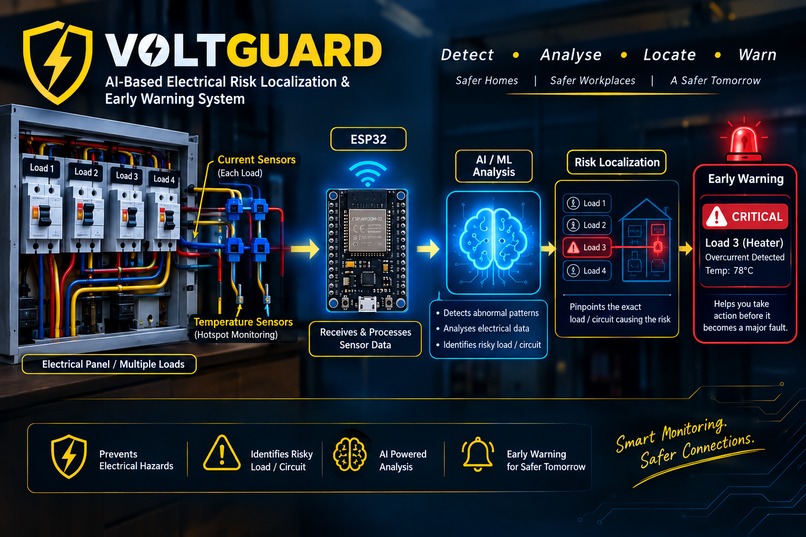
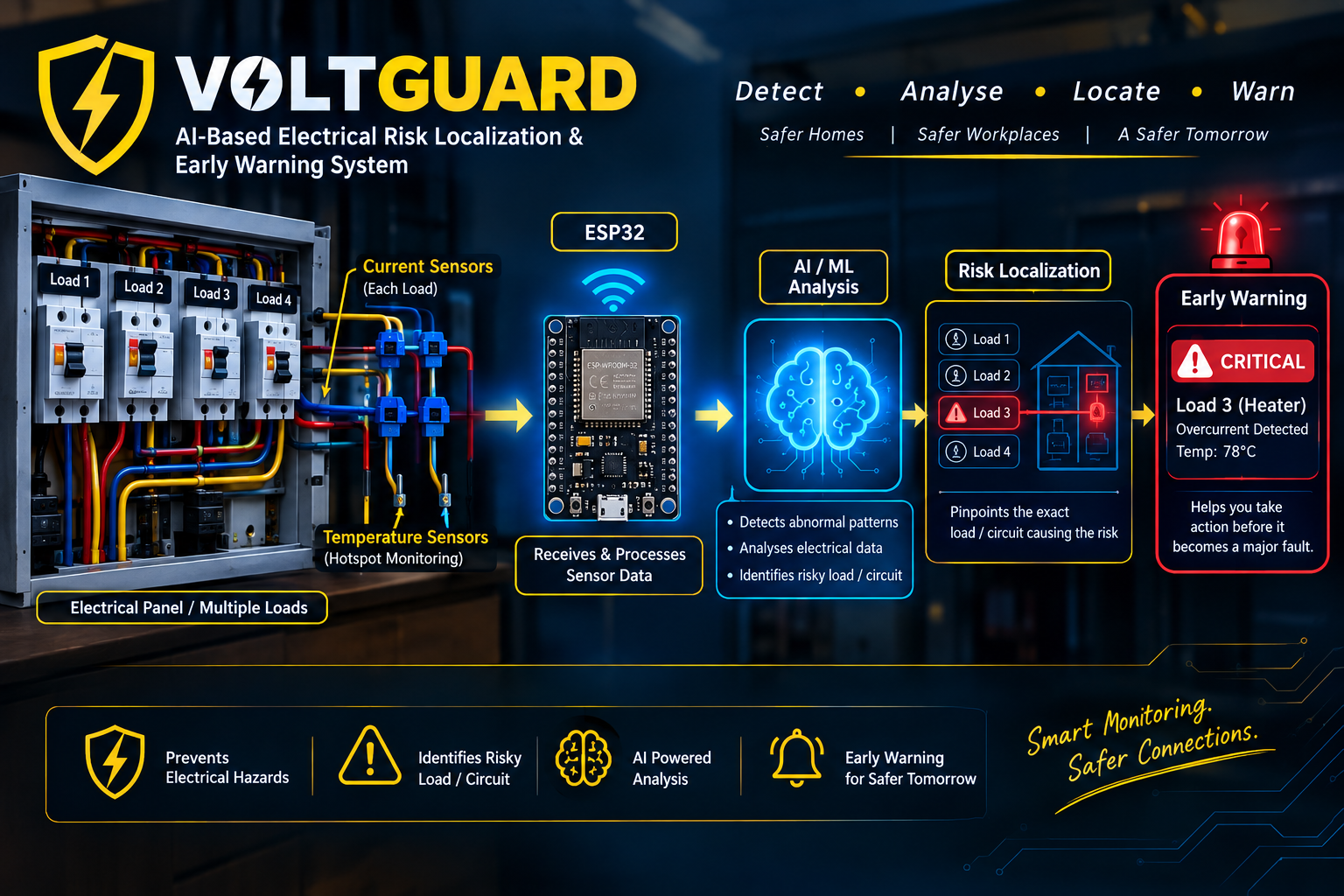
Proposed project concept
-
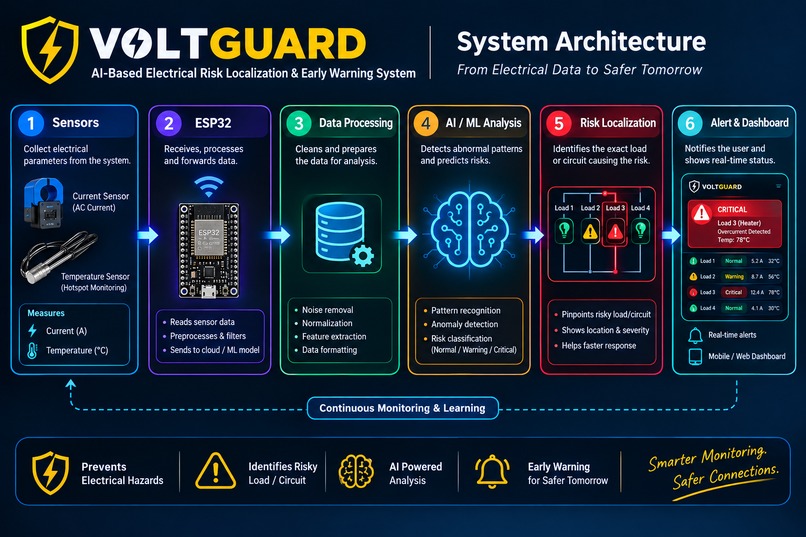
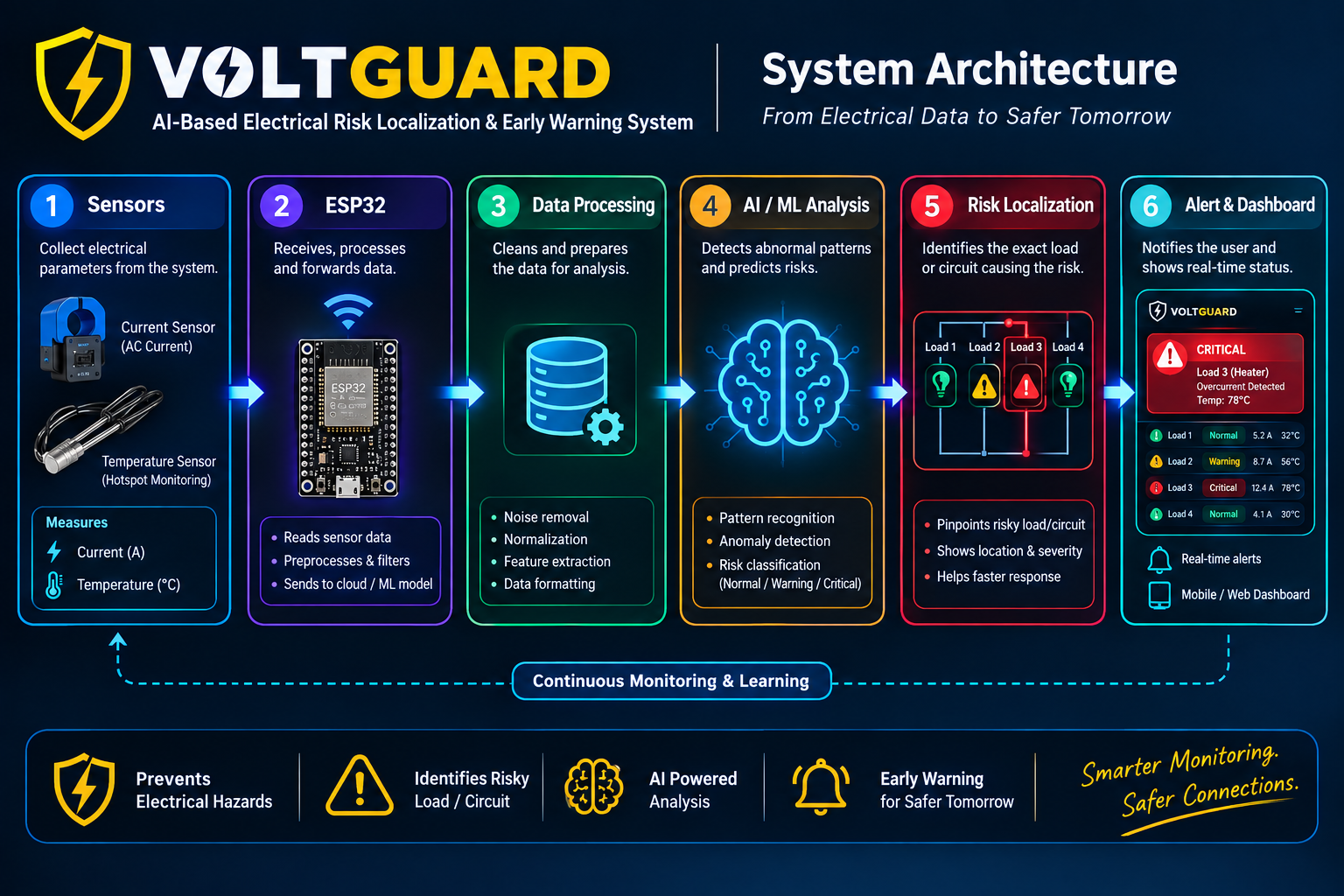
System architecture
-
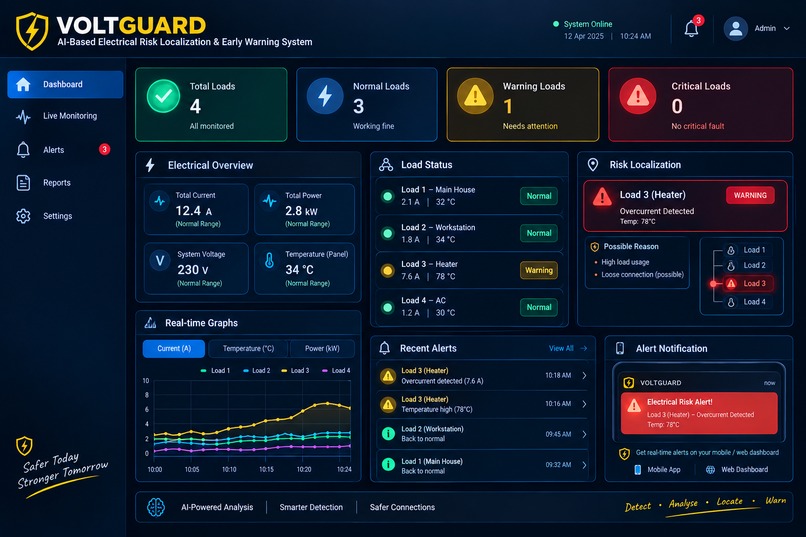
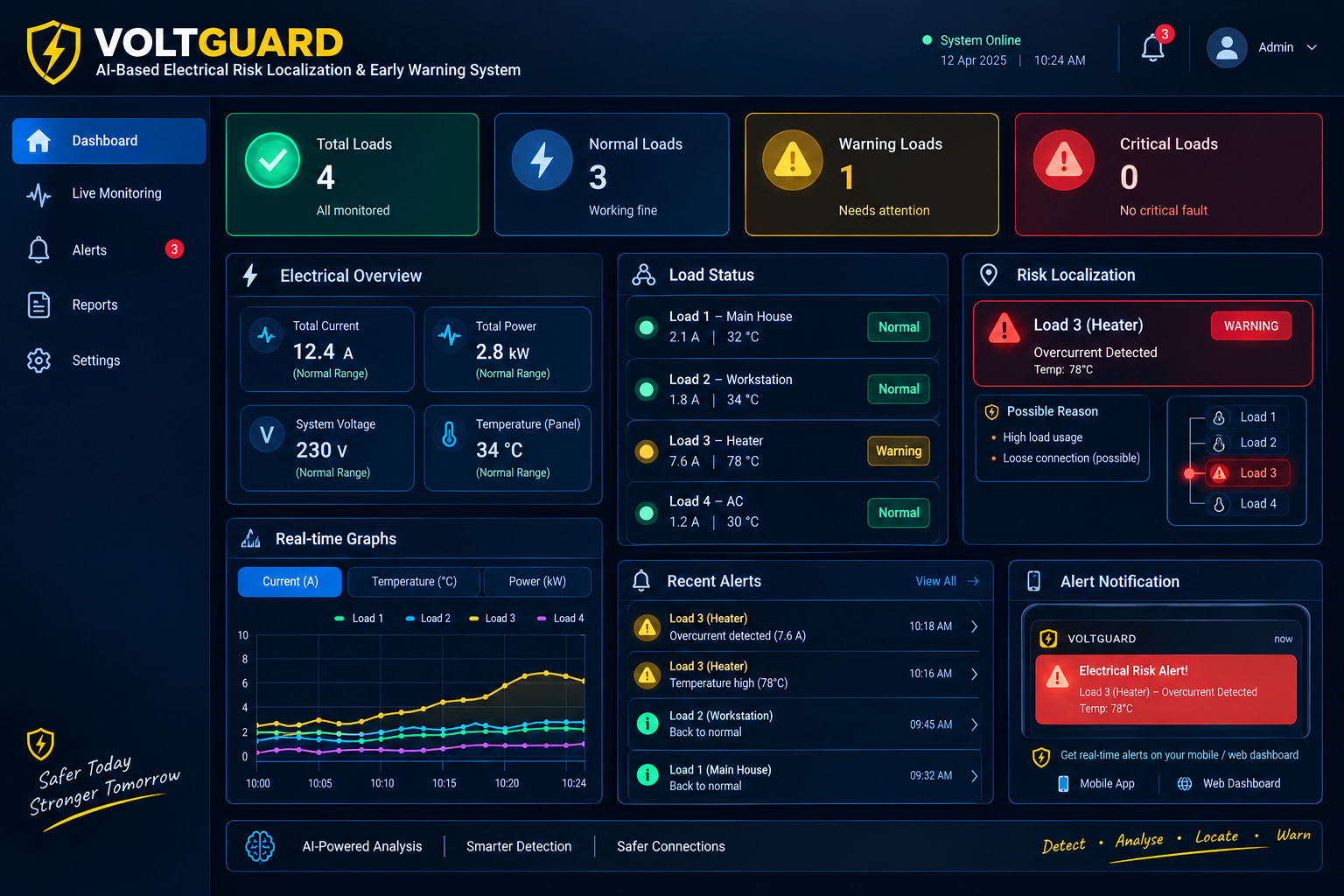
User dashboard interface
Inspiration
Our inspiration came from a simple question: “Can electrical risks be identified before they become serious?” Electrical problems such as overloading, abnormal current, and excessive heating may develop gradually and can be difficult to identify at the exact load or circuit level. This motivated us to explore an intelligent system that could monitor electrical behaviour, locate emerging risks, and provide an early warning. This idea led us to create VOLTGUARD — AI-Based Electrical Risk Localization & Early Warning System.
What It Does
VOLTGUARD continuously monitors electrical parameters such as current and temperature to identify abnormal electrical behaviour. It then: 📊 Analyses the collected electrical data using AI/ML. 📍 Identifies the potentially risky load or circuit. 🚦 Classifies the risk as Normal, Warning, or Critical. 🔔 Provides an early warning with the possible reason. 🛡️ Helps users take preventive action before the risk becomes severe.
How We Built It
We designed VOLTGUARD as a low-cost, sensor-based intelligent monitoring system. 🔌 Sensors collect electrical parameters such as current and temperature. 🧠 ESP32 receives and processes the sensor data. 🤖 AI/ML model analyses the data and identifies abnormal patterns. 📍 The system determines the potentially risky load/circuit. 🚦 The risk is classified as Normal, Warning, or Critical. 🔔 An alert is generated to help the user take preventive action. System flow: Sensors → ESP32 → Data Processing → AI/ML Analysis → Risk Localization → Early Warning
Challenges we ran into
While developing VOLTGUARD, we faced several challenges: 📊 Data Collection: Getting enough electrical data for both normal and abnormal conditions. 🤖 AI/ML Accuracy: Distinguishing genuine electrical risks from normal variations. 📍 Risk Localization: Identifying the exact load or circuit causing the abnormal behaviour. ⚠️ False Alerts: Reducing unnecessary warnings while maintaining early detection. 🔒 Safety: Designing and testing the prototype without directly exposing ourselves to high-voltage mains. 💰 Cost: Keeping the system affordable while maintaining useful monitoring capabilities. Our biggest challenge: Turning raw electrical sensor data into a reliable and understandable early-warning decision.
Accomplishments that we're proud of
💡 Identified a real-world electrical safety problem and developed a focused solution. ⚡ Defined VOLTGUARD as an AI-based electrical risk localization and early-warning system. 🧠 Designed a clear approach combining sensor data, AI/ML analysis, and risk classification. 📍 Focused on identifying where the risk is developing, not just detecting a fault. 🛡️ Designed the concept with low-cost and safe prototyping in mind. 🎯 Created a solution that can potentially be adapted for homes, colleges, shops, and small workshops. Our biggest accomplishment: Turning a common electrical safety concern into a practical, technology-driven solution with a clear path from idea to prototype.
What we learned
Through VOLTGUARD, we learned: ⚡ How electrical parameters like current and temperature can be monitored using sensors. 🤖 How AI/ML can analyse patterns and identify abnormal electrical behaviour. 📍 The importance of risk localization instead of simply detecting a fault. 🧠 How to convert raw sensor data into a meaningful risk classification. 🛠️ How to design a practical system considering cost, safety, and feasibility. 🔍 How to identify limitations in existing solutions and develop a solution around the unmet gap. Most importantly, we learned how to turn a real-world problem into a practical technology-based solution.
What's next for AI Based Electrical Risk Localization&Early Warning System
Our next step is to move from the concept stage to a working prototype. 🛠️ Build the Prototype — Integrate ESP32 with current and temperature sensors. 📊 Collect Real Data — Gather data from different safe test-load conditions. 🤖 Train & Test AI/ML Model — Improve abnormal-pattern detection and risk classification. 📍 Improve Risk Localization — Identify the specific load/circuit where the risk is developing. 📱 Develop a Monitoring Dashboard — Display electrical status, risk level, and alerts. 🧪 Test & Validate — Evaluate accuracy, false alerts, response time, and reliability. 🚀 Scale the System — Extend it to multiple circuits and larger buildings. Our vision: Move from detecting electrical problems to predicting, locating, and preventing electrical risks earlier. ⚡🛡️

Log in or sign up for Devpost to join the conversation.