-
-
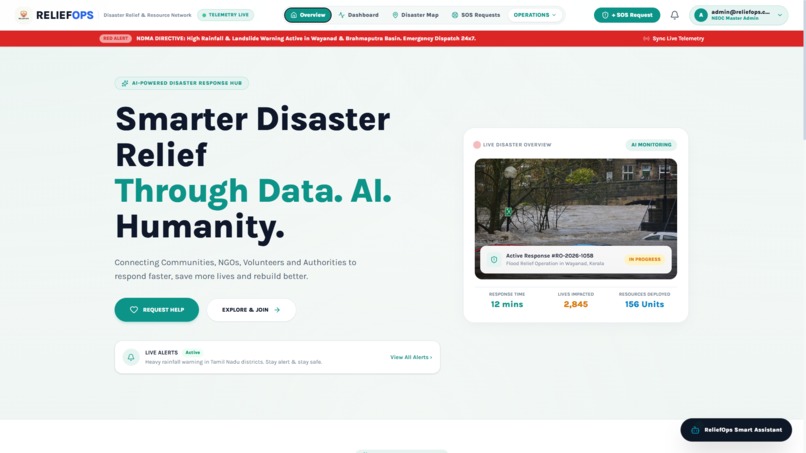
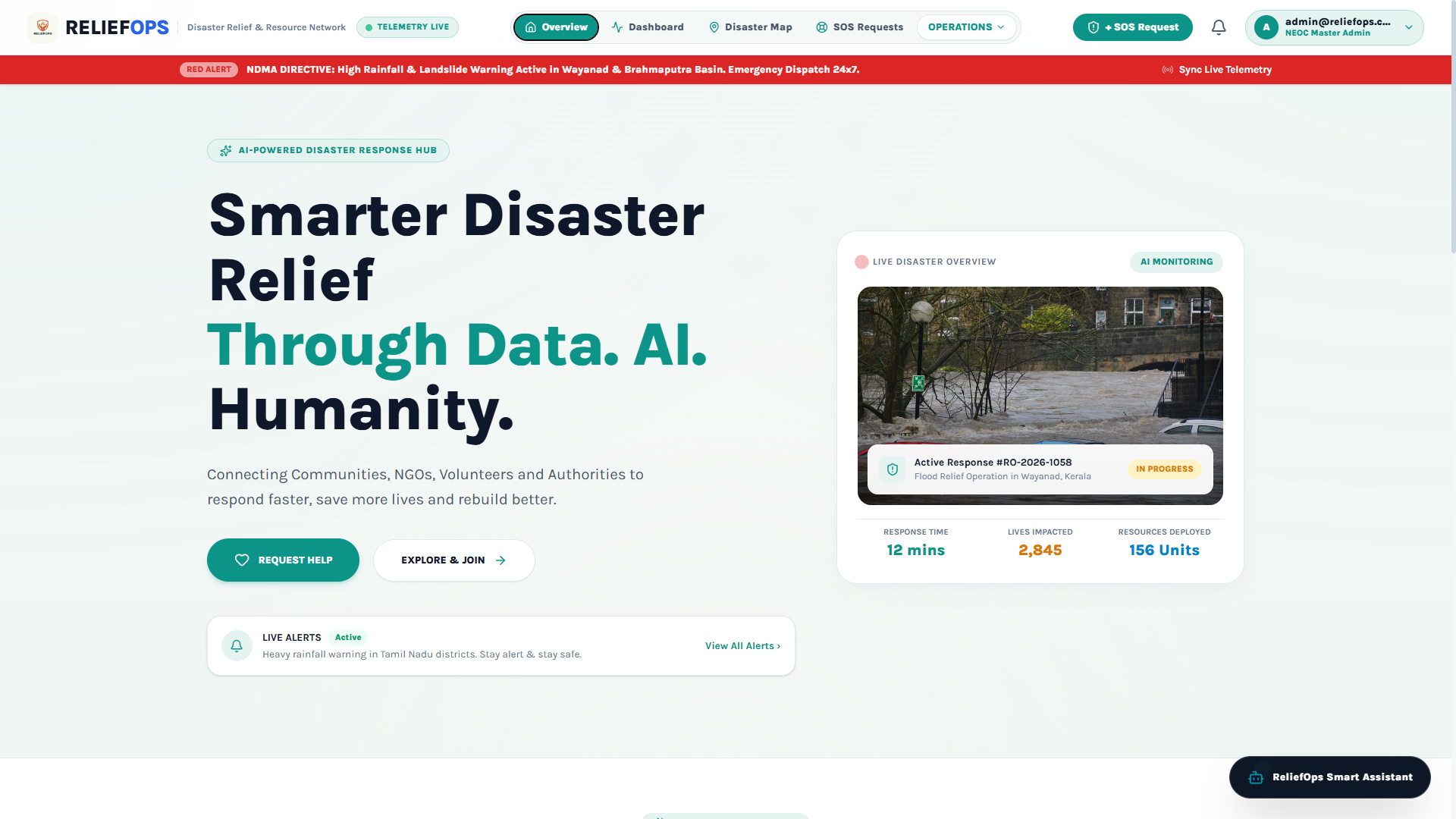
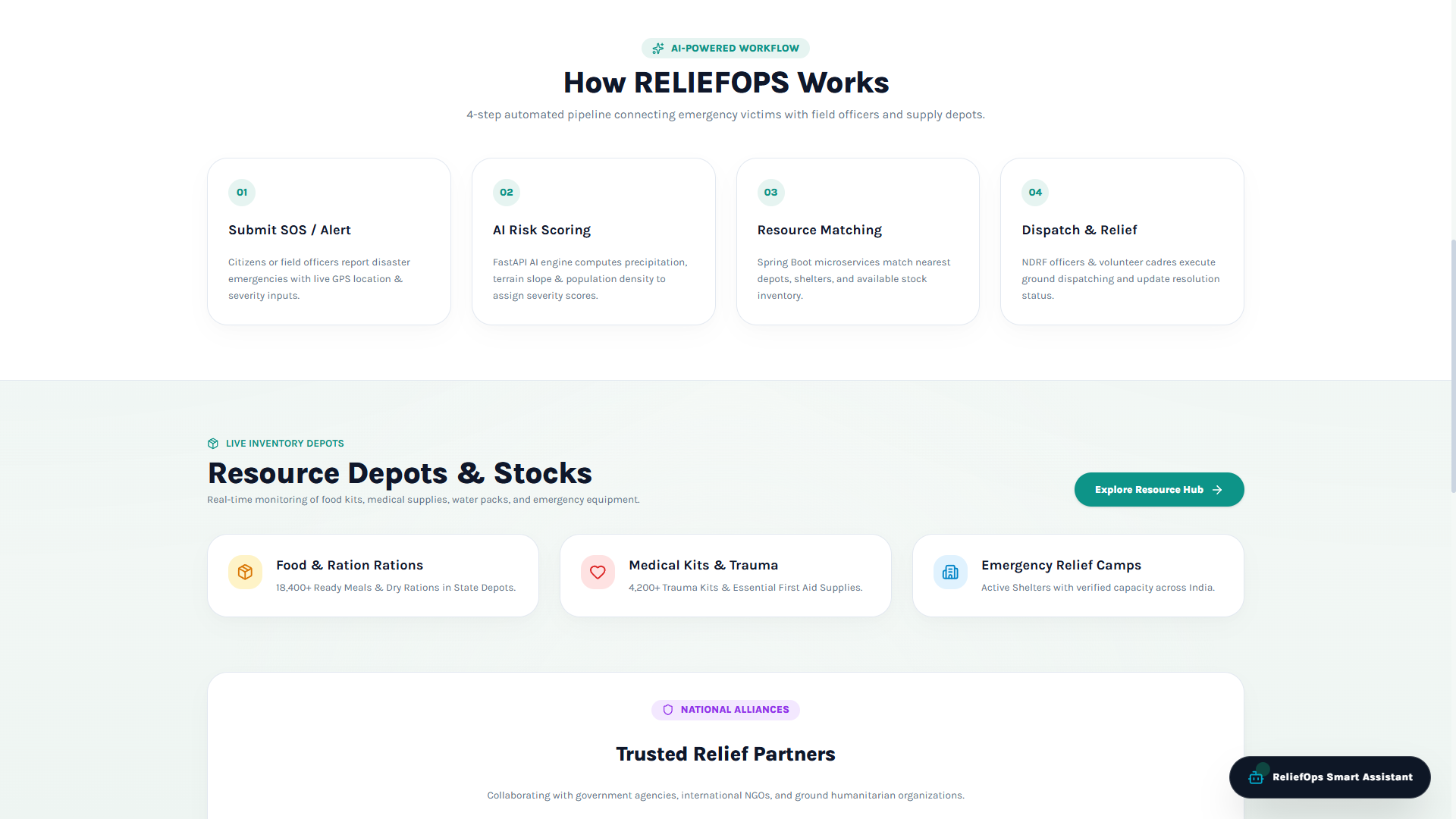
ReliefOps Landing Page — AI-powered disaster relief platform for smarter emergency response and resource allocation.
-
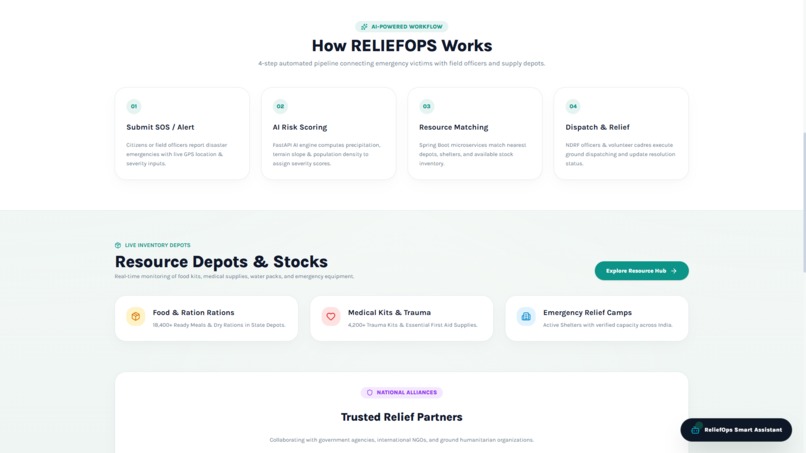
ReliefOps Workflow — Connects disaster monitoring, AI prediction, resource management, shelters, volunteers, and emergency response.
-
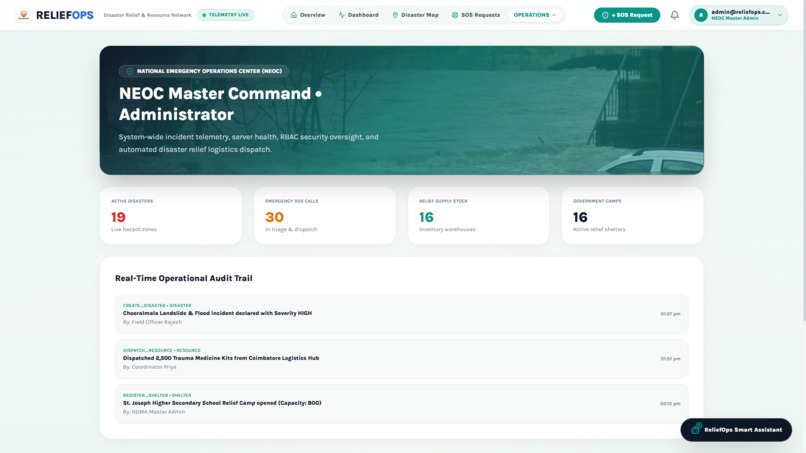
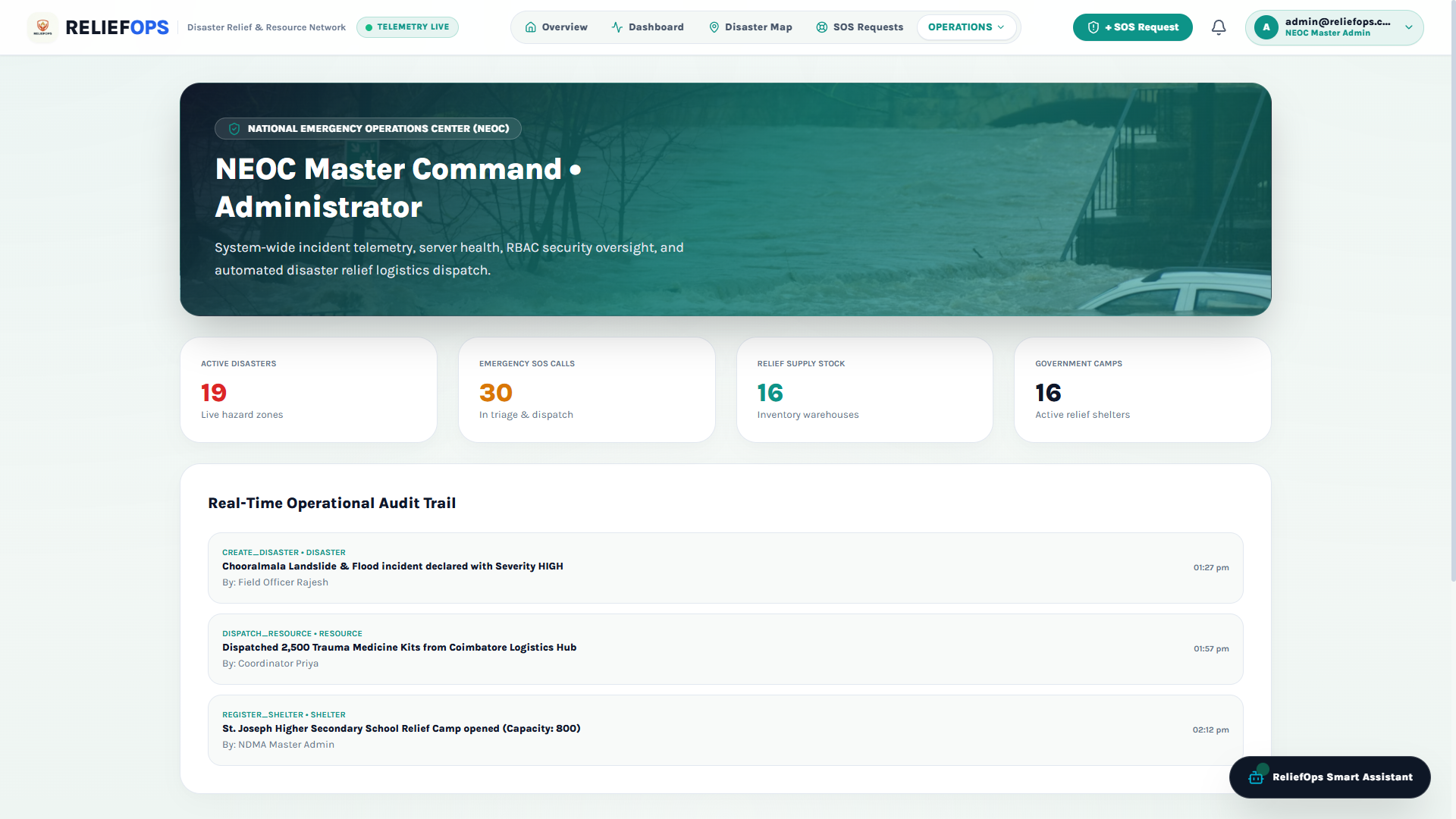
NDRF Command Dashboard — Centralized view of disaster situations, resource status, and emergency operations.
-
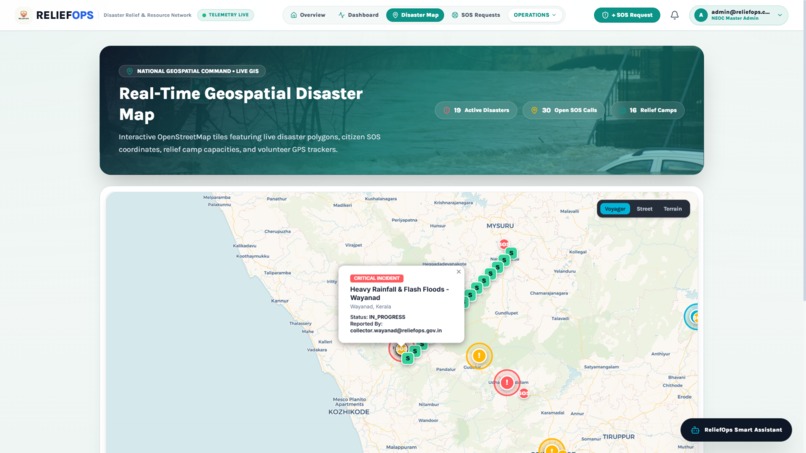
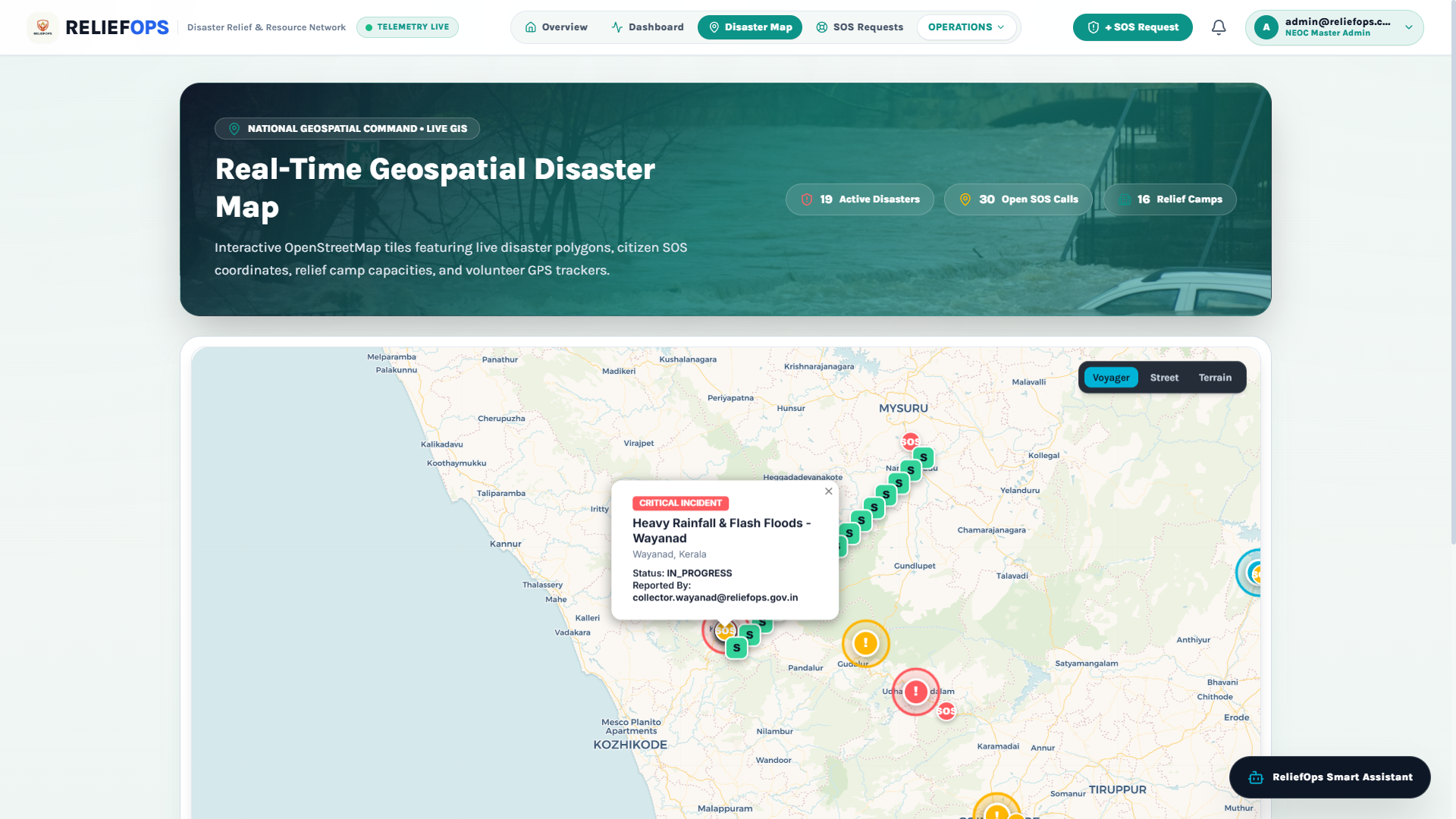
Real-Time Disaster Map — Visualizes affected locations and disaster risk zones for faster response planning.
-
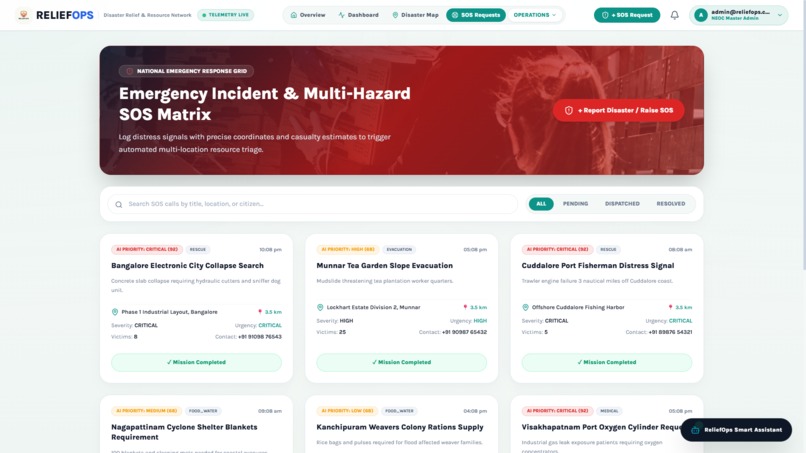
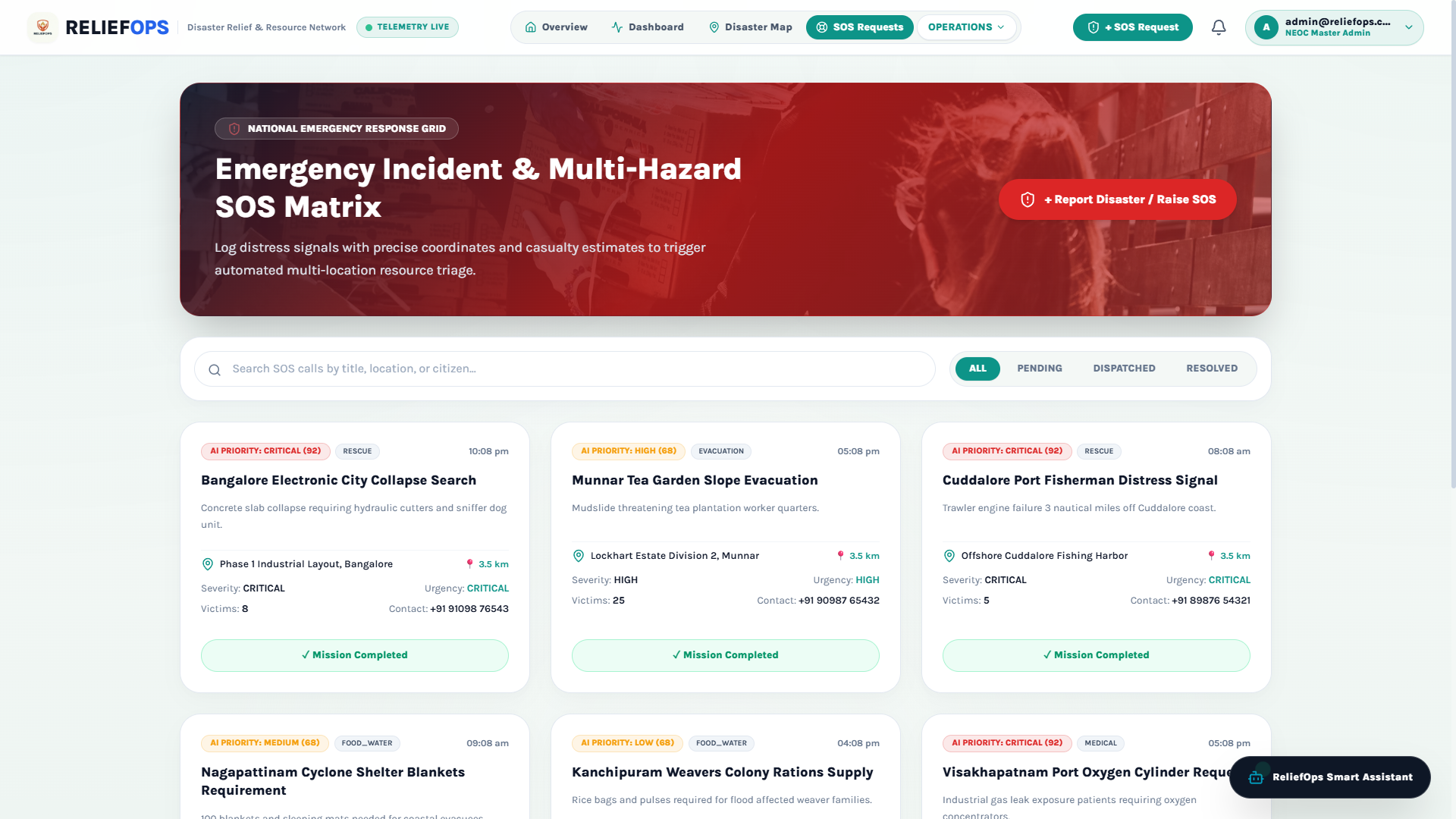
Emergency & SOS Matrix — Provides a centralized view of active incidents and multi-hazard emergency requests.
-
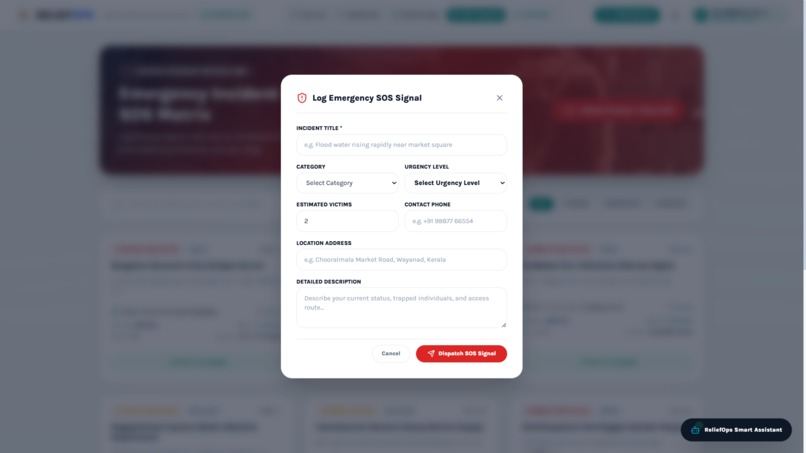
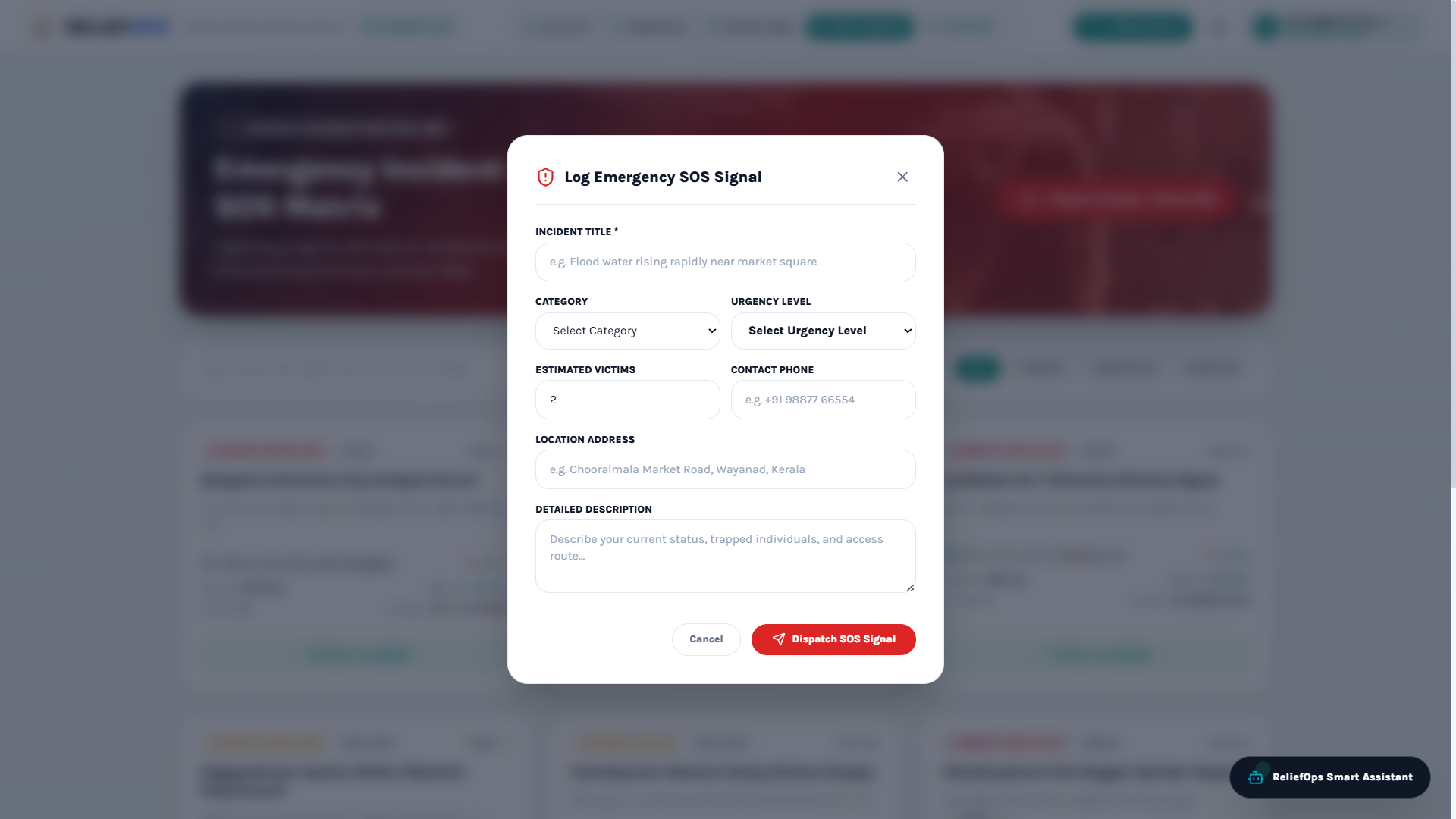
Emergency SOS Request — Enables responders to submit and manage urgent disaster assistance requests.
-
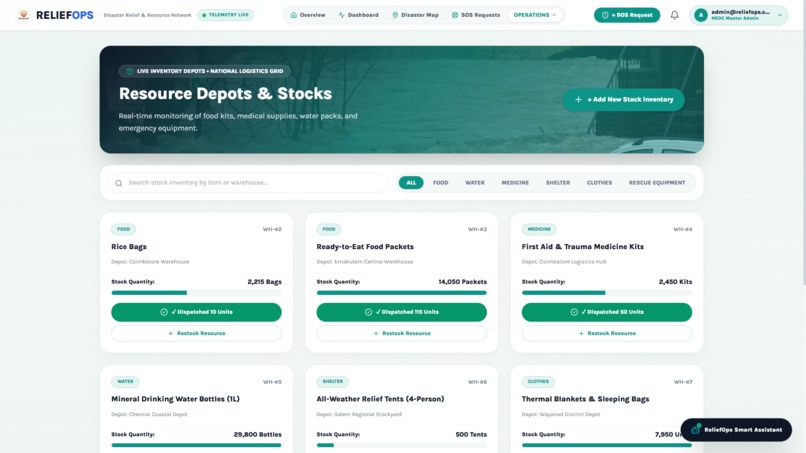
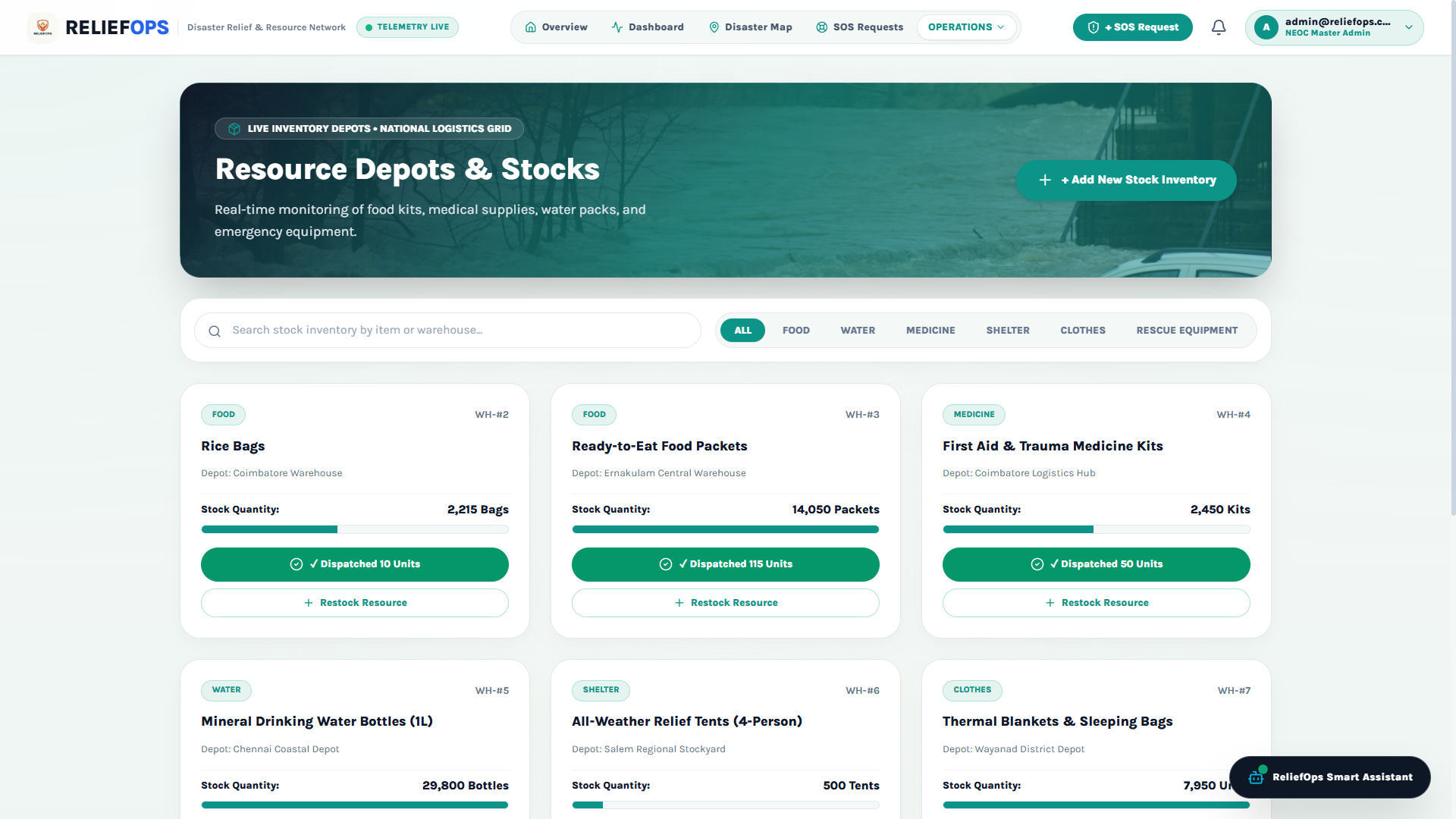
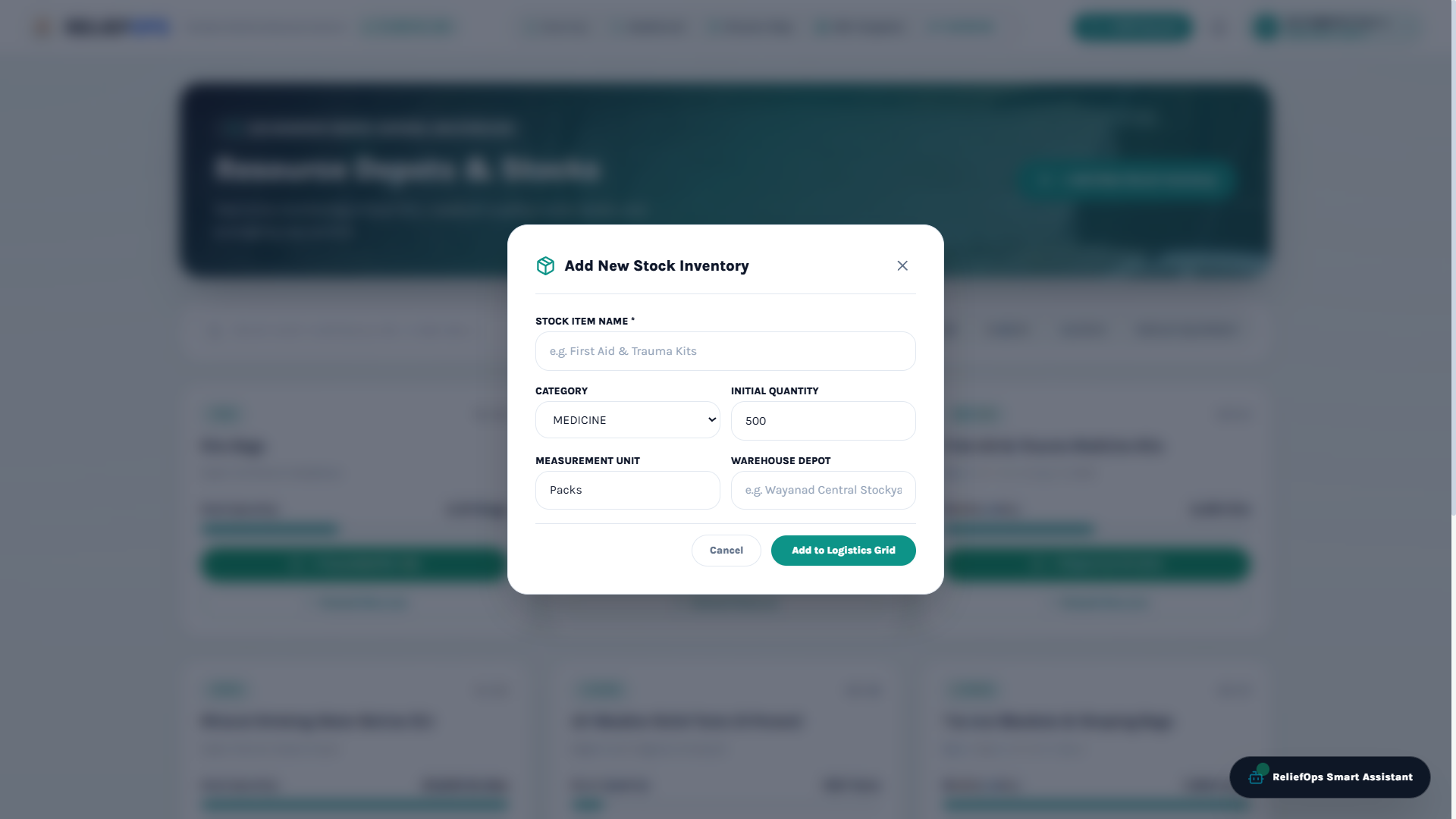
Resource Management — Tracks food, water, medical supplies, and available emergency resources across relief operations.
-
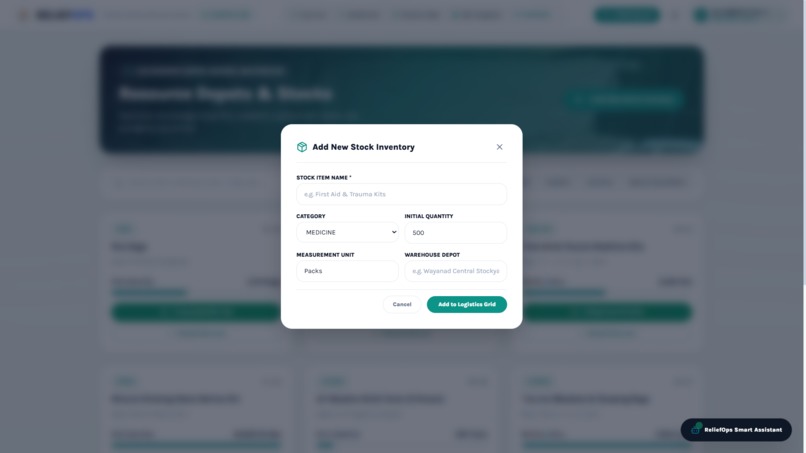
Relief Request Management — Captures emergency requirements and coordinates assistance for affected communities.
-
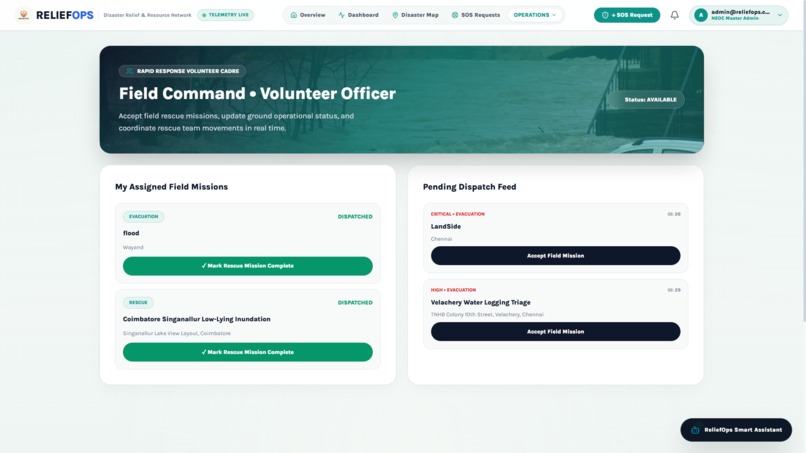
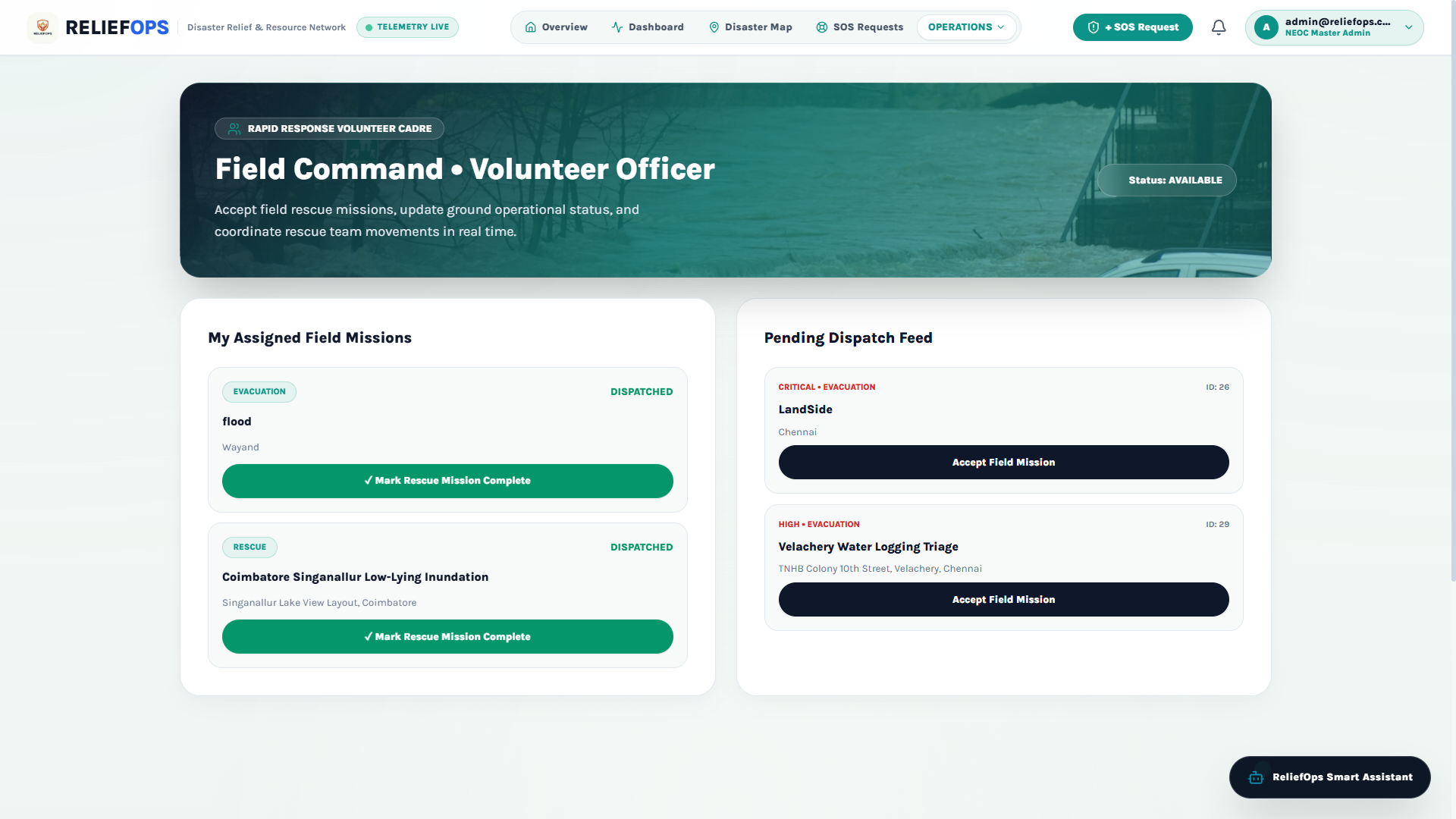
Field Commander & Volunteer Management — Coordinates field personnel and volunteer operations during disaster response.
-
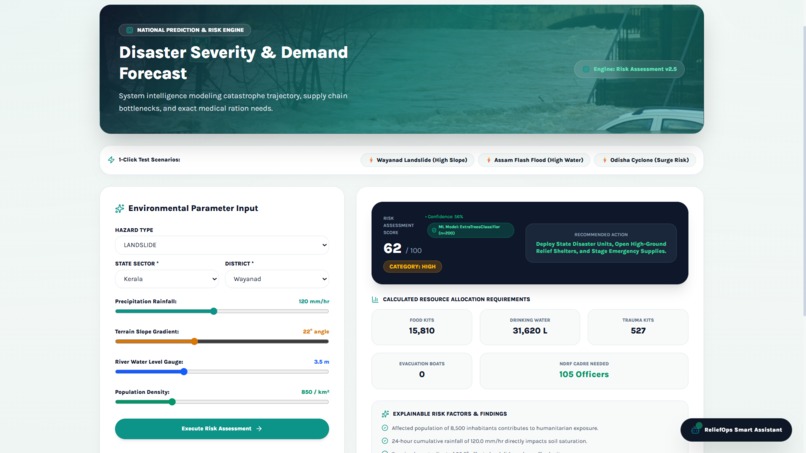
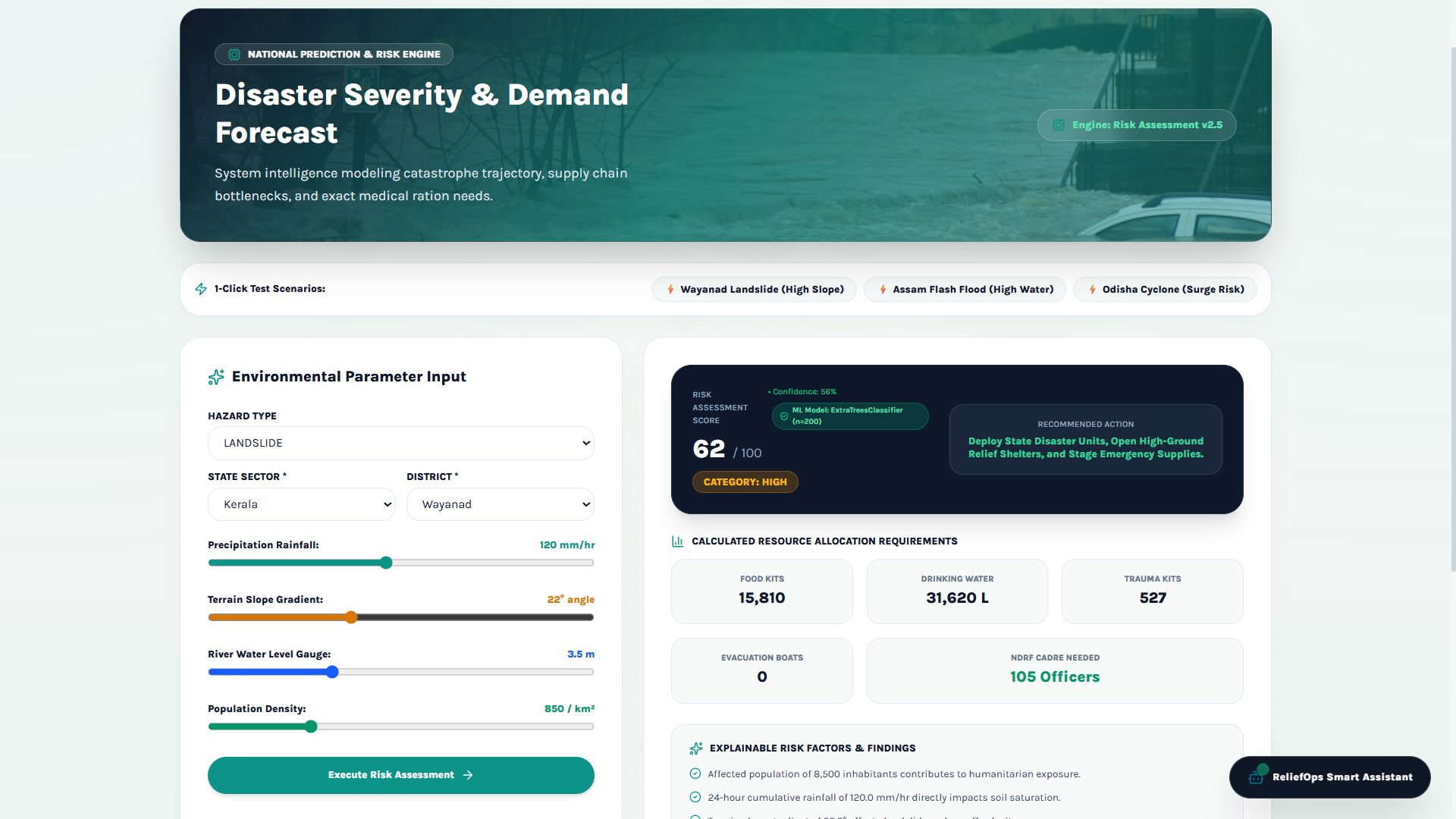
AI Disaster Severity & Demand Forecast — Uses the ExtraTreesClassifier to assess risk and estimate emergency resource requirements.
-
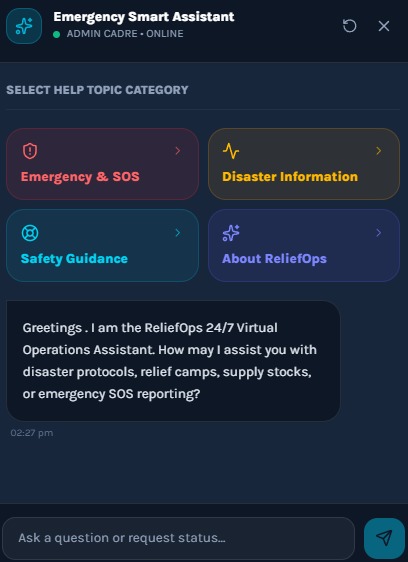
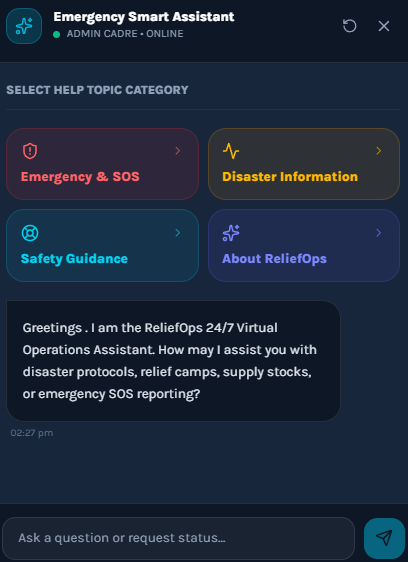
Emergency Smart Assistant — Provides conversational disaster information, safety guidance, and operational assistance.
Inspiration
Natural disasters create urgent situations where resources, rescue teams, and support need to reach the right locations quickly. Our project aims to use AI and technology to help authorities make faster and smarter relief decisions.
What it does
The system analyzes disaster-related information and generates AI-based severity and priority scores. It helps prioritize affected areas, manage resources and volunteers, and support efficient resource allocation through a centralized dashboard.
How we built it
We build the system using a microservices architecture. The frontend uses React, while Spring Boot microservices handle authentication, disaster information, resources, volunteers, and allocation. API Gateway manages communication between services, and Eureka provides service discovery. Oracle and MongoDB manage different types of data. A Python FastAPI service provides AI-based severity prediction and prioritization.
Challenges we ran into
Integrating multiple microservices, databases, frontend components, and the AI service is one of our main challenges. We work on solving API communication, JWT authentication, database connectivity, service discovery, and consistent data handling across different services.
Accomplishments that we're proud of
We are proud of building an integrated disaster relief platform that combines microservices, multiple databases, AI-based prediction, resource management, and a user-friendly dashboard. The system provides a structured approach to disaster response and resource allocation
What we learned
We learn how different technologies work together in a real-world full-stack system. We gain practical knowledge of Spring Boot, React, REST APIs, JWT, API Gateway, Eureka, Oracle, MongoDB, Python, FastAPI, and AI-based decision support.
What's next for Ai based disaster relief and resources allocation system
We plan to improve the AI prediction model, add real-time disaster data, enhance route optimization, introduce live map tracking, improve resource demand forecasting, and provide more advanced analytics to support faster and more accurate disaster response.


Log in or sign up for Devpost to join the conversation.