Inspiration
Natural disasters such as floods, landslides, and cyclones can affect large numbers of people within a very short period of time. During such situations, emergency teams need to coordinate affected areas, rescue requests, available resources, shelters, volunteers, and relief activities while making quick decisions.
Real-world incidents such as the 2024 Wayanad landslides showed us how complex disaster-response operations can become when multiple teams, resources, and affected locations are involved. This inspired us to explore how AI and modern software technologies could be used to support disaster-response coordination.
With this idea, we developed ReliefOps — an AI-Based Disaster Relief and Resource Allocation System designed to bring important disaster-response activities together in a centralized platform.
What it does
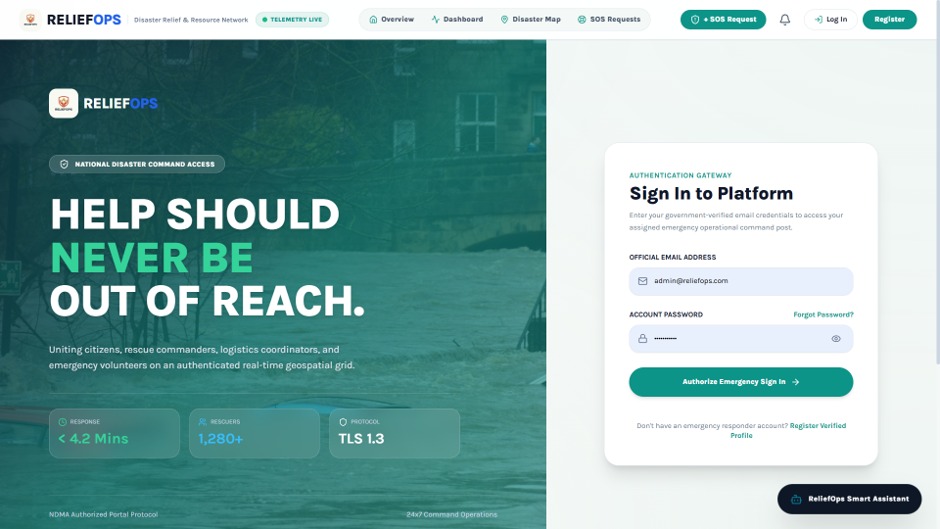
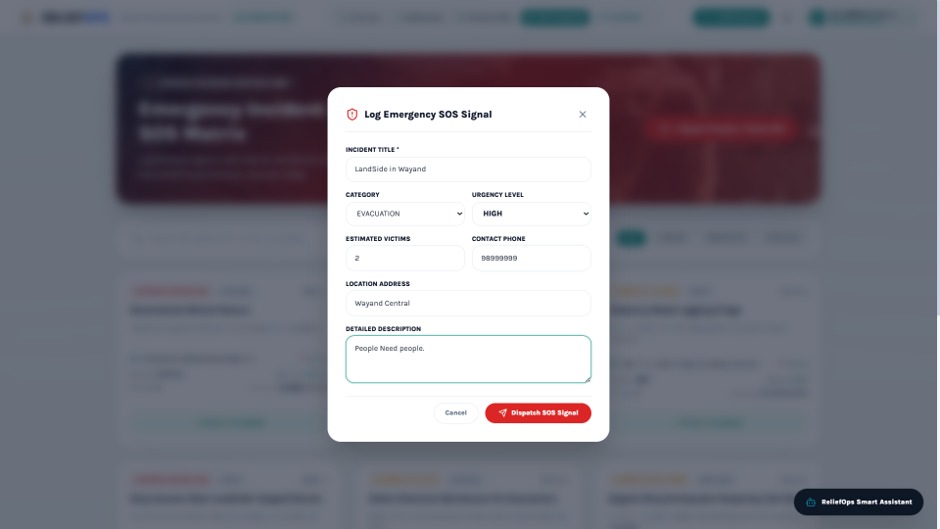
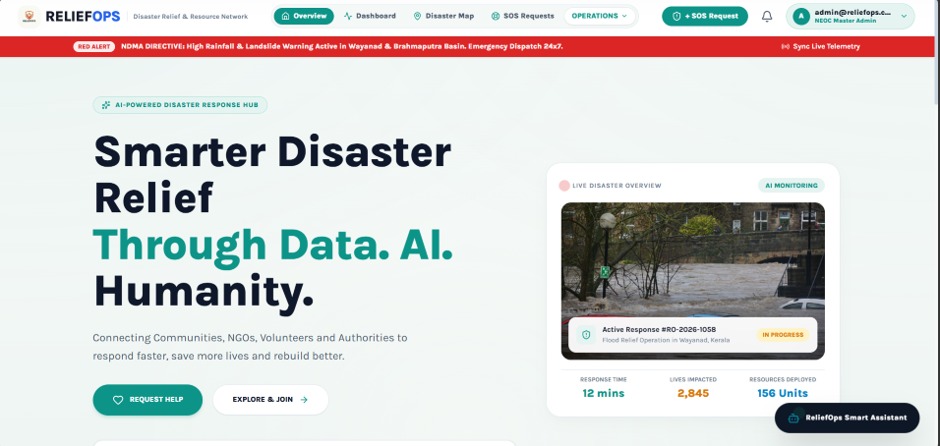
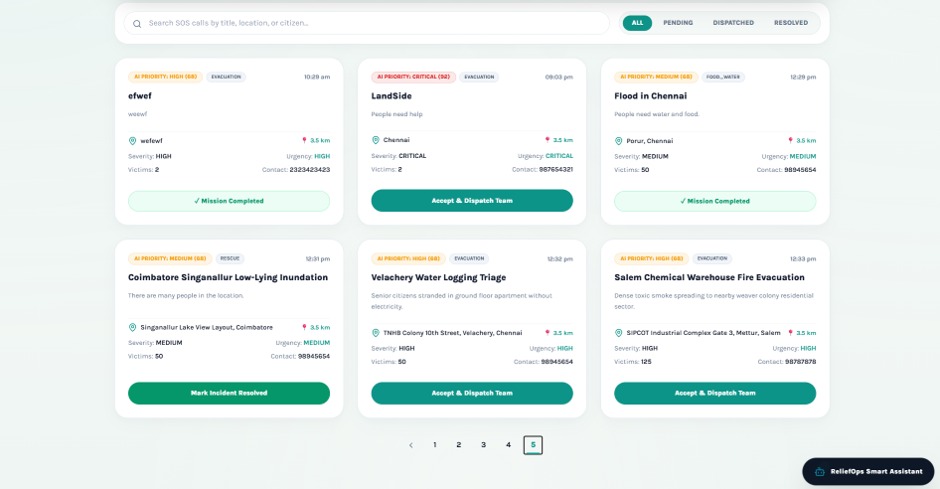
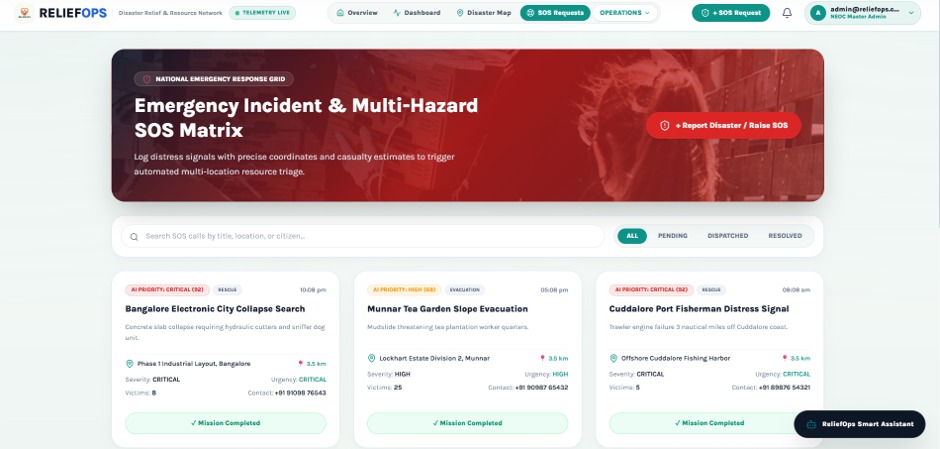
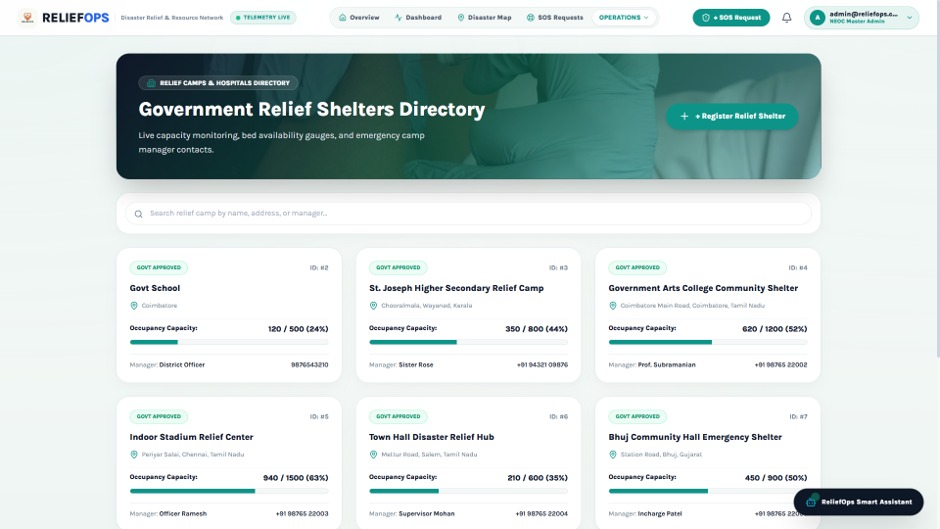
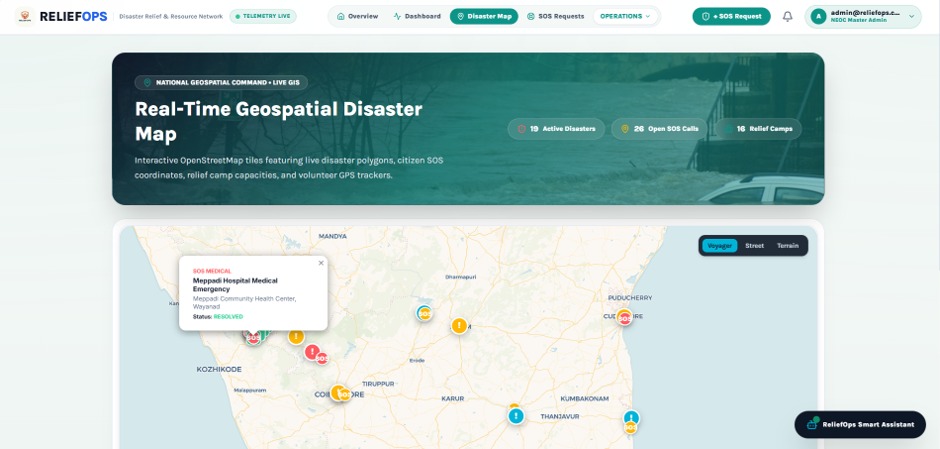
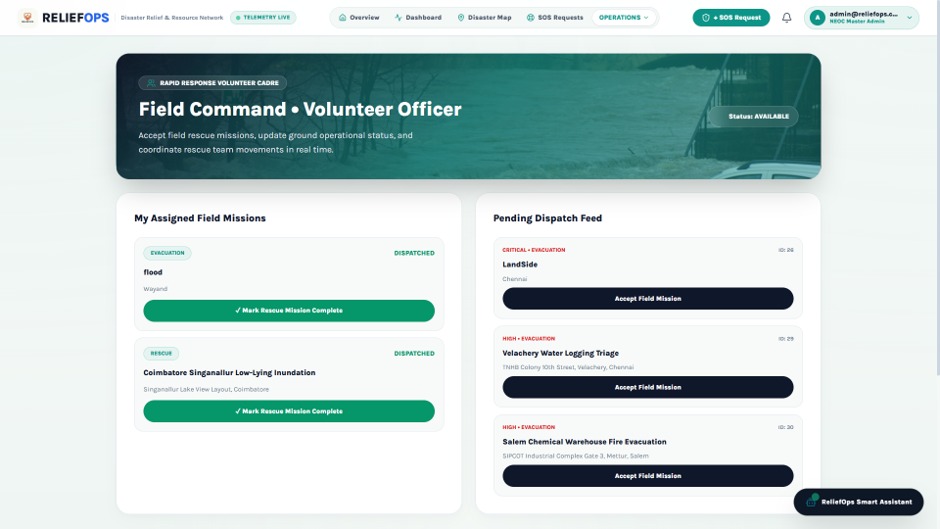
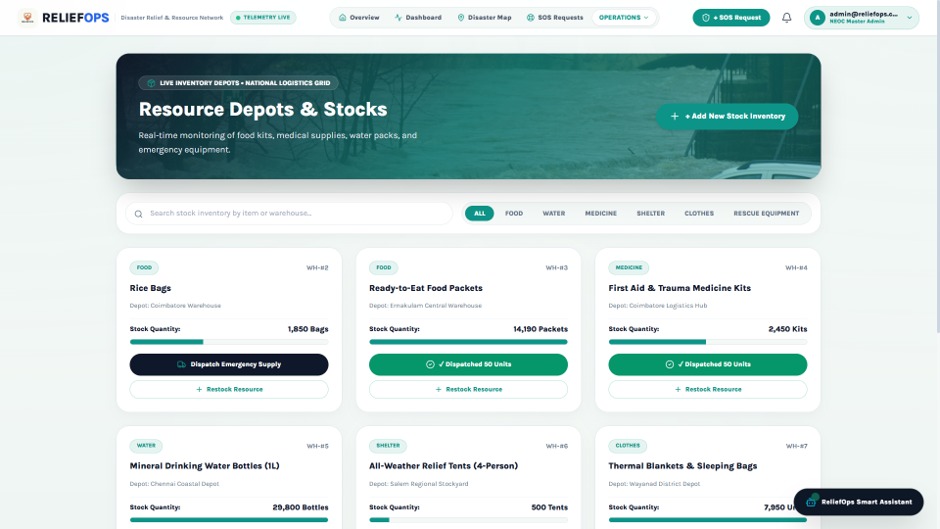
ReliefOps provides a centralized platform for managing different aspects of disaster response.
The system allows users to manage disaster information, emergency requests, available resources, shelters, and volunteers through a unified interface. This helps provide a clearer view of the current disaster situation and the resources available for response.
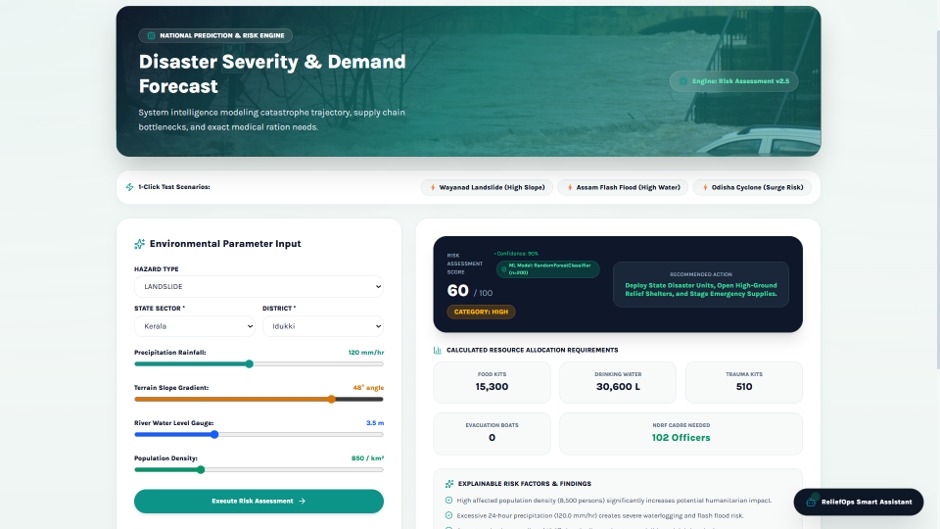
The system also includes an AI service that analyzes disaster-related factors and predicts the severity of an incident. The prediction can be used as an additional decision-support input when reviewing emergency situations and prioritizing response activities.
The platform also includes AI-based conversational assistance to make interaction with the system more natural and help users access relevant information more easily.
How we built it
We developed the frontend using React to create an interactive dashboard and user interface for the different disaster-management modules.
The backend was developed using Java and Spring Boot with a microservices-based architecture. Different services are responsible for specific functions of the application, allowing the system to remain modular and organized.
MySQL is used as the database for storing operational information such as disaster details, emergency requests, resources, shelters, and volunteer information.
For the AI component, we developed a Python-based AI service. The machine-learning component uses the ExtraTreesClassifier algorithm for disaster severity prediction, and the AI service is connected with the main application through APIs.
The overall system combines the React frontend, Spring Boot backend services, MySQL database, and Python-based AI service into a single disaster-response platform.
Challenges we ran into
One of our major challenges was integrating multiple technologies and services into a single working system. The frontend, Spring Boot microservices, database, and Python-based AI service had to communicate correctly with each other.
Another challenge was integrating the machine-learning model with the application. We needed to ensure that the input data was processed correctly, sent to the AI service, and that the prediction could be returned and used by the application.
We also faced challenges related to API communication, database integration, service configuration, debugging, and maintaining consistent data flow between different modules.
Working through these challenges helped us understand the practical difficulties involved in developing an end-to-end AI-powered application.
Accomplishments that we're proud of
We are proud of successfully developing an end-to-end disaster-management platform that combines web development, microservices, database management, and machine learning.
Instead of developing the AI model as an isolated experiment, we integrated it into a complete application where the prediction can contribute to the overall disaster-response workflow.
We also successfully organized the backend using a microservices architecture and connected it with the React frontend and MySQL database.
Another accomplishment is bringing multiple disaster-response functions, including emergency requests, resources, shelters, volunteers, and disaster information, together within a single platform.
What we learned
Through this project, we gained practical experience in developing and integrating different technologies into one complete application.
We learned how to build interactive interfaces using React, develop REST APIs and microservices using Spring Boot, manage application data using MySQL, and develop machine-learning functionality using Python.
We also learned that building an AI-powered application involves much more than training a machine-learning model. The model needs to be integrated with the application, its inputs and outputs need to be handled correctly, and its predictions need to be presented in a way that can support users.
Most importantly, we learned how different technologies can work together to solve a real-world problem.
What's next for AI-Based Disaster Relief and Resource Allocation System
Our future goal is to make ReliefOps more intelligent, scalable, and useful for real-world disaster-response scenarios.
We plan to improve the AI models by using larger and more diverse disaster datasets and exploring additional machine-learning techniques. We also aim to improve resource allocation by considering the location, urgency, availability, and demand for different resources.
In future versions, we would like to integrate real-time weather and disaster data, geospatial mapping, live emergency updates, and route optimization for rescue and resource transportation.
We also plan to improve the AI conversational assistant so that users can ask questions about ongoing incidents, resources, shelters, and emergency requests using natural language.
Our long-term goal is to develop ReliefOps into a comprehensive AI-assisted disaster-response platform that can provide better situational awareness and decision support during emergency operations.

Log in or sign up for Devpost to join the conversation.