Inspiration
The inspiration behind BabyVideo.ai came from a simple idea: people love imagining, remembering, and celebrating moments connected to family and childhood. In conversations online, millions of users enjoy “future baby” predictions, baby transformations, and cute AI-generated content. However, most existing tools were either low quality, limited to static images, or required difficult editing skills.
The project was created to make this experience accessible, fun, and emotionally engaging for everyone. The goal was to build a platform where couples could visualize their future baby with just a few clicks, where parents could create meaningful baby-style videos, and where creators could generate adorable content without technical knowledge. By combining modern AI models with an easy-to-use interface, BabyVideo.ai was designed to bring creativity, curiosity, and joy together in a way that feels personal and magical.
Ultimately, BabyVideo.ai was inspired by the universal human fascination with family, growth, and imagination—and the belief that AI can turn these ideas into something beautiful, playful, and shareable.
What it does
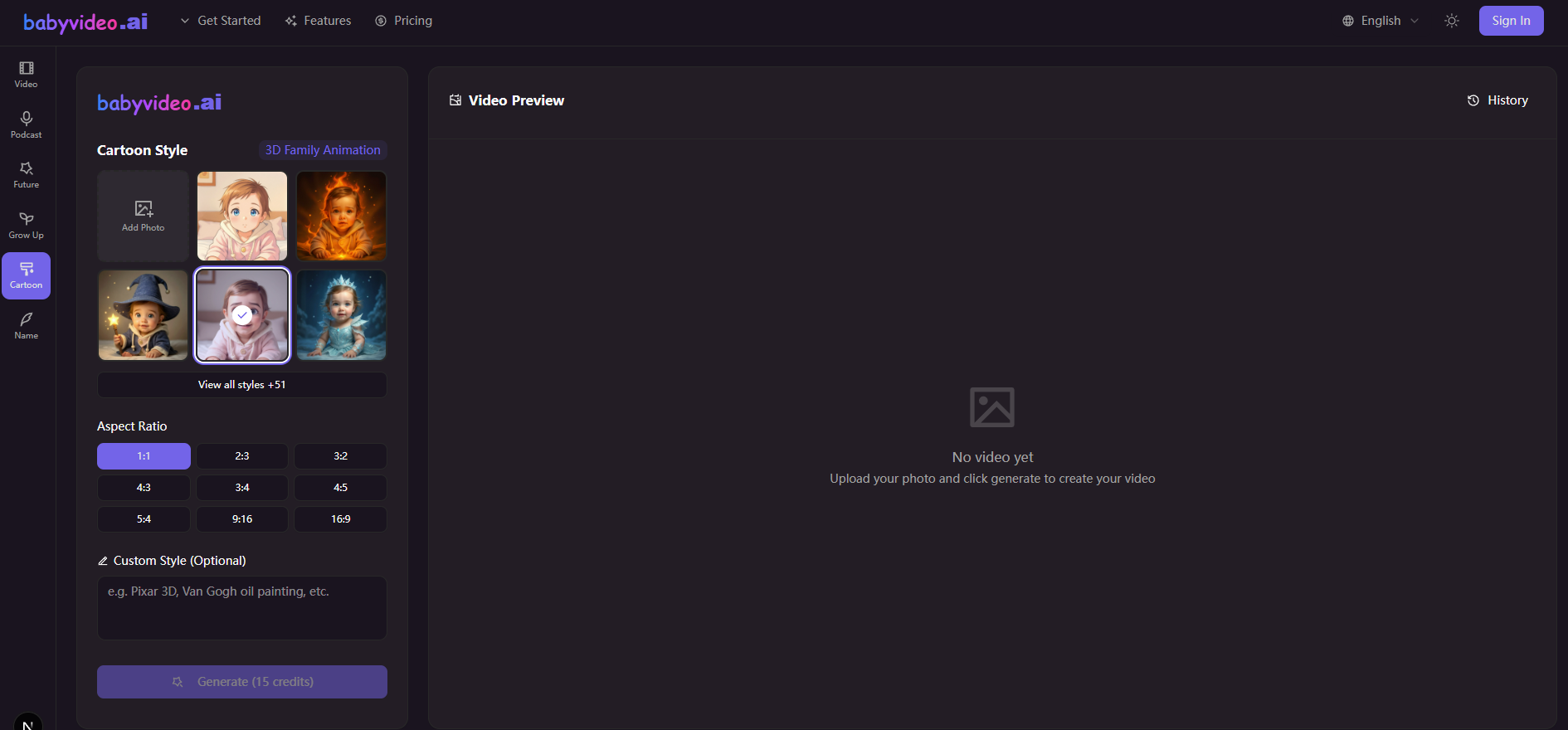
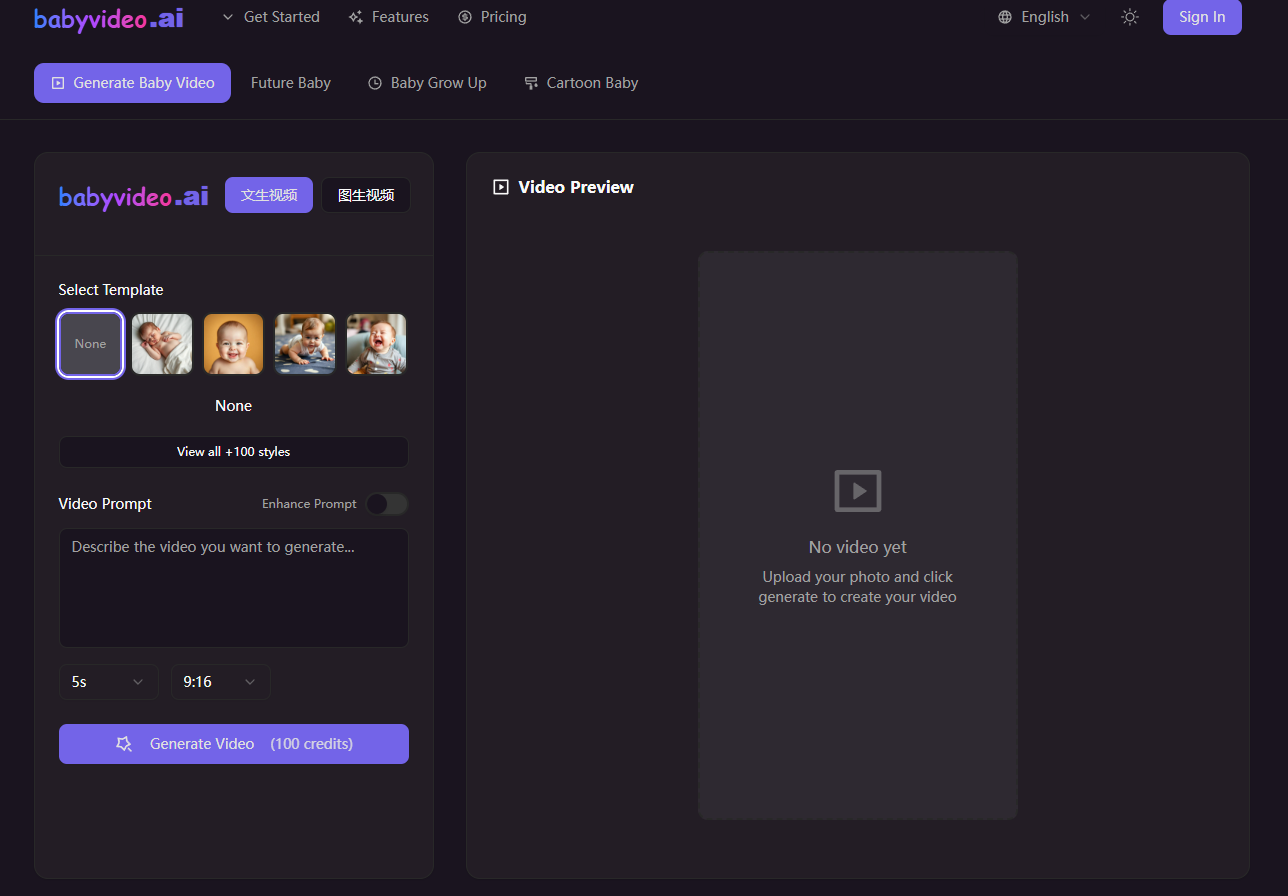
BabyVideo.ai aligns with popular search topics such as “AI baby video generator,” “future baby predictor,” “baby grow-up AI,” and “cartoon baby maker.” The platform supports strong SEO relevance by offering multiple high-intent features including baby video creation, age progression, and baby transformation. Its content naturally targets users searching for tools to visualize their future child, create baby animations, or convert photos into baby-style content.
How I built it
Building BabyVideo.ai requires a combination of modern web technologies, AI video generation models, cloud infrastructure, storage systems, and a seamless user experience. Below is an overview of how such a platform can be constructed from the ground up.
Challenges I ran into
Building BabyVideo.ai came with several technical and product challenges. One of the biggest hurdles was integrating multiple advanced AI models—future baby prediction, image-to-video generation, age progression, and cartoon transformations—into a single seamless workflow. Each model behaves differently, and ensuring consistent quality across all outputs required extensive testing and fine-tuning.
Another challenge was optimizing speed and cost. High-quality video generation can be expensive and resource-intensive, so balancing performance, output quality, and affordability took significant engineering effort. Creating a smooth user experience was equally challenging: handling image uploads, video previews, storage pipelines, and real-time credit deduction all needed careful planning.
Lastly, designing the interface to be easy for non-technical users while still offering flexibility for creators took multiple iterations. The main goal was to hide complexity behind a simple, intuitive UI—and achieving that required both engineering and design work.
Accomplishments that I'm proud of
I’m proud that BabyVideo.ai successfully combines multiple AI capabilities into one platform that feels simple and enjoyable to use. Being able to turn a single photo into a baby video, a cartoon baby, or a future baby prediction is something that truly excites users, and seeing their reactions has been one of the most rewarding parts of the project.
I'm also proud of achieving fast generation speeds and high-resolution output while keeping the process accessible for everyday users. Building a stable credit system, a smooth upload pipeline, and a reliable storage + CDN setup were all major milestones. Most importantly, I'm proud that BabyVideo.ai has become a tool that brings joy, curiosity, and creativity to people around the world.
What I learned
This project taught me a lot about the real-world challenges of running AI at scale. I learned how to optimize inference pipelines, manage GPU-intensive workloads efficiently, and design pricing systems that make sense for both users and operating costs.
I also learned the importance of user experience. Even if your AI model is powerful, people won’t enjoy it unless the UI is clear, simple, and fun. Continuous testing and user feedback shaped many decisions along the way.
On the technical side, I gained deeper experience with Next.js, Vercel, Cloudflare R2, serverless architecture, and multi-model orchestration. On the product side, I learned how to position an AI product, understand user intent, and structure SEO content to grow organic traffic.
What's next for AI Baby Video
The future of BabyVideo.ai includes expanding creative possibilities and improving realism. Upcoming goals include adding more baby video templates, supporting personalized baby photo shoots, introducing emotion-based animations, and improving future-baby prediction accuracy using more advanced AI models.
Beyond that, the platform will continue to enhance speed, reduce generation cost, and support additional languages to reach more users globally. Features like AI-generated baby podcasts, interactive storytelling, and advanced customization tools are also part of the long-term vision.
Ultimately, the goal is to evolve BabyVideo.ai into the most complete and delightful baby-themed AI creation platform—one that brings imagination, family, emotion, and creativity together in ways traditional tools never could.
Built With
- css
- github
- supabase
- typescript
- vercel
